The future of gaming and streaming: a networking and SEO arsenal

30-second summary:

  • As the world starts to return to normalcy, the gaming and live streaming industry need SEO, social networking, and online marketing for continued growth
  • I spoke with industry influencers Alinity, Matt Rehwoldt, and eUnited’s General Manager and VP, Matt Potthoff on the industry’s current scenario, the obstacle course for amplified audience engagement, and the budding need for innovation

Over the past five years, the boom of the live-streaming, esports, and gaming industries has been stealing headlines not only in the tech industry but also in mainstream media.

That boom only increased its radius during the pandemic, which saw astronomical highs in terms of viewership numbers for the Amazon-owned Twitch streaming platform, Google’s YouTube, and even Facebook Gaming, who jumped more aggressively into the marketplace with the acquisition of Microsoft’s Mixer platform during the summer of 2020.

Since then, much of the world has started getting back to more normalcy, which means that studios are back to work on big project games, esports teams are heading back to regular competitions, and the streaming landscape continues its evolution.

Despite the boom, the industry lacks some key ingredients

But despite the impressive numbers, the industry as a whole still lacks some key ingredients that can not only take the industry to the next level, but also improve the business landscape of content creators as well.

More often than not, the industry is splintered off into a number of sectors that, aside from annual conventions and events, don’t often regularly network efficiently.

Compounding the limitations of networking efficiency is the void in marketing practices such as search engine optimization (SEO) and traditional internet marketing that content creators and brands are leaving on the table.

Some of the core complaints among streamers and content creators, among others, is – the lack of discoverability provided by their platforms, and how their growth seems bottlenecked and capped due to the lack of visibility.

Furthermore, content creators and brands often find themselves in the cycle of social media posting, which can lean heavily into monotony and automation – two major factors that drive down engagement.

Sure, you can blame the platforms themselves and you would be partially right. Social media platforms are a wide net of interests and demos, so posts may not hit at high percentages consistently. Streaming platforms seem to be staying the course, which is smart business as it has proven to be profitable, even during the most challenging economic crisis in nearly a century.

That leaves content creators, esports teams, game studios, and the industry as a whole, at a crossroads. Where innovation has seemed to bypass the needs for more connected networking and growth potential, many are forced to double down on the work despite the lack of return just to stay afloat.

Natalia Mogollon, better known as Alinity, is one of the most popular streamers on the Twitch platform, boasting over one million followers to her channel and had leveraged the platform to build one of the more recognizable brands in the streaming industry.

Streaming and content creators

To get an objective perspective on the matter, I caught up with gaming content creator, Alinity and Matt Rehwoldt, former WWE wrestler and content creator.

Alinity on gaming and the need for networking, content creation, SEO

“In regards to networking with other creators, I feel like most creators currently use Twitter for that”

“The problem is that I don’t know which creators are genuinely interested in networking and which just want interactions in order to increase their following. It’s probably 50-50.

“But again, I think the market for small to medium size creators is huge. People that are starting to grow and want to meet other creators”

And it’s the market that remains largely untapped or maximized.

Outside of the most famous streamers in the world, many streamers may be stuck under a ceiling or bottlenecked when it comes to growth, and that is where the streaming side of the industry needs to evolve.

A few years ago, professional wrestler and content creator Matt Rehwoldt was involved in the WrestleMania 34 United States Championship match between Randy Orton, Bobby Roode, Jinder Mahalm, and Rusev, performing in front of over 78,000 people in New Orleans, Lousiana.

And while Rehwoldt is back in the industry with promotions such as New Japan Pro Wrestling and rumored to be heading to Impact Wrestling, the ‘Drama King’ has carved out a home for his brand on both Twitch and YouTube.

Despite his name recognition and work on some of the biggest wrestling stages in the industry, the limitations that platforms present can still negatively impact his content.

Matt Rehwoldt on the gaming industry and the need for SEO skills

“The biggest challenge facing content creators is always discoverability,”

“Twitch struggles with this the most and it’s been said to death by any “How To Grow On Twitch” video you see on YouTube – which is the very point. You need to bring people to Twitch from other sources as their search and discoverability is extremely limited.”

“Here I’ll refer your readers to Alpha Gaming’s Harris Heller. He makes some great points about Twitch’s weaknesses with the most glaring being its searchability.

The inclusion of things like highlights or clips is very cool, but why can’t I search “Crazy FRAG” and find a whole list of clips around those search terms? Then through watching things like that I find new creators.  So there needs to be more searchable content on Twitch where you don’t have to just go to the search bar and type the exact name of the stream you’re looking for.”

“Browsability is key,” he said.

But Rehwoldt also points out that YouTube may present better discoverability but also has its own setbacks.

“YouTube is better but there you’re competing in an even larger ecosystem against clickbait warriors and what feels like the whole world”

he points out.

Rehwoldt goes on to point out how SEO is not only impactful but a valuable resource to learn and utilize.

“That said, if you can take the time to teach yourself a little SEO and how to use titles and keywords properly, it’ll help you a lot. It’s something I still struggle with and am learning too.”

But like many streamers, Rehwoldt has been frustrated with the issues that hold back his content. He stresses the importance of understanding that it all comes down to patience and hard work.

“I’m still learning,”

Rehwoldt says.

“My channels are growing but not nearly as fast as I’d like them to.  So for me, it’s more about keeping my mind right. Do good work that I love and the growth seems to come. Not letting myself get discouraged because some video or stream didn’t “pop off” is key too.”

“Everyone points to people like Ludwig or other creators who blew up seemingly overnight and then get frustrated when they feel like they make similar quality content and the same doesn’t happen to them.”

Well there are two things to consider here: First, that often those creators didn’t blow up from “nowhere” and they’ve been working hard either behind the scenes or prior to launching their content and got seen by the right people at the right time. A classic case of preparation meets opportunity.

Secondly, life is also full of incredible exceptions.

People who explode into stardom because they went viral etc.  But never ever try to compare yourself to the exception. I’ve known and spoken to so many creators, those who make a living at it, and it takes years of trying and putting out content that you later look back on and shake your head. Trial and error everyone. Have patience with your work and yourself.”

Esports

While SEO is not prominent in sectors such as streaming, and the collective industry as a whole, it has trickled in with regards to the Esports industry.

Matt Potthoff is the general manager and Vice President of eUnited, and a former professional esports player who has won championships as a player, coach, and general manager.

eUnited

“eUnited has blossomed into a staple esports organization in North America since its inception in 2016”,  Potthoff said.

“We have competed across many titles and have accumulated over $3 million dollars in prize winnings.

eUnited’s most notable championships are winning the 2018 Smite World Championship and the 2019 Call of Duty World Championship. We pride ourselves on growing amateur talent into championship contender players over numerous gaming communities.”

Part of their growth has been the incorporation of SEO and internet marketing through leveraging social media.

“eUnited does use elements such as SEO to increase visibility when selling merchandise or showcasing new sponsors. Additionally, we help players revise their stream titles and descriptions for better chances of obtaining new viewership when users are searching for different topics on Twitch”

Potthoff points out that the integration of internet marketing, SEO, and targeted social networking can provide results and those results can impact profitability.

“eUnited leverages streaming platforms to grow their players’ brands and sell ads to sponsors by utilizing their player’s streaming audience. Most sponsorship activations in esports that aren’t held in person are done over streaming platforms like Twitch”

Innovation and moving forward with solutions

Regardless of the sector of industry, it seems the problems remain the same, and some success can be rooted in the implementation of SEO and optimized networking.

  • But how does the industry innovate to address this?
  • How do content creators address the areas of need?
  • How do we implement better networking and more meaningful connectivity between these different sectors?

Many brands and content creators face hurdles with finding these solutions. They may not have the budget to consistently contract a quality Internet Marketing & SEO agency, and the SEO agency market certainly doesn’t hone in on these offerings.

So, what is the solution?

I considered all of this when I initially launched Gamactica in October 2018. I asked myself these same questions, and I saw the very issues pointed out in this article when I started streaming.

This is why the foundation of what we have been building with Gamactica is rooted in SEO, internet marketing, and intuitive social networking for the industry. Award-winning internet marketing company Elite Rank Media is the backbone of the internet marketing initiatives and processes. Since 2009, the company has been providing marketing services to brands around the world and has been recognized for its work in both Medical SEO and localized Miami SEO marketing, among others.

An industry where content creators, streamers, gamers, esports teams, esports players, game studios and developers, and cosplayers are spread out so distantly on the social space is one that needs the innovation of improved connectivity.

Our purpose is to provide a professional social network to streamline social networking, bring these sectors together more efficiently, and provides the tools and resources that empower these brands and content creators to reach new levels.

And these are the innovations that can help push through the ceilings, break through the bottlenecks, and clear the hurdles that everyone seems to face, regardless of the industry sector.

Gamactica is implementing those innovations.

“I think the idea is very interesting,”

Alinity says of Gamactica.

“Most current social media platforms focus on relationships with our followings, but a new focus towards networking is innovative. It almost makes me think of LinkedIn.

“I feel like it has a lot of potential for connecting brands and creators, I think there is a big need in that regard. It seems like some streamers are really well connected and get lots of sponsorships, whereas the new creators have no idea how to get these. I think there is a big untapped market within the creators with about 100-500 concurrents (viewers)”

she adds.

“They have more tight communities and often get overlooked but I think there is a huge potential for brand deals with high return on investment for brands, as they tend to be more connected with their viewers. This connection becomes difficult once you get over 1000 concurrent viewers”

she continued.

Alinity points out the vitality of the current market size, the need for better networking, and industry innovation.

“I think the market for small to medium size creators is huge. People that are starting to grow and want to meet other creators. I think the large “whale” streamers would be a good influence for smaller ones to join.”

During the journey of Gamactica, it has been key to stand out as a unique platform, and showcasing how it stands alone is vital to the continued growth.

“I love the idea of something like Gamatica”,

Rehwoldt said.

“But I will be blunt – I’ve seen many trying to compete in this niche space as well. I myself have been approached by several ‘gamer social media’ sites where you open an account, you can link all your streams, socials etc, and it involves you in a like-minded community with the idea that you can all discover each other.

“The key here will be offering something to truly stand apart! Think outside the box!”

And that outside the box thinking is structured in Gamactica’s platform, community, and directories. Streamlining popular social networking features and intuitively interweaving them with the marketing and branding impact that is needed on a larger scale.

“I do think a platform that offers a solution to increase visibility for players is needed,”

Potthoff said.

“My only problem is that a majority of the users are on platforms such as Discord, Twitch, and YouTube.”

“I feel anyone can be discovered in gaming,”

he added.

“It just takes the right moment and presence to take advantage of a situation. If another platform is increasing the odds for a player or company to be discovered, they should definitely sign up and take advantage of it.”

Pushing the needed innovations is at the core of Gamactica’s journey, and implementing the proper concepts while listening to the industry, as a whole, will shape its continued growth.

Not only is the focus on connectivity and marketing, but also helping structure the platform to help combat the harassment and toxicity issues that plague the industry, and also help empower female creators and brands that are operating in a male-dominated sector.

The future requires innovation to achieve growth and continued success, and that journey is what Gamactica is dedicated to continuing.

Stay tuned for more articles in this series.

Anthony DiMoro is CEO of Gamactica. He can be found on Twitter @AnthonyDiMoro.

Subscribe to the Search Engine Watch newsletter for insights on SEO, the search landscape, search marketing, digital marketing, leadership, podcasts, and more.

Join the conversation with us on LinkedIn and Twitter.

https://www.searchenginewatch.com/2021/08/02/the-future-of-gaming-and-streaming-a-networking-and-seo-arsenal/




Facebook’s metaverse gambit is a distraction from its deep-seated problems

Mark Zuckerberg demonstrates an Oculus Rift headset at a 2016 event.
Enlarge / Mark Zuckerberg demonstrates an Oculus Rift headset at a 2016 event.
David Paul Morris/Bloomberg via Getty Images

Facebook mastered social media by giving people an easy way to share their offline lives with friends, family, and complete strangers on the Internet. So why is the company now trying to invent a virtual universe that effectively turns its back on reality?

Over the past week, the social media company has blitzed media outlets with news about its “metaverse” initiative, a plan to create virtual worlds where people can interact to play games, have meetings, and so on. Last week, CEO Mark Zuckerberg shared his metaverse plans with the public in an interview with The Verge. Then, earlier this week, Facebook announced that it would be putting together a metaverse team staffed with a handful of longtime VPs.

It’s clear that Zuckerberg has been thinking about this metaverse idea for a while. But the timing of Facebook’s announcement is interesting, to say the least. Facebook has “a history of doing these kinds of technical projects that look like they might be revolutionary at times when they’re being criticized for their lack of social responsibility,” Jen Goldbeck, a computer scientist and professor at the University of Maryland, told Ars.

Facebook has faced its share of scrutiny in recent months. Lawmakers have been floating antitrust and Section 230 bills that would hit the company hard. It was caught earlier this year autogenerating pages for white supremacist groups. And yesterday, hearings began in the House of Representatives into the insurrection that breached the US Capitol in January, which was partially organized using Facebook apps and sites.

It’s probably an overstatement to say that the metaverse news was released to serve as an intentional distraction from the company’s current problems. But the thought undoubtedly crossed someone’s mind at the company. There’s a “70 percent” chance that Facebook’s metaverse project is a “distraction from all the bad things that are going on,” Goldbeck said. “The last thing they want is more discussion of their algorithms and Q-Anon and extremist groups.”

As a distraction, the metaverse is almost too perfect. It’s a flashy news item that attempts to position Facebook and Zuckerberg as visionaries inventing the future. It’s also literally a way to escape reality. If Zuckerberg ever wanted a metaverse to escape to, where Facebook exerted influence over everything from physics to religion, that time is probably now.

Into the metaverse

The term “metaverse” first appeared in Snow Crash, a 1992 sci-fi novel by Neal Stephenson, where it was a virtual world in which people could interact through their avatars, complete with rules and social norms that differed from the real world. The concept appeared in other forms before Stephenson’s book, and it has been revisited and rehashed numerous times over the years.

Zuckerberg’s vision of the metaverse sounds pretty similar. “You can think about the metaverse as an embodied Internet, where instead of just viewing content, you are in it,” he said in his interview with The Verge.

Hugo Barra and Mark Zuckerberg celebrate Barra's hiring in an early (unnamed and unreleased) Facebook social VR app.
Enlarge / Hugo Barra and Mark Zuckerberg celebrate Barra’s hiring in an early (unnamed and unreleased) Facebook social VR app.

Virtual reality was a key part of Stephenson’s vision, and it comes up a lot in Zuckerberg’s interview. The executive leading the metaverse team, Andrew Bosworth, heads VR and AR at the company. That Facebook is looking for another solution for VR isn’t surprising—it has experimented with VR to middling success. The company’s Oculus headsets have run the gamut from good to bad, and while Zuckerberg’s VR demo in 2016 was impressive, his virtual trip to hurricane-ravaged Puerto Rico was cringe-worthy. Yet Facebook is sticking with it, no doubt in part because it dropped $2 billion on Oculus.

Still, it’s not clear that the metaverse is the killer app for VR, nor is it an obvious evolution of social media. “There was a very clear path for a while,” Goldbeck said. “We were going to have more interactive social media, we were going to have more mobile stuff, then we were going to have more kinds of media. Now, what is the next thing? This feels exactly like a thing that someone would say, ‘Well, maybe the next big thing is the metaverse.’”

Turning away from the real world

Inside Facebook, developing the metaverse may seem like an obvious next step. The company has a large user base that uses its platforms for a variety of everyday things, from sharing updates to shopping, gaming, and more. Add in a dollop of VR and some other buzzword-laden technologies, and you’ve got a metaverse.

In some use cases, Facebook might be on to something. “There are places where people are happy to stay virtual,” Goldbeck said. “This is the tension we’re starting to see emerge now. There are a lot of people who are like, ‘This remote working is great.’” And Facebook could be the company to make it happen. They have deep pockets and a roster of talented engineers. “There are people inside Facebook whose job it is to figure out what the next big thing is,” Goldbeck said.

But in many ways, the metaverse project is a fundamental shift away from what made Facebook successful. First, Facebook is a company that tends to succeed when it iterates on existing ideas or solves genuine problems. Zuckerberg’s initial version of Facebook, called “Facemash,” was a 2003 Harvard knockoff of another site called “Am I Hot or Not” that launched in 2000. Later Facebook iterations aped features from Friendster, MySpace, and others.

Even the company’s technological crown jewel, the News Feed, wasn’t created due to pie-in-the-sky dreaming about what could take social media to the next level. It was a solution to a real problem—as people added more friends on Facebook, they were getting inundated with updates. News Feed and its algorithms helped cut down on the chaos, prioritizing content that a user was more likely to engage with. Another Facebook hallmark—ads in the News Feed, the company’s current cash cow—was born out of its struggles to monetize users on mobile phones.

The metaverse also cuts against a key part of Facebook’s brand—allowing people to share their lives with friends and family. For many, the platform’s appeal comes from users’ ability to like, comment on, and share content related to their real lives—not their virtual ones.

Zuckerberg may truly believe that the metaverse is the next big thing. But it can also be true that the project serves as a convenient distraction from the problems the company faces. At the same time, it can be a reward for loyal executives who want to dream about the future rather than think about automated content moderation. And it can also be a message to investors that the company is making good on past investments in VR and other technologies that have yet to pay off.

In a way, that’s the beauty of the metaverse. It can be whatever you want it to be.

https://arstechnica.com/?p=1783647


Facebook Pay extends its reach later this summer

Facebook Pay is one of many payment services aiming to eliminate the "phone, laptop, credit card" shuffle by offering easily accessed one-tap payment options.
Enlarge / Facebook Pay is one of many payment services aiming to eliminate the “phone, laptop, credit card” shuffle by offering easily accessed one-tap payment options.

This August, Facebook will be making its Facebook Pay payment service available outside its own platforms for the first time. Facebook’s announcement describes the move as providing a mobile-friendly seamless checkout experience for businesses that elect to use it, pointing out that Facebook users already use the service to send money and buy items in Facebook Shops and the Facebook Marketplace.

There isn’t much meat in Facebook’s announcement, which mostly rehashes feel-good bullet points that apply to the entire online financial industry, not just Facebook Pay—for example, the system’s use of encrypted storage and the fact that businesses accepting Facebook Pay don’t need to manage customers’ card or bank account numbers. While these features sound good at first blush, they’re both de rigueur, not innovations—the majority of online stores already use third-party payment processors that manage credit card and bank account numbers for them.

Facebook pledges that Pay users’ credit card and bank account information won’t be used to “personalize their experience” or target advertisements. The company also says that payments and purchases will not be shared with a user’s friends or to a user’s profile or feed. It’s worth noting that these are explicitly separate promises, though—Facebook isn’t promising that payments and purchases won’t be used for “personalization” or ad targeting.

Checking Facebook Pay’s privacy matters blog post makes that last point quite clear:

As with our other products, the actions you take with Facebook Pay can be used for purposes such as to deliver you more relevant content and ads, to provide customer support and to promote safety and integrity (e.g., to investigate violations of our payments policies). For example, if you buy a baseball glove on Facebook Marketplace, you might see an ad for a baseball bat.On the plus side, at least direct email marketing spawned by Facebook Pay activity is opt-in, not opt-out; the same blog post says that “businesses and nonprofits will only be permitted to use [your email address] for marketing purposes if you opt in.”

Facebook Pay’s first steps outside the Facebook ecosystem will be on Shopify stores only, but the service is expected to expand further to more shopping platforms and payment processors over time.

https://arstechnica.com/?p=1780591


Trump prepara una class action contro Facebook e Twitter

L’ex presidente Donald Trump,  ha in programma di annunciare oggi azioni legali collettive contro il CEO di Facebook Mark Zuckerberg e il CEO di Twitter Jack Dorsey, dicono le fonti ad Axios.

Questa  è l’ultimo assalto nella battaglia durata anni di Trump con Twitter e Facebook per la libertà di parola e la censura. Trump è completamente bandito da Twitter ed è bandito da Facebook per altri due anni, sino al 2023. L’annuncio sarà alle ore 11 East, circa le 17 in Europa

Lo sforzo legale di Trump è supportato dall’America First Policy Institute, un’organizzazione no-profit focalizzata sulla perpetuazione delle politiche di Trump. Il presidente ed il CEO dell’associazione lo accompagneranno nell’annuncio.
Le azioni legali collettive gli consentirebbero di citare in giudizio i due amministratori delegati per conto di un gruppo più ampio di persone che secondo lui sono state censurate da politiche faziose, quindi unirebbero le forze di molti comunicatori colpiti dalla censura sul web.
Ad ora Facebook e Twitter hanno rifiutato di commentare, ma dovranno farlo in tribunale. Gli accusatori dovranno presentare le prove del comportamento prevenuto delle piattaforme.
Il presidente e i suoi alleati hanno ripetutamente criticato i divieti come censura. I giganti della tecnologia sostengono di essere stati messi in atto per motivi di sicurezza dopo l’assedio del Campidoglio a gennaio.
Il consiglio di sorveglianza indipendente di Facebook ha confermato la decisione di Facebook di sospendere Trump a maggio.

In attesa di un legislazione seria e completa che tuteli gli utenti e la loro libertà di parola dagli abusi e i social media, spesso influenzati da poteri non democratici, questa potrebbe essere la più grande misura mai presa a favore della libertà di parola. Una battaglia che non sarà facile, ma che vedremo come andrà a finire.


Telegram
Grazie al nostro canale Telegram potete rimanere aggiornati sulla pubblicazione di nuovi articoli di Scenari Economici.

⇒ Iscrivetevi subito ⇐


Minds

.sostieni {padding: 12px; display: block; margin: 32px 0; border-top: 10px solid #E64946; position: relative; background-color: #f8f8f8;text-align:center;} .sostieni p {font-size: 16px; line-height: 22px; color: #000; margin-bottom: 4px; margin-top: 0;} .sostieni form{margin:21px auto;text-align:center;} .sostieni .sostieni_pulsante {background-color: #E64946;color:#fff;padding:7px 16px;text-transform:uppercase;border-radius:3px;font-weight:700;font-size: 17px;line-height: 24px;} .sostieni .vendor{margin:16px auto 0;text-align:center;}

Sostieni ScenariEconomici.it

Fra Mass Media ormai completamente uniformati ai bollettini di informazione del Potere, Scenari Economici rimane una voce che presenta opinioni libere ed indipendenti. Aiutaci a crescere ed a farci conoscere, sia condividendo i nostri contenuti, sia, se vuoi, con una donazione. Grazie!

PayPal

https://scenarieconomici.it/trump-prepara-una-class-action-contro-facebook-e-twitter/


I Spent Three Months on Clubhouse, and Here’s What I Learned

July 3, 2021 5 min read

Opinions expressed by Entrepreneur contributors are their own.

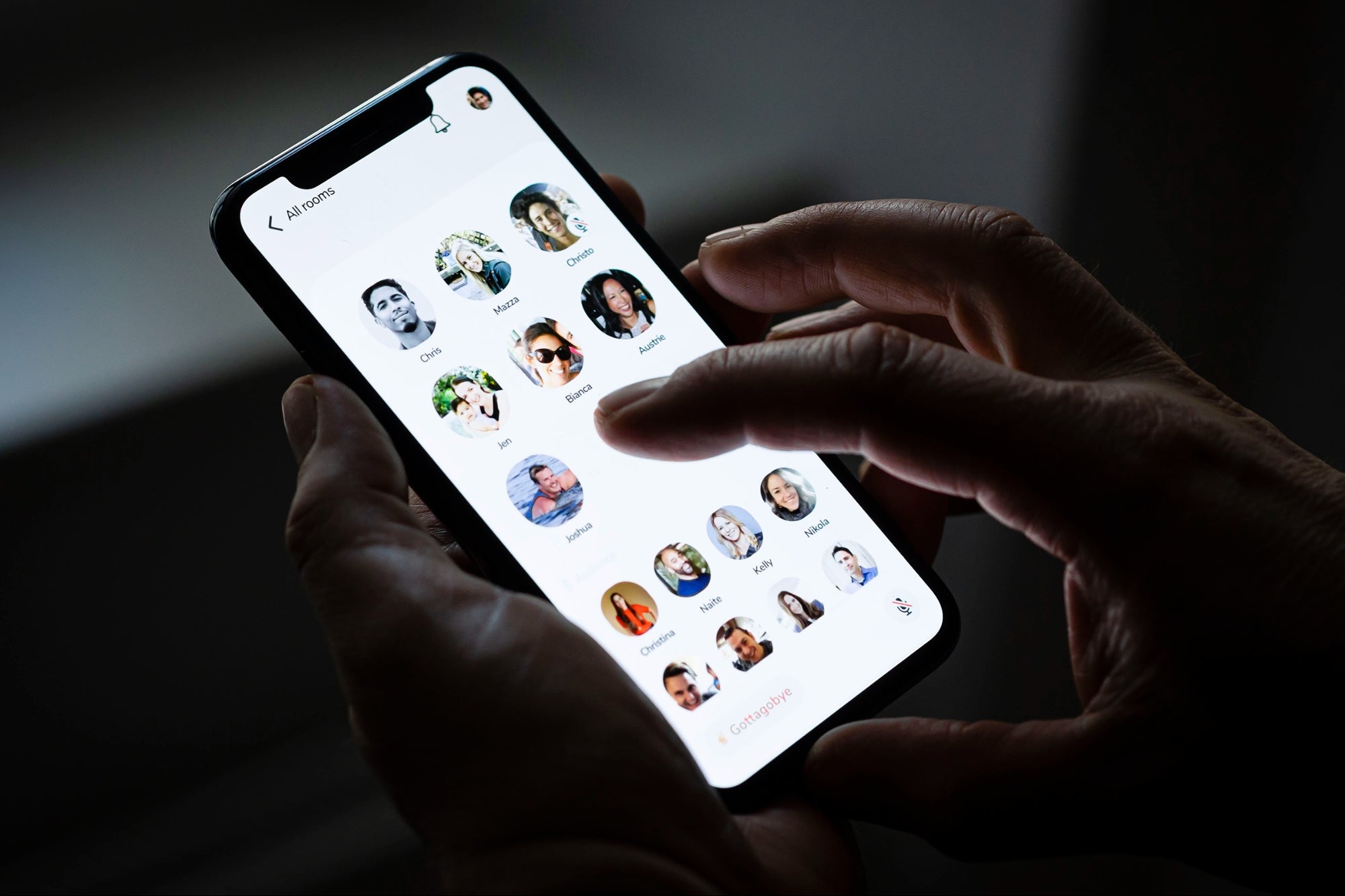
Clubhouse burst onto the screen in 2020 and found immediate relevance due in part to the lockdowns implemented worldwide due to Covid-19. I tried to get on but had little luck until one of my friends mentioned he had a few invites to give away. So, there I was, a Clubhouse noob (as gamers like to say) getting his feet wet and trying to figure out how everything works.

It’s been three months now, and during that time, I’ve moderated a business book club weekly, and I’ve also joined numerous rooms as both a speaker and listener. Android users, unfortunately, were initially left out of this exclusive new app. But in May 2021, Android users rejoiced as the app became available for them. As such, it now seems like a great time to take a deeper look into Clubhouse. I’ll share with you what the platform is and isn’t, as well as four of the best tips to help you get the most out of your experience.

Why you should be on Clubhouse

Clubhouse, at present, is relatively barebones. No frills, just easy access to incredible people and conversations absolutely free. The only cost is your time. Have trouble in your business? Looking for help with your kids? Want to talk about your favorite hobby? Chances are likely you’ll find a room that suits your needs.

On Clubhouse, you have the option of speaking up or simply sitting back and listening, so depending on your circumstances, you can go with what works for you at that moment.

If you’re looking for exposure with little prep, Clubhouse is the place to be. No need to worry about your hair or make-up. No need to get the light just right. All you need to be aware of is your surroundings to ensure you’re not getting too much background noise or echo.

Related: Five Ways to Network on the Clubhouse App

Some pros

If you’re looking to connect with like-minded people in 2021, there’s no better place than Clubhouse. While it’s hot, it’s still very much in its infancy, and you can expect many new functions to be added in the future.  

Some cons

It’s easy to go down the rabbit hole in Clubhouse. You’ll join a room at 10 p.m. thinking you’ll be on for just 30 minutes, and the next thing you know, it’s 2 a.m.

While it’s possible to record your Clubhouse sessions with a little money and effort, it’s a bit of a pain. For most people, once the session’s gone, it’s gone. Moreover, unless you have the right equipment, you’re limited to the mic on your phone, which, while surprisingly good, it’s no pro mic. Hopefully, they’ll enable one-touch recording capability and the ability to use external mics in the months to come.

Related: How Clubhouse Is Creating Unprecedented Opportunities and Access

A few Clubhouse tips

Like LinkedIn, your bio plays a significant role in letting people know who you are and what it is you do. However, unlike other social platforms, you can’t add links. You can and should add your and accounts, making it easy for people to connect with you outside of ClubhousAlso. Be sure your bio includes your expertise, profession, and interests.

The name and description of a room you’re hosting are keys to convincing others to join. The success of a room will often depend on how enticing you make it for members. Experience has taught me to keep the room name short and punchy. “Breakfast with Champions – Millionaire Breakfast Club,” “TechTalks” and “Women’s Powerhouse” are three of the most popular rooms.

Teaming up with other entrepreneurs or speakers and co-hosting a room is the fastest way to increase the number of members in the room. Each moderator should post upcoming events on their social media platform feeds. 

Be aware, people who follow you can see the rooms you’re in. There may be times when you want to get personal and not want someone from your circle to listen in. Fortunately, Clubhouse gives the option to search for people in a room, which comes in handy if the room is crowded.

What Clubhouse is and isn’t

Clubhouse is, in essence, the perfect tool for the social environment in which we find ourselves. You may find yourself sharing the stage with entrepreneurs such as Jay Abraham, Russell Brunson, Billy Gene and Tai Lop on the platform. It’s a great way to hone your speaking in front of an audience (albeit virtually) and get your message out there.

However, unlike other social platforms, Clubhouse isn’t one you can create material for in your free time and simply post it when needed. To make the most out of Clubhouse, you’ll want to speak, and that means airtime. After talking to entrepreneurs about their experiences on Clubhouse, people seem torn between loving it or finding it a massive waste of time, so I hope you can learn from my experience to make yours enjoyable and effective.

Related: 6 Steps to a 5-Figure Income on Clubhouse

https://www.entrepreneur.com/article/373308


How TikTok Became One of the Most Downloaded Apps of All Time

These four aspects of TikTok set it apart from other social media platforms.

July 3, 2021 5 min read

Opinions expressed by Entrepreneur contributors are their own.

I’ve been knee-deep in the social media industry since the beginning. I watched Instagram launch as a simple photo-sharing app then snowball into the second most popular social media platform behind big brother Facebook, which acquired the app for $1 billion.

Watching mature over the years made me realize that it’s a very special social media platform with one very unique selling point that often goes unmentioned – TikTok provides a deeper and more authentic look into influencers’ lives than other social media platforms. This is undoubtedly contributing to its recent surge in popularity and why it’s now one of the most downloaded apps of all time. Let me dive a bit deeper and touch on why TikTok gives its users something other social media networks aren’t. 

It’s more spontaneous and less staged 

Scrolling through Instagram will leave one to believe that everyone on that platform lives a perfect life. Designer clothes, five-star meals, exotic vacations, and sports cars fill Instagram feeds. Everyone is trying to paint a perfect picture. It’s very scripted.

By doing this, they also set the bar so incredibly high that it becomes a game of then trying to constantly raise that bar without allowing it to drop. When was the last time you saw an influencer post a glamorous picture with an exotic backdrop, followed by a makeup-less selfie? You don’t see that, and you won’t on Instagram.

After posting a picture of an over-the-water bungalow in Bali, they aren’t going to post a picture of themselves and their friends at an Applebee’s. TikTok, however, is the complete opposite. The content is more on-the-fly and less staged.

Influencers feel more comfortable just filming random video clips without planning or trying to make them appear perfect. This authenticity is what users love about it. They get to see the true personalities of those they follow.

Related: How Brands Are Leveraging Social Media Influencers to Tell Their Stories

The vibe is focused on fun and laughter 

The entire vibe across TikTok is much lighter than on Instagram. The same Instagram influencer posting pictures that look like a high-end fashion shoot is posting dance challenge videos wearing sweatpants on TikTok.

If you only saw this influencer’s Instagram feed, you would never know they had a playful, less serious side to them. The average social media user doesn’t relate to the pictures of Bali trips, private jets, and Gucci shopping sprees.

But, this is what influencers are convinced their followers want to see. As TikTok continues to attract new users and influencers realize that their engagement is more significant when it’s real, we may see that influence on Instagram; specifically, through the Stories feature.

Nobody is trying to get the perfect angle or write the perfect caption on TikTok. Scroll through the most popular content on the platform, and you will see that 99 percent of the time, it’s natural and fun. Silly dances. Fun challenges. Lots of laughter. Influencers have their guard down on TikTok, and it’s allowing their followers to connect with them in a way that’s far more relatable than on Instagram.

Related: 3 Reasons TikTok Is Here To Stay

TikTok is encouraging interaction among users 

The fun and lighthearted TikTok vibes are due in part to its features that encourage fun interaction. The Duet feature lets users share a split-screen with others or duet with an existing duet video. It’s possible to create an infinite duet. It’s a fun, pleasantly addictive feature that encourages interaction, not a superficial lifestyle.

When an influencer plans out an Instagram post, their goal is to attract as many likes and comments as possible while keeping their current followers engaged and attracting new ones. TikTok, on the other hand, features celebrities and influencers engaging in duets with their followers.

Instagram has become a business for influencers and TikTok is an escape 

There is no denying that Instagram has proven to be a very lucrative platform for influencers; from brand deals and sponsored posts to launching their own brands to millions of buyers.

Because of the opportunity on Instagram, it’s resulted in a lot of content that’s professionally produced and posted in a way that’s planned and highly calculated. TikTok has become a place to escape for these influencers.

Remember, most of the top influencers are highly creative individuals. Some of that creativity is lost from the equation when it becomes a business. While many see TikTok as a business opportunity, many more are seeing it as a fun place to post random things and just have fun.

Related: What You Need to Know About Instagram’s New Ecommerce Feature, ‘Checkout’

https://www.entrepreneur.com/article/373463


Facebook, Twitter pledge to fight abuse of women but leave lots of room for failure

Young woman online shopping on smartphone while lying in bed in darkness at night

Four major social media companies yesterday pledged to make efforts to improve the safety of women on their platforms. Facebook, Google, TikTok, and Twitter all signed the pledge in response to the recommendations of a working group of 120 experts organized by the Web Foundation.

“For too long, women have been routinely harassed, attacked, and subsequently silenced in online spaces. This is a huge threat to progress on gender equality,” said Web Foundation Senior Policy Manager Azmina Dhrodia in a statement. Abuse against women online has reached epidemic proportions, with 38 percent of women reporting personal experience with online violence, according to an Economist Intelligence Unit report.

The pledges represent a step in the right direction, but it’s unclear if they’ll do much to address online abuse. “I’m really grateful to Web Foundation for work that they’ve done, genuinely, to get platforms to make some efforts in this regard because there’s been very little movement over time,” Sarah Sobieraj, a professor at Tufts University and faculty associate at the Berkman Klein Center for Internet and Society, told Ars.

“Having said that, looking at the commitments, it’s pretty difficult to know what they’re going to mean or what they’re going to look like,” she said. “They’re very open-ended. A lot depends on how much the platforms are willing to do.”

Eight pledges

The pledges outline eight tactics split evenly between two broad categories: curation and reporting.

The companies promise to:

Build better ways for women to curate their safety online by:

  1. Offering more granular settings (e.g. who can see, share, comment, or reply to posts)
  2. Using more simple and accessible language throughout the user experience
  3. Providing easy navigation and access to safety tools
  4. Reducing the burden on women by proactively reducing the amount of abuse they see

Implement improvements to reporting systems by:

  1. Offering users the ability to track and manage their reports
  2. Enabling greater capacity to address context and/or language
  3. Providing more policy and product guidance when reporting abuse
  4. Establishing additional ways for women to access help and support during the reporting process

Indeed, those commitments don’t sound very specific, and users may question how thoroughly the pledges will be implemented—social media companies have made it a habit of asking for forgiveness when their half-efforts have fallen short. The way the pledges are written gives the platforms plenty of leeway.

Much of the emphasis is on giving users greater control over what they see and improving the reporting process. Many social media platforms have opaque reporting processes that frequently result in no action being taken against harassers. A moderator reviewing a report may misunderstand the context of a post, for example, or fail to grasp the meaning of coded language. Those shortcomings mean that enforcement of existing policies is often uneven.

Even if platforms were to enforce their policies more consistently, the pledges above still mostly place the burden of dealing with abuse on the user, not the platform. “These mechanisms for flagging or reporting are vital—they’re absolutely essential,” Sobieraj said. “But you can’t unsee or unread the content that comes through to you. It’s a lot of work for the women who are heavily targeted. It’s time consuming, but also it’s very upsetting.”

“Not only is it a burden on recipients,” she added, “but also, the senders still know that the recipients have to read [the posts] in order to [report them]. [The abusers] still get the satisfaction. It really needs to be disincentivized.”

To cope with abuse, some women have taken to outsourcing the management of their social media accounts. It’s a drastic measure, though, and it’s costly, making it unavailable to the vast majority of women on social media.

“We see that the abuse is especially burdensome for women of color, women from religious minority groups, queer women, and so on,” Sobieraj said. “If people start to recede from participating in public spaces, it’s not fair to them, but it also isn’t fair to the rest of us. The people who leave, there’s a pattern. It’s not that it’s random. We’re going to lose certain groups of voices. Maybe it doesn’t feel like that’s a big deal if you’re talking about pop culture, but if you’re talking about politics, it’s pretty important. And I’d argue that it’s pretty important about pop culture, too.”

Proactive solutions

Rather than keeping the burden of combatting abuse largely on users, Sobieraj said social media platforms should take more proactive steps when people become the object of online violence. For one, repeat offenders who aren’t yet banned should have their posts held for moderation, effectively forcing the platform to sign off on the content before it’s visible to anyone, Sobieraj said. She suggested that platforms monitor content trends for people who would likely be the target of abuse and moderate the mentions of the person until the attention wanes.

Preemptive moderation in these cases would take the burden off targeted users so they and others wouldn’t have to see the content. It would also remove a key incentive that motivates many abusers, without disrupting everyone else, Sobieraj said. With those safeguards in place, the vast majority of content could still flow freely on social platforms.

Of course, these solutions would require platforms to take a more active role in content moderation. The companies might have this sort of enforcement in mind—the fourth pledge under “curation” could be interpreted that way. But history has shown that social media companies are loath to preemptively moderate content.

The other pledges are helpful but not revolutionary. To follow through on them, platforms likely wouldn’t have to change much. The companies could simply tweak existing systems that are already in dire need of improvement. The result could end up being more algorithmic Band-Aids on problems that algorithms still haven’t solved.

https://arstechnica.com/?p=1777873


Judge tears Florida’s social media law to shreds for violating First Amendment

A judge's handing hitting a wooden block with a gavel.

A federal judge has blocked Florida’s new social media law because it violates the First Amendment rights of tech companies that moderate user content on their online platforms. The state law would make it illegal for large social media sites like Facebook and Twitter to ban politicians and impose other restrictions on the tech companies, but the judge’s order means it cannot be enforced while an industry lawsuit against Florida is pending. The law would have taken effect today if not for the injunction.

The preliminary-injunction order issued by US District Judge Robert Hinkle yesterday called Florida’s law “an instance of burning the house to roast a pig.”

“If a preliminary injunction is not issued, the plaintiffs’ members will sometimes be compelled to speak and will sometimes be forbidden from speaking, all in violation of their editorial judgment and the First Amendment,” Hinkle wrote. The tech companies would sometimes be forbidden from speaking because the Florida law’s definition of censorship includes not only deleting content, but also “post[ing] an addendum to any content or material posted by a user.”

For several reasons outlined by the judge, the trade groups that sued Florida “are likely to prevail on the merits of their claim that these statutes violate the First Amendment,” Hinkle wrote. “There is nothing that could be severed and survive.” The judge’s order “preliminarily enjoins enforcement of the parts of the legislation that are preempted or violate the First Amendment,” he wrote.

Trade groups representing Facebook, Twitter, and other major websites quickly sued Florida after the state enacted its law in May. The lawsuit was filed in US District Court for the Northern District of Florida.

Gov. claimed law would stop “censorship” of conservatives

Florida Gov. Ron DeSantis claimed the Sunshine State’s law would stop the “censorship” of conservatives on social media websites. The law’s prohibition on kicking politicians off social media platforms would have imposed fines of up to $250,000 per day on social media companies that ban candidates for elected office.

The law also said that online platforms “may not take any action to censor, deplatform, or shadow ban a journalistic enterprise based on the content of its publication or broadcast,” unless the content is “obscene.” Another provision would give Floridians the right to sue Big Tech companies over content-moderation decisions.

The law carved out an unusual exemption for tech companies that happen to also own large theme parks, which would benefit Disney and Comcast, the latter of which owns NBCUniversal including Universal Theme Parks. As Big Tech trade groups pointed out in their lawsuit, “the exemption was added with the undisguised objective of ensuring that certain companies with big economic footprints in Florida—like Disney—are not ‘caught up in this.'”

Judge details everything wrong with the law

Hinkle’s order said that Florida’s law “compels providers to host speech that violates their standards—speech they otherwise would not host—and forbids providers from speaking as they otherwise would. The Governor’s signing statement and numerous remarks of legislators show rather clearly that the legislation is viewpoint-based.”

In addition to violating the First Amendment, Hinkle found that the Florida law is preempted by Section 230 of the Communications Decency Act, which gives online platforms protection from lawsuits over how they moderate user-submitted content.

“[D]eplatforming a candidate restricts access to material the platform plainly considers objectionable within the meaning of [Section 230],” Hinkle wrote. “If this is done in good faith—as can happen—the Florida provision imposing daily fines is preempted by § 230(e)(3). Good faith, for this purpose, is determined by federal law, not state law. Removing a candidate from a platform based on otherwise-legitimate, generally applicable standards—those applicable to individuals who are not candidates—easily meets the good-faith requirement. Indeed, even a mistaken application of standards may occur in good faith.”

Section 230 also preempts the parts of the Florida law “that purport to impose liability for other decisions to remove or restrict access to content” by creating a private right of action against social media companies, Hinkle wrote.

Theme-park exemption laughed out of court

During oral arguments, Florida’s lawyers were unable to mount a convincing defense of the theme-park exemption. Hinkle said the legal standard of “strict scrutiny” must apply to the law even though the state claimed the more permissive “intermediate scrutiny” standard should be used. The law would apparently fail under both tests, however.

“[I]n any event, when asked at oral argument, the State could suggest no theory under which the exclusion could survive even intermediate scrutiny,” Hinkle wrote. Further, “[d]espite the obvious constitutional issue posed by the exclusion, the Legislature adopted it, apparently unwilling to subject favored Florida businesses to the statutes’ onerous regulatory burdens,” he wrote.

State has “no argument” that could pass strict scrutiny

Hinkle then explained why the law doesn’t pass strict scrutiny:

To survive strict scrutiny, an infringement on speech must further a compelling state interest and must be narrowly tailored to achieve that interest. These statutes come nowhere close. Indeed, the State has advanced no argument suggesting the statutes can survive strict scrutiny. They plainly cannot. First, leveling the playing field—promoting speech on one side of an issue or restricting speech on the other—is not a legitimate state interest. Whatever might be said of any other allegedly compelling state interest, these statutes are not narrowly tailored. Like prior First Amendment restrictions, this is an instance of burning the house to roast a pig.

The law is subject to strict scrutiny because it was enacted with a “viewpoint-based motivation.” The plaintiffs asserted “with substantial factual support” that the law was motivated by “hostility to the social media platforms’ perceived liberal viewpoint,” Hinkle wrote.

He continued:

Thus, for example, the Governor’s signing statement quoted the bill’s sponsor in the House of Representatives: “Day in and day out, our freedom of speech as conservatives is under attack by the ‘big tech’ oligarchs in Silicon Valley. But in Florida, we said this egregious example of biased silencing will not be tolerated.” Similarly, in another passage quoted by the Governor, the Lieutenant Governor said, “What we’ve been seeing across the U.S. is an effort to silence, intimidate, and wipe out dissenting voices by the leftist media and big corporations… Thankfully in Florida we have a Governor that fights against big tech oligarchs that contrive, manipulate, and censor if you voice views that run contrary to their radical leftist narrative.”

Additional factors make it clear the law is content-based, including one provision that “applies to deplatforming a candidate, not someone else,” and one that “imposes restrictions applicable only to material posted ‘by or about a candidate,'” Hinkle wrote. The state also did not provide a good defense “for imposing these restrictions only on the largest providers… even without evidence of an improper motive, the application of these requirements to only a small subset of social media entities would be sufficient, standing alone, to subject these statutes to strict scrutiny,” he wrote.

Law’s definition of journalism made little sense

The law’s provisions on moderation of journalism seemed to strike the judge as nonsensical. “The statute defines ‘journalistic enterprise’ in a manner that covers many entities that are engaged in journalism but many that are not; any retailer who does business in Florida, has a website of substantial size, and fills 100,000 online orders per month apparently qualifies,” he wrote. “A small newspaper, in contrast—one with fewer than 50,000 paid subscribers and fewer than 100,000 active monthly users—does not qualify, no matter how high its journalistic standards.”

Hinkle summarized his findings in the order’s conclusion:

The legislation now at issue was an effort to rein in social-media providers deemed too large and too liberal. Balancing the exchange of ideas among private speakers is not a legitimate governmental interest. And even aside from the actual motivation for this legislation, it is plainly content-based and subject to strict scrutiny. It is also subject to strict scrutiny because it discriminates on its face among otherwise-identical speakers: between social-media providers that do or do not meet the legislation’s size requirements and are or are not under common ownership with a theme park. The legislation does not survive strict scrutiny. Parts also are expressly preempted by federal law.

Hinkle also found that the Florida law “is riddled with imprecision and ambiguity” but wrote that “[t]his order need not and does not decide whether vagueness would provide an independent ground for a preliminary injunction.”

The Computer & Communications Industry Association, one of the trade groups that sued Florida, said the law would have “empower[ed] bad actors to bring abusive lawsuits against digital services trying to protect users,” putting US-based “Internet users at greater risk to foreign disinformation and propaganda and extremism, predators and fraudsters, and viruses and malware, among other threats.”

“This decision upholding the Constitution and federal law is encouraging, and reaffirms what we have been saying: Florida’s statute is an extraordinary overreach, designed to penalize private businesses for their perceived lack of deference to the Government’s political ideology,” CCIA President Matt Schruers said. “The court’s ruling is a win for internet users and the First Amendment.”

https://arstechnica.com/?p=1777626


Social Media Data Mining: Tips to Increase Your ROI

June 18, 2021 7 min read

Opinions expressed by Entrepreneur contributors are their own.

Imagine working on several marketing campaigns on different profiles or websites, but it’s just not going the way you want it to go. It can be a waste of time and effort if you don’t use social media data to target your audience properly. Of course, when it comes to marketing, there are numerous ways you can increase your return on investment (ROI).

In order to do so with social media data mining, you must first understand what social media data is. After that, you can focus on how you can use it to increase your ROI. 

What is social media data mining?

Social media data is the information collected from how people interact with your social media profiles. This data is measured through likes, shares, comments, follower growth, follower loss, mentions, hashtags, impressions and more.

When we mine the data from our social media accounts, we collect all these variables. The purpose is simple: We want to see how our consumers engage with our social media content. The most commonly used tool for website is Google Analytics because it’s free and because it is one of the best tools out there.

Social data mining requires other tools that are niche-specific. You wouldn’t coat your shoes with the paint you use for your walls. Well, it’s the same with different platforms and analytics. You need a traffic analytics tool.

Data collection is worth it because it can save a lot of money regarding marketing efforts, and you can have a more specific determination of your . Plus, continuous collection of data lets you follow the trends, see what people are interested in and accommodate their needs with your products.

Here are some useful tips on how to increase your ROI with social media data mining.

1. Find mutual KPIs across your social media accounts

If you determine what is working best in your marketing efforts across your social media accounts, you can easily adjust the other content on those accounts to work in your favor.

An example of this would be to take Facebook Analytics, analyze the data, and compare it with the data you’ve gathered from Twitter Analytics. This way you can see which type of content or product is the most successful.

Determine which kind of content works best across all channels. Once you know what for of content is the most shared, liked and commented upon, you’ll know what your customers appreciate.

With these tools, you can combine the content that is successful on either platform and have an overview of what gets the crowd going. It can be measured by likes or shares. This way, you’ll know which social media platform works best for your product.

Related: Data Security in the Age of Online Payments and Social Media Validation: Where Does the Buck Stop?

2. It’s all about the decision journey of your customers

By using one of the social data mining tools and combining it with a UTM (Urchin Tracking Module), you can figure out which path your customers/consumers took to get to your product.

There are five UTM parameters that you can combine with Google Analytics or Adobe Analytics:

  • utm_source: used to identify the website that sent the customer. It’s handy when it comes to determining which website gets you most of the traffic.
  • utm_campaign: It can identify a specific strategy or campaign as the name implies.

  • utm_term: It helps us understand which search terms our customers use.

  • utm_medium: It can identify what type of link was used.

  • utm_content: It helps us understand which specific things were clicked to get the customer to our website.

Unfortunately, these have to be combined with the line of code of your website. However, by implementing UTMs, you can better understand what might work on your social media accounts as well.

It’s a great thing that there are a lot of available customizable solutions that you can build on your own. With the implementation of personalized analytics for your website, there’s no telling how much you can actually increase your ROI.

What happens next is completely up to you. Determine the journey and fix it up a little so that your customers land at your product in the end. The best possible thing would be to have a customizable solution for social data mining.

3. Use social data mining tools to identify specific audiences

A great benefit of social data mining is that you can use it to identify your specific audience. By identifying the specific audience, you’ll know exactly which gender, age, location, socioeconomic status, and career group to cater to.

Imagine how great it would be if you had your own analytics tool. You could customize all the metrics and easily determine ROI-specific variables. It can make your life much easier.

We used to do surveys over and over to determine these things. It’s great to know that they are within your reach, and all it takes is a click of a button. By analyzing this data, you’ll be able to expand the audience or simply improve efforts to target the group you feel will increase profit the most.

Related: Experiential marketing: how to create sensory experiences without physical contact with your customers?

4. Use Google Analytics as well

There are many benefits of using Google Analytics alongside any other tool that’s used for social media data mining. With this tool, you can connect your social media accounts, and you can learn how long your website visitors were on your website.

Furthermore, you’ll know about downloads, sales and more. With this type of data, you can easily determine your next moves and how to further develop your strategy. This can save a lot of money on marketing efforts and inadvertently increase your ROI.

Another great advantage is the bounce rate measured by Google Analytics. This means that you’ll know how many visitors immediately left as soon as they opened your page. This is equally important to forming an adequate marketing response.

5. Behavioral analysis provides insight

Use the mined data to analyze what your customers are into specifically. This is where identifying the specific audience is a grand advantage. For example, the younger users more frequently leave the social media account before finishing the ad video, while the senior users rewatch the ad a couple of times.

By analyzing these types of reactions and behavioral patterns, you can adjust your content and provide more quality to your social media account visitors. You’ll be able to figure out, for example, whether your audience prefers something lengthy and informative, or something short and to the point.

Use the provided information and see your ROI increase overnight. There are great ready-to-go solutions for social data mining, and they can definitely boost your ROI. However, you can always opt for creating your own solution, which can be much more beneficial as you get to control all the aspects of social data mining and marketing.

Related: How the Crisis is Changing Consumer Behavior, and How Entrepreneurs Can Act on It

Takeaways

Using data gathered with social media mining tools can help you determine KPIs on different platforms. You can act on those KPIs to improve your ROI. You can also combine analytics tools to help you determine specific areas of interest for your customers.

Behavioral analysis has always been the key point of marketing. Analytics tools make it much easier to use the statistics on your social media accounts to turn your profits around. Plus, it’s quite simple to identify different audiences and cater to their needs.

One of the most important aspects is the decision journey. Make sure to use social data mining to identify the path your customers took to get to your product. Ready-to-go tools are a great solution, and if you want something more adaptable or customizable, you can always create your own.

Related: A Small-Business Guide to Google Analytics (Infographic)

https://www.entrepreneur.com/article/370200


How to Use Instagram’s ‘Hide Likes’ Feature

The feature was implemented to reduce social pressure.

June 12, 2021 2 min read

Opinions expressed by Entrepreneur contributors are their own.

Last month, Instagram officially launched its ability hide “likes”, targeted towards giving users more control over their experience on the apps and reduce the pressure of social validation. Instagram creators have been under high pressure after recent engagement drops, and some of them looked for content validation in their like counts. With this feature, Instagram is trying to reduce pressure from the shoulders of the creators and promote original content on the platform.

Will engagement drop?

Recent studies show page engagement dropped in countries with likes hidden, such as Brazil and Australia. A reduction in likes can lead the Instagram algorithm to keep their content from getting on the explore page, even after posting quality content.

How can you hide likes on your posts?

To hide likes from your posts, you need to visit the post and then click “hide likes”, after which people won’t be able to see likes on your posts. In order to hide likes, you need to perform a similar function on all of your posts. There is no feature to hide likes on all your posts together. So if someone has more than 1000 posts, they need to go and disable likes on all of their posts.

Anyone can go to desktop mode and see your likes no matter if you choose to hide them or not. Hiding likes also reduces the need to buy fake likes on the platform, as now content creators can simply hide their likes.

Related: Instagram Is Hiding Likes. Here’s What It Means for Brands and Influencers.

https://www.entrepreneur.com/article/373337