5 Social Media Platforms You Should Watch Out for in 2021
June 12, 2021 4 min read
Opinions expressed by Entrepreneur contributors are their own.
A big part of our reality keeps transferring to social media. In 2021 there were 3.78 billion social media users, and this number is expected to grow 3.9% by 2025. Among other reasons, this sharp rise in the number of social media users lays in the fact that people are attracted by the fast access to quality information.
Social media is not only a tool we can’t survive without. It’s a self-standing industry transforming the way humans work, get knowledge, share their experience and cooperate. Social media promises to stay for long — especially with its latest audio and virtual reality-based trends — to continue satisfying the most essential of human needs: real-like social communication.
These five new social media platforms are ones you should keep an eye on, as they seek to facilitate connection in their own ways.
Clubhouse is a social network that went viral following Elon Musk’s interview on the platform. In 2021, it reached 2.2 million downloads with its minimalist concept of room talks.
The platform gathers people of the same field under separate conversation topics. By following any of the available topics, users get notified of the rooms where audio conversations occur. There are profile pics, usernames and the speakers’ live audio materials.
Despite a remarkable jump in popularity at the beginning of the year, Clubhouse has surrendered its position. However, according to the Sensor Tower spokesperson’s comment, the retention among its users remains significant.
Clubhouse is an invite-only app. New users can join either by the existing user’s invitation or by entering the waitlist. Though initially launched only for iOS users, Clubhouse recently became accessible for Android users.
EduDo is a self-development media platform designed for those ready to be better and skillful in any sphere, from food hacks to space technologies.
The app links those who are willing to share their knowledge with people who want to grasp it. People can share their insights on topics that include money and business tips, math and physics, art and culture to tech, food and others. This tool helps integrate self-development into your life.
MeWe
MeWe announces itself as a platform that addresses a big issue concerning social media: users’ data privacy.
MeWe gives the opportunities to chat, share audio, photo, and video materials and construct a feed of the spheres that interest you most. MeWe claims that the app’s algorithms do not use your data to manipulate the feed anyway. Users see only what they choose to follow, without the ads or suggestions part, as the platform doesn’t sell its registered users’ data to third parties for the targeting activities.
Caffeine
Caffeine is a reinvented live streaming platform, which groups the entertainers, gamers and athletes in one place.
The platform was created by former Apple designers in 2018 and reached wider popularity throughout 2020. Caffeine allows users to share live streams with friends and followers, and can also broadcast video games directly from the computer or TV screen. Since the videos are broadcasting in real time, all interactions are natural, as if the participants are in the same room.
Broadcasts are displayed in the feed, and users can interact with them using emojis or comments. Caffeine has already attracted many celebrities by offering them the ability to stream content directly to their audience.
Dispo
Unlike other photo sharing apps, in Dispo the pictures are only published the next morning and cannot be edited or viewed. An automatic filter is applied to the image, like in disposable cameras. As a result, you can have more authentic and natural photos. To get into Dispo, you need to have an invitation from its user. After the registration, everyone is given 20 invites.
A couple of decades ago, it might have sounded a bit strange to join someone’s live or recorded training to improve a qualification or learn some new practical skills. Nowadays, those who lack a basic awareness of online learning tools can fall out of life. Make sure to catch the wave of rising social media platforms, before the wave comes.
Facebook is a hub of sex trafficking recruitment in the US, report says
Serhii Ivashchuk/Getty Images
Facebook is the most commonly used social media platform for human sex trafficking recruitment in the US, according to a new report published by the Human Trafficking Institute.
Last year, 59 percent of victims in active cases who were recruited through social media were found through Facebook, the report states, with 41 percent of all recruitment taking place online.
“The Internet has become the dominant tool that traffickers use to recruit victims, and they often recruit them on a number of very common social networking websites,” Victor Boutros, CEO of the Human Trafficking Institute, told CBS News. “Facebook overwhelmingly is used by traffickers to recruit victims in active sex trafficking cases.”
The 2020 Federal Human Trafficking Report draws its data from active federal criminal and civil human trafficking cases. Last year, there were 579 active prosecutions and 200 civil suits. Among criminal cases, there were 1,499 victims and 1,007 defendants, and 94 percent of criminal prosecutions were for sex trafficking—only 6 percent were for forced labor.
Women and girls were overwhelmingly targeted by sex traffickers, with 98 percent of criminal cases involving female victims. Most victims—91 percent—were from the US, and a majority were burdened with pre-existing vulnerabilities, chiefly substance dependency or having run away from home.
Facebook was the most common platform for child recruitment, with the report noting that “65% of child victims recruited on social media were recruited through Facebook.” Those findings run counter to trends in teen usage of Facebook. Though around 70 percent of American adults frequent the site, it’s no longer the favored platform among teens—only 51 percent used the network, while YouTube, Instagram, and Snapchat took the top spots in a 2018 survey. Yet, the report says, “Despite Facebook’s reputation as a less popular platform among teenagers, it was a more common platform for recruiting child victims than adult victims in 2020 active sex trafficking cases.”
“Sex trafficking and child exploitation are abhorrent, and we don’t allow them on Facebook,” Facebook spokesperson Jeanne Moran said in a statement to Ars. “We have policies and technology to prevent these types of abuses and take down any content that violates our rules. We also work with safety groups, anti-trafficking organizations, and other technology companies to address this, and we report all apparent instances of child sexual exploitation to the National Center for Missing and Exploited Children.”
After Facebook, the next most common venues for online socialization of child victims were Instagram and Snapchat. Among adult victims, WeChat was the most common, followed by Facebook and then Instagram. Just under half the active criminal cases researched in the report involved children; nearly all of the victims were between the ages of 14 and 17.
In 2020, the Internet was the most common venue for victim recruitment. In 244 cases across all ages, the Internet was the primary location, with recruitment on the street and at stores far behind, at 43 and 10 cases, respectively. Facebook was the primary location in 78 active cases.The Human Trafficking Institute points out that its report is not on the prevalence of human trafficking in the US but rather of cases being prosecuted at the federal level.
Part of the reason why the Internet—and likely Facebook by extension—is so prevalent in the report is because it only considers federal cases. In those cases, law enforcement appears to rely heavily on the Internet for its investigations. “The Internet is implicated in many sex trafficking situations, but the high numbers of federal prosecutions involving Internet solicitation are equally if not more reflective of the strategies law enforcement use to investigate these crimes,” the report says.
https://arstechnica.com/?p=1772081
This LinkedIn tool could boost your sales
June 10, 2021 7 min read
This article was translated from our Spanish edition using AI technologies. Errors may exist due to this process.
Opinions expressed by Entrepreneur contributors are their own.
Sales NavigatorIt’s LinkedIn on Steroids – a completely independent app designed to meet the needs of marketers. Subscriptions range from $ 64.99 per month for an annual individual subscription, to $ 99.99 per month for an annual team subscription. Some people are tough on the price, but even at $ 1,200 a year, the unrestricted access to the entire LinkedIn membership and the specialized tools for prospecting and tracking make it well worth the money. Bluntly, if you can’t make at least $ 1,200 a year from your LinkedIn network, you’re in the wrong job.
The heart of Sales Navigator is its advanced search engine, with detailed filters that allow you to identify your ideal prospects. You can search for leads or accounts, and there are several lead search filters available when you do an advanced search, which can help you find an unlimited stream of leads for your products and services.
To save time, you can mold your sales preferences, or the default search settings, in the Sales Navigator settings. You can set geography, industry, company size, role, and seniority level.
Think of sales preferences as your starting point when looking for potential customers. You must include the characteristics of your main consumers. Once you’ve created advanced searches that reliably find great prospects, you can save them so they’re available 24/7. You can receive notifications of new leads on a daily, weekly or monthly basis, or you can manually check for new leads from those searches.
As you scroll through the list of search results, you have a few options. You can:
Save money. This allows you to monitor a person to see how active they are on LinkedIn and to receive notifications when you post or share content. You can send them a message without being a 1st degree connection or using InMail. You can also save your company as a potential customer account.
Connect. Use this to send the person a personalized invitation to connect on LinkedIn.
View profile. You can view their profile to see if they are suitable for your network.
See similar. The LinkedIn algorithm will show you 99 other professionals who are similar to the person you are looking at.
Add tag. You can flag a lead using pre-selected categories like Follow-up, Customer, or Decision Maker, or you can create your own lead tags like Cold, Hot, or Hot.
Message. You can send a message without using InMail, even if you are offline. This is a great benefit of subscribing to Sales Navigator.
Engage your leads and connections
Now that you’re following some leads, Sales Navigator will give you a lot of great information about your LinkedIn activity. For example, you can see how many people in your first grade network changed jobs in the last 90 days. This gives you a chance to congratulate them and start a conversation. You can ask them about their new roles, which could give you an opportunity to work with them in their new positions.
You will also see who has been mentioned in the news in the last 30 days. This is another opportunity to congratulate them. And you’ll see who’s posted on LinkedIn in the last 30 days, so you can see their posts and be one of the first to like, comment, or share their content. If you’re looking for ways to start conversations on this social network, Sales Navigator offers you ways to reconnect with your potential customers.
News and updates from your network, as well as the people and accounts you’re following, will appear in your Sales Navigator newsfeed. This is similar to your LinkedIn newsfeed, but you will only see information about specific people and accounts that you saved as leads. You can filter the newsfeed data by the most important or the most recent. You can also sort by sales alerts, job changes, suggested leads, news, lead actions, account news, and account actions. You can also only show news and updates from a specific company or person that you follow.
Quickly interacting with the people featured in these updates is a great way to start a new conversation and get back on their radar.
Image: Depositphotos.com
Discover new leads and accounts automatically
The “Discover” tab in the menu uses the LinkedIn algorithm to view recommended leads and accounts. You don’t need to waste time looking for new leads because the app will do it for you. The site searches for people and accounts with similar characteristics to the leads and accounts you are currently following.
Tools for the team
The Team version of Sales Navigator allows you to connect popular CRM applications like Salesforce and Microsoft Dynamics, so all your Sales Navigator activity is captured in your CRM records. The most powerful tool is called Teamlink, which allows you to coordinate your sales activity when selling to large organizations.
Let’s say you have 20 sales representatives who are responsible for managing a large account, such as IBM. It would be embarrassing if two of your sales reps from different divisions called the same contact at IBM to sell them services. With Teamlink, your salespeople would know who’s been calling that person and what they’ve been talking about.
Social sales index
LinkedIn also has a tool called Social Selling Index that assigns you a “score” for your activity on LinkedIn.
Your score is based on how well:
You establish your professional brand
You find the right people
You interact with knowledge
You build relationships
The social sales index gives you an idea of how well LinkedIn thinks you are using the site. The score is not perfect, but it gives you an idea of what the platform thinks of your daily activity.
https://www.entrepreneur.com/article/374191
Florida makes it illegal for Facebook and Twitter to ban politicians
Enlarge/ Florida Gov. Ron DeSantis speaks during the Conservative Political Action Conference (CPAC) in Orlando, Florida, on Friday, Feb. 26, 2021.
Florida Gov. Ron DeSantis yesterday signed a bill into law to stop what he called the “censorship” of conservatives on social-media websites such as Twitter and Facebook. The law is likely to be challenged in court and has been described as blatantly unconstitutional by legal experts and advocacy groups across the political spectrum.
But Florida’s governor and legislature were undeterred by the possibility that courts will strike down the law as violating the First Amendment. The law gives Floridians the right to sue Big Tech companies over content-moderation decisions and prohibits the companies from “deplatforming” political candidates and journalistic enterprises. It is scheduled to take effect on July 1.
“This session, we took action to ensure that ‘We the People’—real Floridians across the Sunshine State—are guaranteed protection against the Silicon Valley elites,” DeSantis, who has a Harvard University law degree, said in a press release. “Many in our state have experienced censorship and other tyrannical behavior firsthand in Cuba and Venezuela. If Big Tech censors enforce rules inconsistently, to discriminate in favor of the dominant Silicon Valley ideology, they will now be held accountable.” Lt. Gov. Jeanette Nuñez said the law is important because many Floridians “know the dangers of being silenced or have been silenced themselves under communist rule.”
The new law (full text) carves out an exception for tech companies that happen to also own theme parks. That would exempt both Disney and Comcast, the latter of which owns NBCUniversal including Universal Theme Parks. Specifically, the law exempts “any information service, system, Internet search engine, or access software provider operated by a company that owns and operates a theme park or entertainment complex as defined in [Florida law].” To qualify for the exemption, the company’s theme park or entertainment complex must be “comprised of at least 25 contiguous acres,” provide “permanent exhibitions and a variety of recreational activities,” and have “a minimum of 1 million visitors annually.”
While the governor’s announcement didn’t explain the theme-park exemption, it said that “Floridians treated unfairly by Big Tech platforms will have the right to sue companies that violate this law—and win monetary damages. This reform safeguards the rights of every Floridian by requiring social-media companies to be transparent about their content moderation practices and give users proper notice of changes to those policies, which prevents Big Tech bureaucrats from ‘moving the goalposts’ to silence viewpoints they don’t like.”
Additionally, the Florida attorney general “can bring action against technology companies that violate this law, under Florida’s Unfair and Deceptive Trade Practices Act.” Companies that violate the law “will be restricted from contracting with any public entity.”
Ban on banning politicians
The prohibition on kicking politicians off social media platforms allows the Florida Election Commission to “impose fines of $250,000 per day on any social media company that deplatforms any candidate for statewide office, and $25,000 per day for deplatforming candidates for non-statewide offices.”
The law says that “[a] social media platform may not willfully deplatform a candidate for office who is known by the social media platform to be a candidate” and that the “platform must provide each user a method by which the user may be identified as a qualified candidate.” Deplatform is defined as “the action or practice by a social media platform to permanently delete or ban a user or to temporarily delete or ban a user from the social media platform for more than 14 days.”
DeSantis objected to the banning of then-President Donald Trump, who was kicked off Twitter and Facebook for inciting violence. “Any Floridian can block any candidate they don’t want to hear from, and that is a right that belongs to each citizen—it’s not for Big Tech companies to decide,” the governor’s announcement said.
US Sen. Ron Wyden (D-Ore.) blasted Florida’s leaders in a statement yesterday. “Following Donald Trump’s lead, Republican-led states are determined to pass laws to force websites and apps to host lies, misinformation and other slime, with full knowledge that those laws are unconstitutional,” Wyden said. “The latest such example out of Florida—which compels online sites to host the speech of politicians—is particularly egregious, and an invitation for extremists, racists and liars to register as political candidates just to keep their posts online.”
While numerous experts believe the Florida law will eventually be struck down, Supreme Court Justice Clarence Thomas recently argued that social media platforms could be regulated as “common carriers.”
Defining censorship
Nuñez claimed that there has been “an effort to silence, intimidate, and wipe out dissenting voices by the leftist media and big corporations. Today, by signing SB 7072 into law, Florida is taking back the virtual public square as a place where information and ideas can flow freely. Many of our constituents know the dangers of being silenced or have been silenced themselves under communist rule. Thankfully in Florida we have a governor that fights against big tech oligarchs that contrive, manipulate, and censor if you voice views that run contrary to their radical leftist narrative.”
The law requires social media platforms to “publish the standards, including detailed definitions, it uses or has used for determining how to censor, deplatform, and shadow ban” and to “apply censorship, deplatforming, and shadow banning standards in a consistent manner among its users on the platform.” It also says the platforms “may not take any action to censor, deplatform, or shadow ban a journalistic enterprise based on the content of its publication or broadcast,” unless the content is “obscene.”
The law defines censorship as “any action taken by a social media platform to delete, regulate, restrict, edit, alter, inhibit the publication or republication of, suspend a right to post, remove, or post an addendum to any content or material posted by a user,” and “actions to inhibit the ability of a user to be viewable by or to interact with another user of the social media platform.” Shadow banning is defined as actions “to limit or eliminate the exposure of a user or content or material posted by a user to other users of the social media platform.”
Supreme Court precedent may doom Florida law
Experts who say the new law is unconstitutional cite a previous case in which a similar Florida law was struck down. After DeSantis announced the proposal in February, First Amendment attorney Ari Cohn told Law & Crime that it “raises the same issue as a previous Florida law which required newspapers that criticized a political candidate to publish that candidate’s response.” In the 1974 case, Miami Herald v. Tornillo, “the Supreme Court struck down the law, ruling that it violated the newspapers’ First Amendment right to choose which content to run or not run,” Cohn said. That case involved a law enacted in 1913.
The Law & Crime article continued:
Professor Daxton “Chip” Stewart, a media law expert who referred to the proposal as “hilariously unconstitutional,” said that DeSantis exhibited a fundamental misunderstanding of corporations’ rights.
“Basically, DeSantis seems to forget that private companies like Facebook and Twitter have First Amendment rights, too,” Stewart noted. “The government can’t force them to host speech they don’t want to, or threaten punishment like these absurd fines for refusing to give platforms to people they find intolerable. Just as a platform can remove accounts of terrorists or the KKK or a cabal that conspires to violently overthrow the government, they can remove accounts of any other individual.”
EFF and TechFreedom agree
The Electronic Frontier Foundation cited the same case. “Since Tornillo, courts have consistently applied it as binding precedent, including applying Tornillo to social media and Internet search engines, the very targets of the [Florida] Transparency in Technology Act (unless they own a theme park),” EFF General Counsel Kurt Opsahl wrote earlier this month. “Indeed, the compelled speech doctrine has even been used to strike down other attempts to counter perceived censorship of conservative speakers.”
On the Lawfare blog in March, TechFreedom Internet Policy Counsel Corbin Barthold and President Berin Szóka also pointed to the Miami Herald v. Tornillo case as an example of why the new law won’t pass constitutional muster. The Supreme Court “has repeatedly held that digital media enjoy the same First Amendment protection as traditional media,” they wrote.
“Only once has the Supreme Court upheld a ‘fairness’ or ‘equal time’ mandate on privately owned media. But that was a special case,” they wrote. “In 1969, Red Lion Broadcasting Co. v. FCC upheld the Federal Communication Commission’s Fairness Doctrine only because broadcast frequencies are scarce, they are owned by the public, and the government licenses their use—clear ‘state action.'”
DeSantis’ argument that Big Tech companies are monopolistic is similar to an argument rejected in the 1974 case, they wrote. “The plaintiff in Miami Herald made a similar argument—and, indeed, many local markets really did have only a single newspaper,” Barthold and Szóka wrote. “Yet the court ruled that no degree of monopoly power could diminish the First Amendment’s protection of newspapers’ editorial discretion.”
Section 230 also protects websites
Wyden pointed out that Section 230 of the Communications Decency Act is also relevant. That US law gives legal immunity to online platforms that block or modify content posted by users.
“The First Amendment to the United States Constitution—backstopped by Section 230—makes it abundantly clear that states have no power to compel private companies to host speech, especially from politicians,” Wyden said. “People eager to chip away at core First Amendment protections for speech must remember that the consequences won’t just impact content they dislike—they’ll apply to everything. Government control of speech on, or off-line, will inevitably be abused by those in power, as made crystal clear by Republican state legislatures at home, and governments abroad like India and China that are already censoring critics.”
https://arstechnica.com/?p=1767478
How to Attract the Right Kind of Twitter Audience
January 7, 2014 5 min read
Opinions expressed by Entrepreneur contributors are their own.
While some large, national companies, like McDonald’s, are happy to have followers from anywhere and everywhere, smaller, niche businesses can benefit greatly from reaching people and growing a following in their own industry. A small business in a specific town, city or region, such as a spa that can only serve 50 people a week, may benefit more from a select local following than a mass following of 100,000 people from all over the world that it could never accommodate.
You need to decide whether your strategy is to build local leads, a national following, or international branding and visibility. It’s important to keep a few things in mind when building a following:
Your potential reach as a business. Are you trying to brand locally or internationally?
Your resources. How much time and money do you have to monitor–or have your staff monitor–your social media activities and interact with followers? If you have numerous followers on Twitter but have no time (or interest) in responding to them, you’ll lose them as brand supporters.
The type of product or service you offer. If you’re a software manufacturer, for example, you’ll want to reach as many people as possible. But if you’re selling high-end furnishings, you may be better served with a smaller following of top designers and those who can appreciate and afford your goods.
Here are 10 easy ways to build a following:
1. Have an excellent photo, bio and profile. Every form of social media lets you provide some information about yourself. Make sure your Twitter profile and bio includes a succinct mix of who you are and what you do, but do not sell! Your photo should be a nice close-up of you alone–preferably sporting a smile. Make sure the photo is clear and close; if it was taken from 50 feet away, your face will look like a dot on mobile devices. And leave the photos of family and friends to your Facebook page.
2. Cross-promote. Let people on Facebook have your Twitter handle, and people on Twitter find your Facebook page. Do the same on LinkedIn and other social media sites. A recent LinkedIn thread in a networking discussion group simply asked everyone to share their Twitter handles–and they did.
3. Put your Twitter handle everywhere. Don’t be shy about letting everyone know where you can be found on social media. Some folks even have bumper stickers with their Twitter handles on them. Are personalized license plates next?
4. Reciprocate. If they like you, like them; if they follow you, follow them; and if they endorse you, endorse them.
5. Be human. Use your own identity rather than your brand or logo. On Twitter, very often the people behind the business have more followers than their businesses. Also connect with the people behind other businesses; this can help you establish a relationship and you can even talk about and cross-promote each other’s companies.
6. Use photos. They can be very effective in your Twitter tweets. Photos grab people’s attention. Make sure they’re good quality and appropriate for your audience.
7. Pay attention. Each social media platform is trying to remain fresh, new and innovative. As a result, there are new options introduced, some of which can benefit you in your effort to build your following and grow your brand. You may not use the many features each social media platform has to offer, but it’s worthwhile to stay abreast of the latest development.
8. Set up a schedule. While you may monitor social media all day long, you might not have the time to be an active participant. If this is the case, you may want to set up a schedule to carve out time for making your presence felt.
9. Review what’s working and what isn’t. If growing a following and building your brand is your goal, you’ll want to monitor your results. If you’re putting yourself out there and people aren’t responding, you may need to change your approach. If many people are responding to your tweets on Twitter but ignoring you on Facebook, then focus on Twitter, or vice versa.
10. Be interesting. I can’t reiterate this enough: If you’re interesting and engaging, people will engage with you; if you’re boring, they won’t. Choose your tweets carefully.
Building a following will take some work; the good news is, you can do it from your office, your home or while sitting on the beach with your trusty tablet. Remember to tweet often.
Mandatory opt-out, data breach notification part of new privacy bill
Enlarge/ Sen. Amy Klobuchar (D-Minn.), during a Senate Commerce, Science, and Transportation Committee hearing on Jan. 21, 2021.
Sen. Amy Klobuchar (D-Minn.) and a trio of her colleagues have reintroduced a bill to protect people’s privacy when their data is collected by big tech companies like Facebook, Twitter, and Google.
Klobuchar originally proposed the bill in 2018 with Sen. John Kennedy (R-La.) and again in 2019 when the Senate was under Republican control. The legislation, known as the Social Media Privacy Protection and Consumer Rights Act, would compel companies to allow people to opt out of tracking and collection. The Verge first reported the latest reintroduction.
The bill didn’t get any traction the first two times it was introduced, though plenty has changed in the last few years. Social media companies have come under greater scrutiny due to their market power, data collection, and privacy practices, and Congress has held severalhearings to question big-tech firms on these issues. Perhaps reflective of the shift, the bill today has three co-sponsors: Kennedy returns, and Sens. Joe Manchin (D-W.Va.) and Richard Burr (R-N.C.) are new.
“For too long, companies have profited off of Americans’ online data while consumers have been left in the dark,” Klobuchar said in a statement to Ars. “This legislation will protect and empower consumers by allowing them to make choices about how companies use their data and inform them of how they can protect personal information.”
The bill prescribes several changes to the way social media, search, and other data-centric companies handle user data. For one thing, they have to give consumers a way to opt out of data collection. That process might be as straightforward as someone declining the terms of service. If a person does opt out, the bill says companies are free to deny users access.
In reality, some companies may find it challenging to deny access to all users who opt out. Take Google, for example. The site does not require someone to be logged in to perform a search, and while untracked users may be less lucrative, they can still be served ads. With a company like Facebook, it might be harder for people to opt out of tracking while retaining their account. According to the 2018 bill, a company could present terms of service that detail how a user’s data will be collected and used. If the user accepts the terms, Facebook could access the user’s data. Declining the terms would effectively opt the user out.
Terms of service likely will have to be rewritten to comply with the proposed legislation, though. Today’s terms of service are often lengthy and filled with legalese. On some sites, they’re also poorly formatted, making them almost impossible to digest. The bill addresses all of those problems, saying that terms of service must be in a form that is “easily accessible, of reasonable length… and uses language that is clear, concise, and well organized and follows other best practices appropriate to the subject and intended audience.”
If a user closes an account, companies would have 30 days to delete the user’s data unless some other law compels them to keep it.
The bill also prescribes what companies must do if they suffer a data breach or if personal data somehow leaks out in violation of a company’s privacy policy (think Cambridge Analytica). Within 72 hours of a breach or leak, a company has to notify its users of the incident, send a reminder of the ability to opt out or close their account, allow them to request that their data be deleted, and provide them with a full copy of the data that has been collected, including a list of the other parties with which it has been shared.
Though the bill has just been reintroduced and its passage remains uncertain, support for it or something similar has been gaining steam, even among social media companies. As state legislatures have introduced a patchwork of dozens of privacy bills, Facebook has called for federal privacy regulations to simplify compliance.
Should the legislation pass, it would be enforced jointly by the Federal Trade Commission and states’ attorneys general.
“It’s common sense that people have a right to data privacy, and that right does not evaporate when someone logs on to their social media profile,” Kennedy said in a statement to Ars. “Social media companies have a duty to protect their users’ data and to offer quick solutions when a breach occurs. The Social Media Privacy Protection and Consumer Rights Act would strengthen users’ control over their own data and better protect their privacy.”
https://arstechnica.com/?p=1766347
TikTok’s Katie Puris Talks About the Power of a Purpose-Driven Guidebook
During last week’s Social Media Week New York, Katie Puris, global managing director of TikTok, walked us through her self-created guidebook for her team at TikTok.
Snap suspends Yolo, LMK anonymous messaging apps after lawsuit over teen’s death
stockcam / Getty
Snapchat’s parent company, Snap, yesterday suspended two apps that allowed users to send anonymous messages to other users on the platform. The move came in response to a lawsuit filed Monday against Snap and the two messaging apps.
The lawsuit seeks class-action status to represent all 92 million Snapchat users, and it demands that Snap ban both Yolo and LMK from its app store. The developers of both apps, the suit alleges, did not implement adequate safeguards against harassing and bullying behavior.
The suit was brought by Kristin Bride, the mother of Carson Bride, a 16-year-old who suffered from cyberbullying on the Yolo and LMK apps. Over half the messages he received on Yolo were “meant to humiliate him, often involving sexually explicit and disturbing content,” according to the lawsuit. After a particularly personal string of insults, 16-year-old Carson searched in vain for how to reveal the identity of his bullies. Just over two weeks later, he took his own life. His last search was “reveal Yolo username online.”
Both Yolo and LMK rely on Snap Kit, a platform that allows developers to tap into Snapchat-specific functionality like logins, Bitmoji avatars, stickers, and various app-specific content features. Of the two, Yolo, a reference to the phrase “you only live once,” has garnered the most attention. First released in May 2019, the app shot to the top of the charts in the week after its launch. In February 2020, the company raised $8 million. “What we are trying to build is a new kind of network where there’s a fluidity to identity,” Yolo co-founder Greg Henrion told Tech Crunch at the time. “We weren’t sure if Yolo was here to stay, but we’re still ranking well and there seems to be a real opportunity in anonymity starting with Snapchat Q&A.”
Enlarge/ Yolo’s now-removed app store screenshots highlight the app’s anonymous messaging features.
Yolo / iOS App Store
Yolo users could post questions to their Snap accounts for other users to answer anonymously, and Yolo later added a group chat feature allowing users to invite friends or friends of friends. In group chat mode, users were represented by their Bitmoji avatars rather than usernames, and once per hour, users could use a “Superpower” function to send completely anonymous messages to the entire group.
Other anonymous chat apps like YikYak folded after becoming littered with hateful speech. But years after those apps shut down, Yolo’s developers persisted, apparently thinking they had the problem solved. As part of the sign-up process, Yolo included a pop-up warning users, “YOLO has no tolerance for objectionable content or abusive users. You’ll be banned for any inappropriate usage.” The company initially outsourced moderation to Two Hat, though its unclear if that arrangement remains in place.
“We’re strict on moderation. When looking at the reviews about bullying, it’s like nothing compared to any other anonymous app. I think we solved 90% of the problem,” Henrion said in the Tech Crunch interview.
Either Henrion overestimated his company’s mastery of the problem or the remaining 10 percent was skewed toward bullying and other harmful messages. Archived app store reviews for the iOS version show that users were complaining of bullying behavior as recently as last Friday. “I keep getting bullied on here and every time I try blocking the person who is sending nasty messages it doesn’t work!!” one review read. We’ve reached out to Yolo and Snap for comment and will update this article if we hear from them.
Enlarge/ As recently as May 7, 2021, reviewers complained about bullying on Yolo.
SensorTower
The lawsuit alleges that the Yolo and LMK apps were “dangerous and defective,” a tack that attempts to work around Section 230 to hold platforms and app developers accountable. It’s an approach that the 9th Circuit Court of Appeals seemed to endorse in a decision issued last week. That case was brought against Snap by the parents of two deceased teenagers who died in a high-speed crash while using the Snapchat Speed Filter in an attempt to unlock a “reward” the teens thought existed for exceeding 100 mph.
“In short, Snap, Inc. was sued for the predictable consequences of designing Snapchat in such a way that it allegedly encouraged dangerous behavior. Accordingly, the panel concluded that Snap, Inc. did not enjoy immunity from this suit under § 230(c)(1) of the CDA,” the appellate court said in its opinion, which reversed a lower court decision dismissing the case.
The new suit against Snap, Yolo, and LMK also argues that the app-makers did not fulfill their own terms of service, a strategy that relies on recent decisions relating to consumer protection law. Though no court has ruled in favor of this argument yet, one recent ruling in a case against the dating app Grindr seemed to open the door.
Yolo may be particularly at risk here. The company made claims that it had “no tolerance” for abusive users, but when Bride’s parents attempted to contact the company months after their son’s death to try to unmask his bullies, the email Yolo provided for law enforcement cases bounced. Bride’s parents tried again, this time using the customer support email. The company has not responded.
Update: A Snap spokesperson sent the following statement to Ars after publication: “In light of the serious allegations raised by the lawsuit, and out of an abundance of caution for the safety of the Snapchat community, we are suspending both YOLO and LMK’s Snap Kit integrations while we investigate these claims.”
Correction: Yolo uses Hive for image moderation, not text moderation, which it outsourced to Two Hat. This post has been updated to reflect that.
If you or someone you know is feeling suicidal or in distress, please call the Suicide Prevention Lifeline number: 1-800-273-TALK (8255), which will put you in touch with a local crisis center.
https://arstechnica.com/?p=1764515
Fitzco Used Data Collection to Combat Emotionally-Charged Misinformation
During day two of Adweek’s Social Media Week New York, Katy Tenerovich sat down to go over media company Fitzco’s approach to the Covid-19 vaccine campaign with Harvey Rañola of Netbase Quid. The conversation centered around the methodology in overcoming emotional response to a fact-based and somewhat controversial issue.
McDonalds’ Jennifer Healan on How to Stay Relevant When Marketing Your Brand
Blake Chandlee, head of global business solutions at TikTok, sat down with Jennifer “JJ” Healan, vice president of U.S. marketing, brand content and engagement at McDonald’s, during Adweek’s Social Media Week to discuss how an iconic brand includes new platforms into its media mix.


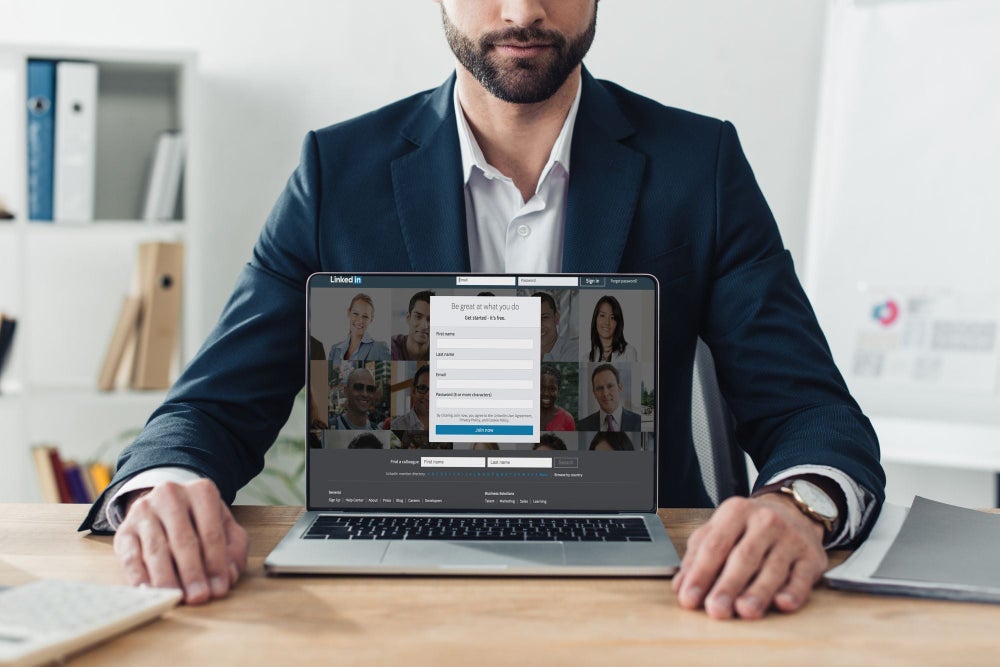 Image: Depositphotos.com