TikTok Helps Liquid Death Make Canned Water Cool

“Our approach is always: We don’t know anything,” said CEO Mike Cessario about bottled water company Liquid Death‘s TikTok strategy. “We don’t know what’s going to work. The thing we think is going to work doesn’t.”

https://www.adweek.com/social-marketing/tiktok-helps-liquid-death-make-canned-water-cool/


McCormick’s Alia Kemet Advises Against Setting ‘Wimpy’ Goals

When it comes to setting goals, Alia Kemet, vice president of creative and digital marketing at McCormick & Company, prefers the large, uncomfortable and seemingly unattainable ones.

https://www.adweek.com/social-marketing/mccormicks-alia-kemet-advises-against-setting-wimpy-goals/


MTV Found Pandemic Success by Using Social Listening to Lean Into Fandoms

When viewership patterns shifted during the pandemic, the MTV Entertainment Group pivoted, leaning further into the insights they gained from social listening platforms to better understand where their viewers were congregating, forming fandoms and discussing new material.

https://www.adweek.com/social-marketing/mtv-found-pandemic-success-by-using-social-listening-to-lean-into-fandoms/


Shouzi Chew Named CEO of TikTok

Social video juggernaut TikTok named Shouzi Chew, the financial chief of its Chinese parent company ByteDance, as its new CEO. Chew will retain his role at ByteDance in addition to leading its most popular Western app.

https://www.adweek.com/media/shouzi-chew-named-ceo-of-tiktok/


Algorithms were under fire at a Senate hearing on social media

Two serious men in suits talk amongst themselves.
Enlarge / Chairman Senator Chris Coons (D-Del.) (right) speaks with Sen. Ben Sasse (R-Neb.) during a Senate Judiciary Subcommittee on Privacy, Technology, and the Law hearing April 27, 2021 on Capitol Hill in Washington, DC. The committee is hearing testimony on the effect social media companies’ algorithms and design choices have on users and discourse.

In a Senate Judiciary Committee hearing yesterday, there was a striking change of scenery—rather than grilling the floating heads of Big Tech CEOs, senators instead questioned policy leads from Twitter, Facebook, and YouTube on the role algorithms play in their respective platforms. The panel also heard from two independent experts in the field, and the results were less theatrical and perhaps more substantive.

Both Democrats and Republicans expressed concerns over how algorithms were shaping discourse on social platforms and how those same algorithms can drive users toward ever more extreme content. “Algorithms have great potential for good,” said Sen. Ben Sasse (R-Neb.). “They can also be misused, and we the American people need to be reflective and thoughtful about that.”

The Facebook, YouTube, and Twitter execs all emphasized how their companies’ algorithms can be helpful in achieving shared goals—they are working to find and remove extremist content, for example—though all the execs admitted de-radicalizing social media was a work in progress.

In addition to policy leads from the three social media platforms, the panel heard from a couple of experts. One of them was Joan Donovan, director of the Technology and Social Change Project at Harvard University. She pointed out that the main problem with social media is the way it’s built to reward human interaction. Bad actors on a platform can and often do use this to their advantage. “Misinformation at scale is a feature of social media, not a bug,” she said. “Social media products amplify novel and outrageous statements to millions of people faster than timely, local, relevant, and accurate information can reach them.”

One of Donovan’s proposed solutions sounded a lot like community cable TV stations. “We should begin by creating public interest obligations for social media timelines and newsfeeds, requiring companies to curate timely, local, relevant, and accurate information.” She also suggested that the platforms beef up their content moderation practices.

The other panel expert was Tristan Harris, president of the Center for Humane Technology and a former designer at Google. For years, Harris has been vocal about the perils of algorithmically driven media, and his opening remarks didn’t stray from that view. “We are now sitting through the results of 10 years of this psychologically deranging process that have warped our national communications and fragmented the Overton window and the shared reality we need as a nation to coordinate to deal with our real problems.”

One of Harris’ proposed solutions is to subject social media companies to the same regulations that university researchers face when they do psychologically manipulative experiments. “If you compare side-by-side the restrictions in an IRB study in a psychology lab at a university when you experiment on 14 people—you’ve got to file an IRB review. Facebook, Twitter, YouTube, TikTok are on a regular, daily basis tinkering with the brain implant of 3 billion people’s daily thoughts with no oversight.

Apples and oranges

“What we need to do is compare what are the regulations and protections we apply in one domain and we’re not applying in a different domain,” Harris said.

The hearing quickly shifted to Section 230 of the Communications Decency Act, the reform of which has been mooted by members of both parties. One bill introduced last year would require platforms with more than 10 million users to obtain permission from people before serving them algorithmically tailored content. If the companies fail to do so, they would not receive protection under Section 230. Another bill would similarly revoke Section 230 immunity if algorithms spread misinformation that leads to violence.

The panel concluded by exploring alternative business models for social media platforms, ones that wouldn’t be as reliant on algorithms to drive engagement and ad views. Harris suggested that electric utilities might be one such model. Rather than encouraging people to leave their lights on all the time—which would make them more money but work against the societywide goal of energy conservation—regulations have been set up to discourage flagrant overuse, and a portion of the profits are put into funds to ensure the sustainability of the electric grid.

“Imagine the technology companies, which today profit from an infinite amount of engagement, only made money from a small portion of that,” he said. “And the rest basically was taxed to put into a regenerative public interest fund that funded things like the fourth estate, fact checkers, researchers, public interest technologists.”

https://arstechnica.com/?p=1761002


When Writing the ‘I’m Moving On’ Post, Channel Kenny Rogers

Know when to fold ‘em, and avoid making the situation look like you’re waving the white flag.

April 27, 2021 4 min read

Opinions expressed by Entrepreneur contributors are their own.

As the principal of a bustling PR agency, I’m used to dealing with issues. Mostly they’re in-house at my company, but occasionally HR issues come up on the client side, and I’m called in to consult.

In many cases, these client-side HR issues revolve around and high-level departures. Publicizing new hires or board members is, of course, the stock-in-trade of PR agencies, and we often write press releases and execute media-relations campaigns when a notable executive joins a client company. However, when a key executive departs — including the — there is a need for around those departure events as well. Employees, customers and partners deserve to be informed about what is going on at the top levels of a company, and key stakeholders, including investors, should also be informed of personnel events that might be considered material.

I often find myself assisting my CMO clients with external communications when they depart one job for another. The most common vehicle for making a public announcement of such a departure is via a post, either on the company website or through channels like Medium or , which give the poster complete, unedited control of the message. My personal belief is that departing CMOs should use such communications as a way to set themselves up for their “next adventure” in the corporate world. Even if the departure is contentious, the main goal for such announcements should be to remain positive and upbeat and avoid making the situation look like you’re waving the white flag.

Related: Ready to Quit Your Current Venture? Consider These 3 Questions First.

When counseling CMOs in these circumstances, I encourage them to be gracious, kind and professional. Perhaps it goes without saying, but a good CMO departure post should never be bitter, petty or small-minded. This is not the vehicle or forum to settle scores or critique one’s employer and their strategic, operational or financial shortcomings. Instead, departure posts should be complimentary when possible, thanking as many people as possible and being generous with praise when recapping both team and personal accomplishments.

This sort of post is also a good place to thank your enemies, because they may end up being your friends or colleagues later in your career. I encourage people to think about the maxim, “The enemy of my enemy is my friend,” because it could happen someday! These communications are also an opportunity to give cover to people for successes not achieved or other challenges that have arisen during a CMO’s tenure. In addition, the departing executive should talk about “lessons learned” that have been instructive to the team or the company overall.

Some HR professionals identify executive resignation letters as “letters of resignation and ,” and I believe that is a good definition of what they should be. A gracious departure note or post always positions the departing CMO (or any executive) favorably, and a key element of this communication is articulating that a successful transition of roles and responsibilities is planned or underway. Positive and well-explained departure announcements, particularly when it comes to C-level executives, portray an organization in the best possible way and can build confidence and strengthen relationships with key stakeholders. And that should be the aim of any organization that is experiencing a top-level executive departure.

Departure letters or blog posts are also great opportunities for explaining the next steps in one’s career and why they’re moving in that direction. Portraying a new opportunity, building on past experiences or making personal changes can be illustrated or alluded to in varying degrees as appropriate, and they help the departing CMO provide color and depth to their departure. This also helps avoid perceptions of hard feelings or disagreement, despite what might be happening behind the scenes in the C-suite.

Related: When Is the Best Time to Make the Leap From Your Day Job to Entrepreneur?

Ultimately, a well-crafted departure letter or blog post sets the stage for a positive transition — not only for the CMO’s own career, but also for the company and employees he or she is leaving behind.

So, yes, in the immortal words of Kenny Rogers, “You’ve got to know when to hold ‘em, know when to fold ‘em, know when to walk away, and know when to run.” And when it comes to walking away as a CMO, doing so gracefully is always your best bet.

https://www.entrepreneur.com/article/368467


Using Instagram to Promote Your YouTube Videos

Use these smart tips for using Instagram to get the word out about your videos.

May 2, 2018 5 min read

Opinions expressed by Entrepreneur contributors are their own.

The following excerpt is from Jason R. Rich’s book Ultimate Guide to YouTube for Business. Buy it now from Amazon | Barnes & Noble | iBooks | IndieBound or click here to buy it directly from us and SAVE 60% on this book when you use code MARKET2021 through 4/24/21.

You may be familiar with promoting your business and your YouTube video on , and if you are, you’re a step ahead of the game when it comes to promoting your video on Instagram. That’s because, in many ways, Twitter and Instagram are very similar. However, while Twitter focuses on each tweet’s text-based message (that can include a photo or video clip), the focus of Instagram is on showcasing photos or video clips that can be accompanied by a short, text-based caption or message. Instagram is also designed to be accessed primarily from a smartphone or tablet (using the official Instagram mobile app), although it can also be accessed using a computer’s web browser.

Facebook owns and operates Instagram but has thus far kept it an independent service. It’s possible, however, to link your company’s Instagram account to your Facebook account so when you publish something on Instagram, it simultaneously and automatically also gets published on Facebook (and if you choose, Twitter and as well).

The easiest way to set up and manage an Instagram account is to download and install the official Instagram app on your mobile device, launch the app and choose the “Sign Up” option. Follow the account setup process and be sure to customize and brand your account by creating a unique username that incorporates your company name, then use your company logo as your account’s profile photo. For simplicity’s sake, try to use the same username for all your company’s social media accounts.

Once your account is set up, access your account settings by clicking on the “Profile” icon, then tap on the “Edit Profile” button. Your profile can include one website URL; however, you can add a second URL for your YouTube channel within the Info field that’s used to describe yourself or your business. Be sure to click on the “Try Instagram Business Tools” option to learn about how you can further customize your Instagram account and gain access to analytics tools to help you build and manage your company’s Instagram following. Similar information can be found using any web browser, by visiting this site.

Because Instagram puts an emphasis on displaying photos and video clips, this can be used to your advantage when promoting your YouTube channel and its content. For example, when promoting a new YouTube video, an Instagram message can showcase the same thumbnail image from your new video and include a text-based message that encourages people to check out your latest video. The message should also include a hyperlink (URL address) to the video. Of course, you can also create postings that promote your company’s YouTube channel and include a link to the channel’s main page or to a specific playlist, as opposed to a specific video.

Another option is to create a short video clip (a preview of your YouTube video) and include that clip within an Instagram posting to promote a newly published video. Then, if you have the budget, consider using paid Instagram advertising to promote your YouTube content and Instagram account. To learn more about Instagram advertising opportunities, visit this page. https://business.instagram.com/advertising. For example, a video-based Instagram ad can be up to 60 seconds long and used to preview YouTube content.

To build and maintain an Instagram following for your business account, consider using Instagram as a tool to share photos and video clips related to your company, as well as its products/services. As with any social media presence, you want to provide content that will be considered valuable and of interest to your target audience.

Since this platform focuses on sharing photos and videos, you can use it to humanize your company by offering behind-the-scenes photos taken at your offices or manufacturing facility and to introduce your followers to key personnel from your company in an informal way. You can also use posts to share details about your products/services, to solicit feedback from your audience and to answer questions or interact with your customers and perspective customers as a group. To encourage people to follow your Instagram account, in addition to your other social media accounts, try to develop and publish content that’s exclusive to Instagram.

Except for optional paid advertising, creating and managing an Instagram account for your company is free. The only requirement is a time commitment to create and manage the account, develop unique content and interact with your followers. Again, be sure to adopt a synergistic approach to the appearance, branding and messaging that you convey on Instagram, so it’s in line with your other online activities and meets the expectations of your target audience.

Did you enjoy your book preview? Click here to grab a copy today—now 60% off when you use code MARKET2021 through 4/24/21.

https://www.entrepreneur.com/article/310209


A Clubhouse bug let people lurk in rooms invisibly

A Clubhouse bug let people lurk in rooms invisibly
Sam Whitney | Wired | Getty Images

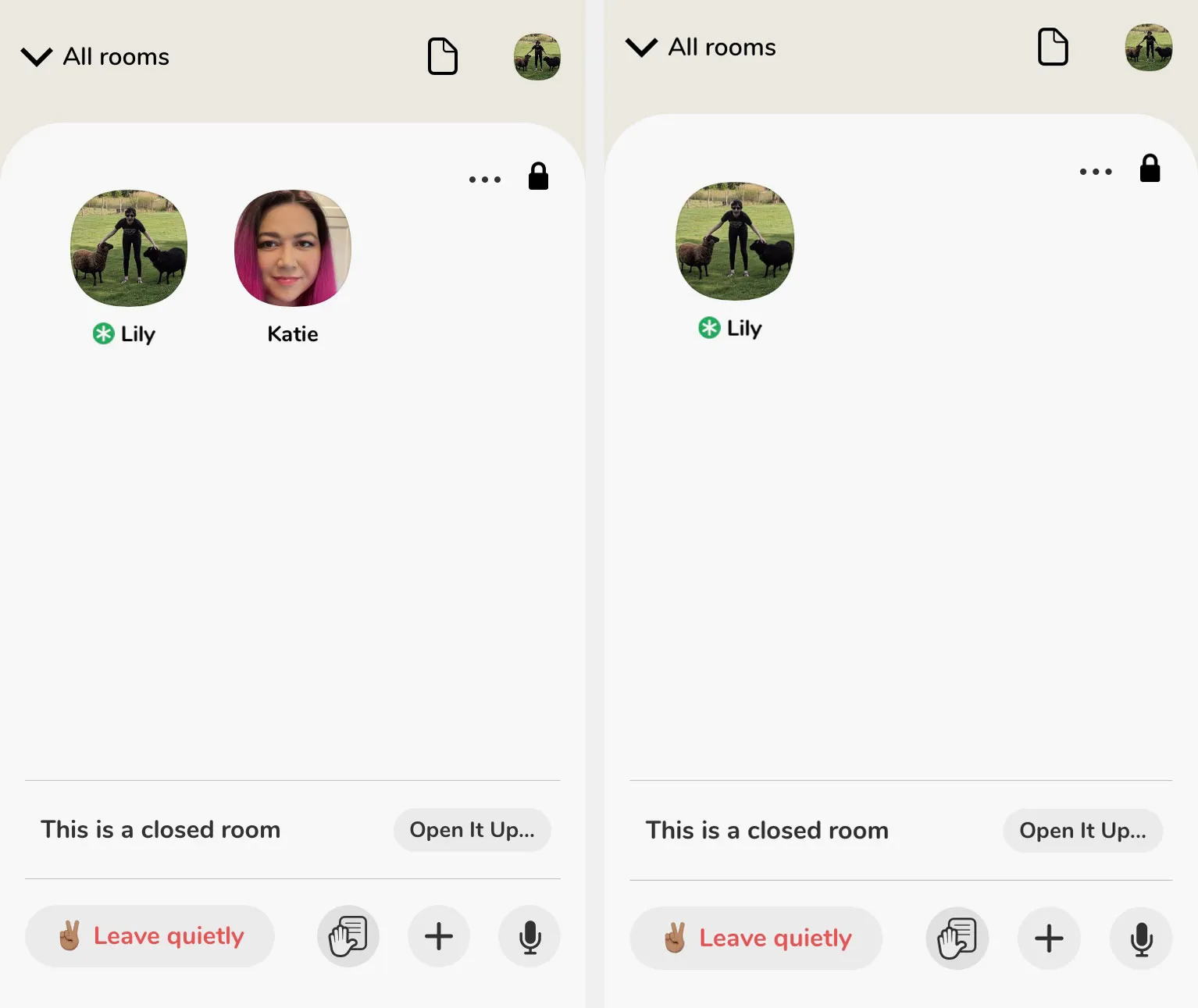
“Basically, I’m going to keep talking to you, but I’m going to disappear,” longtime security researcher Katie Moussouris told me in a private Clubhouse room in February. “We’ll still be talking, but I’ll be gone.” And then her avatar vanished. I was alone, or at least that’s how it seemed. “That’s it,” she said from the digital beyond. “That’s the bug. I am a fucking ghost.”

It’s been more than a year since the audio social network Clubhouse debuted. In that time, its explosive growth has come with a panoply of security, privacy, and abuse issues. That includes a newly disclosed pair of vulnerabilities, discovered by Moussouris and now fixed, that could have allowed an attacker to lurk and listen in a Clubhouse room undetected or verbally disrupt a discussion beyond a moderator’s control.

The vulnerability could also be exploited with virtually no technical knowledge. All you needed was two iPhones that had Clubhouse installed and a Clubhouse account. (Clubhouse is still only available on iOS.) To launch the attack, you would first log in to your Clubhouse account on Phone A and then join or start a room. Then you’d log in to your Clubhouse account on Phone B—which would automatically log you out on Phone A—and join the same room. That’s where the problems started. Phone A would show a login screen but wouldn’t fully log you out. You’d still have a live connection to the room you were in. Once you “left” that same room on Phone B, you would disappear but could maintain your ghost connection on Phone A.

In the screen on the right, Moussouris was gone, but her Clubhouse ghost remained.
Enlarge / In the screen on the right, Moussouris was gone, but her Clubhouse ghost remained.
Lily Hay Newman | Clubhouse

Moussouris also found that a hacker could have launched the attack, or variations on it, using more technical mechanisms. But the fact that it could be done so easily underscores the importance of the flaw. Moussouris calls the eavesdropping attack “Stillergeist” and the interrupting attack “Banshee Bombing.”

Since the vulnerability existed for any room, she argues that the weakness represented a worst-case scenario for Clubhouse as the platform works to deal with privacy issues, harassment, hate speech, and other abuse. Not knowing who’s listening in on a conversation, or having to shut down a room because you can’t stop an invisible person from saying whatever they want, are nightmare situations for an audio chat app.

After Moussouris submitted her findings to the company in early March, she says Clubhouse was not immediately responsive, and it took a few weeks to fully resolve the issue. Ultimately, Clubhouse explained to Moussouris that it patched two bugs related to the finding. One fix made sure any ghost participants were always muted and couldn’t hear a room even if they were hovering in it, essentially trapping them in Clubhouse purgatory. The second bug fix resolved a cache display issue, so users are more fully logged out on an old device if they log in to another. Moussouris says she hasn’t fully validated the fixes herself, but that the explanation makes sense.

“We appreciate the collaboration of researchers like Katie, who helped us identify a few bugs in the user experience and allowed us to swiftly address those to remove any vulnerability before any users were affected,” a Clubhouse spokesperson said in a statement. “We welcome continued collaboration with the security and privacy community as we continue to grow.”

Moussouris waited to publish her research today rather than going live immediately after Clubhouses’s fixes, to honor the full 45-day disclosure window she set for the startup. The company has a bug bounty program through the third-party vendor HackerOne.

[embedded content]

Other researchers who have worked with Clubhouse on security disclosures and data requests through the California Consumer Privacy Act say that the company has been slow to respond. Similarly, journalists emailing the main Clubhouse press inbox typically receive an autoreply: “The Clubhouse team is receiving an overwhelming number of media requests. Unfortunately, we are not able to respond to all inquiries.”

Whitney Merrill, a privacy and data protection lawyer and former Federal Trade Commission attorney, says she encountered these growing pains while trying to file a CCPA request with Clubhouse. The law entitles California residents to request their own information from a data company and receive it within 45 days. Even though Merrill isn’t a Clubhouse user, she strongly suspected that the company held some of her data, because it prompts users to share their address books with the app. After weeks of no response, Merrill says she was eventually able to see the data Clubhouse holds about her and request its deletion.

“I don’t think there are the right incentives for startups to care about privacy and security issues, so you end up fighting the exact same battles that were already fought with other organizations 10 years ago,” Merrill says. “And it’s not that no one is learning their lesson, but the incentives to be compliant or to care about these things just aren’t there.”

At least you don’t run the risk of being Banshee Bombed by a deranged Clubhouse ghost anymore.

This story originally appeared on wired.com.

https://arstechnica.com/?p=1759717


Parler re-platformed as Apple allows social network back into App Store

A shadowy hand holds a smartphone displaying the Parler logo.

Parler is about to be re-platformed.

The app for the “free speech” social media company will be available once again on Apple’s App Store. Apple reinstated Parler on April 14, according to a letter from Apple to Sen. Mike Lee (R-Utah) and Rep. Ken Buck (R-Colo.), which was made public today. Once Parler releases an updated app, iOS users will be able to download it once more.

In the letter to Lee and Buck, Apple said that its App Store review team had spoken with Parler at length about how to bring the app into compliance with company guidelines. “As a result of those conversations, Parler has proposed updates to its app and the app’s content moderation practices,” wrote Timothy Powderly, Apple’s senior director of government affairs.

Parler was kicked off both Apple’s and Google’s app stores in the wake of the January 6 insurrection at the US Capitol, which left five people dead and hundreds more injured. Shortly thereafter, Amazon terminated hosting services for Parler. At the time, all three Big Tech firms said the social media company had not done enough to moderate posts that incited violence. Apple, in its letter, said it still stands by its decision to ban the app in January, and it made sure to point out that it reached that decision independently of Google and Amazon.

Google is reportedly open to allowing Parler back into the Google Play Store. In a statement made to Android Police following Apple’s reinstatement of the Parler app, the company said, “Parler is welcome back in the Play store once it submits an app that complies with our policies.”

Parler initially launched in August 2018, and its founders claimed it would be a “non-biased, free speech social media,” a pitch that pushed the false narrative that conservative voices were being censored on other social media platforms. It was founded by John Matze, Jared Thomson, and Republican political donor Rebekah Mercer. While the latter two remain, Matze was fired on January 30 in a brouhaha over implementing content moderation in an attempt to get Parler back into Apple’s and Google’s app stores.

Moderation on Parler reportedly was spotty at best. Parler reportedly alerted the FBI to threats made on the platform, but it apparently did little to remove them before the insurrection. The site’s rules forbid users from posting threats and criminal activity, but there was evidence of both. Unlike other social media platforms, there was limited automated moderation. Instead, the site relied more heavily on part-time paid “jurors” drawn from a pool of Parler users. Superficially, Parler takes a Twitter-style approach to social media. Posts are limited to 1,000 characters, and users can upload images to share with others.

In the wake of the riot, a hacker scraped and released nearly every post made on Parler, an archive of around 80 terabytes of data. The hack was relatively straightforward—Parler’s public API did not require any authentication, and posts were incremented numerically, allowing nearly anyone who knew of it to easily access reams of posts, images, and videos. The site didn’t scrub location data from images or videos, either, as other social media platforms often do, allowing anyone to quickly determine where the media was recorded.

Those images, videos, and location data have factored into investigations in the Capitol insurrection. Users left a digital trail of their activities inside the Capitol building, allowing law enforcement to identify and charge. One Parler user, Eduard Florea, was investigated for posting threats about Sen. Raphael Warnock (D-Ga.) and ultimately charged with illegal possession of ammunition.

https://arstechnica.com/?p=1758123


5 Tricks From the Social Media Playbook That Will Make Your Website Stand Out

April 13, 2021 6 min read

Opinions expressed by Entrepreneur contributors are their own.

The purpose of any comes down to two factors: engaging a person and getting that person to take action. 

You must create sufficient interest with visitors for them to stay on your page. Failure to engage and get users to take action renders your website purposeless. What good is the small site that doesn’t get potential customers to call, purchase or contact? What good is the ecommerce site that doesn’t get someone to buy? 

Your digital strategy comes down to getting people to the site and getting them to stay on the site. What most people don’t realize is that every platform you can think of is fundamentally a website. They’re extraordinarily complex websites that are technically in the category of applications, but they’re still rendered in HTML, CSS and Javascript, read in a browser and accessed anywhere the internet is accessed.

Social media keeps people engaged on their platforms more than any other website types because that’s their business model. They’ve invested hundreds of millions — if not billions — in making sure people stay glued to the screen and stay on their site.

There’s quite a bit of psychology that goes into these website designs in order to get them to be as addictive as possible. And while there’s an ethical discussion to be had about how far the line has gone in the addictive nature of social media, we’d be foolish to not take lessons and apply them from the observations above. Thanks to their research, we can “growth hack” what works and take key lessons and leverage them for our own gain, without spending millions of dollars to do so.

1. Use dynamic content

In order to get people to routinely visit your site, you need to give them a reason to continuously come. Static content simply doesn’t do this, as the nature of static content is to have a relatively unchanged page that you can continuously reference.

Dynamic content is more about information and entertainment. It’s about having a regular conversation with potential customers and being able to provide them with ongoing value and insights that they wouldn’t necessarily think about. Blog entries are dynamic content types most commonly associated with websites, but there’s so much potential variety here that your site can embrace to give people value again and again. You could mix up short content types, post video content from that you’ve created and also mix in long-form posts.

In effect, what you want to do is have something that is consistently updated, but also varied so people who are viewing the site can consume the content in the format they most prefer. 

Related: 5 Content Marketing Trends You Need to Know for 2020

2. Make your content brief and give people a way to read more

People scan content before they commit to reading, watching or listening. Not only is this a basic human tendency to scan before committing to reading the whole thing, but it’s also being drilled into us as a habit by every single social media and multimedia platform out there. gives previews of every show with highlights, exclusively only allows brief and posts cut down the extra stuff until you click to see more.

Properly done brief content is powerful, authoritative and gives you expert status. When you’re able to consolidate complex ideas into small snippets and chunks of information that people can understand, that’s true expertise. Start with brief content and allow your audience to delve deeper into more information.

3. Your content must be visually appealing

Recently, while watching a friend of mine’s newborn son, he began having a crying episode. What ended up calming him down was exposure to bright colors and animated colors. He was delighted with the vivid colors and movement on screens to the point of fascination.

Adding visual stimulus — even if it’s just changing the background color — enhances engagement with your website because it makes something primal in us say “Oh, what’s this?”

Social media heavily uses visual stimuli and movement to attract and keep . You need to have strong and consistent visual elements and cues.

4. Use a variety of content types

Different people have different preferences. Some people are readers, some are watchers and others are listeners. 

As a business owner, it’s not up to you to decide what content is best for your clients. Rather, your clients are going to have varied tastes. For me, I want to read things before I watch or listen. It’s why I’ll write content first and then make video and audio out of it. 

Allowing people to consume content the way they want means achieving a very simple result: more conversions, more leads and more customers.

Related: Creating Good Content Is Your Best Business Strategy

5. Find ways to encourage interaction with your website

At the heart of everything, social media is interaction. Sharing on social media gets the other person to become an active participant rather than just an audience member. 

While having social media-esque interaction on a small business site probably isn’t going to happen due to the nature of your site, you can take lessons from different platforms. Allow people to comment on posts and content you put up. Actively encourage them just like you do on social media. Add buttons for people to like or share your content directly from your site to the social media of their choice. Provide plenty of buttons that call to action. Any number of these micro- interactions get people involved and doing new things on the site, rather than simply being a casual observer.

At the end of the day, interaction gets people to take action. If visitors on your website are taking action, you’re one step closer to profit.

Related: 5 Psychology Hacks That Increase Website Conversions

https://www.entrepreneur.com/article/368410