Clubhouse Taps Instagram’s Fadia Kader to Lead Media Partnerships

Clubhouse, the audio-based social media app, named Instagram’s Fadia Kader as head of media partnerships and creators on Tuesday. The announcement comes just days after the company poached Maya Watson, formerly of Netflix, to lead its global marketing efforts.

https://www.adweek.com/media/clubhouse-taps-instagrams-fadia-kader-to-lead-media-partnerships/


US lawmakers propose Australia-style bill for media, tech negotiations

Rep. Ken Buck (R-Co.) and Microsoft president Brad Smith at a House hearing on regulation and competition in the news media industry on March 12, 2021.
Enlarge / Rep. Ken Buck (R-Co.) and Microsoft president Brad Smith at a House hearing on regulation and competition in the news media industry on March 12, 2021.

A group of US lawmakers is proposing new legislation that would allow media organizations to set terms with social media platforms for sharing their content, reminiscent of a controversial measure recently adopted in Australia.

The Journalism Competition and Preservation Act of 2021 basically creates a temporary 48-month carve-out to existing antitrust and competition law that would allow small news outlets to join forces to negotiate as a collective bloc with “online content distributors” such as Facebook and Google for favorable terms.

“A strong, diverse, free press is critical for any successful democracy. Access to trustworthy local journalism helps inform the public, hold powerful people accountable, and root out corruption,” said Rep. David Cicilline (D-R.I.), when introducing the proposal. “This bill will give hardworking local reporters and publishers the helping hand they need right now, so they can continue to do their important work.”

This is the third time Cicilline has introduced a similar bill, but he now has more company than in the previous two Congressional sessions. Reps. Ken Buck (R-N.Y.) and Mark DeSaulnier (D-Calif.) and Sens. Amy Klobuchar (D-Minn.) and John Kennedy (R-La.) also plan to co-sponsor the measure—giving it both bipartisan and bicameral support.

Text for the 2021 edition of the bill was not yet available at publication time, but previous editions define “online content distributors” covered by the law as aggregators that “display, distribute, or direct users to news articles, works of journalism, or other content on the Internet” that is generated by news companies and that have “not fewer than” 1 billion users. Very few businesses in this world have more than a billion users, so the bill is effectively tailored to apply to Facebook and Google without actually naming either company.

Seems familiar…

The House Antitrust Subcommittee, of which Cicilline is chair, held an often-contentious hearing Friday on the bill and the broader topic of how to ensure that media—especially smaller, local media—can stay afloat and in the black when the vast majority of the Internet is controlled by Google or Facebook.

Microsoft President Brad Smith testified at the hearing and said he supported legislative action in the US, just as Microsoft did in Australia.

“The problems that beset journalism today are caused in part by a fundamental lack of competition in the search and ad tech markets that are controlled by Google,” Smith said. “As a result, there is a persistent and structural imbalance between a technology gatekeeper and the free press… this makes it very unlikely that the economic transformation needed to restore journalism to health can succeed at scale without new legislation and government support.”

Smith then explicitly drew the connection to Australia’s new law, arguing, “The idea there was straightforward: the Australians put in place legislation to help drive market-based solutions.” The US, too, could seek that kind of solution, he suggested.

The path to legislation in Australia, however, was anything but smooth. After regulators in that nation first proposed the law, Google and Facebook went all-out in their campaign against it, not only lobbying lawmakers but also creating pop-up warnings that told Australian users, “Your [Google Search / YouTube] is at risk” when visiting Google’s web properties.

By January of this year, Google was threatening to quit Australia altogether if the bill became law. A month later, the company unexpectedly cut major deals with several Australian media groups to sponsor content outside of search results.

Facebook went a step farther and actually did ban all news links within Australia or from Australian media on its services in February. Facebook backed down a week later when lawmakers agreed to amend the bill, which became law a few days later.

Critics have argued that the deals in Australia now mainly benefit major media empires, such as those owned by mogul Rupert Murdoch, and do not protect or promote the interests of smaller or independent outlets. During the Friday hearing in the House, some Representatives and witnesses worried the same would happen in the US under the proposed legislation.

The proposed bill “provides a temporary fix for a 48-month period,” Cicilline countered. “And in fact, anything these larger media companies would negotiate would be available to the smallest newspaper in any city or town in America.”

The bill currently under consideration in Congress also does not contain the arbitration provisions present in Australia’s law, which were the largest point of contention during negotiations in that country.

https://arstechnica.com/?p=1749284


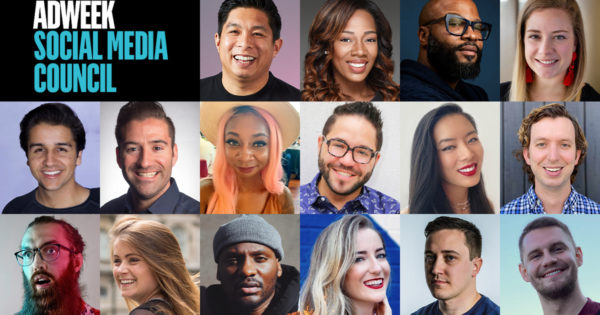
Eric Toda and Tatiana Holifield to Co-Chair Adweek’s Social Media Council

Adweek has formed its first Social Media Council, featuring 16 leaders in the social space ranging from the technology industry to entertainment and consumer-packaged goods and representing over $849 billion in revenue. The council’s efforts are aimed towards advising Adweek in its commitment to helping marketers learn and grow in their journey to be future CMOs, including an active presence in Social Media Week’s New York event on May 4-7.

https://www.adweek.com/brand-marketing/eric-toda-and-tatiana-holifield-to-co-chair-adweeks-social-media-council/


Adweek Podcast: The Rapid Intersection of Media and Commerce


As retailers explore the opportunity presented by launching a media arm and publishers eye digital shopping malls, it’s clear that media and commerce will continue to converge.

The Business of Marketing

Don’t miss The Business of Marketing, a new series featuring leading c-suite executives sharing insights on the importance of leveraging the intersectionality of marketing, finance, technology, HR and the boardroom to drive business growth. Tune in.

Nick is a video producer at Adweek and host of the Gen ZEOs podcast.

https://www.adweek.com/commerce/adweek-podcast-the-rapid-intersection-of-media-and-commerce/


Ikea Created an Augmented Reality ‘Escape Room’ on Snapchat


Ikea is turning decluttering into a game with a new augmented reality “escape room” on Snapchat that tasks users with organizing items with the furniture giant’s products.

The Business of Marketing

Don’t miss The Business of Marketing, a new series featuring leading c-suite executives sharing insights on the importance of leveraging the intersectionality of marketing, finance, technology, HR and the boardroom to drive business growth. Tune in.

https://www.adweek.com/commerce/ikea-augmented-reality-snapchat-ogilvy-buzzfeed/


SEO in 2021: What your organization’s executives and senior leaders must know

30-second summary:

  • Did you know that 53 percent of trackable web traffic is organic?
  • A study from BrightEdge revealed that search (organic and paid) still delivers more traffic to websites than any other channels, including social and display
  • These statistics prove that the role of SEO in 2021 is elevated across all industries since an organic flow of traffic is now more critical than ever
  • Merkle Inc.’s VP Head of SEO, Eryck Dzotsi discusses six key focus areas that leaders across organizations must clearly understand about the role of SEO to drive organic search performance

2020 wasn’t a year that we will soon forget. Life and the way we do business changed forever. Ecommerce grew more last year than it has grown in the past five years combined. As a result, many businesses had to adapt their marketing efforts to these changes. The role of SEO in 2021 is elevated across all industries since an organic flow of traffic is now more critical than ever.

As we navigate this year, leaders across organizations must clearly understand the role of SEO and focus on driving organic search performance. Let’s dive into some key areas of focus:

1. Define the integration of SEO within other channels going forward

Did you know that 53 percent of trackable web traffic is organic? A study from BrightEdge revealed that search (organic and paid) still delivers more traffic to websites than any other channels, including social and display. This statistic alone demonstrates why brands need to realize that organic traffic is not going away, and they need to value SEO in 2021 and beyond. They need to integrate SEO with their other media channels. Organic search is the only channel that has a touchpoint across each stage of the customer journey.

While TV and display are generally associated with awareness, paid search is typically aligned with the mid to lower funnel as customers are making a decision about the product or service and converting. The story is different for organic search.

  • When interested in a product or when they have a problem they are trying to solve, users search (often as a result of interacting with an ad)
  • When making a decision and comparing options, users search
  • When customers are ready to convert, they search again, and often, after the purchase, search is again involved in learning how to use the product, service, and more

SEO is about answering users’ questions and helping them find what they were seeking. As a result, SEO is one of the few channels where the engagement is initiated by the user and the ad does not disrupt the customer journey. This makes SEO the channel that ought to be the point guard to a cross-channel line-up, playing assist to the other channels.

2. Organizations must hold SEO to the same accountability and scrutiny as other channels (ROI)

Organizations need to deploy a clear SEO analytics plan going forward. Often, because SEO does not have an associated cost, marketing prioritization is low, and measurement is laxed. ROI can seem abstract, and teams fail to properly track the measurement of success based on levels of effort, this is not ideal. SEO teams must have a systematic measurement plan and resources in place to make the right level of attribution and adjustments happen.

To start, align your goals with the other media channels – look at the impressions and have a clear understanding of your share of voice within your industry, click-throughs, visits, and conversions as part of the full view – what percent are you gaining compared to the market?

This accountability must be demanded from your SEO team going forward.

3. Organizations must optimize to one search experience by harmonizing SEO and SEM

In the first half of 2020, and throughout some of the social unrest periods that marked the year, many advertisers paused their campaigns. In those instances, this was a real-time experiment in organic vs. paid traffic acquisition. The conclusion many have walked away with is that you need both, but the programs which invested heavily in organic search showed the best results in aggregate.

Since non-branded keywords are becoming increasingly expensive, it is not always efficient to deploy a non-brand campaign in paid search. As a result, many campaigns have been reduced to maximizing visibility on branded terms. So, how do you win in search when you cannot buy your way out with paid campaigns? Organic search is the answer. An analysis should be conducted to properly find the balance between paid and organic so that you are optimizing the total search experience. Organizations that win here will have a clear strategy around leveraging where they are winning and where they have gaps.

4. Marketing teams must align SEO and user experience

Many lessons were gained in terms of reducing friction in the customer journey and optimizing the conversation between customers and brands. As a result, many brands set out to either redesign their websites or migrate to a new platform. When redesigning or overhauling a website, it is vital to involve SEO in the project from the beginning, or you will likely end up adding an extra step when a botched overhaul of content starts to affect performance. Start the project with SEOs involved from the beginning to save time, money, and headaches in this process. Additionally, ranking factors are becoming more aligned with items that are controlled by the UX team. SEO connects your media team to your user experience team, and collaboration between the two is necessary to bridge the gap in 2021 and beyond.

“Page experience” is already a ranking factor in Google’s algorithm and represents a set of aspects considered important in a webpage’s overall UX (mobile-friendliness, security, and the others). There are a couple of things happening this year that are specifically highlighting Google’s continued focus on rewarding websites that provide a great experience. First, Google is finalizing the switch to mobile-first indexing, which means all websites and their content will be crawled, evaluated, and indexed from a mobile device standpoint. Then the Core Web Vitals will be included in the larger page experience ranking factor.

5. Technical priorities for web must include SEO, Core Web Vitals, and user experience

If you ask 1,000 SEOs what the big trend for SEO in 2021 will be, 1,000 will tell you that it will be the year of Core Web Vitals. Core Web Vitals are a set of aspects that Google considers important in a webpage’s overall user experience. There are several things happening this year that specifically highlight this – the most impactful being Google’s switch to a mobile indexing environment, which is the end of an era as we know it. This means that Google will largely use the mobile version of the content for indexing and ranking. In the past, the index primarily used the desktop version of a page’s content when evaluating the relevance of a page to a user’s query. Many websites have done great work to prepare, but complying with your technical foundation is a non-negotiable going forward.

6. SEO anchors on optimizing content across the entire customer journey

Marketers must create content that caters to the user’s journey – answering the demand and questions they will have across each stage of the funnel. As you plan content, have clear keyword governance to manage your content strategy across the organization, clearly defining each owner. For example, for large financial institutions, which business unit of banking, credit card, and mortgages owns the SEO performance for the keyword “credit score”? It is imperative that copywriters work hand-in-hand with SEO to have a functional content strategy to optimize the journey. You shouldn’t just use SEO to prioritize your content and keywords, but use it to determine the voice and narrative around those keywords.

According to a new Google update on December 3, Google is favoring information and user-focused sites. As a result, there has been a shift in ranking for organizations that are providing value and nurturing their customers. User-focused content across the journey is no longer a nice-to-have for organizations, but a must-have to properly rank.

Organic engagement with customers throughout the customer journey is and will continue to be a key element to marketing success. As the data shows, the channel is healthy. Brands that have invested in an institutionalized approach to SEO have achieved and sustained levels of success that span across other channels. There are many more opportunities for growth, and with ecommerce and customer expectations continue to grow at a rapid pace, the outlook for SEO in 2021 is optimistic.

Eryck Dzotsi is VP Head of SEO at Merkle Inc.

https://www.searchenginewatch.com/2021/02/25/what-should-your-companys-senior-leaders-know-about-seo-in-2021/



The ‘Drunk Mode’ of WhatsApp and Other Applications Will Prevent You From Dialing Up Your Ex

The feature will be able to block or delay messages, calls and other posts for a period of 12 hours, while it is active.

February 24, 2021 2 min read

This article was translated from our Spanish edition using AI technologies. Errors may exist due to this process.

Sometimes we make mistakes while intoxicated that range from texting ex to posting embarrassing things on social media. However, with the “drunk mode” feature this could end.

A Chinese company called Gree Electric realized how useful an application or feature would be that blocks WhatsApp and other social networks when users are not in their senses to prevent them from commenting recklessly and created “drunk mode.”

How does it work?

In the same style as your friends hold your cell phone. The application will be able to block or delay messages, calls and other publications for a period of 12 hours, while it is active.

The user would have the ability to customize which applications they want to lock up while drinking. They will also be able to set the verification parameters to show that they are sober enough to use their social media or apps.

This platform could also help you avoid making a bank charge that you do not remember the next morning or a scam or extortion when you are not fully aware of what you are doing.

It is important to mention that there is no release date for this feature yet. So far it is known that the eastern company is already working on the patent, according to Milenio .

https://www.entrepreneur.com/article/366049


10 Trends #MarketingTwitter Thinks are the Most Exciting for 2021 and Beyond

The events of 2020 have fundamentally changed everything for marketers. Pivoting was no longer just an option; it was a necessity. But with rapid change also comes rapid innovation. For 2021 and beyond, marketers now play a much more elevated role in shaping the future of the marketing landscape. But don’t just take our word for it. We asked #MarketingTwitter what they’re most excited about and how they feel it is changing the industry. See what they had to say and be sure to check out what trends our Innovators predicted coming into the new year.

https://www.adweek.com/inside-the-brand/10-trends-marketingtwitter-thinks-are-most-exciting-for-2021-and-beyond/


A Stylist Auctions His First Haircut After Confinement and Manages to Sell It for More Than $480

All the money will go to charity.

February 22, 2021 2 min read

This article was translated from our Spanish edition using AI technologies. Errors may exist due to this process.

Let’s be honest, in these uncertain times, a good look change does not fall badly for anyone and even more so after a long confinement. After passing a maximum peak of infections in mid-December in Germany, they are about to open the doors of different businesses in the region. Among them, the aesthetics.

With this in mind, people in the country began requesting appointments with their trusted hairdressers. Among them Andreas Nuissl, who received so many requests that he decided to do something special to grant the first shift.

Image: Depositphotos

The stylist auctioned off his first haircut after lockdown via Ebay with his clients. Nuissi thanked the participation and explained on his Facebook page where the money raised would go.

“Congratulations to my highest bidder. Thanks to all who participated and contributed to the success of the bid, “the publication reads.

It was possible to raise 422 euros, that is, more than 10,000 Mexican pesos. But not only that, but other clients and friends raised the amount of 1,310 euros, about 33 thousand pesos. In addition, he hopes that after opening on March 1, more donations will arrive.

The money will go to two charities: Bayreith Tafel, who distribute food with donations, and Round Table 98, which helps children in need.

https://www.entrepreneur.com/article/365884


TikTok and WPP Strike Advertising Partnership

WPP, the holding company that owns agencies including MediaCom, Ogilvy, VMLY&R and Wunderman Thomspon, has struck what it’s calling a “first-of-its-kind” partnership with TikTok. 

https://www.adweek.com/agencies/tiktok-and-wpp-strike-advertising-partnership/