On Reddit and Discord, Digital Day Traders Took On Wall Street
By any reasonable measure, GameStop should not be in the news.
https://www.adweek.com/media/on-reddit-and-discord-digital-day-traders-took-on-wall-street/
By any reasonable measure, GameStop should not be in the news.
https://www.adweek.com/media/on-reddit-and-discord-digital-day-traders-took-on-wall-street/
Pinterest has recently become the third-largest social network in the U.S. With its popularity on the rise, it now has over 440 million monthly active users, who have pinned more than 240 billion posts to date. Keeping that in mind, one can’t help but wonder what the reason for its success is.
What makes it stand out from the rest of the photo-sharing sites is the focus on the discovery and curation of not just yours, but also someone else’s content. Each Pin has the potential to be re-pinned by other users and then discovered by their followers, creating a chain reaction of activity.
Furthermore, lots of businesses use Pinterest as their product catalog. About 90% of weekly Pinners make purchase decisions on Pinterest, turning it into a great platform for businesses to market their products.
So, Pinterest has tons of users and they have money to spend. How do you take advantage of that? Well, one way to make sure your Pins are popular with other users is to treat Pinterest as a search engine, which it kind of is. Optimize your Pins for discovery, follow best SEO practices, and your visibility is guaranteed to go up.
The icing on the cake here is Google’s preferential treatment of Pinterest. Unlike Facebook or Instagram posts, your Pins have a chance of appearing in traditional search results. Usually, Google directs users to Pinterest in the early stages of the buyer’s journey, when they are just searching for ideas:

As you can see in the screenshot above, the first page of search results is practically littered with Pinterest pages. And if you switch to image search, then Google is even more likely to include Pinterest content:

But first, let’s focus on Pinterest itself and see how you can improve your chances of being discovered by other Pinners:
Start with getting a free business account. If you don’t already use Pinterest, you need to create it from scratch. If you already have a personal account, you can either create a linked business account or convert your personal account into a business one.
Conveniently, having a business account implies having a number of useful features that cannot be accessed with a regular account:
For starters, you have a header that can be full of either your latest Pins or the ones that have been recently saved by other users. Alternatively, you can pick any board that you like.
This kind of interface visually displays what your account is for. It is a quick way to draw people’s attention and help them understand what kind of products or services you provide.
On top of that, you can check Pinterest analytics by clicking the Analytics button:

Pinterest Analytics shows who sees your Pins, the number of views you get, what content your followers or other users click on and save the most, and lots of other important data. All of these features are essential to help you understand your performance on Pinterest.
You also have the option of using paid ads. In fact, there are different types of them. For instance, Promoted Pins that can be found in the home feed and the search results of your target audience. Or One-tap Pins that, when tapped, instead of taking users to your profile first, take them directly to your website.
You can claim your website and social accounts. Thanks to this perk, all of your Pins are shown with your name and profile picture. Even the ones shared by other people. It’s a great way to increase your discoverability and ranking in general.
Here is what a claimed business account looks like:

And here is what a regular account looks like:

Pay attention to your profile as well. Both your name and bio are of high importance when it comes to looking trustworthy and reliable. You can edit it in the Settings section:

There are two names that you need to create on Pinterest: your display name and your username. Your display name is what other users see on Pinterest, while your username is more like a unique ID used mainly for your URL.
For your display name, the main goal is to represent your brand and be easily found in search results. Add some keywords to provide a clear understanding of your content:

This is where you state the purpose of your account loud and clear. Make sure to feature relevant keywords in the first part of your bio. Add some personality or a call-to-action in the second. That can contribute to your profile’s searchability and users’ engagement.
Linking your Pinterest account and website together is another important step towards better SEO performance.
Basically, Pinterest tags are pieces of code you put on the pages of your website. They allow you to check what type of Pinterest content delivers the most traffic. This data is collected and sent back to your Pinterest account, where you can examine it and adjust your strategy accordingly.
You can use Pinterest tags to see what people do on your site after interacting with your Pins. What type of content attracts more viewers, makes them interested in your services, or urges them to purchase your products. At the same time, you can find out what type of content needs optimization or is of no use at all.
With the help of the Save button on your site pages, your customers can save things from your website to Pinterest. This way your content can be spotted by a far greater number of people.
Here is an example of a website offering the Pinterest Save button:

Pinterest itself can help you find the right keywords. Similar to Google, it has an advanced suggestion system, always offering similar posts and ways to improve your search queries.
For instance, if you search for evergreen plants, Pinterest will offer you a whole range of popular query modifiers. Adding them to your Pin’s description can increase their relevance:

If you are into a more advanced quest for keywords, you can use SEO tools that can help you build a high-potential keyword list.
Keywords are also essential when you create boards for your profile. Make them SEO-friendly and add some searchable terms when naming them. In the screenshot below, you can see a perfect example of boards with strategic keywords:

Give some consideration to your board’s description as well. Try to make it detailed, coherent, and entertaining. Including keywords here is also to your advantage:

Another thing that can improve the discoverability of your profile is adding an eye-catching and memorable cover photo. It can take the visibility of your board to a whole other level.
Finally, make sure to categorize all of your Pins appropriately. They need to reflect the name and aim of the board. This way Pinterest can spread them most effectively.
Obviously, your pins have to be awesome and trendy and all that. But there are also some technical opportunities that may push your pins even further and make them a bit more search-friendly.
Since not all types of Pins display fully in search results, pay attention to their ratio. Pinterest diminishes the role of super-long images, so they don’t perform well in search results. And when uploading videos, avoid horizontal dimensions.
A ratio of 2:3 — or 600:900 pixels — is your best option for images, while 1:1, 9:16, 4:5, 2:3 ratios are optimal for videos. Square ones are especially handy when you post videos from your Facebook or Instagram.
One more tool in your collection is a unique opportunity to use Rich Pins. They automatically sync information from your website to Pinterest. In other words, they simply update each time something changes on your website.
Pinterest offers three types of Rich Pins: product, recipe, and article. There is a slight difference between them, but the main thing is that Rich Pins allow for extra bits of information to be added to your post, like in this example of a recipe pin:

You can add a title, cook time, serving size, ratings, and a list of ingredients. Recipe Rich Pins also let you specify that, for example, your recipe is vegan and gluten-free.
Try to get more engagement on Pinterest. The more engagement you get the more likely your Pins are to be recommended to other users.
Follow profiles similar to yours. This way you can get into their followers’ recommendations. Alternatively, there is a point in following influencers and celebrities that fit in well with your brand or business. High-traffic accounts like theirs can also contribute to your visibility.
The faster users see your post and react to it, the bigger chances are for your posts to be noticed by Pinterest and boosted in search results.
According to a study by CoSchedule, Pinterest users are more likely to scroll their feed during their free time or in the evening. But, of course, it depends on the type of your content and your followers’ goals. Whether they use Pinterest for work tasks, to unwind, or for shopping.
Instead of building your follower base from scratch, connect all of your social accounts to your Pinterest profile. This way you are likely to get new followers faster and distribute your content across other platforms as well.
Don’t forget to reply to comments and answer your followers’ questions. It’s one more way to create a solid customer base.
If you need to make your account and its content better, Pinterest is always there for you. It has a great number of metrics, which you can use to improve your Pin performance, reach the right audience, increase your sales, and much more.
For instance, Saves can show the number of times people saved your Pin to their boards. As well as Clicks that point out which of your linked Pins are clicked more often. These metrics can help you understand what kind of content gets more attention and, consequently, might be more profitable.
Impressions are also essential for your SEO campaign. They give you the total number of times your Pins were shown in search results, someone’s feed, and through boards. With their assistance, you are able to spot popular and engaging content and concentrate on adapting your SEO strategy based on this data.
Keeping a close eye on such metrics is the best way to find new optimization opportunities not only on Pinterest. They come in handy when you want to improve your SEO performance where you need it most. In this article, you can find more useful tips about essential metrics to watch when doing SEO.
With Pinterest being on the rise, you should make full use of it. Not only is it a great assistant with lots of helpful features and a prominent number of monthly active users, but it’s also a way to look at your online performance from another angle – to make it more efficient, adjust your SEO campaign, attract new customers, and boost your popularity. You can do all of this while creating thumb-stopping and eye-catching content through Pinterest SEO.
Aleh Barysevich is Founder and CMO at SEO PowerSuite and Awario.
https://www.searchenginewatch.com/2021/01/26/pinterest-seo-guide-eight-tips-for-search-friendly-pins/
Instagram is the hottest new social media channel for B2B marketing. In fact, a study found that B2B brands are able to generate 20x more engagement on Instagram compared to LinkedIn. Sounds great, right? One of the best parts about Instagram is it gives you the ability to publish Stories along with posts. Over 500 million Instagram users view and post Instagram Stories on the app every day. With such popularity, it’s evident that users like this feature to view content. What’s more, is that one in three of the most viewed Instagram Stories is from businesses.
For B2B marketers, it may not seem the most obvious medium for content creation, but it can be a very effective one. For the uninitiated, Instagram Stories disappear in 24 hours. Think of it as a dashboard where you can add GIFs, photos, and videos that add brand and business value.
While your content doesn’t stay on the platform for long, it gets displayed prominently at the top of the users’ feed amplifying the chances of viewing and engaging with your brand.
Instagram Stories are very versatile. You can use them to promote your latest products or simply share an inspirational quote. That’s one of the biggest “whys?” Instagram Stories can be a great tool for marketing. If you are not using them to promote your brand, it’s time to get started now.
In this section, let’s discuss different ways in which you can leverage Instagram Stories for B2B lead generation.
To give you a better understanding of its practical usage, we’ve also included real-life examples from B2B companies.
The first part of the B2B marketing funnel is about creating brand awareness. You don’t directly try to sell your services or products to a cold lead. The first step to get them interested is to initiate a conversation about your niche or industry.
That’s where Instagram Stories come into the picture. You can publish share-worthy content that educates your audience or is interesting. If you have your own blog, you can also promote your latest posts in your Instagram Stories.
Salesforce uses this strategy to promote their posts and engage prospective leads. As you can see in the screenshot below, Instagram users can swipe to get redirected to their blog.

Source: Instagram
There’s all about getting more website traffic.
But what about lead generation?
On the website, there is a prominent CTA at the end of the blog post. So, Salesforce uses Instagram Stories to get more leads indirectly. It’s a quick entry into the sales funnel.

Source: Salesforce
The actual process of lead generation and conversion happens on the website.
In other words, Instagram Stories provides a great window of opportunity for you to boost your traffic and get more leads.
Don’t miss out.
Not just blog posts, you can also share other resources like case studies, podcast episodes, and webinars via Instagram Stories. Since Stories stay on your profile for only 24 hours, they are great for such short-term promotional activities.
The best part?
Instagram provides different Stickers that you can use to make the promotion more exciting. For instance, Vancouver-based software company, Unbounce used the countdown Sticker to create buzz about their new report.

Source: Instagram
To get users interested, they also provide a sneak peek into the findings in the next series of Stories.
Here is a screenshot:

Source: Instagram
You can use a specialized Instagram Story maker tool with templates to make visually appealing designs without spending too much time or effort.
B2B buyers value brands that are transparent with them.
If you are willing to share knowledge and provide them guidance, you can expect them to tune in. In an effort to build an authentic relationship with your prospects, you can host an Ask-Me-Anything (AMA) session.
It can help you build brand awareness and boost your lead generation efforts. In addition to this, it can also establish your brand as a leader in your industry.
To get the maximum leads, you can invite an influencer or an expert. When they host an AMA on your Instagram Stories, you can attract their followers as well.This way, you can boost your reach and get more leads.
Don’t have the budget for it? There is still a way around it. Take inspiration from HubSpot’s Instagram Stories.
They conducted AMA sessions with their employees, including social media video editor, blogging manager, email and growth manager, and others. Each of them shared what they do and shared tips for others.

Source: Instagram
This is also a great strategy to get more engagement.
And anyone who has an understanding of the B2B marketing funnel knows that it paves the way for conversion.
If you’re launching a new product or are adding new features to your product, announce it via an Instagram Story. It can help you create some buzz and inform your audience about what’s on offer.
Furthermore, you can actually demonstrate what users can do with the new product or feature. Such content can be educational as well as entertaining.
Social media management tool, Buffer used this strategy to promote their new app, Remix. Here is a screenshot from their Instagram profile:

Source: Instagram
As you can see, they have introduced the app casually. In a series of Stories that follow it, they have explained via images and videos how users it works.
They demonstrate how users can share content posted on one social media platform to another one seamlessly with the app. Through such engaging Stories, they provide a quick step-by-step tutorial on how to use the app.

Source: Instagram
Wondering how it is a great strategy to drive leads?
After all, they aren’t driving any website traffic. For that matter, they don’t even have a powerful call-to-action phrase on these Instagram Stories. There isn’t a special offer included either.
So, how is this strategy relevant for B2B lead generation?
As it turns out, providing exposure to your products and services is a top-of-the-marketing funnel. When people know more about your services and products, they are likely to check out your site. This, in turn, can get them to opt-in, and finally make a purchase.
The point being, it can help you with lead nurturing. In a nutshell, it is a baby step in the right direction.
Another cool way to engage your audience and get them interested is to host quizzes and polls in Instagram Stories. Using the Quiz and Polls Sticker in Stories, you can find out what your audience is looking for.
For those who are in the brand awareness stage of the marketing funnel, it can be a great way to lead them onto the next stage.
It can get them to engage with you.
For this, it is a good idea to ask questions that are broadly related to your niche or target audience.
For example, US-based computer technology company, Oracle offers cloud applications. They also have special products related to Java. To spread awareness about them, they created the following quiz:

Source: Medium
As you can see, they are trying to define the scope of their target audience in a very organic manner. Since it is provided in the form of a question, there is some participation required from the reader. This, in turn, makes it more engaging.
In addition to this, you can also use the “Question” sticker in Instagram Stories to ask for feedback. Video marketing software company, Wistia, asked their followers what would make it easy for them to create videos.

Source: Instagram
They even received multiple replies from their audience which they showcased on their Stories.
Here is a screenshot:

Source: Instagram
All in all, it shows how they are willing to lend a listening ear. At the same time, they get engagement and can also attract more leads.
One of the biggest concerns for B2B buyers is whether their purchase will be worth the money they are investing.
It’s a valid concern.
Since they are investing a lot of money, it’s understandable that they want to be sure about it. As a B2B marketer, it is your job to win their trust and showcase the value that you can provide them.
In all of this, where do Instagram Stories come into the picture?
It’s simple — They provide you a great platform to provide social proof to your audience. You can showcase testimonials on Instagram Stories.
Positive reviews or words of affirmation from past customers can go a long way in getting more leads and conversions.
Email marketing software program GetResponse showcased testimonials on their Stories. To make sure that it stays on their profile, they saved it as a “Highlight.”
Here is a screenshot of one such testimonial:

Source: Instagram
In the long-term, this strategy can help you build your credibility and win more customers. The best part is you don’t need to put in a lot of effort to share testimonials via Stories.
In the above example from getResponse, they have used text. But you can experiment and share audio and video testimonials as well.
Don’t be afraid to experiment.
Business communication platform, Slack takes this a step further. In the Highlight, “Slack Stories” on their profile, they share testimonials as well as links to case studies to showcase how their platform is making a difference to businesses.

Source: Instagram
Marketing doesn’t have to solely be about showcasing your products. It’s also about showcasing your brand values. Don’t shy away from taking a stand on a social issue that aligns with what your brand and audience believe in. In fact, during the 2020 holiday season, Mastercard shared that 75% of consumers intend to prefer shopping from businesses that share their personal values.
There are two benefits to this. It showcases that your brand has a human side to it, has personality, and cares about social causes.
Social media management solution, Sprout Social published a series of Instagram Stories on their platform supporting the “Black Lives Matter” movement.
They even shared resources for anyone who wanted to reach out for help.

Source: SproutSocial
For lead generation, it is recommended that you experiment with different types of Instagram Stories. Quizzes, AMA sessions, polls, and more — give it all a try! To find out what resonates with your audience, make it a point to regularly check insights for your Instagram Stories.
To view the stats for a Story that is live on your Instagram profile, you can follow these steps:

Source: Embedsocial
Instagram also allows you to view insights for your previously published Stories.
For this, you can follow the steps mentioned below:

Source: Instagram
Checking the insights for Instagram Stories can help you determine the kind of content that is doing well on your profile. Based on that, you can come up with more Instagram Stories and refine your marketing efforts.
Instagram Stories offer a lot of opportunities for B2B marketers to build brand awareness and generate leads. Not all of the above-mentioned strategies may help you get leads directly, but they can help you move prospective leads along the funnel.
For the best results, you should use a mix of these strategies. Also, keep in mind that social media marketing requires patience. So, do not expect immediate results! It’s one of the B2B trends to watch out for.
Do you have any questions about generating B2B leads using Instagram Stories? Please feel free to ask questions in the comments section.
Sumeet Anand is a Digital Marketing Expert, who specializes in SEO, social media marketing, and content marketing. You can find him on Twitter @Sumeetanand143 or connect with him on LinkedIn.
https://www.searchenginewatch.com/2021/01/22/b2b-lead-generation-using-instagram-stories-six-tips-with-examples/
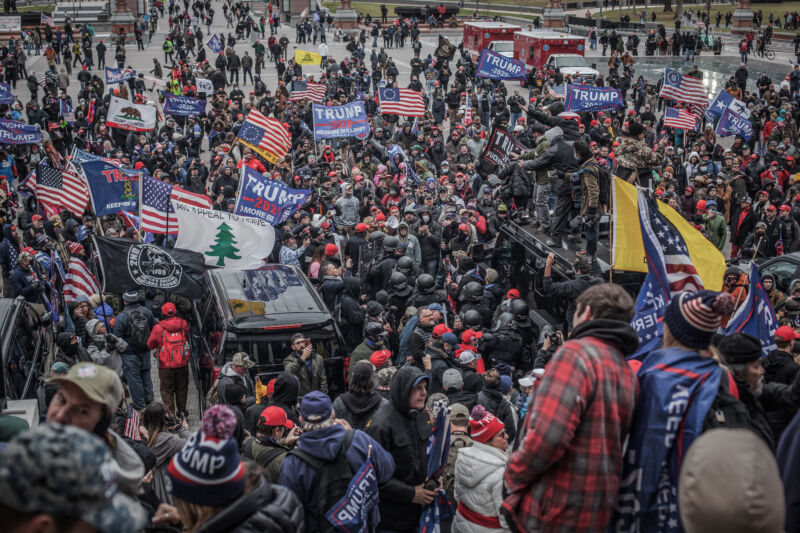
It’s a dark moment in American history that will not be soon forgotten. On January 6, thousands of supporters of soon-to-be-former President Donald Trump gathered for a “Stop the Steal” rally in Washington, DC, to protest the certification of the 2020 election results by Congress. Speaker after speaker pumped up the angry crowd by repeating false claims of widespread election fraud, culminating with an address by Trump himself, in which he called on his followers to “fight like hell” and march on the US Capitol. The result: frenzied rioters overran Capitol Police, smashing windows and triumphantly posing for selfies as they roamed through the evacuated building. By the time the National Guard regained control, five people were dead, including a Capitol Police officer.
As people struggled to process the horror in the immediate aftermath, Michael Bang Petersen, a Danish political scientist at Aarhus University, weighed in on Twitter with some counter-intuitive commentary. While the predominant theme among many pundits centered on the role of Trump and his enablers spreading lies about widespread voter fraud and then whipping the crowd into a frenzy during that morning’s rally, Petersen suggested that perhaps they had it backward. “Did protestors storm Congress because they followed Trump and believed his misinformation about the US election? No,” he tweeted. “They followed Trump and believed in misinformation because they wanted to storm Congress.”
Petersen’s background is in evolutionary psychology, and his research focuses on how the adaptive challenges of human evolutionary history shape the way modern citizens think about mass politics. Back in October, Petersen published a review paper in the journal Current Opinion in Psychology, making the case for his thesis that “mass mobilization”—like we saw with the Trumpian insurrectionists storming the nation’s Capitol—is not the direct result of manipulation by misinformation/wild conspiracy theories spread by a dominant leader. Rather, the paper said, those factors are vital tools for coordinating individuals who are already predisposed to conflict.
This perspective “does not necessarily imply that people do not believe in propaganda,” Petersen wrote in his paper. “But it suggests that such belief can be an effect rather than a cause of the deep need for action.” He describes a tipping point dynamic, in which a group that has coalesced around, say, Trumpism, suddenly becomes sufficiently coordinated to push it over the critical threshold into mass mobilization. In other words, a phase transition occurs, and a loose group of like-minded individuals becomes a violent mob.
Did protesters storm Congress because they followed Trump and believed his misinformation about the US election?
No.
They followed Trump and believed in misinformation because they wanted to storm Congress.
My review of the research, published in Oct: https://t.co/tLypBics57. pic.twitter.com/LNq6swvsAp
— Michael Bang Petersen (@M_B_Petersen) January 8, 2021
On the one hand, Petersen wrote, this means that “groups and societies can be stable even if they contain large minority segments of individuals who share disruptive, violent, or prejudiced views.” On the other hand, “this stability can be quickly undermined if suddenly coordination is achieved.”
Petersen’s counter-intuitive insight does not let Trump and his enablers off the hook for inciting the mob by peddling disinformation; without those elements, there would be no sudden coordination. “I think that Donald Trump is a master of human psychology,” Petersen told Ars, pointing to Trump’s 2016 campaign messaging as evidence: that the world is a dangerous place, and only he could fix it and protect America from those who wish to destroy us.
Trump was offering himself as the avatar of a strong, dominant demagogue, in keeping with Petersen’s research. As he wrote in his paper, “If followers search for the optimal leader to solve conflict-related problems of coordination, they will seek out candidates who are willing to violate normative expectations by engaging in obvious lying, and who displays a personality oriented toward conflict, even if such personalities under other circumstances would be considered unappealing.”
“I think Trump knows what he does in terms of all of the psychological buttons that he is pushing,” said Petersen. “Maybe it’s not deliberate, but he has very deep intuitions about what works, and in that sense I would find it extraordinary if he didn’t know what was going on.” We sat down with Petersen to learn more about the psychological processes underlying this kind of mass mobilization.
Ars Technica: You argue that from an evolutionary standpoint, human beings should be resistant to easy manipulation. But people do believe quite a lot of silly things, and many eagerly embrace conspiracy theories.
Michael Petersen: Evolutionary psychology [holds] that the reason why we have the brain structures that we have is that they have been adapted over human evolutionary history. From that perspective, there should be limits to the degree to which we can be manipulated by others, because ultimately, we would have been at a fitness disadvantage if some person could just come and say, “Hey, do you know the Earth is flat,” or whatever, and then we said, “Oh, really?” We know that one of the ways that we humans engage in social conflict is by sharing rumors, telling stories, pretending that we are more formidable than we are. So we should have a number of psychological defenses that makes us more resistant to manipulation.
But nonetheless, we humans believe in a range of very weird things that we do not have evidence for. So how can it be? We’ve found that when you prime people with inter-group conflict, they reach out for the stronger, more dominant individual as the leader. It wasn’t actually fear that was driving this; it was inter-group conflicts among people feeling anger. Basically, inter-group conflict is this arms race of coordination; the better-coordinated group eventually wins. The dominant leader is one way to create that [coordination], but another way is through these fringe beliefs. In the same way that you can form groups around religious beliefs to signal your group membership, you can use QAnon and other conspiracy beliefs with little basis in reality.
Ars Technica: You’re talking about tribalism, which is a double-edged sword. I think you’re saying that, evolutionarily speaking, tribes are good for survival, but this can be bad when it comes to a point where there are inter-tribal conflicts.
Michael Petersen: Exactly. There’s always conflict in politics. But the tipping point where things go wrong is when the different tribes or the different groups lose a sense of shared fate, that in the end we are in this together. We have differences of opinions, but because our fate is tied together, we need to figure out [how to work together]. What happens at that point is that you go from just conflict, to zero-sum conflict, where whatever is a benefit to them is a cost to me. Then we are in very dangerous territory.

Ars Technica: How does all this help explain the outbreak of violence on January 6?
Michael Petersen: Violence is a dangerous prospect. So you really need to make sure that this is the time to do it, and therefore, if you are violently disposed, then you are waiting for the right moment. A lot of the psychological machinery is operating [subconsciously]. We have people in the US who have high degrees of frustrations directed against the system, so to speak. We have been documenting that for a number of years: a construct that we call the need for chaos, which is basically this Joker syndrome where you just want to watch the world burn. There’s a substantial minority in the US who agree with very radical statements, such as “I think society should be burned to the ground. We cannot fix the problems with our social institutions. We need to tear them down and start over.” That comes with tensions that have been building up over decades, in my view. One of the factors is increasing inequality, which is not just a problem in the US, but across most Western societies.
These individuals are alone with their frustrations. What Trump does is help forge a collective identity. On the day itself, presumably, people don’t know that this is the time to go when they meet up. But you have these small coordination processes—Trump’s speech, the tension is slowly building. People go from the mindset where they say, “Well, I think something should be done,” to, “I think we should do something,” to, “I think these people also want to do something,” to what psychologists call common knowledge: “OK, now is the time. We as a collective entity want to do something and it’s now that we want to do it.”
Ars Technica: Much attention has been focused on the role of social media in the spread of misinformation, and in helping violent groups better coordinate. Removing Trump and various violent right-wing groups and individuals has resulted in a staggering 73 percent decrease in the amount of misinformation circulating on social media platforms, which is encouraging. But is this a long-term solution?
Michael Petersen: What happens on social media is basically a megaphone for what happens in the offline world. It is a reflection of what happens in the offline world. So long term, we cannot steer society back on track without actually doing real reforms. On the other hand, social media does play a huge role. It acts as a coordination device. Just as radio was very important to the genocide in Rwanda, social media has been very important in stirring up sentiments in the US.
I’ve been doing quite a bit of research on what we call online political hostility. Again, it’s not the platforms themselves, it’s not that we change psychologically when we go from the offline to the online world. It’s not that nice people go crazy when they log on to Facebook and Twitter. The people who are offensive and difficult to argue with on Facebook, they are just as difficult to argue with in real life. The difference is that the audiences that you have online are much bigger, so the impact of those few antisocial individuals is larger in the online world than in the offline world. If one person is offensive in a conversation over the dinner table, then it’s just the people around the table that hear that. But if the person is offensive on Twitter, then there’s a large network of people who are exposed to that.
I’m increasingly thinking that in order to get online discussions back on track, it’s about shielding the relatively calm majority from this antisocial minority who are aggressive and using hostile tactics. One of the problems is the business model of Twitter and Facebook is really contingent on stirring up sentiments because that is what generates traffic. So there are some complications there as well; their incentive is not to keep things calm.

Ars Technica: If Trump’s rhetoric serves as a means of focusing pre-existing rage and discontent, how can we unfocus it?
Michael Petersen: That is very, very difficult. When you have forged a group, then it is very difficult to undo it again. In a sense what the US is facing is a mass process of de-radicalization, which we haven’t seen to the same extent in a modern democracy. Some of my colleagues are working with de-radicalization, and that’s not a trivial process. They are just focusing on single individuals like Islamic terrorists and so on. But this is at a much larger level.
Some lessons can be learned from the 1960s and 1970s in Europe. There was also a lot of social upheaval and violent confrontations in the street. That eventually—which is a likely scenario for the US—[evolved] into several small terrorist cells like Rote Armee Fraktion in Germany, Black September in Jordan, and so on. What took away from the mass protest was some kind of reconciliation with these groups. I think that’s potentially the most difficult part of the whole process. There are individuals who are clinging to beliefs that a lot of Americans would view as highly offensive, who have been supporting a violent attack on American democracy. But I think it’s necessary to listen to the frustrations underlying the madness and see where some reconciliation can take place—while at the same time standing firm on democratic principles.
Ars Technica: Is it enough for Trump to finally admit there was no election fraud, or would his most radical acolytes just assume that he’s been taken over by pod people, or he’s being forced to say it?
Michael Petersen: I do think that if he came out saying there was no fraud, the election was won fair and square by Biden, we should not go to the streets, and so on—that is part of breaking coordination at a mass level. So I think that could make open confrontations less likely. But the most likely scenario is Europe in the 1970s with, for example, Rote Armee Fraktion. I think the situation is extremely troublesome at least for the next five years in the US.
My sense is that what is happening in the US and other Western societies is not a difference in kind, from ethnic conflict of the worst kind, but difference in degree. It’s the same kind of psychological mechanisms that are operating, and therefore potentially some of the ways in which they have facilitated reconciliation can also be used in the US. In a way it is up to each individual to say, “Well I have two different identities. I have an identity as a son or as a daughter or as a friend or as a neighbor, and then I have my tribal identity,” as a Democrat, as a Republican, as a Trump supporter, or whatnot. It’s up to each of us to say, “Well, OK, I can try to put the tribal identities that I have to the side.”
I think you collectively need to say, “Well, we are not two tribes. We are one people with a shared faith who have all sorts of cross cutting links to each other.” It’s not easy, but I think that is crucial in the long run. It’s a very, very difficult time for the US. You should know that there’s a lot of people hoping that you will pull through because it’s a great country. In the struggle that you are facing, you have the support of a good deal of the world.
DOI: Current Opinions in Psychology, 2020. 10.1016/j.copsyc.2020.02.003 (About DOIs).
https://arstechnica.com/?p=1735991

Right-wing social media platform Parler, which has been offline since Amazon Web Services dropped it like a hot potato last week, has reappeared on the Web with a promise to return as a fully functional service “soon.”
Although the platform’s Android and iOS apps are still defunct, this weekend its URL once again began to resolve to an actual website instead of an error notice. The site at the moment consists solely of the homepage, which has a message from company CEO John Matze.
“Now seems like the right time to remind you all—both lovers and haters—why we started this platform,” the message reads. “We believe privacy is paramount and free speech essential, especially on social media. Our aim has always been to provide a nonpartisan public square where individuals can enjoy and exercise their rights to both. We will resolve any challenge before us and plan to welcome all of you back soon. We will not let civil discourse perish!”
Parler, however, was deplatformed in the first place explicitly because the content it allowed to flourish was anything but “civil,” and as multiple reports have made clear, the service backend was designed with basically no thought given to privacy. Meanwhile, the path Parler appears to be taking to rejoin the Internet is a shady one paved for it by other explicitly extremist, white nationalist platforms that lost access to more mainstream services after being tied to terrorism.
Parler’s deplatforming began in the wake of the insurrectionist riots at the US Capitol the week before, as it became clear a number of Parler users who had used the platform to make threats were in fact present in the mob that stormed the building.
The insurrectionists who gathered in the District of Columbia on January 6 not only planned out their attack using social media platforms but also used those platforms—especially Parler—while they were at the Capitol. Many major media outlets reported before, during, and after the events of January 6 that the rioters were using Parler to organize.
Google booted Parler from the Android app store on January 8, citing its failures to take down explicitly “egregious content” that incited violence. Apple followed suit a few hours later, suspending Parler from the iOS App Store over its failure to remove “threats of violence and illegal activity” in accordance with the Apple developer agreement.
The final blow for Parler followed that weekend, when AWS stopped providing Web-hosting services to the platform and called it a “very real risk to public safety.”
“It’s clear that Parler does not have an effective process to comply with the AWS terms of service,” the company wrote in an email to Parler. “You remove some violent content when contacted by us or others, but not always with urgency. Your CEO recently stated publicly that he doesn’t ‘feel responsible for any of this, and neither should the platform.’ … It’s our view that this nascent plan to use volunteers to promptly identify and remove dangerous content will not work in light of the rapidly growing number of violent posts.”
Parler turned right around and sued Amazon over the ban, petitioning the court for immediate reinstatement. So far, however, that suit has only made clear just how much violent content Parler was apparently willing to host, as Amazon in its legal response brought (truly vile) receipts showing what kind of content it had explicitly been warning Parler about for months.
In the roughly 24 hours between the time that Amazon warned Parler it was going to terminate the company’s service and the time the platform finally went offline, a quick-thinking researcher managed to scrape and archive almost all of Parler’s public content—which, due to poor coding choices on Parler’s part, meant she was able to access not only some deleted posts but also a trove of metadata, including precise GPS locations for user videos.
Researchers, journalists, and law enforcement have since been able to use that data to pull together a fairly comprehensive picture of what went on inside the Capitol that day—and who was there doing it.
Gizmodo quickly used the GPS data to pull together a map showing that there were hundreds of videos posted to Parler from the Capitol grounds or inside the building on January 6. Another researcher made an interactive map linking the videos to the location pins for easy viewing. And over the weekend, ProPublica published a comprehensive timeline comprising more than 500 videos from Parler to show the events of the day, from President Donald Trump’s speech near the White House to the eventual breakup of the mob in the early evening.
Federal authorities have already made more than a hundred arrests related to the attack at the Capitol. Court documents show many of the suspects currently under arrest were using social media, including Parler, to share images, videos, or live broadcasts of their alleged crimes.
Parler has apparently secured hosting from Epik to bring itself back online. Epik is best known for helping far-right extremist platform Gab to come back online a short time after a Gab user committed a mass murder at a Pittsburgh synagogue in 2018; it has also provided services to other white nationalist, anti-Semitic, and neo-Nazi platforms including 8chan (now known as 8kun) and The Daily Stormer.
Multiple security researchers have also pointed out that Parler appears to have secured the services of DDoS-Guard, a cloud services company based in Russia.
Cybersecurity expert Brian Krebs last year published an analysis of potential legal liabilities DDoS-Guard might face inside the United States due to its client list. Krebs called the list “revelatory,” noting it includes “a vast number of phishing sites and domains tied to cybercrime services or forums.”
Most notably, DDoS-Guard also provides hosting services to Hamas, which the US has classified as a terrorist organization for more than 20 years.
https://arstechnica.com/?p=1735762

Facebook executive leaders promise they are doing everything they can to prevent the platform from being a tool for an anticipated new wave of violence in the nation’s capital in the upcoming days. At the same time, however, content threatening violence is still up on Facebook, and those same executives are downplaying how big a role the platform had in last week’s events at the US Capitol.
Facebook COO Sheryl Sandberg gave a livestreamed interview with Reuters Monday in which she said President Donald Trump is not likely to get his Facebook account reinstated following the company’s “indefinite” ban.
“Even the president is not above the polices we have,” Sandberg said. “We have no plans to let him [back] in.”
But even though she reiterated that the president was banned specifically for fomenting violence on the platform, Sandberg downplayed the role Facebook may have had in bringing the mob to the Capitol in the first place.
“We know this was organized online,” Sandberg told Reuters. “We took down QAnon, Proud Boys, Stop the Steal—anything that was talking about possible violence last week. Our enforcement’s never perfect, so I’m sure there were still things on Facebook, [but] I think these events were largely organized on platforms that don’t have our abilities to stop hate and don’t have our standards and don’t have our transparency.”
Still, she added, “Certainly, to this day, we are working to find any single mention that might be linked to this and making sure we get it down as quickly as possible.”
It is true that a great deal of planning the various groups and individuals did last week took place on less-mainstream communication platforms, such as Parler, Telegram, Gab, 4chan, and dedicated pro-Trump forums. However, the insurrectionists responsible for the attack were not exclusively on those platforms—and the mainstream political figures who egged them on were explicitly present on mainstream platforms, including Twitter and Facebook.
Facebook clearly knows it has a problem with violent users and content; otherwise, the platform wouldn’t have needed to take the actions it has taken this week.
Chief among those supporters of the mob was Trump himself, as Facebook CEO Mark Zuckerberg acknowledged last week when Facebook deleted a few of Trump’s posts and suspended his account.
Trump’s decision to use Facebook “to condone rather than condemn the actions of his supporters at the Capitol building has rightly disturbed people in the US and around the world,” Zuckerberg said at the time. “We removed these statements yesterday because we judged that their effect—and likely their intent—would be to provoke further violence.”
Facebook is also apparently quietly concerned that violence may spill over into retaliation against company employees. Facebook’s security team this week told workers to “avoid wearing or carrying Facebook-branded items at this time.” The Information was first to report on the message, which was seemingly aimed at reducing the chance of Facebook employees becoming targets.
As part of its “preparations” for Inauguration Day, Facebook on Monday said it would ban the phrase “stop the steal,” a rallying cry used by those who don’t (or don’t want to) believe in the fact that President-elect Joe Biden won the election (a group that includes President Trump).
The company added:
We’ve had emergency measures in place since before the US elections such as not recommending civic groups for people to join. Last week, we implemented several additional ones, including increasing the requirement of Group admins to review and approve posts before they can go up, automatically disabling comments on posts in Groups that start to have a high rate of hate speech or content that incites violence, and using AI to further demote content that likely violates our policies. We’re keeping these measures in place.
Facebook, however, is clearly failing to go after “any single mention” of statements that could provoke or contribute to further violence, despite its increased efforts.
A cursory search of Facebook “events” in and near Washington, DC, next week brought up several gatherings and demonstrations that seem designed to interfere with Biden’s inauguration. Some are planned over the weekend, in the days ahead of the event, while others call for participants to gather at the Capitol on January 20—Inauguration Day itself.
The same quick, cursory, five-minute search also brought up a half-dozen private groups that say they plan to bring together “patriots” to march on Washington during the week of the Inauguration, as well as one public group where members were posting threatening content such as a picture of House Speaker Nancy Pelosi (D-Calif.), with the text, “WHY can’t ‘someone’ shut this POS’s mouth??? … SHE ABSOLUTELY NEEDS TO BE LEAD [sic] OUT TO PASTURE.”
Neither is Facebook’s block on “stop the steal” working terribly well as of yet, as Ars’ own Timothy Lee has discovered.
In the meantime, the District of Columbia is already shutting down for blocks around the Capitol, and heavy law enforcement and street closures are expected to remain in place through January 24.
https://arstechnica.com/?p=1734401
Libero quotidiano, il noto quotidiano molto attivo nella ricerca di notizie anche particolari, è stato colpito dalla censura di twitter che ha superato l’oceano per l’ennesima volta e si è scarcata anche in Italia.

La censura non è ancora completa. L’account è stato, per ora , solo “Limitato”, cioè non c’è una chiusura completa, solo limitato. Si tratta del primo segnale, dopo di che si passa alla cancellazione vera e proprio, Con la limitazione viene chiesto agli utenti se veramente vogliono vedere l’account, che non p proposto nella normale timeline.
LiberoQuotidiano è un giornale molto seguito, regolare, dove lavorano giornalisti iscritti all’ordine, che è formalmente e ufficiaalmente Iscritto ai registri riservati alla stampa. Su di lei vigila l Magistratura , con leggi buone o cattive, ma che sono l’espressione della democrazia e che hanno seguito un iter costituzionale. Chi è Twitter per porsi al di sopra della Legge e della Costituzione? Chi dice che “Twitter è una società privata” è un società privata che fornisce un servizio pubblico che quindi deve essere offerto sulla base dell non discriminazione. Una società telefonica non nega il servizio a chi le è antipatico perchè la pensa diversamente.
Prima di tutto piena solidarietà a Liberi. quindi è necessario che o sia chiuso l’accesso a Twitter, azzerando la situazione, oppure che ne venga duramente regolato l’operato.
Intanto le azioni Twitter perdono il 6%. solo oggi, dopo unaa settimanaa sicuramente nn buona….


Grazie al nostro canale Telegram potete rimanere aggiornati sulla pubblicazione di nuovi articoli di Scenari Economici.
https://scenarieconomici.it/twitter-limit-laccount-di-libero-quotidiano-un-pessimo-affare-per-twitter/

Il presidente messicano Andrés Manuel López Obrador, detto AMLO, ha condannato seccamente le azioni di boicottaggio intraprese dalle principali piattaforme di social media statunitensi nei confronti di Trump. Lui, segretario del Partito Democratico Rivoluzionario di sinistra, ha avuto in passato dei rapporti accettabili con Trump
Il presidente messicano ha riconosciuto che il blocco applicato da Facebook e Twitter ai messagii del presidente USA pone un caso estremamente grave di censura applicata ad un personaggio politico eletto e pone un precedente gravissimo del quale bisognerà tener conto in futuro.
“Non mi piace che qualcuno venga censurato o che tolga il diritto di pubblicare un messaggio su Twitter o Facebook. Non sono d’accordo, non lo accetto“, Ha apertamente affermato Lopez Obrador. Quindi ha paragonato la cancellazione all’Inquisizione nell’Europa medievale sotto i monarchi cattolici:
Come puoi censurare qualcuno: “Quindi io, in qualità di giudice della Santa Inquisizione, ti punirò perché penso che quello che stai dicendo sia dannoso” , ha detto López Obrador in un discorso ampio e non sollecitato sull’argomento” Dov’è la legge, dov’è il regolamento, quali sono le norme? Questa è una questione di governo, non è una questione di società private “.
Infine ha definito il CEO di Facebook Mark Zuckerberg come “arrogante” per i suoi commenti. “Ho sentito che era molto importante e molto arrogante”, ha detto Lopez Obrador.
AMLO è un presidente di sinistra, eletto con un programma di sinistra e che sta lottando con durezza contro corruzione, cartelli della droga e per i diritti delle donne. Un sinistra vera è a favore della libertà di parola, proprio per la propria natura. Invece la sinistra Pluto-Comunista americana, guidata da un pugno di iper-ricchi che pensano di dirigere il mondo secondo le proprie volontà.
Grazie al nostro canale Telegram potete rimanere aggiornati sulla pubblicazione di nuovi articoli di Scenari Economici.
https://scenarieconomici.it/il-presidente-di-sinistra-messicano-si-schiera-con-trump-la-democrazia-non-e-plutocrazia/

Twitter has permanently suspended President Donald Trump’s personal Twitter account due to repeated incitement of violence, the company announced Friday night.
“After close review of recent Tweets from the @realDonaldTrump account and the context around them—specifically how they are being received and interpreted on and off Twitter—we have permanently suspended the account due to the risk of further incitement of violence,” Twitter said in a company blog post this evening.
On Wednesday, in the wake of the insurrectionist violence at the US Capitol, Twitter gave Trump a 12-hour suspension and required him to delete three tweets that it saw as continuing to promote, endorse, or glorify the violent event.
In its explanation, Twitter cited two of the tweets Trump posted Wednesday and said that the messages “must be read in the context of broader events in the country and the ways in which the President’s statements can be mobilized by different audiences, including to incite violence, as well as in the context of the pattern of behavior from this account in recent weeks.”
The 12-hour ban expired late Thursday, and on Friday morning Trump returned to the platform to tweet, “The 75,000,000 great American Patriots who voted for me, AMERICA FIRST, and MAKE AMERICA GREAT AGAIN, will have a GIANT VOICE long into the future. They will not be disrespected or treated unfairly in any way, shape or form!!!”
In context, Twitter determined, that message once again comprises a call to violence and, in short, Trump broke that rule one too many times and earned the perma-boot.
This is at least the fourth platform ban Donald Trump has earned since Wednesday. Twitch, Snapchat, and Facebook (including Instagram) have all also suspended Trump “indefinitely.”
Twitter earlier today also suspended the accounts of several prominent Trump supporters, including Michael Flynn and Sidney Powell, as part of a push to deplatform Qanon.
Update, 8:40pm EST: Twitter said it would delete any attempts by Trump to circumvent his ban, and the company seems to have meant it. Trump took to the official presidential Twitter account, @POTUS, a little before 8:30pm to complain about his ban; the thread, as shown in a screenshot below, was deleted within a few minutes.

https://arstechnica.com/?p=1733975

Federal Communications Commission Chairman Ajit Pai said he is dropping his plan to help President Trump impose a crackdown on social-media platforms and offered mild criticism of Trump’s incitement of a mob that stormed the US Capitol in a failed bid to overturn the election results.
In October, Pai backed Trump’s proposal to limit the Section 230 legal protections for social-media websites that block or modify content posted by users. At the time, Pai said he would open an FCC rule-making process to declare that companies like Twitter and Facebook do not have “special immunity” for their content-moderation decisions. But Pai hasn’t moved the proposal forward since Trump’s election loss and has now stated in an interview that he won’t finalize the plan.
“The status is that I do not intend to move forward with the notice of proposed rule-making [to reinterpret Section 230] at the FCC,” Pai said in an interview published yesterday by Protocol. “The reason is, in part, because given the results of the election, there’s simply not sufficient time to complete the administrative steps necessary in order to resolve the rule-making. Given that reality, I do not believe it’s appropriate to move forward.” Pai announced shortly after Trump’s election loss that he will leave the FCC on January 20, President-elect Joe Biden’s inauguration day.
Section 230 of the Communications Decency Act is a US law that says providers and users of interactive computer services shall not be held liable for “any action voluntarily taken in good faith to restrict access to or availability of material that the provider or user considers to be obscene, lewd, lascivious, filthy, excessively violent, harassing, or otherwise objectionable, whether or not such material is constitutionally protected.” Before abandoning his plan, Pai said that social-media companies “do not have a First Amendment right to a special immunity denied to other media outlets, such as newspapers and broadcasters,” but both conservative and liberal opponents of his plan said the FCC does not have constitutional authority to reinterpret the statute.
On Wednesday this week, as Congress met to certify Biden’s election win, the US Capitol was stormed by a mob incited by Trump’s false claims that the election was stolen from him. Trump used social media to spread his baseless claims, and his posting privileges were suspended by Facebook and Instagram, while Twitter removed several of this incendiary tweets. Trump had wanted the FCC to crack down on the social-media companies to prevent Facebook and Twitter from moderating his posts.
Protocol reporter Emily Birnbaum asked Pai if he thinks Trump “bears any responsibility” for the “violence and chaos [that] erupt[ed] on Capitol Hill, perpetuated by Trump supporters in his name.” Pai did not mention Trump by name in his response but said it was a “mistake” to suggest that the election results could be changed:
The scenes we saw yesterday were outrageous and extremely disappointing to those of us who cherish American democracy, one hallmark of which is the peaceful transition of power. To answer your question, I think it was a terrible mistake to suggest that the results of the election, and particularly the process that culminated yesterday in the Senate and the House, could in any way be changed. That was a terrible mistake and one that I do not think in any way should have been indulged.
Birnbaum pressed Pai for a more direct condemnation of Trump, asking, “Do you think that the president’s indulgence of those theories was in part responsible for what happened?” Pai’s response to this question focused on the rioters without mentioning Trump:
I haven’t studied all the statements that were made and actions that were taken. I was following it as closely as I could on television. But all I’ll say is, given the circumstances that we saw—armed guards defending the Senate chamber, people wielding Confederate flags in the seat of the United States government—it was completely unacceptable, completely outrageous. We must be governed by the rule of law, not by the rule of the mob. Law and order must be restored and democracy must be respected. Those are the bedrock expectations of every American citizen. It is what distinguishes democracy from other governments around the world. I believe that to my core, regardless of political affiliation or circumstance.
Pai said he is still concerned about social-media moderation decisions and is open to new regulations. “What I will say is what I said [in] November of 2017, long before this was a dominant strain in the dominant discourse: Social media increasingly defines the public square when it comes to political speech,” Pai told Protocol. “We need more transparency and understanding how some of these decisions are made, how certain content is allowed or not allowed on these platforms.” Elected officials must consider that lack of transparency “as they’re thinking about whether and how to regulate social media companies,” Pai said.
Despite that, Pai did not criticize Facebook and Twitter for restricting Trump this week. When asked if he “agree[s] with Facebook and Twitter’s decision to pull the president off of social media,” Pai responded, “Given the circumstances we saw yesterday, I’m not going to second-guess those decisions.”
Although Democrats on the FCC opposed Pai’s Section 230 push, saying the commission shouldn’t become Trump’s “speech police,” Biden called for the repeal of Section 230 a year ago.
Pai expects Congress to take action. “There’s now a bipartisan consensus among elected officials that the law should be changed,” he said. “Obviously the president believes it should be repealed, President-elect Biden has campaigned repeatedly on its repeal, but within Congress there appears to be a consensus also that it should be revised or reformed in some way.” Pai said it is “a very complicated issue” and “I personally would think about it more carefully in terms of the immunity provision” but said the decision will rest with Congress and the Biden administration.
https://arstechnica.com/?p=1733764


