On-Demand Video: Measuring Facebook Ad Results

In this video, learn how to measure the effectiveness of your Facebook ads. Discover how to use Facebook’s Ad Manager to create custom reports for your business and how to decide which metrics are most important for you to track. 

Complete the registration below to watch now!

About the Speaker

Bob Regnerus is the cofounder of Feedstories, a video sales and marketing agency that turns stories into sales. Since 1998, he has been successfully helping his clients achieve more impact, traffic, and sales through digital media and storytelling. Over time, he developed Deep Funnel Marketing™ strategies to maximize his clients’ impact in their marketplace even as new media comes online and tactics have evolved. Bob has personally served hundreds of clients. He has spoken in 27 states, hosted a radio show on AM560-WIND in Chicago, written six books, and trained tens of thousands. Ninety-nine percent of his clients come to him via referral or after seeing one of his presentations. You can contact Bob for speaking opportunities or media inquiries at Feedstories.com.

https://www.entrepreneur.com/page/measuring-facebook-ad


Twitter, Facebook give Trump temp bans after insurrectionists storm Capitol [Updated]

Supporters of US President Donald Trump breach the US Capitol on January 6, 2021, in Washington, DC.
Enlarge / Supporters of US President Donald Trump breach the US Capitol on January 6, 2021, in Washington, DC.

Update, 8:40pm EST: Facebook has now suspended Trump from posting on its site for the next 24 hours, Axios reports.

The company also said in a blog post that it would be searching for and removing any content across both Facebook and Instagram in support of the violence at the Capitol today, as well as “attempts to restage violence tomorrow or in the coming days.”

Update, 7:10pm EST: At 6:30, Twitter began removing several of President Trump’s tweets, including the video statement.

A screenshot of Trump's account with offending tweets removed.
Enlarge / A screenshot of Trump’s account with offending tweets removed.

“As a result of the unprecedented and ongoing violent situation in Washington, DC, we have required the removal of three @realDonaldTrump Tweets that were posted earlier today for repated and severe violations of our Civic Integrity policy,” the company said. “This means that the account of @realDonaldTrump will be locked for 12 hours following the removal of these Tweets. If the Tweets are not removed, the account will remain locked.”

Twitter also shot a clear warning across the president’s bow, adding, “Future violations of the Twitter Rules, including our Civic Integrity or Violent Threats policies, will result in permanent suspension of the @realDonaldTrump account. Our public interest policy—which has guided our enforcement action in this area for years—ends where we believe the risk of harm is higher and/or more severe.”

Update, 6:00pm EST: Facebook removed from its platform a short video statement made by President Donald Trump about the violence in the District of Columbia today. In the video, the president told his supporters to “go home now,” while also continuing to offer sympathy to the rioters and repeated the lie that the election was “fraudulent” and “stolen.”

“This is an emergency situation and we are taking appropriate emergency measures, including removing President Trump’s video,” Facebook VP of integrity Guy Rosen said. “We removed it because on balance we believe it contributes to rather than diminishes the risk of ongoing violence.”

YouTube also removed Trump’s video from its service, according to a report from The Verge.

The video was also posted to Twitter, which left it up with a message appended saying, “This claim of election fraud is disputed, and this Tweet can’t be replied to, retweeted, or liked due to a risk of violence.”

Original story 4:35pm EST: A growing chorus of groups and individuals are calling on Twitter to suspend President Donald Trump’s account as a mob of his supporters has stormed and occupied the US Capitol, sending members of Congress fleeing the session during which they were meant to be certifying the results of the 2020 presidential election.

Several groups of Trump supporters planned for weeks to meet in Washington, DC, today for a “Stop the Steal” rally to protest the results of the 2020 election and demand that Trump be found the winner instead of actual President-elect Joe Biden, who won both the popular vote and Electoral College.

Trump spoke to the crowd as Congress convened to begin formally certifying the electoral college votes. In his speech, Trump vowed to “never concede,” adding, “It will never happen. You don’t concede when there’s death involved. Our country has had enough. We will not take it anymore.”

A short time later, rioters stormed the Capitol, resulting in the evacuation of Congress. The situation at the Capitol is very much both ongoing and chaotic at the moment.

While President-elect Biden took to the airwaves in the 3pm EST hour to ask Trump to condemn the violence, Trump himself continues only to speak through Twitter.

At 2:24pm, during the height of the chaos, Trump pinned the blame on Vice President Mike Pence, who Trump repeatedly urged to find a way to invalidate the results of the election. “Mike Pence didn’t have the courage to do what should have been done to protect our Country and our Constitution, giving States a chance to certify a corrected set of facts, not the fraudulent or inaccurate ones which they were asked to previously certify,” Trump wrote. “USA demands the truth!”

Twitter appended a label to the tweet, saying, “This claim of election fraud is disputed, and this Tweet can’t be replied to, retweeted, or liked due to a risk of violence.”

“Extremists must be taken at their word”

The violence, however, was already well underway, and several Twitter users immediately called on company CEO Jack Dorsey to take stronger action against the president’s account.

“Extremists must be taken at their word,” Anti-Defamation League CEO Jonathan Greenblatt said in a written statement. “First there was volatile rhetoric online, then explicit calls to violence and now people are acting on those calls in the nation’s capital and flagrantly breaking the law. It must end now. The President has promoted sedition and incited violence… social media companies should suspend his accounts ASAP as they would do for anyone else advocating disinformation and promoting violence. It’s time.”

Hundreds of Twitter users have been using that platform to echo the call. “Let me say in no uncertain terms [Jack]: If you do not suspend Donald Trump’s Twitter account for the next day at least, this mob attack on Congress is also on you,” New York Times technology reporter Kara Swisher wrote, tagging Dorsey as well as other Twitter Safety executives. “Sorry, but he has incited violence for days, using your tools in large part and you need to act now. This is about public safety and the safety of those trapped in Congress now. He has no part in calming down the mob he incited—this will be up to the police and the National Guard.”

Twitter issued a statement saying, “In regard to the ongoing situation in Washington, DC, Twitter’s Trust & Safety teams are working to protect the public conversation occurring on the service and will take action on any content that violates the Twitter Rules. Let us be clear: Threats of and calls to violence have no place on Twitter, and we will enforce our policies accordingly.”

https://arstechnica.com/?p=1733331


Five strategies to promote your business using LinkedIn Stories

30-second summary:

  • LinkedIn Stories feature allows you to create a video that runs no longer than 20 seconds and host it on your profile.
  • The format will help kickstart conversations and nurture the relationships that are core to everything that happens on LinkedIn.
  • These are a good way for brands to share a behind-the-scenes peek into their business’ professional moments.
  • The feature is expected to promote business content in an area whose netizens are purely composed of professionals, thus helping users build relationships with followers.
  • The feature has been rolled out in select countries, with plans to introduce it to a new country every week or so.

Did you know that more than 500 million people watch an Instagram Story every day, and over one-third of those videos are business-related? In a fresh respite for professionals and businesses who would until now take recourse to Instagram to publicize their business, LinkedIn stories have arrived to help professionals share their on-the-fly moments. Much like Instagram Stories, the LinkedIn Stories feature allows you to create a video that runs no longer than 20 seconds and host it on your profile. Once the “story” has been uploaded, it will be accessible by people for an entire day before it goes away.

According to LinkedIn, the feature was a long time coming. Pete Davies, the head of Consumer Products at LinkedIn, was quoted remarking about the usefulness of the feature as “…stories spread for a good reason: they offer a lightweight, fun way to share an update without it having to be perfect or attached to your profile forever.”

But, first things first. Should you even use Instagram stories? More importantly, what are they, and are they any different than the mainstream story feature from other popular social networking platforms?

In a word, yes. Through LinkedIn Stories, you will have a great opportunity to demonstrate your brand from a different angle and interact with your audience in a way they’re familiar with. 

What are LinkedIn Stories?

The LinkedIn Stories feature is a format that allows you to display and share specific content with your audience through an image slideshow or 20-second that is available for 24 hours before it is automatically gone. The video or the image slideshow disappears after a full day since it was posted.

This feature is, in essence, the same as the ones that exist on Instagram, Facebook, and Snapchat, and has more or less the same functions. Users can add stickers, ask questions (AMA), place text overlays, use @mention to credit, or introduce other LinkedIn accounts.

Thus far, the LinkedIn Stories feature has been rolled out in select members and pages in the countries of the Netherlands, United Arab Emirates, Brazil, and Australia. Although, if you are itching to have a go at LinkedIn Stories, sit tight. According to LinkedIn, the feature will be rolled out to one new country every few weeks.

LinkedIn Stories example

However, the talking point here really is LinkedIn’s shift stories and how emblematic it is of social media’s evolution since the inception of a certain Facebook called centralized news feed in 2006. Today, stories have become the norm, and profile users opt to share their “in the moment” experience rather than devoting themselves to a binding feed post.

stat on Instagram stories

Source: Later.com

This aligns with the fad observed with Instagram over the course of the last few years, with an increasing number of people posting more stories and fewer feeds. This was confirmed by a recent study by Later, where influencers were found to now post 33% fewer feeds than they used to in 2016.

So, what meaning does this hold for businesses?

Put simply, this feature will offer a novel, temporary way to share information with your professionally-associated followers (LinkedIn connects). And while it might feel challenging to carve a name for your brand in a bustling online space, there are a host of elements you can peruse to morph a seemingly daunting prospect into a creative new opportunity to further your business objectives.

Benefits of LinkedIn Stories

We already know that, while belonging to different channels, the stories feature is essentially the same as the last one’s. What distinguishes LinkedIn stories the primary difference (and draw) of LinkedIn Stories is the business context.

Now, rather than using the feature to share lifestyle tips with relatives and friends, brands and marketers may share their stories with peers and future prospects. This material may be highly promotional.

Studies show that stories are gradually turning into the new favorite and preferred way to access material on social media channels. However, that is not to suggest that stories will fully replace the LinkedIn feed post. But, providing the stories features offers users the ability to broaden the scope of their LinkedIn content and reach a wider target audience.

This highly offbeat style of material promotion also enables LinkedIn users to provide a deeper insight into the people behind the business. This is especially helpful for company owners, entrepreneurs, and businessmen who want to capitalize on that trust factor with prospective customers and future clients.

LinkedIn Stories offer the most powerful opportunity for interaction. In a recent study, it was revealed that as many as 25% of Instagrammers swipe up when they come across a branded post. With LinkedIn Stories, the same feature and thought process will be replicated on a channel that is completely dedicated to business networking.

However, it’s important to note that while your stories might not directly result in a sale, you are promoting your brand and creating an air of awareness about it. What’s infinitely more exciting is that this promotion will make you come across people that you can talk to directly to open the doors to better opportunities.

Take Instagram, for instance. As many as 50% of businesses over the world make at least one story every month that promotes their brand or product. And this is where the low hanging fruit becomes apparent. Armed with the right strategy, you can make use of a fantastic opportunity in the form of LinkedIn Stories to generate a buzz around your brand.

Five strategies to promote your business through LinkedIn Stories

At first sight, the stories feature, regardless of the channel it belongs to, seems like something that is entirely dedicated to the consumer: they are informal and sate the hankering for instant gratification. But, if you were to look at it a little closer, you would see how this feature can help B2B companies connect with each other on a deeper level to build engaging relationships.

If you are already familiar with the inner workings of the stories feature on other networking platforms, you won’t find it difficult to shift base to LinkedIn Stories for business-related purposes after it has been made available to everyone. Listed below are five ways you can use it for your business when the time comes.

1. Share real-time activities

LinkedIn Stories have a limited life span, making them ideal for communicating less refined, off-the-cuff material right in real-time.

Sharing real-time event updates is also a great strategy, mostly because events are a significant source of leads for many businesses, and 85% of them consider interpersonal meetings central to their marketing plan. LinkedIn Stories let your followers view excerpts of events from a first-person perspective.

From enterprise-wide announcements to award ceremonies, sharing snippets of events in the form of live stories is a tremendously useful way to showcase the goings-on at your company.

This is also an incredible way to generate an extra buzz around your brand. Consider requesting event coordinators and speakers to share short sounds of information about a new product or feature or possibly even feature a BTS look of any extra details in store!

2. Share customer testimonial stories

Irrespective of the generation you are from, the odds are that you trust people’s advice more than any other form of content marketing. This is what makes testimonials and user reviews such a powerful tool for marketing.

With the millennial generation soon climbing up the organizational ladder and becoming decision-makers, they will be searching for goods and services that have demonstrated that they can make professional work easier. They will look for vendors that have the products with the features that they desire, so filming your satisfied customers and posting a short clip on LinkedIn in the form of a story might just be the perfect way to catch their attention.

3. Share business tips and updates

Stories are the perfect way to generate demand. Your most loyal supporters are going to see your story. If you post something about your brand, tease the new features of a product, or make something exclusively available on LinkedIn, they will share it with others. Talk about word of mouth!

4. Share trending news or announcements

If you are among the privileged few brands who have gotten to use the LinkedIn Stories feature first, the chances are that you will get a massive amount of additional airtime with your LinkedIn followers.

Keeping that in mind, it may be a sensible move to use this new forum to post all your essential brand news.

5. Host corporate Q&As

Much like Instagram Stories, the stories feature on LinkedIn is the perfect way to show what goes on behind the scenes and gives you the chance to share the more humane side of your business.

By hosting a pep talk or a Q&A session on LinkedIn stories, you can show the people that make up your brand. Not only is it another great way to share your brand story, but it is also helpful when it comes to creating brand loyalty.

In order to gain more questions for your Q&A session, you can request your followers to submit questions to you in advance. This can be done either through direct messaging or via a conventional LinkedIn feed post.

The do(s) and don’t(s) of LinkedIn Stories

Begin your story strategy with a positive growth mindset. LinkedIn Stories are not simply a means of communicating; they present a powerful tool for promoting interaction, learning about your audience, and improving the business.

Do spend time building a strategy

Consider how short bits of information better suit the brand’s wider content marketing strategy.

Which kind of subjects and press do your followers enjoy? Do you produce new content only for stories or reuse them from other platforms?

Don’t spend time behind perfecting every story

Note that stories are only available for 24 hours after you publish them. Moreover, stories that appear too organized and designed sort of miss the mark. Stories are supposed to feel random, so try to have the same mentality as you do when you post Instagram or Facebook stories.

Do relate to followers

People desire real connections from businesses. Let your brand persona shine a little and share more about yourself. It’s the perfect way to strengthen your brand’s mission, vision, and values.

Don’t be too casual

It’s really easy to let go and get caught up in the moment, which could prompt you to post something regretful when you know it’s going to disappear in 24 hours. Consider creating some boundaries for your stories dedicated to your brand.

Conclusion

If you’re communicating job openings or are releasing a commodity, capitalizing on this latest platform to reach out to a wider audience is certainly a smart move. If Instagram Stories are anything to go by, the first adopters of this feature will put themselves ahead in the race to improved brand awareness.

Aayush Gupta is Sr. Manager, Brand & Marketing at Uplers. He likes to stay on his toes when it comes to marketing and doing things worth risk-taking. He loves traveling and exploring local cuisines. In his free time reading books with coffee is all he wants.

https://www.searchenginewatch.com/2020/12/31/five-strategies-to-promote-your-business-using-linkedin-stories/


McConnell introduces bill tying $2K stimulus checks to Section 230 repeal

Senate Majority Leader Mitch McConnell (R-KY), has thrown a wrench into the expected Congressional over-ride of President Trump's veto of the National Defense Authorization Act.
Enlarge / Senate Majority Leader Mitch McConnell (R-KY), has thrown a wrench into the expected Congressional over-ride of President Trump’s veto of the National Defense Authorization Act.
Ting Shen/Bloomberg via Getty Images

Senate Majority Leader Mitch McConnell (R-KY) has thrown a wrench into Congressional approval of an increase in government stimulus relief checks from $600 to $2,000. The House voted overwhelmingly on Monday to increase the payments, as President Trump had advocated for. Instead of voting on the House bill, however, McConnell blocked it and instead introduced a new bill tying higher stimulus payments to Section 230’s full repeal, according to Verge, which obtained a copy of the bill’s text.

It’s a tangled web, but the move is tied to Trump’s veto of the National Defense Authorization Act, which authorizes $740 billion in defense spending for the upcoming government fiscal year. “No one has worked harder, or approved more money for the military, than I have,” Trump said in a statement about the veto, claiming falsely that the military “was totally depleted” when he took office in 2017. “Your failure to terminate the very dangerous national security risk of Section 230 will make our intelligence virtually impossible to conduct without everyone knowing what we are doing at every step.”

Section 230 has nothing to do with military intelligence; it’s a 1996 law designed to protect Internet platforms. At its highest level, the short snippet of law basically does two things. First, it grants Internet service providers, including online platforms, broad immunity from being held legally liable for content third-party users share. Second, it grants those same services legal immunity from the decisions they make around content moderation—no matter how much or how little they choose to do.

As we previously reported, Trump has been railing against Section 230 all summer and fall, even signing an executive order directing various federal agencies to limit social media’s “unchecked power to censor, restrict, edit” or otherwise manipulate user content. But Congress declined to consider the Justice Department’s proposed rewrite of the law.

It appears to be personal for Trump: he resents Twitter in particular, ever since the site first appended a mild fact-checking link to a tweet of his containing election misinformation in May, something which has become a common occurrence as the president stews over his November electoral loss. As Ars’ Kate Cox pointed out last week, “In short, the more Trump claimed without evidence that all mail-in voting is fraudulent (it’s not) or that President-elect Joe Biden’s somehow ‘stole’ the election (he won fairly), the more fact-checking labels Twitter appended to his posts.”

The NDAA usually moves through Congress with broad bipartisan support, and this year’s edition was no exception. Both chambers supported the bill by wide, veto-proof margins—the House approved by a vote of 335 to 78, and the Senate approved it 84 to 13. But Trump said in early December he would veto the bill if it did not include an outright repeal of Section 230. On December 23, two days before Christmas, he made good on that threat.

The House leadership was prepared for this. On Monday, the House voted to override Donald Trump’s veto of the National Defense Authorization Act (NDAA) by a vote of 322 to 87—easily exceeding the required two-thirds mark. The measure then went to the Senate, where it must also pass by the same margin to overcome Trump’s opposition. The Senate is expected to also vote to override the veto sometime in the next few days.

So what does this have to do with McConnell’s latest political maneuvering? Think of it as a move to appease Trump with regard to Section 230, while also effectively ensuring that the $2,000 increase in stimulus checks will never pass in the Senate. “During this process, the president highlighted three additional issues of national significance he would like to see Congress tackle together,” McConnell said in a floor statement Tuesday afternoon. “This week, the Senate will begin a process to bring these three priorities into focus.”

But that’s disingenuous at best. As Deadline Hollywood’s Ted Johnson notes, “By tying the payments to another Trump priority—the repeal of Section 230—McConnell is likely making the package unsuitable to a number of Democrats in the Senate and the House. Although politicians of both parties have expressed a desire to modify Section 230, it’s a whole other matter to repeal it entirely.”

“Senator McConnell knows how to make $2,000 survival checks reality and he knows how to kill them,” Senate Minority Leader Chuck Schumer (D-NY) said in a statement Tuesday. “Will Senate Republicans go along with Sen. McConnell’s cynical gambit or will they push him to give a vote on the standalone [bill]?”

https://arstechnica.com/?p=1732350


Social media analytics 101: The data that matters most

30-second summary:

  • Marketing decisions should be backed by data about consumers, their behavior, and conversions.
  • Marketing and namely social media analytics provide numerous categories to analyze, so it is easy to get lost.
  • In the article, Aleh Barysevich defines major points for a social media marketer to analyze strategy success or failure.
  • Important data points for analysis: profiles, target audience, competitors, and web traffic from social media.
  • Social listening data provide even more data about the target audience.

Knowledge is power — this saying is even more relevant in our age of information. Anyone who works in marketing holds this belief to some extent. In the ideal world, every marketing decision you take is supported by knowledge, that is, the data you have about consumers, their behavior, and so on.

Of course, as marketers, we don’t always have access to this knowledge. Some of us are luckier than others, and I’d say that social media marketers are the luckiest: they probably get the most data on their customers, their own performance, and marketing possibilities. However, there’s a downside. Social media analytics is such a vast area that it’s incredibly easy to get lost.

Social networks provide you with a thousand different categories to choose from when it comes to analyzing your successes and failures. But your own social media stats are only a part of the story: your competitors and most importantly your clients are also on social media and it would be foolish to ignore all the information they can give you.

Thus, we end up in a situation when you have to prepare a monthly (quarterly/yearly/campaign) report but you are not quite sure what data you should highlight. That’s why this article exists!

We will go through the most important data points for four categories, which you should consider with social media analytics: your profiles, your target audience, your competitors, and the web traffic you get from social media. Let’s begin with the most obvious one: your own page.

Social media analytics: Your social media profiles

In most cases, your own pages and posts are the first thing you are going to track.

For starters, these insights are built in the functionality of social media platforms so you have them right at hand. Secondly, these insights lead to immediate action: since you manage your pages and posts, you can introduce changes to your social media strategy as soon as you notice that something is working (or isn’t working).

Facebook offers more than 150 data points, and the rest of the social networks are not far behind. How do you choose which metrics to track?

Well, every monitoring activity you do should depend on your goals. Are you trying to grow your audience? Track followers and likes. Are you doubling down on video content in order to raise conversions? Check watch time. At the same time, there are some metrics that are considered essential to monitor for any social media manager. They will give you a general understanding of how successful your social media strategy is. What are they?

1. Number of followers (subscribers, likes)

As I mentioned above, the number of followers is the telltale sign of how fast your audience is growing. Every time someone follows you it means that they want to keep an eye on your long-term. But the number of followers is not the only sign of the size of your audience.

Some platforms have several metrics to evaluate the size of your audience, for instance, Likes and Followers on Facebook. Likes, besides expressing the desire to follow your updates consistently, also show the support for your brand. Keep these differences between followers, subscribers, likes, supporters, etc. in mind when you are doing social media analytics: even though they all represent the magnitude of your audience, they can mean different things.

Typically, this metric is available right on your profile. If you want to see how it changed over time, check your Insights or Analytics.

2. Reach

Another important metric to help you evaluate the size of your audience is reach, which is conceptually close to impressions or views. Reach shows how many people were reached by your posts, and views and impressions show how many times the posts were seen, thus, the number of impressions will always be higher than reach.

If the number of followers/subscribers shows how many people want to stay up to date with your news, i.e. your loyal audience so to say,  reach shows your potential audience, i.e. how many people could be interested in your brand. Since most social media algorithms work in such a way that users generally see the content they might potentially like, social media almost eliminates the possibility of reaching a completely wrong audience.

Reach and impressions are usually represented in two ways: you can see the overall reach of your content for a certain time period, and reach for each of the posts. This may differ from platform to platform, but all the major ones: Facebook, Instagram, Twitter, LinkedIn allow you to check stats for individual posts as well for the profile in general.

3. Engagement

Engagement is represented by several metrics, most commonly, reactions (likes), comments, and shares. They all are indicative of different grades of approval from your audience.

Reactions show that people agree with your post, comments indicate the desire to start a conversation, and shares show that your post was so good that people want others to see that as well.

One more metric which you’ll see when checking your engagement stats are clicks, that is, how many people clicked on the links you shared. This is the metric that’s more relevant to traffic so we will discuss it in the respective part of the article.

If you need an outline of the most important metrics to follow, check out this template I designed to track your Facebook, Twitter, and Instagram stats. The different tabs are necessary to track your metrics in relation to some basis: initial numbers or the average number. Download it, add metrics that are important for you, and start tracking your social media performance!

Social media analytics: Your target audience

Many social media managers stop at tracking their profiles’ stats, but it’s only one part of the social media analytics. The other big part of social media analytics is analyzing social listening data. If your number of followers, engagement, and reach say more about your social media strategy, social listening data is what you analyze to find out more about your target audience.

Admittedly, tracking social listening data is a bit less accessible than tracking your own metrics. This process requires a social listening tool: however, there are a lot of social listening tools for different needs and budgets.

Depending on the social listening tools, you’ll get a lot of insights including demographic, psychographic, and behavioral data. Some social listening insights are directly tied to major business KPIs. I’ve decided to highlight the main points you need to cover.

1. Number of mentions and reach

Social listening is the process of gathering mentions of your keywords online. Those keywords may be different: traditionally brands monitor their brand names, names of their products, campaigns, their industry, and so on.

The first metric to pay attention to is the number of mentions. This is pretty straightforward —this stat shows how many times your keyword was mentioned in the selected time period. Depending on what you’re tracking, this metric can show you brand awareness, the popularity of certain products, or your target audience’s demands.

Another metric that is vital to evaluating your brand awareness is reach. In social listening, reach shows how many people saw your brand mentioned on social media. The higher the number of mentions is, the higher the reach is.

However, there’s one caveat. If your brand gets mentioned once by a popular social media user, you’ll reach more people than if it’s mentioned 10 times by someone with 20 followers. That’s why reach doesn’t always correlate with the number of mentions.

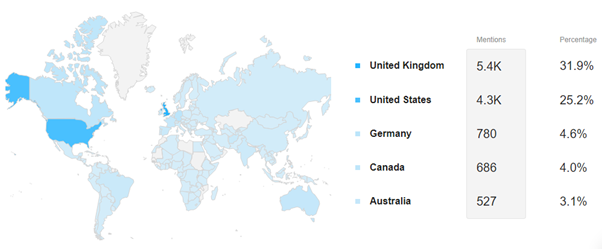
2. Demographics: Gender, location, language

Social listening tools don’t just collect and count the mentions of your keywords, they are able to tell you who the people who use these keywords are. For example, you can find out that your brand is popular among Australian men, or that in Texas it’s much more popular among the Spanish-speaking population than among English-speaking people.

All these insights can lead you to game-changing marketing decisions so don’t ignore them.
social media analytics 101 - demographics

3. Sentiment

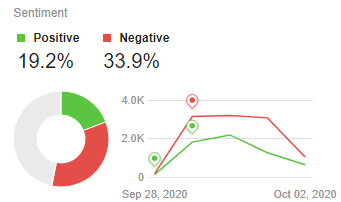
Most social listening tools are able to analyze the sentiment of the mentions and show you the overall sentiment around your brand, products, CEO, etc. Moreover, you can see the sentiment change over time and identify potential crises right away.
social media analytics 101 - sentiment analysis

As soon as you see that there is a sudden surge in negative mentions, you can pinpoint the reason behind this surge and nip the crisis in the bud.

4. Influencers

When we talked about reach, I mentioned that popular accounts have more weight when it comes to brand awareness. That’s why it’s important to keep track of them as well!

Most social listening tools are able to recognize influential accounts that are talking about your keywords. They even rank them according to how much reach they can bring you. By identifying these accounts for each major social media network, you’re able to enrich your influencer marketing strategy.

Social listening tools allow you to skip the tedious process of designing a report since most of them already offer different types of reports to export and share with your colleagues. The tool I’m using offers three types of reports: the general report of your monitoring topic, comparison of several topics, and influencers. Each report is fully customizable, so you can choose to highlight the metrics you need and discard those that you don’t need.

Social media analytics: Competitors

Competitor analysis is a wide topic that includes a lot of aspects: business strategy, products, hiring strategy, marketing, SEO, advertising, and so on. Social media is just a part of this topic, but it doesn’t make it any less important.

Of course, you won’t be able to get as detailed information on your competitors as you have for your own social media profiles, but there are still ways to analyze their social media strategy. First of all, track their stats that are available to you: number of followers and likes. You can also write down the engagement (reactions, comments, and shares) for their posts to count average engagement — that is, of course if they don’t post too often.

Secondly, there are other ways to benchmark your own pages against theirs. For example, Facebook allows you to select several competitors and you will get their monthly growth stats in your Insights. Moreover, some social media tools let you analyze pages simply by putting in their @ — you can use them to get the basic data of your competitors’ pages, see how fast they are growing, how often they post, and so on.

As for their target audience, this is even easier. All you need to do is create a monitoring topic for their brand just like you did for yours and then compare the two (or more) topics — that way you’ll see the difference in your brand awareness levels, what parts of the market you cover vs them and more.

As you can see, you are covering the same points for your competitors as you did for your own brand. The insights you get from competitor analysis on social media may inspire you to change and improve your social media strategy.

Social media analytics: Traffic to websites

Social media platforms are giving brands more and more ways to sell their products right on the platforms. However, most companies are still defining conversion on social media as somebody clicking the link in their post and purchasing a product or service. That’s why monitoring your social media traffic is extremely important. It’s also usually the most convincing argument for extending your budget/hiring new team members when talking to your boss.

To track social media traffic you need to gather data related to social media analytics AND website analytics.

1. Traffic from your pages (link clicks)

Remember I mentioned link clicks when we talked about engagement? Now is their time to shine.

Most social media platforms provide you with overall link clicks for the chosen period of time. Some platforms, for example, LinkedIn, even show you link clicks for each post. This is extremely useful since you can immediately see what call to action works better, what design encourages more people to click, and so on.

2. Traffic from social media

Google Analytics also shows you all the traffic you get from social media pages: this includes your posts, links in your bio, buttons on your profiles that take users to your website, and links to your website shared by other people.

To check this stat, go to Google Analytics – Sources – Social media. Here you can see which social media networks bring you traffic, where this traffic is landing, how much of the traffic leads to conversion, etc.

Closing note

And that’s it! The four pillars of social media analytics covered in one guide. Logically, nobody expects you to present all this data in your monthly reports — at least, most clients don’t. But, you need to keep an eye on these four areas to have a good understanding of your social media strategy, see what’s working and what doesn’t, and perfect it along the way.

Aleh Barysevich is Founder and CMO at SEO PowerSuite and Awario.

https://www.searchenginewatch.com/2020/12/30/social-media-analytics-101-the-data-that-matters-most/



Need to step up your social media marketing? Follow this recipe

30-second summary:

  • Brands face increasing challenges to capture audiences’ attention with paid posts as users learn to scroll past sponsored content.
  • Advertising spending has dropped during the pandemic, meaning there’s less competitive noise and no better time to shine.
  • Marketer Mike Monroe shares the three most important drivers of increased engagement with sponsored posts on social media.

Before the coronavirus pandemic, navigating social media marketing was like trying to make your way through a bustling metropolis. It was noisy, full of ads, and generally oversaturated. After a while, all the scrolling turned into a fuzzy blur.

It has become increasingly challenging for brands to capture audiences’ attention with paid posts. People are scrutinizing big tech and its seductive algorithms. Labels are getting larger. As a result, users on Instagram, Facebook, and Twitter learned to scroll past anything labeled #sponsored. They want to see entertainment, not advertisements.

But now, there’s no better time to shine. Advertising spending has significantly decreased due to COVID-19, which means that the volume has been turned down. Companies have a better chance of standing out now if they follow Seth Godin’s theory and put a Purple Cow — or a remarkable, buzzworthy, unique element — into their social media marketing. It’s the perfect time to capture new attention by creating memorable content on Instagram, Facebook, and beyond. By creating unique ads that are worth looking at during a marketing lull, brands can stand out and snag the attention of target audiences.

Find an opening for your brand

It’s not easy to create sizzle on social, though. Many companies have tried and failed to gain traction with paid media. Sometimes the problem is the sponsored ads look like they’ve been made by people who’ve never tweeted or snapped in their lives. Other times, the error is lacking a clear objective or trying to attract the wrong audiences. For instance, Generation Z won’t scroll Facebook, and Generation X isn’t that interested in TikTok.

However, it can be done. Instagram says that 6 out of 10 users discover new products through its channel, and Twitter ads can net up to a 3% engagement rate. Habits and behaviors are up for grabs right now as people define their new normals, so brands that zig while their competitors’ zag will dominate popular platforms. The trick is figuring out how your company fits into the narrative.

At Vector Marketing, we experienced a huge spike in brand awareness thanks to a deceptively simple TikTok video featuring our product, a clay Baby Yoda head, and annoying background music. The video was our first big hit, and it helped us grow our account significantly in terms of followers and views. Why did the video amass so much engagement? It tapped into a few key internet trends: TikTok was hot, Baby Yoda was popular, and #oddlysatisfying videos were taking off. By merging those phenomena, we struck pay dirt.

How to increase sponsored post engagement

Write the right message for the right person at the right time. That’s the recipe. If you’re struggling with sponsored posts, check the recipe, and see whether your social media marketing efforts include all three ingredients:

1. The right message

What’s your plan? You need to know why you’re saying something before you say it. Think about the purpose your paid ad will serve and position it accordingly. For instance, if your goal is lead generation, make sure you have a hook, an educational element, and a call to action. If you’re aiming for brand awareness, then make engaging content the premium. Remember not to assume that your images, copy, and other creatives are good but instead to A/B test them and learn what really engages your audience. It’s crucial because more than half of all online brand discovery happens in public social feeds. Remember: The more people who see or click your ad, the larger the ROI will be.

2. The right person

Your social media audience serves as the judge, jury, and executioner. If you think your content is trendy and users aren’t biting, then you need to redefine what you consider to be trendy. Your perception is not as important as the audience’s perception. Let’s say that you just created a post for Millennials talking about Baby Yoda. It’s still relevant, but Millennials and Gen Xers have moved on (as they quickly do). You need to meet your target audience where they are, so look into the demographic data of the social platforms you’re courting and plan accordingly.

3. The right time

Identify the perfect moment to post by matching your content to the zeitgeist. If it’s autumn and you own a laundromat, you might ask followers, “You should never wash your jersey during football season. True or false?” While their answers will likely be interesting, they don’t really matter. What does matter is that you capitalized on a trend and met consumers when they were ready to engage.

Capturing the attention of social media users is tough, but it can be done. Just stay attuned to what’s happening, remember the recipe’s three ingredients, and be ready to see that engagement increase.

Mike Monroe is Digital Strategy Manager at Vector Marketing.

https://www.searchenginewatch.com/2020/12/30/need-to-step-up-your-social-media-marketing-follow-this-recipe/


Paid Media Marketing in 2021: 8 Changes Marketers Should Make via @johnelincoln

[unable to retrieve full-text content]https://www.searchenginejournal.com/paid-media-marketing-changes/389319/?utm_source=sej-feed


6 Ways to Repurpose Content with Instagram’s Most Popular Features via @thatbberg

[unable to retrieve full-text content]https://feedpress.me/link/13962/14185599/389822


How C-suite derives business value from social media: Q&A with Hootsuite’s VP of Corporate Marketing, Henk Campher

30-second summary:

  • The pandemic drove people inside their homes and onto social media like never before.
  • Hootsuite has closely been monitoring the changing behaviors of consumers online since the beginning of 2020.
  • We caught up with Henk Campher, VP of Corporate Marketing and Head of Social Impact at Hootsuite, to help you derive a cream level perspective for your digital strategies.
  • Know how CMOs can find value in SMM efforts, conduct market analysis, and run social media campaigns that actually succeed in the eyes of top management.

From learning banana bread recipes to connecting with loved ones, hunting jobs, and now shopping holiday gifts, the pandemic drove people inside their homes and onto social media like never before. 2020 has shown us how people have resorted to Instagram, Twitter, TikTok, and LinkedIn. While Hootsuite has closely been monitoring the changing behaviors of consumers online, we caught up with Henk Campher, VP of Corporate Marketing and Head of Social Impact at Hootsuite, to help you derive a cream level perspective for your digital strategies.

Henk Campher, VP of Corporate Marketing and Head of Social Impact at Hootsuite - Q&AQ. Paid ads have their own cons like reduced page reach, how do you maintain an upward graph for organic page reach and boost relationships, engagement, and direct sales?

Henk Campher: Never take a one-size-fits-all approach to social media marketing, especially with organic content. To reach a large audience, organic posts need to be optimized. To do this, you need to understand the platform and audience you are optimizing for. Start by focusing on the platforms that make the most sense for your business. For example, if you’re a B2B company, you may find the most value on LinkedIn or Twitter whereas a B2C company may gravitate towards Snapchat, Instagram, or TikTok to reach a younger crowd. 

If you want organic content to perform well on social media, create engaging and personalized content that is fitting for the platform you are using. Give people a reason to follow and engage with your social posts. To better understand what content resonates with your audience, start by using social listening tools—at Hootsuite, we integrate directly with Brandwatch so our customers can navigate social intelligence capabilities directly from their dashboard.

Case study:

Securian Financial, a Hootsuite financial services customer, was able to leverage social listening to determine that their key demographics shifted away from complaining about quarantine to sharing positive content around being connected. What arose was Life Balance Remix, a UGC campaign encouraging people to share content that highlighted their “new normal” and garnered thousands of participants with over 2.5 million campaign impressions across Twitter and Instagram. 

Beyond creating the right content for the right platform, it’s essential to connect with people. Show your audience the human side of your brand. You can do this by lifting up your employees on social media and sharing their stories or connecting with the wider community through an employee advocacy tool, like Hootsuite’s Amplify tool. If you want to boost engagement on posts, ask your audience relevant and interesting questions. This is also a great opportunity to learn about what interests them. If you focus on value and creating the right content, you’ll be able to successfully develop relationships with your audience, boost engagement, and drive sales.

Q. What are the top social media metrics that can help CMOs see direct value in marketers’ social media marketing efforts?

Henk Campher: For both B2C and B2B brands, the key to successful social measurement is to keep your metrics simple. Trust classic cross-platform metrics like return-on-ad spend and lifetime value, as these measures also tie directly to your organization’s business goals. Once you choose the content you think will resonate with your audience, test your ideas to identify which posts generate the most engagement, shares, and impressions, and do this for each social platform. Continue to test, learn, and optimize. But when it comes to measuring your efforts on social, it is important to keep your business objectives in mind and develop KPIs that match the overall goals and expectations of your organization. Metrics such as impressions and reach should be analyzed consciously.

If your goal is to build brand awareness, focus on overall engagement and how long visitors are staying on your website. This will help evaluate if your content isn’t just “content-for-content-sake” but is actually resonating with your audience and driving conversions. 

Q. What are the typical touchpoints/aspects marketers must include in their social media campaigns to reflect value for the brand and meet CMO expectations?

Henk Campher: One of the most important aspects of a social media campaign is social listening. A robust social listening tool allows you access to real-time insights into consumer sentiment, shifting trends, and competitive intelligence. These insights are key to helping a brand better understand how consumers feel about a campaign and what they want from your brand.  

The best social media campaigns also have specific goals in mind and are purpose-driven. You must understand the customer segment you’re trying to reach through a specific campaign. To achieve this, create profiles or personas for your core constituencies that integrate data and insights from marketing channels (including social) and CRM. Understanding how, where, and when to engage with your constituents requires a clear picture of their motivations and their needs.

Another important aspect is social data integration. Our ‘Social Transformation Report‘ uncovered that only 10% of marketers feel they have mature practices around integrating social data into enterprise systems like Adobe, Microsoft, Marketo, or Salesforce. However, according to our ‘2021 Social Trends Report‘, 85% of organizations that integrate social data into their other systems have the confidence to accurately quantify the ROI of social media. While data integration is a complex process, a much more accessible entry point that can help marketers better connect social engagement to customer identity and measurable ROI is integrating paid and organic social media activity.  We found that mature organizations with completely integrated paid and organic social strategies are 32% more confident in quantifying the ROI of social media. 

Q. How important is it for any brand to have involvement in social matters and social investments?

Henk Campher: The most successful brands this year didn’t put themselves front and center of the conversation—they decided to listen instead. After taking the time to listen, brands must find creative and empathetic ways of adding value to the conversation instead of trying to lead it. Brands should stay true to their identities and their audience by asking:

  • “What is my role?”
  • “What conversations make sense for me to weigh in on and why?”
  • “How can social media contribute to my business objectives?”

Having a voice in important conversations is powerful for a brand. However, if a brand is posting about topics that don’t align with the brand’s personality and identity, customers will notice. As a wealth of different conversations are taking place across social media at all times, it’s important to create a blueprint for how to comment on a conversation, if at all. 

Q. What methods can CMOs implement to use social media like Facebook, Twitter, and LinkedIn for effective market analysis?

Henk Campher: There are various tried-and-true methods CMOs can implement when using social media platforms for market analysis. Before you begin your analysis, always have a clear goal in mind. It’s important to look at what exactly you want to analyze whether it’s your brand, product, or competitors. Doing a quantitative content analysis by assessing the engagement rate of your social posts can give companies an idea of if a message or product is resonating with your followers. Social listening is another incredibly powerful tool for analysis. Through social listening, you can zero in on how people are talking about your brand.  It’s also important to not be shy. Be empowered as a brand to implement tactics like polls and surveys on social to get in touch with customers and glean informative insights into how your audience is thinking about your brand. 

Q. How would you push an online event that involves employee referral on social media for a maximum turnaround?

Henk Campher: Develop an effective social media strategy in advance and provide your employees with the right resources and tools to promote the event. You can do this by crafting the content and social platform guidelines in advance so it is easy for employees to spread the word on social media. At Hootsuite our Amplify tool allows brands to extend their social reach and increase employee engagement. Using platforms that are suited for employee advocacy will garner the most successful results. 

Q. What are your expert tips on the most effective ways to run a social media campaign, especially during the holiday season 2020?

Henk Campher: The holidays are a great opportunity for brands to increase engagement and drive sales on social media. Here are my four tips to create an effective social media campaign and stand out from the competition: 

  1. Tweak your social media posting schedule to accommodate changing workdays or times. B2B businesses often have higher engagement rates during the day, as employees are leaving early and working less in the evening. B2C companies generally have a better reach when it’s not during typical work hours. 
  2. Continue to curate content over the holidays, even if there might be a downturn of activity on social channels across the board. If you go quiet on social, your customers will notice. 
  3. Maintain community engagement as relationships, connections and engagement are key to any successful social media campaign. Always respond to customer issues or comments promptly.
  4. The holidays are a great time to showcase the ‘human’ side of your business. Take advantage of platforms like Instagram to showcase the company, employees, and interact with the community at large. 

Q. What are the most common mistakes you see brands making in their social media pushes?

Henk Campher: The most common mistake brands make is thinking of social media merely as a broadcast medium. With nearly three billion people on Facebook every month, more than one million on Instagram, and hundreds of millions more on Twitter, Pinterest, TikTok, and Snapchat, it’s tempting to think that way. While social media started with organic posts and later turned to paid social advertising, brands should never lose sight of social media’s core value: establishing and maintaining relationships. Take the time to invest in relationship building, as this helps brands build strong bonds with their audiences and boost customer loyalty, which ultimately benefits their business. Rather than pump out promotional content, take the time to establish your brand’s personality, and connect with customers by taking on an empathetic “human-first” approach.

How is your brand making the most of social media marketing this holiday season? Are there challenges you’re facing with regards to creating value from a board room perspective? Feel free to share your thoughts on our interview, drop a comment!

https://www.searchenginewatch.com/2020/12/22/how-c-suite-derives-business-value-from-social-media-qa-with-hootsuites-vp-of-corporate-marketing-henk-campher/


Seven smart ways to upgrade your ecommerce content marketing strategy

30-second summary:

  • A marketing strategy that focuses on a unique target market is called a niche-hub strategy. Create a niche website and document its progress.
  • Use content formats that boost audience engagement and are easy to produce, such as blog posts, videos, lists, webinars, etc.
  • People engage more with a site that loads fast. Therefore, improve site speed by using affordable options such as cloud storage and AMP.
  • User-generated content makes your brand more personable. Engage with your audience by embedding their comments into your article, running contests, giveaways, or using a hashtag.
  • Country of origin affects consumer behavior. Consider a country-specific blog content strategy to acquire traffic from specific countries.
  • Make use of reverse content Pyramid strategy. Create one piece of “pillar content” and repurpose it into other pieces of content. Finally, distribute them on relevant social media platforms.
  • Invest in dynamic Facebook ads and use the IGTV feature of Instagram to engage with your audience and convert them into consumers.

One of the best ways for ecommerce businesses to enhance their business presence is via content marketing. Around 92% of businesses consider content as their business asset. It’s no wonder that content marketing can offer up to three times more ROI as compared to paid search. However, a majority of ecommerce companies fail at content marketing. Here are the top seven ways to upgrade your ecommerce content marketing strategy:

1. Use the most popular content formats

The easiest way to identify the success of ecommerce content marketing is by measuring user engagement.

Every human thinks differently. Hence, you should create different content formats for the various needs of the users.

The below content formats have been proven to be most successful in enhancing user engagement:

  • Blog posts: Companies that blog regularly produce 67% more leads. Create relevant, engaging, and comprehensive blog posts by targeting long-tail keywords that match the exact intent of the user.
  • Videos: 82% of all internet traffic will be videos by 2022. Hence, text-based blogging will slowly be replaced by text+video blogging. Create videos for every blog post and prepare transcripts for every video.
  • Research articles: Content related to original research that offers new and actionable insights for the audiences are the most linked. Conduct research by taking surveys or running tests and share the results with your audience.
  • Images and infographics: People rarely share blog content without images. The scope of engagement is also limited. Hence, you should always create high-quality and customized images for your blog. Content with images receives 97% more views. Similarly, infographics are a great content choice because they cover heavy topics in an easy to understand way. People share them on social media leading to high engagement.
  • Webinars: The average registration number of a webinar is around 260. You can run webinars by inviting popular influencers in your niche to increase the flow of registrations. Webinars are educational, and they help to convert viewers into customers.
  • Lists: People love lists. Create listicles like top 10 or best ways and share them on social media. Listicles are psychologically seductive because it condenses the information into several points.

To have an idea about the best content format for your website, you can take the help of Google Analytics. Here is a guide to add GA on your WordPress blog. Once installed, you can start tracking the traffic, bounce rate, and time on the top pages of your site. The information provided by Google Analytics can be used to identify and optimize the content on your site.

2. Adopt the niche-hub blog strategy

The niche-hub strategy focuses on making your ecommerce blog a resource for a niche topic.

The first step is adding a blog to your online store. WordPress is the best platform to start your blog because it offers different plugins to manage all your tasks.

Next step is choosing a web host to store all your blogging files. It is crucial to choose a web host that offers a strong uptime. Providers like GoDaddy are considered highly reliable, with more than 99% uptime.

For instance, if you are selling mugs online, then your blog can become a resource containing articles, videos, whitepapers, podcasts related to mugs.

For example, HubSpot is a niche for anything related to marketing, sales, support, and website. They create content that is relevant to the audiences of HubSpot.

Leveraging this strategy, they can acquire millions of traffic to their site. You can create a niche blog and start nurturing traffic to gain more customers.

3. Improve site speed for better UX

Site speed is a crucial ranking factor. If you are looking for a hack to raise the organic rankings of your content, then take steps to improve your site speed.

Google Page Experience will be launched in May 2021. The update focuses on improving UX and site speed is an important factor under Page Experience.

The best way to improve site speed is to use a CDN. However, for small business owners, it becomes difficult to host content on a CDN because they are costly.

If you do not have great website traffic flow, your cost of CDN won’t be justified.

In such a case, emulating the working of a CDN with cloud storage can be an affordable option.

All you need to do is to choose a cloud storage provider like Sync, Google Drive or P Drive and make all your files available for direct public access (leaving the confidential ones that are blocked by robots.txt).

Another great way to increase page speed is to create AMP versions of your content. AMP stands for Accelerated Mobile Pages. Here is a great guide to creating your first AMP page.

4. Involve your audience to create UGC (user-generated content)

UGC (user-generated content) is one of the best ways to generate buzz for your ecommerce brand.

85% of people are influenced by user-generated content (UGC) as compared to brand content.

You can start a photo or video contest on social media and ask audiences to share their best pic with your product.

You can get audiences to interact with your brand via branded hashtags, and the added visibility will help you to capture more audiences.

For instance, the Sudbury Wolves hockey team ran a contest on Instagram to persuade people to share a caption for a photo to win two tickets for the opening match of the Ontario Hockey League. This is a great way to enhance brand visibility and consumer engagement.

Similarly, Adobe ran a campaign called the ArtMaker Series where they invited designers and artists to share their artwork created using any of the Adobe products. They used the UG content for product promotions and expert endorsements.

You can use UG content to upgrade your ecommerce content strategy. You only need to think of some innovative ideas and apply them to your main strategy.

5. Create country-specific blog content

Cross-border B2C ecommerce is expected to reach $4820 billion by 2026.

If you are an international seller, you should consider adopting a country-specific blog content strategy.

Country of origin affects consumer behavior. Here are some of the ways to make this happen:

  • Share content that is locally relevant to your audience.
  • Create articles written by local authors.
  • Promote local products produced by local manufacturers.
  • Target local events and reap in local influencers to market your content.

For example, Shopify creates country-specific blog content to target customers. Here is an example content piece that was written to target consumers during the IPL season in India, which is considered to be a big event. The content was targeted for sellers and helped them gain insights on how they can increase their sales on their Shopify store during the IPL season.

6. Leverage the reverse content pyramid strategy

The Reverse content pyramid strategy is suggested by Gary Vaynerchuk. This strategy is useful to repurpose content to different channels.

Reverse pyramid - Ecommerce content marketing strategy

You create a pillar content and distribute it on several channels by revising it according to the theme of the platform. For example, you can create video content and convert it into other content formats like an article or a podcast.

Besides, you should create lots of ‘micro-content’ to drive traffic to your pillar content piece. These micro-content pieces should be shared on social media platforms such as Instagram, Pinterest, Facebook, Twitter, LinkedIn, and other channels where your target audiences are present.

For example, if you are a pet store owner, then you can create a long-form pillar content piece related to ‘small dog breeds’. After that, you can create several micro-content pieces on every dog breed mentioned in your pillar article. Micro-content can take the form of memes, quotes, or stories. All these micro-content pieces should link to your pillar content.

Now, you should share all these micro-content pieces on your social channels. Get insights from the community and create community-driven micro-content that your audiences would love to see. Redistribute the second round of micro-content. The reverse content pyramid model is a great way to strengthen the popularity of your pillar content, which would help it to rank for several related search queries to reach customers during their buyer journey.

7. Elevate social engagement and reach

Ecommerce businesses present on social media platforms have, on average, 32% more sales than businesses without one.

The key to social media is visual content such as infographics, images, and videos. For ecommerce businesses, social media is not just a destination for posting content but a powerful means of converting followers into consumers.

As per Sprout Social, 89% of marketers use Facebook in their brand marketing efforts. And, more than 80% of people say Instagram helps them discover, research, and decide to purchase new products and services.

Use the following latest Facebook and Instagram marketing strategies to elevate engagement and reach.

  • Invest in Facebook Dynamic Ads: Dynamic ads allow merchants to reignite interest in consumers who visited your website, checked items, or added items to their cart. It utilizes the information provided through the tracking pixel to show those visitors the exact items they checked to pull them back in and earn a conversion.
  • Use Sales options on the Facebook Business page: Create a “Shop” button on your Facebook business page to list several products that allow consumers to purchase merchandise directly from Facebook.
  • Start Using Shoppable Posts on Instagram: Shoppable Instagram posts allow you to showcase your storefront within the social network. You can tag the products shown in your images.
  • Use IGTV feature: IGTV gives you the ability to share videos that are up to an hour-long. It also notifies your followers when you share a new video. IGTV allows viewers to tap items they see in videos and complete their purchase through Instagram’s direct checkout feature or the seller’s website.

Conclusion

Ecommerce businesses should use content marketing to their advantage because it is one of the most ROI-friendly channels to attract relevant customers. Follow the strategies discussed in this article to upgrade your content strategy and grow your brand awareness, traffic, and eventually, profits.

Joydeep Bhattacharya is a digital marketing evangelist and author of the SEO Sandwitch blog.

https://www.searchenginewatch.com/2020/12/17/seven-smart-ways-to-upgrade-your-ecommerce-content-marketing-strategy/