Crowd marketing: A link building method that only 2% use to rank higher on Google

30-second summary:

  • Link building still plays a prominent role in SERP ranking, even in 2020.
  • Crowd marketing is a technique that is based on building backlinks on forums and communities.
  • Most people don’t use it, and you can take advantage of that.

Crowd marketing: What’s that?

Crowd marketing is one of those often neglected link building methods, that can give you a competitive edge in Google ranking. It is often called forum or community marketing because that’s where those backlinks come from.

In this article, we’re going to discover why this link building strategy is still useful in 2020, the best practices to apply, and things to be aware of. Stay tuned!

Content created in partnership with Crowdo.

Why would crowd marketing benefit your SEO strategy?

There are tens of thousands of niche-relevant forums with a large number of visitors and great metrics. Crowd marketing does not only provide pure SEO gains, but also indirect benefits. Some of the advantages are as follows:

  • A stronger and diversified backlink profile: Links from niche-specific forums can strengthen and diversify your backlink profile. As an outcome, you’ll rank higher on Google Search.
  • More views and more brand awareness: You will get a lot of eyes on your website which is great for brand awareness.
  • Increase in website traffic and prospective customers: Since we’re interested in targeting very specific online communities, you can expect an inflow of traffic to your website, and possibly more leads and customers.

As mentioned above, this technique has been largely underestimated, and that’s actually great! That means you can take full advantage of it and possibly outrank your competitors.

Digital community marketing and its types

There are a dozen sources that could be relevant to perform crowd marketing campaigns. Those include but are not limited to:

  • Blog (comments section): Heavily overused and no longer effective way of building backlinks. Why? Because blog comments aren’t usually moderated well, meaning that it’s an open book for spammers, and that’s not what we are after.
  • Social media and Q&A Websites: Once again, probably effective for brand awareness, not so much for a boost in SEO. Why? Again, low moderation and the fact that all the links from those platforms don’t build up any authority of a backlink profile.
  • Forums/communities: Bingo, we’ve just reached our sweet spot! There is a multitude of forums for every niche, with real human visitors and a high emphasis on moderation and helpful content. That’s what we’re after, as links from those sources can give you a solid boost in SERP.

Forum link building: A checklist and best practices

1. Search for niche-relevant forums

Context is king, and this rule holds for link building as well. Make sure to do a thorough search and handpick only those communities that discuss subjects relevant to your niche.

Here are some tips that can help you along the way:

  • Avoid the so-called “hello threads” where people greet each other and discuss literally everything. Those are useless for SEO purposes.
  • Search for niche-relevant forums. Let’s say you have a car shipping business – you should only search for resources that discuss vehicles.
  • Keep in mind, that there is a limited number of websites relevant to your business. No need to be upset though, because you can also find relevant threads on common forums. For example, if you trade cryptocurrency – you can search for specific threads about crypto on IT forums.
  • If you find any local websites, that’s even better. If you offer a local service and you happen to find a digital community right in your area – that’s an additional bonus point for backlink building purposes.

2. Look at the amount of traffic

You should target popular websites with real human audiences. Websites that receive a high volume of traffic and user engagement look trustworthy in the eyes of Google, and can also put your business right in front of your target audience.

You can use tools like SimilarWeb to estimate the amount of traffic a website receives. There is no right and wrong here, but at Crowdo we would advise you to aim for forums with at least 30,000 visitors per month. Usually, it’s not a good sign if a forum does not receive a lot of traffic, this may indicate that it’s no longer active or it became a hub for spammers with no human audience whatsoever.

Traffic overview chart

3. Look at the metrics (here we go, SEO nerds)

When you decide whether a certain forum will be useful for your backlink campaign, make sure to take a good look at its website metrics. Let’s have a short overview of the important metrics to keep in mind:

  1. DA/DR: This figure indicates the overall strength of the domain. The higher, the better, try to look at websites with 50+ DA.
  2. TF: This metric is based on the trustworthiness of a website, based on the quality of its referring domains. For example, links from educational websites or Wikipedia would have a much higher ranking weight, than links from social profiles.
  3. CF: This figure is based on the number of referring domains. It is useful to see how trendy or viral the webpage is, but it does not say much about the quality of information.
  4. PA/UR: This metric is calculated the same way as DA, but limited to a specific webpage. It comes in handy when you’re looking at a particular forum thread, as it’s a separate page (hence a separate URL).

4. Check whether a forum is properly moderated

In our case moderation refers to the extent to which forum content is being reviewed/removed by admins, as well as their tolerance towards self-promotion or even spam.

Whilst you can use tools that assess the “spam score” of a certain website, it’s better to stick to your judgment. Just spend some time and skim around the forum, look at what people post and what they talk about.

If you see tons of lookalike comments that include the exact same promotion, poor wording, and links, this is a warning sign, that the forum is not being moderated, and thus probably contains a lot of spam – this clearly is a “no go”, because backlinks from those websites are toxic and will do more harm than good for your SEO in the long-run.

On the other hand, forums with aggressive moderation will never let you place any link, even if it fits the context and the discussion. To conclude, medium moderation is usually preferable, because it means that a link can be included ONLY if it’s relevant.

Action time: Writing solid forum replies

Now you know everything you need to pick decent websites for link building. Yet, you’re not a guru of crowd marketing if you don’t know how to use them properly.

Let’s take a look at some do’s and don’ts when it comes to posting replies with a backlink to your website.

DO’s:

  1. Use proper language, grammar, and jargon if applicable. The word “crowd” is here for a reason. If the community you’re targeting uses specific vocabulary, then use it as well. Proofread your comments and check for any grammar issues.
  2. Analyze the discussion before posting anything. Your comment should blend in with the rest of the thread. Make sure to read other user’s replies to get a better idea of the subject matter.
  3. Link back to your website in a natural way. Once you’ve written a solid comment, use this chance and include a backlink naturally. Use appropriate anchor text and don’t even try to do clickbait or push users to visit your website aggressively.

crowd marketing link building - dos - example

DON’Ts:

  1. Attempt to hide a backlink. This is black hat and will be punished by admins (or even by Google, if used excessively).
  2. Use software for mass posting. This doesn’t work anymore and will likely get you a Google penalty.
  3. Copy-paste the exact same answer template with your link. Context surrounding the link is important, so make sure it’s unique and sound.

Forum links: dofollow or nofollow?

“Nofollow links are useless” is probably one of the most common SEO misconceptions you will ever come across. In fact, having a natural mix of dofollow and nofollow links is very beneficial.

It is already confirmed that Google treats “nofollow” as a hint, that can potentially result in higher rankings, depending on the context, anchor text, and the referring domain. For example, everyone claims that Wikipedia backlinks are useful, although they’re always nofollow.

The main takeaway is

If you see that all the links posted in a particular forum have a nofollow tag, that’s not a reason to quit, as they might still be helpful for your ranking. Other than that, people click on the links regardless of their tag, so for traffic-generation that does not play a role at all. Just ensure that not all of the backlinks you build are nofollow, because this also doesn’t send Google the right signal.

Crowd marketing: So is it black hat or white hat?

The technique itself is entirely organic and white hat if you use it the right way. Basically, any SEO method can be turned into black hat if it’s abused.

For example, the same words can be said about outreach guest posting. If you genuinely reach out to website owners, propose interesting content, and use the opportunity to build a few links – that’s great and won’t ever get you penalized.

Now if you’re building a blog network solely for link-building purposes (for example, PBN), this is a black hat scheme that won’t go unnoticed.

The same logic can be applied here. If you’re writing genuine and helpful replies, that benefit the community and include relevant backlinks to your website, then you’re doing everything right. A well-carried crowd marketing campaign is not based on spam or volumes, quality is still key.

Don’t try to fool Google and use automated software and spam all night long, because that’s black hat and that’s punishable.

That’s great but looks like there are so many things to keep in mind…

Crowd marketing is definitely time-consuming! Let’s just summarize some of the things that you need to set up for a successful crowd marketing campaign:

  • You have to do a lot of research to find relevant forums and communities.
  • You have to check their metrics, traffic, and level of moderation.
  • You will have to create an account for each of them. In most cases, you’ll also have to build up some reputation before posting any links (or anything whatsoever).
  • In some cases, you will have to pay a membership fee to join an online community.
  • You have to search for niche-specific threads and write helpful replies for each of them.

As you can see, this does require a lot of time, resources, and dedication. That is why more often than not, SEO enthusiasts prefer to outsource this task to reputable link building services like Crowdo. There’s no one restricting you from doing this yourself, but soon you’ll find that it’s hard to do on a large scale.

In any case, don’t fall victim to shady backlink providers or freelancers, who are willing to do the job for cheap. You’ve just seen that doing it “the right way” is not easy, so if you see suspiciously low prices, that often means that either software was used or no research was carried along the way. Both of these will diminish your genuine SEO efforts.

Conclusion

We hope that you’ve learned everything there is to know about forum link building. If you would like to leave this job to professionals, you’re welcome to check what Crowdo has to offer with a 10% discount, exclusively for SEW readers!

If you want to find out more about forum link building, make sure you read their latest report here.

Andrei Cucleschin is a Marketing Lead at Crowdo. Besides writing content, he’s passionate about design, traveling, and coffee.

Crowd marketing: A link building method that only 2% use to rank higher on Google


Social media techniques to integrate into your digital PR strategy

30-second summary:

  • Social media can provide a personable avenue for starting a connection.
  • Keeping connections on social media and emails consistent allows for a solid flow through the construction of a relationship.
  • Compliments and details are valuable if used in the correct context in conjunction with a relevant pitch.
  • Media Relations Lead Nicole Franco shares personalization tips and tricks on sending both professional and personalized media pitches.

Marketers who strive to build backlinks and brand awareness often engage in digital PR. 

But creating amazing content and then pitching that content to writers is not an easy earned media strategy. The outreach alone can cause many marketers to struggle and eventually give up on the tactic.

However, although easier said than done, appealing to the writer away from a regular pitch email can set any market apart from the wave of emails a journalist receives daily. 

Read on to discover several ways to not only compose an exceptional media relations email but also how-to create organic, personalized relationships with writers by utilizing social media.

Technique #1: Complimenting via Instagram

One natural way to start a relationship with an editor or journalist is to start the connection via Instagram. 

First, add them and maybe like their most recent post. Read the situation, maybe leave a witty comment or compliment on a relevant post relating to the content of a potential pitch. 

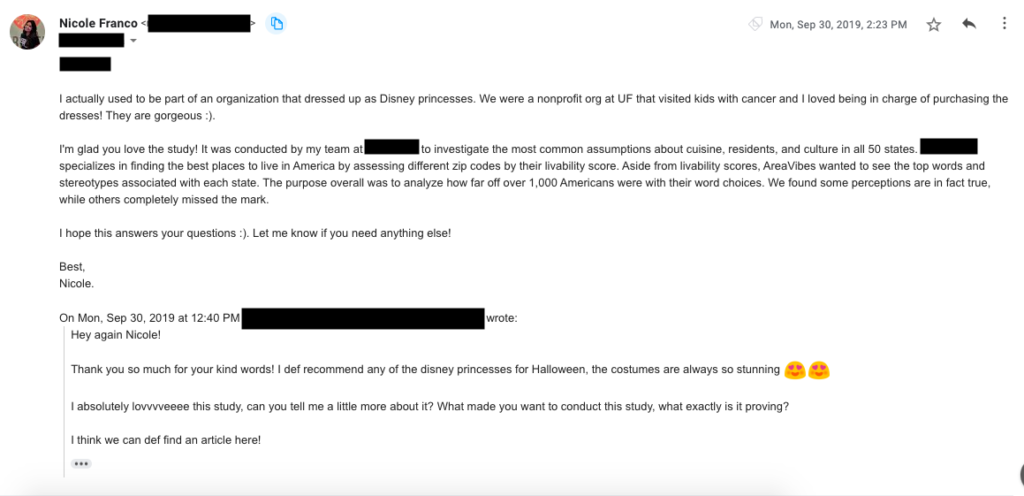
After a minor connection has been made, send them a message or email regarding their Instagram post while mentioning your content and ideas for a collaboration. 

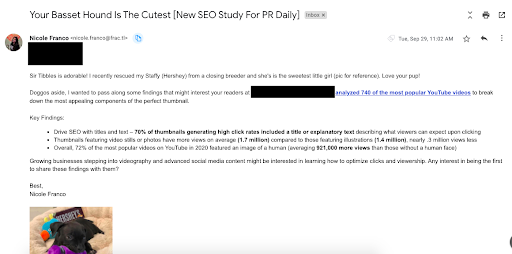
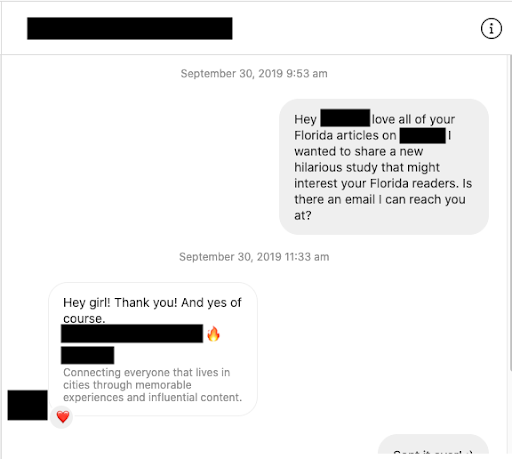
Below is an example of a potential way to reach out to an editor. Keep in mind the content you are pitching and if it’s a serious topic. Editors covering lifestyle topics would be keener on receiving these kinds of requests. 

1. Instagram DM

digital PR outreach using social media - 2 Twitter 1

Pitch email

digital PR outreach using social media - Instagram email pitch

Keeping in mind the kind of journalist you are reaching out to is important. In the example above, the writer had posted about Disney and had consistently covered witty travel content. 

Analyzing their coverage and writing style can provide valuable insight into how to properly reach out. Also, noting something that happens in everyday life or mentioning some seasonal holiday plans are great examples of how to personalize a pitch. In the example above, I chose to connect about Halloween costumes via Instagram. 

Technique #2: Asking for contact info via Twitter

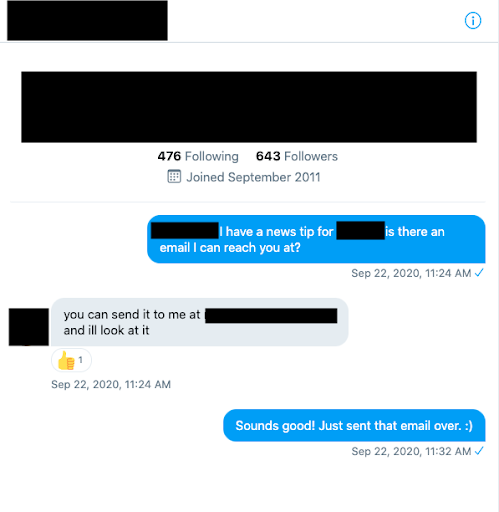
Similar to Instagram, a great way to connect with journalists is by starting a conversation on Twitter. Instead of liking a photo or leaving a compliment, try retweeting or liking a relatable post. 

Twitter DMs are also a great way to ask a publisher for their preferred form of contact. Many publishers have open DMs and are willing to accept a news tip right in their Twitter inbox!

Twitter DM

digital PR outreach using social media - 2 Twitter

Pitch email

digital PR outreach using social media - 3 get acquainted on LinkedIn 1

Pitch Response

Twitter pitch response

One of the most important things to note when reaching out on social media is making sure the content you’re pitching is relevant. This connection worked because the marketer did their research and took the writer’s beat into consideration and referenced a recent article they had covered in the pitch email.

If your content is not relevant or doesn’t align with the writer’s coverage, don’t expect a response. 

Technique #3: Get acquainted on LinkedIn

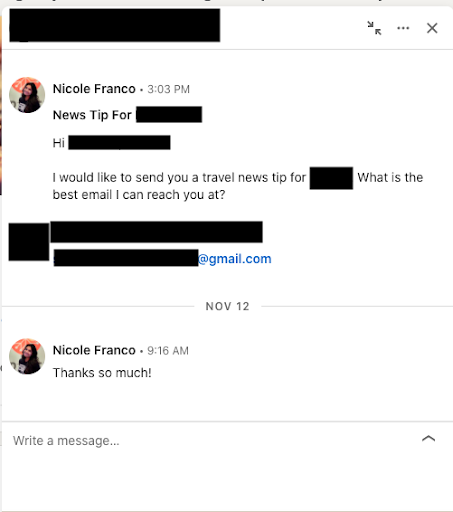
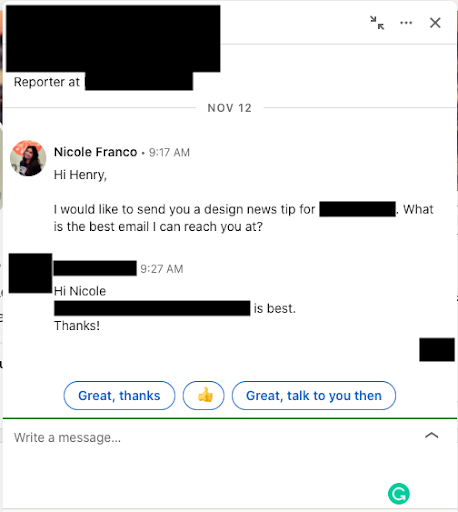
LinkedIn is considered by some to be the most formal way to go. But in order to send a message via LinkedIn, you must be connected to the person, making this a longer connection process. 

When reaching out on LinkedIn, it’s important to note that witty or informal comments might not be taken well on this platform. Keep in mind LinkedIn is used in regards to making professional connections, so keep a PR message short, concise, and professional. 

LinkedIn DMs

In both examples, the message was to mention their beat and simply ask for an email to best contact them at.  Although it seems simple, the writer will expect your email in their inbox and most likely remember your name. Additionally, as mentioned above, personalize your subject line so the writer knows exactly which email is yours. I’ve provided an example below. 

Pitch Email

digital PR outreach using social media - 3 get acquainted on LinkedIn - Email

Aside from just asking for an email, try and connect with them by starting a conversation about the college they went to or an experience they had. Any fellow Gator is always welcome in my inbox!

Technique #4: Reference social to get relatable

Although we are reaching out to journalists in hopes of creating a professional relationship, appealing to their personal likes can go a long way. One way to do so is by reading their bios on their social media or personal website. Some might be writing a book or might express something they really enjoy. 

Do those things relate to you as well? If so, let them know! Yes, the human on the other side of the email loves coffee or dogs just as much as you; who knew?

Pitch email

Pitch response

digital PR outreach using social media - 5 reference social

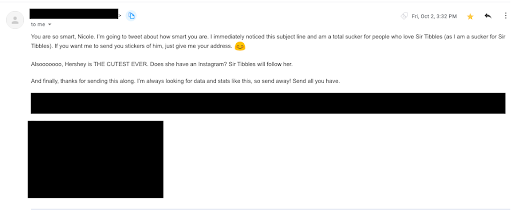
Some say people love dogs more than humans, and this pitch is no exception. Here I decided to take a leap and mention the journalists’ pup in their email. I included a picture of their own pup, mentioned their dog in my email subject line, and shared similar experiences. 

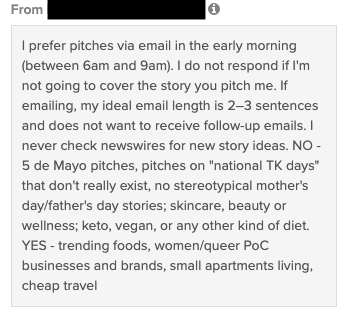
Although this may not always be successful, in this case, it was because of the marketer’s research and analysis. Again, always do your research. Most journalists already mention how they would like to be pitched in places like Muckrack, their personal website, and just by reading their articles (example included below). Marketers can get a feel about how to personalize an email.

digital PR outreach using social media - example

Final tips and tricks for your digital PR strategy

Some things to remember when starting a connection on social media: always do the research, don’t be too invasive and keep it simple. None of us need an elaborate summary of what we tweeted in the summer of 2016. Keep it short, sweet, and relevant.

Consequently, all journalists are different. Although some prefer basic intros, using some sort of external connection can increase a marketer’s chance of building a long-lasting connection. 

Whether it’s referencing dog pictures from Twitter or referencing a line from a recent article they wrote, paying attention to those minor details may be the difference between an email ignored and a new digital PR connection. 

So when in doubt, turn to social. Happy pitching!

Nicole Franco is a Media Relations Lead at Fractl. She’s an extrovert with a passion for building connections with entrepreneurs and working with aspiring businesses to tell their stories. Aside from loving content development; traveling, volunteering, and seeking adventure is what she lives for.

Social media techniques to integrate into your digital PR strategy


How Social Networks Drive Billions of Search Visits with SEO via @Kevin_Indig

[unable to retrieve full-text content]https://feedpress.me/link/13962/14128073/389113


Simple guide to creating an expert roundup post that drives website traffic

30-second summary:

  • Roundup posts are pieces of content in which a list of selected experts give their insights on the same topic, in short descriptions that include their opinions, predictions, or reviews.
  • Creating an expert roundup post for your website or blog can take some preparation and organizing efforts, but it brings undeniable long-term benefits in terms of traffic, authoritativeness, and peer recognition.
  • In the following guide, I will take you through every step of creating an enticing expert roundup post for your website.

Publishing valuable content is a constant challenge when it comes to the formats and topics to cover. As a blogger, digital marketer, or content creator, you already know how much thought goes into offering your audience fresh, engaging content on a regular basis. Readers appreciate formats they are familiar with and can consume easily. A roundup post is an example of a successful approach to topics of interest in your industry.

Roundup posts are pieces of content in which a list of selected experts give their insights on the same topic, in short descriptions that include their opinions, predictions, or reviews.

Creating an expert roundup post for your website or blog can take some preparation and organizing efforts, but it brings undeniable long-term benefits in terms of traffic, authoritativeness, meaningful relationships, and peer recognition. By gathering a group of experts to answer the same question, you will not only generate relevant content for your website but build a strong relationship basis with experts in your industry.

Having a list of selected experts answer a well-placed question gives you a valuable piece of content that is highly shareable, so let’s see what it takes to do it right. In the following guide, I will take you through every step of creating an enticing expert roundup post for your website.

1. Brainstorm potential questions

The first step you need to take after deciding to publish an expert roundup post is to find the perfect question to ask the experts. This will be the key element of your post, and it will dictate whether it will be successful or not.

The perfect question might not be easy to find, but take enough time to find it. Brainstorm as much as you need before you decide who to invite in. All the further efforts of finding influencers and experts could be in vain if the topic you choose does not fit the roundup format, or doesn’t spark interest in your readers’ minds. So I’d recommend you find a question that resonates well with both your readers and experts.

Things to consider when brainstorming

To better understand what kind of questions are fit for a roundup post, you should picture the end result. You want to have your experts give your readers a piece of their own judgment, advice, or insight on a subject that your readers are familiar with. It won’t be a 101, a critical debate, or brain-picking for ultra-specialized information.

Your question needs to be:

  • Easy enough to give your respondents room to elaborate and get ample answers from them without the need for extra-questions.
  • General enough to give you a reasonably long list of influencers, experts, and peers. Go to niche and you might be able to talk to a handful of people about it.
  • Original enough to get your readers curious about the topic, and what experts have to say about it.

What about the topic will you be asking about? Naturally, it has to be specific to your website or niche and what you usually write about. The key is to find a subject that your audience is curious or interested in. Perhaps a trend, or a subject that usually sparks debate or behind-the-scenes type of information that regular posts don’t really get into.

You have the chance to get insights about the latest trends everyone is wondering about, or tips and tricks, good practices that expert peers have discovered through their experience and expertise.

Examples of questions:

  • What’s one piece of advice you’d give to beginner bloggers?
  • What’s one thing you would’ve done differently when starting your blog?
  • What do you think the future of blogging is?

How to get ideas

Easier said than done? If you don’t already have a topic you’ve been pondering about, compile a list of possible questions for your roundup with a little research.

Use tools like the Ahrefs Content Explorer to find trends in your industry, and subjects that seem to attract a lot of readers. You can filter results by their social shares, number, and quality of referring industries so that this tool and similar ones can give you a good idea of what subject should be pursued.

With these things in mind fuel that creative engine and start putting ideas on paper, whether they seem perfect candidates or just potential pursuers. It’s best to have a long list to start from when drafting the winning question for your roundup post.

2. Find talented experts

After finding your question, you should have a good idea about the expertise of your respondents. Assuming that you are active in your industry for a reasonable time, you should already know who the experts in your niche are. You want to compile an extensive list of experts of at least 50+ because not all will reply to your inquiry.

Let’s make a profile for the ideal respondent in your expert roundup post:

  • They are directly related to the industry you are writing about
  • They have a good follower base and an audience that regards them as influencers
  • They have contributed to roundup posts in the past
  • They are continually sharing thought-provoking, original ideas on their social media and on personal or business blogs
  • They have authority in the field: company owners and founders, top positions in companies of the industry, public speakers, success bloggers, and more

A practical, fast way of identifying possible candidates for your roundup post is to check other roundup posts in the industry. Does this approach seem lazy at a first glance? The redundancy of a roundup article doesn’t come from the list of people contributing to it, but from the very topic, you will choose for it.

As long as you are able to provoke your respondents to bring something original to the table, selecting them from other roundup articles is absolutely fine.

Depending on your topic, you might find tens of experts already showing potential for accepting your invitation. But don’t put your eggs in one basket: there are other ways of finding strong, authoritative voices in your niche.

A simple search on social media can give you a good idea of who is interested in the topic you have selected and fits the ideal profile described above. Twitter and Facebook are also great platforms where you can find experts in your industry.

For our roundup post about blogging tips for beginners, we have gathered content from CEOs and founders of content marketing websites, authors, bloggers, and podcasters in digital marketing. They were all able to give us valuable insight into what blogging is like for beginners, and what they should do to thrive.

Web search is another simple solution to putting together your expert list. We were able to find several experts by simply typing in our keyword or phrase onto Google. Find bloggers who have been covering your subject, or similar ones, and dig a bit more in their previous posts, to have an idea of who you’re going to contact.

Ahrefs, BuzzSumo, and Hootsuite are other awesome tools to research hot topics and authoritative blogs, as they display real-time data on their referring industries, traffic value, and the number of shares they get for their posts.

3. Find their contact information

Once you have a list of experts, bloggers, and influencers who can give you valuable insight into the subject you want to cover, it’s time to start gathering their contact information.

It’s best to keep a database of their information, on a simple Google or excel sheet with their names, email addresses, URL to their website, the date when you contacted them, and a column where you check if they submitted content or not. You can get a little more advanced by using a CRM or email outreach tool like Mailshake.

Keeping your contact information organized will speed up the preparation process and will help you avoid awkward situations like sending an invitation twice, or forgetting to do a follow-up with them.

Some of the experts you’re trying to reach won’t have a visible email address but you can use tools like Hunter.io to find them by simply entering their first name, last name, and their domain name. It will give you a list of the results it found. Ideally, you would launch your invitation privately, but if you still can’t find their email address, don’t hesitate to send a tweet that mentions your plan or a simple message via the other social media platforms.

Here are more tips on how to find contact information for people who you want to reach, and what good practices you should follow.

4. Reach out to your experts

If it’s the first time you are contacting someone, it’s a good idea to look into the good practices of a cold email. Roundup posts are great for getting quality backlinks, and the persons you will contact are aware of the positive influence their contribution can have on your traffic and domain. But they can’t endorse a website or a blog that doesn’t prove to be valuable on a constant basis.

We can talk about cold email outreach best practices for days on end but that would take too long. What I highly recommend is that you be genuine, polite, and kind when reaching out to your experts. This goes a long way and they’ll be able to tell when someone is being genuine since they receive hundreds of spam emails every day.

I also recommend you personalize each and every one of your emails. Yes, this will take time but you will have a higher conversion rate than if you were to send the same bulk email to everyone.

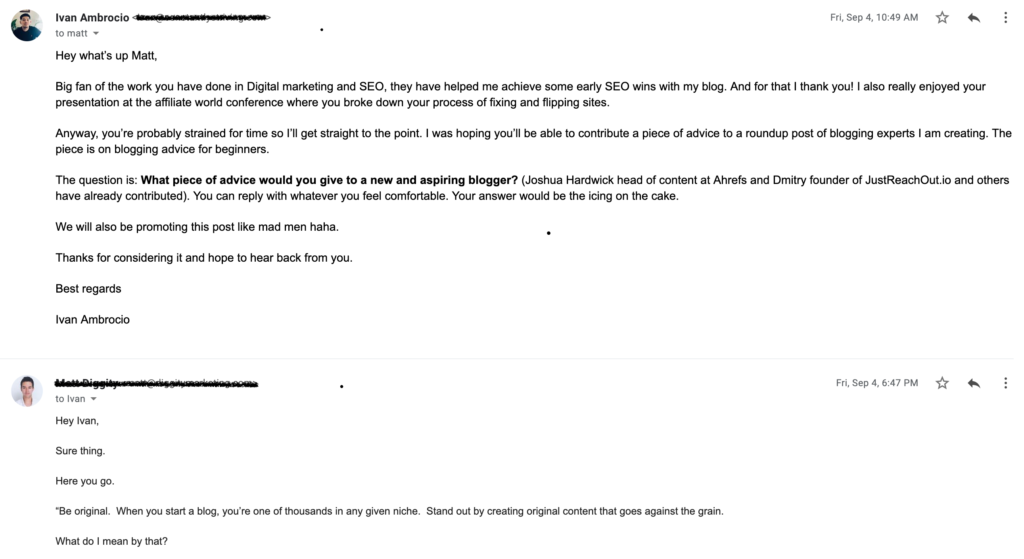
I don’t have a template to help you get started, but below I have provided a screenshot of an email I sent out to one of the experts that we included in our roundup. Feel free to use it for some inspiration and to help garner some ideas.

Another fantastic way of reaching out to experts is by joining and engaging with them via their live streams. We used this tactic to reach one of our experts who had not replied via email. It worked out, and he gave us some awesome advice while on his live stream.

5. Put it all together

Getting enough contributions from the experts you have contacted is a great achievement in the process of creating a stellar roundup post. But your job is not finished yet. Putting together the content you have just received from your guests is very important, as it will have to be a high-quality presentation that they will gladly share on their channels, therefore getting you some exposure to new audiences.

Things you want to include

  • A headshot
  • Their reply
  • Short bio
  • Social media and website handles
  • And your own comments

As you can see in our roundup post example, each contributor’s section starts with a professional picture of the contributor, the content that they have submitted, finished with our own thoughts on their commentary. We have added easy-to-follow social media icons that take you to their Twitter, Instagram, Facebook, or LinkedIn profiles, the titles they hold, and links to their main projects: companies they work for, blogs, YouTube channels, and others.

We wanted to make it easy for our readers to follow and engage with our experts via their blogs, businesses, and social media accounts.

While you want to emphasize the value of each contributor, you must also have your reader’s interest in mind, and clearly answer a need or a question your audience has.

6. Promote your post

Promoting your posts should be done in the interest of all your contributors, yourself, and your audience. The effort you have invested in compiling these pieces of content will ideally be rewarded with significant organic traffic, a good number of quality backlinks, and most importantly the start of new and meaningful relationships.

You should also edit the content carefully so that each contributor gets the same level of attention and appreciation. Take your time to thank each one of them for their contribution and don’t hesitate to personalize your message with your personal impression of their content.

Backlinks are certainly welcome, but asking them explicitly might not be appreciated by all the persons you will contact. The best ways of getting your contributors to share the roundup post are to simply ask them if they could share it with their audience.

Infographics, tweets, quotes included in an image, newsletters, and paid ads are all great ideas for getting your content everywhere and promoting it like crazy.

Conclusion: Creating an expert roundup post is totally worth it

Publishing an expert roundup post might not be everyone’s style of content, but for certain industries and domains, it can be a long-term valuable resource, both for your audience and your peers. And, of course, for you.

Keeping your focus on the value your post should bring to your readers will help you choose an enticing topic, ask the right question, and select the right people to answer it. While no one can ignore the advantages a roundup post has for contributors and creators alike, backlinks and traffic should not be your singular concern.

Ultimately, the success of such a compilation is given by the shares, referrals, and traffic you get from your audience. Create a fantastic expert roundup post by asking a question your readers are interested in, and your contributors can easily answer.

Give this type of content the time and effort it needs and it will prove to be a fruitful initiative, both amongst your peers and as a relevant post for your website.

Simple guide to creating an expert roundup post that drives website traffic


Five quick SEO wins to give your website a boost in search

30-second summary:

  • There are SEO tactics you can apply even without significant expertise.
  • These tactics even the playing field a bit for those who can’t hire a huge team or outsource to an agency.
  • Paying attention to things like images and hosting can give your site a boost.
  • There are simple link building tools that are free and easy to use.
  • Applying these tactics will help you get in the SEO game and give your website a boost in search.

SEO is not easy. In fact, there are around 200 factors that go into determining where your website appears in search results. As such, optimizing your site for search can be a daunting task. Companies hire full teams of SEO experts or outsource the work to agencies to handle the huge workload that can come with executing an effective SEO strategy. Many companies, like yours perhaps, don’t have the resources to do this, however. Fortunately, there are a number of quick wins you can take advantage of to give your website a boost in search.

Try these five tactics to gain some quick SEO wins for your website.

1. Optimize images and visuals

The images and visual elements you place on your site, in articles, on pages, and all around, can be hugely valuable in giving an easy boost to your search rankings.

One example I like to point to is this image on the SE Healthcare website.

Give your website a boost in search - Optimize images and visuals

Image: SE Healthcare infographic ranking in image searches – Source

In working with SE Healthcare on the company’s SEO strategy for a new product launch, we were targeting keywords around the core of physician burnout. Over time, we noticed that this image actually started ranking. It started showing up for tons of searches for “physician burnout solutions” as a result. And those searches went straight to this image in an image search on Google.

Clicks on this result ended up with shares of our infographic appearing on social media as well as a serious lift in our search results for related searches. And we ultimately found that inquiries about related product lines began to rise as well.

So, make sure you’re doing the following to use images to give an easy boost to your search results.

Add visual elements throughout your site

First, adding images, infographics and other visual elements to your site just creates a better experience for users. Any time you can substitute a visual element to explain a concept rather than adding a thousand words of unnecessary text, it can go a long way in connecting with visitors.

Obviously, don’t eliminate text altogether or your SEO will suffer. But, be sure you add images in articles to enhance the articles. Add graphics to explain product features. Add high-quality images of your products. The list goes on, but you get the point. Images add tons of value to your site, and they can also help you rank in search. Google and other search engines love images.

Where to add images

To give you an idea of where you can place images to optimize your site, try the following:

Representative icons – Add representative icons above products and other elements to pull your visitors’ attention.

give your website a boost in search - Where to add images

Image: Icons to represent services – Source

Infographics – Drop infographics into articles and other pages to visually explain concepts and add more value to keep readers on the page and scrolling.

give your website a boost in search - Demo videos

Image: Example of an infographic to add value – Source

Demo Videos – These can really boost your ability to highlight your products by showing rather than telling.

give your website a boost in search with demo videos

Image: Demo video example – Source

Visual Coupon Codes – This is a great way to highlight discounts and entice shoppers on your site to make a purchase. Works great for ecommerce businesses.

Add coupons as a visual element

Image: Visual discount codes – Source

Thumbnail Images – Make sure to add thumbnail images for your posts. These will show up as shown below.

Use thumbnail images

Image: Example of using thumbnail images with posts – Source

Images in Blogs – Placing images through your blog is hugely important. You can use a header image as well as images throughout the post to illustrate important points.

Image: Example of adding a supporting image that expands on the info provided in the text within a blog post – Source

These are just a few ideas of how you can leverage visuals throughout your website to enhance the user experience and give your website a boost in search.

Incorporate videos

Embedding a YouTube video into your articles or your pages can really help boost stats like time on page and lower stats like bounce rate. When these stats head in a positive direction, Google will take notice.

Google loves sites that keep visitors’ attention and keep them on site. A video embedded in the middle of an article can add a minute or more to the time someone spends on your page. And the best part, you don’t even have to create the video.

For example, you could write an article about making Fall décor from egg cartons. Conduct a search on YouTube and find an example of someone doing this, and then embed it in the middle of the article. Not only will visitors read your copy, but they will likely also stop and watch the video, thus keeping them engaged longer.

Insert alt tags

Google is getting better at reading images and determining what they are showing, but the technology still has a way to go. To make sure Google understands the images on your website, you need to place alt tags in each one image upload describing the image. This helps Google determine what the image is showing and whether it relates to a specific search.

Images are super important for helping your site’s SEO performance, so be sure to follow the tips above to benefit.

2. Enhance website security

When you think of cyberattacks, what’s the first thing that comes to mind? Whatever answer popped into your head, I bet it didn’t have anything to do with SEO. Many site owners fail to realize the negative impact a cyberattack can have on your site’s search rankings.

Google, however, is paying attention to a variety of reasons. If your website is lacking in security, and Google takes notice, your site could be in serious trouble.

How Google treats cyber attacks

If Google crawls your website and finds it has been hacked, the search engine giant could actually blacklist your website. When this happens, site visitors will see a notice saying something like “This site may have been hacked.” It goes without saying that visitors seeing that notice will likely navigate away from your website and look for answers and solutions elsewhere.

People see this warning and instantly click away, which can seriously damage your site’s stats. Google will undoubtedly take notice, and your site could be demoted. You may not even notice anything until you see a huge drop in traffic or a major rise in your bounce rate and decide to investigate. By that point, the damage will be done, and you’ll be forced to spend tons of time making things right.

There are a number of types of attacks that can hurt your site. Let’s take a look at a couple types of cyberattacks that can have a seriously negative impact on your search rankings.

DDoS attack

DDoS stands for Distributed Denial of Service. This type of attack is becoming more and more prevalent. The cybercriminal will send massive amounts of bot-related traffic to your site, which can cause significant downtime.

This significant downtime can cause your search rankings to drop. Even 15-minutes of downtime can be a negative signal to Google, so just imagine what a whole week could do. For this reason, you need to take steps to avoid a DDoS attack in order to prevent a drop in search rankings.

Bad bots

This involves bad bots crawling your site and scraping content or stealing data. Obviously, you want to avoid an instance of data theft. Just think of all the major headlines that have been made in recent years from companies being hacked and customer data being stolen. A lesser-known bad bot is the content scraper. These bots essentially scrape your content and place it elsewhere. This compromises your site’s originality and uniqueness and can lead to your search rankings dropping.

These are just a couple of the types of hacks that can hurt your SEO. There are plenty more to be aware of, so you’ll want to do your homework and make sure your site is prepared.

How to protect your site

Fortunately, there are a number of proactive steps you can take to protect your site to avoid this negative impact on your SEO. Here are a few things you should be doing:

  • Make sure you have HTTPS setup
  • Install a strong firewall
  • Conduct regular testing to uncover potential vulnerabilities
  • Use multi-factor authentication for your website logins and even for email
  • Install a security plugin
  • Update your website regularly
  • Use secure logins and passwords for your team (and update them regularly)

Doing these things can position you to avoid the negative SEO impact of a cyberattack and help you maintain the search rankings you worked so hard to earn.

3. Speed up the hosting

Multiple studies confirm that faster site speed does indeed result in better search results. There are a ton of factors that go into optimizing the speed on your site, but one simple factor that’s super easy to control is your site’s hosting provider.

Many of the technical things you can do to speed up your site take time and often require an expert. Fast hosting, on the other hand, simply involves making the right choice and then working with the hosting providers to get your site up and optimized.

There are a ton of hosting providers that offer hosting for $2.99 a month (give or take), but often those are shared hosting, which can be significantly slower. To really get the most out of your hosting and truly experience an increase in site speed, I recommend looking at the following types of hosting providers.

Managed WordPress hosting

I start with this because 38% of websites are built using WordPress. It’s my preferred platform, and for WordPress users, managed WordPress hosting can really help optimize your site and give a boost to your site’s speed. I use a managed WordPress hosting provider for my own website.

Managed WordPress hosting often comes with a higher level of support, enhanced security, and obviously since I’m bringing it up here, faster page load speed.

The cost can range from $50 to upwards of $200 per month, which makes this an affordable option for small- to mid-sized businesses.

Dedicated hosting

The name speaks for itself. You won’t be sharing this hosting with anyone. It is 100% dedicated to your organization alone, which gives you a huge boost in speed. Unfortunately, this option also comes with a boost in cost.

That said, if you are seeing 100s of thousands of visitors to your site each month, this option is right for you. And if you’re seeing that level of traffic, and your site is optimized for conversions, you can likely afford it.

This option can cost a few thousand dollars, so if you aren’t quite there yet, it may be something to keep in mind for the future.

As you can see from the graphic below from Section.io, site speed can seriously impact the bounce rate of your website, which is why I stress the importance of the impact your hosting provider can have.

give your website a boost in search - Add infographics

Image: Source

If these options aren’t the right fit for you, there are tons of other options. With shared hosting, for example, you can pay a bit more to get faster speeds. And with Cloud hosting, you get the benefit of lower downtime.

Whatever option you choose, make sure you talk to the hosting provider and ask questions about site speed and how their platform will help you boost the performance in this area. A faster site is an easy way to give a boost to your SEO.

4. Simplified link building

Link building takes a lot of time and effort. You need to conduct research upfront, and then the execution part, including the outreach to website owners, can be quite time intensive.

There are, however, a few methods you can use to grab some easy links and start slowly building up your arsenal of links.

Let’s take a look at two specific ways you can do link building effectively while saving some time and effort.

HARO (Help A Reporter Out)

This is a great resource. Help A Reporter Out, known in the industry as HARO, allows you to connect with journalists who are seeking sources for the content they’re creating.

You sign up for an account, and when you receive emails with a list of inquires each day related to the subject matter you select. For example, if you run a marketing agency, you can sign up for the business and finance emails. If you run a healthcare organization, you can sign up for the healthcare list.

Once you’re signed up, you’ll receive emails each day that list out queries from journalists asking for expert sources like yourself to provide your opinion or advice on particular topics. Those emails will look something like this:

Image: HARO email example

As you can see in the email, you’ll see a one-liner highlighting the subject of the query. If you see something that stands out (a subject you feel you could answer expertly), you can just scroll down through the email and you’ll see the full query.

The full query will have more details about the publication and what, specifically, the writer is looking for. Only answer queries where you truly feel you are an expert.

Once you find something that’s a fit, submit an email to the writer via the email link in the email you were sent. I recommend formatting it something like this:

By using this format, you’ll have a better chance of getting accepted, and when you get accepted, the writer will typically add a link back to your site from your quote.

If you keep an eye on your HARO emails and try to respond to 1-2 queries each day, you will gradually start to get your answers accepted, thus gaining valuable backlinks, sometimes from super high domain authority sites. I’ve personally grabbed links from sites like Content Marketing Institute (80+ DA) and Forbes (80+ DA), among others.

Directory submissions

This is another easy link building win. All you need is the following information, and then you can start creating accounts for various directory sites.

  • Elevator pitch for your business (aka, brief description)
  • Your website’s URL
  • Physical address and contact information
  • Logo or image to accompany your listing

Some sites will allow you to enter more info, but you need to at least be armed with the basics above.

Start with the general sites like Yelp, Yellow Pages, and of course, Google My Business. Get those sites up, and then dig a bit deeper. Your industry will definitely have industry-specific directory sites, so don’t forget to fill out those as well.

By filling out directory sites, you are gaining links back to your website, but you are also setting up opportunities for your profile on those sites to appear in search when your site itself does not.

These are just a couple of easy ways to start building links. Begin with these tools, and as you start to get on a roll with HARO, and your directory sites are all set up, you can move onto more difficult efforts.

5. Check for broken links

One thing that can hurt your site is having broken links littering your pages. If you post a ton of content, it can be easy for broken links to slip past you.

For example, you link out to external posts to provide supporting information to your blog readers. Over time, the owners of the sites you link to may remove posts, or those pages themselves may become broken.

If you have a ton of broken links throughout your content, this can impact your SEO, and it can create a poor user experience.

Fortunately, there are lots of great tools you can use to check for broken links and then correct them. Here are a few options:

  • SEMRush – This is a paid platform with lots of bells and whistles. There are a ton of great tools included, so if you want to go all-in on SEO, start here.
  • Ahrefs – While Ahrefs has a great paid platform, they also offer a basic broken link checker for free. I highly recommend checking it out.
  • Dead Link Checker – This is another free tool. You just type in your URL and the checker will scan your site and point out any issues with broken links that it finds.

Whatever tool you choose, you’ll want to locate broken links and either update them with links to new, relevant content or unlink them. Doing this can help keep your site clean and give your website a boost in search.

Conclusion

Applying these tactics can help you get a head start on your SEO efforts. While many SEO tactics are very time-intensive and super challenging, these four tactics are a bit easier and can give you some quick wins.

And the best part is that you don’t need to be a seasoned SEO vet to execute these tactics. Anyone can set up a hosting provider, for example. And typically, the hosting provider will move your site over to the new hosting, so all you’ll have to do is provide some login info.

And looking at HARO, connecting with reporters for high-quality publications can be extremely challenging. HARO helps level the playing field and gives you access to reporters in a much easier way.

So, get your team together and figure out the best approach to start applying these tactics. If you stay consistent and focus on the end goal, these tactics can really give your website a boost in search.

Anthony is the Founder of AnthonyGaenzle.com a marketing and business blog. He also serves as the Head of Marketing and Business Development at Granite Creative Group, a full-service marketing firm. He is a storyteller, strategist, and eternal student of marketing and business strategy.

Five quick SEO wins to give your website a boost in search


How social media influence 71% consumer buying decisions

30-second summary:

  • Due to the rise of online shopping and the amount of time people spend on social media, social media impacts consumer buying decisions.
  • Consumers who are influenced by social media are four times more likely to spend more on purchases.
  • There are four ways in which social media has a direct influence on purchase decisions.
  • Social media and online shopping shortened the customer journey.
  • Social media amplified the impact of social proof or word-of-mouth.
  • Social media influencer marketing is one of the most effective ways to reach your audience.
  • Stories and ephemeral content are a new way to connect to your audience.
  • Every social media platform is different and can be useful for different goals.

A large share of purchases are made online nowadays and in 2020 this number has grown significantly thanks to the lockdown. As the number of internet users increases and tech companies develop more ways to integrate the online world into shopping, online retail is expected to grow exponentially. Logically, many consumer buying decisions are made online as well, and where do people spend most of their online time — on social media.

According to GlobalWebIndex, 54% of social media users use social media to research products and 71% are more likely to purchase products and services based on social media referrals. I bet you yourself made a purchase decision based on what you saw in your feed at least once, be it a post from a friend or an ad that convinced you.

It’s hard to say exactly how much social media influences customers, not just what they buy, but their consumer habits in general. Social networks changed the way we promote products and even gave us new ways to advertise. Let’s talk about some factors that impact customers nowadays.

How social media influences consumer buying decisions

1. The shortened customer journey

The first thing that you notice when it comes to customers on social media is the shortened customer journey. It used to be that people found out about a product, saw an ad on TV multiple times, and next week they may have gone shopping and finally bought the product. Now, this process can take minutes.

Modern customer journey

According to the Deloitte report, 29% of social media users are more likely to make a purchase on the same day of using social media. That means that once they see a product, they simply click on the link and buy it: there’s no need to wait before they go shopping. Moreover, the same report states that consumers who are influenced by social media are four times more likely to spend more on purchases.

The customer journey is not just shorter but it’s also more complicated now. Social media has made product research more accessible to users. For example, if your customer sees a product on Instagram, they can immediately search the hashtag to look up other reviews and decide whether they should buy it or not. As a result, customers spend more time on research and check more sources for reviews.

62% of customers say they share bad customer experiences with other people. Thus it’s extremely important to keep an eye on your online reputation and seek out reviews on social media. Remember that every review on social media is important — and that fits nicely with my next point.

2. The influence of social proof

Admittedly, social proof is not a new concept: man is a social animal, and we’ve been giving each other recommendations for centuries. The thing is, these recommendations and anti-recommendations can now be heard by hundreds of people.

Recommendations - How social media influences consumer buying decisions

Every time you tweet or post about this amazing cafe or the shampoo that did wonders to your hair, your social media followers see it and might be moved to try it as well. The same goes for negative opinions and rants. As per Forbes, 81% of consumers’ purchasing choices are influenced by their friends’ posts on social media.

Moreover, people proactively ask for recommendations on social media (and brands unfortunately often ignore them). According to this study by Awario, only 9% of brand conversations are answers to customer questions, however, depending on the industry, there can be more than 100 people asking for recommendations on social media in one month.

As I mentioned above, social proof mostly impacts your friends and the people you know. But more and more people on social media don’t just follow their friends — they also follow influencers. That’s where influencer marketing comes into play.

3. The power of influencers on consumer buying decisions

Influencers are the social media users that have a robust loyal audience that often shares the same interests. Their opinions are naturally seen by a bigger number of people, people that trust them.

According to a study by the Influencer Marketing Hub, almost 50% of Twitter users have made purchases as a direct result of a Tweet from an influencer.

Influencer marketing - How social media influences consumer buying decisions

Micro-Influencers are especially effective in persuading their audience since they are usually experts in some niche and specific topic, which makes them a natural source of recommendations for this topic. If you’re selling a niche product, finding social media influencers in your niche — Instagram bloggers, vloggers, TikTokers, or Facebook group admins — is a great way to reach your audience.

Gen Z and Millenials are more likely to be influenced, with 84% of millennials saying user-generated content from strangers has at least some influence on how they spend their money.

The influence of Stories on consumer buying decisions

Ephemeral content is a relatively recent trend but it’s already winning over social media users and brands alike. Snapchat was the first to use Stories as a format, but it’s Instagram that popularized it and now boasts more than 500 million daily active users.

Instagram Stories - How social media influences consumer buying decisions

The content shared via Instagram Stories is typically more raw and unfiltered, which allows brands to create a more genuine image. It enables companies to take people behind the scenes and show how they operate, their work culture, and the team behind the products. All this helps to foster an authentic connection to a brand.

So these are the features exclusive to social media that shape customer behavior today. But as you probably know, every social media platform is a little different. Oftentimes, brands wonder which social media platform they should focus on. Let’s go through a list of most popular platforms and see what differentiates them from one another.

Most popular social media platforms

1. Facebook

Facebook remains the biggest social media platform in the world (with almost 1.7 billion users), even though it had its fair share of scandals and controversies in recent years.

The sheer size of the network means that you’ll be able to reach more people on there but be careful — Facebook is not as popular as it used to be. Edison Research’s Infinite Dial study from early 2019 showed that 62% of U.S. 12–34 year-olds are Facebook users, down from 67% in 2018 and 79% in 2017. This decrease is particularly notable as 35–54 and 55+ age group usage has been constant or even increased.

Still, Facebook accounts for 50% of total social referrals and a further 64% of overall social revenue, shows Business Insider.

In 2015, Facebook was responsible for influencing more than half, 52% of consumers’ online and offline purchases, shows DigitasLBi Commerce.

Lately, the company has been trying to fix its reputation by introducing more control over advertising and data management.

2. Instagram

Instagram is an amazing platform for brands since it gives you so many opportunities to show off your product: photos, videos, Stories, galleries, filters, and more. It now boasts more than one billion monthly active users.

What’s great about the platform is that it’s popular among all generations in all countries. 80% of Instagram users follow a business account. 73% of U.S. teens say Instagram is the best way for brands to reach them with new products or promotions.

Moreover, the platform itself facilitates shopping by adding shopping tags and checkout options to the posts. 130 million Instagram accounts tap on a shopping post to learn more about products every month.

3. TikTok

Although TikTok is a relatively new platform, its rapid growth made it an important source of brand awareness for social media users, especially Gen Z.

TikTok now has 800 million active users worldwide, and 41 percent of these users are aged between 16 and 24. So, if you want to reach a younger audience, TikTok is the place to be.

TikTok’s algorithm is also amazing for niche and specific products since it curates your feed based on your interests. It makes your job of finding new followers easier — the algorithm will push your content into the feeds of your potential audience.

Moreover, TikTok recently launched new ways to advertise on the app, giving brands more opportunities to attract customers.

4. Twitter

According to Hubspot, Twitter is a source of product discoveries for many people.

Twitter's Recommendations impact on consumer buying decisions

Because of its quick nature and ability to connect to basically anyone, it’s a perfect place to ask for recommendations. SproutSocial shows that 53% of consumers recommend businesses or products in tweets while a further 48% follow through to purchase those products or services.

5. YouTube

There’s a debate on whether YouTube is actually a social media platform or more of a streaming platform or content platform. Nevertheless, it’s one of the most popular platforms out there.

YouTube stats on consumption

More and more people are looking up product reviews on the platform. Keep in mind that 80% of people who said that they watched a YouTube video related to a product they want to buy said that they did so at the beginning of their buying process.

If you’re ready to invest your time in creating content for YouTube, it can be a highly rewarding task. Just look at the BonAppetit channel that belongs to the magazine of the same name. It has almost 6 million subscribers and more than 1,3 billion views when the total circulation for the magazine doesn’t exceed 1,600,000 copies in a year.

Conclusion

As you see, the data and our daily experience on the Internet show that it’s hard to argue that social media influence purchase decisions. The impact of social media on customer purchase decisions can be explained by many factors: social proof, the penetration of social media, and the availability of online retail.

However, it’s getting more and more difficult to make your brand stand out on social media. Focusing on the right platform, building creative social media marketing campaigns, and using up-to-date technologies will help you with that.

The post How social media influence 71% consumer buying decisions appeared first on Search Engine Watch.

https://www.searchenginewatch.com/2020/11/20/how-social-media-influence-71-consumer-buying-decisions/


Top six reasons you should caption your social media video content

30-second summary:

  • Video marketing is more than a trend; it’s a must. But most companies are leaving out a key ingredient to ensure customers engage with their videos: captions and subtitles.
  • Captioning videos in English or subtitling them in other languages has been proven to greatly boost the success and accessibility of online video content.
  • Adding captions, subtitles or a transcript to videos allows Google to index the entirety of video content, rather than just indexing the video title.
  • Captions and subtitles ensure videos are accessible by all: those who don’t have their volume on and the 37.5 million Americans who are deaf or hearing impaired.

No matter what industry you’re in, video content is likely part of your marketing strategy. And if it’s not, it should be. According to a report by Cisco, online videos will make up more than 82% of all consumer internet traffic by 2022. And 72% of customers would rather learn about a product or service by video. Even still, videos aren’t some magic token that’ll get you to the next realm of marketing success and customer engagement. The online landscape is crowded, competitive, and moving at lightning speed. You don’t just need users to slow their scroll, you need them to engage. And when it comes to video content, the solution is quite simple, but often overlooked: closed captions.

Captioning your videos in English or subtitling them in other languages will greatly boost the success of your online video content. As a professional captioner and subtitler, I’m here to help you understand why:

1. Google can’t watch videos, but it can crawl captions

If you’re looking to improve your video’s SEO, adding captions is a quick and easy way to do it. Search engines like Google can’t watch your video content, but they can crawl your captions or transcripts and rank your video based on the keywords they find. Although your video will also be indexed for SEO by its title, description, and tags, captions will increase your keyword density and diversity even further. 

Google can't watch videos but can read captions

Next time you’ve got video content creation on the horizon, make sure you incorporate keywords into the script with this tip in mind, as it will pay off when it comes to video performance and SEO results in the long run.

2. Video captions drive more social engagement 

Adding captions to your videos is almost guaranteed to boost engagement, interaction, and conversion. According to a case study by Instapage, call-to-action clicks increased by 25% after they added captions to their Facebook videos. Another study found that captions increase the time viewers spend watching a video by almost 40% and make viewers 80 percent more likely to watch a video through the end. Simply adding captions to video content drives up clicks, overall view time, and view longevity.

3. A lot of people don’t (or can’t) turn on video sound

Have you ever insomnia-scrolled through Facebook for some entertainment while your partner slept soundly next to you? Or decided to take a peek at your feed during a boring class lecture? Or what about when you’re riding the public bus, having a cup of joe at your favorite coffee shop, or dining out solo? In all cases, playing a video aloud is not ideal… or socially acceptable.

Example of how captions support video experience without audio

As much as 85% of Facebook videos are played without sound. That means, if you don’t have captions on your video, it’ll be skipped by anyone watching with the mute button on, which could be a sizable chunk of your target audience. If you want to ensure your followers can view your content no matter where they are when they watch it, then do your part by adding captions. 

4. Captions boost comprehension, memory, and attention

Hundreds of studies have proven that captions improve comprehension of, attention to, and memory of video content. I’m a native English speaker, but my husband is Spanish. To improve his comprehension while watching TV shows and movies in English, we always watch content with the captions on. I was surprised to find that this also improved my comprehension and understanding of the content, and I now watch all video content with subtitles, whether or not my husband is sitting next to me on the couch. Including captions is the best way to ensure your takeaway hits home and leaves its mark on your viewers.  

5. Captions make videos more inclusive and accessible

Over 37.5 million Americans are deaf or have trouble hearing, so video audio serves little to no purpose to this group. And, only 36% of organizations caption all their video content. So why not get on the right side of that number? Without captions, you’re missing out on connecting with a huge audience. But remember, it’s not all about business and money, ensuring your video content is inclusive of all viewers is simply the right thing to do.

6. Most of your viewers likely live outside of your country of origin 

Making your content available worldwide is another way to grow your reach and the impact of your video content. According to YouTube, approximately “two-thirds of a channel’s views come from outside the creator’s home country.” Think about that: a huge portion of your audience might not fully understand your message or recognize your call to action. That’s a deep pool of potential customers you are missing out on.

Look at your analytics, figure out where your viewers live and consider creating subtitles in other languages to reach new markets. Make this a very strategic decision. Quality translation and subtitling are an investment, so you’ll want to make sure you choose the right language(s) to reach the target markets you’re able to serve. 

A word of caution: Resist the urge to DIY your captions and subtitles

While there are free machine translation, transcription, and captioning tools available on the market, take it from me: you don’t want to DIY your video captions. Leave this task to the experts. 

Captioning and subtitling are skills unto themselves, and without training and experience, can be time-consuming and delicate tasks. Captions and subtitles must follow strict rules, including character limits, reading speed, and cue-in and -out times (when the text appears on-screen and when it’s taken off the screen). Poorly timed captions and subtitles are difficult or impossible to read, which defeats the purpose of captioning or subtitling in the first place. 

word of caution on DIY captioning

Use resources such as the American Translators Association Directory (go to “Translation Service(s)” and choose “Dubbing/Subtitling” from the dropdown list) or visit GoSub’s job board to find a professional subtitler or captioner.

Don’t spend tons of time, money, and effort on creating the perfect video and leave out the key ingredient to ensuring your message reaches as many people as possible. Well-captioned and -subtitled content will increase your views, boost engagement and comprehension, and improve the overall success of your social media video content. Plus, for once, this is a quick and easy marketing fix that can make a big impact!

Molly Yurick is a Spanish to English translator, professional captioner, and subtitler. She is also Deputy Chair of Public Relations for the American Translators Association (ATA), which represents more than 10,000 translators and interpreters across 103 countries. 

Top six reasons you should caption your social media video content


6 Steps to Selling on Social Media Messaging Platforms

Instead of using email to find prospects, social media messaging can reap more benefits if you follow these steps.

November 18, 2020 5 min read

Opinions expressed by Entrepreneur contributors are their own.

Have you ever heard of conversion conversations? This sales technique involves getting to know your prospect through an online messaging platform, creating a conversation, then shifting to a sale once they are qualified. The best part? It’s entirely free if you do the legwork.

When choosing which platform to use for your messaging, keep in mind that is still the largest social media platform, used by 2.6 billion users, according to Statista. Pew Research found that 75 percent of high earners use Facebook. Instagram is more visual, so if you’re products or services that look good in photos, or if you’re targeting younger generations, go for Instagram. According to Statista, 32 percent of users are between 18 and 24, and 33 percent are between 25 and 34.

Related: 5 Tips for Selling Your Luxury Products on Facebook and Instagram

The pandemic has been the perfect time to turn to social media. Americans are spending more time online, as Kantar’s data found a 61 percent increase in social media engagement.

Since company budgets might be tight in these current times, conversion conversations are a great, free way to build your sales funnel. The key to messaging is to say the right thing at the right time. Here are six steps to get you started. 

1. Find leads through their interests. Use Facebook groups to find active members in your niche target audience. Seek out prospects who are looking for a solution. For instance, if you’re a realtor, look up groups focused on people moving to your city and engage with people asking questions like “What’s the best neighborhood to live in?” or “What are the best-rated schools in the area?” These people have a need and you can provide a solution. 

2. Continue to post organic, helpful content, and reach out to your engaged followers. Filter through your likes and comments and reach out individually. Since they are familiar with your brand already, your messages can get to the point faster. Your followers are low-hanging fruit. They are already engaged and seek your expertise on topics.

3. In your conversation, relate to that person. Take a look at the photos or posts on their personal profile and use it as an opener to the conversation. If someone is posting photos of their dog, ask about their furry companion. Start the conversation and focus on them. Don’t jump right into the sales pitch.

Related: The Social Selling System: Flipping a Follower into a Client

4. Once you get a sense that your prospect is comfortable, transition from getting to know them to your sales pitch. The key question: “What do you do for work?” From there, you can transition with the question, “Does it keep you busy?” Usually, the prospect will say yes, which leads you to your next question. “Does it make it hard to (insert your expertise here)?” For instance, if you’re selling fitness coaching, “Does it make it hard to work out?” If you’re selling ad consulting, “Does it make it hard to run your ads?” These are qualifying questions to see if they are a fit for your product or service. 

5. Now you’re in the sales pitch, and the conversion conversation feels more natural. Give your sales team a template of key questions to determine if a prospect is hot. These include:

  • What’s your goal?
  • What’s your struggle?
  • What have you tried?
  • Have you ever worked with a coach before?
  • Do you want help to be more successful?
  • Can you commit mentally and financially to get the help you need to reach your goal?

Make the offer. “I do this (whatever you’re selling) all day long and would be happy to consult with you.”

Related: 5 Tips for Harnessing Social Media to Scale Your Online Business

6. Push the prospect to a phone or video call. Not only is it more efficient, but this gives your prospect more authenticity behind the salesperson and quite honestly, puts the on the spot. Set a goal of having a firm “yes” or “no” answer before the end of the conversation. “Maybe” is the easy way to say no.

Don’t get a response? Follow up after a few hours or at the most, one day. If too much time passes, you may lose the sale. With Facebook Messenger and Instagram DMs, you can see when people have read your message so a brief follow-up is not seen as invasive. If you feel that a prospect is non-commital, reassure them that those feelings are normal before making a big decision. It makes it easier for them to see the value.

https://www.entrepreneur.com/article/359048


Harness the power of integrated CRO and social media

30-second summary:

  • Promote brand awareness if you want customers to know you exist.
  • Collect social reviews and testimonials like you’re collecting candy.
  • User-generated content builds authenticity which means higher conversions.
  • Stay up to date on customer support so your leads are happy.
  • Use the FOMO (fear of missing out) concept to your advantage.

Do you have a new content marketing agency or ecommerce business? Or are you getting irrelevant traffic that doesn’t convert from your marketing campaigns? Is your business model just not resonating with your audience?

Perhaps, it is time to shift your focus on Conversion Rate Optimization (CRO) and social media marketing.

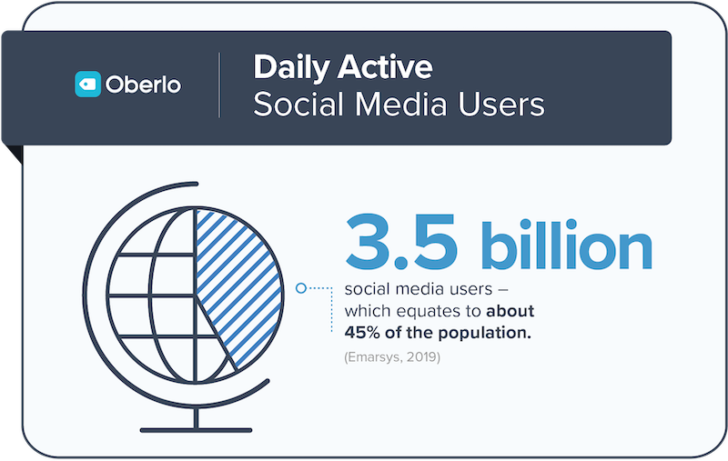
Social media is where your audience lives these days. According to Oberlo, about 45% of the world population is on social media. 

stat - CRO

Source: Oberlo

But note that getting traffic from social media is only winning half the battle of scaling your business. 

Regardless of whether you’ve got a SaaS startup, a cute pet toy company, or even if you’re just a drop shipper, you need to convert that traffic to drive sales.

And it will happen only when your audience takes the desired action like buying a product or signing up to your newsletter. 

Thus, your business should focus on increasing the number of visitors who complete a conversion. 

The process is known as Conversion Rate Optimization (CRO). 

Here’s what Skylar Reeves, founder of Ardent Growth, has to say about the benefits of CRO

“One of the biggest benefits of conversion rate optimization is the sheer ROI it can deliver without a linear increase in budget. There are often many small changes you can make to your marketing or advertising strategy that can increase your conversion rate dramatically – and that can make a huge difference to your annual revenue.”

By integrating CRO and social media, your business not only gets good traffic but increases sales as well. 

Let’s have a look at how you can leverage integrated CRO and social media for your business:

1. Create brand awareness

Online awareness about your brand will be created when people find you on search engines, via paid advertising, earned media, social media, link building, and more.

For instance, you can use social channels like Facebook to create brand awareness since it’s the most widely used social channel with 2.6 billion monthly active users.

Flipping the script, you can earn great brand mentions on popular blogs in your space, increasing brand awareness to relevant audiences: 

CRO - create brand awareness

Source: uSERP

If your company primarily caters B2B, an awesome tactic would be utilizing LinkedIn automation tools to generate leads from the popular social networking service. If you’re struggling to plan out your brand-building strategy, then try using product roadmap software.

Platonik’s Fraser McCulloch says,

“There are an estimated 7.5 billion searches a day on Google, the world’s biggest buyer research tool, figure out what problems prospects are searching for and give them solutions; that’s a better way to build a brand that people want.”

When you set up a social media account, you can optimize your account descriptions and keep it active and interactive with relevant content that converts. It will help you to get more traffic to your landing pages and, more than likely, conversions.

Mobile Marketer found out that 90% of people purchase from brands they follow on social media.

And of course, by connecting with your audience in real-time via social channels, you will be building a good relationship with them.

2. Get social reviews

CEO of Transcription Outsourcing LLC Ben Walker backs the importance of social reviews quite bluntly

“What I do — and what you should do — is use social proof to help convince new clients that your service is up to par.”

There is a good 72% percent of people who won’t take any action until they read reviews. The same poll suggests that 5% of users say they don’t trust businesses that don’t have reviews.

Search Pros founder Isaac Hammelburger has utilized customer reviews on his site and has been met with what seems to be an obvious success

“I’ve been able to increase lead gen calls by more than 20% after I started including reviews and testimonials on my site. Most companies can also boost their bottom line by leveraging this aspect of credibility.”

Clearly, social and client reviews can be a great tool to boost conversions. And it isn’t just for leads.  Reviews are especially important for online course creators as well to establish both trust and credibility of what they’re trying to sell to their audience.

take social reviews to improve CRO

Source: OneHourProfessor.com

However, there are different ways to collect social reviews. First and foremost, use Google Analytics to check and focus on getting reviews on the platforms that are getting the most traffic.

If you are using the Facebook channel, ensure to activate the Review Tab and make it visible. 

To do that, go to ‘Page Settings’ and scroll down to the ‘Templates and Tabs’ option. 

Find the Reviews tab and turn it on.

Source: Facebook

Once you do that, whenever your customers review your product or service, the ratings will appear on Google searches. 

Most importantly, make sure to respond to all the reviews for better customer experience and to receive even more reviews.  

Plus, don’t hesitate to ask for reviews one-on-one. 

Other tactics you can try are using an email marketing service to ask newsletter subscribers for feedback, offering incentives, placing CTAs on your site asking for reviews, and promoting the reviews you already have. 

Also, don’t delete the negative reviews. It shows that you are transparent. Instead, use negative reviews to your advantage by addressing the issues and apologizing for the poor user experience.

3. Create user-generated content

There’s no doubt that the content that comes directly from users in your niche market has immense ability to drive sales. In a Stackla study, 80% of people said that user-generated content has a huge impact on their purchasing decisions.

Plus, your consumers are 2.4 times more likely to see your content as authentic if it is user-generated as compared to content generated by your business.

user generated content (UGC) helps improve CRO

Source: Stackla

This means that user-generated content also succeeds in building customer trust and establishing your brand as a leader in the field. 

Running a hashtag contest on Instagram, asking intriguing questions by creating polls and quizzes are also great ways to create user-generated content.

For instance, an animal pet supplies retailer in the USA generated over 1,500 entries in 25 days by holding a hashtag contest.

Petco Instagram example

Source: Petco Instagram

It’s quite apparent that user-generated content is an excellent way of generating traction and boosting conversion rates. 

Also, share your user-generated content on Instagram stories since they are designed to drive purchases. The combo of the immediacy of Stories and the staying power of Highlights will let you create a permanent album. This way, potential buyers can keep viewing the user-generated posts until they make a decision to head to your website to make a purchase. 

You can also use Facebook to post engaging videos with the possibility of going viral.

4. Offer superior customer support

Companies are not only competing with prices and products but customer support and building relationships as well. 

You could use communication platforms like Ringblaze and other Vonage alternatives that can help with offering a competitive customer experience. 

But these days, customers are not only willing to do business with companies that offer great customer support but are also willing to pay more. 

In fact, 69% of American customers claim they would spend more money with companies that provide better customer service.

With the presence of social media, offering great customer support has never been easier. 

When you offer customer support on social channels, you can be present wherever your customers are. You just have to make it a point to answer all the queries that your customers post on social media as quickly as possible. 

And trust me, your customers do want a quick response. 

Look. 42% of consumers expect a reply from a brand on social media within 60 minutes, and well over half of consumers are less likely to buy from a brand that leaves questions on social media unanswered. 

You don’t want that to be the case with your brand!

Thus, whenever any issues crop up and users are dissatisfied with your service or product, they might leave negative feedback. Ensure to act on them and resolve the issue as fast as possible.

Moreover, you will have to know when to take an issue offline. There are instances when you might require personal data from the customer, or you will need to answer a series of questions. In such cases, it’s a better idea to move the conversation offline.

5. Optimize the landing page experience

It is known that mobile conversion rates are lower than desktop. You get more traffic from mobile, but it lags behind the desktop when it comes to conversions. 

There are different reasons for this. 

In addition to having more options to design a more attractive page layout on a desktop, it’s easier to navigate a site and view images on a bigger screen. Also, consumers are more likely to purchase on the desktop when the process is less complicated. 

In this case, you can use CRO to improve the landing page experience for the target audience coming from social media. 

A company found out that their lead rate started boosted by 19% after they designed a site explicitly for mobile visitors coming from a social media site.

So consider designing a landing page specifically for mobile visitors coming from social media sites. It will definitely help boost engagement. 

6. Create a FOMO

If statistics are anything to go by, over half of social media users suffer from FOMO (Fear of Missing Out).

create a FOMO to increase CRO

Source: Skyword

You can use this phenomenon to your advantage by deliberately creating FOMO and driving sales. 

For instance, you can add an element of social proof to your regular product image for a Facebook ad to drive common-phenomenon-versions. Even if your audiences don’t know you, seeing a celebrity endorsement or a review from real users will pique their curiosity which may generate shares and leads.

Another trick to make your content go viral is to create a sense of urgency by putting a time limit on the product or service you’re trying to sell. 

It will make people excited to buy your product, and they wouldn’t want to miss out on the opportunity. You can use terms like “Only 24 hours left!” or “Offer ends tonight!”

Here’s an example by an Amazon seller:

Amazon example

Source: Amazon

Ecommerce giant Amazon uses their Deal of the Day and countdown timer trick to influence customers to take action right away.

Wrapping up

In this digital age, where people mostly spend their time online on social networking sites, it will benefit your business immensely to leverage the power of integrated CRO and social media. 

As every marketing campaign starts by creating awareness, using social media channels to build brand awareness, and implementing social media strategies like getting social reviews, UGC, optimizing the landing page experience, improving customer support, and creating FOMO. 

If implemented correctly, CRO and social media integration will lead to better conversions and increased sales. 

https://www.searchenginewatch.com/2020/11/17/harness-the-power-of-integrated-cro-and-social-media/


4 Booming Industries That Are Stealing Social Media’s Growth Playbook

November 16, 2020 6 min read

Opinions expressed by Entrepreneur contributors are their own.

Internet users spend approximately two hours a day on social media. That’s enough time for brands to show them dozens of marketing messages, including paid ads. The volume of these messages is so high that is essentially one of the largest networks. 

But some organizations aren’t just marketing through social media. They’re using social media to create new, alternative . Some of these models, like the monetized page, are well known; others are unpublicized but highly profitable.

Related: 3 Common Mistakes Companies Make With Their Social Ad Strategy

So what are some of these alternative business models that are booming right now? We’ll cover the traditional status quo, emerging trends in , and a few concrete examples of new ways to make money online. 

The traditional digital business model

In the traditional digital business model, your website is the heart of your online operations. It’s where you display your products, market to prospects, and take orders.

This is the model used by digital service providers, online stores, and brick-and-mortar businesses. You create a website and drive traffic to it, generating leads and sales. That’s how things have worked for over 20 years.

The biggest change to this traditional model is the emergence of mobile apps. Mobile devices now drive over 50% of all web traffic, and 78% of prefer apps to websites. As a result, more and more businesses are using branded apps.

That said, apps are mostly an alternative way to present website content. They still fit within the traditional digital business model.

This is where social media comes in and it is helping entrepreneurs market, monetize, and scale businesses in profoundly new ways. Here’s how.

The rise of social business models

As recently as 2012, ’s ad revenue was about 1,000% that of Facebook’s. Google was the platform for discovering new content, shopping for products, and just about everything else.

Things are different now. After buying Instagram and growing Facebook Video, Facebook boasts 1.79 billion daily users, compared to Google’s 3.5 billion daily searches. Social traffic is on par with search engine traffic – especially when you factor in other major platforms like Snapchat, LinkedIn, Pinterest, etc. 

This kind of broad user base means businesses can choose to go without search engine traffic or a website. They can do everything they need to do online – drive traffic, market, close sales – entirely inside social media platforms.

This is the gist of the new, alternative business models we’re about to share with you below. They leverage social media for some or all of their online operations, carving out new niches in the process.

Alternative business models powered by social media


1. Influencer ecommerce

In the past, we’ve seen brands sponsor Instagram and YouTube influencers. In this older business model, content creators get a fixed sum for mentioning or showing a product in their photos, write-ups, and videos.

More recently, this has been superseded by a different model, in which influencers are directly monetizing their own content. 

For example, on YouTube, many producers place affiliate links in the descriptions below their content. By doing this, they get to make their own money directly by driving sales to affiliate partners like . 

Related: 4 Top Advantages of a Successful Kickstarter Campaign

Others go a step further and make their own product listings on sites like Amazon. Those that do often hire optimization experts like Danny Carlson, whose Amazon listing optimization agency (Kenji ROI) makes over $70,000 per month.

According to Danny, “[for online sales], the highest-ROI investment you can make is in your Amazon listing… [your] photos, copy, & videos.” Being able to control these elements directly is one of the major reasons social content producers forego affiliate marketing. 

Regardless of the monetization strategy, making social content and using it to generate sales is a booming alternative business model. Thousands of creators are applying it to their business right now – and many more are sure to follow. 

2. Self-published books and audiobooks

Self-publishing on websites like Amazon has been a little-known, highly-profitable business niche for several years. Writers and entrepreneurs have been using this model to generate six and seven-figure incomes as early as 2015.

But right now, a newer version of this model is emerging. Shaping it are two trends: booming audiobook sales and the rise of social media. The essence of the model is to self-publish audiobooks in addition to ebooks and use social media to market both.

As a result of this trend, self-publishing experts and educators are doing two things. First, Kindle publishing veterans are pivoting to use and teach social media. 

Second, a new class of audiobook self-publishers is emerging. One example is the Mikkelsen Twins, who make over $500,000 per month self-publishing on Audible. The two credit much of their success to social media, “The reason why we got so much attention is because we shared everything we knew for free in our YouTube videos.”

Now, Rasmus and Christian Mikkelsen are launching PublishingLife.com to help others succeed with the same business model.

Some entrepreneurs take a separate route and choose to publish free, unmonetized content via their social channels. They turn a profit using the following model.

3. Freemium social channels

Traditionally, social media channels are monetized through merchandise, sponsorship deals, and eCommerce sales. Monetizing content directly – i.e. getting people to pay for your videos, images, and write-ups – has always been desirable, but out of reach.

This is now changing. Platforms like Patreon let creators offer simple, convenient paid subscription options. Users who opt-in are usually rewarded with exclusive, early-access content, fun freebies, and a variety of other perks.

4. Decentralized businesses

Crypto tech has brought us many valuable applications, from Bitcoin to decentralized finance and logistics blockchains. Together with social media, entrepreneurs can now create decentralized crypto businesses.

One example is Fundabit: a decentralized crowdfunding platform that lets users invest crypto into exciting new projects. Another example is the Market Peak project, where users can create a passive income by leveraging online communities. 

Related: 5 Ways to Help Your Small Business Survive During the Pandemic

Market Peak’s founder, Sergej Heck, initially discovered the power of social media by building and scaling large sales teams using social. Now, he uses those same strategies to serve his growing user base. He explains: 

“There’s one thing your customers have in common: they’re all looking for a solution. [You can] host a group or forum where people can share their best tips… so they can network and help one another.”

This is the youngest alternative business model on our list. While it’s had less time to grow compared to the previous three, it appears to have a bright future.

https://www.entrepreneur.com/article/358903