Post-COVID-19 strategy to restore your social media reputation

30-second summary:

  • Trends suggest that about 25% of businesses paused their marketing and advertising on social media during the first six months of 2020.
  • Facebook reports that 89% of advertisers reconsidered their budget in response to the coronavirus outbreak.
  • This post attempts to underline some of the strategies you can consider practicing to restore your reputation and recognition on social media.

COVID-19 has had an impact on everyone and everything – starting from our lives and lifestyle to economies and businesses across the world. Business processes were forcefully shut down as a preventive measure to stop the pandemic earlier this year and the same has reflected in paid advertising, digital marketing strategies, and brands’ social media reputation management efforts.

COVID-19 and digital marketing

The number of people using social media has skyrocketed during the epidemic. Despite that, many organizations paused their digital marketing and even social media due to the lockdown.

Social network is one of the most effective tools businesses use for marketing, branding, sales, engagement, and delivering customer care. And to make the most of it, you should not stop your brand’s social media activities. This is something that a brand should never do.

Contrarily, trends suggest that about 25% of businesses paused their marketing and advertising on social media during the first six months of 2020.

However, this can’t be said for forward-looking marketers.

Facebook reports that 89% of advertisers reconsidered their budget in response to the coronavirus outbreak.

But there is no denying that the activities of brands have reduced to a great extent and has changed a lot during the pandemic. As a result, many have lost their customers and other their online reputation.

This post attempts to underline some of the strategies you can consider practicing to restore your reputation and recognition on social media.

1. Evaluate your situation

If you too had closed off your social media at the beginning of the pandemic, the first step for you to take would be – evaluate. Peep into the insights and evaluate the condition of your social networks.

Run an audit involving all your social networks. This will give insights related to engagement and traffic your activities generated during this period. You will also learn what worked well and what didn’t work for you.

You will be able to identify and understand the mistakes you made. Doing all this will help you develop or modify your social media strategy.

2. Develop a positive and supportive brand voice

When looking to rebuild your lost empire on social networks, you might want to reconsider your brand’s voice as well.

Review the voice and tone of your updates on each social network, and ponder – does it represent your brand?

The idea is to develop a positive voice for your brand that is supportive and feels like you care for customers.

It is obvious that people do not want to be pitched directly by marketers in a difficult time like this. In that picture, it perfectly makes sense to build a brand voice that does not sound overly promotional.

So, this would be the right strategy to give your social networks a new voice – a voice and tone that is calm, positive, and always ready-to-help.

3. Do campaigns broadcasting the benefits of your brand

While direct pitches may have a negative influence on customer behavior, there are ways you can promote your brand indirectly. One such way is – telling the benefits of your products and services.

Another would be to share stories around how your product helped a customer or how your service eased an individual’s life. Posts like this are a great motivator; they help build a positive brand image among your audience.

You can also encourage your customers to share their experiences or review on your brand’s social network. Such campaigns do indirect marketing for your brand, apart from adding to your efforts to rediscover your reputation.

You might want to make some strategic adjustments in your approach to social networks. For example, you can create and share visual content backed by keyword-rich captions or descriptions on your social networks. However, the type of content you share depends largely on factors like your brand, your products, and the media preferences of your audience.

This way, not only will you generate traffic, engagement, and sales for you, but also build a name for sharing high-quality, valuable, and above-all useful content.

And just for a reminder: you don’t need a big budget to get started with a completely new style of posts.

4. Social media influencer marketing

Influencers can also help you turn up your social media reputation. Influencers are celebrities that you can partner with to promote your brand among their fans and followers. In short, they will influence their followers – who follow suggestions and advice from their idols. This is how influencer marketing works.

Since 63% of customers trust their favorite influencer more than they trust brands, you can consider hiring an industry-specific influencer for your brand to give your brand-building efforts a quick boost.

If celebrities don’t fit into your budget, you can shift your focus on onboarding micro and small influencers. When it comes to influencing, micro-influencers get you better engagement and results than celebrities do.

Micro-influencers are students and professionals with a few thousand followers looking to earn some extra cash. They have an active follower base, with which they interact on a daily basis. They can help you reach specific market segments and target audiences more effectively that too without much investment.

And to get started with that, you will need to have a well-planned social media cum influencer marketing strategy.

5. Introduce social media tools

The best part of social media is – everything you do here is measurable. Impressions, likes, dislikes, engagement, clicks, and several other user actions can be traced using the default analytics feature of all leading social networks.

You can analyze user behavior on various factors such as the time zone, the age group, the device, the location, and the gender of those who engaged on your updates. You can use these metrics to develop a new or modify your existing social media marketing strategies.

But, using the inbuilt analytics of social networks could be a time-consuming job, because as a brand you have to manage and analyze multiple social networks at a time.

So, you could consider having an all-inclusive social media management and marketing tool that gives you access to all important metrics related to the performance of all your social networks on a single dashboard. Imagine how much time your team will save with one such tool!

6. Respond to reviews

Reviews are possibly the best thing that helps brands in building social media reputation. While positive reviews make everyone happy, negative reviews on social networks can boost your sales and reputation.

Take negative reviews and criticism as a chance for improvement. Address each issue and complaint raised by customers, and try to resolve their concerns on the same thread. It has two advantages.

First, it turns an unhappy and unsatisfied customer into a happy and satisfied customer. And second, it builds a positive impression which ultimately improves your online reputation.

But, that does not mean you should respond to negative reviews only. Don’t skip positive reviews as well. Thank everyone who posts a review on your timeline.

If it is a positive review, thank them for their kind words. And if it is a negative review, thank them for bringing their concern to you and assure them that you will leave no stone unturned in resolving their issue.

Bottom line

When you restart your social network to regain your lost online reputation, try to be consistent with your activities. Respond to comments and inboxes on an everyday basis. In addition to that, never miss a chance to socialize (that’s what social media is meant for) and engage with your audience.

Encourage your followers to share their opinions on your posts. Celebrate festivities and special days and display the pictures on your brand’s social network. These small yet impactful steps and tactics help you connect with your audience in a more humane way and add to your online reputation.

Birbahadur Singh Kathayat is an Entrepreneur, internet marketer, and Co-founder of Lbswebsoft. He can be found on Twitter .

Post-COVID-19 strategy to restore your social media reputation



Is Your Social Media Content Attracting Leads? 4 Ways to Bolster Your Strategy

You may think your followers want one type of content when really they want another. 

September 26, 2020 5 min read

Opinions expressed by Entrepreneur contributors are their own.

Digital marketers often identify social media as one of the best forms of , but it can often feel like we’re just going through the motions. If the isn’t attracting leads, what good is it? It’s likely you just need a quick boost in strategy to make sure your content is appealing to your and getting inbound requests and messages. 

In fact, 90 percent of social media users have used the platform to communicate directly with a business before. So if none of your customers or followers are reaching out to you, it’s a telltale sign that something should be changed. Ideally, you’ll post a picture or video with a robust caption that offers value and the floodgates will open: direct messages, likes, comments and queries should start coming (or even just trickling at first) in, proving that your content struck a chord and inspired action. Not there yet? Here are four ways to bolster your strategy to attract those leads.

Related: Content Marketing Secrets for Every Social Media Platform

1. Focus your content on interesting stories 

How much does your content dive into stories? They don’t have to be your personal stories. Stories of past clients, stories of other inspiring entrepreneurs or even folklore stories can be used to establish your point. Stories of other people who just went for it and found massive success are powerful too. It helps readers or viewers imagine themselves in the shoes of the story’s protagonist. These stories can be shared in captions or in the post itself through videos. 

Lenney Leong is the founder of Get Customers. He’s had success creating video content around stories, with over 7.2 million views and counting. He advised me to make sure you engage from the start. A long, roundabout story will do little to draw viewers in. “Set the stage for the story from the first sentence, or by the title of the video,” Leong noted. “Be straightforward so people know they should stay engaged throughout the storytelling and know what to expect.” Leong has garnered many inbound conversations as a result of this storytelling. And it’s worth noting that videos perform best on , seeing 49 percent higher interactions.

2. Do a poll asking what type of content people want most 

Instagram has many interactive features in its Story functionality. Use them! If you feel like you’re unsure what your followers really care about, utilize the poll to see for sure. It’s possible you’ve been creating content for something they’re peripherally interested in, but they are really curious about how you created your product’s landing page or how you scaled your company one year in. Instagram influencers and bloggers swear by the functionality, especially because it can have surprising results. You may think your followers want one type of content when really they want another. 

Be open to what you haven’t yet considered. In addition to the polls (where followers can choose one of two options), also use the “Question and Answer” functionality so people can submit, in their own words, what they most want you to talk about.  

Related: 3 Keys to a Highly-Effective Content Marketing Strategy

3. Host a Q & A on Facebook or Instagram Live 

While using the story functionalities is a great way to glean some initial insights, it also depends on what your viewers are doing when they flip through your story and if they currently have the time, interest, or energy to engage. “Another great way to bolster your content strategy is to host a Q&A on Facebook or Instagram live,” says Sarah Lefebvre, CEO of Localiz. “Followers may be more likely to submit questions if you’re going to answer in real-time, and you can tell by the questions or that you’re getting as you navigate different topics what is resonating the most.”

Even better — since only a fraction of your audience will tune in for the live, you can use the answers you gave and strategies you talked about in future posts. Save the video, take notes, and convert into posts of their own. Now that you know for sure it’s something people are interested in! 

Related: How Your Business Can Capitalize on Facebook Live

4. Make sure you have a call to action in every post

Finally, it sounds so simple but is often overlooked. Make sure there’s a call to action in every single post! It doesn’t have to be the same every time, but use something like, “Message me if you’re interested,” or “Follow me for more content like this.” Even asking viewers to comment with a watermelon emoji if they are also looking forward to summer drives engagement and lets you know who is paying attention to your posts. 

Without a call to action, people simply don’t know how to engage. Be clear, state what you’re looking for, and give plenty of direction to viewers and followers — all of which leads to a direct message conversation or whichever KPI matters most to your business.

https://www.entrepreneur.com/article/355230


Top 15 Chrome extensions for social media marketers

30-second summary:

  • When it comes to the internet browser, Google Chrome, with its extensive list of extensions is the indisputable chart-topper.
  • As a digital marketer, you have to keep track of so many things – different projects at various stages of development, research, reporting, new leads, existing clients, et cetera.
  • Bhavik Soni shares a list of the top 15 Chrome extensions that will make social media marketers more productive, smart, and efficient.
  • These are categorized into extensions for – Productivity, research and tracking, content creation and implementation, and digital marketing. Dive in!

When it comes to the internet browser, Google Chrome, with its extensive list of extensions is the indisputable chart-topper. From simple theme-based to technical coding-related, the extension list in chrome is practically endless.

This extension-packed list also boasts a wide variety of efficient social media extensions that boost professionalism, punctuality, and productivity. And, who wouldn’t love a convenient free plugin that makes life easier!

As a digital marketer, you have to keep track of so many things – different projects at various stages of development, research, reporting, new leads, existing clients, et cetera. These extension apps create a focus-orientated and organized work environment by keeping marketers updated on project developments, sending to-do reminders, enhancing content, and more.

In short, these install-and-use plugins act as the ace up their sleeves for social network marketers. They work as useful gadgets and trained assistants. They are the must-have social media marketing tools for every marketer.

You can optimize and make Google work for you in a jiffy by adding these 15 Chrome Extensions to your browser today.

Chrome Productivity Extensions

1. StayFocused: App block & website block google chrome extension

Designed to boost productivity, the StayFocused extension limits the amount of time you spend on vanity Googling. It offers the brute force you need somedays to anchor your focus to what’s more important.

Pricing:

Free

2. Momentum: Personal dashboard new tab chrome extension

Perhaps, Momentum is the best Chrome extension for productivity. It steers your focus from idle to important by motivating you with quotes, encouraging positivity with mantras, and inspiring with serene photography. Features like Daily Focus, To-Do, Countdowns, Metrics, Event Reminder and Links help you browse the internet with intent. What’s more? The plus version is available for just $3.33/month.

Pricing

$3.33/month

Research and tracking extensions

3. Diigo Web Collector: Highlighter and bookmarker for chrome

Diigo is a research chrome extension that lets you highlight important phrases, bookmark and save pages, write notes, and collect references at a single place. It comes in handy for social media marketers, who generally invest hours in R&D for planning a campaign, learning trends, and comparing the competitor’s strategy.

Pricing:

Free

4. Google Analytics URL Builder: Online UTM tracking

This is a tracking extension that lets you build UTM parameters. With the help of this plugin, you will be able to gauge the effectiveness of the UTM tags used in the campaigns. Google Analytics URL Builder also allows you to share templates with others, saves time when you have to generate URLs manually, and shares progress with clients.

Pricing:

Free

5. Ghostery: Makes web cleaner, faster, and safer

Ghostery is designed to block ads and trackers, this productivity chrome extension makes a great social media marketing tool. With its help, you will be able to learn the trackers on the competitor’s sites that they use to attract, engage, and convert the visitors.

Pricing

$11.99 USD /month/user*

6. SpyFu: SEO and PPC tools for professionals

Yet another efficient tracker extension that lets you peek into the competitor’s site data. Spyfu reveals extensive information, including where the competitor appeared on Google in the past nine years. The social media marketing (SMM) plugin also shows all keywords bought on AdWords, every ad variation, and every organic rank for $33/month.

Pricing

$33/month

Content creation and implementation

7. Canva: Design is all around us

How social media advertising will perform relies a lot on visuals. Photo-driven platforms like Instagram and Pinterest yield better ROI than content-driven Twitter or Facebook. It is because photos get more engagement. To ensure you can make most of this social media trend, creating impressive and attention-grabbing posts become imperative. It is where Canva comes into the picture.

Pricing

Free

8. Figure it Out: Solve your time zone pain

A digital marketer works for clients and target audiences in different time zones. For them, Figure it Out proves to be a handy tool. It is an extension that lets you keep track of up to 10 time zones, and makes scheduling posts accordingly.

Pricing

Free and paid ($3/month)

9. WhatFont: Identify fonts on web pages

We get it, fonts are tricky. Download an app, and it gives you hundreds of fonts that are too similar-looking, too familiar, or too quirky for your campaign. One day you browse a site – may be a competitor’s – and find just the font you were looking for but have no clue which one it is.

That’s when WhatFont comes to the rescue. A single click and it reveals not only the name but also the family, style, weight, size, line height, and color of the font.

Pricing

Free

10. Unsplash Instant: Beautiful photos in your new tab

For every social media marketing post, there is a tedious task to find high-quality, professional stock pictures, usually for free. Unsplash Instant lets you find great photos ranging from flowers and skies to desktops and artsy portraits. You can save them for free and use it for all kinds of commercial use.

Pricing

Free

11. Colorzilla: Advanced colorful goodies

Colorzilla allows you to hover over any color shown on a webpage and learn about its hex code for future use in a social media ad post. With this plugin, you will be able to create consistent color themes, appealing visuals, and come up with perfect palettes.

Pricing

Free

12. Sniply: Drive conversion through content

Social media promotions through third-party content are more effective when they include a tempting call-to-action that takes the reader to your own online space. Sniply helps you make those conversion-generating posts by letting you add custom CTA to any piece of content. On the dashboard, the plugin will show how many clicks your links are getting and the level of engagement for tracking purposes.

Pricing

$29/month

Digital marketing extensions

13. IFTTT for Marketing and social media automation

IFTTT free digital marketing extension syncs multiple apps and automates them, thus saving a lot of time and effort. In simple terms, you could post a pic on a dozen different platforms all at once.

Pricing

Free

14. Buffer: Share content easily

With this social media extension, you will be able to schedule and manage posts across different platforms. Buffer will also let you follow up with analytics to track the performance of each post.

Pricing

$85/mo

15. LastPass: Free password manager

By downloading the LastPass Chrome extension, you will not need to remember dozens of passwords to each social media platform. This free password manager will do it for you. You could also create a master password through LastPass.

Pricing

Free

Let’s sum it up

Here’s a guide to 15 best Chrome extensions available for social media marketers. From saving bookmarks to managing posts and passwords, these plugins will work as assistants to digital professionals.

Note: Details like pricing are subject to change as per the respective tool provider.

Bhavik Soni is a Creative Writer at Auto Monkey. We provide an original analysis of the latest happenings in the social media industry. Connect with Latest Social Media Trends and News plus tips on Twitter, Facebook, and other social tools on the web.

https://www.searchenginewatch.com/2020/09/23/top-15-chrome-extensions-for-social-media-marketers/


Creating viral content: Is it possible to harness viral trends?

30-second summary:

  • STEPPS model singles out social currency, triggers, emotional value, public popularity, practical value, and background stories as common points between viral content.
  • People’s tendency to mimic popular behavior and be a part of a group activity results in viral trends.
  • The internet likes content that is raw and genuine.
  • Evelyn Johnson details the elements of viral content and how brands can achieve it.

George Miller, famously known as Joji is one of the fastest rising musicians. He’s the first Asian-born artist to top R&B and hip-hop charts, he achieved this feat with his first studio album. But Joji is no stranger to fame. Before he was a teenage heartthrob —Joji was garnering millions of views on YouTube as FilthyFrank. This online persona was edgy, outrageous, and oftentimes, outright filthy which helped qualify as viral content.

To top it all off, FilthyFrank was responsible for creating one of the biggest viral trends in the history of the Internet.

The Harlem Shake

Back when TikTok wasn’t a thing and Twitter was just a few years old —viral trends were somewhat rare. It was unusual for people to replicate a popular video and take part in activities just because others were doing it on the internet.

The Harlem Shake changed all this. It’s hard to describe this trend so I will let Wikipedia do its job.

“The videos usually last about 30 seconds and feature an excerpt of the 2012 song “Harlem Shake” by American EDM producer Baauer. Baauer’s song starts with a 15-second intro, a bass drop, then 15 seconds with the bass, and a lion roar at the end of the first 30 seconds. Usually, a video begins with one person (often helmeted or masked) dancing to the song alone for 15 seconds, surrounded by other people not paying attention or seemingly unaware of the dancing individual. When the bass drops, the video cuts to the entire group dancing for the rest of the video”.

To explain it simply, a small 30-second clip of Joji dancing in his Pink Guy persona along with his friends in outlandish costumes caught fire, and soon, everyone wanted in on the act. Even the Norwegian Army joined in the fun.

[embedded content]

Now, does this make any sense? Of course not.

The internet can be pretty senseless at times (or maybe most of the time). It’s hard to determine what exactly will capture the imagination of the masses.

But this hasn’t stopped social scientists from analyzing virality and what causes people to participate in a trend.

What exactly makes something go viral?

Let’s say you are a marketing manager at an ecommerce store trying to create a viral promo code. You may look at popular trends and get bedazzled by their randomness. Should you gather a group of individuals in random costumes and make them dance? Maybe it will turn out to be the next Harlem Shake?

Hopefully, it wouldn’t come to that as many academics and marketing professionals have tried to make sense of internet virality. Among them, Jonah Berger STEPPS Model and Robert Cialdini’s Principle of Social Proof and a study by Cambridge University gives an important insight into the psychology behind viral videos.

1. Jonah Berger’s STEPPS Model

When it comes to understanding virality, Wharton marketing professor Jonah Berger is a familiar name. In his book Contagious: Why Things Catch On, Berger attributes six main reasons for the success of videos that go viral. He defines it as the STEPPS model:

  1. Social Currency: People share content that makes them seem smart and cool. While most of us would like to believe otherwise, we do care what others think of us.
  2. Triggers: Relates to the idea of “top of mind, tip of tongue”. People talk about things that are in their minds.
  3. Emotion: When people care, they share. Individuals are likely to share content they found emotionally arousing.
  4. Public: Anything that’s already popular is more likely to be shared further. People imitate other people.
  5. Practical Value: Useful stuff is also widely shared. Informational content has great value and hence “How to” videos often go viral.
  6. Stories: People are always interested in compelling narratives and stories. Anything that connects with the audience has a chance of being shared.

It’s hard not to trace at least some of these attributes in content that goes viral.

Old Town Road

Lil Nas X’s Old Town Road became a hit because it had a certain social currency. It was a cool genre-bending song about country life that people loved sharing. Since the song was released around a time when a game with similar themes —Red Dead Redemption, was extremely popular, it triggered a massive response.

[embedded content]

People were sharing the memes of Old Town Road long before it became number one at Billboard 100. This means the song had a public aspect as well from the STEPPS model.

Admittedly, the song provided no real practical value. But it had an intriguing story: the song was removed from the country chart as critics believed it did not belong to the genre. This prompted country legend, Billy Ray Cyrus, to come out in the song’s support and collaborate with the singer.

2. Robert Cialdini’s principle of social proof

In his book, ‘Influence — The Psychology of Persuasion’, Robert Ciadini introduces the concept of social proof. In his own words:

“The greater the number of people who find any idea correct, the more the idea will be correct…We will use the actions of others to decide on proper behavior for ourselves, especially when we view those others as similar to ourselves”.

It’s also known as herd mentality or groupthink, where we assume an action is appropriate because others are performing it.

Consider this: How many times have you retweeted a tweet that already had thousands of retweets?

“When a social media post reaches a certain level of popularity —it is likely to get shares from individuals who are more influenced by the number of likes than the content itself,”

says Julia Markle, the head of digital content at ClothingRIC.

“This generates a chain reaction that transforms a popular post into a viral post.”

3. Viral altruism

Virality on the internet is most often random and spontaneous. But sometimes it is by design. In a paper published by the University of Cambridge, the famous ALS Ice Bucket Challenge was dubbed as “viral altruism”.

Social psychologist Dr. Sander van der Linden described some key psychological factors that cause such trends to catch fire. Among these is the power of social norms, in particular the attraction of joining a social consensus and the aspiration to conform to prosocial behavior, a clear moral incentive to act, and the need for a “warm glow”: the emotional benefit that’s gained from feeling compassionate.

In simple words, people act:

  • To participate in a popular activity
  • To gain the emotional reward of giving to others
  • When they believe it’s morally the right thing to do

ALS Ice Bucket Challenge

The ALS Ice Bucket Challenge appealed to people’s good side and this made it widely successful. Its virality resulted in $220 million being raised for battling the disease. However, not all similar challenges that go viral have a charitable aspect.

For instance, the “Don’t Rush Challenge” wasn’t for a greater cause but became popular as it allowed people to come together and build a connection by mimicking a popular behavior.

What makes the Ice Bucket Challenge special is that it demonstrated how internet virality can be harnessed and used to inspire action. Of course, this is easier said than done for brands.

[embedded content]

How can brands create viral content?

The internet is filled with listicles that guide brands in crafting viral content. But having well-designed infographics, solid backlinks, and hiring influencers don’t always drive a flood of visitors to your website.

It’s important that along with covering the basics, you keep one important factor into consideration; authenticity. From the Hit or Miss video to Old Town Road and ALS Ice Bucket Challenge —all these popular trends were raw and genuine.

Considering this, brands should create content that fosters human connection. Almost all individuals who’ve studied virality believe “being involved in something big” motivates people to share content and participate in challenges. So whether you hit or miss, there’s no harm in spreading your word through genuine content that’s designed to go viral.

But don’t make the mistake of creating something that’s a blatant attempt to cash in on the internet culture. Millennials and Gen Z in particular will be especially hostile towards any such effort.

https://www.searchenginewatch.com/2020/09/22/creating-viral-content-is-it-possible-to-harness-viral-trends/


Proposal would give EU power to boot tech giants out of European market

Belgien, Brussel, Europaische Kommission, Berlaymont-Gebaude, Europa-Flaggen.
Enlarge / Belgien, Brussel, Europaische Kommission, Berlaymont-Gebaude, Europa-Flaggen.
Westend61 | Getty Images

The EU wants to arm itself with new powers to take on big technology companies, including the ability to force them to break up or sell some of their European operations if their market dominance is deemed to threaten the interests of customers and smaller rivals.

EU Commissioner Thierry Breton told the Financial Times that the proposed remedies, which he said would only be used in extreme circumstances, also include the ability to exclude large tech groups from the single market altogether.

In addition, Brussels is considering a rating system that would allow the public and stakeholders to assess companies’ behavior in areas such as tax compliance and the speed with which they take down illegal content.

“There is a feeling from end users of these platforms that they are too big to care,” said Mr. Breton, who is leading the overhaul of digital rules in the bloc. “[Under] certain conditions we may also have the power to impose structural separation.”

His comments followed a public consultation on the EU’s forthcoming Digital Services Act, which will set new rules on platforms’ responsibilities in dealing with illegal content and disinformation online.

The DSA will update the e-commerce directive, adopted in 2000 when most of the dominant players in the sector were either in their infancy or did not yet exist.

Large technology companies are under pressure from regulators elsewhere. In the UK a new watchdog will have the ability to impose fines without having to go through the courts, as is currently the case. And in the US, tech founders, including Amazon’s Jeff Bezos and Mark Zuckerberg of Facebook, struggled to convince members of Congress that they had been driven by more than self-interest when building their digital empires.

The new EU legislation would increase Brussels’ powers to scrutinize the way technology companies gather information on users, following concerns raised by independent researchers that the voluntary disclosures groups make are often misleading or partial.

Mr. Breton confirmed that the EU would not remove the limited liability that companies have for the content published on their platforms. “The safe harbor of the liability exemption will stay,” he said. “That’s something that’s accepted by everyone.”

However, regulators in Brussels are drawing up a blacklist of activities that technology companies would be required to stamp out. They are proposing a sliding scale of penalties for non-compliance, up to and including the separation of some operations. Mr. Breton said draft legislation will be ready by the end of the year.

Activities that could lead to tougher sanctions include companies preventing users from switching platforms or forcing customers to use only one service, he added.

Mr. Breton compared the power of the big platforms with that of the banks before the financial crisis, saying regulators need to take similar steps today to rein them in.

“It’s like for small banks and big banks you don’t have the same rules—you have more flexibility for the smaller players and of course when you become a systemic [bank] you have a [different] set of rules,” he said.

Mr. Breton said the new system of oversight will be based on a collective effort between national governments and the EU.

“We need better supervision for these big platforms, as we had again in the banking system [after the financial crisis],” he said.

Proposals are being finalized, and once they are agreed they will go through the European Parliament and the European Council.

One EU official warned that Brussels will need to strike the right balance. “Going overboard can also backfire and you score an own goal,” the official said. “On the other hand, too low an ambition will not address the concerns [about Big Tech].”

© 2020 The Financial Times Ltd. All rights reserved Not to be redistributed, copied, or modified in any way.

https://arstechnica.com/?p=1708269


What you must know about TikTok for business

30-second summary:

  • The majority of TikTok users are under the age of 29. So, TikTok is the perfect place if you want to reach Millenials and Gen Zers.
  • TikTok allows users to create short videos with filters, voiceovers, soundtracks, and other additional features.
  • If you want to promote your business, there are multiple paid advertising options. You can run branded hashtag challenges, brand takeovers, and infeed content ads.
  • Influencers are a big deal on TikTok. By partnering with influencers, you can expand your reach and grow your TikTok audience.
  • Countries across the world are raising concerns over TikTok’s data and security policies. Therefore, before you start creating a marketing strategy for TikTok, it’s worth checking the local regulations.
  • Find out how you can take advantage of TikTok for business.

Early adopters of Instagram demonstrated that if you can find the right strategy to leverage the platform during its initial days, you can easily become the top influencer and monetize your success. So, if you’re looking to stay ahead of the competition, the game of signing up for new social media platforms is worth the candle. Are you thinking of TikTok for business?

If you haven’t already, now is the best time to create a TikTok account for your business. Being the fastest growing social media of the decade, TikTok has around 800 million active monthly users globally. This makes TikTok the seventh most popular social media platform in the world. Given the numbers, it should not come as a surprise that so many businesses are moving their marketing efforts to TikTok. 

So, where do you start your business’ journey on TikTok? This article is a great start! We’ve gathered all the important aspects your business should know about this trendy platform. 

Audience

The first important thing you should know about Tiktok is that it has a very specific audience. The platform is extremely popular among Gen Zers. In fact, 41% of TikTok users are aged between 16 and 24. When it comes to gender demographics, 55.4% of TikTok users are male compared to 44.4% of female users. When asked why they like TikTok, platform users say they enjoy watching someone else’s videos, liking content, and following other users. 

User consumption to help TikTok for business

Source: Global Web Index 

So, TikTok is a perfect platform for targeting Gen Zers. Keep in mind that Gen Z is a tech-savvy audience that’s unlike other generations. They are not interested in hard sales and are immune to typical marketing campaigns. When marketing to Gen Zers, it’s important to focus on the experiences rather than the benefits of the product. That’s why if you’re primarily targeting Gen Z, your business can’t afford to ignore TikTok.  

Content

TikTok for business - Content

Source: TikTok for business 

Another important thing you should consider about TikTok is its unique content format. Often compared to Vine, TikTok is a short-form video platform. It’s not the place for your traditional perfectly polished advertisement campaign. As stated on the official website, TikTok is made for real people to create real videos. 

Unlike other social media platforms, TikTok is a creative and entertainment space rather than a social space for communication. So, a smart way for brands to maximize their influence on TikTok is to understand the content popular within the platform and have their creative teams brainstorm content ideas. 

So, what are the most popular content types on TikTok? Studies show that entertainment, dance, prank, and fitness videos are the most popular within the platform. DIY videos, skincare reviews, makeup tutorials, and fashion videos are beloved by TikTok users as well.  

TikTok for business - Content types

Source: Statista 

Advertisement options

There are multiple ways you can use TikTok to promote your business. Firstly, you should create a channel to share relevant videos. Yet, if you want to maximize your reach, it’s helpful to use in-app advertising. Let’s take a look at three popular ad types, so you can better understand how to market on TikTok. 

1. Infeed content ads 

Similarly to Snapchat and Instagram story ads, infeed content ads are short videos displayed in the user’s feed in between other content. Infeed ads take the full screen, but users have an option to skip them. So, if you choose to create native ads, they must be engaging enough to grab users’ attention within the first two seconds of the video. 

Here’s an example of an infeed ad on TikTok. 

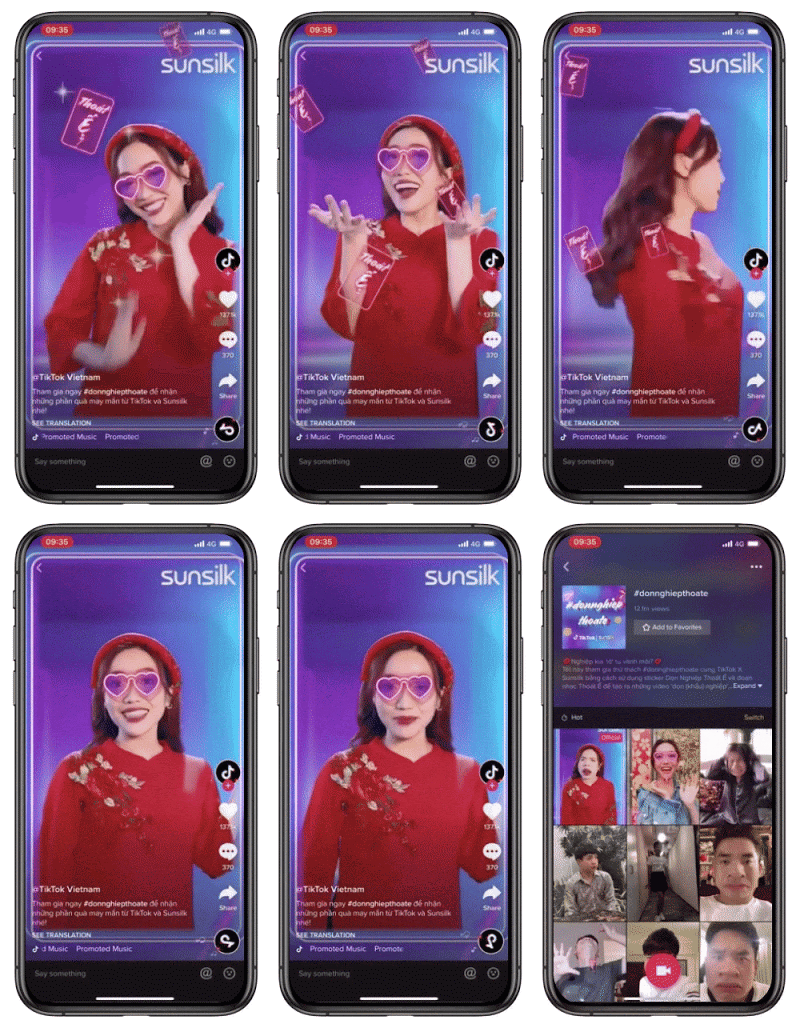
TikTok for business - In feed ads

GIF Source

2. Branded hashtag challenges

Launching a branded hashtag challenge is another way to promote your business on TikTok. In fact, it’s one of the most popular ways to advertise products and business on the platform.

So, what exactly is a branded hashtag challenge? A hashtag challenge is a unique TikTok’s content format where brands ask users to post a certain task using a specific hashtag. When TikTok users see your hashtag challenge, they will be redirected to the main challenge page which includes instructions on how they can participate along with other important details. The most popular branded hashtag challenges make their way to TikTok’s trending page where millions of users can see them. 

Here’s an example of a branded hashtag challenge on TikTok. 

TikTok for business - Brand hashtag challenges

GIF Source

3. Brand takeovers 

A brand takeover is a full-screen ad that appears on users’ devices when they open TikTok for the first time a day. Brand takeovers typically run for three to five seconds and are either videos or images. One great thing about brand takeovers is that you can link them to your TikTok profile, website, or a hashtag challenge page. TikTok allows only one brand to take over a category each day, meaning that your ad will play on a single day only. 

Here’s an example of a brand takeover. 

TikTok for business - Vans - Brand takeover

GIF Source

4. Influencers

Partnering with influencers is another way to promote your business on the platform. Influencers are a big deal on TikTok and businesses are increasingly putting the pedal to the metal and invest in TikTok marketing campaigns. 

If you want to use influencers to promote your business on TikTok, consider starting with micro-influencers. Unlike macro-influencer, micro-influencers have a smaller reach in the range of 1,000-10,000 followers. Even though they have a smaller audience, micro-influencers usually have higher engagement and are, therefore, more likely to help you with conversions.

Potential challenges

Even though TikTok gained enormous popularity over the last few years, governments have raised security concerns about the app. India banned TikTok over security concerns despite the 200 million users in the country. 

The talks around the TikTok ban have escalated fast into reality as countries continue to investigate the potential security threat and the platform’s data and security policies. In the meantime, Tiktok users found a way around the ban using NordVPN and other virtual private networks. Even though the destiny of TikTok in the United States is still up in the air, companies nonetheless continue marketing within the platform. 

The bottom line

TikTok keeps millions of users glued to their screens, and offers unique opportunities for brands to promote their products and go viral by using TikTok for business. By understanding these aspects, you can create relevant marketing content that will resonate with your audience on the platform. Hopefully, now you have a better idea about the addictive scrolling app that Gen Zers are so obsessed with.

https://www.searchenginewatch.com/2020/09/17/what-you-must-know-about-tiktok-for-business/


Trump replaces FCC member in bid to push through Twitter/Facebook crackdown

FCC Commissioner Michael O'Rielly speaks at a conference while FCC Commissioner Brendan Carr and Chairman Ajit Pai look on.
Enlarge / Federal Communication Commission Republican members (L-R) Brendan Carr, Michael O’Rielly, and Chairman Ajit Pai participate in a discussion during the Conservative Political Action Conference on February 23, 2018, in National Harbor, Maryland.

President Donald Trump today nominated one of his administration officials to serve on the Federal Communications Commission in an attempt to push through his proposed crackdown on social media websites.

Trump announced the nomination of Nathan Simington, who is currently a senior advisor in the National Telecommunications and Information Administration (NTIA). Simington “played a significant role in the agency’s social media regulation agenda,” as The Verge reported last week when news broke that Trump was considering Simington for the FCC position.

Simington would replace Republican Michael O’Rielly, who apparently angered Trump by saying that the FCC must uphold First Amendment speech protections “that apply to corporate entities, especially when they engage in editorial decision making.” O’Rielly’s comments signaled that he isn’t likely to support the Trump administration petition, submitted by the NTIA, that asks the FCC to reinterpret Section 230 of the Communications Decency Act in order to limit social media platforms’ legal protections for hosting third-party content when the platforms take down or alter content they consider objectionable.

“Simington had a hand in drafting Trump’s May executive order encouraging the Federal Communications Commission to rethink how Section 230 of the Communications Decency Act protects social media platforms from liability for the content it hosts,” according to The Washington Post.

Trump had nominated O’Rielly to another five-year FCC term in March but withdrew the re-nomination after O’Rielly’s comments. Simington’s nomination would need approval from the Senate. O’Rielly could serve on the commission through the end of 2020 if the Senate doesn’t act on the nomination before then, but he would have to leave if Simington officially gets the job. O’Rielly’s FCC term technically expired in June 2019.

Trump needs three votes

Trump, who is angry about Twitter and Facebook’s treatment of his posts, needs three votes on the five-member FCC to get the NTIA petition approved. The two Democrats oppose it, saying the petition amounts to the FCC becoming the president’s “speech police.”

Trump has the support of Republican FCC Commissioner Brendan Carr, who has explicitly and repeatedly supported Trump’s social media crackdown and criticized Twitter for adding a fact check to Trump’s claims that mail-in ballots will be “substantially fraudulent.”

The question mark is Chairman Ajit Pai, who hasn’t weighed in publicly on the Trump administration petition. Pai is taking public comments on the petition and called for a “vigorous debate.” Trump’s willingness to replace O’Rielly suggests that he could try to do the same with Pai if the chair doesn’t do the White House’s bidding.

If Joe Biden wins the presidency, Democrats would retake the FCC majority. Pai could stay on the FCC if Trump wins re-election, but FCC chairs usually step down at the end of a presidential term even if the White House hasn’t changed hands. A few details complicate matters—Pai’s term extends until mid-2021, and he could continue serving through 2022 if no replacement is nominated and approved by the Senate. But if Trump gets a second term and Pai doesn’t leave of his own volition, Trump would have a chance to replace Pai once Pai’s term officially expires in mid-2021.

During the Obama administration, Pai claimed that the White House orchestrated the FCC’s imposition of net neutrality rules and said, “We shouldn’t be a rubber stamp for political decisions made by the White House.” Trump is taking a much more direct role in trying to set FCC policy by replacing O’Rielly, but Pai has not publicly made the same criticism of Trump that he made of President Obama.

https://arstechnica.com/?p=1707019


How to Recreate Live-Networking Via Virtual Table Talks

September 16, 2020 6 min read

Opinions expressed by Entrepreneur contributors are their own.

Ultimate Guide to Social Media Marketing by Eric Butow, Jenn Herman, Stephanie Liu, Amanda Robinson and Mike Allton, is available now via Entrepreneur Press. Order from Amazon | Barnes & Noble | Apple Books.

When was the last time you attended an in-person conference? If you’re like most of us, it’s been quite some time. And while online events and virtual summits have done their best to provide the same educational opportunities, it’s the networking that we’re all lacking today, i.e. random chances to meet and talk with other people who share similar interests, similar challenges and by stroke of luck happen to sit down at the same table as you and a conversation ensues.

Except when it comes to remarkable events, luck has very little to do with it. Savvy conference organizers know that it’s the seemingly random relationship building that has the biggest impact on attendees. They might remember this or that fact from a presenter, but it’s the friendships that are shared and endure the test of time. (“Do you remember where we first met? It was on the deck of the U.S.S. Midway at Social Media Marketing World!”)

Rekindling those relationships and the potential for sparking new ones are powerful motivators for attendees to return to the same events year after year, so conferences deliberately facilitate such possibilities through networking events and table talks.

Related: 5 Ways to Step into TikTok

Table talks are nothing more than a collection of tables — with enough seating for most attendees — that have specific topics or areas of interest indicated for each one. One table might be for Live Video, while another might be for TikTok. While one might have a sign for Agency Owners, another might be set aside for International Ecommerce. The event simply needs to consider the range of topics attendees are interested in, as well as categories of attendees or target audiences, and designate seating accordingly.

As an attendee, you can then choose to sit at whatever table and topic sparks the most interest at that particular moment. Sometimes you’ll have questions, while sometimes you’ll have answers for other people, but the time spent will always result in new acquaintances and opportunities for long-term relationships.

But of course, until in-person events are restored to their original levels of occurrence and attendance, we won’t be participating in such table talks any time soon.

Some events have used Zoom and even breakout rooms within a Zoom call to give some semblance of directed networking, but it doesn’t have quite the same randomized energy that we’re looking for.

So what if I told you that we have an option available to us right now, for free, that can go a long way toward replicating the exciting success of in-person table talks?

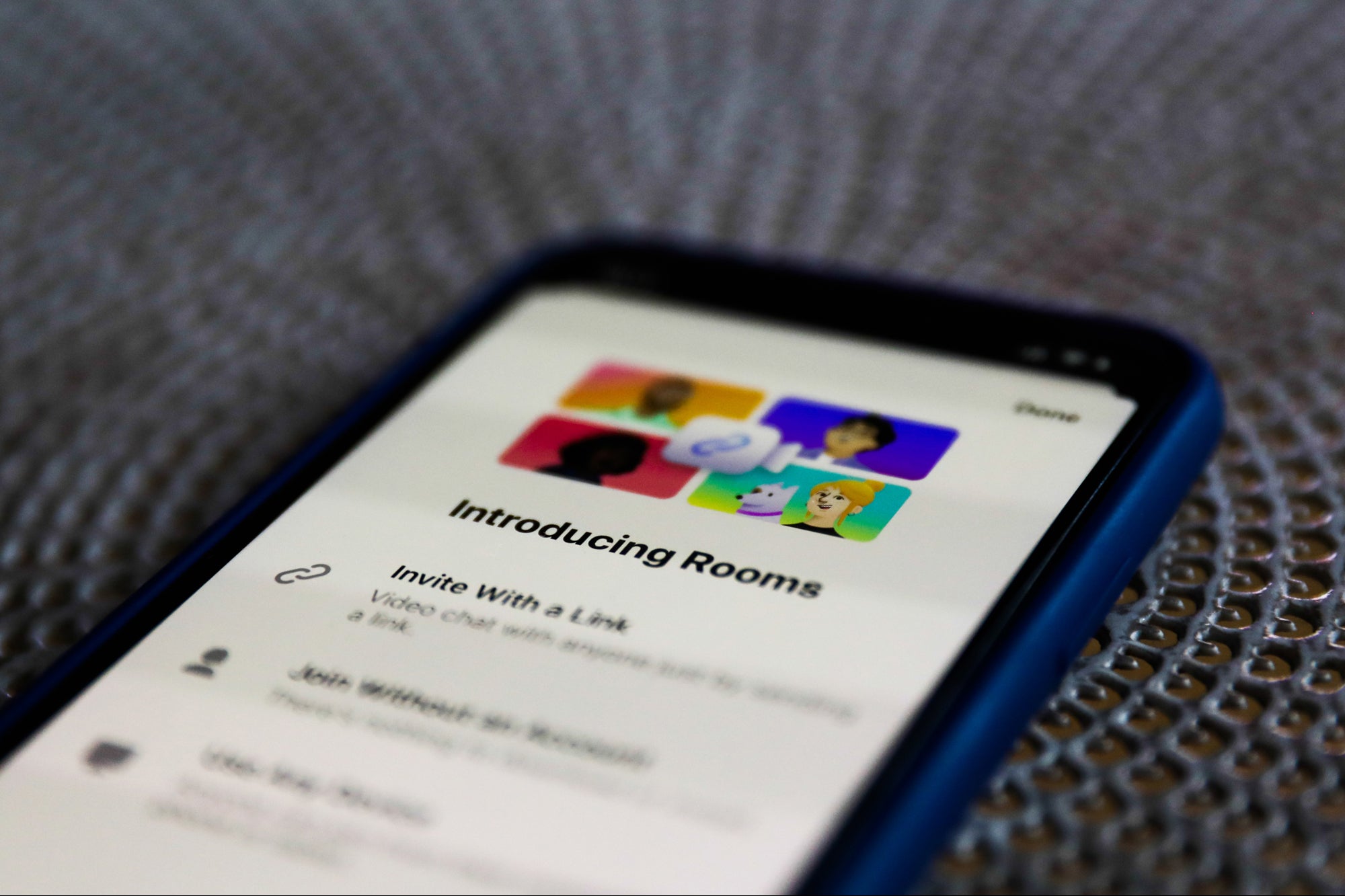
While the initial implementation of Rooms in 2014 by Facebook never even made it to home release, their 2020 live-action reboot has been a blockbuster. Positioned specifically as a competitor and alternative to Zoom, Messenger Rooms are a way to easily hop into a with one or more of your friends and connections. Up to 50 friends, in fact.

Dubbed “Messenger” Rooms because, initially, you would use a chat or group chat within Messenger to start the Room and video call, Facebook recently rolled out the ability to utilize Messenger Rooms within Groups and Events to help folks looking for new and better ways to connect online.

The release made it incredibly easy for group administrators and moderators, or even regular members (if permission is opened), to start up a Room and create a fun video chat among community members.

Just like a Zoom video call, Messenger Room participants can choose to mute their mic or disable or their camera, as well as share their screen or a particular app they have open on their system. And Rooms can be joined from either desktop or mobile.

What makes Messenger Rooms somewhat easier to manage is that users need only be logged into their Facebook profile to join. There’s no additional or app to install.

Messenger Rooms as Virtual Table Talks

The lack of having to install any additional software is just one of the ways that Messenger Rooms is integrated into Facebook and makes the solution an elegant one.

  • Rooms within a Group are created by an Admin or Moderator and immediately generate a post within the Group that the rest of the community can see and, potentially, join the Room from.

  • Rooms can also be found through a Rooms tab in the Group navigation bar.

  • Rooms are automatically given a permanent link that can be shared to other social channels via email and more.

  • Rooms can be scheduled for a particular date and time.

  • Rooms can be organized into Units if the Group is set as a social learning group, allowing group owners to easily create different Rooms for different purposes.

And one of the great security features about Rooms is that, if the group is configured so that only Admins or Moderators can create a Room, that also means that only Admins or Moderators can open a Room for others to join. Without an Admin or Moderator present, such Rooms cannot be accessed or used.

How Steep Is the Learning Curve?

Because Rooms are still relatively new, there’s definitely a degree of uncertainty for both moderators and attendees alike. If you’re considering using Rooms for your next event, or perhaps just as a way to help strengthen relationships within your Community, you should consider:

  • Starting to use Rooms in your Facebook Group well in advance of the event so that community members become accustomed to the .

  • Creating a private Facebook Group for speakers and Room hosts, if you’re using other people to help open Rooms, so that all have an opportunity to test and experience Rooms in advance.

  • Posting easy instructions for event attendees, and including detailed information in an event guidebook.

Related: Virtual Meeting Etiquette Guide for Hosts and Attendees

Facebook is determined to carve out a slice of the live video networking pie, so we can expect Messenger Rooms to continue to evolve and improve in the coming years. If you have an online event coming up, using a Facebook Group and Rooms — whether as a standalone solution or to augment other platforms — will be a great way to help build community and give your members easier ways to build relationships.

https://www.entrepreneur.com/article/356087


How to drive digital innovation necessary during the pandemic

30-second summary:

  • COVID-19 has kept consumers in their homes, which has led to significant spikes in internet use and companies scrambling to digitize in order to meet customers where they are.
  • The ability to quickly develop digital capabilities will continue to be critical for meeting customer needs and ensuring organizations’ survival.
  • To remain competitive, companies must enhance the digital customer experiences they offer through upgraded social media, optimized conversion, strategies, better marketing research, an effective internal website search, and fresh customer touchpoints.

Emerging digital technologies like artificial intelligence (AI) and cloud computing enticed leaders with their agility and efficiency. Many companies planned to make digitization a goal for the new decade.

In hindsight, they probably wish they hadn’t waited.

The novel coronavirus upended every aspect of our lives. As businesses and governments around the world try to combat the pandemic, millions of consumers sit inside their homes. And where do people go during a government-mandated lockdown? Online.

The unprecedented shift to remote work and online learning, combined with a dramatic increase in movie streaming, videoconferencing, and social media traffic, has led to significant spikes in internet use. In this same time frame, big tech companies — the businesses at the forefront of digital innovation — have flourished, as have brands that capitalized on the power of social media engagement.

The biggest trick to digitization right now is meeting customers where they are. For example, my company, Teknicks, is working with an online K-12 speech and occupational therapy provider. When schools began transitioning to remote learning, students’ needs changed, too. We helped the provider pivot its value proposition and messaging to accommodate school districts’ new realities. By focusing on teletherapy tools and reassuring parents, we’ve seen substantial growth and brand recognition during the pandemic.

Until we find a vaccine for the novel coronavirus, your customers will likely engage with you through online channels. The ability to develop digital capabilities quickly will continue to be critical for meeting customer needs and ensuring survival for your organization. With that in mind, here’s how you can enhance your digital customers’ experiences:

1. Upgrade your social media

It’s not hard to be good at social media marketing — it’s hard to be great. As you build your audience on websites like Facebook and Instagram, be sure to engage with followers consistently. Create a content calendar mapping out your posts and sharing strategies and stick to it. These platforms are also a great channel for customer service, allowing you to provide personalized support and become instantaneously useful (something that customer support tickets and chatbots never seem to be).

If you already have a sizable engaged audience, it’s time to work on your content strategy. Don’t build your content strategy around keywords. Instead, focus on your audiences’ needs. A truly effective content strategy will be customized for the platform you’re on and will account for the user behavior most characteristic of that platform. Naturally, you will use keywords and phrases that are optimized for discoverability while maintaining authenticity.

One key strategy is to conduct marketing research using a survey. This tactic goes well beyond traditional keyword research and generates content ideas directly from your targeted audience, not a keyword tool. Surveying your prospective customers allows them to tell you what type of content they want to consume, significantly increasing the likelihood of engagement. Often, this strategy is the key to successful marketing strategy. I’ll go into more detail below.

2. Focus on and prioritize conversion optimization

Ideally, your website looks good and loads quickly, but those qualities alone don’t make a website great. The user experience that your website offers is ultimately what determines whether customers bounce in droves or actually stick around. Attempting to boost your initial traffic will exponentially increase customer acquisition costs, so improving your conversion rates via website optimization is a more affordable (and profitable) solution.

We often see double-digit increases in conversion rates on our first test. We typically focus on the most trafficked pages to increase the likelihood of big, impactful wins. There is an entire science behind conversion optimization, but the core fundamentals have remained the same for years.

To make sure your website’s architecture is seamless and intuitive, develop a conversion rate optimization strategy that works for you. This will require you to ask visitors for feedback, experiment with different messaging options, and regularly review your analytics, among other things. The idea is to get to know your visitors well. It takes work, but it will pay off over time as the incremental conversion rate increases impact top-line revenue.

3. Conduct marketing research surveys

With the right insights, you can turn every engagement into a memorable and valuable experience for both you and your customers. The best way to get customer insights is to ask. Design a survey of up to 10 questions in a variety of formats along with some screening questions to make sure the feedback you get is actually useful.

When designing, consider your potential customers’ preferences and pain points. For example, if you know your audience is mostly on Instagram, asking “What do you like about social media?” won’t be as effective as “What makes Instagram posts better than Facebook posts?” Once the survey’s drafted, post it to your social channels and send it out to your mailing list. You want to understand which messages resonate with your audience before you spend a cent on marketing. Learning how to conduct marketing research is one of the most important marketing skills you can attain.

Asking individual customers how they feel about various messaging options can give you a goldmine of useful data to help inform the language and design choices you make. Not every customer will choose to participate in a survey, but some will. Show them you appreciate their input by offering a small discount or another incentive once the survey is completed. You’ll be surprised by how many responses you get and how beneficial the precursory information is.

4. Review your internal website search

As much as you’d love for every visitor to spend hours exploring every nook and cranny of your website, most will want to get on with their lives after they’ve found what they came for. To make the process faster, you should offer some sort of internal website search functionality. If you don’t already have one, add a search box to your navigation menu.

Not every website has one, and even the ones that do have very surface-level functions. However, search bars are a valuable asset that can increase internal sessions and conversion. Internal website searchers are 216% likelier to convert, according to WebLinc. Search bars assist your visitors and expand your understanding of user behavior, providing you with the information you need in order to adjust your website accordingly.

Evaluate the effectiveness of your internal search, taking notice of how it finds and organizes the content after a search. Most native search functionality is very basic and just looks for the presence of “search term,” but you may want to test out more advanced filters that help users more effectively find the information they are looking for.

I recommend looking at the search data monthly to see what users have been looking for. Be sure to review what searches yielded zero results and which searches brought up irrelevant content. Identify areas that can be approved and understand your content gaps that need additional content to support the demand.

5. Identify new customer touchpoints

Innovation is all about using new technology to improve old processes. While your typical customer journey might depend on your industry and business, chances are good that you can find ways to enhance it with emerging technologies.

Evaluating whether an emerging technology is a fit for your business and whether you should invest in testing it out, starts with (drumroll …) a survey. As we discussed earlier, surveys can answer just about anything you want to know about your target audience. Go ahead and ask your audience if they own or use the emerging tech and validate its place in the customer journey.

Take the new home buying process, for example. David Weekley Homes, the largest privately-held home builder in the U.S., wanted to better understand whether voice-enabled devices can play a role in the customer journey. The company also wanted to propose a voice app idea to the audience and understand how they felt about the emerging technology concept. By conducting a survey, we uncovered that 81% of the respondents would consider the voice app idea to be somewhat to extremely valuable and 70% would possibly to definitely use the voice app if it existed.

The increasing usage of voice search and voice-enabled devices also offers an opportunity for consumer brands to make it easier than ever for customers to find their products. Tide, for example, has capitalized on marketing on Amazon’s Alexa Skills platform to remove a step from the purchasing process. Customers can use the company’s skill to order Tide products without having to pull up the Amazon app or go to the Tide website. In that way, new tech makes an old process (purchasing detergent) more frictionless than ever.

The COVID-19 pandemic has made digital innovation a business imperative. Regardless of your industry, you should look for ways to anticipate and meet customer needs. Your customers expect a seamless digital experience. If you can’t provide it, they won’t have to leave their homes to find someone else that can.

Nick Chasinov is the founder and CEO of Teknicks, a research-based internet marketing agency certified by Google in Analytics, Tag Manager, and a Google Premier AdWords partner.

https://www.searchenginewatch.com/2020/09/16/how-to-drive-digital-innovation-necessary-during-the-pandemic/


Defying crackdowns, QAnon continues its relentless global spread

BOSTON—A man wearing a QAnon vest held a flag during a No Mandatory Flu Shot Massachusetts rally held outside of the State House in Boston on Aug. 30, 2020, to demonstrate against Gov. Charlie Baker's order for mandatory influenza vaccinations for all students under the age of 30, an effort to lower the burden on the health care system during the COVID-19 pandemic.
Enlarge / BOSTON—A man wearing a QAnon vest held a flag during a No Mandatory Flu Shot Massachusetts rally held outside of the State House in Boston on Aug. 30, 2020, to demonstrate against Gov. Charlie Baker’s order for mandatory influenza vaccinations for all students under the age of 30, an effort to lower the burden on the health care system during the COVID-19 pandemic.
Boston Globe | Getty Images

The online phenomenon known as QAnon is evolving beyond its pro-Trump roots and spreading rapidly into new global communities, despite efforts by social media platforms to stamp out the world’s most persistent conspiracy theory.

Cryptic posts by the group or individual known as “Q” first began appearing on the imageboard 4chan in 2017, propagating a theory that swiftly gained traction online in which the US president is leading a battle against a “deep state” that wields control over the country.

In July, TikTok blocked several hashtags, while Twitter banned thousands of accounts. Last month, Facebook launched a sweeping crackdown on the movement, including shutting down 790 QAnon-related groups.

But adherents of QAnon have been swift to adapt to their new conditions, rebranding themselves to avoid detection and piggybacking on to related movements to further propagate their message.

“It’s a meta-conspiracy—it just has so much in it you can pick and choose from, which explains its rapid spread,” said Chine Labbe, European managing editor at NewsGuard, a counter-misinformation organization. “It seduces people in a lot of different circles and across ideologies.”

After the shutdowns

Facebook’s actions succeeded in removing some of the biggest accounts from the platform, including QAnon News and Updates—the largest group on the site, with 200,000 members at its peak. But a range of groups from a wide variety of communities has since absorbed the newly displaced believers.

As of September 9, a search for “QAnon” on Facebook yielded 11 groups with 10,000 or more members, compared with 30 in July. One, a private group called QAnon Update Group, has more than 39,000 likes and predates the first QAnon post, with previous names referring to extraterrestrials, popular video games, and a Vietnamese marketplace.

Meanwhile, members of the closed QAnon groups have used a range of tactics to remain on the platform and continue to spread their message. Some have migrated to other areas, said Angelo Carusone, president of Media Matters for America, targeting related communities such as anti-mask groups or remnants of the Tea Party, to maintain their network on the platform.

“If [Facebook] had taken their action a year ago, you would not have seen that explosive growth [in QAnon] which began in March,” said Mr. Carusone. “The core infrastructure would not have been able to scale with it.”

Aoife Gallagher, a researcher at the Institute for Strategic Dialogue, a London-based think-tank, added that some QAnon believers were trying to circumvent detection, sometimes by changing their names. One group with around 3,000 followers had substituted the word Cue for the letter Q.

A spokesperson for Facebook said that the company always removes content which incites violence and had removed QAnon accounts, groups, and pages that had violated the policies in the past. They also said that they were aware that movements and groups can evolve quickly and that the platform’s teams were studying attempts to avoid enforcement.

New dimensions

The social media crackdown came as QAnon had already begun to move into a range of new online communities, tweaking its message in the hope of broadening its network and capturing more adherents.

On Facebook, for instance, QAnon-related content has been posted on a number of spiritual, wellness, and alternative medicine groups. One such group, with over 90,000 members, featured memes about crystal healing, palmistry, and alien technology interspersed with QAnon-related claims about pedophilia and COVID-19 denialism.

“If you post a QAnon meme to one of these groups, they can be distributed far and wide,” said Mr. Carusone.

A newer breed of QAnon believer has emerged from these communities, said Joe Ondrak, senior researcher at Logically, a counter-misinformation organization, which he dubs “lower-case q.” Rather than the political dimension of the conspiracy theory, they are primarily focused on child sex-trafficking claims—one of the other original tenets of QAnon.

“They’re all about the narrative itself—they’re not big on personalities except when it comes to the bad guys,” he said. “It’s not the Trump cult for them—it’s about saving kids from this shadowy cabal.”

“A real knot of different narratives”

QAnon content now circulates freely on anti-child abuse groups on Facebook. Several of these were created in recent months, coinciding with QAnon-driven conspiracies about child trafficking and efforts by believers to hijack hashtags such as #SaveTheChildren.

Content in these groups ranges from genuine news reports of pedophilia and child abuse to misinformation. References are often made to the QAnon mythos, even when the wider movement is not always explicitly named. “They’re mixing fictional problems with real ones, creating a real knot of different narratives,” said Mr. Ondrak.

The problem of disentangling real and QAnon narratives has been further complicated as the movement has spilled into the real world. Logically and outlets including NBC document links between QAnon believers and organizing of global marches against child sexual abuse.

Mr. Ondrak argued that this softer-edged form of the conspiracy requires a particularly nuanced policy response to counter the spread of disinformation while avoiding penalizing genuine advocates for child safety.

Q goes global

At the same time, QAnon is increasingly shedding its US-centric focus. “Every country in the world has elites, so [QAnon advocates] manage to work these local stories to adapt the QAnon framework,” said Ms Labbe.

In France, QAnon ideas have merged with the similarly nebulous Yellow Vest movement, which began two years ago as a protest against fuel prices and the cost of living. Three of the Facebook QAnon groups with more than 10,000 members are Francophone.

According to Similar Web data, Dissept, a French conspiracy theory website created in June 2020, is the single largest site of referrals to Qmap.pub, the major dedicated QAnon website. A NewsGuard report found that, in under two months, it had reached the top 2,500 sites in France by online engagement.

Mr. Ondrak said that narratives could also adapt significantly when crossing international borders, sometimes in seemingly contradictory ways. He pointed to the co-opting of QAnon discourse by Islamophobic groups in the UK, a sentiment not usually present in its US incarnation.

“It’s this weird malleability and localization as it spreads further into Europe,” he said. “They’re folding localized prejudices into the pyramid of [QAnon beliefs].”

© 2020 The Financial Times Ltd. All rights reserved Not to be redistributed, copied, or modified in any way.

https://arstechnica.com/?p=1705648