What Is Quora & Why Should You Care? via @martinibuster
[unable to retrieve full-text content]https://feedpress.me/link/13962/13870821/379341
[unable to retrieve full-text content]https://feedpress.me/link/13962/13870821/379341
September 10, 2020 5 min read
Opinions expressed by Entrepreneur contributors are their own.
Long before influencer marketing was established, a group of emerging YouTube creators descended upon Venice Beach in California in 2009.
Together they created ‘The Station’ — a lineup including the biggest YouTube stars at the time (Shane Dawson, Kassem G, Phil DeFranco, Dave Days, Shay Carl, and Lisa Donovan). By coming together, they became the “online-video version of the Brat Pack”. The cross-promotion created a ‘rising tides lift all boats’ scenario.
By the end of the year, The Station became the second most-watched web series on YouTube. Although there was a rotating cast with some talent splintering off, a subsection of The Station of creators continued to work together for years to come. They rebranded themselves as Maker Studios.
By the end of 2012, they were generating over two billion views a month. By 2014 they were acquired by Disney for $550 million dollars.
Since then the tactic of forming collaboration networks and ‘collab houses’ has only gotten more refined with each generation of creators.
In 2015, the top Vine talent all moved into an apartment complex at 1600 Vine Street in Hollywood to collaborate. In 2017 infamous YouTuber Jake Paul created ‘Team 10’ a collective of YouTubers he personally selected to live and work together. With the advent of TikTok, a new crop of creators has adopted the tactic — known as the Hype House, which includes Charli D’Amelio and over a dozen others.
The tactic is tried and true. By living in close proximity, creators are able to grow quickly and it’s easier to collaborate. There’s no scheduling time and driving across town. When creators live and work under one roof every moment is an opportunity for content creation.
The ability to cross-pollinate audiences creates a 1+1 = 3 scenario.
Most recently, we’re seeing the NBA experience their own pseudo ‘collab house’ in the form of “The Bubble.” It’s the NBA’s inventive solution to keep the 2020 season alive while navigating the effects of COVID-19. Players are in Orlando, Florida quarantined off from the rest of the world. They will live, work, and socialize without their families or friends for the next four months of the NBA seasons.
Due to being in such close proximity, players are appearing in each other’s social media posts — cross-promoting one another and their social media footprints are exploding.
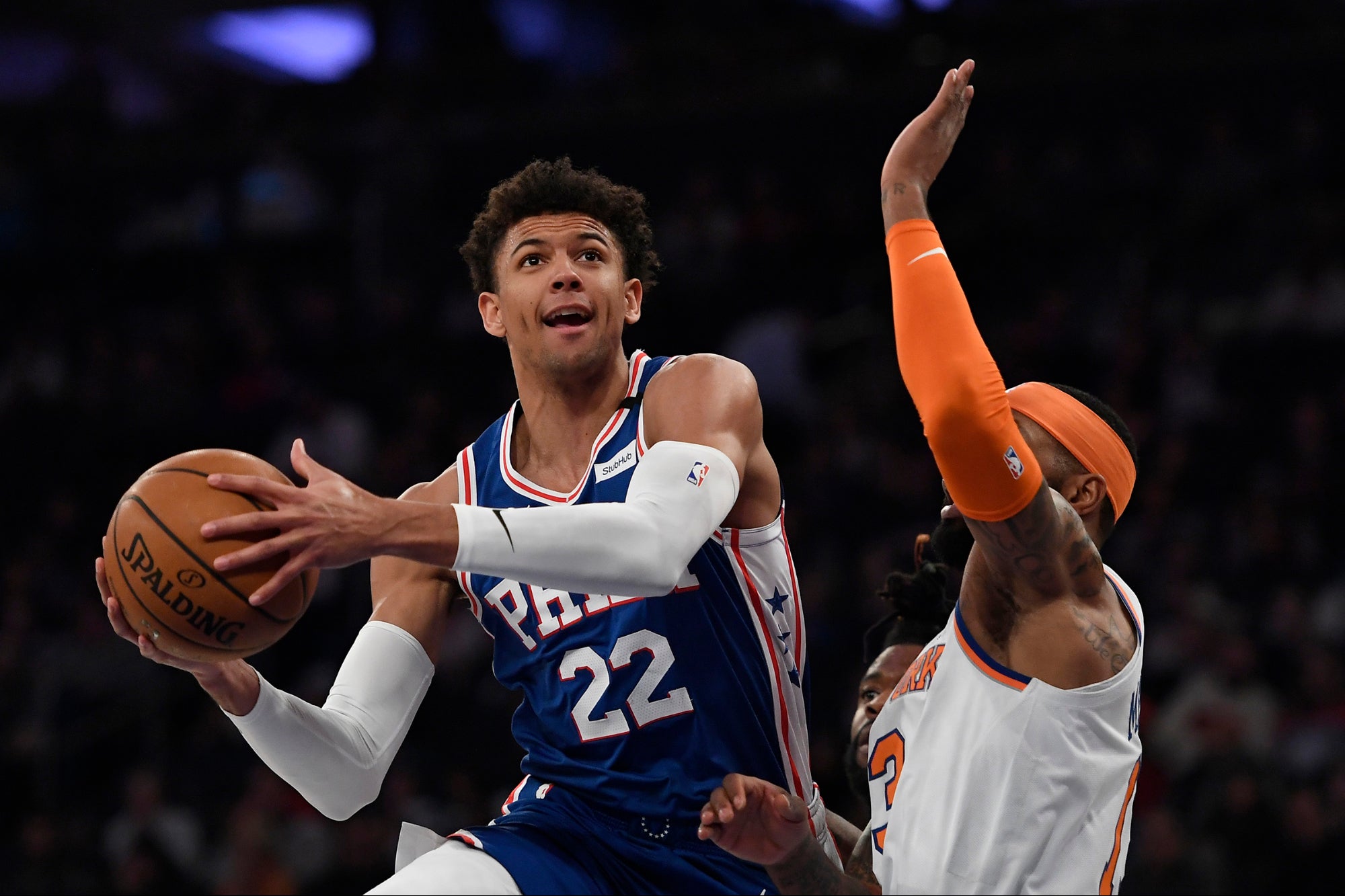
Most notably Matisse Thybulle.
A rookie on the 76ers, Thybulle started a vlog series ‘Welcome To The Bubble’. Thybulle’s first vlog, sharing his first day in The Bubble went live on July 11th. Within two weeks he generated 300k subscribers and 4 million views.
Other star players such as Jordan Clarkson, Rudy Gobert, Josh Hart have turned their focus to gaming. The three are the most high-profile NBA players regularly streaming on Twitch.
Gordon Hayward, a forward for the Celtics, has been blogging his experiences.
The league has always been a bit of a soap opera that revolves around star players. In the book, Personal Foul, disgraced NBA referee Tim Donaghy wrote that (the fans) “they pay to see superstars like Kobe Bryant score 40 points. Basketball purists like to see good defense, but the NBA wants the big names to score big points.”
What If the biggest stars are no longer the best players with the best skills? What if the biggest stars are the ones with the biggest audience online?
According to the WSJ, a typical pre-season game last year averaged 885,000 viewers, and Thybulle’s first YouTube video has more views than that.
With an audience comes leverage.
The NBA should begin looking at the business differently.
Rather than focusing on the NBA as a vehicle to sell advertising against games, they should look at it through the lens of a record label. The NBA is investing in and promoting these players. They should provide resources to players in the form of production and social media teams. Help them build their audiences, and in return get a portion of that IP and/or use it as additional marketing and advertising channel.
The world is changing. In adapting, and helping players grow their audiences, the NBA could help themselves.
Note: Since I first submitted this piece a lot has happened within the NBA. Teams went on strike to fight for social justice in the wake of the Jacob Blake Shooting. NBA players in The Bubble banded together and initiated conversations with team owners across the league about social justice issues. Players amplified their message and drove awareness of the cause across their own social channels. Thus far, the players brought about meaningful change in the form of NBA arenas becoming polling stations for the upcoming election.
As I noted above, with an audience comes leverage. In this instance, players are wielding that audience for not just monetary gain, but for social good.
https://www.entrepreneur.com/article/355105

September 7, 2020 6 min read
Opinions expressed by Entrepreneur contributors are their own.
Ultimate Guide to Social Media Marketing by Eric Butow, Jenn Herman, Stephanie Liu, Amanda Robinson and Mike Allton is available now via Entrepreneur Press. Order from Amazon | Barnes & Noble | Apple Books.
The phrase “innovate or die” is one way to describe the life of any ecommerce brand right now. We are seeing many get creative by deploying user-generated content for digital ads. Influencer marketing is a staple in marketing budgets, and live streaming is a big part of content strategies. This is why Amazon Live and its new influencer program presents an intriguing opportunity for brands and influencer entrepreneurs to “innovate.”
You already know the usual suspects for live-streaming platforms: Facebook, Instagram, YouTube and Twitch. But is Amazon Live worth exploring? Here’s why you should try it today, along with some guidance how to start your own Amazon Live stream.
Related: 10 Laws of Social Media Marketing
Imagine the infomercials on QVC, except instead of being on TV, you’re showcasing your products on Amazon.com, the world’s largest retailer. For a more literal explanation, Amazon Live is a live-streaming feature for Amazon sellers and influencers to promote products and drive sales through live video. The tool became available in 2019, and all broadcasts appear on Amazon.com/live. Compared to Facebook and Instagram, broadcasts usually stay on the brand or an influencer’s profile. With Amazon, there’s a dedicated landing page where shoppers can discover and watch streams that are “live now” or have previously streamed.
It’s quite the sales tool, as you can give live demonstrations, chat with customers in real-time, unlock extra benefits the more you stream and grow your following on Amazon.
The nice thing about Amazon Live is it’s free and simple to get started. However, it’s not available to all users. You need to be part of the Amazon influencer program with an active storefront, be a U.S. Professional Amazon Seller who uses seller central or a U.S. Vendor with an approved Amazon Store.
If you meet the requirements, here is all you need to get started:
Download the Amazon Live Creator app.
An iPhone or iPad (the app is currently only available for iOS users).
A strong and stable Wi-Fi connection.
You can go live directly from the app or connect to an external mic or camera using broadcast software like Restream or Ecamm or a video encoder.
I also recommend having a tripod for stabilization if you’re streaming via an iPhone or iPad.
When you’re ready to go live, you will be asked to pick a brand of the product you want to showcase (the brand needs to be registered with Amazon’s Brand Registry). Then you add products to your product carousel to display during your stream, name the stream and either go live now or schedule for later.
For ecommerce brands….
Two marketing trends continue to rise and deliver positive ROI. Live streaming is growing fast, with 47 percent of live-streaming viewers worldwide streaming more live video than the previous year — and all signs point to this number continuing to grow.
Influencer marketing budgets are a real thing, and the numbers show it works. Almost 90 percent of marketers say the ROI from influencer marketing is comparable to or better than traditional marketing channels.
With Amazon starting its influencer program, it’s a great opportunity for brands to work with influencers — especially live streamers with an established audience to help increase brand awareness and boost leads and sales.
For Influencers….
This is where things get interesting. There’s a sense of exclusivity added with Amazon Live and extra incentives for influencers. Here’s why.
Only influencers accepted into the Amazon Influencer Program will have access to broadcast on Amazon. For all other platforms such as Instagram, Facebook or YouTube, you don’t have to worry about that, and you’re competing much more for attention.
Amazon Live rewards influencers when they stream more and earn more. You start as a Rising Star and can earn an A-list status where your products show up on the Amazon.com homepage. Check out more about Amazon levels here.
When you go live, your followers are notified and your stream automatically appears on your influencer page. As an influencer, your business thrives on traffic and sales, and when people buy from your Amazon live stream, you earn commission on top of what brands pay you. (You can see if you’re eligible to be an Amazon influencer here.)
See how some top influencers, like fitness and transformation expert Corrie Calliet and fashion-and-style influencer Shea Whitney, use the platform.
Related: Beginner’s Guide to Social Media Marketing
The stats and signs are all pointing to yes. Even though Amazon Live isn’t as well-adopted by users like Instagram and YouTube, there’s no hiding the influence Amazon has on the ecommerce world. Amazon was responsible for 45 percent of U.S. ecommerce spending in 2019, and that number is expected to grow to 47 percent this year.
With the right planning and promotion, you can easily showcase how products can be used, leverage special offers and build a strong following that leads to more sales.
From what I hear from other influencers and business owners, Amazon Live is a best-kept secret, and it feels like only a matter of time before more brands and influencers jump on the opportunity. So, in my professional opinion, I think it’s worth being one of the early adopters. I mean, it’s freaking going live on Amazon.com.
https://www.entrepreneur.com/article/355642
[unable to retrieve full-text content]https://feedpress.me/link/13962/13859887/380037

September 3, 2020 3 min read
Opinions expressed by Entrepreneur contributors are their own.
Instagram created Reels, a new way to engage and connect with your followers and audience, but will it help brands grow and stand out in the current chaotic noise on social media?
Reels is Instagram’s latest feature that launched at the start of August as a competitor of TikTok. Instagram users can now create bite–sized videos sharing tips, inspiration or light–hearted good vibes. At the start, TikTok captured a tween and young adult audience but recently started attracting more entrepreneurs leveraging the platform to serve as a lead generator for their brand.
Related: Instagram Launches Reels and Tries to Beat TikTok at Its Own Game
Here’s how you can start using Reels for a similar purpose and grow both your business and your brand outreach:
Related: 3 Kinds of Social Media Marketing You Shouldn’t Ignore
“IG Reels definitely has a semi-steep learning curve, even for tech-savvy users,” says Dr. Hu. “For example, it isn’t super clear that you can add text and graphics to various frames within each reel. It took me a while to figure out how to add and edit an IG Reel … be patient, play with layering text, graphics and GIFs on your reel, and play back the Reel to see how your edits appear.”
https://www.entrepreneur.com/article/355039

September 3, 2020 6 min read
Opinions expressed by Entrepreneur contributors are their own.
Social media has fast become an essential part of the ecommerce world. According to a report from eMarketer, 36 percent of internet users say social networks are as important as any other information source when making decisions about buying a product. Forty-five percent say their mobile device is now their most important shopping tool.
Luxury products aren’t immune to these changing trends. The visual nature of Facebook and Instagram make it easier for luxury brands to communicate their premium status and reach the audiences most likely to buy.
While many of the principles of selling products on social media are universally applicable, there are a few factors that those selling luxury products should be especially mindful of.
While this tip may not be unique to luxury products, it is one that bears repeating. Social media — especially Instagram and Facebook — is an inherently visual medium. To create a luxury look for your products, Popular Photography’s Peter Klonia has some advice. “Start by selecting a salient feature or characteristic of your subject that you want to showcase. It could be texture, color, form, line or a mix of these elements. Then play with the lighting until it forces the viewer’s eye to notice that salient feature first and foremost.”
This can help with both individual posts and carousel style ads that are designed to show off several related products at once. Well-lit photography will highlight the luxury features of a product. Lifestyle photos should always showcase the product in a high-end setting.
For example, if you’re showing someone wearing a luxury watch while driving a car, make sure they’re driving a luxury vehicle. Everything about the image should convey your brand’s premium status.
Influencers are a big part of social media campaigns. This is especially true of luxury brands. Partnering with the right influencers in your niche will help communicate how your products can serve as a trendy status symbol. The Edelman Trust Barometer reports that 63 percent of consumers trust influencer messages more than traditional ads. This can have a big impact on your product sales.
As just one example, Korean beauty product brand Surepi partnered with beauty content creators for a campaign that highlighted a new product’s advantages and offered usage tutorials. The result was a 51 percent higher return on ad spend, and a 33 percent reduction in the cost per purchase. Relevant partnerships build trust and help further elevate your brand’s status.
Do your research on potential influencer partners and their followers. The best influencer partnerships won’t just be an authoritative figure in your niche — their followers should also primarily be those who are interested in buying high-end products.
Related: CGI-Created Virtual Influencers Are the New Trend in Social Media Marketing
Luxury brands stand out thanks to their unique stories. Whether that is a legacy of producing handcrafted items or using environmentally-sourced materials, such differentiators are often a key part of what makes a brand “luxury” in the first place. Communicate the luxury status of your products by taking customers behind the scenes with your social media posts — like this post from Chanel. It’s an easy way to communicate your quality and luxury status. Video as a medium of communication cannot be understated here.
Using the Stories feature on Facebook or Instagram is a great way to ensure that this curated content actually reaches your customers. A recent study in AdWeek reports that while the reach of branded Instagram posts has fallen to 4.3 percent, the reach rate for Stories has actually risen to 7 percent. Posting a “preview” of a post in Stories can also serve as a great way to direct followers to a new post or campaign.
Such posts should be crafted with the same level of commitment to presenting a luxury look as your product photography.
User-generated content can be a big boon to your social media growth. Studies have consistently found that user-generated content performs better in terms of clickthrough rates, ad views and even forming an emotional connection between viewers and the brand.
Of course, not all user-generated content is created equal. While luxury brands can (and should) encourage customers to provide branded photos with contests and sweepstakes, they must be extra diligent when it comes to curating photos that will be shared on the official brand page.
For example, Brilliant Earth is adept at featuring everyday people using the brand’s products, selecting user-generated photos that were still taken by professional photographers. That aesthetic matches the general style of images that the brand would normally post. Such guidelines help present the products in the best possible light.
Related: How to Create Content Built for the Future of Social Media
Luxury products come with a premium — and that means not everyone will be able to afford your products. Luxury product advertising is often aspirational — meaning that people who can’t afford the products are still exposed to the brand and its ads. This won’t always help you make the most of your social marketing budget.
However, as MarketingLand reports, in 2019 Facebook introduced a new method of targeting users based on income. This targeting metric doesn’t focus on total household income. Instead, it targets users based on how they compare to the average income for their ZIP code. You can target users who fall in the top 5 percent of area earners, the top 10 percent, and so on.
With this income-oriented targeting, you can ensure that your ads are reaching customers who are actually in a position to buy your products. This is an absolute must when a campaign’s goal is sales, rather than building brand awareness. However, let’s be clear, for infant luxury brands just getting their feet wet in paid media, this sort of niche targeting could prove detrimental to the long term success of a campaign.
At the end of the day, the way you approach your luxury product branding on Facebook and Instagram should simply be an extension of your other branding efforts. By remaining true to your brand identity and focusing on the luxury aspects of your products, you will be able to communicate your value and build a strong social media following that leads to actual sales growth.
https://www.entrepreneur.com/article/355306

Hint: Targeting emotions is key.
September 3, 2020 4 min read
Opinions expressed by Entrepreneur contributors are their own.
Whether you own a nonprofit or a social impact company, your cause deserves mass exposure. At times, it can feel challenging to utilize social media to unlock this. With so many competing causes and companies, much of it can feel like white noise. Fortunately, thanks to today’s social media accessibility, it’s easier than ever to get shares and more eyes on your cause’s content. A recent report by Statistica found that 95 percent of young adults follow a brand online. Social media isn’t just for friends and social engagements anymore.
Achieving virality is quite random, but there are a few social media hacks that can get you closer. Used consistently over time, these hacks can — at the very least — garner your cause more exposure than any of your previous social media efforts.
Related: Beginner’s Guide to Social Media Marketing
Especially if you don’t yet have a big name or a significant following, it can be hard to fight for viewers’ attention. Because the average person has the attention span of a goldfish, they have to instantly be interested in your content in order to engage further. Garrett Adkins, the co-founder of Impact Media, says it’s “all about the first three seconds.”
“It is not the consumer’s job to give us their time. It is our goal and effort to receive it,” Adkins says. “We want to hook someone through a bold statement or intriguing question that both catches the eye and still aligns with the context of our message. It’s an art.”
How can you grab viewers from the start? Perhaps a surprising headline, a cliffhanger or a catchy first line. Your goal should be to make the viewer — who potentially has never even heard of your cause before — to read the next line of your caption or watch the next 20 seconds of your video.
Because many causes are rooted in human emotion, impact-oriented startups have a real opportunity in creating content that targets emotions. One powerful example of this was UNICEF’s fifth birthday campaign. Using the headline, “Every Child Deserves a 5th Birthday,” the campaign asked for viewers to submit a photo of themselves on their own fifth birthday. This did two things: It elicited emotion (especially seeing photos of very young children), and it also incorporated ownership, allowing viewers to contribute their own photos.
It will differ widely for every cause, but consider how you can put viewers in the shoes of who you’re impacting through your organization. How can you give them ownership and make the content interesting and emotional?
Related: A Breakdown of Every Major Social Media Platform for Business Owners
On the other side of the same coin, laughter is a human emotion that’s shareable. If you’ve ever stumbled across a meme or video that made you burst out laughing, you likely shared it with at least one other person. Because social impact companies typically have more serious causes, it can initially seem challenging to create humorous content around the mission.
A marketing campaign that did this well was from Movember, or No Shave November, which encourages men to talk about their mental health struggles through the month of November. Because “it gets better” is a common line in a mental health sense, Movember created a campaign featuring actors from The Office called “It gets fuller,” poking fun at growing a mustache and how hard it can be for some. This relatable, funny message still raised awareness for the cause and gained virality.
Get creative with your own ideas using these three guidelines. As long as you target human emotion and aim to capture the viewer right off the bat, you’re in business. It may take a few iterations, but eventually, you’ll create a piece of content or a marketing campaign that gains some serious exposure for your cause.
https://www.entrepreneur.com/article/354049
Baffled by Twitter’s trending topics section? The company plans to make it easier to see why a person, place or thing is showing up on everyone’s feed.
September 3, 2020 2 min read
This story originally appeared on PCMag
“Why is this trending?” was tweeted more than half a million times in the last year. Twitter users clearly want to understand why something is popular, and the company took note.
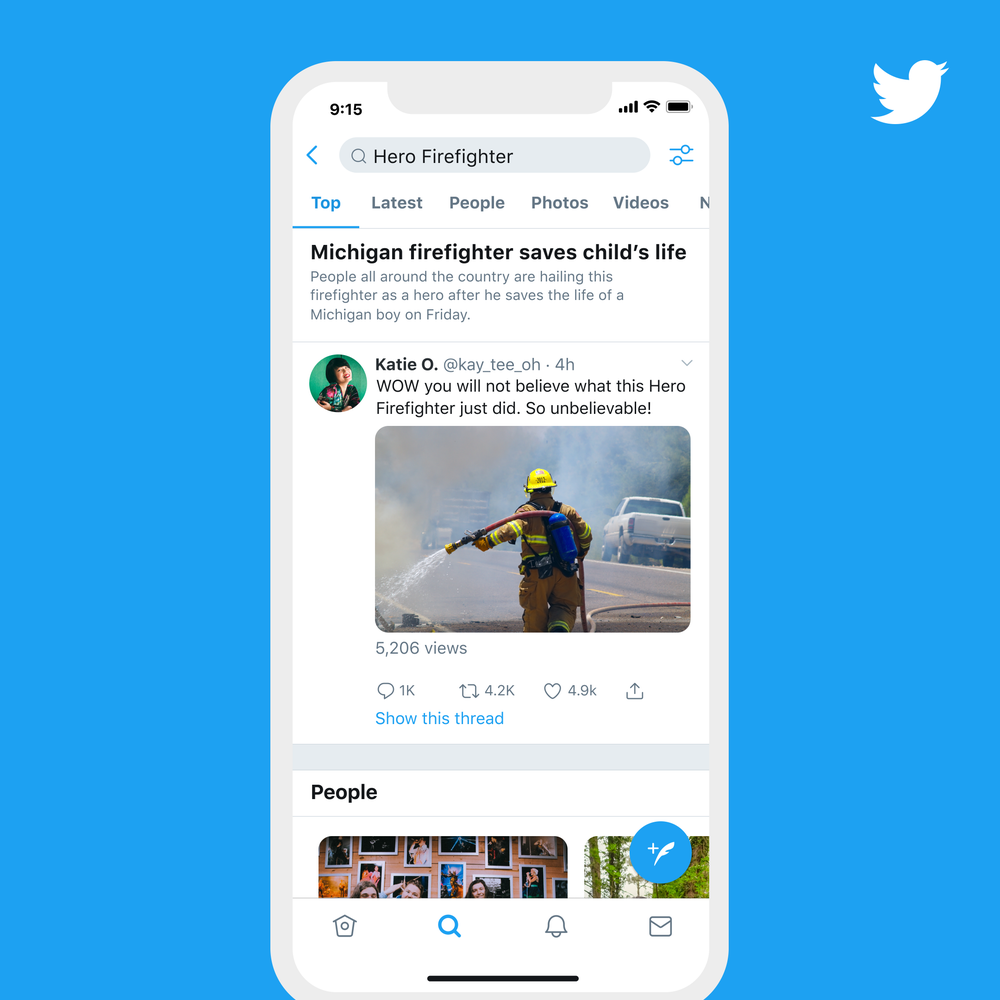
On Tuesday, Twitter announced that it would elaborate on trends via pinned tweets and descriptions on trending topics.
Providing context around trends happens through a combination of algorithms and human review. The algorithms pick out tweets that aren’t abusive, spam or posted through fraudulent accounts. A representative tweet is then pinned to a trend to show why users are talking about the topic. This feature has already been implemented on Twitter for iOS and Android, and the company plans to bring it to Twitter.com as well.
Descriptions haven’t rolled out yet, but they’ll be written by Twitter’s curation team, which will abide by certain guidelines.
Here’s what pinned tweets and descriptions could look like:
(Image Credit: Twitter)
Related: Twitter Labels Trump’s Mail Drop Boxes Tweet for Violating Election Integrity Rules
The additional context on trends will be available in Argentina, Australia, Brazil, Canada, Colombia, Egypt, France, India, Ireland, Japan, Mexico, New Zealand, Saudi Arabia, Spain, the United Kingdom, the United Arab Emirates and the United States.
“To bring more clarity to the conversation, we hope to add more context to more trends over time,” says product trust partner Liz Lee and product manager Frank Oppong reads. “We need to make trends better and we will.”
https://www.entrepreneur.com/article/355732
[unable to retrieve full-text content]https://feedpress.me/link/13962/13850804/379584

September 1, 2020 5 min read
Opinions expressed by Entrepreneur contributors are their own.
The following excerpt is from Ultimate Guide to Social Media Marketing by Eric Butow, Jenn Herman, Stephanie Liu, Amanda Robinson and Mike Allton (each of whom contributed additional reporting to this week’s topic), available now via Entrepreneur Press. Pre-order now from Amazon | Barnes & Noble | Apple Books.
Using video in your social media marketing can seem daunting, but if you follow some basic rules, you’ll be an expert in no time. If you want to create video that not only gets views, but helps convert sales, follow some of these best practices.
One of the first reasons people often cite for not creating video content is that it’s too expensive to buy the right equipment. Let us help you with that.
Today, virtually everyone in business has a smartphone, and you can use that smartphone to livestream or record video anywhere. In fact, under the right conditions, that video footage can be just as good as anything you’d get with a dedicated video camera. Similarly, most laptops come with a built-in webcam and an audio port to plug in a headset and mic.
Related: 3 Ways to Create Buzzworthy Social Media Images
The biggest drawback to using a laptop or smartphone to record video is that it is harder to compensate for poor lighting. In fact, if you’re going to invest in anything for recording video, better lighting should be at the top of your list, particularly if you want to record in a dim office.
When you task a camera to record you in poor light, the resulting video is dark and grainy. Conversely, when you’re well-lit, the video is crisp, clear and, most important, your audience can see you nicely.
To that end, the recommended placement of lights is to have two in front of you, on either side of the camera, and one that is directed behind you to eliminate shadows. You’ll find that lights designed specifically for video work can be adjusted and directed more easily than normal household lights, but feel free to work with what you have.
To test your lighting, simply open a video recording program on your computer, such as QuickTime for macOS, and see how your video quality looks. Are you grainy or shadowed? Lit too harshly? Get up and move your lights accordingly and then see how that impacted the quality of the video. If necessary, record yourself briefly and send it to a friend for input.
Eye contact is effective for establishing a connection with your audience. It’s how you start building rapport. People who never look at the camera risk suggesting to the audience that they cannot be trusted.
That’s not to say you can’t take your eyes off the camera. But the more you can directly look at the camera — making each and every viewer feel like you’re looking at them — the more effective your videos will be.
So practice that! Get into the habit of looking at the camera while you’re speaking. Treat it as though it’s the person you’re talking to. If it helps, imagine it’s a dear friend you’re having a wonderful conversation with.
One trick is to minimize whatever video screen you’re looking at. Make it small and centered at the top of your monitor, so it’s as close to your camera as possible. That way, even if you’re looking at yourself, other guests or a feed of comments from a live screen, your eyes are never far from the camera.
It’s also important to give yourself time and grace when it comes to creating video content. No one is born knowing how to produce gorgeous videos. It takes many, many hours of practice and experience to get good at it, and even then, like every other skill, it takes a lifetime to master it.
Remember that generally speaking, your audience and viewers are rooting for you! They want to learn from you and connect with you, and they will bear with you as you struggle here or there.
If you’re broadcasting live and say something wrong, just laugh it off and move on. Heck, some of the video clips that have gone the most viral for mine and my co-authors’ 360 Marketing Squad are the blooper reels I inevitably pull out. Those actually serve a wonderful purpose: They show your authenticity, humanity and hopefully your sense of humor.
Finally, when you’re deciding on your video strategy — where you’re publishing videos and what you’re going to talk about— also include a time frame for how long you’re going to commit to doing this before you render any real judgment.
It can be discouraging to spend hours filming and editing a video only to publish it and get no views. But don’t let that stop you. Publish the next one, and the next one, and the one after that. Keep pushing out that content and scratching out an audience for yourself. If you’re not sure whether the videos are good, find trusted friends and colleagues who can give you candid, professional feedback, and then keep publishing the videos.
Related: 3 Kinds of Social Media Marketing You Shouldn’t Ignore
It takes a long time to build an audience and even longer to start incorporating feedback and input and get great at making videos. Give yourself sufficient time to accomplish that, and have some reasonable expectations and metrics as a gauge for success.
https://www.entrepreneur.com/article/355481