How to Manage Social Media in a Global Crisis via @danibeetalks
[unable to retrieve full-text content]http://tracking.feedpress.it/link/13962/13479797
[unable to retrieve full-text content]http://tracking.feedpress.it/link/13962/13479797
Marketing does not work in silos, and neither does life.
A brand awareness campaign that includes paid search can result in more organic search traffic with an increase in branded search terms. A newsworthy event can result in additional organic searches or views on social networks, such as what we’re currently seeing.
With a large number of the world’s population now confined at home, people have turned to social media as an outlet to remain connected with family, friends, and work. This online behaviour is the intersection of Paid, Earned, Shared, and Owned marketing, or the PESO model.
So, what happens when a company decides to increase or decrease their paid social media campaigns at a time when so many people have turned to social networks for connection, resources, and to just pass the time?
At JUST Media, we run media planning and buying for some of the world’s most powerful enterprise technologies. We produced the following analytical findings across our accounts in an effort to help other marketers ensure their brand’s message is reaching the right audiences.
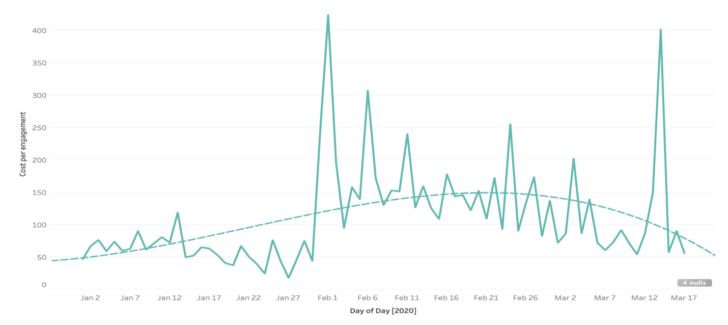
Company A, shown below, had a paid social campaign running in 2020 and saw a positive trend with social traffic and engagement with an improvement in Cost per Engagement (one of their KPIs).
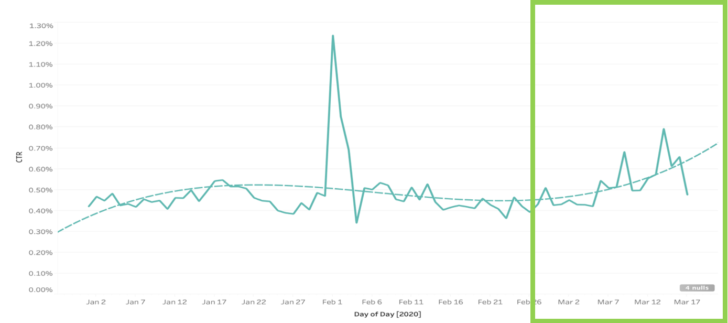
And, an uptick in click-through rate.
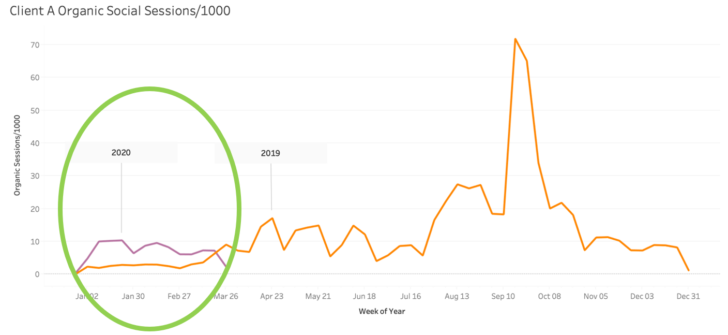
As the global pandemic spread and events were cancelled, schools and businesses closed, and shelter-in-place orders enacted, paid social was paused the week of 3/17/2020. In the chart below showing organic social traffic (measured in 1000’s), the 2020 graph has outpaced the 2019 graph all year. It isn’t until after the paid social budget was paused that we see the 2020 organic social traffic line dip below the 2019 line.
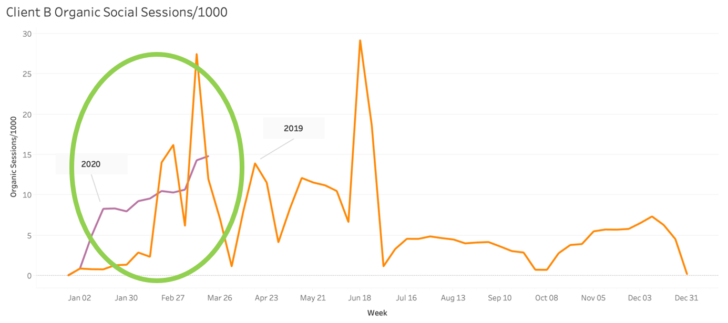
You might wonder, though, how much of that is due to cutting the social budget vs. the overall global uncertainty with COVID 19. Let’s compare it to Company B, which left its paid social budget unchanged. This chart shows organic social traffic during the same time period as Company A, but notice the strong 2020 trend line that is outpacing 2019. There is no indication that 2020 cannot continue to outpace 2019.
Finally, let’s look at another example where Company C decided to boost its paid social media presence in 2020. Cost per click and (CPC) and cost per 1000 impressions (CPM) both saw efficiency with the higher budget.

Not only are the pre-click metrics showing improvement, but organic social traffic also shows an uptick.
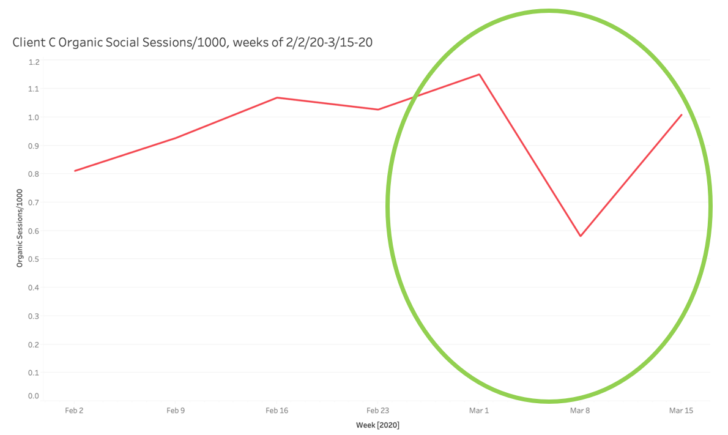
Notice that 2020 and 2019 organic social traffic is pretty close together until the 2nd and 3rd week of March when we start to see some distance where 2020 rises and maintains above 2019. It raises the floor and gets a larger return for the investment.

To further show the effect of paid social with organic social, let’s look in more detail at the last six weeks. The week of March 8 when so many companies implemented a mandatory work-from-home policy, there was some pull-back in the social strategy. The following week when the focus returned, organic social traffic rebounded to similar levels.
Beyond the traffic volume that social networks can provide is the engagement on these platforms by its users who are liking, sharing, and commenting on posts and ads. This engagement provides the opportunity for companies to interact with their customers at a time when face-to-face contact is not possible beyond a video conference call. Companies can also guide the conversation and initiate messaging with their customers. This is known as community management, and it can be powerful in an overall social strategy.
What we are seeing right now with clients who are active on social platforms is an increase in engagement. This means an increase in the opportunity for companies to interact with their clients at a time when businesses are closed, face time is diminished, and customers have an increased need in having their concerns and worries calmed.
Companies who have chosen to decrease their paid social presence or pause it together are likely not only seeing a drop in their paid social traffic, but also their organic social traffic, and if they are also not involved in a community management strategy, they are potentially missing a key opportunity to interact with their customers. Those companies that are maintaining their social presence through paid campaigns and community management will likely be better positioned for an upswing in the coming weeks and months when the world begins to emerge from the current situation.
Note: This is not a sponsored feature.
Jennifer LoMonaco is Director of Data and Analytics and John Smith is a Data Engineer at JUST Media.
[unable to retrieve full-text content]http://tracking.feedpress.it/link/13962/13442016
[unable to retrieve full-text content]http://tracking.feedpress.it/link/13962/13431500
Raise your brand awareness in a fraction of the time.
April 6, 2020 2 min read
Disclosure: Our goal is to feature products and services that we think you’ll find interesting and useful. If you purchase them, Entrepreneur may get a small share of the revenue from the sale from our commerce partners.
For small businesses, an efficient, lean social media marketing strategy is essential. You want to stand out online but you don’t want to expel huge amounts of time and money to do it. And with teams running leaner and meaner than ever while we navigate the impact of COVID-19, it’s important to utilize social media to connect with customers despite having limited resources.
Fortunately, there are programs that can help you boost your social media marketing on a budget like Socialii. In short, it’s an all-in-one social media manager, and you can get a lifetime subscription to the Pro plan for just $49.99.
Socialii helps you manage your social media presence without expending hours of time. It’s the most straightforward solution on the market, helping you tackle all of your social media profiles — on all of your platforms — from one central location. You can automate posting, target specific audiences, create emails and post across all of your Facebook, Twitter, LinkedIn, Whatsapp and other profiles at once.
And with access to the Pro plan, in particular, you can manage 20 social profiles and provide access to up to two team members. If you need more firepower, you can still save on the Elite plan, which includes 100 social profiles and 10 team logins.
Beyond that, Socialii gives you insights into your followers, fans, and friends to understand them better and know what kind of content they want to see. You’ll even get historical data on all of your posts to see which posts on which networks are working the best.
With a Socialii Pro Plan, you’ll have the best chance at keeping your social presence active without hiring extra hands. Get a lifetime subscription today for just $49.99.
https://www.entrepreneur.com/article/348734
[unable to retrieve full-text content]http://tracking.feedpress.it/link/13962/13422905
[unable to retrieve full-text content]http://tracking.feedpress.it/link/13962/13411699
[unable to retrieve full-text content]http://tracking.feedpress.it/link/13962/13404672
[unable to retrieve full-text content]http://tracking.feedpress.it/link/13962/13388762
Every year the social media marketing community turns into fortune tellers — we collectively try to predict what trends, features, and innovations will take place in the upcoming year. Of course, trying to predict social media trends is much more trustworthy than fortune-telling even if you’re using astrology as a framework for that.
Most social media predictions stand on the existing trends and research, which makes them highly likely to actually be accurate. It’s a common truth that social media platforms are constantly changing, they come up with new features, change algorithms, review their respective policies, and it all affects the way we do marketing on social. But it’s not like these changes come out of nowhere — they are all the results of social media company’s vision and business model or external circumstances.
To identify trends that will dominate social media this year we need to consider all of these internal and external circumstances. And that’s exactly what I did to make up this list of five major trends that will be prominent in 2020. In addition to simply describing what to expect in 2020, I also give some recommendations on how to use these trends to your brand’s advantage.
Source: Screenshot from social listening tool, Awario
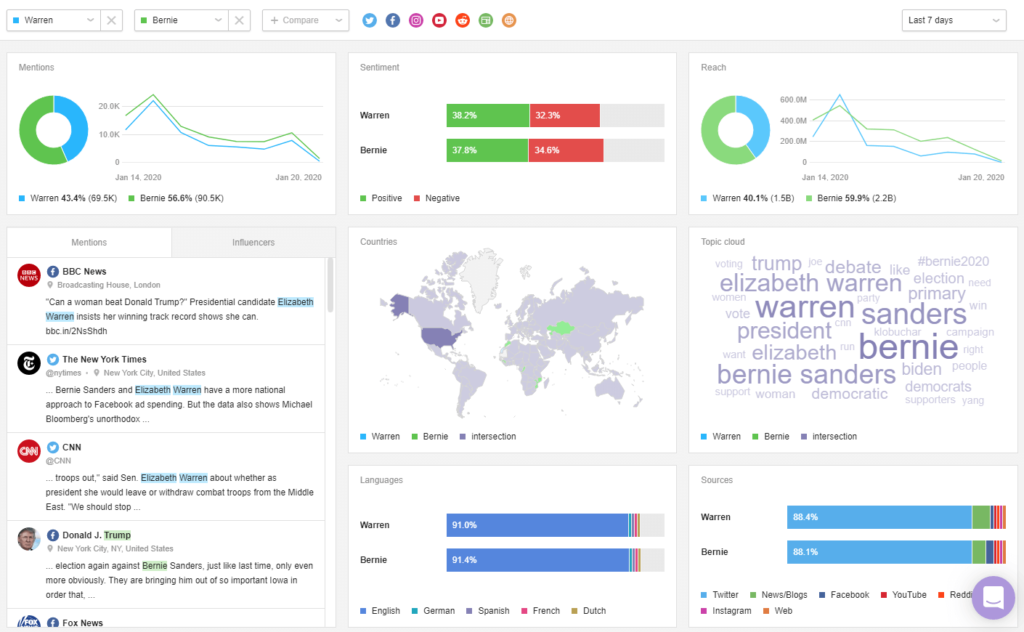
Knowledge is power, and social media companies want to empower their users and brands, or rather attract more investments. That’s why they are giving social media managers more and more access to insights and data analytics. Facebook is constantly expanding Creator Studio’s and Facebook Insights’ functionality, Twitter is adding more insights to Media Studio, and Pinterest is adding Pinterest Trends to inform brands on user behavior.
This year we are likely to see more ways to access user trends on different platforms and tap into this data for marketing and social media research. At the same time, due to trend number three on this list, brands might have to change the way they used to do social media marketing, especially with targeted advertising. There are ethical and unethical ways to use data, and the upcoming year will probably be the time to rethink these terms. That may encourage brands to get more involved in the research of the publicly available data with the help of social listening, for example.
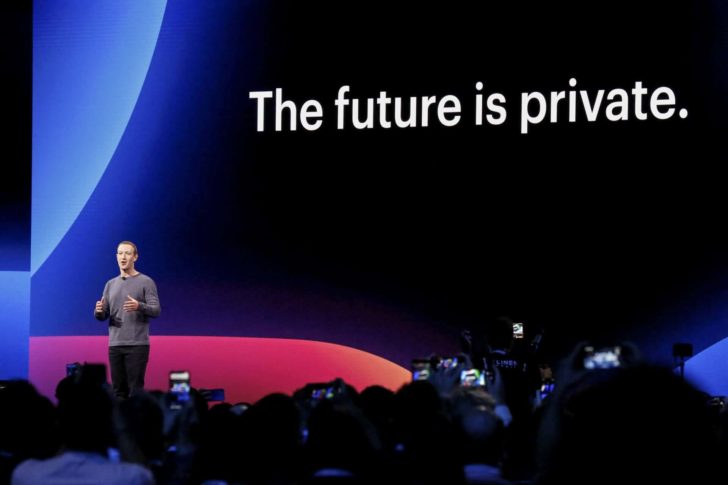
In 2019 Mark Zuckerberg claimed that “the future is private”. This was a surprising turn of events for the company which started out as a service to meet people and connect strangers. Facebook’s CEO announced that from now own the platform will prioritize ways to build and sustain smaller communities and tet-a-tet communication meaning more focus on Groups and Messenger as well as WhatsApp. And it’s not just Facebook, social media apps have been introducing more privacy-driven features lately including Instagram’s “Close Friends” list, various updates to DMs functionality for Twitter and Instagram, more ways for brands to manage social messaging. With the upcoming redesign of Facebook feed (expected to be fully rolled out in Q1 and the new ability to limit replies to your tweets, it’s obvious that 2020 will be the year of private social media.
The turn to private communication is, of course, motivated by user behavior. People simply got much more into messaging their friends and interacting in small interest-based communities. Social media companies took notice of that and are now giving people what they want. However, taking into consideration how many privacy scandals we had in the last couple of years, it’s easy to imagine that the turn to privacy was also prompted by the intent to improve ones’ reputation, especially when we are talking about Facebook.
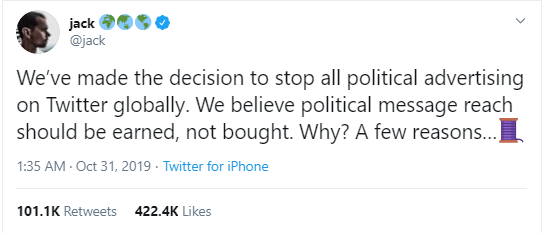
Source: Twitter
This will probably be the most prominent theme in the news coverage of social media companies for 2020. Once again, it’s not a new trend — the pressure to sort out the issues with spamming, misinformation, manipulation of the algorithm, and the social media impact on users’ mental health has been there for a while.
In 2020 we can expect more regulations on ads, more sophisticated algorithms for discovering spammers and bots, and more ways for users to control what they are seeing on the timeline. In 2019 we saw some actions taken not just by the platforms themselves but also by the state — there were several court cases around creating fake engagement and selling followers and likes that could become precedents for creating legislation around this matter.
Both Facebook and Twitter CEOs publicly stated that the ultimate framework for dealing with misleading ads and handling users’ data should come from the governmental actors and independent expert committees, not the social media companies. California Consumer Privacy Act is the first attempt at such legislation. This will certainly affect the way brands advertise on social and conduct marketing research (see trend number one).
Social media companies also face a bigger challenge – how to avoid locking people in their own social media bubbles and creating echo-chambers that skew their view of the world? Admittedly, this is a broader challenge for our society in general. However, we can’t ignore the fact that social media contributes to exacerbating the political and social divide between people, and it might be the time for platforms to rethink the core functionality and algorithms behind them.
Another area where social media companies are encouraged to take on more responsibility is mental health. By now it is obvious (and confirmed by research) that social media can have a negative effect on users’ self-esteem and mental health, especially among teenagers, and social media companies need to take notice of that. Some platforms have already made steps in the right direction by informing users about how much time they are spending on the app. The next big change will concern vanity metrics (see below). In 2020, it’s expected that there will be more platform regulations that aim to protect users from abuse and bullying and more ways for users to filter the information they don’t want to consume.
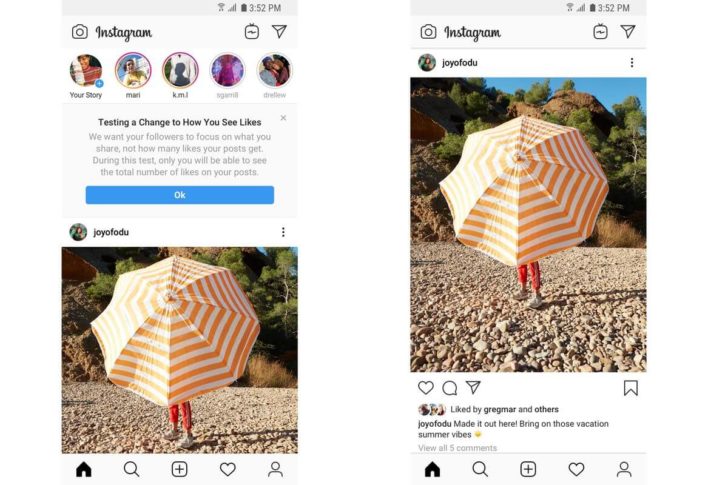
This trend is partly related to the previous one. In 2019, we saw several experiments around hiding vanity metrics, mainly like count, on Facebook and Instagram. Twitter’s CEO has also been vocal about his desire to move away from vanity metrics. Moreover, both Instagram and Twitter have slightly tweaked their design to put less emphasis on the number of followers an account has. The rejection of like count is probably motivated both by moral and practical reasons, comparing your number of likes to someone else’s is proven to damage one’s self-esteem.
Hiding vanity metrics from anyone could eliminate the pressure of competition people feel and make social media less stressful. Instagram has also revealed that during the tests they discovered that discarding like count leads to more content on the platform and that’s what any social media company wants.
That’s the logical outcome of the previous point, if people feel less pressure to get the most likes, they will feel more at ease with posting. All in all, prepare to say goodbye to like counts in 2020.
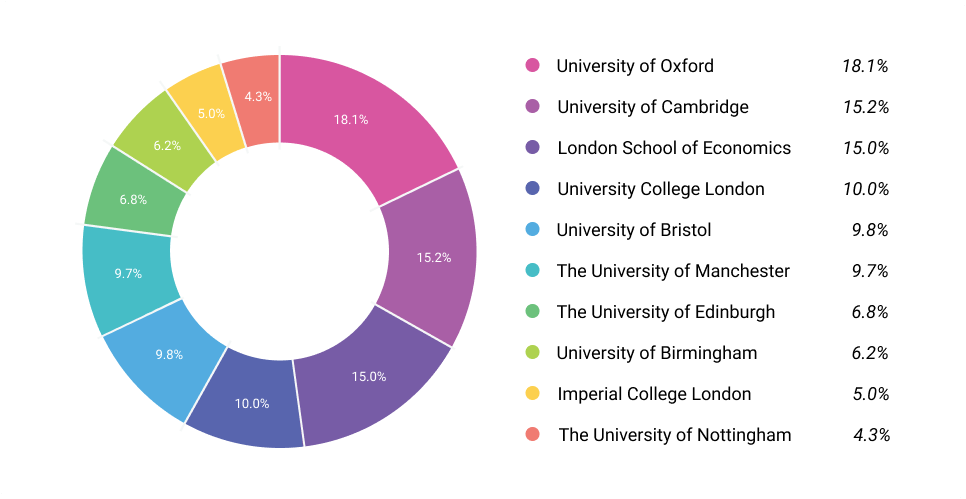
Source: Screenshot from social listening tool, Awario
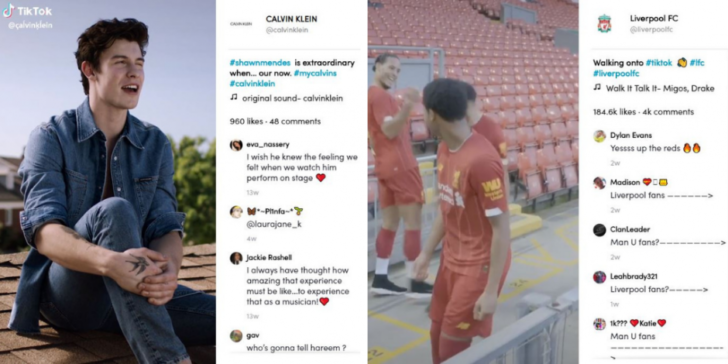
In 2019 TikTok became one of the most downloaded apps in the app store. The swift rise of the social media app drew a lot of attention from social media marketers, and will surely draw even more attention this year. The greatest thing about TikTok is its feed algorithm which allows you to reach a significant number of users right from the get-go, without having to gain followers for a long time.
The platform is tailored for viral content: easy sharing, trends, and challenges enable you to easily create videos with a huge potential reach. Moreover, the platform is constantly developing its business capabilities, just recently TikTok rolled out the ability to run ads on the platform for everyone.
TikTok is the app to keep an eye on, as it is one of the fastest-growing social media networks, it surely has bigger plans for the upcoming year.
Social media trends don’t just pop out of nowhere and it’s not difficult to predict what will happen in the upcoming year. However, knowing something is only half the battle — you need to actually adjust your social media strategy to the ever-changing circumstances to get the best results.
In this article, I tried to demonstrate the broader trends but also shared actionable tips to implement in your work. Some of the trends that will play out in 2020 may seem like an impediment for social media marketers, you can’t use targeting, you can’t see how many likes an influencer gets, and people are getting harder to reach since they are all hanging out in private communities. But it’s actually a chance for building genuine and trusting relationships with your audience — and you can do it by using these trends to your advantage.
Aleh is the Founder and CMO at SEO PowerSuite and Awario. He can be found on Twitter at .