Social learning: How to optimize your Facebook PPC campaign

For many of us, social media is a mysterious and ever-changing corner of the internet. Networks rise and fall at rapid rates, but one always seems to stay at the forefront of our minds. It’s clear that Facebook is the place to be, and 2.26 billion users may feel inclined to agree. If you feel like you’re not getting the most out of Facebook PPC ads (or are too afraid to take the plunge right now), you may have asked yourself how effective campaigns can take place through the social network. 

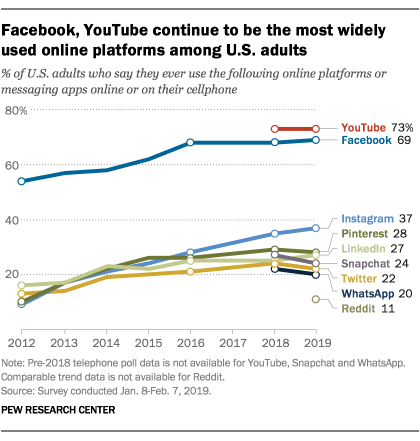
As the data shows, Facebook is only a narrow second-place to YouTube in terms of popularity among US audiences, and the world-renowned social network is twice as popular as its nearest like-for-like competitor. 
(Image: LYFE Marketing)

Naturally, this means that your PPC campaigns will be accessible for more users if utilized on the pages of Facebook. If your business has serious ambitions focused on attaining more customers or scaling as efficiently as possible, it’s certainly worth looking at building some PPC campaigns to go on Facebook.

But how exactly can users optimize their PPC campaigns? And just how effective could Facebook PPC actually be? Let’s delve into how businesses can optimized their Facebook PPC campaigns in a way that drives conversions and generates growth: 

Optimize your sales funnel

Facebook ads perform a little differently to Google ads, for example.

In the case of PPC advertisements placed via Google, it’s clear that audiences will be actively looking to buy the products or services in question, whereas with Facebook, it’s far more likely to be the case that you’re appealing to audiences who are simply browsing with little intention of making an immediate purchase.

This could potentially be problematic if you’re looking to operate on a smaller budget for advertising. 

With this in mind, it could be more useful to create a Facebook campaign that’s more focused away from the act of making an immediate purchase. Through using Facebook as your platform, it’s potentially most useful if you run a series of campaigns at the same time, all with different goals which could lead to creating your own social sales funnel. 

One of the most purposeful funnels you could create as part of your Facebook PPC campaign could focus on engagement. This helps to lure new customers in and is perhaps most effective when undertaken through the medium of video. 

It’s worth taking a moment to consider exactly who your target audience are before focusing on crafting a campaign that builds meaningful connections with them. 

Be sure to build engaging content for prospective customers and optimize your campaigns. When an uploaded piece of media has attained a healthy number of views – say, over 2,500 – create a new conversion campaign that targets users who viewed around 25% of your video.

By targeting audiences who have already engaged in viewing your campaign, it’s possible to yield much higher conversion rates as opposed to marketing in a more unfocused manner. 

Build exposure through frequency

It’s possible to monitor the number of times one specific user views your advertising campaign through ad frequency. This is an important metric because audiences that witness your ad repeatedly are more likely to recall it.

It’s important to leave your mark within campaigns – but be careful of overdoing your frequency – if your ad appears too often, it’ll only lead to users ignoring your branding. 

To help you take control of your exposure, be sure to place a frequency cap on your advertising report. Once the audience is saturated, your PPC costs will slowly begin to increase.

If you notice sharp increases in your costs, it could be worth duplicating your ad set and re-launching it for new targets – thus helping to realign your campaign for new audiences. 

Make your budget go further

A/B testing is always a great way of checking which type of campaign is best for your business.

When you first create your PPC setup for Facebook, you’ll likely be running two-to-three ad sets with multiple adverts within each set. To pick which ad set is more effective, it’s important to study the metrics available to see which campaign is best helping you accomplish your goals. 

When you’ve determined which ad is performing best, gently allocate more budget towards the set – a steady boost of about 10-20% will help to optimize the money you’re using without taking too many dangerous risks. 

If you continue to see encouraging results, repeat the process each day until you see signs of diminished returns on your investment. 

To help to study your ad performance more forensically, Google Analytics has a reliable platform for gaining insights into campaigns, while external platforms like Finteza can provide rich insights into your overall website performance as well as deep traffic quality checks. 

Fine tune your target market

Proper placements bring perfection to PPC campaigns. It’s possible to use automatic placements here as well as edit your settings. There’s no right or wrong answer here, but different options will benefit different types of campaign. 

For example, if you decide to incorporate Instagram into your ad reach, it’s reasonable to expect far greater engagement, but it’s likely that you’ll see far fewer comments or likes if you choose to place your ad as a Facebook page post.

Another effective add-on comes in the form of Facebook Messenger, which generally performs well when it comes to conversions. Audience Network placements can often increase a brand’s reach but it’s important to constantly monitor your metrics to ensure that no budgeting is being wasted. 

Get the right bidding option

Facebook uses an auction-based system when running advertising campaigns. Simply put, the social network chooses the most appropriate ad for audiences based on the level of money bid by a company and its performance on the website. 

The bidding system utilized by Facebook is becoming more complex than earlier in the 2010s however, and now users need to choose how they want to optimize their ads. Advertisers need to pick the type of campaign they want to run – whether it’s based on conversions in the form of link clicks, landing page views, or certain on-site interactions. 

Naturally, this will require some introspection and businesses will need to have a clear idea of their respective advertising goals before determining the bidding option that best suits them. 

Recycle ads to preserve engagement figures

It’s vital that your advertisements go down well with their intended audiences. More popular ads will be viewed widely as more favorable among users, and will likely receive considerably more engagements from targets.

However, many of the ad tests that you’ll perform to optimize your PPC campaigns will remove your comments and restart your engagement stats for each post. 

This can be a nuisance because of the value of likes and comments to advertisers, however, it’s possible to utilize the technique of ‘social stacking’ in a way that helps to keep all interactions in tact for all to see online. 

To perform social stacking, go to the ad preview page for the existing advertisement you’re aiming to keep. Click on the drop down menu to the top right of the preview and select the option ‘Facebook Post With Comments’. Copy the end of the existing URL for your ad and then choose to ‘Use Existing Post’ when setting up a new campaign. Paste the copied Post ID from the previous step and voila – a brand new PPC ad with all the relevant likes and comments carried over.

Peter Jobes is the Content Marketing Manager at Solvid, a digital marketing agency who specializes in SEO, paid advertising and website designing.
Social learning: How to optimize your Facebook PPC campaign


Four powerful tools to optimize your social media conversions

I think you’ll agree with us when we say, “It’s really hard to get conversions from social media channels.” Hours of creation and curation later, all we get are a few likes or just basic inquiries. But what if we told you that getting leads from social media isn’t quite a very hard nut to crack?

In fact, by using the below-mentioned tools we managed to get 89 new enquires in the past week alone. That’s a 594% staggering increase from the 12-13 leads that managed to squiggle through previously.

Sounds unbelievable?

Well, our magic potion is certainly a mix of a few tricks and tools that helped us to achieve this feat. But most importantly, it is the result of months of trials, tests, and efforts of keeping the social community engaged through frequent posting and analyzing.

What exactly are social media conversions?

Conversions from social media could be anything – from gaining new subscribers to your mailing list, more app downloads, website visits, to closing sales through your social channels. These conversions are an important part of digital marketing services and strategy.

The question now is, how do you, as a marketer gain meaningful conversions from your social media channels?

To help you out, we’ve put together a list of our most trusted social media tools for marketing that helped us gain an edge over our competitors:

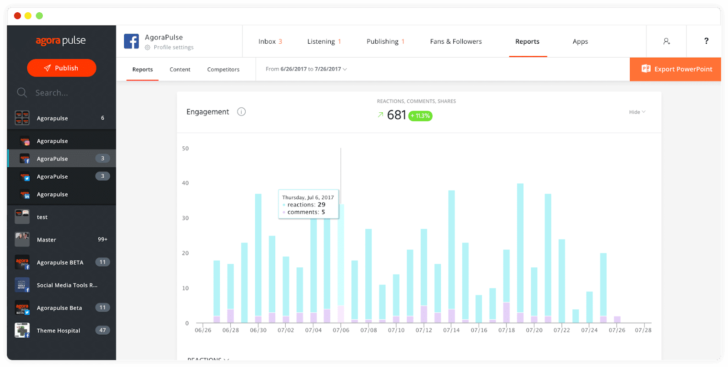
1. Ace your social game with Agorapulse

Agorapulse is a social community and moderation tool that helps businesses manage all their social network profiles. Furthermore, it helps you gather critical data like statistics and reporting to help you gain high-quality insights, devise and execute effective social media campaigns.

It is the ultimate social media tool as you can connect it to every social account that you run. Plus it also provides a CRM platform making it efficient for sales-oriented tasks.

Agorapulse features

Social inbox

One amazing feature in Agorapulse is its ‘Social Inbox’. If you are the kind of brand that likes to stay connected with your customers and monitor each brand mention, then Agorapulse is the tool for you. All your social media notifications will appear in the social inbox, so you can take action and reply to comments and mentions directly from this social inbox.

Social listening

As a social listening tool, Agorapulse can also find mentions of your brand on social media, where you haven’t been tagged. This generally helps you to identify negative reviews and smell a crisis before the disaster strikes. You can also set up custom searches for whatever query or keyword you like.

Content scheduling and queueing

Scheduling is easier too with categories. With the Chrome plugin, you can schedule content on the go.

Agorapulse for social media conversions

Source: Agorapulse

Audience analysis

As a B2B company, it is important to know if your clients are interested in your brand’s social content. Agorapulse lets you see your most engaged followers, who are more likely to become customers or clients in the near future.

Analytics and reporting

Agorapulse stands out for its in-depth analytics reports. These reports help in measuring your social media ROI to see if your efforts on social media are paying off. Compare your page’s performance to those of your competitors, to know where you are lacking.

Pricing

Agorapulse, beyond the trial period, is a paid tool. But if you are serious about getting leads and conversions on social media, it is definitely one that we recommend spending on. Agorapulse plans come in four different pricing ranges.

  • Medium- $99/mo
    Best for small businesses
  • Large-$199/mo
    Best for agencies
  • Extra Large-$299/mo
    Best for larger organizations
  • Enterprise-$499/mo
    Best for large teams with many profiles

Clients

Agorapulse remains the favorite social management tool for big names like Ogilvy, Disney, Dove, and Yves Saint Laurent.

2. Understand your social media audience with Socialbakers

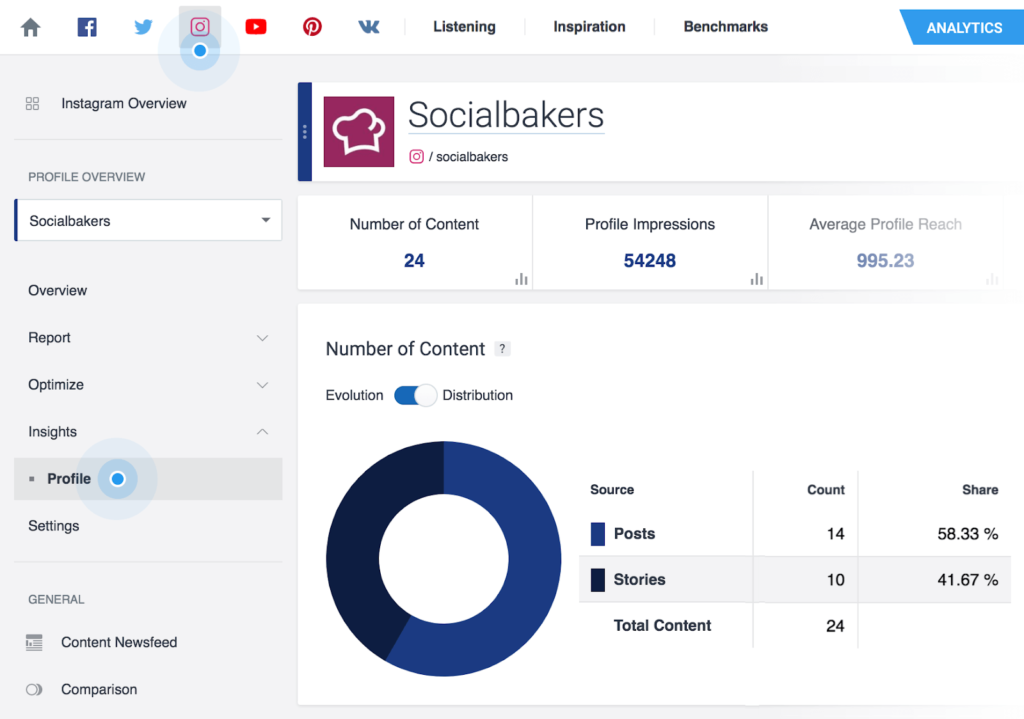
Socialbakers is a tool that can manage and measure everything from social media to your audiences in one place. It helps you discover your customer personas, what content resonates with them and which influencers do they like.

One of the more important things with social media is to understand the kind of content that resonates with your audience. Getting to know what your followers like and engage with, helps you in creating more relevant posts and content for the future. After all, content is created with the latent aim of getting customers in the long run.

Enter Socialbakers – an all in one analytical tool that helps you get the most of your data.

Socialbakers features

Creating detailed reports

Social media managers often tend to struggle with making customized performance reports to review their efforts on social media. With social bakers, you can get a complete analytical report scheduled to your inbox at set intervals of time. Save it as a presentation or excel sheet or PDF to peruse when required.

Socialbakers to understand social media audience

Source: Socialbakers

Competitor analysis

The multi compare feature in Socialbakers allows you to pit yourself against 10 other similar brands from your industry, so you can identify where you stand. By recognizing their strengths and weaknesses, you can create a better content strategy.

Social engagement

Discover what content is clicking with your audience, to do more of what’s working and engaging the viewers. Monitor your social media performance over different platforms to see which social channel is doing best.

Know your most engaged audience

Also, Socialbaker’s the ‘Response Time Evolution’ feature lets you determine the highest engagement time frame, you can mark the exact hour at which your posts should go out to get more responses.

Pricing

Socialbakers has two pricing plans that are determined by the number of profiles you wish to manage with it.

  • 10 profiles- $19/mo
  • 20 profiles-  $38/mo

Clients

Socialbakers is the tool of choice for brands like Sony, Samsung, Nat Geo, Vodafone, Walmart, and more.

3. Integrate apps, save time, and do more sales with Zapier

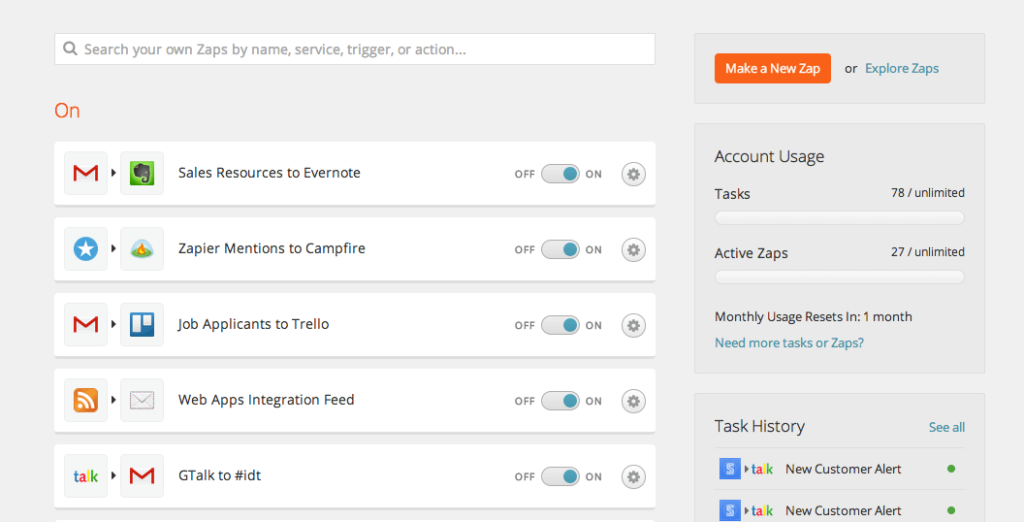
Zapier is an online automation tool that connects two or more apps. It automates simple repetitive tasks eliminating the need for coding and human intervention.

Zapier automation helps you manage your social media and spend time engaging in meaningful customer conversations.

Zapier features

Automate repetitive tasks

Zapier helps you by creating time-saving zaps or workflows that are fully automated.  It is a personal assistant that does little tasks for you.

Crossposting

Crossposting across different social media platforms is easy with Zapier. That means if you post a new picture on Instagram, and want the same to be posted on your Facebook account, you don’t need to do it manually each time.

Zapier to integrate apps and sales

Source: Zapier

Many people face issues crossposting their Instagram content on Twitter. The pictures appear as links, which need to be clicked and can be viewed only on the native platform. Zapier allows you to create image tweets from Instagram that can be directly viewed on Twitter.

Ongoing sync among apps

As social media managers usually suffer from a lack of time, they look to automate simple tasks, these tasks could be anything from posting the same content on different platforms, posting blog links to social media channels, saving interested leads and sign-up form data to a Google sheet, and more.

Zapier eases the burden by automating all these processes.

Zap templates

The best part about Zapier is that there are already hundreds of zap recipes created for you to use. If you are unsure, you can even customize a zap, by specifying a trigger and the resultant action.

Pricing

Zapier is a free tool for up to 100 tasks a month, and single-step Zaps, but if you want advanced features, and more zaps then there are four paid upgrades.

  • Starter- $25/mo
    Multi-step Zaps
    • Professional- $61/mo
      Advanced tools and unlimited Zaps
  • Team- $374/mo
    Collaborate with team
  • Company- $749/mo
    Enterprise-Grade Features

Clients

Zapier is trusted by teams large and small. Popular users include BuzzFeed, Spotify, Adobe and Fox network.

4. Get high-quality B2B leads with Lusha

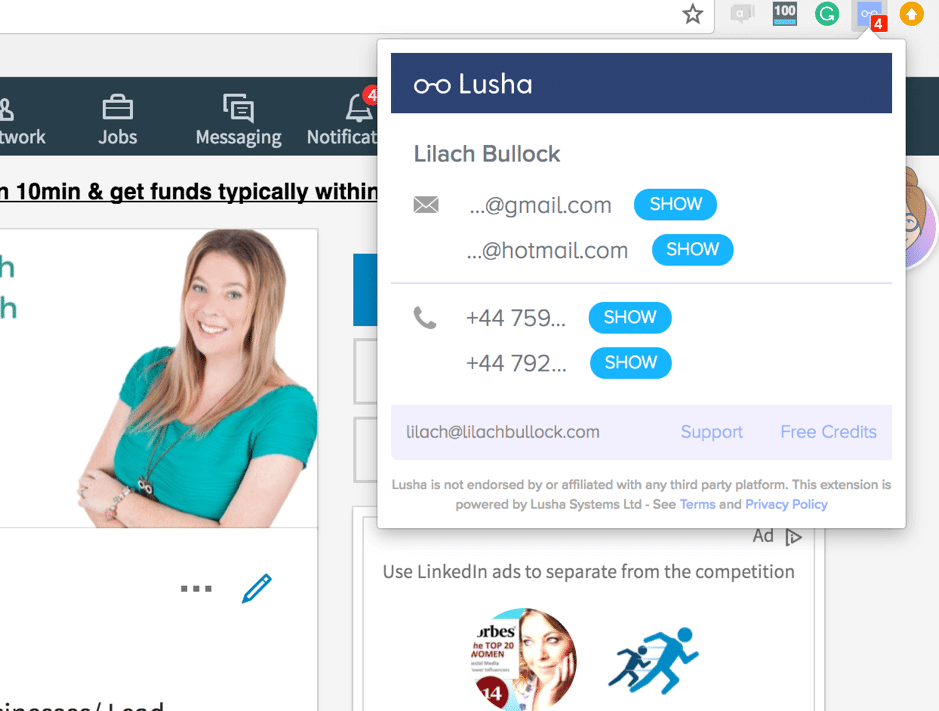
Lusha is primarily an email and phone number tracker. It is GDPR compliant and helps you get the contact information of B2B leads you’re interested in. Interestingly, you can even integrate Lusha with your salesforce to capture leads, contacts, and other sales front data.

Lusha features

Email and phone number finder

We tried using Lusha on our Linkedin profile and got some amazing results. Apart from people who regularly interact with our content on Linked in, we delved deeper and found contacts of people that we were interested to sell our services to. We primarily targeted CEOs, Marketing Managers, and key decision-makers.

Data import

With a warm list of qualified leads, we were able to create smart email campaigns. Also, using the phone numbers that we got through Lusha, we were able to pitch our services over sales calls.

Lusha for social media data and sales

Source: Lusha

The plugin works on LinkedIn, Gmail, and Salesforce platforms. Generally, contact information is hidden on LinkedIn, and to contact someone, you’ll have to send a message or an In-mail. With the click of a single button, Lusha shows you the personal email, work email, and phone numbers of the person you want to get in contact with.

Pricing

The free plan gives you five credits. That means you can view the contact information of five different profiles. However, if you wish to export contacts, and save them to your CRM, you have to purchase a paid plan. Lusha prices its plans on the basis of the number of Lusha credits. There are 3 pricing packages to choose from.

  • Professional – $75/mo
  • Premium – $149/mo
  • Enterprise – Price upon consultation

Lusha empowers some of the world’s best companies. These include Google, Uber, Dropbox, Facebook, Microsoft and more.

Takeaways

Social media traffic has a low conversion rate of only 0.71% when compared to search campaigns and email marketing. However, given that we put in smart work and regularly monitor our efforts, we can milk in more leads than usual. What’s really important to note is the knowledge of each social medium and how audiences behave on different social platforms.

With the above mentioned social media tools for marketing, your social media team is better equipped for conversions. If you’re still unsure about your social media conversion strategy, you can avail digital marketing services of an experienced agency.

Shaista Mujeeb is a Copywriter at Wolftain Agency.

https://www.searchenginewatch.com/2020/02/06/four-powerful-tools-to-optimize-social-media-conversions/


Why LinkedIn Direct Messaging Is Your Best New Sales Tool

It may feel awkward at first, but it could also lead to the essential connections you’ve been lacking.

January 22, 2020 3 min read

Opinions expressed by Entrepreneur contributors are their own.

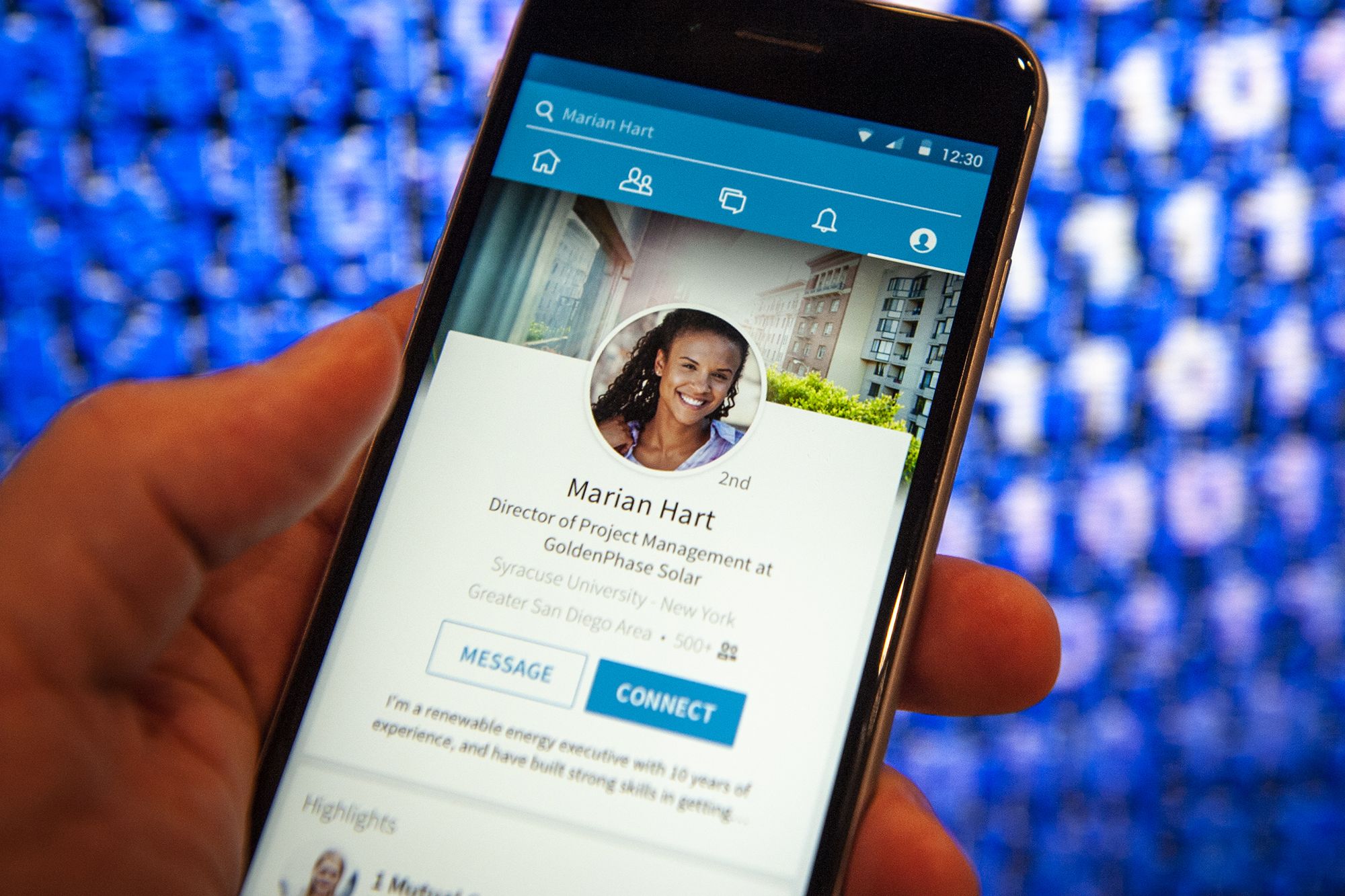
It’s true: Sending cold solicitations can feel cringeworthy. We’re exposed to so many cold emails and messages a day that sending one of our own feels like a step backwards. And yet, more businesses than ever are crediting cold LinkedIn messages with massive success.

As long as the message is well-crafted, spelled right and positioned to hit home, LinkedIn messaging can have a much higher ROI than other traditional forms of marketing, such as running ads. And even better, those who are on LinkedIn likely have money to spend, as a recent report found that the average salary of a LinkedIn user is $75,000. 

If all that isn’t convincing enough, consider these four other reasons why LinkedIn direct messaging is an underutilized avenue for sales. 

Related: These 10 LinkedIn Tips Will Make You a Networking Master

1. It’s a direct line to business decision-makers.

There’s nothing worse than investing time in a sale only to find out that the person you’ve been conversing with isn’t actually a decision-maker at their company. Sure, they may now be convinced of why the company needs your product or service, but that could easily get lost in translation when they communicate that to the real decision-makers.

LinkedIn’s marketing blog states that 61 million LinkedIn users are Fortune 500 senior executives and another 40 million are decision-makers at their companies. That’s a big pool of big fish.

2. It starts a conversation with prospects in a casual way.

Matt Young, the founder of Realply, which specializes in LinkedIn messaging, shares one of the most pertinent reasons that LinkedIn messaging is so effective: It’s casual. “We find that trust is established far quicker when the conversation feels light and casual, like you’re meeting at a happy hour rather than in a formal setting,” Young notes. “Plus, it’s attached to your profile, which humbly lists your qualifications and accomplishments. It creates the perfect balance of casual and credible.”

3. It’s quicker than a cold email. 

You have two messages waiting for a reply: One is a cold email sitting in your inbox, the other is a cold message waiting in your LinkedIn DMs. If you’re running out the door, which one are you more likely to reply to? Likely the latter, simply because it’s quicker. No need for formalities in this chat-like format. 

Response times continue to be quick, too, simply because of how frequently the average user is on LinkedIn. Recent statistics found that the average user spends between 10-20 minutes on the site daily.

Related: Instagram Offers Access to DMs on the Web

4. It can be done at scale. 

Finally, many LinkedIn users find that the messages are far easier to manage and scale than other forms of cold outreach. Whereas 10 cold calls can take more than an hour, 10 LinkedIn messages (factoring in the time to personalize the message, of course) can take as little as 20 minutes. Not to mention it’s easy to flip back and forth between messages in LinkedIn’s DM portal, meaning you can have multiple sales conversations at once.

So, if you haven’t yet tried LinkedIn messaging for your business, it’s high time you start. More and more business owners are tapping into the power of LinkedIn for sales and taking advantage of its impressive user statistics.

https://www.entrepreneur.com/article/345158


10 Important 2020 Social Media Trends You Need to Know via @MrDannyGoodwin

[unable to retrieve full-text content]http://tracking.feedpress.it/link/13962/13155074


Here’s How to Make Stunning Social Media Videos (Without Being a Tech Wiz)

Video content is king, but you don’t have to be a technology expert to create it.

January 8, 2020 5 min read

Opinions expressed by Entrepreneur contributors are their own.

Unsurprisingly, video content has quickly become an essential part of social media branding. According to research from Renderforest, video content on social media generates 1,200 percent more shares than text and images, and 90 percent of viewers state that a video helps them determine whether they will buy a product. But if you have a small marketing team or lack professional equipment or know-how, the idea of creating a stunning social media video can seem impossible.

However, this doesn’t have to be the case. In reality, even those without any tech-savvy can create engaging, well-crafted video content that drives social media engagement. You just need the right process — and the right tools. Here are some guidelines for making it happen.

Related: 5 Ways Social Media Video Will Benefit Your B2B Business in 2020

Leverage existing content.

For many who are new to creating video content, even the idea of coming up with topic ideas can seem intimidating. The good news is if you’ve been doing your due diligence in other areas, you already have a great source of video content ideas: your old blog posts.

Look at your most popular or most shared posts to get a better idea of which topics most resonated with your audience. Typing your blog URL into a site like BuzzSumo is an easy way to determine which entries generated the most engagement. Once you know what’s performed best in the past, you can start repurposing what you’ve already written to formulate your video script.

In a blog post for Social Media Examiner, Serena Ryan recommends creating videos that target different portions of the marketing funnel: brand awareness, building relationships and making the sales pitch. “Your videos might not use all of the content from your blog post,” she writes. “Your main goal is to deliver the material most relevant to each part of your funnel. Choose the best content to create a one- or two-minute video with the information your funnel requires. To pack the most value into each video, cut introductions and instead display text or titles in the lower third. What’s important is to get your message across clearly and succinctly.”

Set things up for quality recording.

You can certainly film social videos using only your smartphone, but to get good results, you still need to set yourself up with the right equipment. For example, a sturdy tripod will stabilize your smartphone to avoid shaky, handheld camera-esque footage. The right lighting will drastically improve image quality and make it easier to edit your video later on. Soft, natural light is best. Try to avoid harsh shadows or bright sunlight. If you’ll be speaking in front of the camera, arrange the lighting so that your face is evenly lit.

The right location can make all the difference. After all, if you’re filming a product video, you don’t want a busy background to distract from the product itself. If you’ll be speaking in front of the camera rather than dubbing in a voiceover, you’ll need to film in a quiet area free of excessive background noise. Speak directly into a microphone, and focus on your enunciation so that your voice is easy to understand.

Take advantage of user-friendly editing apps for polish.

Once filming is complete, you’ll need to edit your video to give it a quality look. Fortunately, editing is no longer limited to film experts. One tool that I’ve found to be particularly helpful is VideoBoost, a free app in the BoostApps suite that offers easy-to-use templates and animations that can integrate with your business’s logo, as well as trimming and formatting for various social platforms and helpful editing filters. You can add your own video and text or use stock footage and pre-written copy.

You should also be mindful of how different social media platforms can influence your video formatting. For example, Instagram videos have a maximum length of 60 seconds, and most users prefer a square 1:1 aspect ratio that matches the style of photos found in their feed. With Facebook, on the other hand, you can post videos as long as 120 minutes (not that that’s recommended). Landscape video in a 16:9 ratio is preferred. Don’t let the wrong formatting throw off your marketing efforts.

Related: What All High-Performing Social Media Videos Have in Common

Creating engaging video content that you can share on your social platforms doesn’t require that you purchase expensive film equipment or hire a video-editing tool. By following these practices and taking advantage of the resources that are readily available to you, you can create great, dynamic content without breaking your marketing budget.

https://www.entrepreneur.com/article/341649


3 Stealth Ways to Express Your Personal Brand on Instagram

Purpose, passion and a design that pops are all central to success on the social-media platform.

December 30, 2019 5 min read

Opinions expressed by Entrepreneur contributors are their own.

Many would argue that understanding how to express a personal brand on social media is one of the most challenging things to do, and yet it’s necessary, and easier than you may think. A good rule of thumb? Think, “What would I do if I were a business?”

Although people and their personalities are fluid, adding consistency to what and how you post will equate your personal page with a brand to your followers. The important note here is to continue expressing the brand consistently, because it takes, on average, five-to-seven brand impressions for people to notice what you’re doing. Compounded over time, your followers –even the ones who are strangers — will start to feel like they know you, particularly if you follow these three guidelines. 

Related: You Need a Personal Brand. Here’s How You Build One.

1. Choose a cause.

While you may have many passions and interests, followers want to know what they’ll get from you consistently. So, if your one big passion is sustainability, gear your captions and content towards that realm. If you suddenly add posts about digital marketing tactics, it gets a bit confusing for followers who come for your insights on sustainable initiatives.

Sometimes, a good starting place for this big question is considering what you most want to say. You’re the one who will be creating the content, so what is in your heart that you want to teach or share with others? I know that this can be a bit muddy at first, so I recommend writing a personal manifesto. New York Times tech writer Thorin Klosowski suggests that the manifesto should lay out your topics (what you most want to focus on) and your principles (your beliefs and intentions) and do so with strong, affirmative statements. Rather than, “I want to be an authoritative voice for women in STEM,” write, “I AM an authoritative voice.” Put this manifesto by your desk or make it your phone wallpaper. 

2. Choose your colors and fonts.

Companies create visual “brand books” with their logos, colors, fonts and overall brand feel. This is an important step in the creative process of building a business, because it engenders a sense of familiarity for the consumer over time. NDash Marketing VP Matt Solar blogs for Marketo that “the psychology of color can help [you] establish trust and familiarity by soliciting the right emotions … and increase the brand recognition with the desired reactions that they may provoke.” 

These colors and fonts can then be used on your Instagram story and any graphic-design posts within your feed. Again, the more consistent you are, the more quickly a follower will recognize that the post is from you when they see these branded markers.

As far as choosing the color goes, I personally went with a dark pink, simply because I like it. Studies find that colors like blue or red are the most popularly used for business brands, but this choice is all personal for you. If you choose a color you like, you’re more likely to also have that color as your coffee tumbler or notebook color, so it keeps everything consistent. None of this should be calculated, necessarily. These are just ways to emphasize what you already love and express.

Related: Your Personal Brand Is Just as Important as Your Business Brand

3. Hone in on your “baked potato.” 

Finally, every strong personal brand has a product or concept that typifies its personality or is an extension of what the owner loves. For Spanx founder Sara Blakely, it’s Cheez-It crackers, and for her husband Jesse Itzler, it’s bananas. It doesn’t necessarily have to be a food (although for many, it is), but the idea here is to ask yourself, “What do I love so much that my friends think of me when they see it?” 

I accidentally discovered mine when I took to my Instagram story last year to discuss my baked-potato woes. As it is my favorite food, I had just ordered one singular baked potato from a steakhouse. For whatever reason, this really resonated with people. I started receiving pictures of baked potatoes with kind notes, and a school I spoke at even posted a picture of baked potatoes on their social-media feeds to announce I was cominng.

This is also something you can’t overthink. Because it was a food I actually really liked, it was more probable that I’d be eating it more often and that I could enhance this marker of my brand with a picture on my Instagram story every time I did. It’s silly, but it works. A client of mine drinks tea every night while she plans her following day, so I told her to get in the habit of posting the quote attached to her teabag. I now call this tactic the “baked-potato principle” — accidentally establishing resonance with an audience because of a quirky thing you’ve always loved. 

I’ll reiterate once again: The secret here is consistency. The more you can create content in alignment with your passion, establish clearly visible brand expressions through color and font and find your own baked potato, the more the expression of your personal brand will become second nature. And your followers will feel they know you more than ever.

https://www.entrepreneur.com/article/343724


10 Tools for Social Media Managers in 2020

An updated list of tools to help manage posting on social media.

December 18, 2019 5 min read

Opinions expressed by Entrepreneur contributors are their own.

The social media landscape shifts on a regular basis, but it has changed dramatically since Entrepreneur’s 2016 article, “6 New Social Media Marketing Tools The Experts Use,” and so too have the services around it. Some tools are still very much relevant — Buffer, for example — but four years is a lifetime in social media, so it’s high time for a refreshed version. Here is my list of social media management tools that will ensure you’re equipped with the latest technology as we enter 2020. 

Social media post-scheduling tools

1. Buffer

Buffer, chosen by Neil Patel in the 2016 list, is still as relevant today as it has ever been. With powerful drag-and-drop scheduling features across nearly all social media platforms, it’s one of the most useful tools for organizing your social media calendar. 

Buffer has also added a mobile app and a browser extension to help you curate content across platforms. Using its insights into the engagement reached by the millions of posts scheduled through its platform, it also provides analytics, such as days and times when it’s ideal to post. 

2. Later

Initially designed for Instagram, Later has evolved to include both Facebook and Pinterest scheduling. Similar to Buffer, Later features a drag-and-drop scheduling feature and a rich visual content calendar where you can preview your Instagram profile. Instagram’s API is usually quite strict on allowing vendors to auto-publish, but as an official Instagram partner, Later allows you to auto-publish posts using saved captions, hashtags and other pieces of text to ensure the entire process is smooth. 

Related: 5 Rising Social Media Platforms to Watch

Social media ad tools

3. Adespresso

If you run Facebook ads, you know that a big part of ongoing optimization is testing different ad sets to see what maximizes your return on ad spend. Adespresso does this for you. Using a powerful suite of tools, you can quickly run massive multivariate tests on Facebook ads. Just input a couple of different variations on the text, images, videos, audiences and calls to action, and Adespresso will automatically set up dozens of small ads to begin testing what works. For the diligent marketer looking to optimize both spend and ROI, this tool is worth trying out. 

4. Ad Stage

This tool is useful for marketers who run ads on multiple platforms. Instead of pulling data manually from each platform (for example, Facebook, Google, LinkedIn and Bing), Ad Stage does this for you, giving you a complete overview of all your campaigns. This is particularly useful for agencies who need to extract cross-platform data for clients quickly.

Social media analytics tools

5. BuzzSumo

Often used by content marketers, BuzzSumo is a powerful social media tool that helps you understand how shared content is performing across different platforms. For social media managers competing on hashtags and keywords, BuzzSumo also lets you see what else is performing well on the same queries, allowing you to refine your strategy based on the lessons of what’s currently trending. 

6. Sprout Social

Sprout Social aims to be an all-in-one solution for social media analytics. After linking up your social media accounts, you can quickly get a full overview of your followers, engagement, impressions and growth. It’s particularly useful for agencies managing multiple client accounts, each of which has multiple social media profiles. 

7. Snaplytics

New services have sprung up to track the recent popularity of Stories. Snaplytics is focused only on Snapchat and Instagram stories, looking at open rates, clicks, drop-off times and so on. Brands that work with influencers can use this tool to gather insights into how audiences are interacting with their Stories. 

8. Famoid

Another tool that is useful for brands that use influencers as part of their marketing strategy is Famoid. Famoid’s analytics function is a free and quick way to gather immediate oversight into the health of a particular Instagram account, with followers, engagement percentages and more a few clicks away. 

Related: 8 Simple Ways to Make Social Media Work for Your Business

Social media creative tools

9. Rev

This one took me by surprise when I first used it. With the extraordinary growth of videos on social media in the last few years, subtitling videos is paramount for engagement. Rev is a simple service in which you upload a video and it quickly matches you with a transcriber. Everything is handled via a very intuitive platform, and turnaround is often less than a few hours. 

10. Promo

Promo is basically Canva — which helps you build static creative social media assets — for video. You can browse thousands of stock videos and import them into Promo’s online video-editing suite, adding text overlays and smooth transitions. You can then export your videos in social-media friendly formats and sizes. It’s an incredibly useful tool when you don’t have in-house video production resources. 

https://www.entrepreneur.com/article/341495


Hootsuite social trends report for 2020

Hootsuite social trends report for 2020

Vancouver, BC – December 11, 2019​ – ​Hootsuite​, the leader in social media management trusted by more than 18 million customers and employees at 80 percent of the Fortune 1000, today released its ‘​Social Media Trends 2020’ report. The company’s fourth annual report on global social trends reveals the biggest opportunities for brands to deliver winning social marketing strategies in the coming year.

“The new year is a time to refocus and energize your strategies for the year ahead,”

says ​Hootsuite VP Corporate Marketing Henk Campher​.

“The social trends we’ve identified at Hootsuite provide the sharpest tools needed to create the most exceptional and meaningful employee and customer experiences in 2020 and beyond.”

Brands are starting to act more like people on social, sometimes interacting one-on-one and sometimes in groups. The key is for organizations to make the experience seamless across both worlds.

Brands are also taking a stand on the most important issues facing our planet, becoming beacons of trust to their employees, who in turn are using social to amplify their company purpose.

And TikTok, the short-format video sharing platform, is shaking up the social media landscape in unexpected and delightful ways. Even if TikTok’s Gen-Z user base isn’t your target, marketers should think about diversifying their audience targeting beyond just the major social platforms.

Campher further added,

“Combined, these trends represent tremendous new opportunities for brands to establish deeper, more authentic, and longer-lasting connections with customers, with social at the center of everything they do,”

Hootsuite’s 2020 social trends for businesses large and small

1. Brands strike a balance between public and private engagement

The rise of private behaviors like 1:1 and group messaging has not diminished the importance of public social media feeds, which remain a critical space for brand discovery and customer acquisition. The key is ​creating multi-touch, personalized, and ​seamless experiences across both worlds, while balancing automation at scale and human connection to build deeper customer relationships.

2. Employers take center stage in a divided world

As our world becomes increasingly divided, employees are looking to their organizations to take a stand. Globally, employers are significantly more trusted than NGOs, businesses, government, and the media. Progressive organizations will take advantage of this new role, building strong internal cultures while amplifying their company’s purpose with employee and customer advocacy.

3. TikTok shakes up the status quo

With more than 800 million monthly active users and a median age of 16-24, TikTok continues its incredible rise. Whether or not it lasts, TikTok’s popularity brings valuable insight into the future of social culture, content, and collaboration. Social marketers should keep an eye on TikTok while using these insights to adapt their strategies on established networks for the next generation on social.

4. Social marketing and performance marketing collide

As social marketers face pressure to expand the scope of their skill sets, established champions of brand awareness and community building must also become fluent in performance marketing, finding a balance between driving short-term conversions and long-term strategies to build brand equity, customer happiness, and differentiation.

5. The social proof gap closes

New social commerce features are bridging the top and bottom of the sales funnel, creating a wealth of data around the conversion side of the customer journey. This bottom-of-the-funnel data can now be added to brand awareness activities, giving an invaluable holistic view of how people move through the entire buying journey.

Conducted in the third quarter of 2019, Hootsuite’s ​’Social Media Trends 2020′ report is based on a survey of more than 3,100 marketers and interviews with industry specialists. The research report includes not only the trends but also Hootsuite’s recommendations for seizing the opportunities that the trends represent, along with comprehensive examples of best-in-class brands getting it right. Hootsuite’s 2020 Social Trends report can be found ​here​.

Hootsuite is the leader in social media management, trusted by more than 18 million customers and employees at more than 80 percent of the Fortune 1000.

Whitepapers

Related reading

The finite era of "actionable insights"

Four initiatives B2Bs must tackle now to win in 2020

https://www.searchenginewatch.com/2019/12/13/hootsuite-reveals-2020-trends/


Yahoo Extends Deadline for Deletion of Yahoo Groups Data via @MattGSouthern

[unable to retrieve full-text content]http://tracking.feedpress.it/link/13962/13062691


COLPO DI SCENA: FACEBOOK WHATAPPS ED INSTAGRAM VIETATI IN GERMANIA. Sentenza della corte di Monaco

Il tribunale distrettuale di Monaco ha emesso una sentenza shock: Whatsapp, Instagram, Facebook e Facebook Messenger nella loro forma attuale violano i brevetti detenuti da Blackberry. Implica diverse funzioni individuali che non sono fondamentali per il funzionamento delle app. Il verdetto non è ancora definitivo, può ancora essere appellabile, ma Blackberry potrebbe chiederne già sin d’ora l’applicazione, imponendo la chiusura delles tesse. Sarebbe sufficiente che la casa di telefonini depositasse una cifra cauzionale e potrebbe chiedere la chiusura delle APP sin da ora.

La casa di Menlo Park avrebbe utilizzato una serie di brevetti sviluppati da Blackberry nello sviluppo delle  proprie App  mobile, soprattutto nelle parti che sono legate all’invio delle cronologie tramite Whatapps, o il passaggio da una chat ad un’altra. Blackberry è stata in passato molto attiva nello sviluppo delle funzionalità mobile, ed evidentemente le sue soluzioni sono state utilizzate anche da altri senza pagarne i relativi diritti. Attualmente la redditività di Blackberry dalla vendita dei telefonini è crollata e quindi la società cerca di integrarla attraverso i diritti per l’utilizzo delle proprie invenzioni. Alcuni parlano di “Trollaggio sui brevetti” ma la casa canadese rifiuta questa qualifica.

Cosa farà Facebook? La casa californiana ha affermato che non vuole nè chiudere le sue applicazioni in Germania, o potenzialmente in ogni paese in cui Blackberry voglia far valere i propri diritti, e neppure vuole pagare Blackberry, per cui sostituirà le funzionalità sotto accusa con altre di proprio sviluppo. Quindi, intuitivamente, c’è da aspettarsi un serio aggiornamento di tutte le funzionalità collegate a Facebook ed ai servizi satellite, magari con l’introduzione delle nuove funzionalità di cui si sente parlare da alcune settimane, come ad esempio il servizio di pagamento Facebook Pay.


Telegram


Grazie al nostro canale Telegram potete rimanere aggiornati sulla pubblicazione di nuovi articoli di Scenari Economici.

⇒ Iscrivetevi subito ⇐


https://scenarieconomici.it/colpo-di-scena-facebook-whatapps-ed-instagram-vietati-in-germania-sentenza-della-corte-di-monaco/