Facebook Groups For Photographers
Facebook is a vast ocean of photographic imagery. Can beginning photographers capture something of value from the depths of this huge social media site?

We all have our views on Facebook and how it treats our data and photos. Some say that “people don’t realize that Facebook is a social network, not a diary.” The structure of Facebook, its albums and downsizing of photos, powerfully affects how people see photographs and how we share them. For beginning photographers, Facebook offers many ways to show and improve our photographs, with a few caveats.

While there is no substitute for experience, there are times we must be inside and online. Exploring the social side of Facebook’s photograph groups, it can be motivating and inspiring to get feedback and see good work. Joining a group in a social network allows us to get critiques and suggestions for gear and presentation. Wedding pros, creatives, iPhoneographers, photojournalists, and film photographers are all given equal space in the forums. There is a Facebook group for everyone, but the value depends on the relationships that you create.

Tip for Beginners: When posting a photo to Facebook, I try to remember that we don’t read on Facebook as we read books. Instead, we quickly skim. When we share and engage with a group, our relationships can be shallow or deep, depending on how we tag and put our photos into context. We want to make it easy for viewers to engage with our pictures. For example, since Facebook members like to give their opinions, we can encourage people to respond in ways other than a simple “Like.” For instance, asking for advice, as in “Which is better, B/W or Color” will get more comments. Posts that share photo tips or photography techniques will get a wider response as well.

Seven Groups

Read on for seven groups that are helpful to beginning photographers. All these groups are inclusive. Follow the group guidelines. If you choose to join and share your creative images, understand that some groups have admins who want a few questions answered about your interest in the group.

1. For Photo Editors

Facebook has groups for photo editors such as ON1 and Adobe Photoshop Lightroom. The ON1 group has an active community and links to tutorials. The Lightroom group also has tutorial links. But there is eye candy too. For instance, the still photography work of photographer Bo Wen Huang of Taiwan, with stunning images of orange and blue lighting of temples at night.

2. All About Cameras

Nikon, Canon, Sony and Sony Alpha, Leica Camera, Fuji, Ricoh Imaging, Pentax Forums, and many others are on Facebook. Within a specific camera brand, there are dedicated groups. For instance, if you own a Nikon, there is a Nikon Digital Camera Enthusiast Group for posting 3 pictures a day. The group members share their techniques, like multiple exposure of nature subjects.

3. Critique

Fstoppers, a lasting Facebook group, averages 30-40 posts each day. The group is a forum to get feedback. With 25,000 members and a focus on your questions, the critique of your posts, and exchanging ideas, it is the Facebook offshoot of the web site Fstoppers.com. There, you’ll find links to tutorials for photographers such as Ten Secret Photoshop CC Tricks.

4. Apogee Photo Magazine

Check out a variety of articles about travel, gear, and techniques on the Facebook page of the web’s oldest photography magazine. Learn techniques of White Balancing. Explore an in-depth journey of an African glamping photo safari. Find a review of Canon’s PIXMA Pro Printer.

5. Film

There are many film photography sites on Facebook. I still make photographs with my Nikon, Bronica and Minolta cameras.

Old Film Photos has many videos as well. It is a group for those who love pictures from bygone eras.

6. Beginning Photography

Each week the Beginning Photography group posts a new topic for its photo challenge, from street photography, ultra wide angle, and on to other popular topics like bokeh. Cell phone photos are shared. Members post the camera settings so everyone can learn, and constructive critique is encouraged. Dutch Photographer and sailor Tjerk Heringa is the host and administrator. He lives in South Holland near Amsterdam, and his style for this Facebook group is humorous, open, and welcoming for all beginners to learn skills in photography. There are more advanced tips as well, such as focus stacking.

7. Nature

The North American Nature Photography Association, NANPA, share exquisite work by talented nature photographers. It posts workshops and field trips around the US and Canada. One such trip is Yellowstone in January 2020. Members share interesting facts with their posts, such as bison fur is used by birds for nest building.
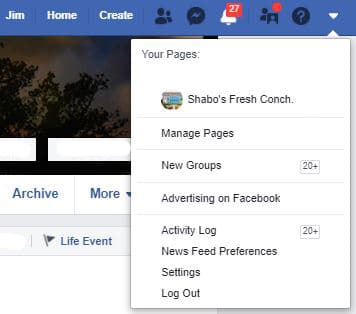
Tip: There is an easy way to learn about joining a new Facebook group. At the top right of your Facebook home page, find a small, white, upside-down triangle. Click this triangle. A menu should drop down. Click on New Groups.

To find your groups, go to your Facebook profile. You’ll find the work EXPLORE at the left of the page. At the top left, you’ll see a menu with the word DISCOVER, and GROUPS. Put in a relevant keyword in the search box at the top left of the page. For instance, in the Search box, type “Beginning Photography.” You can then filter the results. Click on the name of the group to learn more. Click Join to become a member of the group. You may be surprised at who you meet in a Facebook group.

Facebook Groups For Photographers


Just Because You Can Take a Selfie Doesn’t Mean We Want You To

We can all agree that a picture in front of the Parthenon is a fair game, but that post-workout flex? Maybe not.

June 21, 2019 2 min read

This story originally appeared on PCMag

At the 2019 U.S. Golf Open, golfer Henrik Stetson knocked out a fan. His ball sped across the green and ended up in the stands, where it clocked an unsuspecting golf enthusiast in the noggin. The fan came to with a ball-like bulge protruding from his head and asked Stetson for a selfie.

The surprising part of this story is how unsurprising it is. If something happens, we want to document it.

The smartphone’s portability and ubiquity make recording everything easier than ever. Every meal. Every vacation. Every one of Uncle Timmy’s embarrassing blunders at Aunt Tina’s wedding. But just because you can do something doesn’t mean you should.

Photo etiquette, especially now, divides us: Chances are if you’re taking a public picture, someone won’t be happy about it. Statista polled 1,190 adults on when and where it’s appropriate to snap a selfie. It’s worth noting that by polling only adults, we miss out on a large proportion of selfie tastemakers.

Most agreed that travel photos are acceptable, with 75 percent of respondents giving their blessing. Both parties and concerts were also approved — 71 percent and 68 percent, respectively, gave the affirmative. But add a selfie stick into the mix, and people flip-flop; another Statista poll found 61 percent of people support a selfie-stick ban.

The most divisive photo venues were restaurants (39 percent for, 33 percent against), the gym (38 percent for, 28 percent against), and public transport (36 percent for, 29 percent against) — all places we try to disappear. (I, for one, don’t need to be the sweaty backdrop in the photo of your post-workout flex.)

The bottom two categories push the limits of decency. Of those asked, 16 percent approved of selfies taken in the bath (and hey if you’ve got the confidence, why not.) And a concerning 6 percent — that’s 71 people, folks — believe it’s okay to take a selfie at a funeral. #yikes.

Oh, and happy National Selfie Day!

https://www.entrepreneur.com/article/335661


How SMBs can effectively manage their online reputation on a shoestring budget

How SMBs can effectively manage their online reputation on a shoestring budget

Managing an online reputation is a 21st-century business responsibility that simply cannot be ignored, or even placed on the backburner for any amount of time.

The online world of consumerism runs 24/7. It doesn’t take holidays, time off, or even a two-minute break. Regardless of what business ideas you might have, managing an online reputation comes with the turf. Even for small businesses with relatively low brand awareness, developing a bulletproof system is crucial for every growth-minded organization.

Now, as a small-to-medium sized business (SMB), you are probably dedicating a good deal of your budget to sales, marketing, production, etc. In other words, you are spending money to simply get to a point where you have an online reputation. The prospect of managing it is probably some ways down your list.

The good news is you don’t need a giant budget to manage an online reputation. If you play your cards right, you can stay on top of this crucial task with pocket change. Here’s how.

Take advantage of cost-effective or free monitoring tools

In the early stages of managing an online reputation, it’s relatively easy to stay on top of things like brand mentions, reviews, social media interactions, etc. However, as business picks up and you begin to build a decent online presence, it’s going to get harder and harder to keep tabs.

As a general rule of online reputation management, it’s always best to have tools and processes in place before you actually need them. Obviously, you don’t need anything fancy (at least not yet). Start by setting up Google Alerts to get a notification every time your brand name is mentioned.

Another good (and free) tool to use is IFTTT.com. This helps you connect all of your apps and devices so any online activity related to your business is quickly brought to your attention, no matter where you are.

In terms of social media listening, the free Hootsuite plan is a fantastic place to start keeping tabs on your presence across major networks. In addition to monitoring your mentions, this tool helps you schedule content delivery and manage your online sentiment.

All three of these tools are fantastic in laying the groundwork for online reputation management. The sooner you get your processes established, the better off you will be as your business begins to scale.

Create an outreach system to gain high-value user content

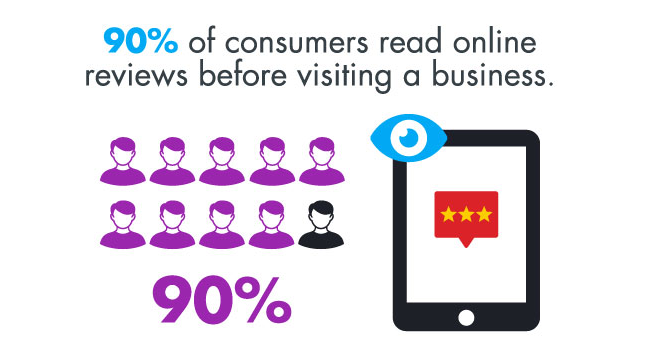
Customer reviews are an integral part of online reputation management. Moreover, they are perhaps the most influential pieces of content when it comes to purchasing decisions. To give you an idea, a study from Invespcro found that nearly 90% of consumers trust online reviews from strangers as much as a personal recommendation.

Stat on how customers read online reviews on businesses

Source: Invesp

With this in mind, one of the biggest components to building an online reputation is simply getting people to leave sentiment about your business. This is an interesting task. While it might not seem like it on the surface, the very concept of online reviews has evolved quite a bit over the years.

To give a brief history, online reviews first emerged around 1999 and early 2000s during the Clinton impeachment. They were then used for patients to review doctors. As time went on, online reviews became a popular form of user-generated content for all businesses and products.

Realizing just how powerful they were in swaying purchasing decisions, many businesses would try shady tactics like forging fake reviews or paying others to write them. As many of the big review platforms started to crack down on these practices, consumers also started to wise up. Nowadays, most online customers have a strong radar for made-up reviews and are not swayed by a simple star rating and a vague sentence – regardless of whether they are real or not.

So where does this leave you?

As you develop a strategy for gathering online sentiment, you need an outreach process that encourages top-to-bottom feedback. This involves getting the pros, cons, overview, advice to the company, etc.

Now, you are kind of between a rock and a hard place here. On one hand, you want to get super in-depth, detailed reviews. On the other, you don’t want to make the forms too complex that people don’t want to fill them out.

In terms of the review form itself, the key is to create simplistic questions that ideally spur open-ended answers like the ones given below.

  • What were the pros?
  • What were the cons?
  • What advice would you give to us?
  • What advice would you give to other consumers?

These are just a few to keep in mind.

When it comes to developing an outreach system, there are several key guidelines to live by

1. Don’t jump the gun 

Most of the time, you don’t want to follow up with a review request immediately after the purchase. Give it a day or two before you reach out.

2. Make it easy 

Always remember, customers, are doing you a big favor by leaving their feedback. You don’t want to make them jump through a bunch of hoops. Be sure the forms you build are easily-integrated with email, mobile, or whatever apps you use.

3. Make the best use of social media

Social media can be a gold mine for feedback and engagement. Try asking general questions and using hashtags to get responses out of your followers.

Example of how Costa Coffee handles customers reviews online

Source: Twitter

4. Make them visible

The purpose of reviews is to present an unfiltered, third-party opinion of your business. In addition to social media and the major review platforms, make it a point to showcase reviews on your website, both the good and the bad.

Source: Bizzabo.com

At the end of the day, your outreach strategy is the guiding force behind developing your online presence. Take your time here and find the formula that works best.

Develop a plan for negative feedback

Getting negative online feedback is simply part of life in today’s business world, there is no getting around it. Dealing with negative feedback is a lot like washing dishes; no one particularly likes it, but you have to clean up the mess before it accumulates and gets out of hand.

Now, dealing with negative feedback isn’t always apples-to-apples.

For starters, as you look into customer review platforms, you need to take extra precaution to understand how it filters out fake or biased reviews. Fortunately, review technology has come a long way. Many of the bigger platforms have methods of pinpointing when companies try to sidestep the process. The last thing you want is for a competitor to sabotage you.

In the case you get some genuinely poor feedback, you need to have a plan to approach it. First and foremost, do not respond right away. Give it some time to marinate. You never want to respond immediately while emotions are high. Wait at least 12 hours to respond, and no longer than two to three days.

When it comes to responding, there are a few key points to remember

  1. Thank them for taking the time to leave a review.
  2. Accept responsibility.
  3. Respond rationally while staying true to your brand voice.
  4. Be concise in your response.
  5. Don’t throw yourself under the bus too far.
  6. Try to take the conversation offline.

Here is an excellent example of how to respond to a bad review

Example of how Honda handled a bad online review

Source: Broadly

A bad review, while it may seem harsh at first, can actually be a good thing. Ultimately, the way you handle negative reviews says a lot more about your company than the review itself. Additionally, Google recently confirmed that responding to reviews impacts local SEO.

If you approach the situation carefully, you can turn a negative into a long-standing positive.

Know when it’s time to hire someone

As a small business grows, the task of managing an online reputation will obviously become more tedious. If you are carrying out these duties as an owner, you need to know where to draw the line and decide when it’s time to hire someone.

Developing a small business requires much, much more than keeping up with an online reputation. If you are finding that your time commitment here is overshadowing other important jobs, it’s probably time to step back and hand over the job to someone else.

Generally speaking, if you are spending more than one or two hours per day covering the duties involved with managing an online reputation, consider bringing someone on – at least part-time.

As you are likely on a small budget, it can be tough to justify this overhead. However, keep in mind that growing an online reputation never truly ends. Having someone solely dedicated to this task is an investment that will save you time, money, and headaches in the future.

Over to you

Online reputation management is a job you need to take very seriously, no matter how big or small your business is.

SMBs currently exist at an interesting point in time. They are growing their business when online sentiment plays a critical role in sales. Developing a robust plan and protocol for managing an online reputation early on is an integral part of long term success. Fortunately, doing so with a little-to-no budget is easier than ever.

Manish Dudharejia is the President and Founder of E2M Solutions Inc.

Related reading

How to make online reviews one of your most powerful SEO weapons

Regulation in the SEO industry - Impossible or essential

Exclusive interview with Craig Campbell Golden nuggets every SEO needs to know

How to understand searcher intent to boost SEO rankings

https://searchenginewatch.com/2019/06/19/online-reputation-management-tips/


8 Social Media Tips for Small Businesses via @coreydmorris

[unable to retrieve full-text content]http://tracking.feedpress.it/link/13962/12041106


Facebook Changes Reach of Comments in News Feed via @martinibuster

[unable to retrieve full-text content]http://tracking.feedpress.it/link/13962/11965807


8 Business Titans Reveal the Best Social Media Tactics to Promote Your Company

One word: Instagram.

June 13, 2019 8 min read

Opinions expressed by Entrepreneur contributors are their own.

If you aren’t promoting your business on social media, you’re asleep at the wheel. Here’s what eight social media masters and Advisors in The Oracles told us about the channels and tactics that impact their businesses most.

1. Understand the platforms.

1. Understand the platforms.

Bethenny Frankel

Image credit: The Oracles

There’s definitely a science to social media. Consider what each platform can do for you and your followers. For example, I look at Twitter as an incredibly connected and trusted focus group. Instagram is a solid, stable place to communicate information and images. Creating Instagram Stories is a fun way to capture what I’m experiencing and share with people pieces of who I really am. —Bethenny Frankel, founder of Skinnygirl, cast member of “The Real Housewives of New York City,” New York Times bestselling author, and Shark on “Shark Tank”; follow Bethenny on Twitter and Instagram

2. Create content your followers want.

2. Create content your followers want.

Dan Lok

Image credit: The Oracles

Don’t try to be everywhere. Identify where your ideal clients hang out, master that platform, and gather feedback about what’s working as you implement. Create content your fans want, not the content you want to create. Ask what they want, answer their questions, and like their comments. They are humans, so don’t treat them like a number. Becoming a brand requires depth and substance.

Use compelling video titles with “how to” or “secrets of.” Create a “teaser” trailer explaining who you are, what your content is about, what you want them to do (subscribe to your channel, for example), and what they will get. Tell them how often you will post content. Your following will grow faster when you post more frequently. But you have to build trust first, which takes time and consistency. Upload at the same time and same frequency. Don’t give up after just a dozen videos. Once you have followers, don’t forget you have to sell them something to convert their attention into money. —Dan Lok, Chinese Canadian serial entrepreneur, global educator, and international bestselling author of “Unlock It!”; two-time TEDx opening speaker and founder of Closers.com, which connects companies to closers; follow Dan on YouTube, Facebook, and Instagram

3. Focus on Instagram Stories.

3. Focus on Instagram Stories.

Craig Ballantyne

Image credit: The Oracles

Instagram is the golden goose of social media right now. The Instagram Stories feature is the secret to turning it into an unstoppable sales machine. An Instagram feed is like the window in a retail store: it’s meant to capture your attention as you pass by. That’s where you post content that is valuable, purposeful, shareable, and high status. Giving your followers value strengthens your connection. Shareable content makes your followers look good for sharing it, and high-status content makes you look good.

This organically grows your following and gets people to trust you enough to check out your Instagram Stories. Start your stories with a slide that catches attention and builds curiosity. Share content that proves you are an authority and delivers value. Then you’ve earned the right to ask followers to take action. Tell them what they can get, how, and why they need it now. Like Facebook, Instagram may not always be so effective for organic marketing. So get in now. —Craig Ballantyne, owner of Early to Rise and creator of The Perfect Day Formula and Social Story Selling System; author of the WSJ bestseller “Unstoppable”; read how Craig overcame entrepreneurial anxiety; follow Craig on Instagram, Facebook, and LinkedIn

4. Get to know your followers and avoid the ‘friend zone.’

4. Get to know your followers and avoid the ‘friend zone.’

Chris Dufey

Image credit: The Oracles

Don’t get caught up in the vanity metrics of getting more followers. You can have many followers but few customers. And followers don’t pay the bills — customers do. So focus on attracting your ideal clients and don’t worry about repelling those you don’t want to work with.

Social media is best to help people get to know you. Use it to show them you can help them. For example, if you’re a personal trainer focusing on female weight loss, create content that helps women get the body they want. Talk to their pains, fears, and desires.

Focus on driving followers into your sales process by engaging with them and building strong relationships. But avoid getting into the “friend zone,” where followers engage with your content but don’t buy from you. Separate yourself from your competition by delivering more value. This is key to positioning yourself as an authority, which helps you attract your ideal customers and grow your business. —Chris Dufey, founder and CEO of Coaches Cartel, which he grew to a multimillion-dollar business in one year; author of “Your First 100 Clients” and host of “The Chris Dufey Show” podcast; connect with Chris on Facebook, Instagram, and YouTube

5. Pull back the curtain.

5. Pull back the curtain.

Dennis Najjar

Image credit: The Oracles

Letting your authentic self shine through is a challenge in our industry. Social media, especially Instagram and Twitter, has enabled us to open a door and give our audience a behind-the-scenes peek at our world. Instead of being the accounting department behind the curtain, we leverage social media to regularly broadcast our people and personality to the world. We believe this is instrumental to our success.

Share key moments and ideas from your company. To ensure you have a genuine voice, give different teams the responsibility to post on social media. And don’t be afraid to share your true self. People can tell when something is authentic or fabricated. Your company is candid art, not a stock photo. —Dennis Najjar, co-founder of AccountingDepartment.com, a virtual accounting service for small businesses; connect with Dennis on LinkedIn

6. Make connections on Instagram.

6. Make connections on Instagram.

Jason Capital

Image credit: The Oracles

Instagram is No. 1 in my book right now, and I believe that’s where the trend is heading. That is where I recommend focusing. Some studies are showing that people are spending more time there than on Facebook.

My favorite thing about Instagram is the interactions I have with my fans and students via direct messages. I don’t get to respond to everyone, but I read all the messages. It’s incredible how connected we can be in today’s digital world; so take advantage of that connection. With it comes the opportunity for greater impact and contribution. —Jason Capital, White House top 100 entrepreneur under 30, bestselling author, high-income coach, online marketing expert, and founder of High Status; connect with Jason on Instagram

7. Cultivate your tribe.

7. Cultivate your tribe.

Katrina Ruth

Image credit: The Oracles

Soon after I started using social media in 2008, I became well known in the Australian fitness industry and was making tens of thousands a month, even without any intention or strategy. I didn’t do this by focusing on sales. I cultivated a loyal tribe of incredible, driven women who loved my message and energy and were my perfect clients.

If your sole reason for being on social media is leverage or growth, you’ll never succeed. People can sense when you only see them as a conversion. Focus on connecting with your tribe and communicating your soul-led message. That’s how you build a following that is 100 percent sold — on you, your vibes, and anything you offer them.

Now my multimillion-dollar business runs on a combination of social media and email marketing. About half of my sales come from Facebook posts and live streams. This comes from giving value, cultivating community, and connecting as human beings — then giving them the opportunity to buy something as a secondary goal. — Katrina Ruth, founder and CEO of “The Katrina Ruth Show,” a multimillion-dollar online coaching business for entrepreneurs; connect with Katrina on Facebook and YouTube

8. Decide who you are and stick with it.

8. Decide who you are and stick with it.

Daniel Lesniak

Image credit: The Oracles

The first step is deciding your core message and value proposition. Own who you are. Too many people worry about what others think. Your message should attract and resonate with people, but it should also repel those with different values — and that’s OK.

The next step is to consistently deliver your message, no matter the platform. Stick to your message and keep sharing. You can’t say something doesn’t work just because you don’t see results after a few tries. For our real estate company, Facebook has been the best channel to reach sellers. Instagram has been best to reach buyers, and LinkedIn helps us recruit agents to our team. —Daniel Lesniak, founder of Orange Line Living, broker at the Keri Shull Team, and co-founder of real estate coaching business HyperFast Agent; author of “The HyperLocal, HyperFast Real Estate Agent”

Want to share your insights in a future article? Join The Oracles, a mastermind group of the world’s leading entrepreneurs who share their success strategies to help others grow their businesses and build better lives. Apply here.

For more articles like this, follow The Oracles on Facebook, Twitter, and LinkedIn.

https://www.entrepreneur.com/slideshow/335053


It’s time we rethink how we measure influencers for SEO

Why we should stop using DA to measure influencers

Whether you’re an SEO, PR or a website owner, it’s highly likely you’ve come across DA (Domain Authority). The metric, created by industry-leading platform Moz, was designed to help search marketers understand the value of a domain, at a glance and compare it with others in the same industry or niche.

This was important for SEO, third party links have long been used to understand how “trustworthy” a website is and form part of Google’s “ranking criteria” (although their importance and how this works is a hot talking point in SEO).

Moz uses their index (or understanding of the web), to map out these links between sites and, alongside other factors, try to assign a “competition” score to each website they encounter. This can then be used as a proxy to determine the value of a said site.

Note: I have nothing against Moz. This piece isn’t in any way designed to be a slight on them or their work, but further insight and context into how to use the data they provide.

The eye-opener to follower deception

Last year, Social Chain opened marketers’ eyes to the murky world of follower deception. Many brands understand the importance of influencers to the digital ecosystem, but measuring the value that someone can bring prior to working with them is difficult and time-consuming. As such, often companies rely on metrics that symbolizes “reputation”, followers, engagement, and other similar indicators. However, as Social Chain asserted, the typical signposts do not always depict a true picture and if not completely understood or manipulated, can lead to large amounts of spend being wasted.

This is a common theme with SEO. Although it’s less a question of manipulation and more a question of understanding. In 2012, Penguin, Google’s “webspam” filter was rolled-out and assigned a positive or negative value to third party links. Prior to this, “trust” was judged on an arguably simpler set of volume-based criteria, but as the flaws in the system were exploited. It soon became clear that a more complex solution was required, to ensure the integrity of search results was maintained. Trust continued to be an important factor in success, but SEO’s had to start thinking more carefully about how they generated these. Here the connection between SEO and PR became more important as links could not be artificially built they had to be earned, naturally.

The two teams started to collaborate more closely, with SEOs providing PRs extra resource to contact a “lower”, but still valuable tier of influencer and PRs helping SEOs reach the higher, more widely trusted publications that they could not access before. Over time, the lines between SEO and other channels have started to blur – and as teams were pushed to operate across remits, PRs started to use SEO metrics, with DA taking precedence (as it was arguably the simplest to use), to understand more about the people they were contacting. With investment from brands increasing, more influencers started to appear, and from this grew an industry in its own right.

Fast forward to the present day

An influencer marketer will likely sit across content, Social, PR, and SEO, with the goal of engaging personalities to improve performance across all the channels they are connected to (based on the goals of the organization/campaign). For social and PR, engagement and reach can be more easily measured. But SEO has always been complicated. This is because “good SEO” has never been about links alone and the idea of a “link value” is entirely subjective, based on factors that change between industries, counties, and even search results. As such, the idea of using a single, links-based metric to determine the value a domain can provide for SEO is inherently floored – and yet, many marketers, influencers and PR teams still continue to use DA for this purpose.

To make matters more complex, the whole link-building ecosystem has been flooded with misinformation. I discussed this in a recent webinar with SEMRush, but it’s often been the case that the wider industry’s understanding of the link building practice has come through commentators on the practice and not the experts conducting the work themselves. This means, the influencers and PR teams, and not the SEO community themselves.

Why is this the case?

There’s really no simple answer, although, for a long time before the collaboration was mainstream, it would be a frequent occurrence for SEOs and PRs to clash over remit cross-over. In the agency world, this could have led to reduced budgets – why pay two agencies to do the work of one, although (from my experience), clients were very much open to creating a joined-up approach between both teams.

While conflict happened behind the scenes, uncertainty, and misinformation filtered out to the influencer market, with PRs and SEOs trying to show that they “knew enough” about the other to make a wider judgment on influencer selection for projects. This led to followers and domain authority becoming key metrics in this process which, although not unhelpful, rarely offered the truest picture of a website’s worth. In turn, this led to transactional relationships with websites, where links and shares were bought for a price that, once this became a commodity only ever increased. Instead of paying for the time and expertise of the people that were being engaged, their value became intrinsically tied to their reach or their link-equity (perceived through domain authority), two metrics that could be easily manipulated.

Now, the growing rumble of discontent within the influencer landscape has finally hit the headlines with a theatrical flourish. Unfortunately for many, this has come too late, with brands realizing the cost of investing in reach over expertise, most famously with the Fyre festival scandal. But, this doesn’t mean that influencer marketing isn’t valuable, as I wrote at the time, but that how and most importantly – the reasons as to why marketers engage with content creators need to change. We’ve seen publicly how using followers to measure reach can be folly. But there’s still time to take these learnings and apply them to domain authority too before something as equally damaging to the industry happens.

Latest developments

Recent legislation in the UK has started to pave the way for change in this field. It’s certainly made working with influencers harder, in large part to the ambiguity around the specifics of how the changes should be interpreted, I personally apply the principle of “better safe than sorry”, even from a search perspective. Every brand interaction should now be declared as an advert, including event invites and even in cases where the only “payment” has been a reimbursing of travel costs. With Google’s hardline view on manipulative link building, the practice of engaging “high authority” SEO influencers is slowly ending or at least, becoming incredibly risky.

Instead, we should look to engage influencers for their subject matter expertise and credibility they can lend to a story or campaign. In practice, this means killing the transactional “I give you X and you give me Y” type of relationships and seeing content creators as partners in getting your message out to the world. For SEO, this may mean using “no-follow” links (which, in basic terms, tell crawlers that they should not consider them for search benefit), but this shouldn’t be an issue. Sure, their direct value on search may be limited, but to think that the search algorithm considers the web in as simple terms as this would be myopic. There are some brilliant studies around the power of brand on search, which are worth noting in this context. Moreover, at its heart, a link is there to carry users from A to B. Adding a “no-follow” tag doesn’t stop this from happening and in this case, using domain authority as a metric often would lead to discounting a valuable traffic driving part of this ecosystem.

With this shift in the industry and better collaboration than ever between search and the wider marketing mix, the opportunity for content, search and marketing communication teams to unite is stronger than ever. So too, is the need for it, as achieving cut-through in the wall of digital noise is harder than it’s ever been. Campaigns, to be successful on all fronts, must genuinely inspire, engage or provide value to users and older-school tactics, such as product reviews and content seeding, have all but lost their ability to drive results. On this point, we simply must move away from using domain authority and followers as a metric in isolation, as neither is an effective gauge of how useful a site might be to its users.

Closing notes

I’d like to speak directly to influencers because without a universal change in mindset, we’ll continue to see the same practices continue and the channel will continue to be under-utilized. I’d impress upon them the need to keep an open mind and focus on becoming the best subject matter experts that they can. I’d encourage the end of any agonizing over “vanity metrics”, which are often taken out of context, and in place look to whether their users are genuinely engaging with their content, and how this impacts their value as creators. Importantly, I’d implore everyone, PRs and SEOs included, to have a little more fun, harness the incredible creativity that brand communications teams, content creators, and influencer marketers can yield and build something great together.

Ric Rodriguez is an SEO Director and winner of the 2018 Drum Search Award. He can be found on Twitter @RicRodriguez_UK.

Related reading

How to master technical SEO Six areas to attack now

Image optimization for SEO Everything you need to know for success

A guide to implementing Google’s “How-to” schema

https://searchenginewatch.com/2019/06/12/stop-measuring-influencers-using-da/


How to Add More Context to Your Social Media Content via @casieg

[unable to retrieve full-text content]http://tracking.feedpress.it/link/13962/11795919


The 7 Biggest Social Media Sites in 2019 via @KristiKellogg

[unable to retrieve full-text content]http://tracking.feedpress.it/link/13962/11767819


Your (Online) Competitors May Not Be Who You Think They Are via @stoneyd

[unable to retrieve full-text content]http://tracking.feedpress.it/link/13962/11616823