Google+ Public Posts to be Preserved by the Internet Archive’s Wayback Machine by @MattGSouthern
[unable to retrieve full-text content]http://tracking.feedpress.it/link/13962/11163727
[unable to retrieve full-text content]http://tracking.feedpress.it/link/13962/11163727
[unable to retrieve full-text content]http://tracking.feedpress.it/link/13962/11153413
[unable to retrieve full-text content]http://tracking.feedpress.it/link/13962/11148335

If there’s one thing that is constant about social media, it’s change.
So many things influence the way we behave on social media: technology, social changes, economy, and politics. All of them are changing at a rapid speed, so you can imagine how volatile the social media world is.
This makes predicting trends for a year ahead quite difficult. However, there are tendencies that stick around and affect the industry in a major way for a long time. For example, influencer marketing has been winning the hearts of social media marketers and the pockets of consumers for a couple of years now, and the ephemeral content, even though it has been around for a while, got a significant boost with Instagram’s investments put into the Stories feature.
Considering these points, I present to you the eight social media trends of 2019. These are the tendencies that take their roots in the current cultural zeitgeist, technological development, and social platforms’ respective strategies, and are expected to take over social media this year.
Social listening is not a new thing by any means, but the way we apply social listening is changing right now. In the past years, social listening was a way to manage brand mentions and reputations for big brands like Apple or Hilton. However, two things happened that altered the social media listening industry:
How did this affect social listening strategies? Well, nowadays, the new features and data sources allow going beyond basic brand monitoring. You can use social listening for social selling, SEO, and customer care to name a few.
If I’d have to point out one area where social listening could really change the current marketing landscape, I’d go with sales. Social selling is a unique tactic that gives you an opportunity to engage with people who are seeking services and products in your industry directly.
One tool in particular even added a specific feature dedicated to social selling called Awario Leads.

For now, this tactic is extremely underused, but we can expect to see more and more brands taking on social selling this year.
Social selling is one thing, but what if you could choose and order a product without even leaving the social media app?

To be fair, it’s not a new thing, Facebook already allows users to buy products from brands’ pages in their ‘Shop‘ section. They also have a Marketplace feature launched way back in 2007 which is an alternative to Craigslist, a platform where individuals can sell or exchange mostly second-hand items.
In 2019 we will see more social media companies opening up their platforms for ecommerce. It would be the next logical step for companies which already offer brands a wide range of features for advertising, like YouTube or Instagram. In fact, one of these might be already working in that direction.
Last September, The Verge reported that Instagram might be working on an ecommerce app. According to the article, the app will let users browse collections of goods from merchants that they follow and purchase them directly within the app.
Surely, the app is not an additional feature to Instagram but rather a stand-alone entity. However, this indicates Instagram’s understanding and interest in implementing e-commerce in their product (which is only natural considering that Facebook owns Instagram).
Social media data has become essential to any marketing strategy, hence social listening is on this list. However, this past year proved just how little knowledge we as a society have of the scope and impact of social media data collected on a daily basis.

Last year was marked by an array of privacy scandals, with Cambridge Analytica being the most prominent one. However, Facebook wasn’t the only one who suffered, Twitter, YouTube, and even Reddit reported at least one security breach last year.
However, let’s not diminish Facebook’s role in this regard, they seemed to have one PR nightmare after another. This probably prompted Mark Zuckerberg to make a special New Year’s resolution for 2019 to organize a series of public discussions dedicated to how Facebook influences society.
That will be only one of the initiatives dedicated to bringing more transparency into the world of social media companies. Data is one of the most important resources in social media marketing, and ethical collection, as well as unbiased evaluation of it, will be a major priority for companies this year.
Our century is marked by brands developing personalities for themselves and building relationships with their audiences. According to this study by Sprout Social, millennials are expecting more transparency from brands than politicians or friends and family. Gaining the trust of the audience will become the focus of social media platforms’ strategies.
Powered by social media algorithms, pivoting to video content has been a trend for a while now. This year, however, live streaming is the new black.
Social streaming favors in-the-moment content, another trend that has been taking over social media for a while with Instagram Stories, Snapchat, and, most recently, Facebook stories. According to this Facebook report, daily watch time for Facebook live broadcasts grew four times over the course of a year.

You can use live streaming to present a new product, change the narrative during a PR crisis, or introduce a collaboration with an influencer.
What makes live streaming so special is the ability to create space for an actual dialogue with your customer in real time. Your viewers feel like they are in the middle of a natural conversation, and you’re speaking directly to them. It wins over highly produced video content because of its authenticity, the thing every marketer is trying to accomplish.
2018 saw a trend of communication migrating to private channels.
More and more interactions occur in Facebook groups and private communities rather than on public pages, which is favored both by algorithms and people (unless these people are social media managers). Moreover, social media platforms keep adding new features to simplify the curation of private groups on top of integrating messaging features in their apps.
On Instagram, turning your growing Instagram account private creates a sense of exclusivity and urgency encourages people to follow, as described in this article by the Atlantic. Private groups and accounts make you feel like a part of an exclusive community, and who doesn’t want that?

Consider creating a private community for your brand, for example, a group on Facebook or LinkedIn. This will give your users an opportunity to not just communicate with you but also with each other, which contributes to building a strong community and encouraging brand advocacy.
The most private communication channel is, of course, direct messaging. And for the last few years, brands have been engaging with customers through DMs and personal messages on social.
For now, brands are mostly using messaging apps and DMs for customer service purposes. But there’s untapped potential to create personalized, automated communication that’s even more effective than email.
This year, messaging will become a meaningful part of every social media strategy. Moreover, brands will finally embrace messenger automation. A study conducted by Relay revealed that out of 1000 trending B2B companies on Crunchbase, only 0.5 percent of the companies had a chatbot.

Chatbots could make messenger marketing the new email marketing, the open rate for messages is much higher than for emails, and messaging itself is seen as a more casual and personal way of communication.
Chatbots aren’t perfect yet, and people still prefer to converse with a human. However, as chatbots become more sophisticated and use more natural language, they will become necessary. You need to figure out which part of your marketing strategy could benefit from them.
Integrating eCommerce functions could also be beneficial for messaging apps. This is not the new idea if we remember WeChat, but it hasn’t been explored yet in the Western part of the world.
Chatbots and messaging can also be a part of a comprehensive personalization strategy. 2019 will be the year when personalization powered by AI takes over marketing.
Considering the vast amount of personal information currently available to social media companies, it has become extremely easy to obtain insights into all kinds of information about your customers. Content consumed, purchase history, clicked links, social media interactions, and even personal messages. All this and more can be used to create a laser-targeted marketing campaign just for you.
However, some consumers may feel uncomfortable with how personalization is currently implemented in marketing. Brands need to find the fine line between being helpful and outright creepy.
One way to do this would be combining personalization and other types of marketing: influencer marketing, personalizing your messaging communication (beyond using first names), and so on. Take an example from Airbnb, which uses information about your past and upcoming trips to craft personalized traveling recommendations.
AR can be used in a plethora of ways, from creating filters dedicated to certain events to actually implementing your product in videos or photos to let customers try it on.
At its F8 developer conference last year, Facebook announced that it was testing AR ads. In your timeline, they look like ordinary Facebook Ads but with a ‘Tap to try it on’ button that lets you try products on virtually with the help of camera filters.

AR could be the solution for those who don’t like online shopping and prefer to test a product before buying. If social media platforms successfully implement this technology on a wide scale first, they will become an even more attractive platform for advertising compared to digital space.
As you can see, none of these trends are coming at you completely out of the blue, most of them are a logical development of social media platforms’ strategies or the way ordinary users behave on social media.
So this year, it’s time to become an early adopter and try something new, be it a social listening tool or a messenger bot. In 2019, make sure you:
You will undoubtedly see a boost in your social media ROI.
Got any unique social media strategies chalked out for 2019? Share your thoughts in the comments.

As demand for ad impressions on social media increases, marketers need to take extra steps to optimize campaigns and maximize their ROI for paid social.

Scaling social media can be risky because it’s about human connection. Here are 3 pieces of the puzzle you should scale — and two things you shouldn’t.

Facebook has decided to test Search Ads in selected industries in the US and Canada. What does this experiment mean for the search advertising industry?

Key social media trends to consider for a successful marketing strategy in 2019. More focus on ROI, new tech, and trust between brand and customers.
https://searchenginewatch.com/2019/03/01/eight-social-media-trends-that-will-make-2019/

Facing scrutiny for allowing anti-vaccine lies and conspiracy theories to fester and spread on its pages, Facebook announced Thursday a set of steps it will take to rid its platform of misinformation—which has seemingly become even weirder and more idiotic recently.
The move follows a letter sent to Facebook from Rep. Adam Schiff (D-Calif.) last month, raising concerns that anti-vaccine information spread on the site could corrupt anxious parents’ views of safe, life-saving immunizations. Schiff also questioned the popular social media site about accepting payments from anti-vaccine advertisements.
Facebook wasn’t the only media giant questioned; Schiff sent a similar letter to Google, too, raising concerns about content on YouTube specifically. Still, Facebook has taken center stage on the issue.
In a Senate hearing last week exploring the rise of misinformation about vaccines (titled Vaccines Save Lives), a now-high-profile Ohio teenager made a point to single out the site. Ethan Lindenberger, the 18-year-old who famously got himself vaccinated despite his mother being fiercely against vaccines, said his mother’s false beliefs came from one place: Facebook. When a Senator asked Lindenberger where he got his information on vaccines, Lindenberger, chuckling, responded, “not Facebook.”
“From CDC, World Health Organization, scientific journals… accredited sources,” he added.
With the steps outlined Thursday, Facebook aims to inject some of those credible sources into its platform. Broadly, the social media giant will try to boost the profile of accurate, authoritative information on vaccines while thwarting the spread of pre-identified vaccine misinformation in news feeds and recommendations. It will also boot ads with that misinformation.
To identify just what is false and what is credible, Facebook said it will rely on the World Health Organization and the US Centers for Disease Control and Prevention to pick out what it referred to as “vaccine hoaxes.“
“If these vaccine hoaxes appear on Facebook, we will take action against them,” the company said. It offered an example of planned actions, saying that “if a group or Page admin posts this vaccine misinformation, we will exclude the entire group or Page from recommendations, reduce these groups and Pages’ distribution in News Feed and Search, and reject ads with this misinformation.”
The success of the stated plan may hinge on whether the World Health Organization and Centers for Disease Control and Prevention can keep up with the ever-shifting conspiracy theories and bunkum related to vaccines. The noxious yet established falsehood that vaccines or vaccine components can cause autism, for instance, has been widely debunked. But others are burgeoning and may be hard to head off. For instance, there’s the myth that vaccines are cash cows for Big Pharma (they make relatively little revenue), which is secretly behind pro-vaccine messages (they’re not; public health experts are).
More recently, a theme that has been volleyed by anti-vaccine advocates is that getting measles is somehow good for you and could prevent cancer. Both are completely wrong. Measles is a serious illness that can cause severe disabilities in children, including deafness and intellectual disabilities. It is also deadly. An ongoing measles outbreak in Madagascar, for instance, has killed nearly 1,000 children. Being dead isn’t good for you.
The idea circulating that measles can prevent cancer may stem from a misunderstanding of studies that used bioengineered versions of the virus to deliver cancer therapies. But these are not the viruses that circulate during outbreaks. There is no credible evidence to suggest that previous measles infections will protect a person from cancers.
Last, in an even more idiotic turn, a Texas lawmaker argued that he was not worried about measles because, in the US, we have “antibiotics and that kind of stuff.” Antibiotics only treat bacterial infections. Measles is caused by a virus. Moreover, there is no specific antiviral treatment for measles.
Due in large part to this kind of misinformation spreading, the US is now battling six separate measles outbreaks and has confirmed cases in 11 states so far this year. Amid an outbreak in Washington state, more than 800 potentially exposed children have been barred from schools.
https://arstechnica.com/?p=1470651
[unable to retrieve full-text content]http://tracking.feedpress.it/link/13962/11134852
[unable to retrieve full-text content]http://tracking.feedpress.it/link/13962/11130680

ADVERTISEMENT
Pinterest is enhancing its shopping experience with more ways for businesses to promote their products.
In addition, Pinterest is getting more products in front of users by expanding personalized recommendations.
Here is an overview of all the new updates announced today.
Shop by brand
Beneath Product Pins, users will be able to view a new section with more products from that specific brands. Users will be able to dive into a brand’s catalog by clicking “more from [brand]”.
Personalized shopping recommendations
These will appear alongside style, home, beauty, and DIY boards. Users will see in-stock ideas related to what they’ve been saving.
Catalogs
Brands can upload their full catalog to Pinterest and turn their products into dynamic Product Pins.
Shopping ads
Shopping Ads are now available to all businesses through Pinterest’s self-serve Ads Manager tool.
Shopping search
When searching for a product, shopping results will now appear at the top of the home feed.
Further updates to the Pinterest shopping experience are on the way in the coming months.
http://tracking.feedpress.it/link/13962/11125729

Influencer marketing has been one of the hottest marketing tactics for a while. It only seems logical that we had influencer marketing long before the invention of social media.
The internet simply made influencer marketing much more targeted and available even for smaller brands.
Blogging and vlogging on social media allow influencers to find a loyal audience even in the most niche categories. Even if the product you market is not very exciting — say, power drills — you will always find a blog, a YouTube channel, or even a Pinterest profile dedicated to it.
Whether you work in a social media marketing agency or an inner marketing department of a specific brand, at some point you will need to find influencers for your campaign. You can turn to a talent agency, however, it would be much more cost-efficient to use an influencer marketing tool. The only challenge is to choose the right one. This list will help you to do exactly that.
Also read: Top social media trends for 2019
Awario is primarily a social listening tool. It allows you to monitor brands, competitors, carry out social selling and, of course, discover influencers in a chosen niche.
Also read: What is social media listening (and how it can help your SEO)
You can find influencers with Awario by monitoring keywords across social media and websites (it monitors Twitter, Facebook, YouTube, Instagram, blogs, and news articles). All you need to do is choose the keywords related to your industry (for example, “gadgets”, “fitness tracker”, “headphones” if you’re looking to promote a new tech) and put them in Awario.
It gathers social mentions and articles with your keywords and analyzes their authors to find the most prominent voices in a chosen industry. It ranks influencers and platforms based on their reach and number of followers or daily visits, depending on the source.
Using a social listening tool for influencer search gives you a lot of flexibility. You can discover influencers in your industry, see who works with your competitors or the influencers who already mentioned your brand. Besides, you can use it for multiple purposes to enrich your business strategy at every stage, from marketing to product development.
Influencer search is included in all plans as well as in the free trial. Plans start at $29/month.

Followerwonk specifically focuses on Twitter and is essentially a Twitter analytics tool which can be used to discover influencers on the platform.
It also uses your keywords to find influential Twitter profiles, but this time it doesn’t monitor social mentions i.e. tweets, and searches based on Twitter bios, names, URLs and locations.
One of its most useful features for influencer marketing is the ability to compare Twitter accounts with each other. It can be used to find influencers who have the audience with similar interests and at the same time, doesn’t overlap with your own audience.
Besides, it analyzes your Twitter followers and segments them by their bio, location, and who they follow.
The pricing depends on the number of followers of the accounts you want to analyze. With the accounts which have 25,000 followers and less, you can get the tool for free. If you need to analyze bigger influencers, you can buy the cheapest plan for $29 or invest in a more expensive one.
Klear is a tool specifically dedicated to influencer marketing, which uses a wide range of social data to find influencers. It even has some social listening features which allow you to monitor competitors and analyze the success of their influencer marketing campaigns.
Using sophisticated algorithms and machine learning, Klear divides influencers into over 60,000 topic categories and offers deep analytics about their audiences’ demographics and psychographics respectively.
The great thing about Klear is that the search won’t take much time, it has a huge number of profiles already indexed and associated with millions of data points in its database.
You can filter your findings by social channel, audience size, skills (chosen from the categories the AI organized them into), mentioned keywords, location, influencer gender, audience gender, and age.
Overall, you can be sure that you’ll discover influencers in the chosen field and will get a ton of useful insights about them.
Klear offers a range of free tools to help you identify influencers on Instagram, Twitter, YouTube, and blogs. Of course, free tools are quite limited in their functionality and do not include sophisticated analytics.
The prices for the tool are not disclosed. However, according to customers, they start at about $250 per month.
BuzzSumo is a tool that can be very useful if you want to double-down on influencer marketing and content creation since it can help you in both cases. BuzzSumo uses social data to identify content trends as well as to find influencers.
Firstly, it can discover the most popular content to let you know who the top performing content creators in your niche are. BuzzSumo has a great range of features dedicated to content research, therefore you will be able to use it in your own content strategy or give the influencer guidelines on what type of content they could create during your collaboration.
Secondly, BuzzSumo has a powerful influencer search for Twitter. It monitors tweets and profile bios based on the keywords you provide. They also differentiate Twitter accounts by their type, i.e. blogger, influencer, journalist.
The cheapest plan costs $79 per month.
Although the names are similar, BuzzSumo and BuzzStream are quite different. BuzzStream is primarily a link-building tool, but it still enables you to organize every stage of your influencer marketing journey, from discovering influencers to reaching out to them.
You can discover influencers based on your keywords and see a comprehensive overview of this influencer’s website and social media presence on one page.
After that, you can add discovered influencers to a prospect list. You can sort and filter the list to choose influencers for a specific campaign. For example, you can sort them by authority, or whether someone has promoted you in the past or not.
Then you can start contacting influencers from your prospect list. BuzzStream will help you keep track of your outreach successes and failures, and will even send out automated follow-ups.
Prices for BuzzStream plans depend on the number of accounts you want to reach out to. In the cheapest plan ($24) you have 30 searches and can get 1000 contacts in total.

Traackr is one of the pioneers of the influencer marketing industry. It stepped into social media influencer marketing analytics back in 2008, just a couple of years after major social media platforms were created.
Traackr has its own influencer database which you can search and filter by social channel, topic keyword, language, location, age, gender, and brand affinities. You can also use the same filters to analyze the followers of an influencer.
The database is created by an algorithm and curated by humans. If there’s an influencer you want to work with who isn’t in the database, you can manually enter their username from one service, and Traackr goes out and finds all of their social channels, then indexes posts and statistics.
Since the tool focuses on building relationships with influencers, it doesn’t stop at the search stage. After you’ve found relevant influencers, you can create highly customizable lists depending on their social platforms, your plans of collaboration, the audiences you want to reach, and so on.
Another way to organize influencers is by relationships, have you interacted or worked together before? Traackr will take notice of that. This will simplify working in big teams and collaboration with other departments.
An in-built social listening feature allows you to follow the performance of your influencer campaigns and analyze which influencers are bringing you the most value.
The tool prices are revealed upon request, but according to the users, prices start at around $500 per month.

Upfluence is a self-proclaimed ‘Google of influence’. It uses its own massive database of nearly 1 million influencers which is constantly revised and updated. Every piece of content their algorithms find is analyzed for reach and engagement. You can look for influencers on Twitter, Instagram, Facebook, Pinterest, YouTube, and blogs.
While searching for influencers, you can put in several keywords and assign them different degrees of importance. Let’s say, you’re promoting organic and gluten-free products, and you’re especially interested in reaching people who are allergic to gluten. You can assign more weight to keywords related to gluten and thus the tool will look for influencers who cater to this audience the most.
Another cool feature is that during your search, Upfluence groups influencers depending on the size of their respective audience. You can also filter influencers by location, social platform, and the number of followers.
There is also an audience analytics feature, unfortunately, only available for Instagram. You can analyze influencers’ audiences by brand affinities, cultural interests, and more.
You can add influencers to lists upon discovery and customize them according to your needs.
Upfluence also has an outreach tool, which allows you to personalize your outreach emails. All email correspondence is archived for easy reference. It will also help you track what stage of influencer collaboration you’re on, who you’re negotiating with, who you’re waiting for to complete content, who are waiting on payment, and so on.
The cheapest plan includes 500 contacts and costs $795 per month.
According to eMarketer, 81% of marketers that tried influencer marketing reported that it is an effective channel. There are two main reasons why influencer marketing is so popular:
The tools on this list vary from enterprise-level solutions best suited for social media agencies to more affordable options that cover a wide range of marketing needs.
If you’re planning to carry out multiple influencer marketing campaigns on a regular basis working in huge, possibly international teams, I’d recommend going with big guns like Traackr. However, if you need a solution for influencer search, I’d go with a social listening tool, for instance, the above mentioned Awario.
The tools can help you to discover influencers and organize your workflow with them, but how you will work with an influencer is on you. Personalize your influencer outreach, create engaging content together in the true spirit of collaboration, and maybe they will become a brand evangelist.

Scaling social media can be risky because it’s about human connection. Here are 3 pieces of the puzzle you should scale — and two things you shouldn’t.

Facebook has decided to test Search Ads in selected industries in the US and Canada. What does this experiment mean for the search advertising industry?

Key social media trends to consider for a successful marketing strategy in 2019. More focus on ROI, new tech, and trust between brand and customers.

Seven of the top tools available to help you discover what people search for online: the most popular topics, keywords, and trending stories.
https://searchenginewatch.com/2019/03/01/seven-best-tools-to-find-influencers-on-social-media/
ADVERTISEMENT
Instagram is introducing a new way to showcase local businesses with in-app profile pages.
Raj Nijjer alerted me to this feature while providing several screenshots.
As you can see in the examples below, the pages look very much like Google local knowledge panels.
They have the business address, hours, contact information, and website.

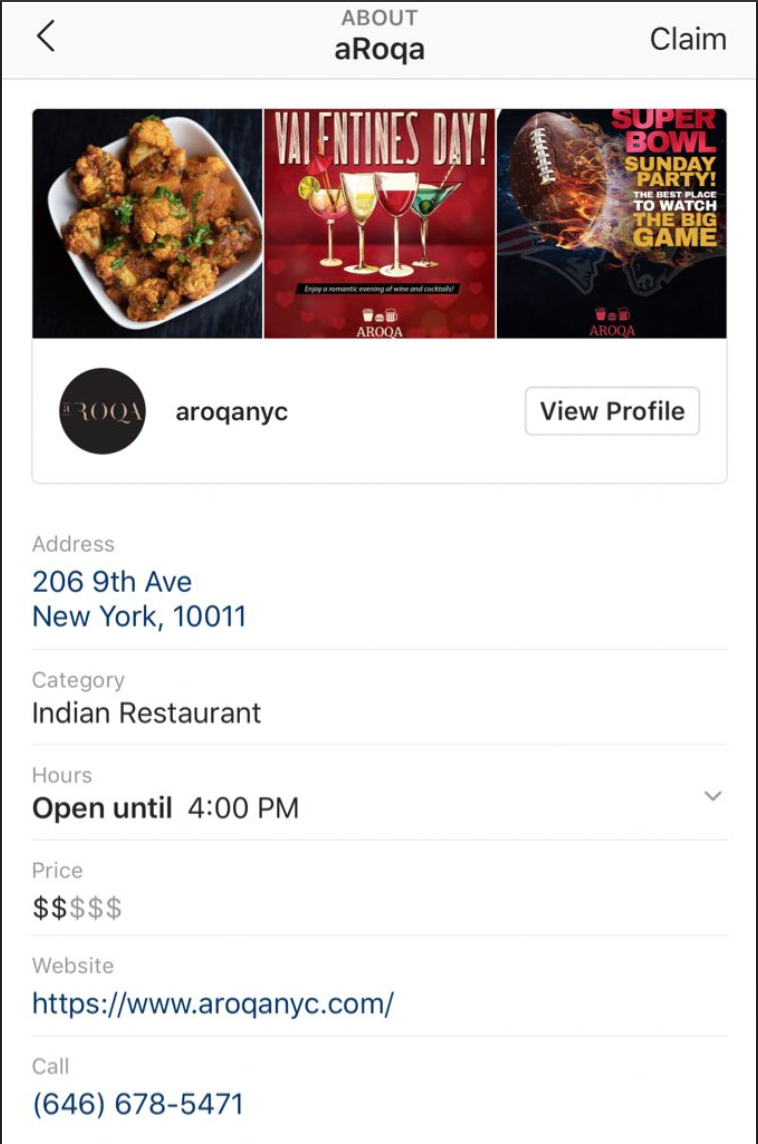
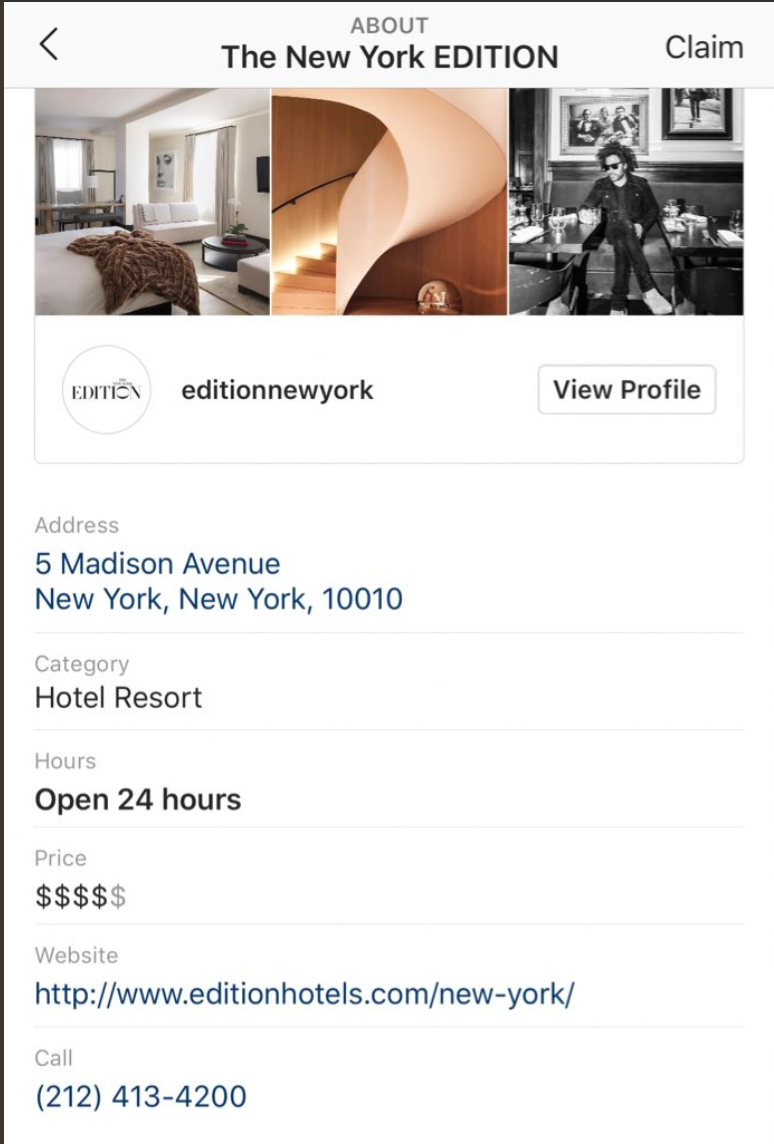
Of course, a link to the business’s Instagram profile is featured prominently at the top of the page.
I reached out for more information about how Nijjer found these pages, as I’m not able to bring them up in my Instagram app.
He sent me a video showing that he simply searched for the location and tapped on a large button reading “View Information.”
You’ll see the screenshots above there’s an option to “Claim” the profile page on the top right of the page.
Users can claim a business profile page if they also have access to the business’s Facebook page.
Claiming a profile page will grant users the ability to edit the business information.
So if your business information is displayed incorrectly, that’s how to go about correcting it.
This addition to Instagram has not yet been officially announced by the company, and as I mentioned before I’m not able to replicate it.
So I’m not sure how widely the business profile pages are being rolled out at this point, but there’s evidence that at least some users are seeing them.
http://tracking.feedpress.it/link/13962/11122496
