4 Reasons Why Social Media Has Become So Toxic and What to Look for Next

Users are being forced into a sensationalized ‘publishing media’ environment. Is it any surprise that Facebook’s viewership has declined?

February 22, 2019 7 min read

Opinions expressed by Entrepreneur contributors are their own.

“Guys, I am gonna be perfectly honest,” wrote Katie Bower, a mother of five and “mommy blogger” with over 52,000 Instagram followers. “Instagram never liked my Munchkin, and it killed me inside. His photos never got as many likes. Never got comments. From a statistical point of view, he wasn’t as popular with everyone out there.”

Related: Learning From Kevin Hart’s Social Media Mistakes

It was the sixth birthday of Bower’s “Munchkin,” a.k.a. her son, and as many mothers now do, she marked the occasion by writing a long social media tribute to everything she loved about her child. But she also used the post to lament the fact that her photos of him weren’t getting as many likes as those of her other children. “I want to believe that it wasn’t him .. that it was on me,” she fretted.

“My insufficiency caused this statistical deficit because obviously my Munch should get ALL the love, and squinty eyes are totally adorable.”

Bower’s post went viral after hundreds comments lodged negative feedback about Bower’s assessing her child’s appeal based on likes received. Though she later deleted the post, the incident highlighted just how far social media has come from its original, humbler purpose: to connect friends and family.

Nowadays, moms like Bower aren’t just posting family photos to share their lives — they’re doing it for money. The new “influencer marketing” industry is expected to grow to a $10 billion dollar industry by 2020, according to Mediakix. And that means that that old promise of connecting people has evolved into a toxic, commercialized landscape that seems to have forgotten what it’s supposed to be about. Here are the four main factors that have caused this toxic environment:

1. Social media has become a marketplace first.

Facebook is a prime example of a social network that has become more about quantity and commercialization rather than a place to connect with friends and family. While the platform’s actual viewership has slowed considerably in recent years, its ad revenue actually jumped by 42 percent in early 2018, demonstrating the company’s aptitude for making money over its aptitude to forge connections.

Facebook has been acquiring other popular social networks only to see their founders quit shortly thereafter. An example: The co-founder of WhatsApp left over data privacy clashes, after Facebook pushed it to change its terms of service to give the larger social network access to WhatsApp users’ phone numbers and to look into advertising.

Similarly, both Instagram founders quit this year after tensions with Facebook founder Mark Zuckerberg mounted over the direction of the app. Reportedly, they wanted to keep Instagram independent from Facebook, while Zuckerberg wanted to further integrate the app into his platform.

Related: How Humans Relate to Social Media

He hasn’t stopped his efforts: As Facebook shares continue to fall due to slow user growth, Zuckerberg has been searching for ways to continue monetizing the platform through other social app acquisitions, rather than making fixes to Facebook that will keep users engaged and active.

2. Commoditizing social status via likes is detrimental to mental health.

Multiple studies have shown that the psychological effects of likes, comments and shares are proving detrimental to the mental health of the general population.

One study reported in the American Journal of Epidemiology found that liking more posts was tied to worse mental and physical health and “decreased life satisfaction,” while another study by the University of Copenhagen found that many people suffer from “Facebook envy,” the concept of being jealous of friends’ activities on social media.

The design of Facebook in particular has caused what researchers have called a context collapse, where users are locked into a single persona by the platform. This occurs despite sociologists’ agreement that we have, and display, different aspects of our identities depending on what contextual situation we’re in — when we’re at work versus at a bar. The single persona we create on Facebook has led us to “self-edit” what we share, to create the perfect version of that public persona, another factor leading to Facebook envy, and a reason many people are actually buying followers on Twitter, YouTube, Facebook and Instagram.

This has created a market for commoditizing social connections even further, while skewing the perception of popularity on social media and starting the vicious cycle of Facebook envy once again.

3. Personal data is being bought and sold to the highest bidder.

Third-party data brokers, or companies that buy and sell information on customers, have become massively influential in the era of big data. For social media platforms, which capture large amounts of data, these transactions present an enormous new stream of revenue.

Most social media users don’t understand the value of their personal data, and it’s become more common to accidentally expose themselves to malicious activity. Facebook users, in particular, were outraged when the third-party data firm Cambridge Analytica got its hands on personal data for as many as 87 million Facebook users — without their permission. While that breach was the the most publicized one, there have been additional breaches since then.

However, even these security breaches haven’t changed much about how users participate in social networks. According to a Chicago Tribune writer, experts have said “that “many users are either ambivalent toward data privacy or don’t understand what they’ve given up by agreeing to the terms of service in order to create an account.”

And, if these privacy breaches don’t end, users can only expect steeper consequences in the future.

4. Users are being forced into a sensationalized “publishing media” environment

Today’s social publishing environment rewards sensationalized content, thereby damaging healthy relationships online. These platforms reward “engagement” by highlighting highly liked posts more prominently in newsfeeds, accustomizing social media users to attempting to post that sensationalized content  themselves.

This attention-seeking behavior has left people vulnerable to dangerous propaganda and influence campaigns. Last year, teenagers infamously filmed themselves ingesting Tide Pods in attempts to gain more attention and followers, while, more seriously, Russian government operatives posted political proganda on Facebook that reached 126 million Americans before the 2016 election.

The platform is also being taken to task for allowing hate speech from extremist politicians in Myanmar, which later contributed to the genocide of the Rohingya people.

What was once a seemingly harmless platform, then, has now evolved into a powerful machine that, due to confusing hate speech and privacy policies, has set dangerous precedents for the future of social media.

The next generation of social networks will overcome these toxic influences

By now, we all know that the current social media system is broken. Healthy personal relationships are being drowned out by social media flare-ups with the news (real and fake), sensationalized posts and a commoditized environment that values money over genuine connections.

A social media exodus may be coming. A recent Pew survey said that one in four Americans polled had deleted Facebook from their phones in 2018, while 42 percent said they’d stopped using Facebook at all “for several weeks or more” in the previous year.

Now, new questions abound: As people do start leaving big networks like Facebook and Twitter, what will they do next? Have they become so exhausted from the toxicity that they’ll quit social media completely, or will they turn to alternative networks — and if so, what will they look for there?

Clearly, people need a space to privately share their lives with their inner circles, while leaving the general media posts right where they belong — in social media.

Related: Facebook Admits Using Two-Factor Phone Numbers to Target Ads

If there’s anything social media has taught us, it’s that people do still enjoy being connected. Once we move our personal relationships away from social media to networks that truly value privacy, we may eliminate the current toxic social media environment and get back to the basics.

https://www.entrepreneur.com/article/328749


Stop and Follow These Super Fun, Empowering Illustrators on Instagram

Follow these Illustrators on Instagram

Hate social media bringing you down? Hate scrolling and slowly feeling down about yourself as the posts roll by? Follow these ten illustrators on Instagram we suggest below and you’ll perk right up. We promise!

We are all about inspiration these days. We have started a Facebook group for creatives and hope you’ll join. Head to the We Are Weapons – Go Media Creative Crew on Facebook and request to join in on the conversation.

A few more notes before the inspiration begins:

A space that honors the importance of choosing self-care over self-harm.

Inspirational Illustrators to Follow on Instagram


Empowering creative ladies! Started by @jessicavwalsh
powered by awesome ladies worldwide in over 200 cities.


THEY/THEM pls | queer trans artist & activist


A way of being | A space for embodied wisdom


Original artwork © Dani DiPirro
DC-area artist + author


illustrator trying her best


infamous anti-socialite and pug lady


London Based Artist & Social Issues Advocate

https://gomedia.com/zine/inspiration/web-roundup/inspirational-illustrators-instagram/


Learning From Kevin Hart’s Social Media Mistakes

He lost his gig at the Academy Awards over some old tweets.

February 17, 2019 5 min read

Opinions expressed by Entrepreneur contributors are their own.

This month, the Academy Awards will take place without a host. Kevin Hart was forced to resign the job after old offensive tweets resurfaced. This is a high-profile example of something that can affect anybody. Online posts often live forever, and there is no telling when a person will be held accountable. As social media becomes ever more integral to our lives, it is important to think carefully about the way we handle ourselves online.

Social media can be an invaluable communication tool, but many people use public platforms like Facebook, LinkedIn, SnapChat and Twitter as vehicles for expressing anger and vitriol. People hiding behind their computers and phone screens commonly share angry opinions that they would never say in person. Those hateful comments then become a part of the person’s online record and, as Hart’s example proves, that record can be shockingly permanent.

Related: 7 Ways to Recover After a Reputation Crisis

“Your reputation lives online, and how you engage in social media communities can sabotage your career,” says Jessica Nunez, CEO of TruePoint Communications. “If an organization’s leader or employee goes on social media spewing hate, it can negatively impact the company for employing these folks, especially when they are leaders.”

At Acceleration Partners, our team takes social media activity into account when we hire, and more and more businesses are doing the same. It’s an important barometer of a person’s judgment. Here are some ways you can put your own best self forward online.

1. Don’t engage in the argument.

The instantaneousness of social media can work against people in tense situations. It is easy to see how a platform like Facebook can attract angry comments — people who see something they disagree with can fire off a harsh response in just a few keystrokes. It’s so easy that people quickly fall into the trap of engaging in toxic social media arguments that everyone can see.

I am a strong proponent of building emotional capacity, and part of that involves putting aside battles that are not worth fighting. Arguing on social media is often pointless. You are unlikely to change the other person’s mind, and you can put your own future at risk with a thoughtless post or comment.

Charles R. Swindoll said, “Life is 10 percent what happens to you and 90 percent how you react to it.” This is especially true for social media. If you see something that makes you angry, but is not personal to you in any way, try not to engage.

Related: Want to Do a ‘Marie Kondo’ on Your Messy Social Media Accounts? Here’s How.

2. Wait awhile before you hit send.

Whether it’s an email, a text message or a social media post, responding in an emotional state can be risky and counterproductive. When you get an upsetting note, it’s tempting to lash out immediately, but it’s better to take the time to formulate an argument that you will later be able to stand behind.

Unless you are in an urgent situation, a great strategy is to craft a response and then sit on it for 24 hours without sending it. I have a folder of emails that I never sent. I wrote them to blow off steam, and I later revisited the issues when I was calmer and ready to respond appropriately. This approach provides the emotional catharsis of getting everything off your chest, but it gives you the chance to temper your reaction once you are feeling more level-headed. It’s a great strategy for protecting yourself from saying something that you might regret.

3. Use the Sunday paper test.

There is so much content on social media that it’s tempting to think of everything as abstract and temporary. Who could possibly care about a single careless post? Unfortunately, online outputs stick around forever — and you never know what the long-term implications might be. On professional networks like LinkedIn, missteps can even impact your company’s reputation and success.

Related: 3 Ways Companies Are Analyzing Social Media To Make Hiring Decisions

Before you write your next social media entry, use this thought exercise: Imagine your post was on the cover of the Sunday morning newspaper, there in black and white for all your colleagues and neighbors to see. Would you be proud of what you said? Would you stand by it? Or would you be worried about who is seeing those comments? Using that lens to judge posts will hold your online presence to a higher standard.

For all the ways social media makes our lives better, it can also be misused and destructive. It is important to remember that your social media activity will last forever. Since you don’t know who will see your comments, either now or in the future, live online as if anybody could be watching.

https://www.entrepreneur.com/article/327389


Twitter is Testing a New Way to View Users’ Profiles by @MattGSouthern

ADVERTISEMENT

Twitter is testing a new way to view the profiles of other users in the mobile app without leaving the timeline.

When a Twitter handle is tagged in a tweet, users can tap on it and it will open in a pop-over window.

To get back to the previous screen just slide the pop-over window down.

This is a small but useful change as it prevents interruptions to the Twitter browsing experience.

Ordinarily, tapping on a Twitter handle would take you to the user’s profile in a new screen.

That may cause you to lose your place on the screen you were previously viewing.

Losing your place could be especially annoying if you were reading a lengthy Twitter thread, or had been scrolling down for a while.

Personally, there are times when I avoid leaving the screen at all if I’m especially concerned about losing track of what I’m looking at.

So I see this as a welcome addition to the user experience that could ultimately lead to more connections with Twitter users.

The test is rolling out now to users on iOS and Android.

Subscribe to SEJ

Get our daily newsletter from SEJ’s Founder Loren Baker about the latest news in the industry!

Ebook

http://tracking.feedpress.it/link/13962/11071924


Instagram Bug is Causing People to Lose Followers by @MattGSouthern

ADVERTISEMENT

Instagram has a confirmed bug that is causing some users to lose a significant number of followers.

In addition to losing followers, the number of accounts users are following back is also going down in some cases.

The company acknowledged the issue and said it’s working on a fix.

Instagram tweeted another update roughly 12 hours later saying it’s expecting to have the issue resolved by 9 am PST (12 pm EST) on Thursday.

At the time of this writing, Thursday at 1 pm EST, there has been no further update and no sign of the issue being resolved.

It’s being speculated this issue is related to the fake follower purge that Instagram announced last year. However, that has not been confirmed.

If the issue is connected to the fake follower purge the company likely would have said so, rather than say it’s working on a fix.

I will update this story if and when Instagram confirms a fix has been implemented.

Subscribe to SEJ

Get our daily newsletter from SEJ’s Founder Loren Baker about the latest news in the industry!

Ebook

http://tracking.feedpress.it/link/13962/11071330


4 Strategies to Find Instagram Influencers Best Suited for Your Business by @mansidhorda

ADVERTISEMENT

Instagram is perhaps the best platform for promoting your brand – especially using influencers.

As of January 2018, 78 percent of social influencers used Instagram for brand collaborations worldwide, while the share of blogs remained 16 percent followed by YouTube (4 percent), Facebook (2 percent), and Pinterest (1 percent).

Social Influencer Statistics

Social Influencer Statistics

Instagram influencers can easily generate authentic word-of-mouth engagement that turns their followers into your loyal customers.

According to a study released by Quintly, Instagram boasts the highest interaction rate compared to all its counterparts.

As the most effective platform, it seems to be the right choice for your influencer marketing campaigns. Without the right influencers, however, you can’t produce the desired results even on Instagram.

Finding the best suited Instagram influencers for your niche can be challenging. Here are four essential tips that will help.

1. Keep Your Business Goals in Mind

Before you start looking up the influencer’s vital metrics such as engagement rate and number of followers, think about your business goals.

Step back and determine why and how you intend to use Instagram influencer marketing campaigns.

Why Do You Need Influencers?

What specific objectives do you have in mind for influencer marketing?

The three primary goals should be:

  • Increasing brand awareness.
  • Generating leads or sales.
  • Increasing your Instagram followers.

Your choice of influencer will depend on these objectives.

For example, increasing your Instagram followers will require you to create competitions or quizzes using a specific hashtag. Roping in an influencer who can participate in the competition and encourage his/her followers to jump in too will be the right way to go.

On the other hand, sales and lead generation will need you to use affiliate marketing and discount codes. So, you will need to partner with influencers whose audience is likely to buy your product.

Do They Fit Your Brand’s Personality?

The influencer needs to align with your brand’s identity or at least the products you want to sell. If there is no brand alignment, your campaigns will generate low ROI.

Having a clear idea of your influencer campaign goals is necessary to find an influencer that closely reflects your brand.

For example, an influencer who is known for traveling on a budget will be the right choice to promote low-cost travel gear. Hiring a model who offers beauty tips will be a waste of time.

Sperry, a boat shoe brand, worked with more than 100 micro-influencers who were already posting high-quality images of Sperry’s products on social media. Most photos comprised the micro-influencers in high-altitude scenic locations.

Sperry Instagram

Sperry Instagram

Until recently, Canon focused on using professional photographers to drive their latest innovations on Instagram.

Thinking outside the box, however, the brand has started embracing the new generation Instagrammers like filmmakers Elise Bauman to promote their products on Instagram.

Although these influencers have a lesser number of followers, they offer better engagement owing to their industry expertise.

Elise Bauman Instagram

Elise Bauman Instagram
On the other hand, American Express uses a mix of mega-celebrities as well as micro-influencers to promote their brand on Instagram.

Andrea Pion is one such niche influencer along with top Instagram influencers such as Flaviana Matata, a Tanzanian fashion model, and Patrick Janelle, an entrepreneur and social media influencer actively involved in their #AmexAmbassadors campaign.

All of these influencers take advantage of American Express services during their frequent travels.

Andrea Pion Instagram

Andrea Pion Instagram

2. Look for Genuine Engagement

Engagement is one of the critical metrics of Instagram influencer marketing.

The average engagement rate for an Instagram influencer was around 4.36 percent in 2017, with influencers having less than 1,000 followers registering the highest engagement rate of 8 percent.

The engagement rate goes down as the number of followers increases. However, sometimes this metric can be misleading as popularity does not always result in conversions. You must first determine how authentic the engagement is.

Analyze the Comments

In 2017, Mediakix created two fake Instagram influencer profiles namely @wanderingggirl and @calibeachgirl310 to make people aware of the fake engagement problem.

Both accounts remained active from March to July, generating more than 80,000 followers between them and securing four paid brand endorsement deals. Chances are you may also encounter fake influencers.

One of the easiest ways to determine if the influencer is fake or genuine is to analyze comments on their posts. Usually, vague comments such as “nice pic” or “cool dress” or “looking good,” and comments with emojis often mean fake engagement.

On the other hand, relevant and conversational comments are a sign of real engagement, which brings us to the next point.

Search for Word-of-Mouth Reactions

Real followers ask questions, make personal statements, and also tag their friends in comments. These are word-of-mouth reactions by genuine followers.

Check out the following post from Lisa Linh, an Instagram influencer. All her posts receive real responses, like this one, from her genuine followers, not bots. Only this type of engagement can result in new leads and sales.

Lisa Linh Instagram

Lisa Linh Instagram

3. Explore Hashtags Related to Your Brand

It is better to rope in Instagrammers who are already talking about your brand or products. They could be the next influencers to promote your brand.

Some hashtag research can prove helpful in this regard.

Avoid High-Density Hashtags

Hashtags are just like keywords for SEO. You will come across several high-density keywords. These are the most used hashtags on Instagram.

Though relevant, using these keywords to look up influencers will be a waste of time.

For example, if you start your search with #organic, you will have to go through more than 33,00,000 posts.

High-Density Hashtags

High-Density Hashtags

But, as you dig deeper into long-tail (or low density) hashtags, the number of posts also goes down. In this case, #organicfoods has 162,771 posts, #organicfoodstore has 2,386 posts, while #organicfoodchicago has only 17 posts.

Both #organicfoods and #organicfoodstore will provide you will more accurate search results. #organicfoodchicago has too few posts to be considered for influencer search.

Use Keywords That Describe Your Brand or Target Audience

You can also start your search with keywords that describe your brand or target audience. Focus on tags with a substantial number of posts to find influencers.

If you’re selling running or jogging accessories, start your search with something like #running, and Instagram will suggest the most trending and relevant hashtags.

Here you can use hashtags such as #runningmama, #runninggirl, and #runningcoach to look for influencers catering to a specific niche.

Describe Your Brand or Target Audience

Describe Your Brand or Target Audience

Use the Hashtags #sponsored or #ad

Instagram also requires influencers to use #sponsored or #ad hashtags to distinguish promotional content. You can follow these hashtags to find out the potential influencers in your niche.

You can mine your followers or your competitor’s followers to see who is using #sponsored or #ad hashtags. If they are using it, they already know what influencer marketing is. You can ask them to promote your product.

4. Use an Influencer Platform

All these methods, though useful, are manual and time-consuming. Fortunately, you can use an influencer marketing platform to find the right influencers with just a few clicks.

Some of the popular ones include HYPR, Tap Influence, Upfluence, Famebit, NeoReach, Revfluence, and Influencer.

Find the Right Influencers

You can search for the most suitable influencers in your niche using different sets of parameters such as the number of followers, type of followers (demographics), and work experience.

Complete Campaign Management

You can also manage one or more of your influencer marketing campaigns using these platforms. You can control campaign features such as advertisement text, graphics, hashtags, social media mentions, giveaway details, influencer payments, and the complete campaign timeline through one platform.

Real-Time Analytics

You can calculate various campaign metrics including views, reach, engagements, ROI calculations, and URL tracking. Several platforms allow you to generate daily, weekly, and monthly reports that you can share with your marketing team.

Perhaps, the only downside is that all these platforms usually charge you a recurring monthly or annual fee. If you can set aside a budget for this, you will save a lot of time and resources.

Keep the following in mind when choosing a platform:

  • Choose a platform with a substantial number of influencers from your niche. But, make sure the quality of influencers is also good.
  • Find out what content creation, distribution, and tracking tools are available on a platform. You should be able to control every aspect of your campaign through the platform.
  • The platform should also provide a good selection of real-time analytics and reporting tools.
  • You should also get built-in payment and transaction facilities to pay your influencers.
  • Don’t forget to check what others are saying about the platform. Check user reviews along with how long the platform has been around before registering.

Here are a few examples of influencer marketing platforms to get you started:

  • TapInfluence: It is a cloud-based influencer marketing platform. According to TapInfluence, their platform can result in an 11x increase in ROI of your influencer marketing campaigns. It also comes with an ROI calculator that lets you know whether your sales goals are worth investing in a marketing campaign.
  • Famebit: It initially focused on YouTubers, but now Famebit supports almost all social networking sites. You can find social media influencers starting with 5000 followers belonging to varied niches.
  • HYPR: HYPR claims that over 30 percent of the world’s largest brands, agencies, and influencer marketing platforms trust their data. This feature-rich platform comes with several tools based on sophisticated algorithms to help analyze the registered influencers.

Parting Words

Influencer marketing is catching up, particularly on Instagram.

However, only the right influencer can help you succeed. So, you need to focus your efforts on finding the perfect match for your business.

Hopefully, these four tips will help you find the best fit for your brand.

Have you used Instagram influencer marketing before? Tell us more about it in the comments box below.


Image Credits

Featured Image: Created by author, February 2019
All screenshots taken by author, February 2019

Subscribe to SEJ

Get our daily newsletter from SEJ’s Founder Loren Baker about the latest news in the industry!

Ebook

http://tracking.feedpress.it/link/13962/11066915


The Top Reasons Consumers Follow and Engage With Brands on Social Media by @MattGSouthern

ADVERTISEMENT

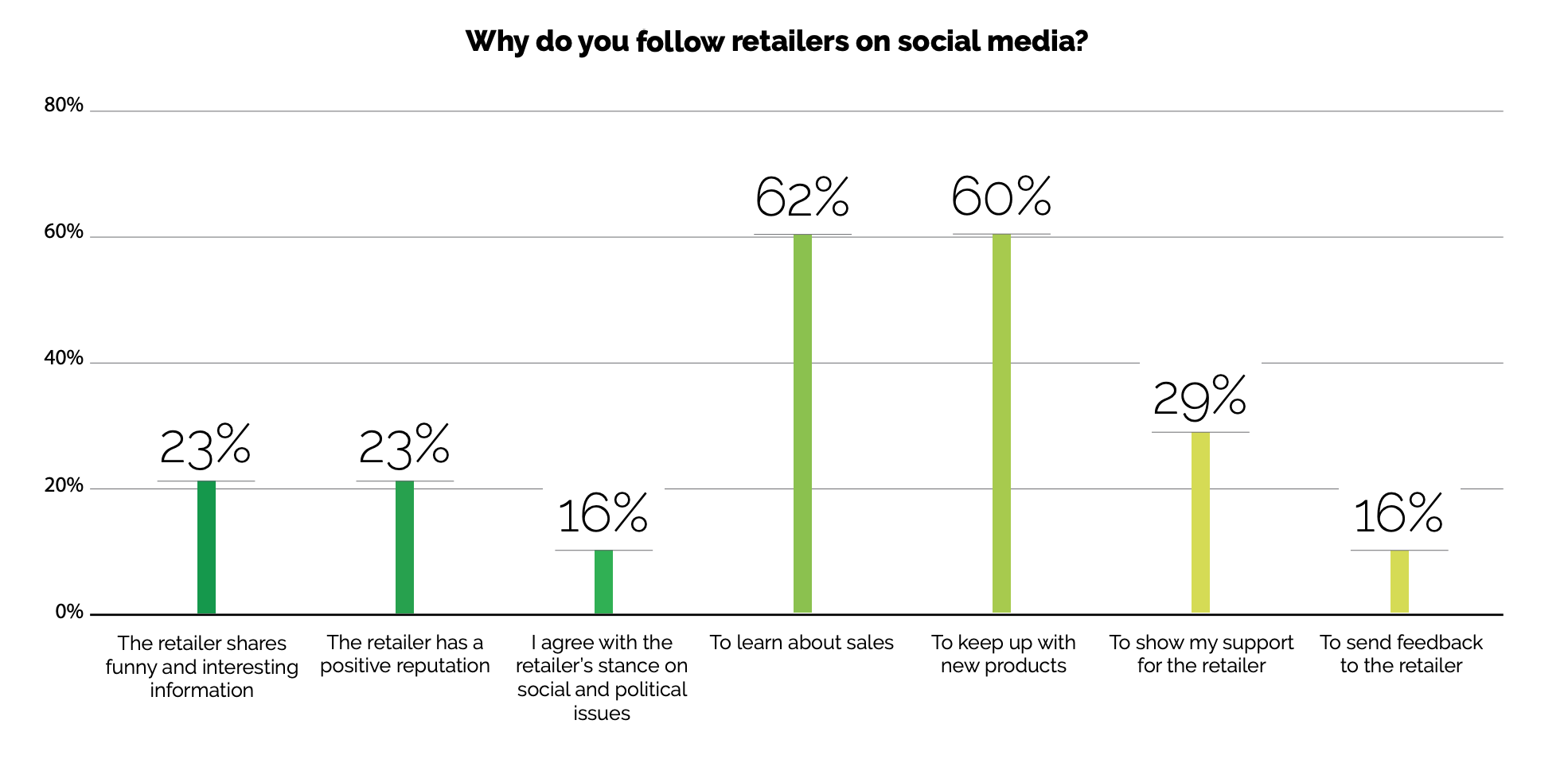
A new study reveals the real reasons why consumers follow brands on social media, and what motivates them to engage with posts.

A survey of 1,000 consumers conducted by Yes Marketing in June of 2018 discovered:

  • 63% of consumers follow retailers on social to learn about sales.
  • 60% follow retailers to keep up with new products.
  • 29% follow to show support for the retailer.
  • 23% follow because the retailer shares funny and interesting information.
  • 23% follow because the retailer has a positive reputation
  • 16% follow because they agree with the retailer’s stance on social and political issues.

The Top Reasons Consumers Follow and Engage With Brands on Social Media

The Top Reasons Consumers Follow and Engage With Brands on Social Media

When consumers were asked about why they engage with a retailer’s content on social media, here’s how they responded:

  • 36% engage with content because the retailer promises a discount for sharing the post.
  • 36% engage in order to share a product update or sale with their followers.
  • 35% engage because they agree personally with the content of the post.
  • 30% engage because the post is funny or interesting.
  • 29% engage in order to share positive feedback with the retailer.
  • 20% engage in order to share negative feedback with the retailer.

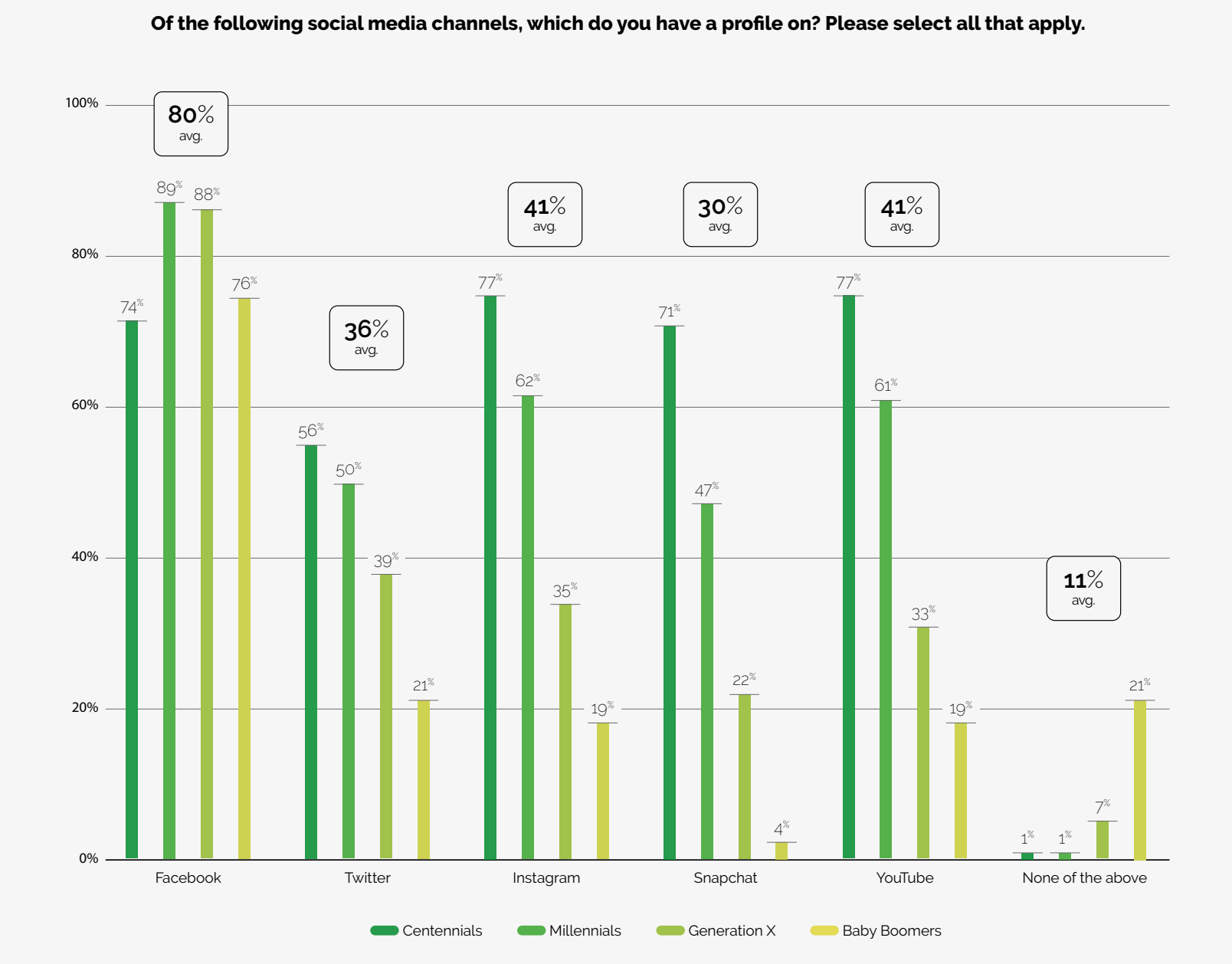
When it comes to which demographics are active on different social networks, the survey discovered:

  • Gen Z consumers are more likely to have YouTube (77%) and Instagram (77%) accounts than a Facebook account (74%).
  • Millennials (89%) and Gen X (88%) are most likely to be on Facebook.
  • More Gen Z consumers (56%) are on Twitter compared to Millennials (50%) and Gen X (39%).
  • Snapchat is the least used social network among all respondents (30%), followed by Twitter (36%).
  • Only 11% of respondents are not on any of the major social networks.

The Top Reasons Consumers Follow and Engage With Brands on Social Media

The Top Reasons Consumers Follow and Engage With Brands on Social Media

For more information, download the full report here.

Subscribe to SEJ

Get our daily newsletter from SEJ’s Founder Loren Baker about the latest news in the industry!

Ebook

http://tracking.feedpress.it/link/13962/11065734


10 Steps to Success from Instagram Icon Abigail Ratchford

How passion and drive helped this social media megastar build a global brand.

February 12, 2019 7 min read

This story has been updated since its original publication date.

Having a clear goal is the first step to success, and for Abigail Ratchford, that goal couldn’t have been clearer: “I wanted to be famous,” she laughed on a recent call with Entrepreneur. If you are one of her 8.8 million Instagram followers, you know that she achieved that goal and then some.

Among a host of projects, the superstar influencer sells her own branded products on her Official Abigail Ratchford site and recently launched her own app, which offers exclusive and bonus content.

Over the course of our discussion with the social media megastar, Ratchford revealed her roadmap for turning her dream into millions of fans — and then turning that fan base into a global business. Here are her 10 biggest takeaways.

1. Take charge of your life and take a risk.

“This social media model lifestyle sort of started by accident. I grew up in Scranton, Pennsylvania. I’m a small town girl. I did a photo shoot with a local photographer and he put the pictures up on his Facebook page. Within a few days, the pictures got picked up by Sports Illustrated and other places. So I started to do more and I realized that I really loved doing it. After about a year of doing that, I realized that there wasn’t going to be many opportunities for me in Scranton, so in 2014 I moved to L.A. I developed a whole blueprint plan for myself. And now here I am.”

Related:  Models Turned Millionaires — 10 Women Who Launched Their Careers In Sports Illustrated

2. Good things don’t happen by accident. Plan, plan, plan!

“I wanted to be ready to go once I got to L.A. So I did research on all the best photographers, makeup people, hair people, PR companies, videographers — anything I could think of. And I had it all saved in one album marked ‘L.A.’ I lined up a bunch of photo shoots before I got there, I didn’t want to waste one minute once I got off the plane.”

Photo: Brooke Mason

3. Treat other people’s success as great lessons.

“I was building a following with my photos, and around the same time, Kate Uptonwent really went big with a viral video. I realized that I needed to not just think about photo shoots, but also come up with some fun, crazy video ideas that would go viral and get my name out there. And sure enough, once I went in that direction, I wound up on TMZ and some other sites and my following basically tripled in like two weeks.”

4. Be nice to people who support you.

“When that first video went viral, I reached out to TMZ to thank them for helping put me on the map. And I’ve kept a really good relationship with them ever since. I’ve become really good friends with a lot of the writers and editors and camera people over there. And these are real friendships, we figure out fun things to do together or just chat and catch up with each other. You don’t want to be some fame-hungry person where every time you call you’re looking for a favor. It is definitely important to build these good relationships and have a good reputation in the industry.”

5. Take time to recognize the big moments.

“The first time I was on TMZ was pretty surreal. But my most ‘I can’t believe this is happening’ moment was last year when I shot for Kanye West’s Zine. I remember walking in for my fittings the first night, and Kanye was in the hallway on his cell phone. Hung up and he came up to me and introduced himself. Kanye West introduced himself to me. I was beyond starstruck. He was telling me how he liked my page and my videos and I just could not speak. I couldn’t believe Kanye West knew my Instagram page. That was super crazy.”

Related: Inspiring Quotes to Get You Through the Work Day

6. Show your audience love — and ignore the trolls!

“I’m always on Twitter replying to comments and interacting with my fans. It keeps my fans and I connected and helps build a bond. They are so supportive of what I do and I like to give that back. I just really ignore negative comments at all cost. It’s so hard to turn your cheek and ignore them, but it’s kind of a slap in the face to all the people who are saying really nice things if you only react to trolls. You just show that you’re more bothered by negativity than you are flattered by positivity, and that’s not a great message to send to your true fans.”

Photo credit: Instagram.com/abigailratchford/

7. Always try the next new platform, filter or innovation.

“Even though my whole career has been built on social media, I’m just so clueless with new technology and my tendency is to stick to what I know. I used to do a lot of Instagram videos and when Snapchat came out, I was like, what is the point? But people told me how fun it was, so I tried it and just loved it. My presence grew on there pretty quickly, and now if a company wants me to post something on my Snapchat, that’s a new revenue stream for me. So it is worth trying new things!”

8. Learn the Instagram pay scale.

“Once you hit a million followers, you can start to a get $1,000 to $1,500 for a sponsored post. And it climbs from there: $2,000 at 2 million and so on, but there is kind of a capping point. There aren’t a lot of companies that will pay $7,500 for one post, for example. So my rate is $3,500 right now to keep it reasonable. But don’t get me wrong,  $3,500 is still a lot of money!”

9. Don’t take just any customer.

“I do a lot of endorsements and I sell a lot of my own branded stuff, like these cool skateboard decks. But I have to like what I’m selling and legitimately think it is cool. I was approached by a tampon company for a post—that was a no. But the best was these things called Dude Wipes. They’re like feminine wipes for men. I was like, no way! You could not pay me enough to endorse Dude Wipes!”

Related: 10 Startup Secrets You Can Learn From Plus-Size Model and CEO 

10. Find smart and reliable partners.

“I have a merchandise company that I work directly with that sources products for me, runs my website and does the posters and calendars. I’ve worked with them for the last two years now. They front the costs and then after they recoup, it is a 70-30 split on profits. That’s how it works with us. Looking ahead, I definitely want to get more into beauty stuff. I’ve been hosting a lot of beauty and skin routines to grow my female audience and I hope I can come out with my own line or collaborate with a preexisting line. Girls spend more money than guys will, so that’s my next move.”

https://www.entrepreneur.com/article/292287


The Top 10 Skills Every Successful Social Media Manager Should Have by @jonleeclark

ADVERTISEMENT

Social media is one of the most powerful innovations of the last 20 years. While the internet was able to make the world accessible with a click of a button, social media was the tool that connected people.

Starting small on sites such as MySpace, social media powerhouses such as Facebook, Twitter and Instagram have developed over the last few years to be some of the most influential companies in the world. Today, there are a plethora of social media channels that connect people of all ages and demographics.

Social media today is more than just something to do for fun, though; it’s a way for businesses to directly connect and interact with their current and prospective customers. A business’ social media channels can be the heart and soul of their brand, of how people view their company.

That’s why the role of a social media manager has become so important.

Social media managers go above and beyond simply creating social media pages and posting content. Social media managers are responsible for managing the company’s brand as seen by a majority of the world.

What makes a good social media manager is a particular set of skills that oftentimes isn’t seen at other positions in a company.

It’s a job that is part writer and editor, part marketer, part designer and part public relations. A social media manager also must be self-driven and have the ability to lead a process while working independently.

A day-in-the-life of a social media manager might look something like this:

Day in the Life of a Social Media Manager

Day in the Life of a Social Media Manager

Throughout the day, these are the top 10 skills a social media manager will need to succeed.

1. They Must Have Solid Communication Skills

It may seem obvious that someone whose primary job is to connect with people from outside the company needs to have good communication skills. In fact, it’s arguably the No. 1 skill social media managers need to be successful.

Communication skills in this realm are slightly different than they are in traditional communication roles. Social media managers need to be able to understand the audience they are communicating with and speak in a way that will resonate with that audience.

While all social media is similar in the sense of what it accomplishes, each social media channel has a slightly different way of communicating. Recognizing and understanding the way a person communicates on Facebook is different than the way a person communicates on Twitter is essential.

2. They Must Be Social

The best social media managers are people who thoroughly enjoy social media and participate on social media on a personal level. To be a truly successful communicator on social media, one has to know not only the ins and the outs of the programs but be able to use the vernacular common to each.

It sticks out like a sore thumb when an “outsider” posts on a social media channel, and that can have a negative effect on the business’ reputation. That’s why a social media manager who is well versed in everything each channel entails is key, and why the best social media managers are those who, first and foremost, participated in social media on a personal level before taking it on as their profession.

3. They Must Have Personality & Creativity

One of the biggest differences between social media usage for work and personal life is the formality of the content. This isn’t to say that social media messaging for businesses should be stuffy. It’s quite the opposite actually.

Social media channels are a way for businesses to communicate with customers on a more personal level. So, a sense of humor, a touch of creativity and a voice that resonates with the audience are all must-haves. A business’ social media channels shouldn’t come off as ads or include typical PR jargon.

4. They Must Be Up on Digital Data

The top three skills on this list all deal with the make-up of the person who holds the title of social media manager. The rest are all professionally-based skills.

A social media manager needs to take the content a step further by optimizing and analyzing it. This means being able to discern whether the social media marketing is working by culling the appropriate data for each channel and then adjusting the content, if necessary.

This aspect of the job requires knowledge of search engine optimization (SEO) general practices, and specifically how search engines treat social media posts.

5. They Must Be Project Managers

Managing social media channels for a business isn’t all fun and games. It’s a serious job that takes serious management skills.

Some social media managers will be one-man or one-woman teams. If this is the case, the person will need to approach each channel as a separate project with short-, medium- and long-term goals, along with that of the overall social media plan.

Some social media managers have a team of people helping them manage each of the channels. In these cases, the manager will need to have solid skills in managing people as well as a project.

6. They Must Write & Edit Well

While social media provides some leeway in terms of language and content, keep in mind that it’s still a message being sent to current and prospective customers; it’s still messaging that will serve as the public voice of a company.

That’s why all successful social media managers need to have excellent writing and editing skills. Some of the typical language one might use for a personal social media account won’t fly on a professional account.

Yes, the social media manager will need to be able to inject some flair into the writing, but it must be done in such a way that is professional. This goes for content the manager will write, and for the content he or she will edit that others on the team have written.

7. They Must Have Visual Skills

Social media is a very visually-driven form of communication. Even posts on text-based channels such as Twitter perform better if they have pictures that go along with the text. That’s why successful social media managers need to have an understanding of how to pair visuals with text.

This means a good social media manager will be able to cull available images from the internet or from a company’s database, and also must be able to create great imagery on his or her own – or at least be able to tell a design department in the company what to create.

8. They Must Be Flexible & Adaptable

A social media manager’s job requires a lot of patience and flexibility. Not only are a company’s needs changing all the time, but social media itself is, too. This is where the flexibility comes in.

A good social media manager will need to be able to digest changes made to each social media channel, as well as how to shift the approach to that channel.

In addition, social media managers need to be able to adapt to each environment they are communicating in, as sometimes the change occurs with the users of a social media channel and not just the channel itself.

This means being up on all the trends on not just how people are using Twitter, for example, but what they are talking about on Twitter – whether that relates to the manager’s company or not.

9. They Must Be Great Marketers

Ultimately, the purpose of a social media channel is to create marketing opportunities. The fun part of social media is communicating, taking photos, creating eye-pleasing posts and interacting with people.

But the end goal is to market the business. The social media manager doesn’t need to have a strong direct sales background, but he or she does need to understand that the content the social team produces is ideally supposed to generate sales – if even in an indirect way.

It’s important also, then, for the social media manager to be able to recognize a sales lead that may come across in a reply to a message, and pass it along to the sales team.

10. They Must Have Excellent Customer Service Skills

One aspect of social media that can’t be overlooked is the fact that it’s a two-way communication street. It’s simple for people to reply to your content or share it with all of their followers.

Successful social media managers will understand this customer service aspect of the job and will have the ability to effectively monitor the activity on each social media channel as well as respectfully reply to all inquiries in a timely manner – whether the reply is positive or negative.

People can say whatever they want on social media – and they often do – so approaching these people in a polite, respectful manner does take some patience and discipline.

The best social media managers will have a nice combination of the above 10 skills, as it’s truly a position that requires a diverse set of skills across a variety of traditional disciplines.

More Resources:


Image Credits

In-Post Infographic: Visualistan

Subscribe to SEJ

Get our daily newsletter from SEJ’s Founder Loren Baker about the latest news in the industry!

Ebook

http://tracking.feedpress.it/link/13962/11059771


40% of LinkedIn Members Visit the Site Every Day, Engagement is up 60% by @MattGSouthern

ADVERTISEMENT

LinkedIn has released an ebook for social media managers that contains an updated list of stats about the platform.

In making a case for why social media managers should prioritize LinkedIn, the company presents the following statistics.

LinkedIn Traffic & Engagement

Engagement on LinkedIn is “booming,” the company says.

  • LinkedIn now has 610 million registered members
  • 40% of LinkedIn users visit every day
  • Comments, likes, and shares are up 60% year-over-year
  • Views in the LinkedIn feed are up 60% from last year
  • Mobile LinkedIn sessions are growing 57% year-over-year
  • Over 130 thousand articles are created on LinkedIn every week

Business Leaders are on LinkedIn

“On LinkedIn, we’ve assembled the right audience,” the company says.

It backs up that statement with the following data:

  • Executives from all Fortune 500 companies are LinkedIn members
  • 61 million LinkedIn users are senior-level influencers
  • 40 million LinkedIn users are in decision-making positions
  • About 45% of LinkedIn article readers are in upper-level positions (managers, VPs, Directors, C-level)

LinkedIn Drives Traffic and Generates Results

What sets LinkedIn apart from other networks, the company says, is that it attracts professionals driven to exchange ideas and grow their careers.

It’s also a platform that generates meaningful business results.

  • 45% of all social media traffic to a company’s homepage comes from LinkedIn.
  • 71% of people use information from LinkedIn to inform business decisions
  • LinkedIn is the most trusted social platform globally, according to Business Insider’s Digital Trust report
  • 50% of LinkedIn members are more likely to buy from companies when they have engaged in their social channels

For further data, along with detailed information about how to use LinkedIn effectively, see the company’s official ebook here.

Subscribe to SEJ

Get our daily newsletter from SEJ’s Founder Loren Baker about the latest news in the industry!

Ebook

http://tracking.feedpress.it/link/13962/11054331