5 Social Recruiting Mistakes and How to Avoid Them

Social recruiting isn’t as simple as creating a profile and reaching out to candidates.

December 31, 2018 7 min read

This story originally appeared on Glassdoor

Social media has had a massive impact on almost every aspect of business — and recruiting is no exception. Today’s candidates use social media to find their future employers, and as a result, recruiters have embraced platforms like LinkedIn, Twitter, and Facebook as valuable recruiting channels. Consider these statistics:

  • 80% of employers say social recruiting helps them find passive candidates
  • 70% of hiring managers say they’ve successfully hired with social media
  • 91% of employers are using social media to hire talent today

But social recruiting isn’t as simple as creating a profile and reaching out to candidates. In fact, it’s really easy to make mistakes that ultimately take a toll on your recruiting efforts. Below, we look at five common mistakes recruiters make on social media, and strategies to avoid them altogether.

Mistake #1: You Only Use Social Media to Share Job Openings

When you’re overwhelmed with day-to-day recruiting tasks, it’s easy to put your social media presence on the backburner. A sure sign you’ve fallen into a social recruiting rut is only publishing content related to job openings.

The truth is, candidates use social media for far more than finding relevant job postings. They want to learn about employers, access useful information and engage with companies who they believe might be a good fit. If you post nothing but job descriptions, you’ll struggle to build a following on social media or grab the attention of ideal candidates.

Solution: Share valuable content.

Share a variety of content to build both your employer brand and your personal brand as a recruiter.

Use social media to tell your brand’s story. Publish content that shines a spotlight on company culture and core values. If you’re not sure where to find high-quality content, check in with your marketing team, subscribe to industry publications or create your own posts to add a personal spin to it. Remember, if you don’t find a piece of content interesting, your audience won’t either.

Related: 20 Days of Content for Recruiting Informed Candidates

Mistake #2: You fail to define your ideal candidate before taking to social media with your search.

Consider your current social recruiting strategy. Do you take a different approach depending on the job description? Or do you rely on the same set of tactics for each opening? If your answer was the latter, you’re making a common social recruiting mistake.

A one-size-fits-all approach doesn’t work when it comes to social recruiting. Think about it — if you don’t narrow your focus and tailor your strategy based on the preferences of your ideal candidate, you’ll be wasting your efforts on a largely unqualified or uninterested talent pool.

Solution: Consult your candidate personas.

Instead of a more general approach, hone your social recruiting efforts by using candidate personas. Candidate personas are semi-fictionalized profiles of your ideal candidates. These profiles include important traits and characteristics including employment history, goals, skills and more.

For the purpose of social recruiting, candidate personas help you identify your target candidates and shape your social strategy to fit each candidate’s specific preferences. You can use them to prioritize the platforms you use, to personalize your messaging and to share content that engages your ideal candidates.

If you haven’t started creating candidate personas, make them a priority. Not only will candidate personas improve your social recruiting strategy — they’ll improve your overall recruiting strategy too.

Mistake #3: You Don’t Prioritize Interaction

Social engagement involves a lot more than generating likes and comments on your posts — a successful social recruiting strategy requires consistent interaction with your talent pool. But many recruiters only log in to their social media accounts to publish their own posts.

This one-way approach ignores the primary goal of social recruiting: building meaningful connections with your audience.

Solution: Interact with other users to build relationships.

In addition to posting your own content, make a consistent effort to engage with other users’ posts as well. Whether you share someone else’s content or leave a thoughtful comment, you’ll quickly begin to build relationships within your audience.

Keep in mind that consistent engagement requires a significant amount of time. But the more you engage in conversations and engage with other users, the more your audience will view you as an important member of your social community. Soon, you’ll have a network of people willing to help you out — people who can suggest candidates, apply for jobs themselves or share your openings with their own networks.

Mistake #4: You Use a Generic Outreach Template

The last thing a candidate wants to see is another generic, scripted message from a recruiter asking to connect. This one-size-fits-all approach is the best way to get ignored. High-quality candidates know a template when they see it. And, even if the candidate is a good fit, your impersonal outreach will have them hitting the delete button before they even take the time to read it.

Solution: Personalize your messages.

If you want to engage with potential candidates and build personal connections, you must make every outreach message unique to the individual you’re contacting. And no, that doesn’t mean simply using their name at the beginning of your message. Spend time researching each candidate and find specific interests or characteristics you can reference in your introductory message.

Related: How To Seal the Deal With a Quality Candidate

Mistake #5: You Don’t Track Your Performance

Social recruiting is a strategy, and it should be treated as such. It’s important to set goals and track your performance in order to achieve better results.

We get it: Social recruiting is just one part of a recruiter’s job, so you may be inclined to slack on social media KPIs in favor of other, more important recruiting metrics.

But without clear objectives and metrics, you’ll be in the dark when it comes to optimizing and improving your social recruiting strategy. As a result, you’re likely to miss out on high-quality candidates.

Solution: Set clear social recruiting goals and KPIs.

Clearly define the metrics you plan to track to assess your social media recruiting efforts. The KPIs you select will depend on your specific objectives, but here are a few examples to consider:

  • Engagement metrics: Track your follower or subscriber count, likes, comments and shares over time. These metrics will help you understand your growth over time, and determine what posts and content generate the most interest among your audience.
  • Web traffic: Which platforms and posts generate the most traffic to your careers page or job postings.
  • Source-of-hire: It’s imperative that you understand where your top hires come from, which makes source-of-hire a crucial social recruiting metric. By tracking source-of-hire, you can determine which social channels generate the most successful candidates for your business.

Of course, these are just three examples — there are plenty of other valuable recruiting metrics to track. Learn about these metrics here: 8 Important Recruiting Metrics for the Modern Staffer.

Key Takeaways

Recruiting will only become more dependent on social media in the coming years, so if you haven’t fine-tuned your strategy and addressed any weak points, you’ll quickly fall behind your competitors.

But if you work to assess and improve your social recruiting efforts, you’ll build stronger connections and secure more qualified candidates — and the extra work will be more than worth it.

(By Sam Holzman)

https://www.entrepreneur.com/article/324991


How to Plan a Successful Influencer Marketing Campaign in 9 Steps

Social Media Marketing

Industry Report

In our 10th annual social media study (44 pages, 70+ charts) of 5700+ marketers, you’ll discover which social networks marketers most plan on using, organic social activities, paid social media plans, and much more! Get this free report and never miss another great article from Social Media Examiner.

https://www.socialmediaexaminer.com/how-to-plan-successful-influencer-marketing-campaign-9-steps/


In Memoriam: The Rise, Fall & Death of Google Plus by @schachin

ADVERTISEMENT

Google Plus is officially dead.

The announcement generated a lot of news when Google released its declaration in October.

And Google Plus made even more news when we found out about another data breach.

However, Google Plus was really dead long before Google announced it.

The death of Google Plus really shouldn’t have been a surprise to anyone.

It has been on life support for years now.

Now what might be surprising for some is that Google Plus, though typically described as a failed social network, was never primarily a social network at all.

If Google Plus Wasn’t a Social Network, What Was It?

Google Plus was never really intended to be a place to share life updates, cat videos, and historically inaccurate memes with your friends.

Sure, it got lumped in with Facebook, Twitter, LinkedIn, and Pinterest; but in reality, Google+ was developed as an identity service, which may have a lot more to do with its life and death than an inability to compete with say, Facebook.

In August 2011, Google’s then CEO Eric Schmidt told NPR reporter Andy Carvin, that Google+ was not built as a social network, but an identity service:

“[Eric Schmidt] replied by saying that G+ was built primarily as an identity service, so fundamentally, it depends on people using their real names if they’re going to build future products that leverage that information,” Carvin wrote in a Google+ post. “Regarding people who are concerned about their safety, he said G+ is completely optional. No one is forcing you to use it. It’s obvious for people at risk if they use their real names, they shouldn’t use G+.”

The Rise of Identity

In the years between 2009-2015 (loosely speaking), there was a push by corporate entities and governments around the world to build an online ecosystem that could replace passwords.

Not only did they want to replace passwords, but they wanted to help better identify the person behind the log-in as a real human, a verified person.

This “verified” identity was to make it, so users were known to the companies they interacted with online.

Sort of an “insta-trust” for the web.

Andy Carvin continues:

“Paraphrasing [Eric} Schmidt’s comments, Carvin wrote that the Google exec also said the Internet “would be better if we knew you were a real person rather than a dog or a fake person. Some people are just evil and we should be able to ID them and rank them downward.”

The real-world implementation of Identity Service Providers, or Identity Providers (IdPs), was going mainstream.

The Push for Real Names & IdPs

The government was behind the push for using IdPs but did not want to be an IdP themselves.

Anyone remember the push in Google and Facebook for “real names”?

For everyone to have a login if they used any Google Product?

How about Google authorship?

Identity Provision was behind all of those initiatives.

Since users would no longer be unknown entities on the internet, but rather known persons who used IdPs to verify who they were online as they interacted with websites and other online platforms, such as government agencies, it was important that those providers were comprised of private entities.

This is where companies like Google came in.

But they were not alone.

Identity Provision & the NSTIC

This initiative towards Identity Provision was much bigger than Google alone.

Google was only going to be one of many identity service providers for a program run by the Federal Government called the NSTIC, or National Strategy for Trusted Identities in Cyberspace.

“[NSTIC] The initiative envisions an online environment-the “Identity Ecosystem”‘ – that improves on the use of passwords and usernames, and allows individuals and organizations to better trust one another, with minimized disclosure of personal information. The Identity Ecosystem is a user-centric online environment, a set of technologies, policies. and agreed upon standards, that securely support transactions ranging from anonymous to fully authenticated and from low to high value. It would include a vibrant marketplace that allows people to choose among multiple identity providers – both private and public – that would issue trusted credentials that prove identity.”

And it wasn’t just the U.S. government.

The Identity Provision program was international in scope.

The identity providers and the NSTIC were part of the “Real ID Movement” across the globe.

The movement was meant to bring together a set of nation states to implement similar protocols in their countries, which could be used to identify individual users, across borders and online.

However, this had to start somewhere and, in the U.S., there were pilot programs set up to test the identity ecospace.

Google Plus Is Officially Recognized

Google, Equifax, PayPal, Symantec, and Wave Systems were the first federally recognized IdPs of this new identity system.

This meant they were certified to start acting as IdPs for specific pilot programs in both public and private partnerships.

“In basic terms, this means that solutions from firms like Equifax, Google, PayPal, Symantec and Wave Systems – all of whom have had their credentialing solutions certified to meet Federal security and privacy requirements – can be trusted identity providers for certain types of Federal applications.” – White House Press Release

NSTIC Critics

NSTIC was not without its critics, including privacy rights groups like the Electronic Frontier Foundation (EFF).

The NSTIC was met with its fair share of resistance due to:

  • Privacy concerns.
  • First Amendment protection issues.
  • A lack of clarity on what an Identity Provider could do with the data they would now have detailing every online action a user performed.

Human rights and privacy rights groups, along with a fair number of high-profile cybersecurity experts, were harsh critics of the concept of a Real ID program online.

However, this did not stop the growth of the program.

It seemed to be humming along right up until 2015 when its funding was seemingly unexpectedly and dramatically reduced, and the program cut down to maintenance levels.

So, what happened?

The End of Google Plus

In 2015, the NSTIC was defunded to “maintenance levels.”

This meant all new programs would be canceled and only a few remaining pilot programs were left at basic funding levels.

House Slashes Online ID Program and Pilot Funding

Last Friday, the House of Representatives passed a spending bill including less funding and language intended to wind down the administration’s efforts to replace the online username/password with a more secure proof of identity. The House Commerce, Justice, Science and related agencies (CJS) Appropriations bill would only provide $5.9 million of the requested $16.5 million for the National Institute of Standards and Technology (NIST) program known as the National Strategy for Trusted Identities in Cyberspace (NSTIC) program.”

Why?

There was never a clear statement on why the NSTIC program was defunded.

Prevailing thoughts are it was a combination of budget cuts in general and privacy concerns post-Snowden that made the concept of an online Identity Program run by the federal government less than desirable.

The Snowden Effect

Due to Edward Snowden’s revelation that the NSA had installed hidden backdoors into company networks like Google under a program called Prism, it is thought it would become much harder to push a public-private identity ecosystem.

Since the NSTIC relied on a private push for user adoption, lack of trust in the identity providers could make their efforts tenuous at best.

“Tapping the Google and Yahoo clouds allows the NSA to intercept communications in real time and to take “a retrospective look at target activity,” according to one internal NSA document.

To obtain free access to data- center traffic, the NSA had to circumvent gold-standard security measures. Google “goes to great lengths to protect the data and intellectual property in these centers,” according to one of the company’s blog posts, with tightly audited access controls, heat-sensitive cameras, round-the-clock guards and biometric verification of identities.“

Now, to be clear, there is no stated link between this breach, the defunding of the NSTIC program, and the demotion of Google Plus from Identity Provider to simply a social media platform.

However, it is hard to ignore the timeline and its correlations to events.

Here is a timeline of Google Plus’ slow demise from Digiday.

  • In June 2013, The Guardian reported the first leak based on top-secret documents that Edward Snowden stole from the National Security Agency. These took approximately almost 12 months to fully roll out with the last release in May 2014.
  • In July 2014, Google Plus drops its controversial “Real Name” requirement.
  • In March 2015, Google Plus split into two products.
  • In May 28, 2015, Google executive Bradley Horowitz, who had co-founded Google Plus, said that Google+ was about to undergo a “huge shift” that would better reflect how the service is actually used.
  • In June 2015, the NSTIC was defunded.
  • In July 2015, Google removes the Google Plus single login requirement.
  • In November 2015, Google Plus underwent a redesign to become “Communities and Collections.”

But this was not the end of Google Plus as an application, just Google Plus as an Identity Provider as the program was no longer funded and Google was reverted back to its secondary intent, a social network, of sorts.

Then, in October 2018, Google Plus finally had its life support pulled.

What Finally Killed Google Plus?

What finally killed Google Plus could be thought of as ironic given its beginnings.

What finally killed Google Plus was Google’s failure to disclose a potential data breach and application vulnerability that would allow developers using the Google Plus API access to private information on up to 500,000 Google Plus users.

Instead of fixing the vulnerability, something very expensive for a product that had low rates of engagement (90 percent of user sessions lasted less than 5 seconds), Google decided to just shut Google Plus down.

According to Google, it was:

“… not worth the effort, considering the meager use of the product, the company said.”

Since Google Plus was never primarily a social network, it struggled to find a place for itself after the NSTIC program was defunded.

As with many failed Google products, without a clear sense of direction or intent, it floundered and never found solid footing except as a really great way to get news articles indexed instantly, as any SEO who works with news publishers likely knows.

Goodbye, Google Plus! We Hardly Knew Ye!

So, it’s time for us to say goodbye to Google Plus – the social network that never actually was a social network.

I know some news publishers will be really sad to see you go, though given the engagement rate it is not likely many others will even notice.

You can review the links below for a full history of Google, the NSTIC, and Identity Provision.

Articles I have written on Google+ and the NSTIC Program:

Additional information:

More Resources:

Subscribe to SEJ

Get our daily newsletter from SEJ’s Founder Loren Baker about the latest news in the industry!

Ebook

http://tracking.feedpress.it/link/13962/10922337


Instagram Adds New Ways to Engage With Followers by @MattGSouthern

ADVERTISEMENT

Instagram has rolled out a series of new features designed to form stronger connections with followers.

These new features can be used with Instagram’s fastest-growing channels–stories and live videos.

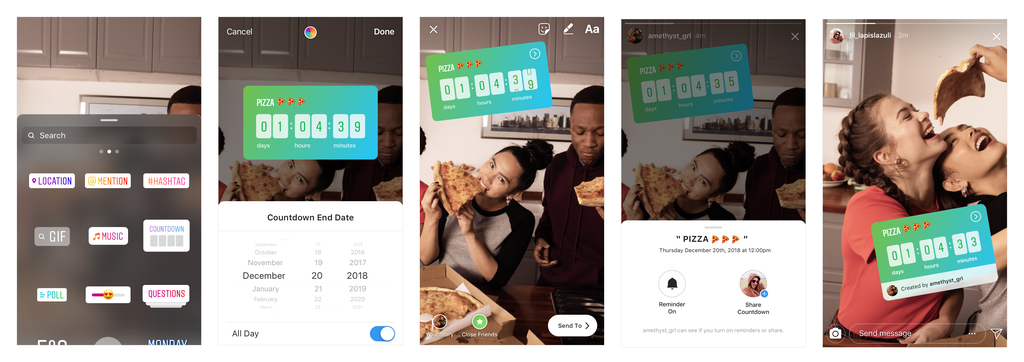
Countdowns in Stories

Users can now add interactive countdown stickers to Instagram stories.

Marketers can use this feature to countdown to an event, like a product launch or a webinar.

Ecommerce retailers can also use countdown stickers in stories to remind followers about a limited-time offer that’s expiring soon. Or one that’s about to start.

After a countdown sticker is created the first time it will be readily available to reuse until the countdown ends.

Instagram Adds New Ways to Engage With Followers

Instagram Adds New Ways to Engage With Followers

Other users who see the countdown can follow it, which will allow them to receive a notification when the countdown is over.

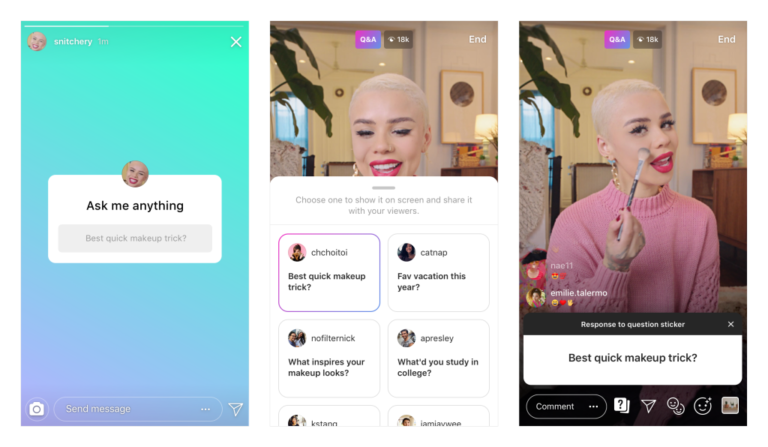
Questions in Instagram Live

Question stickers can now be utilized during live videos, allowing users to receive questions from their followers and answer them in real-time.

Live videos are already a popular outlet for answering followers’ questions.

However, if there are a lot of people asking questions at once, it’s easy to lose track of the good questions.

Also, people joining the stream part-way through might have no idea when the person in the video is talking about.

With question stickers in live videos, the person in the video can easily see all the questions, and viewers will be able to see the question currently being answered.

See an example below:

Instagram Adds New Ways to Engage With Followers

Instagram Adds New Ways to Engage With Followers

These features are available on iOS and Android starting today. Broadcasting live videos is only available on iOS, but they can be viewed by users on Android.

More Resources

Subscribe to SEJ

Get our daily newsletter from SEJ’s Founder Loren Baker about the latest news in the industry!

Ebook

http://tracking.feedpress.it/link/13962/10917006


Twitter Rolls Out ‘Show Latest Tweets’ Button by @MattGSouthern

ADVERTISEMENT

Twitter now offers a way for users to quickly toggle between latest tweets and top tweets.

An update rolling out today on iOS adds a button to the top right-hand corner of the app while viewing the timeline.

Just tap it to switch to a reverse-chronological feed, and tap it again to go back to the algorithmic feed.

See an example below:

Twitter announced back in September that it was working on offering this feature.

At that time, the company said it would be available within a matter of weeks.

Well, weeks turned into months, but now it’s finally here.

Early adopters of Twitter will remember the timeline was reverse-chronological for years by default.

In an effort to attract more casual users, Twitter eventually introduced a Facebook-like algorithmic feed.

Showing users what they’re most likely to be interested in has proven to be a successful move for Twitter, increasing both engagement and conversions.

However, there is still a demand to see the most recently published tweets.

In certain instances, such as a breaking news situation or sporting event, the latest tweets are what users would prefer to see first.

Twitter’s priority will still be surfacing top tweets, which means users will periodically have to re-enable the ‘latest tweets’ feed.

At least there’s now an option to immediately view recent tweets without digging deep into the app’s settings.

As mentioned, this feature is rolling out now on iOS, but is said to eventually be available on Android and desktop as well.

More Resources

Subscribe to SEJ

Get our daily newsletter from SEJ’s Founder Loren Baker about the latest news in the industry!

Ebook

http://tracking.feedpress.it/link/13962/10916867


Facebook Backtracks on Changing Chatbot Subscription Messaging Policies by @MattGSouthern

ADVERTISEMENT

Facebook will no longer be changing its subscription messaging policies, which would have affected chatbots.

We reported last month that Facebook was making a change to chatbot permissions, and giving pages until December 31st to comply with the new policy.

The policy change would have impacted the ability of chatbots to send subscription messages.

Subscription messages are non-promotional messages that can be automatically sent to users at any time, such as news updates or alerts from apps.

If your Facebook page has a chatbot that sends subscription messages, you can disregard our previous report.

Facebook recently stated in an update:

“As we continue to review our Subscription Messaging policies, developers provided access to send messages via app-level permissions may continue to do so until further notice. We still encourage developers to migrate to the Page-level permission as we evaluate potential updates to this policy.”

Pages no longer have to be granted permission from Facebook to send subscription messages, at least for now.

If you have already migrated to page-level permission, well, you’re a step ahead. Facebook may still decide to implement a policy change in the future.

More Resources

Subscribe to SEJ

Get our daily newsletter from SEJ’s Founder Loren Baker about the latest news in the industry!

Ebook

http://tracking.feedpress.it/link/13962/10913792


Top social media trends for 2019

social media trends 2019

How will the social media landscape change in 2019? Here are the key trends you need to consider for a successful marketing strategy.

Social media marketing needs to be frequently adapted to the changing trends. The rapid pace that social media platforms evolve requires from marketers to be alert if they want to maintain successful tactics.

2018 had been a busy year for all social media platforms. There were lots of positive and negative stories that had to do with their usage and it’s now time to review our social marketing strategies.

Here’s a closer look at the key trends of the year and how they will affect 2019 to help you proceed to the necessary changes to your tactics.

Messaging will grow even more

Messaging apps have already passed social media apps in usage and it seems to be a trend that will dominate 2019. People are moving beyond public posts on social media to private messaging, whether it’s simply about reaching their friends or even to stay in touch with their favorite brands.

What makes messaging interesting is that brands can find the much-desired engagement that they’re seeking by understanding how people use messaging apps.

Back from 2017, marketers believed that messaging is the first trend that will affect their social strategies.

WhatsApp, Messenger, Viber, WeChat hold a large percentage of the messaging market and they already introduced additional features to go beyond messaging, from Stories and news updates to automated bots for customer service and e-commerce functions.

Source: Statista

There is a whole new world to try out as a brand and we’re already seeing big brands and publishers tapping into the messaging trend.

I’ve asked Debbi Dougherty, Head of B2B Marketing and Communications at Rakuten Viber, on how brands can use messaging apps as a growing trend and here’s what she said:

“Moving into 2019, media will continue to seek ways to find its place with younger generations. Tapping into these audiences will be impossible without the presence of a centralized location where users can conveniently interact with content. Messaging apps offer the most ideal platform to achieve this, providing ease-of-use and personalized experiences that aren’t possible through traditional channels. For newspapers, in particular, their ability to transition onto social platforms like messaging apps is critical to the future of their readership. It not only helps them extend their reach globally, but gives them access to an entirely new demographic of users.

The truth is, the amount of time people spend on messaging apps has grown exponentially and is much higher compared to any other platform, including social media. Brands need to recognize this and adjust accordingly.”

Data breaches make trust more important than ever

The reason that messaging apps became even more popular is the growing lack of trust in social networks.

It’s been a turbulent year for Facebook, for example, which made many users uncomfortable in sharing their data.

Privacy concerns are increasing and it makes all social media platforms realize that trust is crucial. Facebook is learning the lesson the hard way that you need to be more mindful about the use of data.

As a brand, the growing discussion about social data and privacy concerns brings out the importance of building trust with your audience.

It’s useful for a brand to be transparent with its audience, whether it’s about admitting their mistakes or even to update their audiences on a recent change. Such factors can help their customers trust them and even be more open to hearing more from them in future campaigns.

Narrowing down the focus on specific channels 

Social media marketing is becoming more competitive and the most successful professionals realize that you need to focus on the best-performing channels for your business.

Gone are the days when you had to join Facebook simply because ‘everybody was there.’ Nowadays, it’s more important to go after niche audiences that are relevant to your business. There’s no need to broadcast the same message to all platforms if you don’t see a successful result from it.

Don’t be afraid to limit down your work to two channels, for example, if you’re noticing that these two channels will bring you the best ROI.

We can all start the new year by making the most of our time and spending it on the channels that are only worth our attention.

The more distractions we are having, the higher the chances to lose our focus. Start by analyzing where your audience is and which channels work better for your business goals.

Review your current performance and set goals to improve it in the right direction that you want to move.

The ad spend is increasing but you’ll need to consider ad saturation

Social media advertising has been on the rise the last few years. We are now able to create social ads in multiple channels and it’s up to us to decide on the objectives and the type of ads that we want to use.

There has been an increasing success for many brands that used paid social in the marketing mix. It’s no surprise that there is a growing ad spend across marketers.

For example, Instagram’s level of engagement has intrigued more marketers to increase their ad spend to the channel, both on the feed and the Stories.

As Facebook was becoming more saturated with the existing competition, Instagram started showing up as a great alternative to promote your brand.

A growing ad spend indicates the increasing interest in a platform, but it can also signal the start of an increasing cost to promote your business.

Instagram Feed and Stories seem to bring a good ROI for many brands, but what if more marketers create ads for the specific platform?

2019 will probably see an even further increase to marketers’ social ad spend, with Instagram growing in popularity.

However, it’s good to consider that it’s not a good idea to rely too much on one platform, either for organic or paid growth.

There is only a set space for ads in each platform so the competition may push the costs to increase.

Videos, podcasts, and live streaming

Blog posts can still be effective in 2019. Long-form posts can still engage readers, provided that they are appealing and properly formatted to facilitate the reading experiences across all devices.

Content consumption though goes way further than written text, with videos and podcasts seeing great success.

From the rise of YouTube to the introduction of IGTV, social media platforms were always interested in highlighting video content.

Facebook has even adjusted their algorithm to ensure that video posts show up more frequently on our feeds.

Video marketing is becoming more appealing both for brands but also for users who notice the content that stands out.

It’s only a matter of time until videos take over the whole social media world. 2019 will be the year that more brands will experiment with different types of video among different channels:

  • Short videos with captions are really appealing to mobile users and are also accessible to everyone. They can be found on any social media platform with Facebook favoring them in their algorithm. They can make really effective ads and they’ve already been used quite extensively from ads.
  • Vertical videos on Snapchat and Instagram Stories grow really fast in popularity and we already see many ads in a vertical format. It’s a format that will grow even more like a trend due to the improved viewing experience in mobile screens.
  • Long videos of powerful storytelling can still keep an audience engaged. Whether it’s YouTube, Facebook, or even IGTV, there is an increasing need for video stories that can be interesting enough to convince the viewers to watch more than a few seconds.
  • Live streaming is also another big trend that is now available across many different platforms. Users turn into broadcasters and brands become publishers to come closer to their audience. There are numerous opportunities to benefit from a live streaming strategy.

Except for videos, podcasts have also seen a growing success. Audio content is bringing the radio days back as a great way to catch up with your favorite stories and brands when you’re on the go.

More marketers are experimenting with podcasts, either to build their own personal brand or to promote their business. What makes podcasts special is the fact that they still focus on the content rather than the promotion. People subscribe to a podcast because they are interested in the content, whether it comes from a brand or another person.

AR to become more mainstream

Social media and AR are making a good combination the last few years and it’s only a matter of time until we see an even more applied use to further channels.

We have already seen how brands involve AR to facilitate the customer experience. Augmented reality can make the brand message engaging, fun and possible more actionable. Having the option to try out, for example, a pair of glasses before buying them can lead to an increased number of sales.

Facebook is greatly investing in AR in an attempt to dominate the field, which means that they understand the potential that this investment may bring.

They have already announced the introduction of AR ads to make social commerce more appealing. Moreover, AR Camera effects are also available in Messenger to ensure that messaging and customer experience will keep improving.

The goal is to keep the users to the platform, while brands can capitalize the trend by seeing an improved customer satisfaction.

What do all these trends mean?

Social media marketing is going towards a stage that focuses more on ROI, new technologies and a trusting relationship between the brand and the customers.

The only way to survive in-between data breaches, emerging technologies and new platforms is to ensure that you:

  • Understand your audience
  • Review your social media marketing strategy
  • Allocate time and budget to new tools and technologies
  • Keep your focus on what works
  • Do your best to build trust with your users in every campaign

Related reading

tool to see page authority within your website

bing ads trending queries and broad match

Top social media trends for 2019


Social Media Surpasses Traditional Newspapers as a Primary News Source [STUDY] by @MattGSouthern

ADVERTISEMENT

For the first time, more US adults are saying they regularly get news from social media compared to newspapers.

In a study from Pew Research Center, 20 percent of US adults say they often get their news from social media, while 16 percent turn to newspapers.

That means social media is now the fourth most popular source of news.

Television is still the most popular news source by a wide margin, although it has been on a steady decline over the past three years.

Websites are growing as a news source and, surprisingly, radio is growing as well.

Social Media Surpasses Traditional Newspapers as a Primary News Source [STUDY]

Social Media Surpasses Traditional Newspapers as a Primary News Source [STUDY]

As the study notes, when combining news websites and social media, the margin is much smaller.

“And when looking at online news use combined – the percentage of Americans who get news often from either news websites or social media – the web has closed in on television as a source for news (43% of adults get news often from news websites or social media, compared with 49% for television).”

Pew included streaming devices on TVs for the first time since conducting this study, with 9 percent of respondents saying they often use those to get news.

The study broke down the results by age groups, revealing that older adults are more likely to get news from TV, while younger adults are more likely to get news online.

Percent of US adults who regularly get news from television:

  • 81 percent of people ages 65+
  • 65 percent of people ages 50-64
  • 36 percent of people ages 30-49
  • 16 percent of peoples ages 18-29

Look how the data is reversed when it comes to social media.

Percent of US adults who regularly get news from social media:

  • 8 percent of people ages 65+
  • 14 percent of people ages 50-64
  • 22 percent of people ages 30-49
  • 36 percent of peoples ages 18-29

Interestingly, websites are most popular with middle-aged adults.

Percent of US adults who regularly get news from websites:

  • 28 percent of people ages 65+
  • 28 percent of people ages 50-64
  • 42 percent of people ages 30-49
  • 27 percent of peoples ages 18-29

What’s also notable about this data is that young and middle-aged adults are less likely to get their news from a single source compared to older demographics.

Subscribe to SEJ

Get our daily newsletter from SEJ’s Founder Loren Baker about the latest news in the industry!

Ebook

http://tracking.feedpress.it/link/13962/10906230


12 Tips to Finding Social Media Zen by @lisabuyer

ADVERTISEMENT

Feeling peaceful, fulfilled, and relaxed as a social media marketer?

*spoiler alert*

Not if Facebook has anything to do with it.

Oh, and all the Lit and Yaas stickers on Instagram you thought were so magnetic and romancing. Flames.

Fake news, full feeds, fast unfollows.

It’s stressful, painful, and even sometimes dismal.

Social media trust has taken a nosedive leaving brands scrambling to figure out a functional sales funnel.

Once the golden child of digital marketing, social media continues to shock, surprise, seduce, defy, and when done right, even sell.

Let’s remind ourselves, there is no autopilot, no snooze button in this current state of marketing

Social media famously does not allow marketers to get too comfortable.

What’s the solution?

Stay clear and focused and know how to stay in the social media zen zones.

Zen Channels

LinkedIn

Known as the most trusted social media network according to 2018 The Digital Trust Report, LinkedIn is experiencing a love fest with its professional user base.

Minus the algorithm headaches and plus the newer features such as live video, positive network vibes, engagement, and exposure possibility are at an all-time PR high.

“LinkedIn is by far the easiest network in the world to go viral on,” said LinkedIn Ad expert AJ Wilcox.

While every network is trying to suppress and show less to their users, LinkedIn wants to show more.

Anytime someone hits “Like”, “Comment”, or “Share”, that update is shown to part of that person’s network.

If you share things that make people want to interact, you’ll get a ton of views from people outside your immediate network, said Wilcox.

Back to the trust factor. People also feel safe sharing professional content on LinkedIn because it’s the acceptable place for it.

That means when you share work-related content, your great aunt won’t be commenting on how proud of you she is, and your work colleagues will chime in.

Pinterest

If you are looking for cooking, shopping, decorating, dieting, or researching just about anything, Pinterest is chanting Ommmmm.

Good news for the brands if your audience is on Pinterest, there is still lots of opportunities to drive referring traffic.

With more than 250 million people using Pinterest monthly, Pinners span the globe, but they all share an important trait: they’re actively seeking help and inspiring ideas.

People use Pinterest to plan for what’s important in their lives.

What marketers need to know is that it’s still possible to optimize on Pinterest to:

  • Influence buying power.
  • Drive significant referring traffic.
  • Reach your audience for less than other social networks.

Twitter

With its “presidential” effect, Twitter has had a bit of a rebirth since the last election.

With more than 326 million active monthly users, Twitter’s speed, freedom of speech, and potential abuse make it a social network to thrive or dive.

Don’t underestimate the power of Twitter’s 280-character length.

One of the fastest and most powerful ways to break news and persuade the media is with Twitter.

If you are looking to engage with the media, start a movement like #MeToo or share your brand’s thought leadership, news or opinions, head over to Twitter.

Warning: Just make sure you are not under the influence, tired, or in a bad mood. One wrong tweet and you could end up in a not-so-positive news story.

Be intentional in who you follow and why.

Attention is only valuable if you are in front of the right audience.

YouTube

Who would have believed YouTube stars would be more influential than mainstream media?

Finding fame has never been easier than YouTube – just ask Justin Beiber or this year’s top YouTube earner.

Meet the 7-year-old boy named Ryan who earned a cool $22 million last year playing with toys and uploading YouTube videos.

Seems pretty peaceful and low stress to me.

12 Tips to Finding Social Media Zen

12 Tips to Finding Social Media ZenDigging a little deeper into Ryan’s YouTube channel, you will see all the magic happened despite not having any effort into optimization.

None of the video descriptions include links back to any website. Even the About section does not have working links – an online marketer’s nightmare or field day.

What’s the secret to Ryan’s YouTube Success?

Let’s learn from Ryan.

  • First, film yourself opening a toy. Ryan plays with everything from dinosaurs and Legos to Disney action figures and surprise eggs.
  • Then, explain all the toys’ features while playing with them.
  • Finally, upload a video to YouTube. Cha-ching, you’re a multi-millionaire!

A few things brands should take notice – sound quality was not ideal, the videos are far from perfect quality, and there was no real strategy.

Instagram

All brands aboard. Get ready to hit saturation.

Once everyone joins the party, it’s not as exclusive and things seem diluted and fabricated.

Instagram still shows signs of organic opportunity but with its growth pace of reaching 1 billion users, the future looks harsh.

So what can you do to stay zen?

Post more authentic content to filter out from the people who try to only post content that makes others believe they live in this great fantasy world where nothing goes wrong.

“Like any social network ages, it loses its niche as wider adoption occurs. Instagram is starting to go through that, and it’s harder and harder to avoid the Instamodels and the Joneses,” Wilcox said.

It’s hard to tell what’s real and what’s filtered, leaving users skeptical.

Hairstylist Kat Chase lets her followers know how to spot a fake on Instagram.

And then this is where users turn to for advice and offer reliable sources to her stream.

Instagram is breaking new barriers when it comes to reporting news, giving Twitter a run for its breaking news money.

If your audience is scrolling Instagram, this is where you break news and make news.

Everyone must know one thing – you can’t just post anything wherever, whatever.

Commit to the feed and tell a story in Stories.

Facebook – The ‘F’ Word

The good news: everyone and your grandma is on Facebook.

The bad news. Same.

Facebook offers more opportunity than any other social network. With more than 2 billion users it shows no sign of losing.

One slight problem, it’s complicated, organic reach is dead, and Facebook marketing “gurus” are spin selling advice.

What do you do?

Stay in the zen zone by focusing on what’s working right now on the Facebook channel.

Right now, it’s Groups, Messenger, chatbots, and touches of certain types of video with hints of virtual reality signals.

What about Facebook ads? It depends on the talent and agency you have behind the Facebook Ads Manager.

“Facebook ads definitely work but I see a wide range of experience out there and so you have to make sure you are working with the right person or agency,” said Andrea Vahl, co-author of Facebook Marketing All-in-One for Dummies. “There can be a tendency for agencies or consultants to say they can do ‘everything’ but Facebook ads change quickly and tactics that worked last week don’t work this week. An agency needs to keep on top of the latest trends and have experience running Facebook ads in the niche you are in.”

When it comes to creating groups in your Facebook Group, MobileMonkey’s Director of Content Marketing Virginia Nussey shares her ways to find zen:

  • Being in it! I’m available not just during business hours but any time I’d talk to anyone (friends, family, etc.) because this isn’t just work, it’s a community.
  • Live videos on a regular schedule! Every Friday I get to do a 30-minute live stream to the group. The group has 8,500 members and these videos get over 900 views! That’s over 10 percent engagement! Each video gets more views as the reliability and momentum and connection builds.

12 Tips to Make the Most Out of Your Social Media Channels Today

So how can you make the most out of your social media channels and find the zen zone?

Here are 12 ways.

1. Personas, Please

Try tools such as Xtensio to create personas, Typeform to collect info, and Hotjar to create surveys.

2. Measurable Objectives

“If you can’t measure it, you can’t improve it,” is a famous quote by Peter Drucker.

3. Blend Paid, Owned & Earned

Sure social ads can bring immediate gratification.

Add in the investment of things like quality blog content and gaining media exposure, and you’re on your way to the zen zone.

Pay it forward using social ads.

4. Adjust Frequently & Fail Fast

Why stay in a broken relationship?

If you see something is not working in social, make an adjustment and move on.

5. Create an Editorial Calendar

This can start in a Google Calendar, Excel, or Google Doc – and even platforms such as Asana.

6. Tap into Video or Fail

New tool features (like Instant Image Resizer by Promo and Lumen5 square and vertical video creator) can make your life easier.

7. Write to Your Audience like You Mean It

Generic content with a specific audience in mind does not work.

Find their pain points and help them solve problems with purposeful content.

8. Creativity Is the New Productivity

Use tools to help be creative and efficiently such as Hemingway, Grammarly, and AnswerThePublic.

9. Publish in New Horizons

Medium, LinkedIn long-form posts, Facebook Live, and guest post articles will help you reach new audiences, gain more referring traffic, and possibly boost your SEO.

10. Optimize Your Way to the Top of Search & Social

It’s the law of attraction.

If you want to receive more organic exposure, you need to focus on organic traffic generators such as keywords, links, and visuals.

Remember each social network is its own search engine.

Keep those SEO best practices for social media, too.

11. Delight Customers & Be There

Word of mouth is your marketing karma in 2019.

If what goes around comes around is true, paying attention to your community holds the key to success.

12. Be First to the Next Big Thing

Pay attention to new channels popping up like Facebook Spaces and AltSpaceVr and start building community early.

When it comes to finding the zen zones of social media it all boils down to being present, timing, focus, and staying connected to what matters most to your business objectives.

More Resources:


Image Credits

Featured Image: Created by author, December 2018

Subscribe to SEJ

Get our daily newsletter from SEJ’s Founder Loren Baker about the latest news in the industry!

Ebook

http://tracking.feedpress.it/link/13962/10905128


Facebook Search Ads are Now Available to Select Businesses in North America by @MattGSouthern

ADVERTISEMENT

Facebook is now testing ads in search results, which are available to businesses in the automotive, retail, and e-commerce industries.

The ads will be displayed to users in the United States and Canada.

Facebook search ads may be expanded to more countries based on the results of this initial test.

It’s fair to say that Facebook is now offering an ad product that competes with Google’s search ads.

Although Facebook search ads will obviously be limited to appearing on Facebook, they are still competing for the same advertising dollars.

Businesses now have to ask themselves if it would be more beneficial for their ads to show up in Google search or Facebook search.

How Facebook Search Ads Work

When creating a campaign in Facebook Ads Manager, businesses in eligible categories will see ‘Search Results’ as a placement option.

The search results option can be selected as an additional placement when creating news feed campaigns.

Businesses cannot run search ads without also running news feed ads.

The ad format itself will look similar to news feed ads, containing the same headline, image, and body text.

Facebook search ads will appear either as a static image or in a carousel format. They will be clearly labeled with a “Sponsored” tag.

Unlike Google ads, there is no option to select specific keywords or phrases for Facebook search ads.

Ads will be eligible to appear in searches for terms related to the business’s offerings, in both the primary Facebook search function and Marketplace searches.

More Resources

Subscribe to SEJ

Get our daily newsletter from SEJ’s Founder Loren Baker about the latest news in the industry!

Ebook

http://tracking.feedpress.it/link/13962/10898882