OpenAI mocks Musk’s math in suit over iPhone/ChatGPT integration
And most glaringly, Apple noted that xAI is not a rival or consumer in the smartphone industry, where it alleges competition is being harmed. Apple urged the court to reject Musk’s theory that Apple is incentivized to boost OpenAI to prevent xAI’s ascent in building a “super app” that would render smartphones obsolete. If Musk’s super app dream is even possible, Apple argued, it’s at least a decade off, insisting that as-yet-undeveloped apps should not serve as the basis for blocking Apple’s measured plan to better serve customers with sophisticated chatbot integration.

“Antitrust laws do not require that, and for good reason: imposing such a rule on businesses would slow innovation, reduce quality, and increase costs, all ultimately harming the very consumers the antitrust laws are meant to protect,” Apple argued.

Musk’s weird smartphone market claim, explained

Apple alleged that Musk’s “grievance” can be “reduced to displeasure that Apple has not yet ‘integrated with any other generative AI chatbots’ beyond ChatGPT, such as those created by xAI, Google, and Anthropic.”

In a footnote, the smartphone giant noted that by xAI’s logic, Musk’s social media platform X “may be required to integrate all other chatbots—including ChatGPT—on its own social media platform.”

But antitrust law doesn’t work that way, Apple argued, urging the court to reject xAI’s claims of alleged market harms that “rely on a multi-step chain of speculation on top of speculation.” As Apple summarized, xAI contends that “if Apple never integrated ChatGPT,” xAI could win in both chatbot and smartphone markets, but only if:

1. Consumers would choose to send additional prompts to Grok (rather than other generative AI chatbots).
2. The additional prompts would result in Grok achieving scale and quality it could not otherwise achieve.
3. As a result, the X app would grow in popularity because it is integrated with Grok.
4. X and xAI would therefore be better positioned to build so-called “super apps” in the future, which the complaint defines as “multi-functional” apps that offer “social connectivity and messaging, financial services, e-commerce, and entertainment.”
5. Once developed, consumers might choose to use X’s “super app” for various functions.
6. “Super apps” would replace much of the functionality of smartphones and consumers would care less about the quality of their physical phones and rely instead on these hypothetical “super apps.”
7. Smartphone manufacturers would respond by offering more basic models of smartphones with less functionality.
8. iPhone users would decide to replace their iPhones with more “basic smartphones” with “super apps.”

Apple insisted that nothing in its OpenAI deal prevents Musk from building his super apps, while noting that from integrating Grok into X, Musk understands that integration of a single chatbot is a “major undertaking” that requires “substantial investment.” That “concession” alone “underscores the massive resources Apple would need to devote to integrating every AI chatbot into Apple Intelligence,” while navigating potential user safety risks.

https://arstechnica.com/tech-policy/2025/10/openai-mocks-musks-math-in-suit-over-iphone-chatgpt-integration/


OpenAI’s Sora 2 lets users insert themselves into AI videos with sound

On Tuesday, OpenAI announced Sora 2, its second-generation video-synthesis AI model that can now generate videos in various styles with synchronized dialogue and sound effects, which is a first for the company. OpenAI also launched a new iOS social app that allows users to insert themselves into AI-generated videos through what OpenAI calls “cameos.”

OpenAI showcased the new model in an AI-generated video that features a photorealistic version of OpenAI CEO Sam Altman talking to the camera in a slightly unnatural-sounding voice amid fantastical backdrops, like a competitive ride-on duck race and a glowing mushroom garden.

Regarding that voice, the new model can create what OpenAI calls “sophisticated background soundscapes, speech, and sound effects with a high degree of realism.” In May, Google’s Veo 3 became the first video-synthesis model from a major AI lab to generate synchronized audio as well as video. Just a few days ago, Alibaba released Wan 2.5, an open-weights video model that can generate audio as well. Now OpenAI has joined the audio party with Sora 2.

[embedded content]

OpenAI demonstrates Sora 2’s capabilities in a launch video.

The model also features notable visual consistency improvements over OpenAI’s previous video model, and it can also follow more complex instructions across multiple shots while maintaining coherency between them. The new model represents what OpenAI describes as its “GPT-3.5 moment for video,” comparing it to the ChatGPT breakthrough during the evolution of its text-generation models over time.

Sora 2 appears to demonstrate improved physical accuracy over the original Sora model from February 2024, with OpenAI claiming the model can now simulate complex physical movements like Olympic gymnastics routines and triple axels while maintaining realistic physics. Last year, shortly after the launch of Sora 1 Turbo, we saw several notable failures of similar video-generation tasks that OpenAI claims to have addressed with the new model.

“Prior video models are overoptimistic—they will morph objects and deform reality to successfully execute upon a text prompt,” OpenAI wrote in its announcement. “For example, if a basketball player misses a shot, the ball may spontaneously teleport to the hoop. In Sora 2, if a basketball player misses a shot, it will rebound off the backboard.”

https://arstechnica.com/ai/2025/10/openais-sora-2-lets-users-insert-themselves-into-ai-videos-with-sound/


TikTok Announces New Ad Solution for Travel Industry

TikTok knows its platform is a popular destination for travel-related content. To help brands connect to potential travelers during both the discovery and booking phases, the app is introducing Travel Ads powered by Smart+.

This new ad solution offers advertisers the ability to automatically promote their hotels, flights, and destinations at scale using personalized, catalog-integrated creatives.

“Travel on TikTok goes beyond the For You feed, unlocking real-life travel experiences,” said David Hoctor, TikTok’s head of US verticals, travel, and gaming. “With TikTok Travel Ads, advertisers can leverage dynamic ad creatives and travel-first intent signals to seamlessly guide the TikTok community from discovery to booking—making every swipe a step toward conversion.”

TikTok Travel Ads feature optimization models that identify high-intent audiences and match them with travel offerings based on their in-market activities and preferences. Advertisers can also combine TikTok’s travel intent model with their catalog data to deliver relevant, personalized travel ads at scale across the entire journey, and then use Smart+ AI tools to automate parts of their campaign, including setup, creative generation, and delivery optimization.

Advertisers can also tap into an enriched travel format that showcases hotels, flights, and destinations through visually engaging, dynamic ad formats, boosting engagement and driving incremental conversions.

TikTok Travel Ads offers brands a choice of three creative formats, including single video, catalog video, and catalog carousel.

Using single video, a hero video can be made shoppable with personalized travel cards that display details such as hotel name, flight route, destination, or price. If they opt to use catalog video ads, they can be built from catalog content, paired with relevant travel cards and calls to action to promote a property, destination, or experience.

While using the catalog carousel, a scrollable carousel will automatically pull images from a catalog, turning them into interactive ads with a strong call to action.

TikTok knows it has a big base of travel enthusiasts on its platform with 66% of users saying it’s their most helpful source of travel inspiration. In addition, users noted they are 2.6 times more likely to book an experience after searching on TikTok.

https://www.adweek.com/social-marketing/tiktok-travel-ads-smart-plus/


Reddit Introduces Reddit Pro Tools for Publishers

Reddit is introducing a new set of tools making it easier for media outlets to share and track content across the popular social media platform.

Reddit Pro tools for publishers is built with features designed to help publishers find and engage directly with knowledge seekers on Reddit.

Now in beta mode, the platform is opening a test waitlist for its suite of three new tools featured within Reddit Pro, which it expects to be available to all users sometime in 2026.

Located within the new Links tab, the new tools include obtaining article insights, which allows publishers to track which of their stories are being shared on Reddit. They will also be able to see the specific communities their stories are shared in, and monitor key metrics like views, upvotes, and clicks.

Publishers will now also be able to sync their RSS feeds and automatically import their articles to Reddit Pro, making them instantly shareable across the social media platform.

What is a set of new features without artificial intelligence? The surging tech function will also be part of the featured tools, giving publishers AI-powered community suggestions for where to post their articles. Reddit said this ensures that their content finds the right audiences and generates meaningful conversations.

The Atlantic, The Hill, NBC News, and The Associated Press are some of the publishers that have already been alpha-testing Reddit Pro tools for publishers.

Also coming soon for Reddit users will be an improved way to read articles on the platform. Articles posted directly on the application will now be enabled with a swipe-up feature to view comments and join in the conversation.

This feature should be of great benefit to Reddit as it ensures continuous engagement on the platform.

https://www.adweek.com/media/reddit-introduces-reddit-pro-tools-for-publishers/


Instagram Now Available on iPad

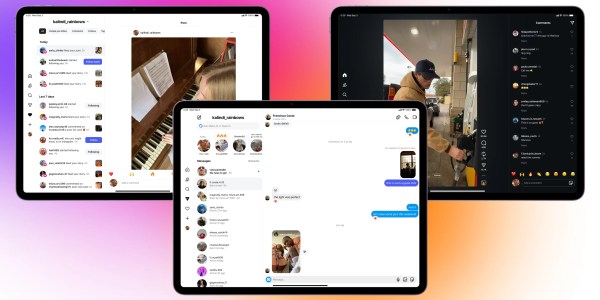
Instagram launched a dedicated application for the Apple iPad Wednesday. 

Taking advantage of the bigger screen, Instagram said its iPad app was designed for “lean-back entertainment.” Reels will be the prominent feature when the app is launched, with Stories still positioned at the top.

New for the Instagram for iPad app is a Following tab, which the Meta-owned social media platform said enables users to keep up with the accounts they follow. The app provides multiple viewing options in the Following tab, including All, Friends, and Latest.

All lets users see recommended posts and Reels from the accounts they follow. Friends allows users to see recommended posts and Reels from accounts they follow and follow back. And Latest displays posts and Reels from followed accounts in chronological order.

Taking advantage of the additional real estate, Instagram for iPad allows users to view messages and notifications with layouts that display both tabs. Additionally, when watching Reels, the comments section can be accessed while the Reel stays at full size. 

Instagram joins WhatsApp in launching dedicated apps for the iPad. WhatsApp’s app for the tablet launched in May, with users able to enjoy the same features commonly available on the iPhone or desktop version. 

This includes making video and audio calls with up to 32 people, sharing screens, and using both front and rear cameras.

https://www.adweek.com/media/instagram-now-available-on-ipad/


LinkedIn to Verify More Businesses and Key Job Titles

LinkedIn announced a set of new verification options Thursday, including the expansion of its Company Page verification, as it seeks to build more authenticity, trust, and credibility on its platform.

The professional network said companies with a Premium Company Page subscription will be eligible for the Company Page verification badge. This feature was previously available to a limited number of organizations, as well as by request.

Other business-level verifications being introduced include recruiters and talent acquisition specialists verifying their workplace on their profile. The addition of this badge helps recruiters build trust with potential candidates and also protects those clients from scams or fraudulent accounts. 

Finally, LinkedIn is introducing a C-suite verification feature, including executive director, managing director, and vice president. This badge helps prevent executive impersonation, along with protecting the integrity of leadership representation on the platform.

“These updates help ensure that the people and organizations you engage with on LinkedIn are who they say they are,” LinkedIn vice president of product Oscar Rodriguez said in a statement. He added that these features strengthen “trust across every interaction, whether you’re a business building credibility, a recruiter interacting with job seekers, or an executive representing your company.”

https://www.adweek.com/media/linkedin-to-verify-more-businesses-and-key-job-titles/


With Celebrity Campaigns, Risk Management Matters More Than Reach‬


Outrage spreads faster than joy‬‭. So it makes sense‬‭ that we’ve seen a recent uptick in‬ celebrity-driven campaigns generating not just attention, but firestorms.

Sometimes the‬ outrage is deliberate. Sometimes it’s collateral damage. Either way, one outcome is the same:‬ free reach, fueled by algorithms that reward high-arousal emotion.‬

‭The rage-bait playbook is simple: Elicit a strong emotional reaction, watch comments and‬ stitches flood in, and enjoy millions of impressions … for better or worse.‬

Many brands hope that controversy will be good for business. But outrage is a dangerous‬ currency. Sometimes it pays off. Sometimes it doesn’t.‬

‭Why rage travels faster‬

‭Behavioral science tells us‬‭ humans are wired to notice‬‭ threats more than rewards‬‭. Anger sticks‬ because it keeps us scrolling, sharing, and reacting.‬‭

Platform algorithms are built to reward‬‭ that‬ engagement, so outrage gets amplified by design. So many examples, even just in the last few‬ weeks, have shown that outrage often spills into mainstream media.‬

‭Risk management > provocation‬

‭This isn’t about condoning or condemning rage bait. The reality is that the key to any campaign‬ flirting with controversy is risk management. Brands must weigh the positives against the‬ negatives and scenario-plan for the potential upside, the potential fallout, and the fire you’re‬ willing to stand in.‬

‭In any campaign that has a celebrity collaboration or component, the stakes are always higher.‬ A famous face magnifies both the reach and the risk. As someone who has led brand and‬ celebrity collaborations with hundreds of brands in the past, it’s been fascinating to watch how‬ others’ brand collaborations have played out: Some collabs fueled by outrage delivered‬ a short-term bump. Others caused damage that will take longer to repair.‬

‭While outrage can be unpredictable, what you‬‭ can‬‭ control is the rigor you apply before launch to‬ manage the risk to your brand. For any brand looking to identify the risk and potential reward for‬ a celebrity collaboration, it’s imperative to follow a framework I call the Rage-Bait Risk Assessment Checklist.

There are six‬ things you should consider before partnering with a celebrity or influencer.

‭Match your fan base to your brand base‬

‭Does this celebrity’s following align with your core audience? If a star is embraced by the same‬ communities you’re trying to reach, the partnership will feel natural. If not, it risks looking forced‬—or worse, alienating—and you’ll spark more division than resonance.‬

‭Stress-test the message‬

‭Celebrity partnerships don’t exist in a vacuum. The talent’s persona will shape how your copy,‬ visuals, and slogans are received.

A line that feels clever in a script can take on a different‬ meaning once attached to a particular face. And in a world where campaigns are clipped and‬ memed in seconds, you need to know whether the punchline, or the backlash, will land on the‬ brand or the star.‬

‭Read the cultural room‬

‭Every celebrity carries cultural baggage into the spotlight. Past roles, public stances, or political‬ associations can all color how audiences interpret a campaign.

Sometimes that baggage works‬ in your favor and deepens the story. But misalignment, or a failure to anticipate sensitivities, can‬ quickly turn a brand moment into a cultural flashpoint.‬

‭Pick the partner you can stand behind‬

‭The best partnerships feel inevitable and authentic, not opportunistic. If a celebrity doesn’t fit‬ your brand values, your customers will notice immediately.

Ask whether loyal buyers would nod‬ in recognition or scratch their heads. And if controversy hits, could you credibly defend why this‬ was the right partner at the right time?‬

‭Put the ledger on the table‬

‭Every talent deal comes with a ledger: upside versus downside. On the plus side, a celebrity‬ can deliver reach, sales, and earned media buzz. On the flip side, a misstep could mean‬ boycotts, lost partnerships, or lasting reputational damage.

Before signing, decide whether the‬ payoff is worth staking your brand name on theirs.‬

‭Look beyond the initial buzz‬‭

Does this collaboration create a platform you can build on, or will it fizzle after a week? A‬ sustainable partnership keeps elevating your brand long after the first post goes live. If you’ll‬ spend more time managing fallout than building momentum, it’s not worth the investment.‬

‭Celebrity partnerships can’t be judged on reach alone. What matters is seeing the full picture:‬ the rewards, the risks, and the potential blind spots. Outrage may drive attention, but‬ preparedness is what will protect your brand.‬

https://www.adweek.com/brand-marketing/with-celebrity-campaigns-risk-management-matters-more-than-reach/


Meet the Brands Partnering With The Summer I Turned Pretty to Reach Gen Z

Amazon Prime Video’s The Summer I Turned Pretty’s final season is well underway, and brands are eager to reach the show’s fans.

The third season of the show debuted on July 16 with two episodes, receiving 25 million viewers globally in the first week, according to Amazon. That’s a 40% increase in viewership compared to the second season’s performance in the same time period. Additionally, the show’s viewership tripled from Season 1 to Season 3 in the first seven days. 

As the show’s popularity has grown as the series comes to an end, Amazon snagged deals with brands including Catbird jewelry, apparel brand Solid & Striped, and Sour Patch Kids that go beyond product placement.

ADWEEK rounded up the brands featured in the third season of The Summer I Turned Pretty.

Catbird

Jewelry brand Catbird scored an integration into one of the most talked about moments of the show: Jeremiah’s proposal to Belly in the second episode. Jeremiah proposes with Catbird’s dainty Diamond Fizz Ring, which generated lots of online chatter about its slight size.

Leigh Plessner, Catbird’s chief creative officer, told ADWEEK that the brand knew that the ring was going to be used in the show, but seeing how it was used and received by audiences was a fun moment. Within a month of the episode airing, Catbird saw a 1,900% increase in pageviews for the ring on the brand’s ecommerce site, according to Catbird.

Belly also wears Catbird’s 100 Summers Gold Chain with a daisy charm in the show.

The partnership between Catbird and The Summer I Turned Pretty came about after Opening Ceremony cofounder and the show’s stylist Carol Lim DMed Plessner’s personal Instagram account. They then created a seven-piece jewelry collection that’s available on Catbird’s website. It includes a gold bracelet that reads Belly as well as a shell charm. 

Catbird has collaborated with Phoebe Bridgers, Laufey, Jenny Slate, and the Metropolitan Museum of Art in the past. The goal is for partnerships to come from a place of real connection to the collaborative project, said Plessner. For The Summer I Turned Pretty, Plessner felt that jewelry was a big part of the show’s story and of Belly’s style evolution.

“Something that’s really special about the show is that even though the main characters are of a certain age, the fan base is across generation and gender,” said Plessner. “While the theory of reaching young people is true, there’s so much more to it.”

Sour Patch Kids

Still, the show heavily skews towards Gen Z and teens—a core demographic that Sour Patch Kids uses to vet its partnerships, said John Vasington, senior brand manager of candy at Mondelez International.

“To have a show that’s so popular amongst that audience—and so naturally integrates our brands in a way that feels really resonant—had us very excited to make things official and become official partners for season three,” said Vasington.

Sour Patch Kids and Swedish Fish—both owned by Mondelez International—were organically included in the second season of the show when Conrad buys Belly Sour Patch Kids while Jeremiah buys her Swedish Fish.

“Each brother and their storyline up to that point in Season 2 really aligned with the brands and the storytelling there,” said Vasington.

He pointed to Jeremiah’s sweetness fitting with Swedish Fish. Conrad is more reserved before opening up embodying the sour then sweet taste of Sour Patch Kids. 

For Season 3, Mondelez released exclusive Team Conrad and Team Jeremiah packs of Sour Patch Kids and Swedish Fish and watch party snack mixes. Ten thousand of the Team Conrad and Team Jeremiah packs were made to sell on Amazon. The packs are also for sale on teen-centric retailer IT’SUGAR. A handful of retailers including Krogers and Albertsons also received in-store displays featuring the Conrad and Jeremiah characters.

Solid & Striped

Solid & Striped’s integration into the third season of the show came from being organically part of the first season of the show when Belly wears two of the brand’s swimsuits. For Season 3, the apparel brand built a capsule collection with Lim. 

It’s the first time that Solid & Striped has done a brand integration and it felt like a natural fit for the brand, Ginger Lau, Solid & Striped’s design director, told ADWEEK.

“We chose to do it because Belly already wore Solid & Striped before we formalized the partnership,” said Lau. “We made sure that the pieces weren’t just placed, but felt like part of the storytelling.”

Solid & Striped’s products are available on the brand’s ecommerce site and on Amazon.

On social media, Solid & Striped noticed a surge in engagement about the show, especially among younger audiences, said Michelle Guiles, the brand’s COO. The collaboration drove 2.5 times higher engagement than the brand’s average social posts with notable increases in reach and follower count.

Coach 

Coach is also featured in the show, and is running traditional ads during breaks on the ad-supported tier of Prime Video.

The fashion brand also created a capsule line of bags inspired by the show. The collection of 21 pieces includes bag charms, a backpack, and quilted purses. Coach sold the products on its own ecommerce site as well as Amazon—although the collection is currently sold out on Amazon.

“It felt like a natural fit for Coach and Coachtopia because of the way the show’s themes of youth, transformation and self-discovery align with our brand values,” said Jennifer Yue, svp of strategy and consumer insights at Tapestry and Coach. “Our integration into the show has allowed us to be part of the story and create a cultural moment that resonates with Gen Z.”

https://www.adweek.com/convergent-tv/meet-the-brands-partnering-with-the-summer-i-turned-pretty-to-reach-gen-z/


ChapStick Taps Croud and Born Social to Revive Its Brand for Gen Z


ChapStick has appointed two agencies to revamp its iconic brand for a new generation.

Croud and Born Social will manage ChapStick’s U.S. social media business after a competitive review, with a remit spanning creative, influencer, and media planning.

The pitch began in April and moved quickly, with ChapStick selecting the agencies “within a couple of weeks,” according to Croud chief business officer Kris Tait. Their work together formally kicked off last week.

Multiple agencies were involved in the review, which was not run by a consultancy.

“That it was integrated from a media, influencer, and creative perspective, but underpinned by measurement, was the hook that won it,” Tait told ADWEEK. “They really bought into our strategy with how we work with creators.”

Born Social managing director Sarah Rainford added that ChapStick was drawn to the agency’s approach to influencer work. “A big focus for us is not giving our clients a black book of pre-chosen creators. It’s really finding the right people for the brand and for the brief,” she said.

According to COMvergence, ChapStick spent less than $15 million on U.S. media in 2024.

An Iconic Brand for a New Generation

ChapStick, owned by Suave Brands Co. and backed by private equity firm Yellow Wood Partners, is investing in social as it seeks to reintroduce itself to a new generation amid heightened competition in the skin and health care spaces.

Rainford said the brand’s new agencies will do that through a “full-service social” brief that will rely heavily on influencers. “They need to approach their younger market in a completely new, creative way,” she said.

Tait pointed back to ChapStick’s athletic, outdoorsy ads from the ’90s featuring celebrity athletes like Olympic skier Suzy Chaffee and highlighting ChapStick’s protective benefits for active lifestyles. “It’ll be interesting to see what we can do from that influencer and social space and get it back into that sort of realm,” he said.

The agencies highlighted how they use AI in influencer campaigns, such as with Croud’s proprietary InfluencerGPT, which benchmarks fair pricing for creators. “It can’t just be cool influencer work. It has to deliver,” Tait said.

Their first work together is expected to launch in Q4.

A PE-backed Offering

For Croud and Born Social, the former of which acquired the latter in 2022, the win is a proof point that their integrated offering is resonating. Where Born Social brings expertise in social media marketing, Croud offers media planning and buying know-how, Tait said.

“The really key intersection of skills is on the media planning side,” he said.

While Born Social still retains its brand, the two agencies pitch and service accounts together and share office space. The combined agencies are backed by private equity firm ECI Partners.

Croud’s client roster includes brands like Nespresso, Chime, and Timberland, while Born Social works with Guinness, Ford, Smirnoff, and Barclays.

https://www.adweek.com/agencies/chapstick-taps-croud-and-born-social-to-revive-its-brand-for-gen-z/


Study: Social media probably can’t be fixed

Ars Technica: I’m skeptical of AI in general, particularly in a research context, but there are very specific instances where it can be extremely useful. This strikes me as one of them, largely because your basic model proved to be so robust. You got the same dynamics without introducing anything extra.

Petter Törnberg: Yes. It’s been a big conversation in social science over the last two years or so. There’s a ton of interest in using LLMs for social simulation, but no one has really figured out for what or how it’s going to be helpful, or how we’re going to get past these problems of validity and so on. The kind of approach that we take in this paper is building on a tradition of complex systems thinking. We imagine very simple models of the human world and try to capture very fundamental mechanisms. It’s not really aiming to be realistic or a precise, complete model of human behavior.

I’ve been one of the more critical people of this method, to be honest. At the same time, it’s hard to imagine any other way of studying these kinds of dynamics where we have cultural and structural aspects feeding back into each other. But I still have to take the findings with a grain of salt and realize that these are models, and they’re capturing a kind of hypothetical world—a spherical cow in a vacuum. We can’t predict what someone is going to have for lunch on Tuesday, but we can capture broader mechanisms, and we can see how robust those mechanisms are. We can see whether they’re stable, unstable, which conditions they emerge in, and the general boundaries. And in this case, we found a mechanism that seems to be very robust, unfortunately.

Ars Technica: The dream was that social media would help revitalize the public sphere and support the kind of constructive political dialogue that your paper deems “vital to democratic life.” That largely hasn’t happened. What are the primary negative unexpected consequences that have emerged from social media platforms?

Petter Törnberg: First, you have echo chambers or filter bubbles. The risk of broad agreement is that if you want to have a functioning political conversation, functioning deliberation, you do need to do that across the partisan divide. If you’re only having a conversation with people who already agree with each other, that’s not enough. There’s debate on how widespread echo chambers are online, but it is quite established that there are a lot of spaces online that aren’t very constructive because there’s only people from one political side. So that’s one ingredient that you need. You need to have a diversity of opinion, a diversity of perspective.

https://arstechnica.com/science/2025/08/study-social-media-probably-cant-be-fixed/