Facebook Talks Data Portability With the FTC
The goal of the workshop is to examine the potential benefits and challenges to consumers and competition related to data portability.

In its comments, the social network discussed tools that are available to its users, including Download Your Information, Download Your Data (Instagram), Access Your Information and its recently introduced photo transfer tool.

Facebook also reiterated its commitment to the Data Transfer Project, a collaborative effort with Apple, Google, Microsoft, and Twitter that it joined in July 2018.

The company wrote in its comments to the FTC, “We remain committed to ensuring that the current product remains stable and performant for people, and we are also exploring how we might extend this tool, mindful of the need to preserve the privacy of our users and the integrity of our services. Our product decisions are not made in isolation. We’re informed by user interest, policy and regulatory conversations spurred, in part, by our white paper on portability, and our participation in the Data Transfer Project to gather insights from people, policy stakeholders and the developer community.”

Facebook pledged to extend its work on the Data Transfer Project in three areas:

  • Improving the reliability, performance and user experience of the product.
  • Adding new destination services for photos and video.
  • Supporting new use cases and data types.

The social network also examined the various questions surrounding what happens if one person wants to transfer data associated with another person, listing questions that could potentially be raised:

  • Should I be able to take my friends’ data to another service?
  • What are my friends’ rights to control their information in that scenario?
  • What if people want to export the contents of their phone’s address book or a list of their contacts’ birthdays to a new service?
  • Should a person’s contacts—whose information would be shared with the new service—have a say in whether the person may share the information?
  • Should I have the right to transfer a group photo uploaded by a friend if I’m in that photo?
  • Should I have the right to export content that I created jointly with other people, such as a shared photo album or a document where I drafted one-half of the text?

Facebook concluded, “Facebook supports the passage of comprehensive federal privacy legislation in the U.S., alongside dedicated portability legislation that can help guide the implementation of practical solutions. As policymakers and the commission consider both privacy and portability regulation in the U.S., it is important to keep in mind that harmonization of these regimes with existing laws will help both people and businesses reap the benefits of data portability.”

https://www.adweek.com/digital/facebook-talks-data-portability-with-the-ftc/


Facebook Suits Up for UEFA Champions League Final

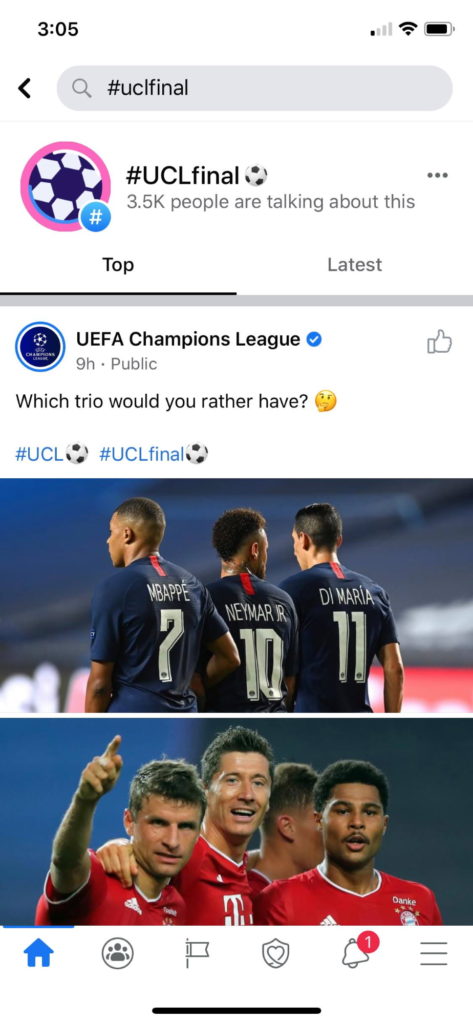
Fans who search for or click on the #UCLFinal hashtag on Facebook will be taken to the UEFA Champions League hub, featuring a feed of some of the most popular related content on the platform, including posts from UEFA, the two clubs vying for the trophy and media outlets covering the match.

Soccer-themed stickers will be available for use in Stories or News Feed, and fans who type “goal” will see a special animation.

Finally, people in Latin America will be able to view the match on Facebook Watch or at the top of the UEFA Champions League hub.

https://www.adweek.com/digital/facebook-suits-up-for-uefa-champions-league-final/


Wendy’s Spices Up Other Brands’ Twitter Profile Pictures

Wendy’s used the recent addition of its Spicy Crispy Chicken Sandwich to its 4 for $4 menu as an excuse to spice up some Twitter profile pictures.

The fast-food chain received nearly 25,000 replies to this tweet, and it chose 131 of them to bring the spice to, including brands such as Adobe Photoshop, Chips Ahoy, Looney Tunes and Toyota.

Adweek was fortunate enough to be one of the 131.

https://www.adweek.com/brand-marketing/wendys-spices-up-other-brands-twitter-profile-pictures/


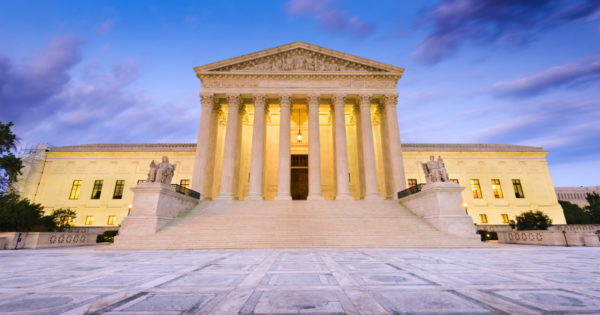
President Donald Trump Tries to Take Twitter Blocking Case to Supreme Court

The Knight Institute filed a lawsuit against Trump in 2018, and U.S. District Court for the Southern District of New York judge Naomi Reice Buchwald ruled in May of that year that Trump’s blocking of Twitter users with differing political viewpoints was a violation of the First Amendment, rejecting the president’s argument that his personal First Amendment rights superseded those of the plaintiffs.

The U.S. Court of Appeals for the Second Circuit unanimously affirmed that ruling in July 2019 and denied his request for an en banc review in March.

After Trump petitioned the Supreme Court Thursday for a review of the decision by the U.S. Court of Appeals for the Second Circuit, the Knight Institute weighed in.

Executive director Jameel Jaffer, who argued the case before the Second Circuit, said in a statement, “This case stands for a principle that is fundamental to our democracy and basically synonymous with the First Amendment: Government officials can’t exclude people from public forums simply because they disagree with their political views. The Supreme Court should reject the White House’s petition and leave the appeals court’s careful and well-reasoned decision in place.”

Senior staff attorney Katie Fallow added, “Public officials across the country now use social media as their main means of communicating with their constituents. In recent months, we’ve seen how vital these accounts are to ensuring that people get the information they need to understand public policies related to everything from Covid-19 to unemployment benefits. Blocking people from these forums denies them access to important information and deprives them of the opportunity to engage with the officials who represent them.”

https://www.adweek.com/digital/president-donald-trump-tries-to-take-twitter-blocking-case-to-supreme-court/


Pinterest Shop Opens Its Doors for National Black Business Month

Pinterest said searches for “Black-owned business” on its platform were up 13 times year-over-year in June, while “support small business” rose by 4.6 times.

The Pinterest Shop will feature over 600 products from more than 20 Black-owned brands, all with shoppable Pins linking directly to those brands’ online checkout pages.

Supermodel Liya Kebede curated a board of her favorite picks from Lemlem, her sustainable fashion label that features women’s artisan-driven resort wear made in Africa.

Businesses that are part of the new collection include:

  • Andrea Iyamah, a global brand strongly inspired by color, ethnic cultures and nature, catering to the fashionable across borders.
  • Beauty Bakerie was founded by Cashmere Nicole during a challenging fight with breast cancer, and it reflects her passion for high quality, healthy ingredients that enhance the beauty in everyone.
  • Bôhten Eyewear was founded by Nana Boateng Osei, who was inspired by the natural beauty of Ghana. Its frames are made from reclaimed wood sourced from West Africa.
  • The Folklore is an innovative online retail concept store that stocks emerging designer brands from Africa and the diaspora.
  • Kahmune is a luxury women’s footwear line designed in 10 skin-tone hues in order to ensure that no woman has difficulty finding a skin tone shoe, regardless of her complexion.
  • Lemlem, a women’s artisan-driven resort wear brand made in Africa and committed to elevating artisanship and expanding production and jobs across Africa, founded by supermodel Liya Kebede.
  • MFMG Cosmetics is a cruelty-free and paraben-free beauty brand that develops and curates cosmetics tailored to multicultural beauty consumers.
  • Nolaskinsentials was created when founder Jane Ormon noticed that her own skin issues were not being catered to, and it is a vegan, cruelty-free skincare brand created for skin with melanin.
  • Studio One Eighty Nine, co-founded by Rosario Dawson and Abrima Erwiah, works with African artisanal communities that specialize in traditional craftsmanship techniques.
  • Stuzo Clothing’s mission is to create a space where all are welcome without judgment, and all of its offerings are gender-free.
  • Uoma Beauty’s goal is to rewrite the rules of inclusivity and diversity.

https://www.adweek.com/brand-marketing/pinterest-shop-opens-its-doors-for-national-black-business-month/


Facebook Lifts Ban on Promoting Hand Sanitizer, Surface-Disinfecting Wipes

The social network imposed a temporary ban on those products in March in order to prevent scams, inflated prices and hoarding.

The social network said in a Newsroom post, “Since then, we’ve continued to monitor trends and activity around Covid-19 to better understand how people are using our platform and advertising tools during the pandemic.”

https://www.adweek.com/digital/facebook-lifts-ban-on-promoting-hand-sanitizer-surface-disinfecting-wipes/


Twitter Adds Hide Replies Endpoint to API v2

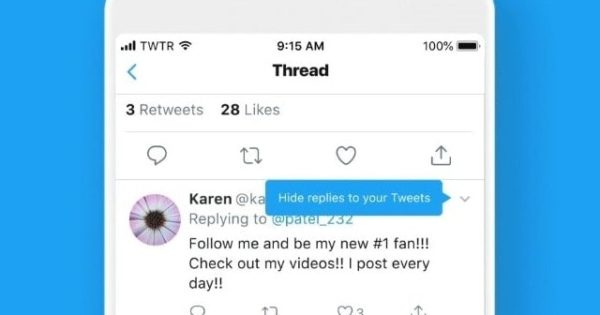
Twitter extended the ability for all users to hide replies to their tweets last November, and it officially rolled out its API v2 (application-programming interface) last week. They were joined Wednesday, as the Hide Replies endpoint was added to the API.

A Twitter spokesperson said, “Developers play a key role in serving and improving the health of the public conversation. This endpoint perfectly demonstrates that belief, as it enables developers to hide replies to a tweet on behalf of a person who has authorized the developer to do so. This will enable developers to build tools that limit the impact of abusive, distracting or misleading replies on behalf of their customers.”

The social network made the hide replies feature available to its Twitter Developer Labs testing program in February and, based on feedback from those tests, it added two features to the Hide Replies endpoint: the ability to hide or unhide replies to a tweet, and a higher rate limit than what was available during the test.

Twitter highlighted apps that were built using the new endpoint, including:

  • Dara Oladosu scaled his Hide Unwanted Replies app to more customers.
  • Reshuffle built an app to detect and hide replies that include keywords defined by its clients.
  • Sprinklr is helping its users automatically detect and hide replies that detract from their messaging.

https://www.adweek.com/digital/twitter-adds-hide-replies-endpoint-to-api-v2/


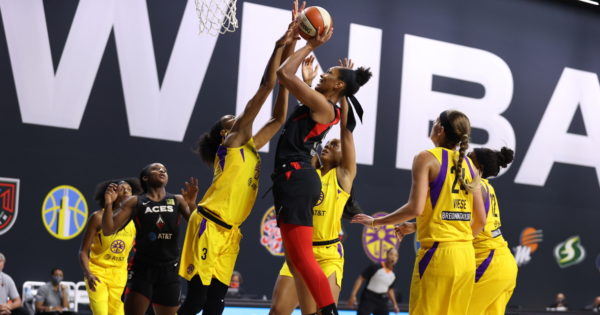
WNBA to Livestream 20 Games on Oculus Venues, Facebook Watch

The league is conducting its season at IMG Academy in Bradenton, Fla., due to Covid-19.

The live games will be available in 2D through Oculus Venues on Oculus Quest and Oculus Go headsets, as well as via the social network’s long-form video destination.

The schedule follows:

  • Wednesday, Aug. 19: Dallas Wings at Minnesota Lynx, 9 p.m.
  • Thursday, Aug. 20: Seattle Storm at Indiana Fever, 8 p.m.
  • Friday, Aug. 21: Washington Mystics at Wings, 8 p.m.
  • Sunday, Aug. 23: Wings at Los Angeles Sparks, 6 p.m.
  • Sunday, Aug. 23: Phoenix Mercury at Mystics, 8 p.m.
  • Friday, Aug. 28: Lynx at Atlanta Dream, 7 p.m.
  • Sunday, Aug. 30: Mercury at Lynx, 6 p.m.
  • Sunday, Aug. 30: Dream at Sparks, 8 p.m.
  • Tuesday, Sept. 1: Fever at Dream, 8 p.m.
  • Tuesday, Sept. 1: Mercury at Las Vegas Aces, 9 p.m.
  • Wednesday, Sept. 2: Lynx at Chicago Sun, 7 p.m.
  • Thursday, Sept. 3: Fever at Mercury, 10 p.m.
  • Friday, Sept. 4: Lynx at Wings, 8 p.m.
  • Friday, Sept. 4: Storm at Sparks, 10 p.m.
  • Saturday, Sept. 5: Connecticut Sun at Fever, 4 p.m.
  • Saturday, Sept. 5: Aces at Dream, 6 p.m.
  • Sunday, Sept. 6: Storm at Lynx, 6 p.m.
  • Wednesday, Sept. 9: Mercury at Sun, 7 p.m.
  • Friday, Sept. 11: Dream at Sun, 7 p.m.
  • Saturday, Sept. 12: Mystics at New York Liberty, 4 p.m.

Facebook director of sports media and league partnerships Rob Shaw said in a statement, “When we discussed WNBA marketing opportunities, we wanted to make sure that our investment helped connect the league with its current and future generation of fans. This sponsorship achieves that, as people around the world will now be able to experience and engage with the WNBA and its incredible players like never before on Oculus and Facebook Watch.”

WNBA commissioner Cathy Engelbert added, “We are excited to partner with Facebook and Oculus to provide fans a new and truly immersive experience to view WNBA games this season and beyond. Providing more opportunities to view WNBA games on innovative platforms will drive expanded coverage to our growing fan base and, combined with our other broadcast partners, will help sculpt the future landscape of the fan experience.”

https://www.adweek.com/digital/wnba-to-livestream-20-games-on-oculus-venues-facebook-watch/


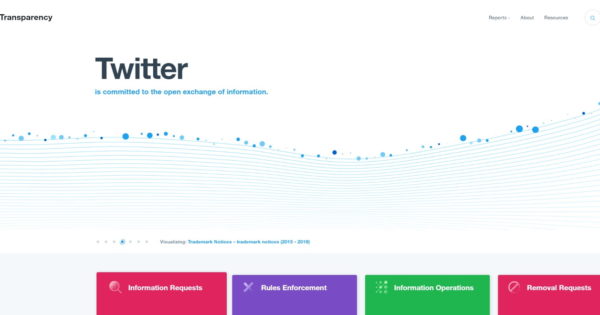
Twitter Reinvents Its Transparency Report as the Twitter Transparency Center

The new website hosts all of Twitter’s disclosed data in one place, and it includes data visualizations to make it easier for people to compare trends over time, as well as a country comparison module.

“Tool tips” are also included to explain key terms and provide more insights on terms used by the social network, and there are new policy categories to better align with the Twitter Rules.

The Twitter Transparency Report contains a history of the company’s transparency milestones and updates, as well as new metrics and methodology on enforcement of the Twitter Rules, starting in July 2018.

The social network said reports will soon be published in Arabic, French, German, Japanese, Portuguese, Spanish and Turkish.

Twitter said in a blog post, “Transparency is core to the work we do at Twitter. The open nature of our service has led to unprecedented challenges around protecting freedom of expression and privacy rights as governments around the world increasingly attempt to intervene in this open exchange of information. We believe that transparency is a key principle in our mission to protect the Open Internet and advancing the Internet as a global force for good.”

The latest data covers the period of July 1 through Dec. 31, 2019, and Twitter said the next update will encompass the first six months of 2020.

Highlights of data shared by Twitter follow:

  • State-backed information operations: Twitter recently shared its largest disclosure to date, adding 32,242 accounts to the archive, which now contains more than 9 terabytes of media on over 83,000 accounts and more than 200 million tweets. Data sets of information operations in over 15 countries are included.
  • Platform manipulation: Twitter said its proactive detection of behavior such as bots resulted in a 10% reduction in anti-spam challenges.
  • Terrorism and violent extremism: Action was taken on 86,799 unique accounts during the six-month period, with 74% of those accounts proactively suspended using the social network’s internal, proprietary tools.
  • Child sexual exploitation: 257,768 unique accounts were suspended during the last six months of 2019 for violating these policies, with 84% of those proactively suspended.
  • Twitter Rules enforcement: The social network reported a 47% rise in accounts locked or suspended.
  • Abuse and harassment: The number of accounts where action was taken for violations rose 95% compared with the previous reporting period.
  • Hateful conduct: There was a 54% uptick in the number of accounts that faced action against them from Twitter.
  • Sensitive media, including graphic violence and adult content: Action was taken on 39% more accounts than in the previous reporting period.
  • Promoting suicide and self-harm: Twitter took action on 29% more accounts for violations of this sort than in the first half of 2019.
  • Illegal or certain regulated goods and services: In this new addition to the Twitter Transparency Report, action was taken on 60,807 unique accounts.
  • Private information: There was a 41% jump in the number of accounts that were acted upon due to “doxxing.”
  • Non-consensual nudity: The social network credited internal improvements and extensive retraining with a 109% leap in the number of accounts that saw actions taken against them.
  • Violent threats: Twitter saw a 5% drop in the number of accounts where action was taken.
  • Information requests: Roughly 21% more information requests from governments and law enforcement agencies globally were submitted compared with the previous period, with the number of accounts specified in those requests rising by almost 63%. The U.S. continued to account for the lion’s share, with 26% of all requests, trailed by Japan (22%).
  • Content removal: The social network received 27,538 legal demands regarding 98,595 accounts, the largest totals since its first Transparency Report in 2012. They came from 51 different countries, but 86% originated in Japan, Russia and Turkey.
  • Copyright and trademark actions: Twitter reported a 13% increase in Digital Millennium Copyright Act takedown notices, affecting 163% more accounts than in the first half of 2019, and 7% more trademark notices than in the previous reporting period.

Twitter said in its blog post, “The fundamental belief in the power of open, public conversation inspired Twitter to launch one of the industry’s first transparency reports back in 2012. At that time, our goal was to provide the public with regular insights into government pressure that impacted the public, whether through overt attempts at political censorship or by way of soliciting account data through information requests. The world has changed significantly since 2012. In 2020, it is more important than ever that we shine a light on our own practices, including how we enforce the Twitter Rules, our ongoing work to disrupt global state-backed information operations and the increased attempts by governments to request information about account holders.”

https://www.adweek.com/digital/twitter-reinvents-its-transparency-report-as-the-twitter-transparency-center/


Facebook Begins Rolling Out Revamped Ad Preferences Page

Facebook will roll out a redesigned Ad Preferences page over the next few months in an effort to simplify navigation.

Director of product management for business integrity Rob Leathern introduced the new design in a tweet, stressing that users will not lose access to any of the controls they currently use or the other transparency measures made available by the social network.

The Ad Preferences page is being split into three tabs—Advertisers, Ad Topics and Data—and Leathern said more descriptions will be added and some tools will be relabeled in response to feedback from users that it was difficult to understand how data informs ads and what some of Facebook’s controls did.

Ad Preferences is still accessible by going to Settings & Privacy, Settings, Ads.

https://www.adweek.com/digital/facebook-begins-rolling-out-revamped-ad-preferences-page/