Movement By Michelob Ultra Live Virtual Workout Videos Will Aid Trainers, Gym Owners

Michelob Ultra brewed up an initiative aimed at helping both gym owners and gym members during the coronavirus pandemic.

The low-calorie beer brand will tap its Movement By Michelob Ultra Live virtual workout series every Thursday at 6 p.m. ET on Facebook, Instagram and YouTube.

The workouts are being led by top trainers and private gym owners from across the U.S. who are being impacted by Covid-19, and a virtual tip jar will enable viewers to donate to those workout leaders.

Michelob Ultra and partner Optimum Nutrition will match up to $7,500 in donations every week.

[embedded content]

The International Health, Racquet & Sportsclub Association said in a letter to leaders of the House of Representatives and the Senate that the country’s 39,750 health clubs and studios are vital to the economy, as they serve 64 million customers, generate $32.3 billion in revenue per year and employ over 425,000 people.

The initial instalment of Movement By Michelob Ultra Live this Thursday (April 16) will feature a workout from 305 Fitness and a special DJ set from two-time Grammy Award-nominated DJ and producer Steve Aoki.

https://www.adweek.com/digital/movement-by-michelob-ultra-live-virtual-workout-videos-will-aid-trainers-gym-owners/


Washington Attorney General Files Second Lawsuit vs. Facebook Over Political Ads

Washington Attorney General Bob Ferguson is once again going after Facebook for violating the state’s campaign finance law.

Ferguson filed a similar suit against the social network in June 2018, and it was resolved that December, when Facebook paid a $200,000 penalty and $38,000 to reimburse the state’s legal costs and fees.

According to Ferguson’s office, even though Facebook decided on its own at the end of 2018 to stop accepting ads related to state or local elected officials, candidates, elections or ballot initiatives, this has not been the case.

Ferguson cited reports by blog The Stranger and The Seattle Times that Facebook has continued to sell ads to political committees in the state.

His office wrote, “Since November 2018, Facebook sold hundreds of ads to at least 171 Washington state political committees. The 171 committees paid Facebook at least $525,000 for these ads. Facebook ran these ads without maintaining the legally required information, as our transparency laws require.”

Facebook called the dispute an ongoing legal matter, saying that it has worked closely with local authorities and will continue to do so.

The social network added that its policy banning ads that are targeted to Washington state and reference local elected officials, candidates, elections or ballot initiatives is still in place, and it took steps to bolster enforcement of that policy.

The Washington state Public Disclosure Commission adopted specific rules for digital political advertisers last November, requiring Facebook and other platforms to maintain information on political ads so that it is available for public inspection.

That information includes: the name of the candidate or measure being supported or opposed; the dates the ads ran; the name and address of the sponsor behind the ads; the total cost of the ads; who paid; and the method of payment used.

Ferguson’s office said that while Facebook makes information about political ads in Washington state and elsewhere publicly available via its Ad Library, the information shared by the social network does not meet all of the requirements laid out by the state.

The suit against Facebook seeks the imposition of a civil penalty, an injunction requiring the social network to comply with the PDC requirements and reimbursement of the state’s legal costs and fees.

Ferguson concluded, “Whether you’re a tech giant or a small newspaper, those who sell political ads must follow our campaign finance law. Washingtonians have a right to know who’s behind the ads seeking to influence their vote.”

https://www.adweek.com/digital/washington-attorney-general-files-second-lawsuit-vs-facebook-over-political-ads/


The Newest App From Facebook’s NPE Team Simplifies Messenger on Apple Watches

Facebook’s NPE Team turned its attention to the Apple Watch with the release this week of its newest application, Kit.

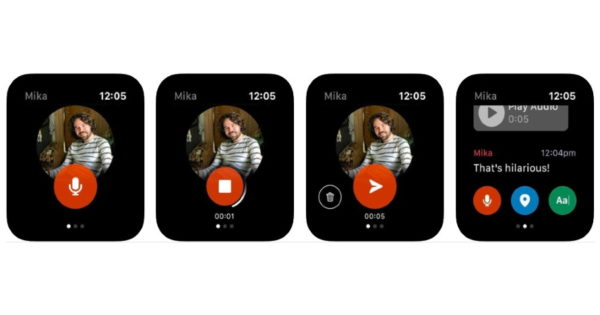
Kit—which stands for “Keep In Touch”—was developed to make the process of communicating with contacts on Messenger From Facebook easier via Apple Watch devices, and a Messenger account is required to use the app.

The NPE Team (NPE stands for New Product Experimentation) said in the listing for Kit on the iTunes App Store, “Kit makes keeping in contact from your watch easy. Everything you need to compose a message is just one tap away. No more struggling to navigate a tiny screen to find the right option. To get started, just scan the QR code on your watch and pick a contact. One tap lets you send a voice message, your location or an emoji. You also have easy access to speech-to-text.”

The features listed on the App Store page are:

  • Onboarding: Log in by scanning a QR code on your watch or by entering an access code at fb.com/devices.
  • Contact selection: Select a Messenger connection from your suggested and recent contacts with one click. Tap on “Change Contact” in the settings page to switch.
  • Sending a message: Send a message with one tap via audio recording, emoji, location sharing, scribble, or dictation input.
  • Receiving messages: Swipe to see your contact’s messages on the right.
  • Notifications: Receive and respond to notifications from your top Messenger contact.

The social network’s NPE Team has been busy of late, releasing iOS app Tuned, which creates a private place for couples to share content with each other, earlier this month.

Pinterest-influenced Hobbi debuted in February, following three apps that were released last November: Bump, a one-on-one anonymous chat app based on conversation topics and geared toward college students; Aux, also aimed at college students, described as a “DJ for Your School”; and meme-creation app Whale.

https://www.adweek.com/digital/the-newest-app-from-facebooks-npe-team-simplifies-messenger-on-apple-watches/


WHO Rolls Out Interactive Health Alert Experience on Messenger From Facebook

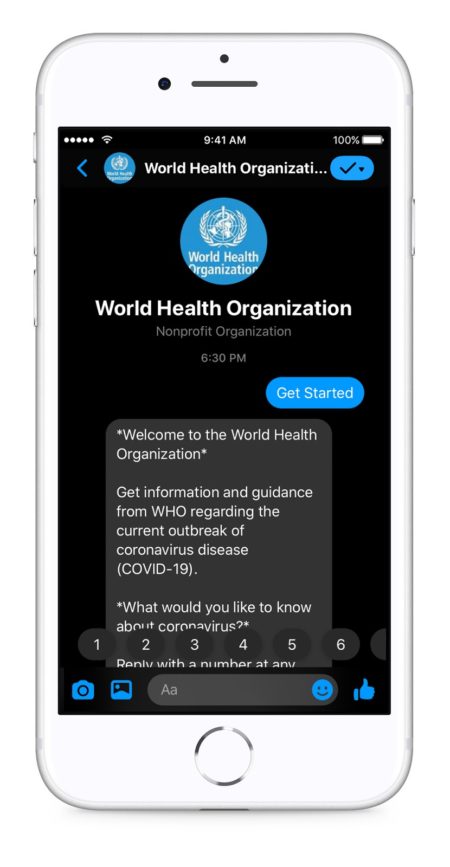
The World Health Organization teamed up with customer experience management platform Sprinklr to roll out its interactive Health Alert experience on Messenger From Facebook.

Health Alert will provide accurate and timely information about the coronavirus pandemic, free-of-charge, and it can be accessed by sending a message via the official WHO Facebook page or via this dedicated Messenger link.

World Health Organization/Messenger From Facebook

Vice president of Messenger Stan Chudnovsky said in a blog post that the WHO has already reached over 12 million people via a similar initiative on corporate sibling messaging application WhatsApp, adding that over 20 government health organizations have rolled out similar experiences on Messenger, including Argentina’s Ministry of Health, the governments of France and India, Pakistan’s Ministry of National Health Services and UNICEF.

He wrote, “Understandably, many people all over the world are turning to communication platforms like Messenger to get information on the current crisis. In many of the regions hit hardest by Covid-19, total messaging through Facebook’s family of apps has increased by more than 50%.

Chudnovsky concluded, “We are very pleased that the WHO has decided to use Messenger and, through its partnership with Sprinklr, was able to deploy the experience so quickly. We will continue to leverage the unique nature and reach of the Messenger platform to help people everywhere connect during this unprecedented moment.”

As a service to our community, much of our coronavirus-related coverage is available to everyone with a free Adweek membership. Never miss a key story by signing up for our daily First Things First newsletter  and consider gaining full access and supporting our journalism with an Adweek Pro Subscription.

https://www.adweek.com/digital/who-rolls-out-interactive-health-alert-experience-on-messenger-from-facebook/


Government Stimulus Payments Can Be Deposited Directly Into PayPal Accounts

PayPal detailed two initiatives related to the coronavirus pandemic: One aimed at helping customers tap into their government stimulus payments, and the second to provide access to small business loans through the Small Business Administration Paycheck Protection Program.

The payments platform said in a blog post that users who don’t already have a PayPal Cash Card can apply for one by logging into their account via the application or online.

Once this is done, the account number and routing number for the PayPal Cash Card, listed in users’ settings under Direct Deposit, can be entered into the IRS portal to receive the stimulus payment.

PayPal said in its blog post that it is working with the Treasury Department to create more ways for people to get their stimulus payments into their PayPal accounts, adding, “Using PayPal Direct Deposit to send your payment to your PayPal Cash Plus account is free. Plus, if you have already set up Direct Deposit to transfer your latest federal income tax return to your PayPal account, you should receive your payment automatically. The stimulus payment should be transferred to your account in the same way. Refer to the IRS website for more details.”

The company added in a separate blog post that it received SBA approval to become one of the first non-bank institutions to participate in the Paycheck Protection Program.

President and CEO Dan Schulman wrote, “Small businesses have been hit especially hard by the coronavirus crisis. There is an urgent need to help every qualified business access the funding needed to ensure that as many workers as possible keep their benefits and paychecks. This is a race to save jobs in the present and for the future. We are eager to deploy our capital and expertise to do our part in helping small businesses survive this challenging period. We are thankful to congressional leaders for ensuring that the CARES Act allowed companies like PayPal to help distribute funds quickly to those businesses that are most impacted.”

As a service to our community, much of our coronavirus-related coverage is available to everyone with a free Adweek membership. Never miss a key story by signing up for our daily First Things First newsletter  and consider gaining full access and supporting our journalism with an Adweek Pro Subscription.

https://www.adweek.com/digital/government-stimulus-payments-can-be-deposited-directly-into-paypal-accounts/


Instagram Redesigns IGTV App, Improves How Videos Are Shared to Stories

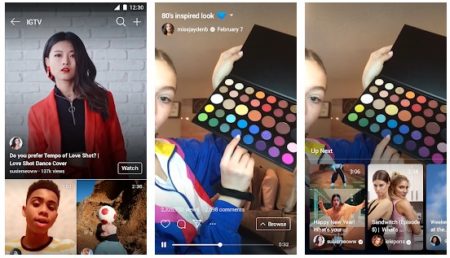
Instagram revamped its stand-alone IGTV application and changed the way IGTV videos can be shared to Instagram Stories.

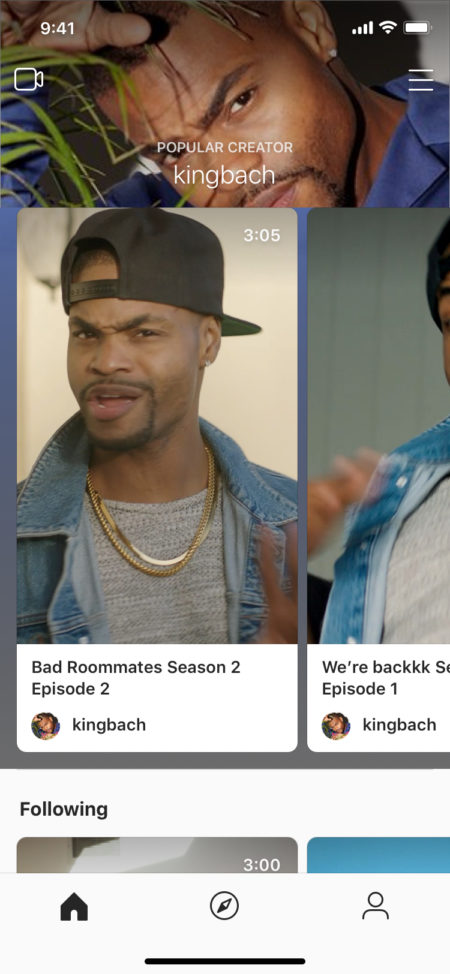
The app was redesigned with creators and discovery in mind. The new home page features a popular creator at the top, as well as content from accounts the user follows in a feed-like experience.

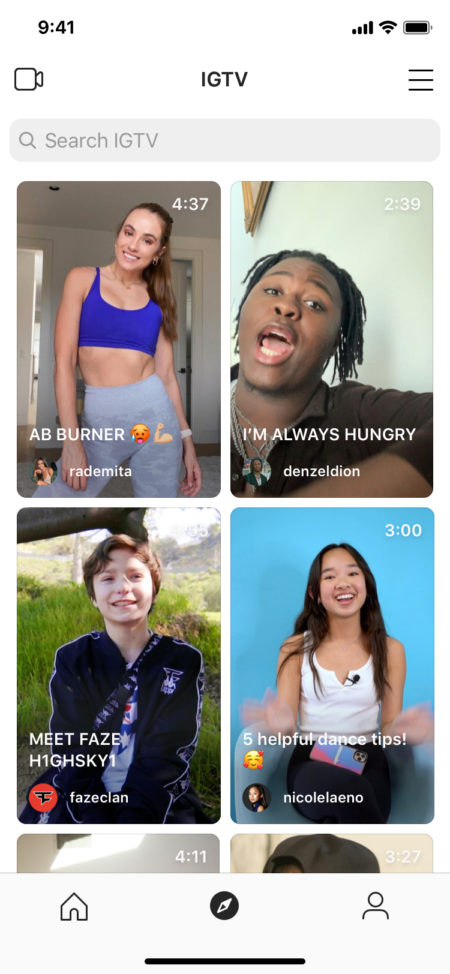
The app’s Discover tab mirrors Instagram’s Explore tab, showing users IGTV content that they might be interested in.

A new hands-free mode makes it easier for people recording videos via the IGTV app.

The redesigned IGTV app for Android
Instagram/Google Play Store

And while IGTV videos could previously be shared to stories via a static sticker, Instagrammers can now preview the first 15 seconds of those videos in Stories, with the option of tapping to see more.

An Instagram spokesperson said, “This will make it easier for people to discover videos they might be interested in. It will also help creators increase discovery of their content.”

The spokesperson added, “We’re updating IGTV in the standalone app and the Instagram app to make it easier for people to watch and discover great content and help creators reach more of their communities and fans.”

Monetization of IGTV videos also continues to move closer to reality, although the spokesperson would only reiterate Instagram’s statement from earlier this year that it was making progress.

Developer and blogger Jane Manchun Wong shared screenshots of the eligibility requirements for monetizing IGTV videos in a tweet.

According to the images shared by Wong, creators should not: infringe on copyrights, misinform, mislead, overly sensationalize, or compromise quality for viral distribution.

https://www.adweek.com/digital/instagram-redesigns-igtv-app-improves-how-videos-are-shared-to-stories/


Piper Sandler: Snapchat Is Teens’ Favorite Social Platform

Visual communication continues to drive teens’ use of social media platforms, which bade well for Instagram, Snapchat and TikTok in the newest semiannual Taking Stock With Teens survey from Piper Sandler.

Those app were the top three in a survey of 5,200 teens in 41 states in terms of engagement (Instagram, Snapchat, TikTok) and teens’ favorite apps (Snapchat, Instagram, TikTok).

Piper Sandler said this was the first time TikTok was listed as an option, adding that roughly 4% of respondents wrote it in as a favorite for the last survey, which was conducted in the fall of 2019.

Facebook showed a slight rebound after steadily declining since the first Taking Stock With Teens report in the fall of 2016. The world’s largest social network posted slight gains in engagement (to 34% from 31% in the fall of 2019) and favorite social platform (4% from 3%).

Respondents told Piper Sandler they spent an average of 12 hours per week on social media.

Piper Sandler said teens’ 10 favorite social platforms are:

  1. Snapchat (36%)
  2. Instagram (31%)
  3. TikTok (13%)
  4. Twitter (4%)
  5. Facebook (4%)
  6. Discord (2%)
  7. Pinterest (1%)
  8. Reddit (1%)
  9. Other (1%)
  10. LinkedIn (0%)

And their top 10 social platforms in terms of engagement (usage at least once per month) are:

  1. Instagram (85%)
  2. Snapchat (82%)
  3. TikTok (62%)
  4. Twitter (41%)
  5. Facebook (34%)
  6. Pinterest (27%)
  7. Discord (14%)
  8. Reddit (12%)
  9. LinkedIn (4%)
  10. Other (4%)

Piper Sandler

https://www.adweek.com/digital/piper-sandler-snapchat-is-teens-favorite-social-platform/


Instagram Direct Messages via Desktop Are Now Available Globally

Instagram began testing Instagram Direct messages via the web on desktop in January, and the Facebook-owned photo- and video-sharing platform released the feature worldwide Friday.

Other than the “small percentage” of users who were part of the test group, Instagram Direct messages could previously be send only via its mobile applications.

The process is similar to sending Instagram Direct messages via the apps: The Direct icon appears in the top-right-hand corner, and clicking on it displays all existing conversations on the left side of the screen.

DMs can also be initiated via other users’ profiles by tapping on the message icon.

And desktop notifications can be activated for Instagram Direct DMs.

https://www.adweek.com/digital/instagram-direct-messages-via-desktop-are-now-available-globally/


Facebook Looks to Decloak LeadCloak via a Lawsuit

Facebook filed a lawsuit in the U.S. District Court for the Northern District of California Thursday against Basant Gajjar, alleging that he violated the social network’s terms and policies by providing cloaking software and services under the name LeadCloak that was designed to circumvent the company’s automated ad review systems and run deceptive ads on Facebook and Instagram.

LeadCloak’s software targeted other technology companies including Google, Oath, Shopify and WordPress, Facebook director of platform enforcement and litigation Jessica Romero said in a Newsroom post.

LeadCloak’s homepage makes little effort to conceal these activities, saying, “LeadCloak is a powerful cloaker that you can use to easily cloak various ad networks to get targeted traffic to your web sites and offer pages.”

Romero added that Facebook disabled personal and ad accounts on Facebook and Instagram that it determined used LeadCloak’s software, and it intends to continue efforts to identify LeadCloak’s customers and take additional enforcement actions against them.

LeadCloak had not responded to a request for comment at the time of this post.

Romero wrote, “Cloaking is a malicious technique that impairs ad review systems by concealing the nature of the website linked to an ad. When ads are cloaked, a company’s ad review system may see a website showing an innocuous product such as a sweater, but a user will see a different website, promoting deceptive products and services, which, in many cases, are not allowed.”

She continued, “In this case, LeadCloak’s software was used to conceal websites featuring scams related to Covid-19, cryptocurrency, pharmaceuticals, diet pills and fake news pages. Some of these cloaked websites also included images of celebrities.”

Director of product management for business integrity Rob Leathern added in a tweet, “Given that these deceptive and malicious practices broadly affect our industry, we’d also like to work more closely with other companies to share threat intelligence and thereby react more quickly and create accountability/consequences for these bad actors.”

https://www.adweek.com/digital/facebook-looks-to-decloak-leadcloak-via-a-lawsuit/


Facebook Begins Rolling Out Quiet Mode to Encourage Users to Take Breaks

Facebook is helping ensure that people don’t spend too much time on its platform while practicing social distancing during the coronavirus pandemic, adding Quiet Mode features to the Your Time on Facebook activity monitoring tools it introduced in August 2018.

The social network confirmed last month that it had been testing Quiet Mode after it was discovered by developer and blogger Jane Manchun Wong.

Facebook said in a blog post Thursday, “As we all adjust to new routines and staying home, setting boundaries for how you spend your time online can be helpful. Whether it’s to help you focus on your family and friends, sleep without distraction or manage how you spend your time at home, we have tools that can help you find the right balance for how you use Facebook.”

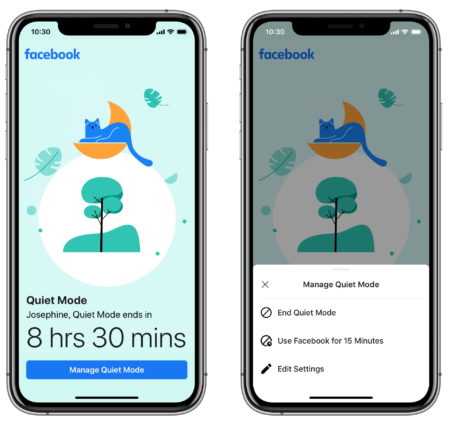
Quiet Mode can be activated manually or scheduled, and people can schedule multiple periods of Quiet Mode to reflect sleep time, work time, family time and other events.

When activated, Quiet Mode mutes most push notifications, mutes targeted tab badges (notification badges from areas on Facebook such as Marketplace and Facebook Watch) and displays a bypass screen if the user tries to access the Facebook application during Quiet Mode. People can opt to continue past the bypass screen and access the app.

Facebook also added shortcuts to its notification settings and News Feed preferences to better enable people to control the types of posts they see in their News Feeds, as well as the updates they receive.

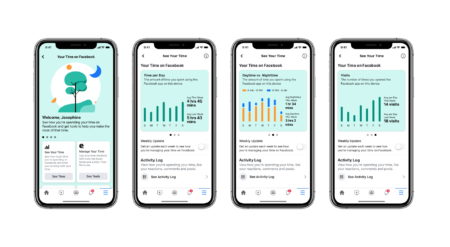
The activity dashboard in the social network’s Your Time on Facebook tools now provides people with data including times per day that the Facebook app was used on that particular device over the past week, as well as that same information broken out by day (6 a.m. to 10 p.m.) and night (10 p.m. to 6 a.m.).

Facebook said these updates began rolling out globally on iOS Thursday and will continue over the next month, with Android to follow in May.

The social network also revealed other moves on the well-being front.

The company is donating $2 million to support crisis helplines, including to: Vibrant Emotional Health, which operates the National Suicide Prevention Lifeline in the U.S.; Canada’s Kids Help Phone; India’s iCall Psychosocial Helpline; Samaritans in the U.K.; and Brazil’s Centro de Valorização da Vida.

Facebook is also adding tips from the World Health Organization to its Coronavirus (Covid-19) Information Center on how people can take care of themselves, stay active, relieve stress and establish new goals and routines while remaining at home.

Information on how to connect to local crisis hotlines will be available, as well, and similar tips from the National Alliance on Mental Illness will be available on Instagram.

Netflix created an Instagram Live series, Wanna Talk About It?, in which stars will team up with experts from organizations such as the American Foundation for Suicide Prevention, Crisis Text Line, Mental Health America, NAMI and The Trevor Project to discuss how they’re coping during social distancing and ways to handle anxiety, stress and feelings of isolation.

Facebook said it is also working on a separate Instagram Live series with NAMI to encourage conversations about mental health and promote activities to help people stay well.

Finally, Facebook chief operating officer Sheryl Sandberg will host a Facebook Live video at 2:15 p.m. PT/5:15 p.m. ET Thursday along with loneliness research expert Julianne Holt-Lundstad.

As a service to our community, coronavirus-related articles are available to everyone with a free Adweek membership. Never miss a key story by signing up for our daily First Things First newsletter  and consider gaining full access and supporting our journalism with an Adweek Pro Subscription.
https://www.adweek.com/digital/facebook-begins-rolling-out-quiet-mode-to-encourage-users-to-take-breaks/