Facebook Keeps Moving on Changes for Housing, Employment and Credit Ads
Facebook detailed the next two deadlines that must be met by advertisers, developers or partners promoting housing, employment or credit opportunities.

The social network said in a blog post that by Feb. 11, all businesses that are located in the U.S. or targeting audiences in the U.S. must identify any ad campaigns belong to special ad categories that were created before Dec. 4, 2019.

Targeting settings for those campaigns must also be updated to comply with the social network’s advertising policies, or those ads will no longer be permitted on Facebook’s platform.

By March 31, all businesses that are located in the U.S. or targeting audiences in the U.S. and that are creating new ads offering housing, employment or credit opportunities must specify a special ad category and update their targeting settings to comply with the restrictions for special ad categories, or their ads will not be allowed to run.

Businesses creating ads that do not promote housing, employment or credit opportunities must select “none” in the special ad category field in order for their ads to run,

Finally, businesses creating ads that offer housing, employment or credit opportunities but that are targeted outside of the U.S. must either choose special ad category and proceed with the limited targeting options, or choose none. Ads with no designation will not be allowed on the platform.

The American Civil Liberties Union teamed up with Communications Workers of America and workers’ rights law firm Outten & Golden in September 2018 to file charges with the Equal Employment Opportunity Commission against Facebook and 10 companies that advertised jobs via its platform, claiming unlawful discrimination and saying the advertisers used the social network’s targeting capabilities to deliver their ads solely to male users.

In response, Facebook promised several changes in March 2019.

The social network said at the time that age, gender and ZIP code targeting would no longer be allowed on ads for housing, employment and credit; interest segments for ads in those categories were slashed from thousands to hundreds; and a new transparency tool was being built to provide information on all current housing ads being run in the U.S.

All of those measures did not stop the U.S. Department of Housing and Urban Development from officially charging Facebook with discrimination later that month.

The EEOC reached a settlement with Facebook last March, and it issued a decision last September that seven U.S. companies violated federal law by using Facebook’s ad targeting capabilities to exclude women and older users from seeing job ads on the social network.

The social network said last August that advertisers, developers and partners must indicate when their ads promote housing, employment or credit by selecting a special ad category, which began rolling out in Ads Manager last July and was extended to the Marketing API (application-programming interface) last Sept. 16.

The company added at the time that all housing, employment or credit ads that had not implemented the special ad category flows by last Dec. 4 would be paused for non-compliance, and it began enforcing that rule on that date.

Clem Akomea-Agyin, who works on product for Facebook, wrote in the blog post, “Discrimination has no place on Facebook, and our advertising policies have long prohibited unlawful discrimination. As a result of historic settlement agreements with leading civil rights organizations, we introduced a new process last year for how advertisers based in the U.S., or targeting audiences in the U.S., can create ads that offer housing, employment or credit opportunities.”

https://www.adweek.com/digital/facebook-keeps-moving-on-changes-for-housing-employment-and-credit-ads/


Facebook Reveals Its First Significant Overhaul to Privacy Checkup

Facebook unveiled the first major updates to its Privacy Checkup feature since its introduction in September 2014.

https://www.adweek.com/digital/facebook-reveals-its-first-significant-overhaul-to-privacy-checkup/


Oscars All Access Preshow Will Be Livestreamed on Twitter Again

Twitter is making a return trip to the red carpet at the 92nd Academy Awards Sunday, Feb. 9.

For the second consecutive year, 90-minute red-carpet preshow Oscars All Access will be livestreamed exclusively on Twitter, via @TheAcademy..

The livestream will begin at 6:30 p.m. ET/3:30 p.m. PT Feb. 9 and include fan tweets and questions, as well as Twitter polls.

This year also brings a new gamified predictions experience within direct messages with @TheAcademy.

Superfans can predict the winners in all 23 categories, while more casual fans can do so for the six most popular ones, and sharing prompts, reminders and scoring touchpoints will occur throughout the DM experience.

https://www.adweek.com/digital/oscars-all-access-preshow-will-be-livestreamed-on-twitter-again/


Snap Inc. Scoops Up Startup AI Factory

Snap Inc. liked Snapchat’s recently introduced Cameo feature so much that it bought the company that helped develop it.

Snap confirmed its acquisition of AI Factory Friday, declining to provide any further details, such as terms of the transaction.

The AI Factory website was taken offline at some point and remained in that state Friday.

The company’s LinkedIn page described it as follows: “AI Factory is San Francisco Bay-area company founded in 2018. We provide multiple AI business solutions based on image and video recognition, analysis and processing. AI Factory is a team of young scientists, coding monsters and designers eager to bring artificial intelligence methods to completely new level of daily usage. The company founders had implemented multiple successful startups with great exits.”

Ingrid Lunden of TechCrunch reported that the price tag for the deal was in the range of $166 million, adding that while the company is based in San Francisco, the bulk of its team is based in Ukraine, and it is believed that some of them will relocate while others stay there.

Lunden added that AI Factory founder Victor Shaburov was director of engineering at Snap before leaving in May 2018 to start the company.

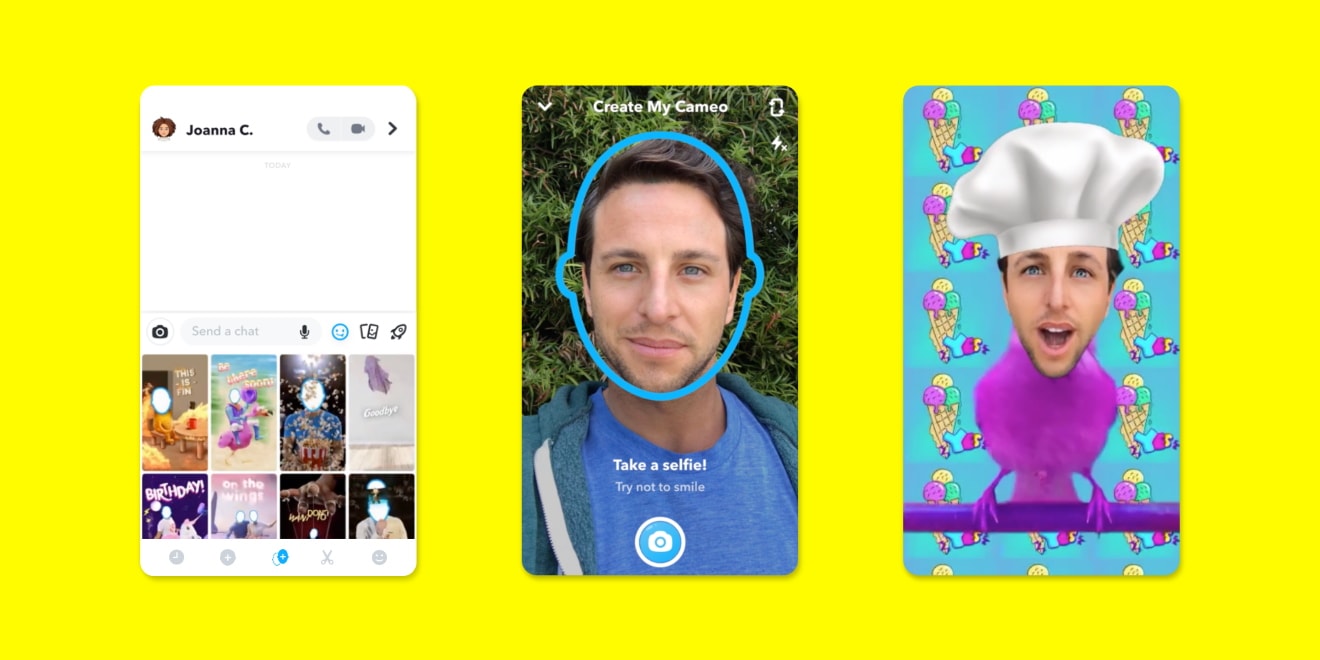
Cameo, which debuted Dec. 18, enables Snapchatters to add their faces to popular memes and create short, looping videos.

https://www.adweek.com/digital/snap-inc-scoops-up-startup-ai-factory/


Facebook Reveals Several Updates to Instant Articles

The emergence of Facebook’s stand-alone News tab in October appeared to signal that the end was near for its Instant Articles fast-loading rich media stories from publishers, but appearances can be deceiving.

Product manager Jaynth Thiagarajan detailed several updates to Instant Articles in a blog post Friday, adding that 30% more time is spent on Instant Articles than on traditional mobile web articles.

Facebook created a new recirculation and navigation surface for Instant Articles, which makes it easier for readers to browse other offerings from the same publisher, potentially discovering fare on other topics.

Users can swipe right on Instant Articles to see the “More from” recirculation surface, which provides up to 50 articles from the same publisher, in a personalized, chronological view.

A similar personalized, chronological also appears in the redesigned footer that follows each Instant Article.

And the footer now contains dedicated engagement buttons which enable readers to save, discuss and share Instant Articles.

Those buttons scroll away while people are reading, boosting the amount of visible content.

Thiagarajan also revealed that rather than being served blindly, as has been the case, call-to-action units in Instant Articles now have an integrated CTA and ad-yield model, which enables publishers to estimate the value of a given CTA impression based on regional averages of what other publishers paid to achieve its objectives.

The model will then serve either a CTA or an ad, based on which provides greater estimated value to the publisher.

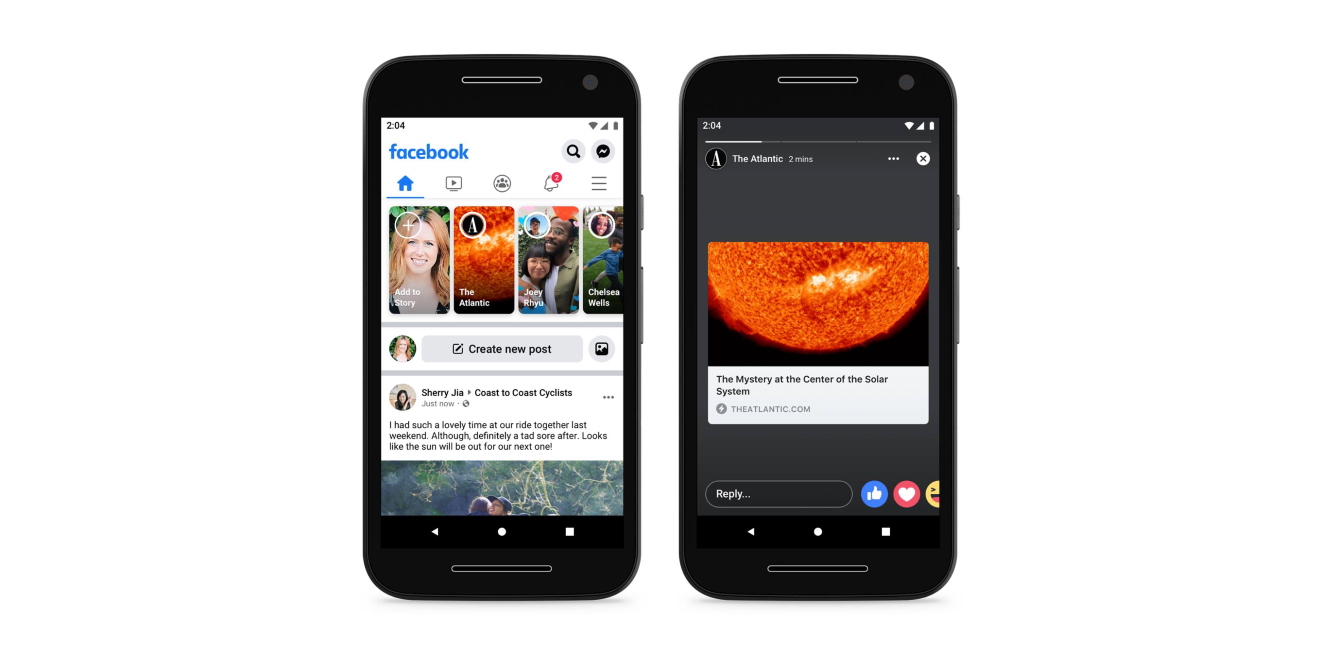
Finally, support for Instant Articles links was added to Facebook Stories, including those created by pages, as well as those cross-posted from Instagram.

Users can now read Instant Articles directly from Stories, with the same experience, while publishers can tap into the new source of potential distribution provided by the 300 million or so people who use Facebook Stories daily.

Thiagarajan wrote, “Since launching these features, we’ve observed an increase in RPMs (revenue per thousand article views) of 9% for Publishers across our ecosystem. People are also spending more time reading articles from the same publisher. We’re excited about this refresh, and we’ll continue to act on feedback to improve the Instant Articles experience.”

https://www.adweek.com/digital/facebook-reveals-several-updates-to-instant-articles/


WhatsApp Has a Record-Breaking New Year’s Eve

WhatsApp welcomed 2020 with a record 100 billion messages sent worldwide on New Year’s Eve.

Dec. 31 marked the biggest single messaging day in the Facebook-owned messaging application’s 10-year-plus history.

WhatsApp also said more than 12 billion photos were shared via its platform from midnight through 11:59 p.m. PT on Dec. 31.

The five most-used features on the app in 2019 were: text messaging, Status (its take on Stories), picture messaging, calling and voice notes.

https://www.adweek.com/digital/whatsapp-has-a-record-breaking-new-years-eve/


eMarketer Pegs Instagram U.S. User Growth in Single-Digits for First Time Ever

Competition from Snapchat and TikTok is taking a bite out of U.S. user growth for Instagram, which fell to single-digits in 2019 for the first time ever, according to eMarketer.

The research firm found that the Facebook-owned photo- and video-sharing network’s U.S. user growth rate slipped to 6.7% in 2019 from 10.1% in 2018, and eMarketer projected a continued decline.

eMarketer—which uses its own methodology to arrive at its forecasts and estimates—revised its U.S. growth rate projections for Instagram for the next two years downward, to 4.5% in 2020 from 5.4%, and to 3.2% in 2021 from 4.1%.

The company said older age groups are not joining the platform as quickly as it originally anticipated, and the resurgence of Snapchat and rise of TikTok will make it difficult for Instagram to sustain any kind of high growth.

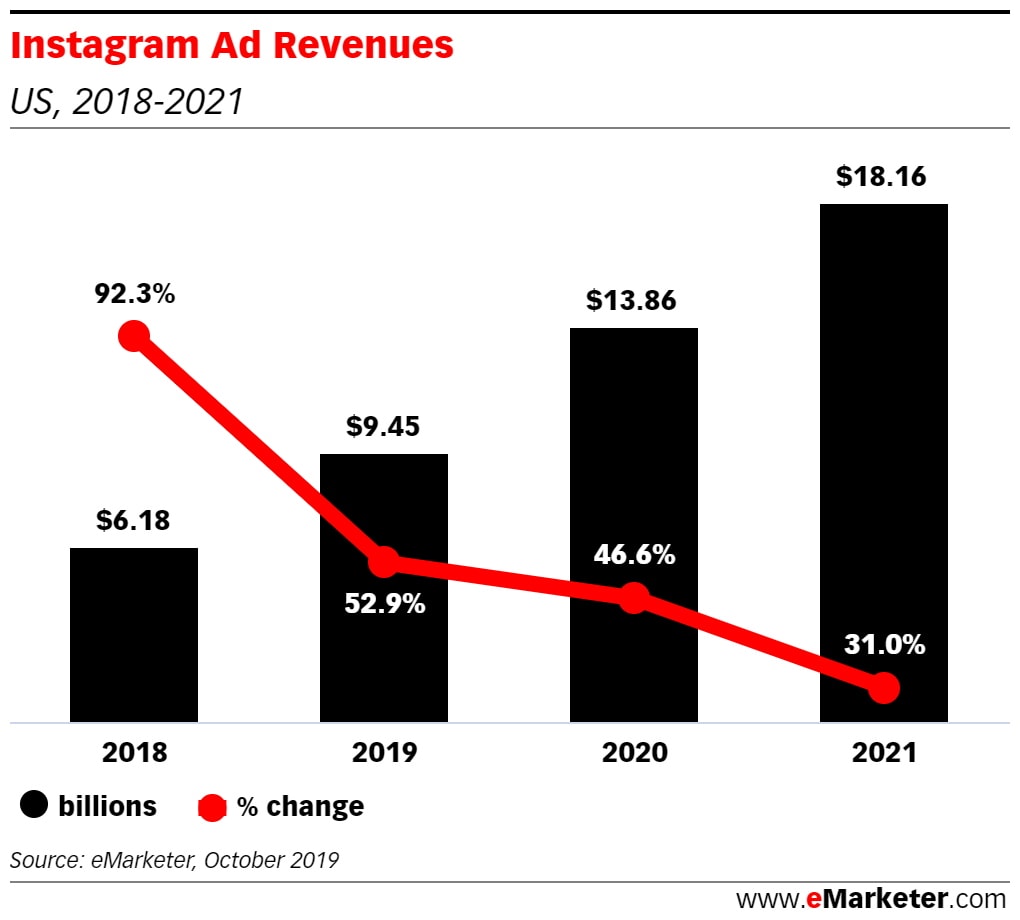
However, eMarketer believes Instagram’s ad revenue in the U.S. will continue to grow at double-digit rates, driven by the introduction of ads in the application’s Explore tab, as well as the growth of shoppable ads.

The company said Instagram generated $9.45 billion in U.S. ad revenues in 2019, and it sees that figure jumping 46.6% in 2020, reaching $13.86 billion.

eMarketer junior forecasting analyst Nazmul Islam said in an email, “Instagram is doing really well—it is the second-most internet-penetrated social media platform in the U.S. behind Facebook and, despite increased pressure from competition, we expect it to maintain its second-place position with a good gap from the rest of the platforms.”

https://www.adweek.com/digital/emarketer-pegs-instagram-u-s-user-growth-in-single-digits-for-first-time-ever/


Twitter Permanently Suspends 88,000+ Accounts in Saudi Arabia

Twitter shared data on 5,929 of the more than 88,000 accounts originating in Saudi Arabia that were permanently suspended late last year for violating its platform manipulation policies.

The social network said in a blog post that its investigations traced the coordinated inauthentic activity to Saudi Arabia-based social media marketing and management company Smaat, which appeared to have created, purchased and/or managed the suspended accounts on behalf of—but not necessarily with the knowledge of—its clients.

Twitter said Smaat’s access to the social network and the accounts of its senior executives were permanently suspended, adding that the company managed accounts for high-profile individuals and government departments in Saudi Arabia.

Twitter Safety wrote, “Many of the accounts involved in the overall network employed third-party automated tools in order to amplify non-political content at high volumes. As a general matter, the use of automation to tweet helpful content—like crisis response information or weather updates—is not a violation of our rules. However, this behavior was, in part, strategically employed in an attempt to mask the overall platform manipulation originating from these accounts. These tactics made it more difficult for observers to identify political tweets in the timelines of accounts, which mostly shared automated, non-political content.”

Twitter said content posted by the suspended accounts amplified messages that were favorable to Saudi authorities, using inauthentic engagement tactics such as aggressive liking, retweeting and replying, adding that while most of the content was in Arabic, some was related to events that were relevant to Western audiences, such as sanctions in Iran and Saudi government officials appearing in Western media.

Twitter Safety wrote, “In order to protect the privacy of potentially compromised accounts repurposed to engage in platform manipulation, and in response to researcher feedback requesting that we pre-filter unrelated spam, we have not disclosed data for all 88,000 accounts. In the interest of offering meaningful transparency, the dataset we are disclosing includes a representative, random sample of the fake and spammy accounts associated with this broader network.”

https://www.adweek.com/digital/twitter-permanently-suspends-88000-accounts-in-saudi-arabia/


Facebook Removes 2 Unconnected Networks for Foreign and Government Interference

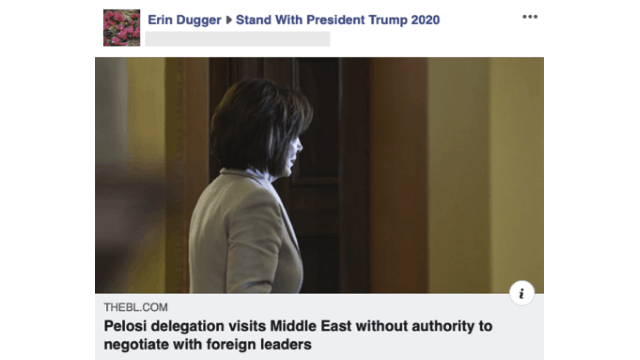
This post was from a page linked to The BL

Facebook revealed late last month that it removed two unconnected networks of accounts, pages and groups for engaging in foreign and government interference—one originating in the country of Georgia, and the second in Vietnam and the U.S.

Head of security policy Nathaniel Gleicher shared details on the two networks in a Newsroom post.

For the first network, which originated in the country of Georgia, 39 accounts, 344 pages, 13 groups and 22 Instagram accounts were removed.

Gleicher said the people behind the activity used fake accounts—some of which had previously been disabled by the social network’s automated systems—to increase engagement with content and manage pages, which posed as news organizations and impersonated political parties, public figures, activist groups and media entities.

Content typically covered domestic news and political issues including elections, government policies, public officials, criticism of the opposition and local activist organizations, and Gleicher said Facebook’s investigation linked the activity to Georgia-based advertising agency Panda and the Georgian Dream-led government.

Roughly 442,300 Facebook accounts followed one or more of the removed pages, while some 52,000 joined at least one of the groups and around 2,100 people on Instagram followed one or more of the accounts removed from that platform.

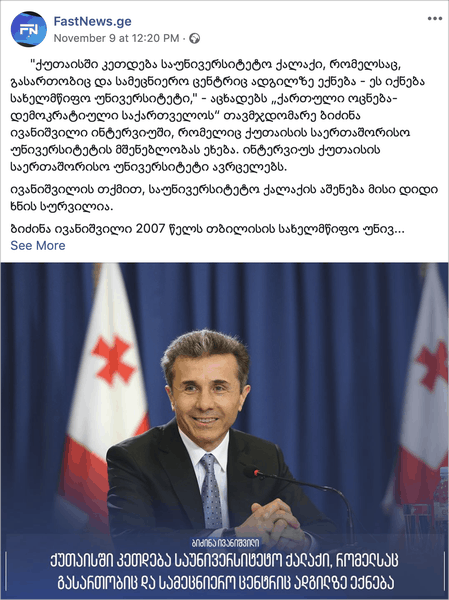
Gleicher said under $316,000 was spent on ads on Facebook and Instagram, paid for in U.S. dollars, and he shared examples of content from the removed pages:

Translation: “There will be University city in Kutaisi that will also host scientific and leisure centres – this will be state university” – says chairman of “Georgian Dream – Democratic Georgia” Bidzina Ivanishvili in the interview regarding building international university in Kutaisi. Interview is shared by international university of Kutaisi. Ivanishvili says, that building university city is his long time gream. In 7 Bidzina Ivanishsvili..

Translation: Anri Okhanashvili: group of prosecutor’s advisors thinks, that existing evidence is enough to file charges against Khazaradze and Japaridze Anri Okhanashvili is talking about the evidence in the Khazaradze-Japaridze case and clarifies that general prosecutor of Georgia, due to the high public interest, made an important decision, when he decided to make the process open and he made it open so that international experts could participate as well. “Overall, advisors..

Page Title: National Media. Post Translation: “Eka Beselia: “Spending was minimal.” – Who paid 17K laris for a philharmonic hall?”

The second group was made up of 610 accounts, 89 pages, 156 groups and 72 Instagram accounts, originating in Vietnam and the U.S. and focused primarily on the U.S., with some content geared toward Vietnam and Spanish- and Chinese-speaking people worldwide.

Gleicher wrote, “This activity primarily focused on The BL, a U.S.-based media company, and its pages, which were operated by individuals in the U.S. and Vietnam. The people behind this activity made widespread use of fake accounts—many of which had been automatically removed by our systems—to manage pages and groups, automate posting at very high frequencies and direct traffic to off-platform sites. Some of these accounts used profile photos generated by artificial intelligence and masqueraded as Americans to join groups and post the BL content.”

He added that a combination of fake accounts and authentic accounts belonging to individuals in the U.S. was used to manage pages and groups and avoid detection, with content usually consisting of memes and other fare about U.S. political news and issues including impeachment, conservative ideology, political candidates, elections, trade, family values and freedom of religion.

Gleicher said Facebook’s investigation linked the activity to U.S.-based media organization Epoch Media Group and individuals in Vietnam working on its behalf, adding, “The BL-focused network repeatedly violated a number of our policies, including our policies against coordinated inauthentic behavior, spam and misrepresentation, to name just a few. The BL is now banned from Facebook. We are continuing to investigate all linked networks, and we will take action as appropriate if we determine that they are engaged in deceptive behavior.”

Some 55 million accounts followed at least one of the removed pages, with the vast majority of those accounts from outside of the U.S. About 381,500 joined at least one of the groups, and approximately 92,000 followed one or more of the Instagram accounts.

Gleicher said nearly $9.5 million was spent on ads on Facebook and Instagram, paid for primarily in U.S. dollars, in addition to Australian dollars, Canadian dollars, Indonesian rupiah, Korean won, new Taiwan dollars and Vietnamese dong.

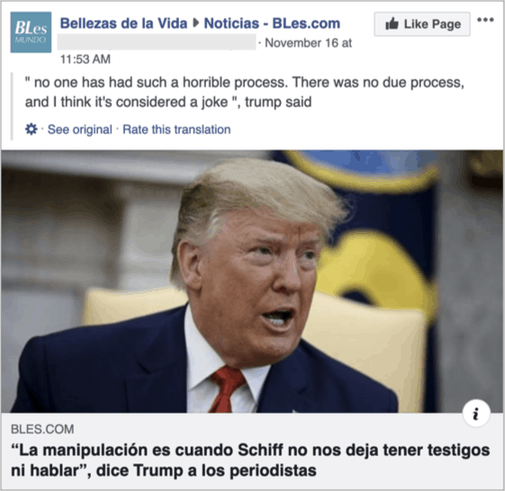
He also shared examples of content from the removed pages:

https://www.adweek.com/digital/facebook-removes-2-unconnected-networks-for-foreign-and-government-interference/


Instagram Adds Several Features for Business Accounts

Instagram released a host of new and updated features for businesses as 2019 came to a close.

The Facebook-owned photo- and video-sharing network said in a blog post that its new growth insights enable administrators of business accounts to easily see which posts and Stories are generating the most followers, along with an aggregated view of follower changes by day or week.

Stories that mentioned Instagram business accounts over the past 24 hours are now being aggregated under those accounts’ activity tabs.

As previously reported, business and creator accounts can now set age gates for their content directly via the application. A default age can be established globally for viewing content from the account, and that age can be tweaked by country in order to allow brands and creators to comply with local laws and regulations that may differ.

Business profiles can now be customized, giving account holders the option of whether or not to display or hide contact information and the business category label.

And inboxes can be organized into primary and general tabs, with the ability to move messaged between those two tabs via a swipe.

https://www.adweek.com/digital/instagram-adds-several-features-for-business-accounts/