iOS Live Photos Can Now Be Uploaded to Twitter as GIFs

Apple incorporated the feature into iOS 11

iOS Live Photos can finally be uploaded to Twitter as GIFs.

Apple incorporated the feature into iOS 11, which was released in September 2017.

The social network revealed the update in a tweet:

https://www.adweek.com/digital/ios-live-photos-can-now-be-uploaded-to-twitter-as-gifs/


These TV Series, Specials and Sporting Events Were 2019’s Most Social

Game of Thrones went out in a blaze of glory, and it did so on social platforms, as well, as Nielsen Social Content Ratings pegged it as the most social primetime TV series of 2019.

The HBO drama blew away the competition with an average of 5.329 million social interactions per episode, eclipsing second-place WWE Monday Night Raw on USA Network, at 1.944 million.

NBC’s Saturday Night Live was the top late-night fringe variety series, while the top special for 2019 was the 61st Annual Grammy Awards on CBS.

Nielsen Social Content Ratings said in a blog post, “In today’s age of screen-based multitasking, the convergence of TV and social media is creating new experiences for audiences. Marketers, brands, media owners and, increasingly, savvy talent themselves, looking to capitalize on an oft-engaged and connected viewer, have an impetus to understand the power of influence as a way to sway consumers.”

The most social TV series of 2019, by total interactions per episode, were:

  1. Game of Thrones, HBO/HBO Latino, 5.329 million
  2. WWE Monday Night Raw, USA Network, 1.944 million
  3. WWE Friday Night SmackDown, Fox/Fox Deportes, 1.656 million
  4. America’s Got Talent, NBC, 1.409 million
  5. American Idol, ABC, 1.308 million
  6. WWE SmackDown!, USA, 1.144 million
  7. The Bachelorette, ABC, 937,000
  8. The Bachelor, ABC, 768,000
  9. Grey’s Anatomy, ABC, 729,000
  10. Dancing With the Stars, ABC, 715,000

The year’s most social televised sports events, by total interactions, were:

  1. Super Bowl LIII, New England Patriots vs. Los Angeles Rams, CBS/ESPN Deportes, 32.288 million
  2. 2019 National Basketball Association Finals, Toronto Raptors at Golden State Warriors, June 13 ABC/ESPN Deportes, 20.627 million
  3. 2019 NBA All-Star Game, TNT, 10.822 million
  4. 2019 NBA Finals, Warriors at Raptors, June 10, ABC/ESPN Deportes, 10.564 million
  5. 2019 National Football League American Football Conference Championship, Patriots at Kansas City Chiefs, CBS, 10.087 million
  6. 2019 NBA Finals, Raptors at Warriors, May 30, ABC/ESPN Deportes, 8.103 million
  7. 2019 NBA Finals, Raptors at Warriors, June 2, ABC/ESPN Deportes, 7.664 million
  8. 2019 NBA Western Conference Finals, Warriors at Houston Rockets, May 10, ESPN/ESPN Deportes, 7.441 million
  9. 2019 NFL National Football Conference Championship, Rams at New Orleans Saints, Fox/Fox Deportes, 7.117 million
  10. 2019 NBA Finals, Raptors at Warriors, June 5, ABC/ESPN Deportes, 6.901 million

The most social late-night fringe variety series, by total interactions per episode, were:

  1. Saturday Night Live, NBC, 618,000
  2. The Daily Show With Trevor Noah, Comedy Central, 114,000
  3. The Tonight Show Starring Jimmy Fallon, NBC, 102,000
  4. The Late Show With Stephen Colbert, CBS, 89,000
  5. The Late Late Show With James Corden, CBS, 63,000

The year’s most social televised specials (by total interactions) were:

  1. 61st Annual Grammy Awards, CBS, 26.215 million
  2. 2019 American Music Awards, ABC, 23.575 million
  3. Billboard Music Awards, NBC, 21.203 million
  4. 91st Academy Awards, ABC, 17.679 million
  5. 2019 MTV Video Music Awards, MTV, 17.131 million
  6. State of the Union 2019, multiple networks, 15.172 million
  7. Golden Globe Awards, NBC, 8.559 million
  8. 20th Annual Latin Grammy Awards, Univision, 8.345 million
  9. 2020 Democratic Candidates Debate, June 27, Telemundo/NBC, 8.301 million
  10. CNN Democratic Debate, Oct. 15, CNN, 8.212 million

The most social primetime Hispanic series, by total interactions per episode, were:

  1. Mira Quien Baila All Stars, Univision, 454,000
  2. Reina de la Canción, Univision, 348,000
  3. La Voz, Telemundo, 171,000
  4. El Final del Paraíso, Telemundo, 162,000
  5. El Señor de los Cielos, Telemundo, 47,000
  6. Amar a Muerte, Univision, 31,000
  7. La Reina del Sur, Telemundo, 30,000
  8. Juntos, el Corazón Nunca se Equivoca, Univision, 25,000
  9. Jugar con Fuego, Telemundo, 20,000
  10. Señora Acero, Telemundo, 17,000

https://www.adweek.com/digital/these-tv-series-specials-and-sporting-events-were-2019s-most-social/


Instagram Is Testing a Way to Turn Its Stories Camera Into a Photo Booth

Instagram appears to be testing a way to have its Stories camera mimic an old-school photo booth.

Developer and blogger Jane Manchun Wong discovered the feature, called Poses, and said in a tweet that activating the Poses mode in the application’s Stories camera causes it to take four pictures, each three seconds apart, and combine the four images into a stop-motion Story.

Instagram had not responded to a request for comment at the time of this post.

https://www.adweek.com/digital/instagram-is-testing-a-way-to-turn-its-stories-camera-into-a-photo-booth/


YouTube Tries to Give Its Harassment Policy Some Teeth

YouTube is giving its policy on harassment more muscle with a series of updates it revealed Wednesday.

The already simmering issue of harassment on the platform heated up further in late May, when Vox Media journalist and video producer Carlos Maza shared several clips of YouTube personality Stephen Crowder using homophobic slurs to make fun of Maza’s videos, resulting in harassment and doxing attempts.

YouTube initially said Crowder was not in violation of any of its policies before quickly reversing field and demonetizing Crowder’s videos.

Vice president and global head of trust and safety Matt Halprin detailed the changes to the Google-owned video site’s rules on threats and personal attacks, repeat offenders and toxic comments in a blog post Wednesday.

Halprin said YouTube has always removed videos that explicitly threaten someone, reveal personal information or encourage people to harass someone, and it will now extend that policy to veiled or implied threats, such as content that simulates violence toward an individual or language suggesting that violence may occur.

The video site’s hate speech policy was updated to no longer allow content that insults people—private individuals, YouTube creators, public officials—based on attributes such as race, gender or sexual orientation.

Policies for the YouTube Partner Program are also being reinforced so that channels that repeatedly violate its harassment policies will be suspended from the program, eliminating their ability to make money from their content.

Continued violations may result in the removal of content or, in extreme cases, the removal of the channel altogether.

Regarding YouTube’s often problematic comment section, Halprin said more than 16 million comments were removed from its platform in the third quarter of 2019, and he expects that figure to rise in future quarters as a result of the policy changes.

He pointed to creators having the ability to review comments before they are posted to their channels, saying that channels with this feature enabled saw a 75% reduction in user flags on comments.

Halprin wrote, “Last week, we began turning this feature on by default for YouTube’s largest channels with the site’s most active comment sections, and it will roll out to most channels by the end of the year. To be clear, creators can opt-out and, if they choose to leave the feature enabled, they still have ultimate control over which held comments can appear on their videos. Alternatively, creators can also ignore held comments altogether if they prefer.”

He concluded, “As we make these changes, it’s vitally important that YouTube remain a place where people can express a broad range of ideas, and we’ll continue to protect discussion on matters of public interest and artistic expression. We also believe these discussions can be had in ways that invite participation and never make someone fear for their safety. We’re committed to continue revisiting our policies regularly to ensure that they are preserving the magic of YouTube, while also living up to the expectations of our community.”

https://www.adweek.com/digital/youtube-tries-to-give-its-harassment-policy-some-teeth/


Heads of WhatsApp, Messenger Defend Facebook’s Move to End-to-End Encryption

Facebook responded to October’s open letter regarding its plans to implement end-to-end encryption across all of its messaging services.

The October letter was addressed to Facebook CEO Mark Zuckerberg by U.S. Attorney General William Barr, Australian Minister for Home Affairs Peter Dutton, then-acting U.S. Secretary of Homeland Security Kevin McAleenan and U.K. Secretary of State for the Home Department Priti Patel.

They urged Facebook not to move forward with its plans without being sure that user safety would not be impacted and without providing methods for lawful access to communications content shared via messaging services.

Barr, Dutton, McAleenan and Patel wrote, “Companies should not deliberately design their systems to preclude any form of access to content, even for preventing or investigating the most serious crimes. This puts our citizens and societies at risk by severely eroding a company’s ability to detect and respond to illegal content and activity, such as child sexual exploitation and abuse, terrorism and foreign adversaries’ attempts to undermine democratic values and institutions, preventing the prosecution of offenders and safeguarding of victims. It also impedes law enforcement’s ability to investigate these and other serious crimes. Risks to public safety from Facebook’s proposals are exacerbated in the context of a single platform that would combine inaccessible messaging services with open profiles, providing unique routes for prospective offenders to identify and groom our children.”

They called on Facebook and other messaging platforms to:

  • Embed public safety into their system designs, enabling them to continue acting against illegal content and to facilitate the prosecution of offenders and the safeguarding of victims.
  • Grant law enforcement lawful access to content in a readable and usable format.
  • Consult with governments to accomplish all of this “in a way that is substantive and genuinely influences your design decisions.”
  • Not implement changes until systems that maintain user safety are determined to be fully tested and operational.

WhatsApp global head Will Cathcart and vice president and head of Messenger Stan Chudnovsky issued their response Monday in an open letter to Barr, Dutton, Patel and current acting U.S. Secretary of Homeland Security Chad Wolf.

On the topic of end-to-end encryption, they wrote, “We believe that people have a right to expect this level of security, wherever they live. As a company that supports 2.7 billion users around the world, it is our responsibility to use the very best technology available to protect their privacy. Encrypted messaging is the leading form of online communication, and the vast majority of the billions of online messages that are sent daily—including on WhatsApp, iMessage and Signal—are already protected with end-to-end encryption.”

They also pointed out that cybersecurity experts believe that weakening any part of an encrypted system compromises the entire system, writing, “The ‘backdoor’ access you are demanding for law enforcement would be a gift to criminals, hackers and repressive regimes, creating a way for them to enter our systems and leaving every person on our platforms more vulnerable to real-life harm. It is simply impossible to create such a backdoor for one purpose and not expect others to try and open it.”

Cathcart and Chudnovsky said Facebook will continue its monthly meetings with officials from the governments of Australia, the U.K. and the U.S., as well as its regular consultations with privacy and safety advocates.

They concluded, “We have spent considerable time over recent months meeting with safety experts, victim advocates, child helplines and others to understand how we can improve our reports of harms to children so they are more actionable for law enforcement. We have listened to our users who want an even more private experience. We have also heard from governments who want us to collect less data. As we move forward, it is our sincere hope that we can work together on solutions that keep people safe and their communications private. We recognize that technological advances impact the way in which law enforcement operates and look forward to working with you to help ensure that the actions of government and companies are effective in keeping citizens safe.”

https://www.adweek.com/digital/heads-of-whatsapp-messenger-defend-facebooks-move-to-end-to-end-encryption/


Facebook’s Portal Video-Calling Devices Welcome Several New Features

Facebook introduced several new features for its Portal video-calling devices, which users should start seeing Tuesday.

Portal owners can now login to their devices via their WhatsApp accounts in order to make video calls and access features including Story Time, meaning Facebook accounts are no longer a requirement for those features.

However, other features on the Portal devices can only be accessed via Facebook accounts.

The new Mic Drop feature on Portal TV enables people to sing along with popular song clips and perform on an augmented reality stage during video calls.

The music catalog for Mic Drop includes the Backstreet Boys, Katy Perry and Coldplay, and AR masks can transform users into music genre characters including punk rockers, hippies and 1980s rock stars.

GIF snapshots of performances can be shared with friends.

Portal TV users also now have access to Photo Booth, which was previously available for the Portal, Portal+ and Portal Mini.

Photo Booth enables people to capture selfies or videos, add effects and share them with friends and family via Messenger.

Video messages can be sent if someone misses a call, and photos from the Superframe feed can be shared via Messenger, as well.

The Watch Together feature, initially available only for Portal TV, was added for Portal, Portal+ and Portal Mini, enabling people to view Facebook Watch fare during calls.

People can now livestream directly to their Facebook profiles from their Portal devices via Facebook Live by opening the Facebook Live app on Portal and enabling its Smart Camera to “be the cinematographer.”

As previously announced, enterprise platform Workplace by Facebook is now integrated with portal devices, and users can access the Workplace on Portal application for features such as chat, video calling and groups.

New stories were added for the devices’ Story Time feature, both classics (Little Red Riding Hood, Goldilocks and the Three Bears) and new (Llama Llama, Pete the Cat and Otto).

Story Time

Finally, Portal owners are gaining access to thousands of shows and movies via new streaming partnerships including Amazon Prime Video (Canada, France, U.K., U.S.), Crave (music, Canada), Deezer (music, podcasts and audio shows, Canada), FandangoNOW (U.S.), France Télévisions (France) and Sling TV (U.S.).


https://www.adweek.com/digital/facebooks-portal-video-calling-devices-welcome-several-new-features/


Snapchat Will Debut Its Cameo Video Meme Feature Dec. 18

Snapchat is releasing a new feature on iOS and Android Dec. 18 that enables users to add their faces to popular memes and create short, looping videos.

Cameo will make its debut with 150 meme options, and Snapchat said more will be added weekly.

If two Snapchatters have Cameo set up, they can team up while creating videos.

Starting Dec. 18, Snapchatters with access to Cameo must start by taking a selfie. This can be done by opening the chat dialog, tapping the smile icon next to the chat bar and tapping the blue plus button at the bottom. After selecting a tile in Cameos, they will be prompted to take their selfie, and they can opt to enable two-person Cameo videos at this point.

The selfie can be updated at any time by following the steps above and then tapping More on a Cameo tile, followed by New Selfie.

To send a Cameo video to a friend, users can follow the first four directions outlined above, and then tap Send.

When selecting Cameos, Snapchatters can enter word or phrases at the bottom of the screen to fine-tune their searches.

Cameos can be previewed by selecting one and then tapping View Full Screen.

They can also be saved from chat by pressing and holding Save to Camera Roll.

A Snap spokesperson said in an email, “From Lenses to Bitmoji and everywhere in between, we’re always building fun new ways to express yourself in the moment. Now, we’re unveiling another feature to bring your conversations to life: Cameos … Whether you’re feeling excited, exhausted or just want to say hi, you can find the perfect Cameo for the moment. You can even customize the captions for certain Cameos to make them your own.”

https://www.adweek.com/digital/snapchat-will-debut-its-cameo-video-meme-feature-dec-18/


Facebook Adds More Reporting Options in Time for the Holiday Shopping Season

Facebook released three updates to its reporting features to help businesses get a better handle on how their campaigns are performing during the holiday shopping season.

The social network’s new cross-account reporting option will enable brands to see metrics including reach, impressions and conversions across multiple ad accounts.

The new feature also includes de-duplicated reach, or unique people reached across accounts and campaigns, giving brands a clearer picture of who they are reaching and the accuracy of their ad targeting.

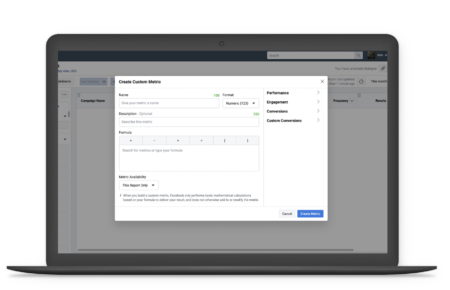
Facebook also introduced a custom metric building feature, enabling advertisers to formulate and save metrics that tailor their reports to match their business goals.

The social network said in a blog post, “Cross-account reporting and custom metrics can help your better understand the performance of your campaigns, improve your advertising strategy and understand who you are reaching during the holidays and beyond.”

Facebook also detailed the conversion path report it added to its attribution tools earlier this year.

The social network cited an Ipsos report it commissioned, which found that holiday shoppers used a variety of channels last year—online, print, television—to shop and decide on purchases.

Facebook said its conversion path reporting will enable advertisers to view publishers in the most frequent conversion paths across channels and devices in order to identify the paths delivering the most impact and to properly credit those sources.

The company wrote, “We know cross-channel and cross-device measurement is a top priority for many advertisers. That’s why we’re always working to evolve our measurement solutions and make it easier for you to better understand how marketing across channels impacts the business outcomes, especially during the holidays.”

https://www.adweek.com/digital/facebook-adds-more-reporting-options-in-time-for-the-holiday-shopping-season/


Spotify: Here’s How to Change Your Volume Level Setting

Did you know that Spotify allows you to control the volume of the content you play outside of just using a volume bar? The platform also allows you to set your overall “volume level” by selecting “loud,” “normal” or “quiet.” Our guide will show you how to change your volume level setting from within the Spotify mobile application.

Note: These screenshots were captured in the Spotify app on iOS.

Step 1: On the Spotify home screen, tap the gear icon in the top-right corner of the screen.

Step 2: Tap “Playback.”

Step 3: Scroll down to the “Volume level” area and tap “Loud,” “Normal” or “Quiet,” depending on the setting you wish to use. You can repeat these steps at a later time if you wish to change your volume level setting again.

https://www.adweek.com/digital/spotify-heres-how-to-change-your-volume-level-setting/


Over 1.1 Million People on Facebook Raised $120 Million on GivingTuesday

Another GivingTuesday is in the books, and a lot of the giving that went on Tuesday came from people on Facebook.

Chief operating officer Sheryl Sandberg said in a Facebook post Wednesday that more than 1.1 million people raised roughly $120 million Tuesday, with donations going to “97,000 nonprofits supporting disaster relief, animal shelters, cancer research and so much more.”

Facebook added that some $20 million was raised in the week leading up to Dec. 3.

The social network’s holiday pop-ups in New York, Los Angeles and Chicago will be open to the public through Sunday (Dec. 8), in support of the Military Mama Network Facebook group, which is currently being featured in one of the company’s TV commercials.

[embedded content]

https://www.adweek.com/digital/over-1-1-million-people-on-facebook-raised-120-million-on-givingtuesday/