Her Cart Will Go On: Céline Dion Teams Up With Instagram on Gift Guide

Superstar Céline Dion teamed up with Instagram on a 1990s nostalgia gift guide featuring 18 shoppable brands on the Facebook-owned photo- and video-sharing network.

Instagram said in a blog post, “From #asif to #grunge, ’90s nostalgia is one of the biggest trends in culture, retail and especially on Instagram. And with Instagram Shopping, not only can you discover inspirational trends: You can shop them, too. This holiday season, we teamed up with icon Céline Dion to create the ultimate gift guide. Inspired by ‘It’s All Coming Back to Me Now,’ we created a music video that features 18 shoppable brands available on Instagram.”

The video was directed by Matt Lambert of Prettybird, with Mother in New York serving as the agency for the project and Mel Ottenberg as the stylist.

The featured brands are: Adam Selman, Adidas, Bebe, Bershka, Calvin Klein, Chillhouse, Chinatown Market, Emi Jay, Good American, Marc Jacobs, Michael Kors, Natori, Net-a-Porter, Oscar de la Renta, Ralph Lauren, Rebecca Minkoff, Retrosuperfuture and Revolve.

https://www.adweek.com/brand-marketing/her-cart-will-go-on-celine-dion-teams-up-with-instagram-on-gift-guide/


LinkedIn Chief People Officer Christina Hall Leaves the Company

LinkedIn senior vice president and chief people officer Christina Hall is no longer with the company.

Giles Turner and Amy Thomson of Bloomberg reported that Hall’s departure was due to an internal compliance issue, but LinkedIn would not comment on the reasons for the move.

Nina McQueen, currently vp of global talent, benefits and employee experience at the professional network, will take over Hall’s responsibilities on an interim basis.

LinkedIn spokesperson Nicole Leverich said in an email, “Christina Hall, global head of talent, has resigned from LinkedIn. We are grateful for Christina’s contributions over her six years with LinkedIn. Nina McQueen will lead our global talent organization on an interim basis while we conduct an internal and external search for a replacement.”

Nina McQueen

Hall had been with LinkedIn since July 2013, starting off as senior director of global compensation before moving through the ranks to vp of global compensation and human resources mergers and acquisitions; vp of global compensation, M&A integration and human resources business partners leader; and vp, global talent organization. She assumed her final role at the company in September 2018.

Prior to LinkedIn, she worked on compensation for Facebook, after serving as director of global rewards for Intuit.

McQueen joined LinkedIn in her current role in September 2013, after holding the post of director of global benefits at Facebook from December 2010 through August 2013, at the same time Hall was with the social network.

Prior to Facebook, McQueen held similar benefits titles with Yahoo, Gap and Agilent Technologies.

https://www.adweek.com/digital/linkedin-chief-people-officer-christina-hall-leaves-the-company/


How Do People on Facebook Feel About the Accuracy of Categories in Their Ad Preferences?

A new study from Pew Research Center arrived at some seemingly obvious conclusions about the correlation between usage of Facebook and how much the social network learns about people through that usage.

Pew conducted a survey in which Facebook users were asked to review their ad preferences on the social network, with roughly nine out of 10 finding information about them on those pages.

Not surprisingly, people who use Facebook several times daily or who have been on the social network for longer periods of time reported seeing more categories listed on their ad preferences pages.

Pew found that 44% of respondents who use the social network several times per day reported at least 21 categories, while that total was only reached by 34% of those who use Facebook once per day and 20% of those who access it less often.

Overall, 37% of respondents found 21 or more categories, while 30% found just one to nine.

52% of people with Facebook accounts that were more than 10 years old at the time of the survey found 21 or more categories, compared with 36% of those with accounts between five and 10 years old and 27% of those who had been on the social network for fewer than five years.

Pew said roughly one-third of accounts younger than one decade had fewer than 10 categories listed, while that number dropped to 18% for those with accounts for more than 10 years.

Pew Research Center

The think tank also found that respondents who found more categories on their ad preferences pages also found those categories to be more accurate than those who found fewer of them.

According to Pew, three-quarters of respondents with 21 or more categories said those categories were very or somewhat accurate, while just 58% of those with fewer than 10 categories felt the same.

Similarly, 72% of respondents who use Facebook multiple times daily said the categories listed for them at least somewhat accurately represented their interests, compared with 58% of those who don’t visit the social network every day.

Length of time that respondents have had their Facebook accounts wasn’t as much of a factor, as 67% of those who have been on the social network for more than 10 years found its information on them to be at least somewhat accurate, versus 66% of those who have been on Facebook for five to 10 years and 69% of those with accounts less than five years old.

In any event, fewer than 20% of overall respondents said the categories attributed to them were very accurate.

Pew Research Center

Privacy settings had little effect, according to Pew, which found that respondents who made changes to their privacy settings in the year prior to the study reported the same levels of accuracy as those who didn’t do so.

Pew found that just 14% of respondents knew that their ads preference pages existed prior to taking its survey.

Just four out of 10 respondents were somewhat comfortable with the existence of these lists—44% of those who use Facebook daily, compared with 34% of non-daily users.

And 52% of those who found their lists to be at least somewhat accurate were at least somewhat comfortable with the existence of those lists, versus 21% of those who felt that their categories were not very or not at all accurate.

https://www.adweek.com/digital/how-do-people-on-facebook-feel-about-the-accuracy-of-categories-in-their-ad-preferences/


Facebook Created a Chatbot to Help Its Employees Answer Tough Questions

Facebook built an internal chatbot to help its employees answer tough questions from family and friends about the company’s often controversial policies.

The social network said the tool, named Liam Bot, has been in beta since May, and it is available to any employee of the company who opts in.

Topics covered by Liam Bot include Facebook’s policies on hate speech, its efforts to fight misinformation, its position on political ads and how to navigate its help center if someone is having account issues.

Sheera Frenkel and Mike Isaac of The New York Times provided the following example of a Facebook employee being asked how the company handles hate speech.

Liam Bot would provide the following talking points: Facebook consults with experts; the company has hired more moderators to police content; artificial intelligence is being developed to detect hate speech; regulation is important; and citing statistics from a Facebook report on the topic is suggested.

A Facebook spokesperson said in an email, “Our employees regularly ask for information to use with friends and family on topics that have been in the news—especially around the holidays. We put this into a chatbot, which we began testing this spring.”

Facebook pointed out that prior to Liam Bot, it took similar steps to provide its employees with talking points around the holiday season, via methods such as internal groups on Workplace by Facebook, as well as email.

https://www.adweek.com/digital/facebook-created-a-chatbot-to-help-its-employees-answer-tough-questions/


Tumblr Shares Its Year in Review for 2019

Artists on Tumblr was the top community on Tumblr in 2019, while the most popular meme for the year on the microblogging platform was Area 51.

Tumblr took the wraps off its 2019 Year in Review Monday, and highlights follow:

Tumblr’s overall top 10 for 2019:

  1. Good Omens, television
  2. BTS, music
  3. Marvel, comics/film
  4. Steven Universe, TV
  5. Druck, TV
  6. Game of Thrones, TV
  7. SKAM France, TV
  8. Pokemon video game
  9. Critical Role, web
  10. Ineffable Husbands, relationships

The top communities on Tumblr in 2019 were:

  1. Artists on Tumblr
  2. Studyblr
  3. Photographers on Tumblr
  4. Mineblr
  5. Writers on Tumblr
  6. Witchblr
  7. Poets on Tumblr
  8. Fitblr
  9. Simblr
  10. Curators on Tumblr

2019’s top memes on the platform were:

  1. Area 51
  2. Inktober
  3. Moodboard
  4. Shit My Players Say
  5. CountryHumans
  6. Fake History
  7. Caturday
  8. Taylurking
  9. Cursed Image
  10. Spidersona

The top relationships of the year were:

  1. Ineffable Husbands (Aziraphale and Crowley, Good Omens, male/male)
  2. Klance (Keith and Lance Voltron, Legendary Defender, male/male)
  3. Juliantina (Juliana Valdés and Valentina Carvajal, Amar a Muerte, female/female)
  4. Reddie (Richie Tozier and Eddie Kaspbrak, It, male/male)
  5. Jikook (Park Jimin and Jeon Jungkook, BTS, male/male)
  6. Phan (Daniel Howell and Phil Lester, YouTubers, male/male)
  7. Reylo (Rey and Kylo Ren, the Star Wars universe, female/male)
  8. Malec (Magnus Bane and Alec Lightwood, Shadowhunters, male/male)
  9. Bellarke (Bellamy Blake and Clarke Griffin, The 100, female/male)
  10. Tyrus (TJ and Cyrus, Andi Mack, male/male)

2019’s top 10 web series were:

  1. Critical Role
  2. RWBY
  3. Sanders Sides
  4. Homestuck
  5. BuzzFeed Unsolved
  6. The Adventure Zone
  7. Camp
  8. Hazbin Hotel
  9. The Magnus Archives
  10. Team StarKid

And the year’s top web celebrities were:

  1. Jacksepticeye
  2. Thomas Sanders
  3. Daniel Howell
  4. Markiplier
  5. AmazingPhil
  6. David Dobrik
  7. Jenna Marbles
  8. The Dolan Twins
  9. Shane Madej
  10. James Charles

https://www.adweek.com/digital/tumblr-shares-its-year-in-review-for-2019/


Facebook Integrates WhatsApp Into Its Crisis Response Features

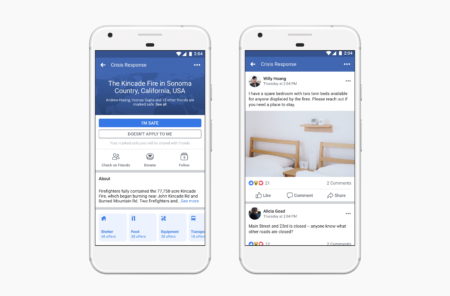
Facebook integrated its WhatsApp messaging application into its Crisis Response tools and added the ability for people to share firsthand accounts of timely information, including photos and videos.

The social network said people who want to offer or request help via its Crisis Response pages were previously limited to sending messages via Messenger, but starting Monday, WhatsApp is included in that mix, as well.

And in addition to sharing requests and offers for help, people can now use Facebook’s tools to share firsthand accounts of timely information, such as building collapses or road closures, with photos and videos included.

The social network also revealed updates on its Disaster Maps and Displacement Maps.

Facebook Data for Good is now working with more than 100 disaster response and public health partners, and the social network had already been providing its Disaster Maps to relief organizations, enabling them to strengthen their response efforts and maximize the efficiency of their distribution of supplies.

Facebook said in an email, “Through strengthened partnerships with organizations that support state and local emergency responders during disasters, like Direct Relief and the National Alliance for Public Safety GIS (NAPSG) Foundation, we’re now delivering insights from Disaster Maps to support state and local officials, as well as federal relief agencies, in order to better serve their communities when disasters strike.”

The social network added that it worked closely with international experts on the topic of displacement, including the International Displacement Monitoring Centre, to improve its Displacement Maps, factoring in elements such as commute patterns and tourist populations.

Facebook said, “By sharing anonymized and aggregated numbers on displaced populations at the city level, we can now empower response agencies and academics to better support displaced populations and affected communities around the world.”

https://www.adweek.com/digital/facebook-integrates-whatsapp-into-its-crisis-response-features/


Facebook Begins Testing Photo Transfer Tool

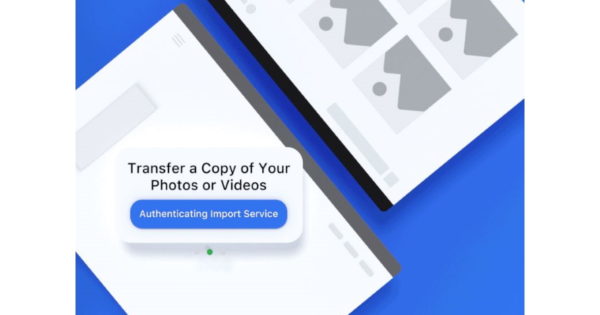
Facebook began testing a photo transfer tool that will enable people to transfer their photos and videos from the social network directly to other online services, beginning with Google Photos.

This new feature marks the next step in Facebook’s efforts to provide its users with data portability options.

The photo transfer tool was released in Ireland Monday, with plans to make it available globally during the first half of 2020.

Director of privacy and public policy Steve Satterfield said in a Newsroom post that people with access to the new tool can find it within the Your Facebook Information area.

Satterfield said privacy and security were top priorities in developing this tool, and software engineer William Morland provided more details in a separate blog post.

He wrote, “Any mechanism to send data outside of a service carries risk. We have put measures in place to mitigate these risks. For example, we use the commonly used protocol OAuth to authenticate people with the destination service. As we continue to add more services and data types, we needed to look at several factors. It’s important that the system request only the permissions required for the task at hand. Access to the destination service should end once the transfer is complete. Finally, transfers should only be created by the owner of the account. In order to verify this, we ask people to re-enter their password before initiating a transfer. We also send an email to the registered account once a transfer has begun, which allows people a chance to stop the transfer if they change their mind or do not recognize the request.”

Satterfield said the social network is testing the new tool with plans to refine it based on feedback from users and conversations with stakeholders.

He added, “We’ve learned from our conversations with policymakers, regulators, academics, advocates and others that real-world use cases and tools will help drive policy discussions forward. That’s why we’re developing new products that take into account the feedback we’ve received and will help drive data portability policies forward by giving people and experts a tool to assess.”

And Morland pointed out that Facebook’s Download Your Information tool has been available since 2010, and the social network joined the Data Transfer Project—along with Twitter, Google and Microsoft—in July 2018.

https://www.adweek.com/digital/facebook-begins-testing-photo-transfer-tool/


Spotify: Here’s How to Start a Private Session

Did you know that Spotify allows you to turn on a private session mode if you wish to listen to content anonymously? When this mode is on, information about the content you listen to won’t be shared with others. Our guide will show you how to begin a private session in the Spotify mobile application.

Note: These screenshots were captured in the Spotify app on iOS.

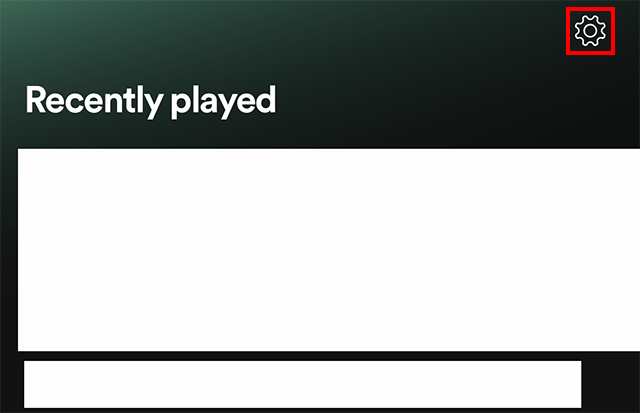
Step 1: On the Spotify home screen, tap the gear icon in the top-right corner of the screen.

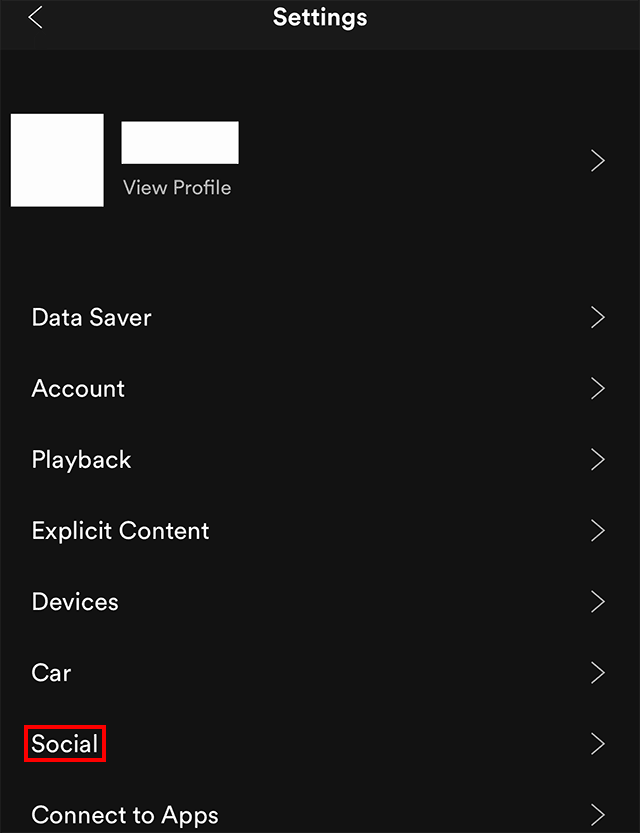
Step 2: Tap “Social.”

Step 3: Tap the toggle to the right of “Private session” to turn this feature on. You can repeat these steps at a later time to turn your private session off.

https://www.adweek.com/digital/spotify-heres-how-to-start-a-private-session/


Twitter to Dormant Account Holders: Use ‘em or Lose ‘em (UPDATED)

Twitter is taking steps to clean up inactive accounts on its platform and make the usernames of those accounts available again.

The social network is sending out emails to holders of inactive accounts, with the subject line, “Don’t lose access to @(username),” reading: “To continue using Twitter, you’ll need to agree to the current terms, privacy policy and cookie use. This not only lets you make the best decisions about the information that you share with us, it also allows you to keep using your Twitter account. But first, you need to log in and follow the on-screen prompts before Dec. 11, 2019, otherwise your account will be removed from Twitter.”

A Twitter spokesperson said in an email, “As part of our commitment to serve the public conversation, we’re working to clean up inactive accounts to present more accurate, credible information that people can trust across Twitter. Part of this effort is encouraging people to actively login and use Twitter when they register an account, as stated in our inactive accounts policy. We have begun proactive outreach to many accounts who have not logged into Twitter in over six months to inform them that their accounts may be permanently removed due to prolonged inactivity.”

Chris Welch of The Verge pointed out that these accounts don’t necessarily have to tweet to keep their handles, and they are only required to follow the instructions in the email above, adding that usernames with fewer than five characters are no longer supported by the social network.

UPDATED Nov. 27, 3:50 p.m. ET: Twitter responded to concerns over the move in a series of tweets Wednesday.

The social network said the change only impacts accounts in the European Union, for now, in part due to the General Data Protection Regulation, but it may be extended to other regions in the future.

Twitter also responded to concerns about accounts belonging to deceased people, and loved ones who wanted to keep those accounts active in some way, tweeting, “We’ve heard you on the impact that this would have on the accounts of the deceased. This was a miss on our part. We will not be removing any inactive accounts until we create a new way for people to memorialize accounts.”

https://www.adweek.com/digital/twitter-to-dormant-account-holders-use-em-or-lose-em/


HBO, Snapchat Team Up on AR Lenses for His Dark Materials

Will Snapchatters be able to bear the newest series of augmented reality lenses from the messaging application and HBO?

The premium network and Snapchat teamed up on a series of AR lenses that bring Iorek Byrnison, the armored bear from series His Dark Materials, and other animals from the show—referred to as daemons—to life.

His Dark Materials is based on the trilogy of books by Philip Pullman, and stars include Lin-Manuel Miranda and James McAvoy.

The key art marker tech lens, featuring Miranda, debuted in New York and Los Angeles early this month.

HBO/Snapchat

It was followed by a landmarker lens that was released last week at the TCL Chinese Theatre in Los Angeles.

HBO/Snapchat

And Wednesday, a face lens and world lens join the fray, available to Snapchat users throughout the U.S.

HBO/Snapchat
HBO/Snapchat

HBO/Snapchat

HBO/Snapchat

HBO/Snapchat

Snap Inc. called HBO a key partner for 2019, noting that the two parties also collaborated in April, when they used landmarker AR technology to enable the Ice Dragon from Game of Thrones to take over New York’s Flatiron Building.

https://www.adweek.com/digital/hbo-snapchat-team-up-on-ar-lenses-for-his-dark-materials/