Pinterest Adds 10 Coping Exercises to Its Well-Being Activities

Pinterest expanded on the well-being activities it added in July for Pinners searching for terms indicating that they may be struggling.

Co-founder and chief creative and design officer Evan Sharp revealed in a blog post that 10 new coping exercises were added for when users search for terms related to self-injury.

The new activities rolled out in the U.S. Thursday on Pinterest’s iOS and Android applications (version 7.37 and above), and Sharp said Pinterest is working to bring them to more people in more places.

He wrote, “Each exercise is guided with steps that people can take to manage their feelings, such as ways to redirect energy, release tension or create a calm environment. For example, let’s say you typed in, ‘self hate,’ and chose the ‘redirect your energy’ activity. It would suggest starting a journal and rereading it a few days later to get some perspective on your thoughts. Or, if writing isn’t your thing, you could try drawing a nature scene or making a playlist.”

Sharp added that the activities came from Pinterest’s work with emotional health experts, and they are not intended to replace professional care.

He also noted that Pinterest ensured that the experience felt separate from the rest of the platform, with gentler colors to create a sense of harmony and calmness, as well as a full-screen approach with optimized typography to make the activities easier to read and follow.

Pinterest added the ability in October for Pinners to access the well-being activities it released in July by searching for #pinterestwellbeing, and that applies to the coping exercises that debuted Thursday, as well.

The guided activities were created with the help of emotional health experts from Brainstorm at the Stanford Lab for Mental Health Innovation, along with advice from Vibrant Emotional Health and the National Suicide Prevention Lifeline.

Sharp concluded, “For some of the most painful emotional experiences—urges to self-injure or thoughts of suicide—most tech platforms are good at connecting people to crisis hotlines. But there’s a gap between urges to self-injure and thoughts of suicide. Experts confirm that these are different emotional states, and they require different solutions—most people who injure themselves are often not suicidal in the moment, and instead are looking for a way to cope with their emotions. The exercises we created bridge that gap, offering new ways for someone to reduce their stress levels in the moment and giving them tools they can use on a regular basis to cope with their emotions. And if they ever need access to crisis prevention support, it’s readily available from our app.”

https://www.adweek.com/digital/pinterest-adds-10-coping-exercises-to-its-well-being-activities/



Twitter Adds Conversation Insights Tool to Media Studio

Twitter added a new tool to its publisher insight portion of Media Studio, conversation insights.

Product manager Ellen Havlicek said in a blog post that conversation insights enables publishers to see tweets they may have missed via the social network’s content listening tools, which go beyond mentions and hashtags.

Tweets that are surfaced are displayed on a customizable dashboard, enabling publishers to see what is being said about them minute-by-minute over time.

Features in the conversation insights tool include:

  • An interactive graph that displays how many tweets there are about the publisher.
  • Top accounts talking about the publisher or engaging with its content, filtered by follower count or frequency.
  • A timeline of tweets about the publisher that can be filtered by follower and engagement thresholds, language, tweet format and verification status.

Havlicek added that in the future, publishers will be able to engage with tweets, share tweets or reply directly via the tool.

https://www.adweek.com/digital/twitter-adds-conversation-insights-tool-to-media-studio/


Facebook Brings Machine Learning Into the Dynamic Ads Creation Process

Facebook is adding a touch of machine learning to help brands more accurately personalize dynamic ads.

The social network’s new dynamic formats and ad creative solution delivers a personalized version of an ad to everyone who sees it, based on formats they have proven more likely to respond to, such as collection and carousel.

Facebook said in a blog post that this solution can be leveraged within Facebook dynamic ads when they are created for the catalog sales, traffic and conversions objectives in Ads Manager or via the Marketing API (application-programming interface).

The social network added that it recently conducted a test with 12 ecommerce and retail advertisers and found that dynamic formats and ad creative outperformed carousel-only ads in driving lift across content views, add-to-cart, purchases and sales, with a 34% improvement in incremental return on ad spend, a 10% boost in life and a 6% drop in cost per incremental purchase.

When brands are creating single-media ads for traffic, application installs and conversions objectives, they can add multiple text optimization, enabling them to input multiple options for the primary text.

Facebook said in its blog post, “This allows our ad system to optimize for delivery and performance using variations of the text options provided, based on individual preferences identified by our machine learning models.”

Advertisers can also use auto-translation for single-media ads, enabling them to reach international customers in their local languages and save on the resources they would have needed to do the translations themselves.

Brands opting for this feature have controls that allow them to review the translations it produces and, should they wish, to provide their own.

The social network wrote, “By leveraging machine learning to dynamically select ad formats, creative and text at the ad impression-level based on what might work best for the individual in question, we can improve advertiser performance and the consumer experience.”

https://www.adweek.com/digital/facebook-brings-machine-learning-into-the-dynamic-ads-creation-process/


Facebook Proactively Removed 80% of Posts Pulled for Hate Speech in Q2, Q3

Facebook released the fourth edition of its Community Standards Enforcement Report Wednesday, covering the second and third quarters of 2019.

CEO Mark Zuckerberg said during a press call discussing the report, “While we err on the side of free expression, we do have community standards defining what is acceptable on our platform and what isn’t. This is a tiny fraction of content on our platform, but this is some of the worst content out there.”

Vice president of integrity Guy Rosen said in a Newsroom post that the report now includes metrics across 10 policies on Facebook and four on Instagram.

The Facebook policies covered are: adult nudity and sexual activity; bullying and harassment; child nudity and sexual exploitation of children; fake accounts; hate speech; regulated goods (drugs and firearms); spam; suicide and self-injury; terrorist propaganda; and violent and graphic content.

And for Instagram, policies covered are: child nudity and sexual exploitation of children; regulated goods (drugs and firearms); suicide and self-injury; and terrorist propaganda.

Instagram head of product Vishal Shah said during the press call that future reports will include data on additional policy areas.

Metrics detailed by Facebook include how often content that violates its policies was viewed, how much content action was taken on, how much of that content was detected before someone reported it, how many appeals there were on content after taking action and how much of that content was restored after the company initially took action.

Rosen said of the first metric, which Facebook refers to as prevalence, “Think of this as an air quality test to determine the amount of pollutants in the air. We focus on how much content is seen.”

Rosen said data on appeals and restores was not available for Instagram, as appeals were not added to that platform until the second quarter, but such data will be included in future reports.

He also pointed out that metrics may vary between Facebook and Instagram, as the latter does not offer links or reshares in feed, pages or groups.

Rosen was also asked about how the figures being reported by Facebook Wednesday accounted for Facebook Stories and Instagram Stories, and whether the fact that content in that form disappears within 24 hours affected enforcement, and he replied that the same user reporting capabilities and proactive detection systems apply to Stories, and the approach is by and large the same.

Rosen said Facebook’s rate of removing hate speech proactively is up to 80%, compared with 68% in its last Community Standards Enforcement Report, attributing the increase to investments and advances in detection techniques such as text and image matching, as well as machine learning classifiers that examine language and reactions and comments to posts.

On automatic removals, he wrote, “We only do this in select instances, and it has only been possible because our automated systems have been trained on hundreds of thousands, if not millions, of different examples of violating content and common attacks. In all other cases when our systems proactively detect potential hate speech, the content is still sent to our review teams to make a final determination.”

“Defining hate speech involves a lot of linguistic nuance,” Zuckerberg said during the press call.

Facebook said its rate of detecting and removing content associated with al-Qaida, Isis (Islamic State) and their affiliates remains above 99%, and for all terrorist organizations, that figure is 98.5% on Facebook and 92.2% on Instagram.

Facebook vp of global policy management Monika Bickert said during the press call that the company expanded its report to include enforcement against all terrorist organizations, adding, “We are always evolving our tactics because we know bad actors will continue to change theirs.”

https://www.adweek.com/digital/facebook-proactively-removed-80-of-posts-pulled-for-hate-speech-in-q2-q3/


Dutch Court Rules vs. Facebook in Suit Over Cryptocurrency Scam Ads

Facebook’s oversight of cryptocurrency ads was not enough to satisfy a court in the Netherlands.

Dutch court Rechtbank Amsterdam issued a ruling this week saying that the social network can be required to use filter technologies to identify and take down ads linked to cryptocurrency scams, which featured the images of celebrities including media personality John de Mol, Natasha Lomas of TechCrunch reported.

de Mol filed a lawsuit against Facebook in April over the ads, according to Lomas.

A Facebook spokesperson told Lomas: “We just received the ruling and will now look at its implications. We will consider all legal actions, including appeal. Importantly, this ruling does not change our commitment to fighting these types of ads. We cannot stress enough that these types of ads have absolutely no place on Facebook, and we remove them when we find them. We take this very seriously and will therefore make our scam ads reporting form available in the Netherlands in early December. This is an additional way to get feedback from people, which, in turn, helps train our machine learning models. It is in our interest to protect our users from fraudsters and, when we find violators, we will take action to stop their activity, up to and including taking legal action against them in court.”

The court’s judgment ordered Facebook to remove the ads within five days—with a penalty of 10,000 euros ($11,102) per day for failure to comply, up to €1 million ($1.1 million)—and revealed that victims of the scams reported damages of €1.7 million ($1.87 million) to the Dutch government at the time of the summons, Lomas reported

The court also ordered Facebook to provide data to affected celebrities on the accounts that were misusing their likenesses within seven days, with further penalties of €1,000 ($1,101) per day for failure to comply, up to €100,000 ($110,124), Lomas reported, and the company was ordered to pay the case costs.

Lomas reported that Facebook argued that it could not proactively remove the ads because doing so would breach European Union laws against monitoring conditions on internet platforms, but the court rejected that argument, along with another argument by the company that restricting the ads amounted to restricting freedom of expression.

The social network implemented a policy in February 2018 that prohibited ads from promoting financial products and services frequently associated with misleading or deceptive promotional practices, such as binary options, initial coin offerings or cryptocurrency.

Facebook relaxed its policies somewhat that June, allowing ads that promote cryptocurrency and related content from pre-approved advertisers, but still banning ads promoting binary options and ICOs.

And in May, the company waived its pre-approval requirement for ads related to blockchain technology and cryptocurrency industry news, education or events.

https://www.adweek.com/digital/dutch-court-rules-vs-facebook-in-suit-over-cryptocurrency-scam-ads/


Facebook Brings Political and Issue Ad Policies, Transparency Tools to Taiwan

Facebook’s political and issue ad policies and ad transparency tools were extended to Taiwan prior to that country’s presidential election, which will be held Jan. 11, 2020.

Public policy director Katie Harbath said in a blog post that anyone seeking to run ads about social issues, elections or politics in Taiwan must first confirm their identity and disclose who funded the ad, with a person, page or organization’s name to appear in the “Paid for by” disclaimer.

Advertisers must provide additional information such as phone number, email address, website and business address in order to use their organization or page name in the disclaimer.

Harbath said the authorization process also applies to ads related to social issues including political values/governance, civil/social rights, environmental politics, economy, security, foreign policy and crime, adding that potential advertisers should begin the process as soon as possible, as it may take a few days to complete.

Ads from authorized advertisers will be placed in Facebook’s Ad Library for seven years, including disclaimer information and covering ads across all products on the social network’s platform. The Ad Library provides people with details including spend range, reach and name of the person or entity behind the ad.

Facebook debuted transparency tools covering political and issue ads in the U.S. last May, and they were extended to the U.K. last November, India last December, the European Union in March, Australia in April, Canada in June and Singapore in September.

The social network revealed in June that the tools would be extended worldwide, starting with Ukraine, Singapore, Canada (announced earlier that month) and Argentina.

Harbath wrote, “We will continue to refine and improve our policies and tools as part of our commitment to help protect the integrity of elections in Taiwan and around the world.”

https://www.adweek.com/digital/facebook-brings-political-and-issue-ad-policies-transparency-tools-to-taiwan/


Bug Caused Camera on Facebook iOS App to Activate When Not in Use

A bug in Facebook’s flagship iOS application caused the app’s camera to activate after users tapped on photos while browsing News Feed.

Dimitar Mihov (Mix) of The Next Web and Alfred Ng of CNET shared several tweets from Facebook users (embedded below) regarding the issue.

Facebook vice president of integrity Guy Rosen took to Twitter to address concerns about the issue, tweeting, “We recently discovered that our iOS app incorrectly launched in landscape. In fixing that last week in v246, we inadvertently introduced a bug where the app partially navigates to the camera screen when a photo is tapped. We have no evidence of photos or videos uploaded due to this.”

A statement from a Facebook spokesperson echoed Rosen: “We recently discovered that version 244 of the Facebook iOS app would incorrectly launch in landscape mode. In fixing that issue last week in v246 (launched Nov. 8), we inadvertently introduced a bug that caused the app to partially navigate to the camera screen adjacent to News Feed when users tapped on photos. We have seen no evidence of photos or videos being uploaded due to this bug. We’re submitting the fix for this to Apple today.”

Joshua Maddux, owner of web design firm 95Visual, told Mihov he experienced the issue on five iPhones running iOS 13.2.2, but not on devices running iOS 12, and Mihov reported that iOS 13.1.3 appeared to be unaffected, as well, but some Twitter users said the bug did indeed affect iOS 12.

https://www.adweek.com/digital/bug-caused-camera-on-facebook-ios-app-to-activate-when-not-in-use/


Facebook Pay Unifies Payments Experience Across Facebook, Messenger, Instagram, WhatsApp

Facebook CEO Mark Zuckerberg revealed long-term plans in January to unify the messaging infrastructure behind Facebook, Messenger, Instagram and WhatsApp, and the social network took the first step toward that goal Tuesday with its introduction of Facebook Pay.

Vice president of Marketplace and commerce Deborah Liu said in a Newsroom post that Facebook Pay provides a secure and consistent payments experience across Facebook, Messenger, Instagram and WhatsApp.

Liu said Facebook Pay will begin rolling out on Facebook and Messenger in the U.S. this week for fundraisers, in-game purchases, event tickets, person-to-person payments on Messenger and purchases from select pages and businesses on Marketplace.

She added that Facebook Pay will be expanded to more people and places, as well as Instagram and WhatsApp, over time.

Facebook Pay supports PayPal and most major credit and debit cards, and payments are processes in partnership with PayPal, Stripe and other providers in the field.

Liu noted that Facebook Pay is built on existing financial infrastructure and partnerships, and it is separate from the Calibra cryptocurrency wallet the company is developing to run on the Libra network.

Facebook vp and chief privacy officer, public policy Erin Egan addressed the privacy aspects of Facebook Pay in a separate Newsroom post.

Egan said people will be able to add or remove payment methods, view transactions and access customer support directly via Facebook Pay, and those who choose to set it up across applications will be able to view their payment histories across those apps in one place.

People will also be given the choice to opt in to email marketing from businesses that they shop from or nonprofits they donate to, and those businesses or nonprofits will only be able to use their email addresses if they opt in.

Users with access to Facebook Pay can go to Settings, Facebook Pay on the flagship Facebook app or website and add their payment method, and once Instagram and WhatsApp are on board, Facebook Pay can be set up directly via those apps, as well.

Egan specified that Facebook Pay will not be automatically set up across apps that people are active on, and that the process must be initiated by the user.

Facebook Pay can then be used to make payments and purchases across the apps that it is set up on, eliminating the need for users to have to re-enter payment information for every transaction.

Liu said real-time customer support is available via live chat in the U.S., with more markets to be added.

Egan pointed out that Facebook has been providing payment capability since 2007, and the social network has processed over $2 billion in donations since debuting fundraising tools in August 2015.

She added that Facebook Pay was designed to securely store and encrypt card and bank account numbers, and the company performs anti-fraud monitoring to detect unauthorized activity and provide notifications for account activity.

Users can also add PIN numbers or use their device biometrics (touch or face ID recognition) for an extra layer of security when making payments through Facebook Pay, and Egan said Facebook does not receive or store biometric information.

Egan said Facebook will collect information on purchases made via Facebook Pay, such as payment method, transaction date and details in billing, shipping and contact information.

Actions taken with Facebook Pay can be used to deliver relevant content and ads, to provide customer support and to promote safety and integrity, and Egan added that card and bank account numbers will not be used to personalize users’ experiences or determine which ads they see.

Payment and transaction history via Facebook Pay can only be seen by the user, and it is not shared with friends or to Facebook profiles or News Feed.

https://www.adweek.com/digital/facebook-pay-unifies-payments-experience-across-facebook-messenger-instagram-whatsapp/


Facebook Gives Users of Its iOS, Android Apps More Control Over Their Shortcut Bars

Facebook is rolling out a way for users of its flagship iOS and Android applications to customize the shortcuts in their navigation bars.

People will have the option of hiding shortcuts to features they don’t access often, such as video destination Facebook Watch, ecommerce hub Facebook Marketplace, recent addition Facebook Dating, groups, events, profile, friend requests, News, Today In and Gaming, as well as the red notification dots that appear with those shortcuts.

Long-pressing on the shortcut bar will bring up this functionality for users who have received they update, at which point they can remove shortcuts they no longer wish to see and turn off badge notifications for tabs. The social network said it wanted to give people the ability to turn notifications they receive within the app on and off as they wish.

Facebook said the update is available to nearly all iOS users, and it is ramping up on Android, with the aim of global availability in the next few weeks.

A spokesperson for the social network said in an email, “We are rolling out navigation bar controls to make it easier for people to connect with the things they like and control the notifications they get within the Facebook app.”

https://www.adweek.com/digital/facebook-gives-users-of-its-ios-android-apps-more-control-over-their-shortcut-bars/


Twitter Rolls Out Its Topics Feature to iOS Users Globally

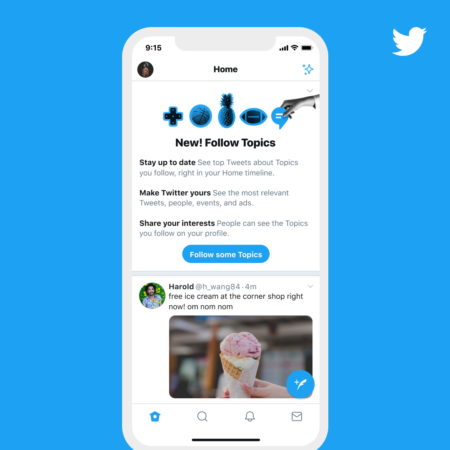
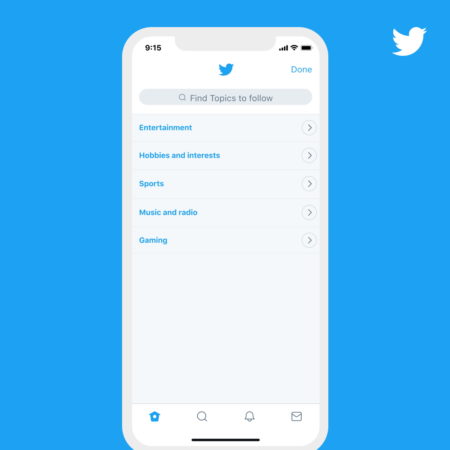
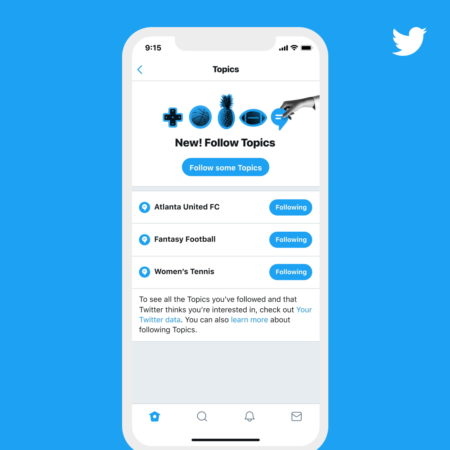
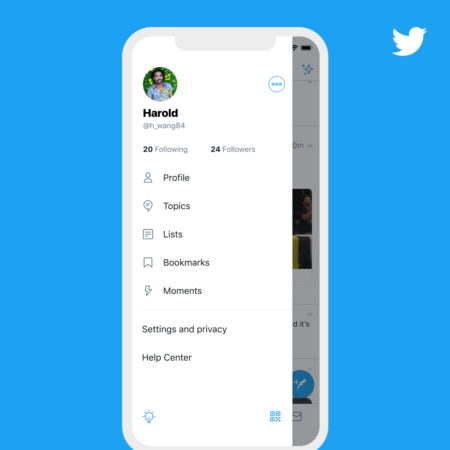
The Topics feature Twitter began testing in August is now available worldwide on iOS, with Android and the web set to follow Wednesday.

The social network revealed a small test of enabling Android users to follow sports topics in August, with product lead Kayvon Beykpour saying at the time that Twitter also planned to enable users to mute topics and to create a separate timeline with content from certain accounts and topics they follow.

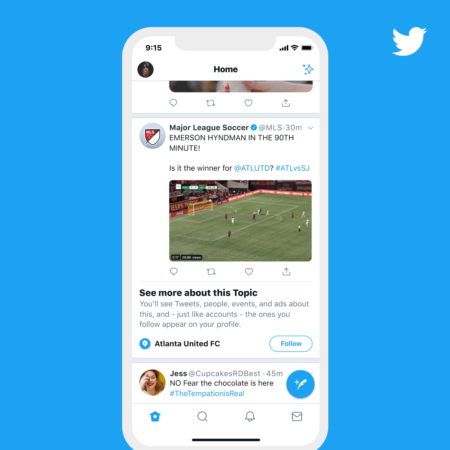
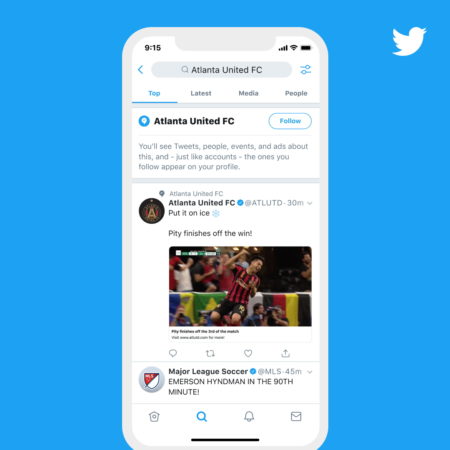
Twitter said suggestions for Topics to follow will appear in its timeline and search results, based on what people already follow and tend to search for on the social network.

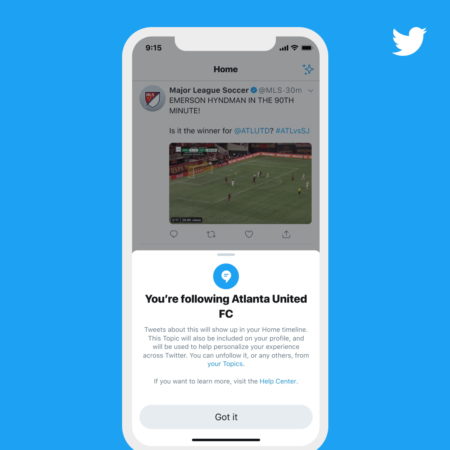
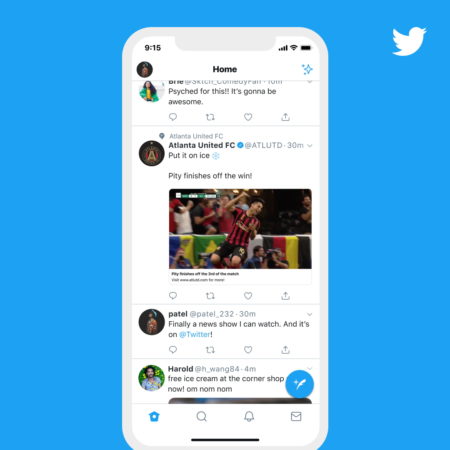
When someone follows a Topic, they will see tweets from accounts that are experts, fans or just tend to discuss the subject frequently.

Twitter also detailed updates to Topics that it plans to test or debut over the next several months:

  • Topic Selector: People will be able to select available Topics to follow from a Topic Management page.

  • Topics to a List: Twitter will begin experimenting with adding Topics to lists, writing, “Think of it as filtering your lists to see only the tweets that focus on the interest you made a list about from your favorite accounts.”
  • Topics Page: Twitter will test the ability for users to see tweets within a topic without following it on a page similar to the social network’s Explore feature.

  • New Topics: The social network will continue to roll out new Topics based on conversations happening on its platform on an ongoing basis and across different languages, countries and interests.

Twitter wrote in a blog post, “Previously, all of the work was on you to figure out the best way to keep up with what’s happening by following certain accounts, searching for it or looking in the Explore tab for the latest. Now, you have the option of seeing the most relevant and interesting tweets about what you care about with a single tap, and the conversation will come to you.”

https://www.adweek.com/digital/twitter-rolls-out-its-topics-feature-to-ios-users-globally/