Kin Is Bringing 5 Lifestyle Shows to Facebook Watch

Lifestyle entertainment company Kin unveiled a slate of five shows for video destination Facebook Watch.

The partnership is part of the social network’s efforts to pair publishers with creators and public figures.

The first five shows are currently in production:

  • Tia Mowry’s Quick Fix Presents Comfort Kitchen: This family cookbook in video form debuts in November. It features Tia Mowry and her friends and family sharing the stories behind their recipes and hanging out in the kitchen.
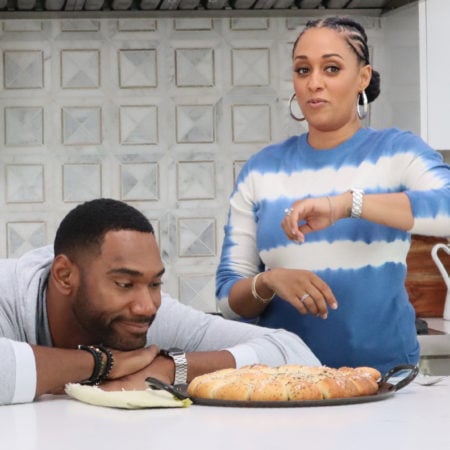
Tia Mowry’s Quick Fix Presents Comfort Kitchen

  • Wear It Well: Adrienne Bailon Houghton is tasked with styling and dressing her group of friends with diverse body types. It is also set to debut in November.
  • Side by Side: Twins Malika Haqq and Khadijah Haqq balance their bond with living lives at completely different stages, as Khadijah is a married mother of three, while Malika just found out she’s pregnant with her first child. This is another November debut.
  • Save the Cake: Yolanda Gampp of Cake Queen and How to Cake It helps struggling bakers save their kids’ birthday cakes. Gampp has 7.9 million social followers. Save the Cake will premiere next year.
  • Your Trash, Mai Treasure: Jeannie Mai takes the opposite approach of her anti-Marie Kondo mom as the two decide whether a person’s old junk is trash or treasure. It debuts in 2020.

The collaboration with Facebook watch marks Kin’s latest effort to create high-quality lifestyle franchises for women 25 and older.

The company’s current successes include Tia Mowry’s Quick Fix, All Things Adrienne and Hello Hunnay with Jeannie Mai.

Kin CEO Michael Wayne said in a release, “Our model for creating lifestyle programming has been successful in engaging audiences and delivering profits. Our audience doesn’t just passively view—they truly invest in the talent and are dedicated to tuning in every week. That’s why Facebook Watch is an incredible platform for our shows: Its unique features let fans interact with talent and each other.”

https://www.adweek.com/digital/kin-is-bringing-5-lifestyle-shows-to-facebook-watch/


WhatsApp Files Complaint vs. Israel’s NSO Group Over Video Calling Vulnerability

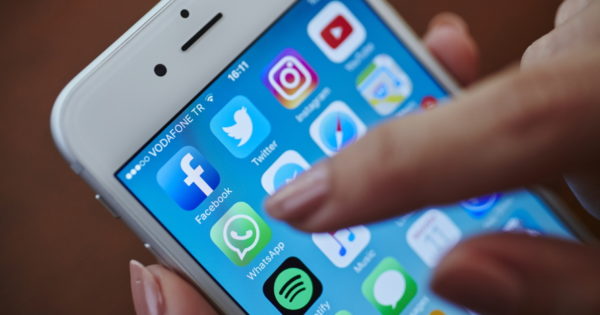
WhatsApp confirmed that Israeli technology company NSO Group was behind a vulnerability in its voice-over-internet-protocol calling feature that it identified and corrected in May.

The Facebook-owned messaging application did not identify NSO Group by name when it revealed the vulnerability in May, but Financial Times did, reporting that its code was installed on both iPhones and Android smartphones by exploiting the bug in the app’s audio call feature, and the spyware could be installed whether or not the recipient answered the calls, with those calls often disappearing from victims’ call logs.

According to FT, the spyware used in the attack was Pegasus, from NSO Group, which is licensed to governments for the purpose of gaining access to people’s devices during investigations.

NSO Group said at the time, “The company does not operate the system and, after a rigorous licensing and vetting process, intelligence and law enforcement determine how to use the technology to support their public safety missions. We investigate any credible allegations of misuse and if necessary, we take action, including shutting down the system.”

WhatsApp global head Will Cathcart wrote an op-ed for The Washington Post Tuesday, revealing that WhatsApp and parent company Facebook filed a complaint against NSO Group in the U.S. District Court for the Northern District of California.

He wrote, “As we gathered the information that we lay out in our complaint, we learned that the attackers used servers and internet-hosting services that were previously associated with NSO. In addition, as our complaint notes, we have tied certain WhatsApp accounts used during the attacks back to NSO. While their attack was highly sophisticated, their attempts to cover their tracks were not entirely successful.”

Cathcart also noted that the attack targeted at least 100 human-rights defenders, journalists and “other members of civil society across the world,” adding, “Tools that enable surveillance into our private lives are being abused, and the proliferation of this technology into the hands of irresponsible companies and governments puts us all at risk.”

He concluded, “The mobile phone is the primary computer for billions of people around the world. It is how we have our most private conversations and where we store our most sensitive information. Governments and companies need to do more to protect vulnerable groups and individuals from these attacks. WhatsApp will continue to do everything we can within our code, and within the courts of law, to help protect the privacy and security of our users everywhere.”

https://www.adweek.com/digital/whatsapp-files-complaint-vs-israels-nsa-group-over-video-calling-vulnerability/


Sen. Mark Warner Has Questions for Facebook Over Its Political Ads Policies

A politician who has clashed with Facebook and other tech companies in the past was highly critical of the social network’s policy of allowing political ads that contain misinformation.

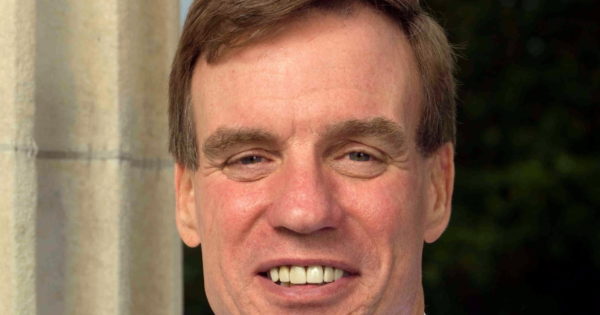
Sen. Mark Warner (D-Va.) sent a letter (embedded below) to Facebook CEO Mark Zuckerberg this week, detailing his concerns.

Warner and Sen. Josh Hawley (R-Mo.) cosponsored the Dashboard Act (Designing Accounting Safeguards to Help Broaden Oversight And Regulations on Data Act) in June, aimed at requiring internet companies with more than 100 million monthly active users to disclose the monetary value of their user data.

He sent a letter to the Federal Trade Commission last December expressing concerns over the agency’s slow response to investigating digital ad fraud and noting that the market is “largely dominated” by Google.

Warner spoke with Adweek last September about his thoughts on the roles played by Facebook, Twitter and Google during the 2016 U.S. presidential election.

Sen. Amy Klobuchar (D-Minn.) and Warner introduced the Honest Ads Act in October 2017, co-sponsored by late Sen. John McCain (R-Ariz.), to make political ads on platforms such as Facebook and Google transparent like those on TV and radio stations.

In his letter to Zuckerberg, Warner mentioned ads run by President Donald Trump that contained false allegations against presidential candidate and former Vice President Joe Biden, blaming Trump for undermining political discourse norms of decency and probity.

He wrote, “But it is also true that these norms have been undermined at least in part because of the nature, architecture, policies and operation of platforms like Facebook. The public nature of broadcast television, radio, print, cable and satellite ensured a level of accountability for traditional political advertisements. In addition to being broadly accessible to the electorate, these communications are accessible to the press, fact-checkers and political opponents through media monitoring services that track broadcast content across television and radio markets. As a result, strong disincentives exist for a candidate to disseminate materially false, inflammatory or contradictory messages to the public.”

He continued, “By contrast, social media platforms tout their ability to target portions of the electorate with direct, ephemeral advertisements—often on the basis of private information the platform has on individual users, facilitating political advertisements that are contradictory, racially or socially inflammatory or materially false, without the same constraints as more traditional communications mediums, and without affording opposing candidates an equal opportunity to respond directly in front of the same targeted audience.”

Specific questions for Zuckerberg that Warner requested answers to within the next two weeks were:

  • Under this policy, how is Facebook defining “politician?” What steps have you taken to prevent abuse of this definition?
  • Nick Clegg, Facebook’s vice president of global affairs and communications, has noted that this policy has exceptions for speech that “can lead to real-world violence and harm” or “endangers people.” How is Facebook defining these terms?
  • Unlike online intermediaries like Facebook, traditional media outlets can be sued for defamation for the advertisements they run. Because of this, traditional media outlets have generally adopted norms of refusing to run advertisements with clear falsehoods, and of taking down ads where an opposing campaign or fact-checking organization has shown an ad to be false. Would a regulatory regime establishing greater parity in liability between Facebook and traditional media outlets serve to simplify Facebook’s policies in this sphere?
  • Will you commit to provide ad targeting information, as required under the Honest Ads Act, to better allow opposing campaigns to “correct the record” in responding to potentially misleading ads?

https://www.adweek.com/digital/sen-mark-warner-has-questions-for-facebook-over-its-political-ads-policies/


Twitter Android Users Can Now Share Tweets in Direct Messages

Twitter began testing the feature on iOS in May

Android users can now share tweets in Twitter direct messages.

The social network began testing the feature on iOS in May and rolled it out to all users of that operating system in July.

Twitter tweeted about the extension of the feature to Android Tuesday.

https://www.adweek.com/digital/twitter-android-users-can-now-share-tweets-in-direct-messages/


Dior, Snapchat Create AR Experiences to Back Luggage Collection Created With Rimowa

Luxury brand Dior teamed up with Snapchat for the first time on a series of augmented reality experiences to mark the debut of the capsule collection that it created with luxury luggage brand Rimowa.

A preview of the campaign debuted in Paris Thursday, and Snapchat said the face lens, world lens and marker tech will be released at Dior’s boutique in Miami in early December, prior to reaching all of the brand’s boutiques across the globe following the new year.

Snapchat said the face lens and world lens will bring the creations imagined by Dior masculine collections artistic director Kim Jones.

The face lens covers the viewer’s face with the Dior Oblique motif, while the world lens reveals a futuristic car, in which the Rimowa suitcase can be discovered in AR, evoking the ad campaign for the collection, by Steven Meisel.

Dior/Snapchat

Dior/Snapchat

And during the event in Paris, people were able to scan cards via Snapchat, using its marker tech to make the Personal clutch appear in 3D.

Dior/Snapchat

https://www.adweek.com/digital/dior-snapchat-create-ar-experiences-to-back-luggage-collection-created-with-rimowa/


Twitter Releases Teaching and Learning With Twitter Handbook

Educators can equip younger generations with media literacy skills
Twitter/UNESCO

Twitter marked the start of UNESCO’s Global Media and Information Literacy Week 2019 with its release of new handbook Teaching and Learning With Twitter.

Public policy manager for Europe Ronan Costello said in a blog post that the handbook is aimed at helping educators equip younger generations with media literacy skills, enabling them to ask the right questions about content they engage with online and to critically analyze news and information they engage with on Twitter and elsewhere.

Teaching and Learning With Twitter also includes best practices on media literacy from UNESCO and a reading list curated by the organization’s program specialists to help guide educators through current teaching literature on the topic.

And it contains tips for educators and parents who want to use the social network as a learning tool in the classroom or at home.

The handbook will be available in nine languages—Arabic, English, French, German, Hindi, Japanese, Portuguese, Spanish and Swedish—with more to be added.

Outgoing Twitter vice president of public policy, government and corporate philanthropy Colin Crowell said in the blog post, “At Twitter, we are hopeful that this handbook will have a tangible, beneficial impact on students across the world by helping educators impart critical information and skills to younger generations about how to navigate an increasingly complicated media environment. We deeply treasure our global partnership with UNESCO on media and information literacy, and this project strongly benefits from UNESCO’s expertise in this area. We look forward to continued discussion and collaboration with UNESCO on how media and information literacy can be a defense—particularly in our young people—against disinformation and political propaganda around the world.”

UNESCO assistant director-general Moez Chakchouk added, “Polarized information is driving a rise in hate and discrimination and is often amplified by inauthentic and malicious activity, while disinformation is compromising democracy and development. Promoting media and information literacy learning through social media platforms, such as this Twitter and UNESCO collaboration, could be far-reaching if systematically implemented and sustained. This is only the start of Twitter and UNESCO working together. We can expand our cooperation to give more impetus to promoting media and information literate citizenry in online spaces.”

https://www.adweek.com/digital/twitter-releases-teaching-and-learning-with-twitter-handbook/


Twitter Brought Its Tweet Suite to Game 2 of the World Series

Twitter opened the doors to its Tweet Suite at Minute Maid Park in Houston for game two of the 2019 World Series Wednesday night.

Twitter Sports invited influencers to join them for the game—in which the visiting Washington Nationals throttled the host Houston Astros 12-3, taking a two games to none lead in the series—and a few fans got to join in on the fun, as well.

Some fans who tweeted with the hashtags #TweetSuite and #WorldSeries were direct-messaged by Twitter Sports and invited into the Tweet Suite.

Twitter said the most-tweeted-about player during game two was Astros starting pitcher Justin Verlander, and the most-used hashtag besides #WorldSeries was #stayinthefight, the Nationals’ hashtag.

The social network shared some of the tweet from fans in the Tweet Suite:

Twitter also shared tweets from influencers and the baseball community:

https://www.adweek.com/digital/twitter-brought-its-tweet-suite-to-game-2-of-the-world-series/


Snapchat Introduces Creative Kit for Web

Snapchat is extending its Creative Kit, which enables its users to share media from outside applications, to the web.

Creative Kit for Web enables publishers and brands to add Share to Snapchat buttons to their websites (mobile and desktop), enabling Snapchatters to easily share content via the messaging app.

Snap Inc. said each Snap shared via those buttons will contain a custom-branded sticker or GIF, along with a link to drive content back to the originating site.

The company added that users can subscribe to partners’ Discover channels via those shared Snaps or when sharing content from those partners’ websites.

Initial partners for the rollout of Creative Kit for Web include BuzzFeed (mobile site only), FabFitFun, Insider, creative agency RebelMouse and Vice.

FabFitFun/Snapchat

Vice/Snapchat

The company said over 100 million Snapchatters engaged with Snap Kit partner apps in September, adding that more than 450 apps have integrated with Snap Kit.

Snapchat is celebrating the debut of Creative Kit for Web with its first-ever global online Snap Kit hackathon, and interested developers can register here.

https://www.adweek.com/digital/snapchat-introduces-creative-kit-for-web/


LinkedIn Refreshes Its Morning Update, The Daily Rundown

LinkedIn revamped The Daily Rundown, its morning update in which editors at the professional network curate professional news, trends and career tips.

Senior product manager for news Sneha Keshwani said in a blog post that members can now click on one of the headlines in The Daily Rundown to see relevant conversations members are already having, adding, “Now, you can more easily move between each story and dive deeper into the ones that interest you the most.”

The Daily Rundown is currently available to LinkedIn members in Australia, Austria, Brazil, Canada, China, France, Germany, India, Japan, Mexico, the Netherlands, Pan Asia, Pan Europe, Switzerland, the U.K. and the U.S., and it will be added in the Middle East and North Africa soon.

Keshwani said members with the LinkedIn mobile application can go to Communication, News setting to receive notifications when The Daily Rundown is ready every day.

LinkedIn’s news editors also surface content for Today’s news and views on the right-hand side of the professional network’s main feed on desktop, which can also be accessed via the search bar in mobile.

Keshwani wrote, “This feature not only helps you stay informed about important news and trends affecting your work-life but also provides you with conversations and perspectives from other members.”

Finally, LinkedIn recently began a program where members can subscribe to regularly published articles written by thought leaders on its platform, such as newsletters Get Hired and The Hustle.

Keshwani said members can subscribe to these newsletters via the subscribe button on notifications, via articles in feed or on articles in the newsletters, adding that they can click on their Network Tab, followed by Newsletters Related to Your Industry, to discover more choices.

https://www.adweek.com/digital/linkedin-refreshes-its-morning-update-the-daily-rundown/


97% of National Political Tweets Come From Just 10% of U.S. Users

Pew Research Center found in April that the top 10% of U.S. Twitter users in terms of activity were responsible for 80% of tweets created in the country, and on Wednesday, the think tank revealed that the ratio is even more skewed when it comes to tweets about national politics.

Pew analyzed over 1.1 million tweets from a random sample of 2,427 U.S. adults between June 8, 2018, and this past June 9, and it found that 97% of tweets from that group that mentioned national politics came from just 10% of the people in the group.

Pew Research Center

The think tank defined national politics as mentions of national politicians, institutions or groups, as well as civic behaviors, such as voting.

Pew found that while content explicitly related to those issues accounted for just 13% of the tweets it analyzed, 39% of those users tweeted on those topics at least once.

Disapproval of President Donald Trump drove people to their smartphones and keyboards, as Pew found that members of the test group who shared that sentiment were behind 80% of all tweets and 72% of tweets mentioning national politics.

Meanwhile, those who approve of Trump churned out 11% of overall tweets and 25% of national politics tweets, meaning that strong disapprovers and approvers of the president were responsible for 97% of all tweets mentioning national politics.

According to Pew, 55% of U.S. adults on Twitter strongly disapprove of Trump, compared with just 48% of the general public, while 15% of Twitter users strongly approve of the president, versus 29% of the public overall.

Pew Research Center

Other findings by Pew included:

  • Americans 65 and older produce just 10% of tweets from U.S. adults, but they are behind 33% of national politics-related tweets. Those numbers are 29% and 73%, respectively, for those 50 and older. Meanwhile, U.S. Twitter users between the ages of 18 and 29 are responsible for 20% of all tweets from U.S. adults but just 4% of political tweets.
  • Political tweeters—which Pew defined as people who tweeted at least five times overall and at least twice about national politics during the test period—were nearly twice as likely as other Twitter users to say people they follow on the social network share similar political beliefs to their own. Pew said 38% of political tweeters indicated this, compared with about one of every five nonpolitical tweets (tweeted at least five times during the study period with no more than one national politics tweet).
  • Partisanship reigns on the social network, particularly among Republicans and Republican-leaning independents, as 51% of them who tweet about national politics gave a rating of “very cold” to Democrats on a “feeling thermometer” scale.
  • 35% of national political tweeters said they contacted an elected official within the past year, versus 14% of nonpolitical tweeters and 21% of infrequent tweeters.
  • 57% of U.S. Twitter users believe the news they see on social media sites is largely inaccurate, while 41% see it as largely accurate. Those figures are 51% and 48%, respectively, for political tweeters.

https://www.adweek.com/digital/97-of-national-political-tweets-come-from-just-10-of-u-s-users/