LinkedIn Creates a Guide to Its Marketing Solutions Partners

LinkedIn introduced The Complete Guide to LinkedIn Marketing Solutions Partners this week with an eye toward matching up advertisers on the professional network with the appropriate LinkedIn Marketing Partners to help them achieve their goals.

Partner marketing lead Kaitlin Stich said in a blog post that one out of every five marketers on LinkedIn works with one of its partners.

She added that companies are added to the list of LinkedIn Marketing Partners based on their expertise, innovation and quality of service.

The new guide is broken out into the following categories:

  • Technology partners
  • Community management
  • Ad technology
  • Audience management
  • Analytics and measurement
  • Content partners
  • Original thought leadership
  • Turnkey content

Stich wrote, “Inside the guide, you’ll uncover information on the capabilities associated with each category, and what some of the prominent partners within each one can offer specifically. We also outline the distinct value for both brand marketers and agencies.”

https://www.adweek.com/digital/linkedin-creates-a-guide-to-its-marketing-solutions-partners/


Snapchat: Here’s How to Share Content From Reddit in a Post

Snapchat recently added the ability for users to share posts from Reddit directly to the Snapchat camera, so that those posts can be shared with friends and followers on the photo- and video-sharing platform. Our guide will show you how to share a post from Reddit to Snapchat.

Note: These screenshots were captured in the Reddit and Snapchat applications on iOS.

Step 1: In the Reddit app, tap “Share” in the bottom-right corner of the post you wish to share.

Step 2: Tap the Snapchat app icon. The text “Share to Camera” will be found under the icon. Note: You may have to swipe left on the app icons that appear to find the Snapchat icon. If this is the first time you’ve shared content from Reddit to Snapchat, you may also see a pop-up asking for your permission to open the Snapchat app once you tap its app icon.

From there, the Snapchat app will open, and a preview of the Reddit post will be added on top of the Snapchat camera. You can continue using the camera as normal to create your post before sharing it.

https://www.adweek.com/digital/snapchat-heres-how-to-share-content-from-reddit-in-a-post/


Facebook Pledges $1 Billion Toward Affordable Housing Initiatives

Facebook said it will invest $1 billion over the next decade to address the affordable housing crisis in its headquarters state of California, as well as in other areas where the company operates.

Chief financial officer David Wehner broke down where the funds will go in a Newsroom post:

  • $250 million will go to a partnership with the state of California for mixed-income housing on excess state-owned land in communities with housing shortages.
  • $225 million worth of land in Menlo Park, Calif., that Facebook already purchased is now zoned for housing, and the company said it is committed to producing over 1,500 units of mixed-income housing.
  • $150 million will go toward the production of affordable housing, including housing for the homeless, in the San Francisco Bay area, with the company contributing to Partnership for the Bay’s Future’s affordable housing investment fund, Bay’s Future Fund.
  • $25 million is earmarked for housing on public land for teachers and essential workers in school districts in California’s San Mateo and Santa Clara counties.
  • $350 million is being set aside for additional commitments based on the progress of the initiatives listed above.

Wehner pointed out in the Newsroom post that a family of four making over $100,000 per year is considered low-income in the Bay area.

California Gov. Gavin Newsom added in the Newsroom post, “Access to more affordable housing for all families is key to addressing economic inequality and restoring social mobility in California and beyond. State government cannot solve housing affordability alone. We need others to join Facebook in stepping up: Progress requires partnership with the private sector and philanthropy to change the status quo and address the cost crisis our state is facing. Public-private partnerships around excess land is an important component in moving us forward.”

https://www.adweek.com/digital/facebook-pledges-1-billion-toward-affordable-housing-initiatives/


Instagram’s IGTV Long-Form Video Destination Adds Support for Series

Instagram is now supporting series content on its IGTV long-form video destination, and the Facebook-owned photo- and video-sharing rolled out a tool enabling creators to take advantage.

Select creators are already using the series tool, including Yara Shahidi, Kade Speiser and Igrid Neilsen.

Creators using the tool can give fans the option of turning on notifications so that they will be aware when new episodes are available for viewing.

Videos that are part of a series can be organized on a series page, and each video will include a badge with the name of the series, so people can differentiate them from the creator’s other videos on IGTV.

And when a viewer watches an episode that is part of a series, the next episode will automatically be recommended if it is ready for viewing.

Creators can begin using the tool by tapping “Add to Series.” If they have not yet created any series, they will be asked for a series name and given the option of writing a description. Or videos can be added to existing series.

To add existing content to a series, creators can go to their profile, select the IGTV tab, tap on the video they want to add, tap on the overflow menu, select “Edit” and tap on the new Add to Series option, after which they can follow the instructions above.

To remove a video from a series, creators can select the IGTV tab from their profile, tap on the video they wish to remove, tap the overflow menu and select “Remove From Series.”

https://www.adweek.com/digital/instagrams-igtv-long-form-video-destination-adds-support-for-series/


47 Attorneys General Are Now Part of the Multistate Antitrust Investigation Into Facebook

The multistate antitrust investigation into Facebook, spearheaded by New York Attorney General Letitia James, swiftly expanded from nine attorneys general when it was first revealed in early September to 47.

The original nine attorneys general make up the leadership team for the investigation: the attorneys general from Colorado, the District of Columbia, Florida, Iowa, Nebraska, New York North Carolina, Ohio and Tennessee.

James said in a press release Tuesday that attorneys general from the following states are now on board: Arizona, Arkansas, Connecticut, Delaware, Idaho, Illinois, Indiana, Kansas, Kentucky, Louisiana, Maine, Massachusetts, Michigan, Minnesota, Mississippi, Missouri, Montana, Nevada, New Hampshire, New Jersey, New Mexico, North Dakota, Oklahoma, Pennsylvania, Rhode Island, South Carolina, Texas, Vermont, Virginia, Wisconsin and Wyoming.

The attorney general from the territory of Guam will also participate, and James added that there are “a number of other states that cannot confirm their participation in pending investigations.”

James said in the release, “Our investigation now has the support of 47 attorneys general from around the nation, who are all concerned that Facebook may have put consumer data at risk, reduced the quality of consumers’ choices and increased the price of advertising. As we continue our investigation, we will use every investigative tool at our disposal to determine whether Facebook’s actions stifled competition and put users at risk.”

Connecticut Attorney General William Tong added, “Social media is a critical part of doing business in today’s economy. Any effort by Facebook to unlawfully stifle competition could cause wide-ranging harm to smaller companies, restrict consumer choice and increase costs for all.

Michigan Attorney General Dana Nessel said, “Facebook has played a major role in shaping our global online economy as one of the largest social media platforms in the world. It is illegal for a business to use its market power to engage in anticompetitive conduct in an effort to achieve or maintain a monopoly. Our personal data is the biggest commodity in today’s online economy and, as the chief law enforcement officer of the state, it is my duty to ensure Michigan residents’ personal data doesn’t continue to be pillaged in a monopolist’s quest to control social media and advertising markets.”

And North Carolina Attorney General Josh Stein added, “I’m increasingly concerned about the way the internet has come to be dominated by a few major tech companies. When companies in any industry get too big and too powerful, they can use that power to harm their consumers and to damage markets.”

https://www.adweek.com/digital/47-attorneys-general-are-now-part-of-the-multistate-antitrust-investigation-into-facebook/


Still Alive and Kik-ing: MediaLab Acquires Messaging App That Was Headed for Shutdown

Reports of the demise of messaging application Kik turned out to be greatly exaggerated, as holding company MediaLab revealed late last week that it will acquire the app, which will remain active, but it will introduce advertising.

MediaLab said in a blog post on the Kik website, “We believe that Kik’s best days remain ahead of it. As part of that long-term commitment, we need to ensure that we’re able to cover our expenses. So, over the coming weeks, we’ll be introducing ads to the service. While we know that some of you may not love that idea, we plan to do it in a way that it is nonintrusive and in no way takes away from what makes Kik great (no annoying full-screen video takeovers or things like that).”

Last month, Ted Livingston, founder and CEO of Kik and cryptocurrency Kin, said in a Medium post that he was shuttering the messaging app to focus on the cryptocurrency, citing pressure from the Securities and Exchange Commission.

MediaLab—with other internet holdings including anonymous social media app Whisper and online mixtape distribution platform Datpiff—said in the blog post that it agreed to acquire Kik, and it will maintain and develop the app going forward.

The company said its plans for the app over the next few months revolved around “getting back to basics,” including making Kik faster, more reliable and less buggy, as well as making it the best place to connect with people who have similar interests and eliminating spam bots and unwanted messages.

MediaLab added that some features that it felt weren’t optimized will be sunset, such as the video chat toggle and Kik’s third-party bots platform.

The most recent data for Kik indicated that it had 300 million registered users as of May 2016, while Livingston said in his Medium post revealing his decision that Kin has over 2 million monthly active earners and 600,000 monthly active spenders.

MediaLab explained the motivation behind its acquisition in the blog post: “Ted Livingston and the rest of the team at Kik have spent the past nine years building something truly special. At the risk of sounding cheesy, we are still passionate believers in what the internet promised to bring in its early days—a connected and shared experience amongst people regardless of geography or time zone. Kik is one of those amazing places that brings us back to those early aspirations. One where you can instantly connect with someone from halfway around the world and forge a connection through common interest. Whether it be a passion for an obscure manga or your favorite football team, Kik has shown an incredible ability to provide a platform for new friendships to be forged through your mobile phone. As a group of nonconformists ourselves, we resonate with the Kik ethos and felt this was a community we wanted to help continue.”

The company also elaborated on the relationship between Kik and Kin: “We are fans of Kin and believe in its long-term potential. We are excited to further partner with Ted and his team on expanding the Kin integration and have plans to further support the project. We’ll have more to share on that front soon.”

https://www.adweek.com/digital/still-alive-and-kik-ing-medialab-acquires-messaging-app-that-was-headed-for-shutdown/


LinkedIn: Here’s How to Cancel an Event

LinkedIn recently launched LinkedIn Events for all users around the world. The feature allows users to create events and then invite their connections to attend. If you ever need to cancel an event you’ve created, our guide will show you how this is done.

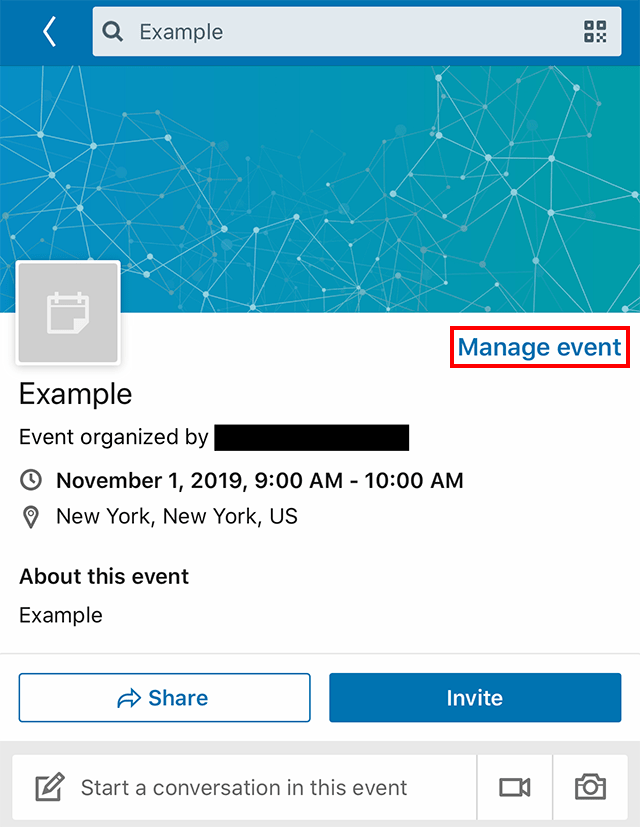
Note: These screenshots were captured in the LinkedIn application on iOS. Also note, when you cancel an event, all attendees will be notified that the event has been canceled, but the event page won’t be deleted.

Step 1: On the page for the event you wish to cancel, tap “Manage event.”

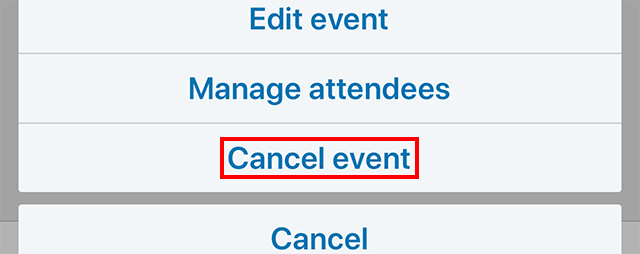
Step 2: Tap “Cancel event.”

Step 3: Tap “Cancel event” on the confirmation window that appears.

https://www.adweek.com/digital/linkedin-heres-how-to-cancel-an-event/


LinkedIn: Here’s How to Create an Event

LinkedIn recently launched LinkedIn Events for all users globally. The feature allows you to create public and private events and share them with your connections. Our guide will show you how to create an event from within the LinkedIn mobile application.

Note: These screenshots were captured in the LinkedIn app on iOS.

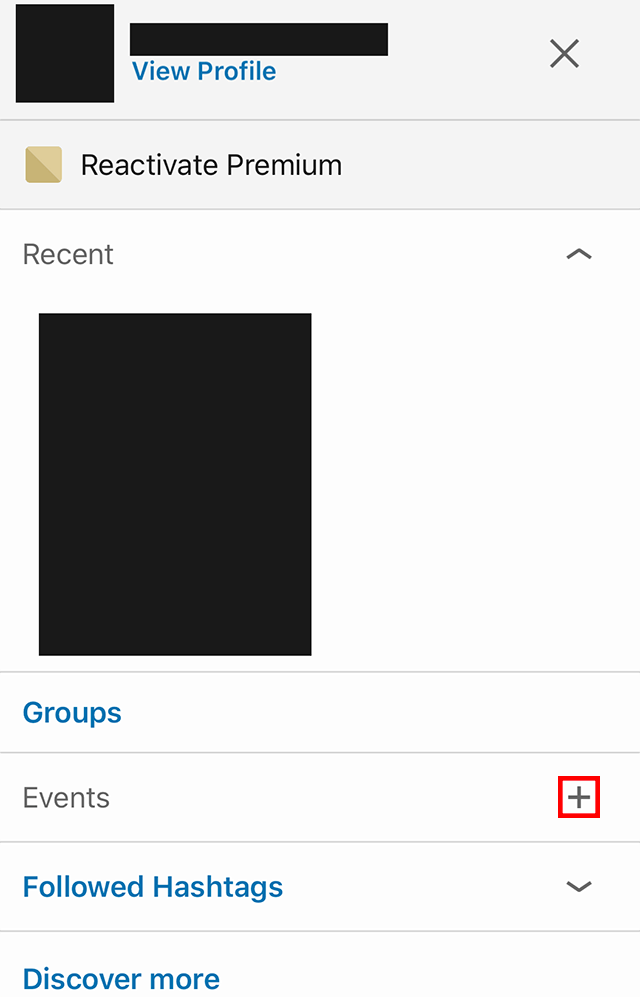
Step 1: Tap your profile picture in the top-left corner of the screen.

Step 2: Tap the plus sign to the right of “Events” to begin creating a new event. Note: On Android, you can tap “Create Event” under the “Events” section.

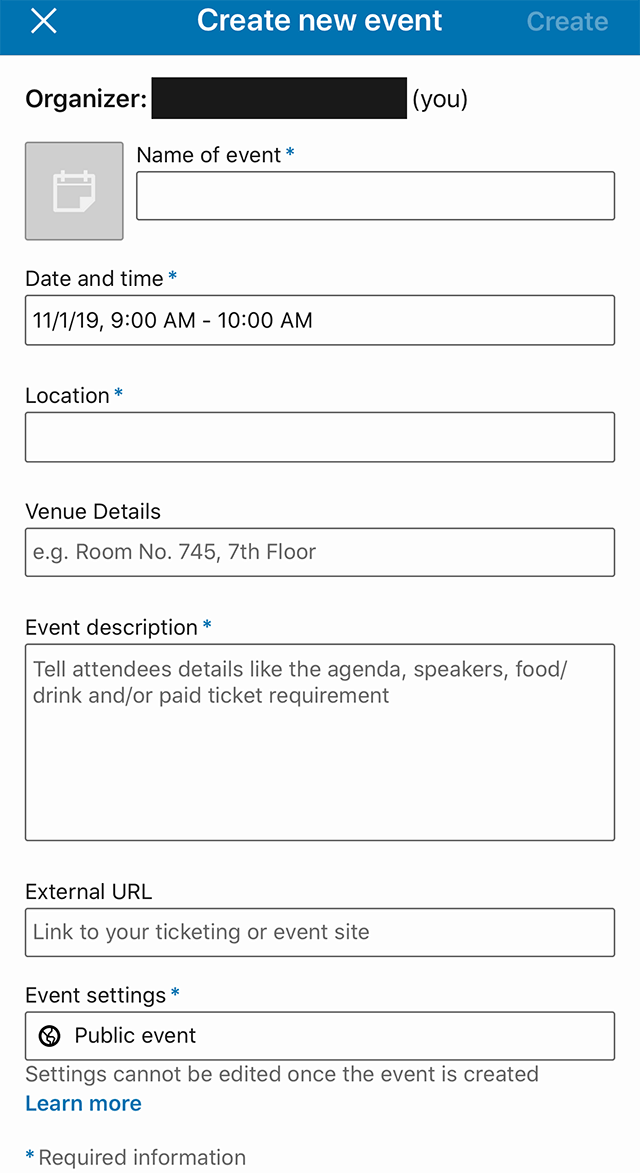
Step 3: Tap each text field to fill in the appropriate information for your event (event name, date, location, event description, etc.). You can also choose to make the event public or private.

Step 4: When you’re done filling in the event information, tap “Create” in the top-right corner of the screen.

From there, you’ll be taken to your event’s page, where you can manage the event, invite connections to attend and more.

https://www.adweek.com/digital/linkedin-heres-how-to-create-an-event/


Facebook’s Tweak May Cause Organic Page Impressions to Drop

Facebook page administrators may start seeing a dip in organic page impressions this month, but likely nowhere near the scale of the social network’s January 2018 change to its News Feed algorithm that rocked the media industry.

Social media industry commentator and consultant Matt Navarra shared what appears to be part of an email from Facebook to page admins or social media managers in a tweet.

Facebook had not responded to a request for comment at the time of this post.

In the text shared by Navarra, the social network issued an alert that it is updating the way it filters repeat organic page impressions to mirror the methodology it uses for ads.

Facebook said it began rolling out the change Thursday, and the rollout would continue through Oct. 28, so page admins may not be able to detect any changes until the process is complete.

The text read, “Specifically, we will be updating the time frame for which we filter out repeat organic impressions from a same person. As a result, you may see less organic impressions for your page and posts.”

The social network said metrics such as reach and engagement will not be affected, adding, “We are unable to provide any estimates for how this update may affect your page, if at all. Fluctuations in impressions for Facebook pages and posts continue to be normal, as impression counts can be influenced by many factors over time.”

https://www.adweek.com/digital/facebooks-tweak-may-cause-organic-page-impressions-to-drop/


5 Key Parts of Mark Zuckerberg’s Talk on Free Speech at Georgetown University

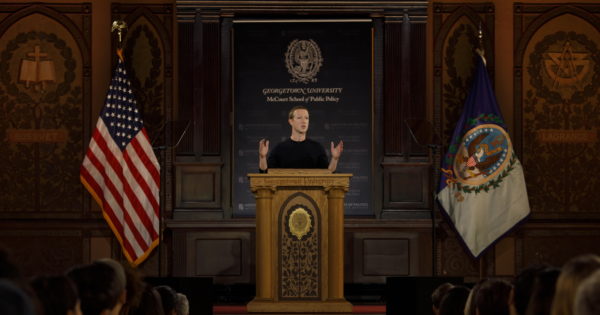
Facebook CEO Mark Zuckerberg spoke about his views on free speech and expression at Gaston Hall at Georgetown University in Washington, D.C., Thursday.

Zuckerberg focused on giving everybody a voice and cautioned against laws that undermine free expression and human rights.

The video of the full speech is available here, and following are five key areas he addressed during his talk.

Facebook’s responsibilities

Zuckerberg said, “I believe that we have two responsibilities: To remove content when it could cause real danger as effectively as we can, and to fight to uphold as wide a definition of freedom of expression as possible—and not allow the definition of what is considered dangerous to expand beyond what is absolutely necessary. That’s what I’m committed to. But beyond these new properties of the internet, there are also shifting cultural sensitivities and diverging views on what people consider dangerous content.”

Later in his speech, he added, “I’m committed to the values we’re discussing today, but we won’t always get it right. I understand people are concerned that we have so much control over how they communicate on our services. And I understand people are concerned about bias and making sure their ideas are treated fairly. Frankly, I don’t think we should be making so many important decisions about speech on our own either. We’d benefit from a more democratic process, clearer rules for the internet and new institutions.”

Misinformation

With campaigning for the 2020 U.S. presidential election in full swing, this topic grabbed headlines last week when candidate Sen. Elizabeth Warren (D-Mass.) created a political ad on the social network making the blatantly false statement—and immediately disclosing that it was a false statement—that Zuckerberg endorsed President Donald Trump for re-election.

Warren’s ad was a response to the Trump campaign’s ads on social platforms that contained false information, as well as Facebook’s declaration last month that third-party fact-checkers would not review posts from politicians.

Speaking about misinformation in general, Zuckerberg said, “Take misinformation. No one tells us they want to see misinformation. That’s why we work with independent fact-checkers to stop hoaxes that are going viral from spreading. But misinformation is a pretty broad category. A lot of people like satire, which isn’t necessarily true. A lot of people talk about their experiences through stories that may be exaggerated or have inaccuracies but speak to a deeper truth in their lived experience. We need to be careful about restricting that. Even when there is a common set of facts, different media outlets tell very different stories emphasizing different angles. There’s a lot of nuance here. And while I worry about an erosion of truth, I don’t think most people want to live in a world where you can only post things that tech companies judge to be 100% true.”

He pointed to the transparency provided by Facebook regarding political advertising, including its Ad Library—which is available to everyone, whether they have a Facebook account or not—and he said of the decision not to fact-check content from politicians, “We don’t do this to help politicians, but because we think people should be able to see for themselves what politicians are saying. And if content is newsworthy, we also won’t take it down even if it would otherwise conflict with many of our standards.”

Finally, he reiterated his belief that private companies should not be tasked with censoring content or deciding what is truthful, saying, “I know many people disagree, but, in general, I don’t think it’s right for a private company to censor politicians or the news in a democracy. And we’re not an outlier here. The other major internet platforms and the vast majority of media also run these same ads. As a principle, in a democracy, I believe people should decide what is credible, not tech companies. Of course, there are exceptions, and even for politicians, we don’t allow content that incites violence or risks imminent harm—and of course we don’t allow voter suppression. Voting is voice. Fighting voter suppression may be as important for the civil rights movement as free expression has been. Just as we’re inspired by the First Amendment, we’re inspired by the 15th Amendment, too.”

Political ads

Zuckerberg repeated a statement he has made in the past: “Given the sensitivity around political ads, I’ve considered whether we should stop allowing them altogether. From a business perspective, the controversy certainly isn’t worth the small part of our business they make up. But political ads are an important part of voice—especially for local candidates, up-and-coming challengers and advocacy groups that may not get much media attention otherwise. Banning political ads favors incumbents and whoever the media covers.”

https://www.adweek.com/digital/5-key-parts-of-mark-zuckerbergs-talk-on-free-speech-at-georgetown-university/