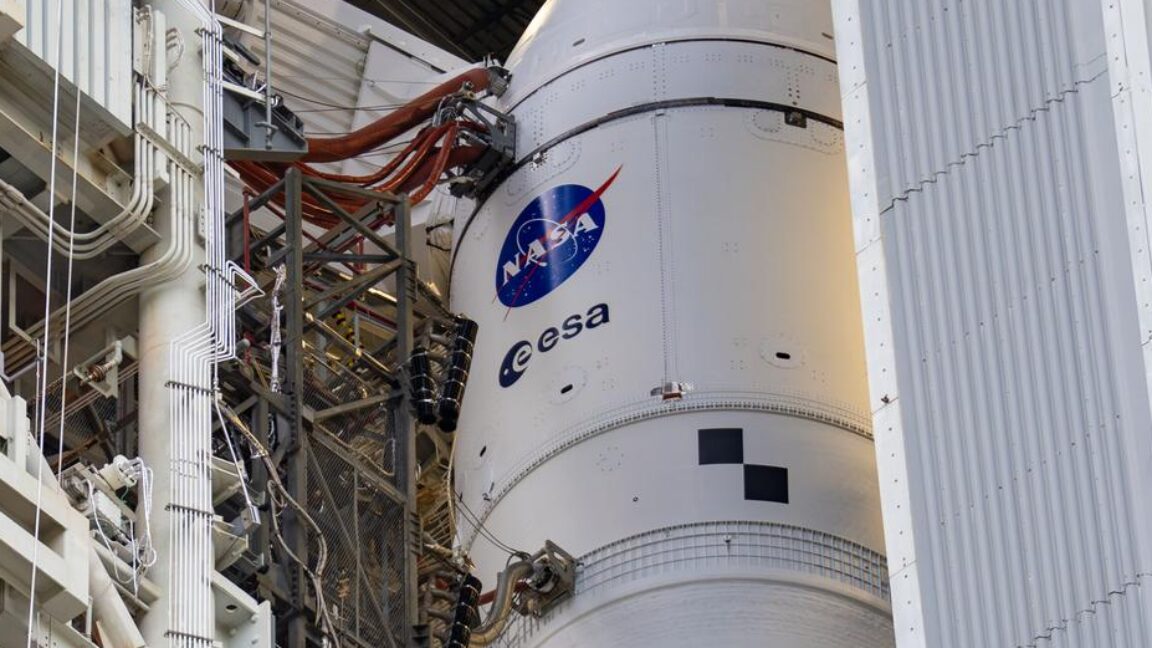
NASA and SpaceX disagree about manual controls for lunar lander

The report notes that during every one of the Apollo program’s crewed lunar landings, astronauts engaged the backup manual control method. (Of course, this occurred six decades ago, when flight software was considerably less sophisticated than today.)

As NASA and SpaceX near a key decision point, known as Critical Design Review, the issue remains unresolved. The new report suggests that this may result in automation being the only landing method.

A similar fight over Dragon

The space agency and SpaceX engaged in a similar back-and-forth during the design process for the Crew Dragon spacecraft a decade ago. SpaceX initially wanted touchscreens only, with limited flight commands available to astronauts. NASA pushed back and wanted what were essentially joysticks for astronauts to fly the vehicles like previous spacecraft. A former NASA astronaut then working at SpaceX, Garret Reisman, helped broker a compromise by which astronauts could manually fly the vehicles using controls on touchscreens.

However, the new report says the flight controls for Dragon were built on many successful missions by a cargo version of the vehicle that flew to the International Space Station.

“Starship will not have the same level of proven flight heritage in the actual operating environment for its crewed lunar missions,” the report states. “Incorporating this system capability is a key element of HLS’s human-rating certification and part of an essential crew survival strategy.”

A design for Blue Origin’s manual control has not yet been made, according to the inspector general.

There is other interesting information in the report, including details on the uncrewed demonstration flights that SpaceX and Blue Origin are both required to fly before human missions can take place. The inspector general notes that these flights will not require life support systems and airlocks, as human missions will. Nor will the tall Starship vehicle be required to test an elevator to bring crew down to the surface.

There will also be a limited ability to test the abrasive impact of lunar dust, expected to be returned inside the vehicles after Moonwalks, on life support equipment during these uncrewed demonstrations.

https://arstechnica.com/space/2026/03/nasa-and-spacex-disagree-about-manual-controls-for-lunar-lander/



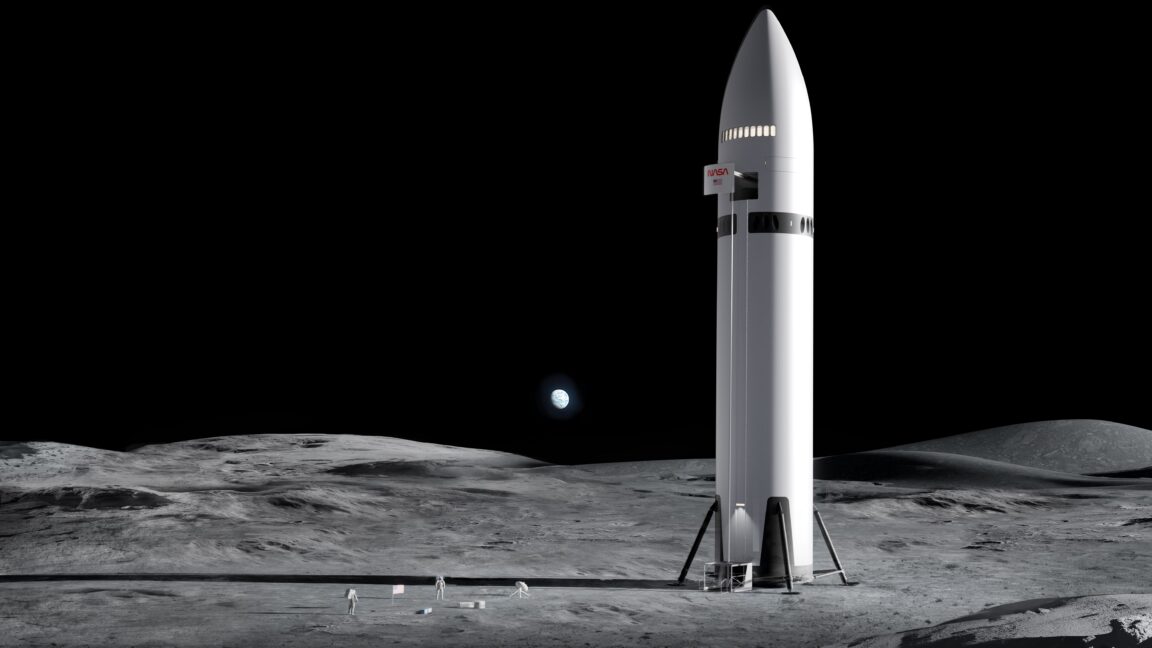

After falling far behind the rest of industry, Blue Origin creates new stock option plan

The email from Limp did not provide details about the new plan, other than saying, “As Blue achieves its goals and increase in value your equity will grow alongside it.”

To compete with SpaceX, Blue must continue to grow. The exact numbers that SpaceX will target with its IPO have not been set, but the company is likely to seek a valuation in the vicinity of $1.5 trillion, which would raise between $30 billion and $50 billion in cash. This is on top of SpaceX’s estimated 2026 revenue of $22 billion to $24 billion.

This gives SpaceX CEO Elon Musk a massive pile of capital to throw at his Starship rocket, Starlink constellation, AI, and orbital data centers.

Bezos has expressed an interest in all of these technologies, too, with his 9×4 New Glenn rocket, lunar lander program, TeraWave constellation, and space-based data centers.

But—and yes, this is a strange thing to write about one of the top five richest people in the world—Bezos does not have the resources to match SpaceX. Blue Origin’s annual revenues are not publicly known, but they are likely on the order of $1 billion a year. Bezos is pumping multiples of that annually to fund the company, but this total is still dwarfed by SpaceX’s annual revenue. And that’s before an IPO.

Until a few years ago, Bezos could more or less match the revenues SpaceX had available with annual contributions to Blue Origin. Both companies had a workforce of over 10,000 people and broad ambitions. But as Starlink sprints ahead, and with an IPO on the horizon, SpaceX is taking a significant leap upward.

All of this raises the possibility that Bezos may finally consider taking on outside investment if he wants Blue Origin to remain competitive with SpaceX.

“He’s never really talked about going for outside investment,” said Chris Davenport, author of Rocket Dreams, about Bezos. “The fact that Elon has had a number of liquidity events is going to put some pressure on Jeff and Blue Origin to at least think about it.”

https://arstechnica.com/space/2026/03/after-years-of-missteps-blue-origin-to-finally-offer-meaningful-stock-options/


Ding-dong! The Exploration Upper Stage is dead

Now, you might think NASA would ask industry for solutions to this problem. After all, United Launch Alliance was developing a more powerful upper stage for its Vulcan rocket, the Centaur V, that used the same propellant as the core stage of the SLS rocket. And Blue Origin was also developing a powerful upper stage engine, the BE-3U, powered by hydrogen. These options were cheaper, available, and … summarily ignored.

10 years, billions of dollars, and not much to show for it

Congress, smelling jobs, wanted NASA to develop a brand new upper stage. So in 2016, lawmakers allocated $85 million for preliminary work on the upper stage, and have since awarded more than $3.5 billion.

For the development of a rocket’s second stage.

With engines (RL-10s) that have been flying in space for six decades.

And after all of this, a decade later, the upper stage remains years from being ready to fly.

In some ways, the Exploration Upper Stage was the perfect vehicle for pork. It not only spread largesse among Boeing and Aerojet Rocketdyne (for the engines), but it also necessitated a massive new launch tower in Florida. That was good for the Exploration Ground Systems program at Kennedy Space Center.

The original cost estimates of these projects are always instructive to look back on. Boeing’s initial contract to build the Exploration Upper Stage started at $962 million, and NASA planned to launch the rocket on the second flight of the SLS in 2021. Oops. As for the launch tower, the initial estimate for its cost was $383 million, but as of late, it was heading north of $2 billion. So we are talking billions and billions and billions of dollars for a relatively straightforward upper stage, using off-the-shelf engines and a large launch tower.

https://arstechnica.com/space/2026/03/ding-dong-the-exploration-upper-stage-is-dead/


Satellite firm pauses imagery after revealing Iran’s attacks on US bases

Planet Labs, one of the world’s leading commercial satellite imaging companies, said Friday it is placing a hold on releasing imagery of some parts of the Middle East as a regional war enters its second week.

The company, which brands itself as Planet, operates a fleet of several hundred Earth-imaging satellites designed to record views of every landmass on Earth at least once per day. Its customers include think tanks, NGOs, academic institutions, news media, and commercial users in the agriculture, forestry, and energy industries, among others.

Planet also holds lucrative contracts selling overhead imagery to the US military and US government intelligence agencies.

“In response to the conflict in the Middle East, Planet is implementing temporary restrictions on data access within specific areas of the affected region,” Planet said in a statement emailed to Ars. “Effective immediately, all new imagery collected over the Gulf States, Iraq, Kuwait, and adjacent conflict zones will be subject to a mandatory 96-hour delay before it is made available in our archive.”

Imagery over Iran will remain available as soon as it is acquired, the company said. “This change applies to all users except authorized government users who maintain immediate access for mission-critical operations.”

Infographic with satellite images showing damage at a selection of four US military sites, or sites hosting US personnel, in the Middle East in the context of Iranian strikes since February 28, 2026, using images from Planet Labs.

Credit: Graphic by Nalini Lepetit-Chella and Sabrina Blanchard/AFP via Getty Images)/© 2026 Planet Labs/AFP

Infographic with satellite images showing damage at a selection of four US military sites, or sites hosting US personnel, in the Middle East in the context of Iranian strikes since February 28, 2026, using images from Planet Labs. Credit: Graphic by Nalini Lepetit-Chella and Sabrina Blanchard/AFP via Getty Images)/© 2026 Planet Labs/AFP

Overhead intelligence

In the last few days, Planet’s satellite imagery showed the aftermath of Iranian missile and drone strikes on US and allied bases in the region, including damage to the US Fifth Fleet headquarters in Bahrain and to a $1 billion US-built early warning radar in Qatar used for tracking incoming projectiles. Planet said it wants to prevent “adversarial actors” from using its data for “Battle Damage Assessment (BDA)” purposes. In other words, the company doesn’t want to help Iran’s military know where it succeeded and where it failed.

https://arstechnica.com/space/2026/03/satellite-firm-pauses-imagery-after-revealing-irans-attacks-on-us-bases/


With Gateway likely gone, where will lunar landers rendezvous with Orion?

There are many details about the EPO/CoLA orbit in the research paper, but critically, its closest point to the Moon lies just 100 km above the Moon’s surface (the apolune distance is 6,500 km). For many landing sites, the paper notes, a Human Landing System vehicle can perform a single burn to reach a much lower orbit.

As part of his change in plans, Isaacman said the Space Launch System rocket’s upper stage would be “standardized” for Artemis IV and beyond. That means the first lunar landing mission will use a new upper stage, likely the Centaur V built by United Launch Alliance. This will have more propulsive capabilities than the current rocket, so it is possible that for Artemis IV, Orion could reach an even more favorable orbit (i.e., closer to the Moon, requiring less energy to reach the surface) than EPO/CoLA.

Can Starship be accelerated?

At the end of the day, it’s helpful to find new orbits and relax requirements where appropriate. But it will still be up to the lander contractors to deliver the goods, and for NASA, the sooner the better.

Last November, Ars looked at several ways Starship might be brought online faster as a lunar lander. Perhaps the biggest problem with using Starship as a lander is the need to fly multiple uncrewed tanker missions to refuel Starship in low-Earth orbit before it transits to the Moon and awaits a crew aboard Orion. This necessitates an estimated one- or two-dozen launches.

The best solution we could come up with was flying an optimized, expendable Starship tanker stage that would maximize propellant delivery per flight. When asked about this, though, SpaceX founder Elon Musk shot down the idea. Once Starship begins flying at rate, Musk believes, a dozen or more tanker missions per lunar flight will not pose a major impediment.

So it should come as no surprise that SpaceX has not proposed significant changes to its Human Landing System hardware. In response to NASA’s desire to accelerate the Artemis timeline, the company has indicated that it will prioritize the Human Landing System more as part of the Starship program. The company also suggested that eliminating the requirement to dock in near-rectilinear halo orbit could open up new mission plans, including potentially docking with Orion in orbit around Earth rather than the Moon.

https://arstechnica.com/space/2026/03/nasa-has-shuffled-its-artemis-rockets-but-what-of-the-lunar-landers/


Rocket Report: SpaceX launch prices are going up; Russia fixes broken launch pad

CU later, EUS… “NASA must standardize its approach, increase flight rate safely, and execute on the president’s national space policy,” Isaacman said. “With credible competition from our greatest geopolitical adversary increasing by the day, we need to move faster, eliminate delays, and achieve our objectives.” The announced changes to the Artemis program include the cancellation of the Exploration Upper Stage and Block IB upgrade for SLS rocket, and future SLS missions, starting with Artemis IV, will use a “standardized” commercial upper stage. Artemis III will no longer land on the Moon. Instead, the Orion spacecraft will launch on SLS and dock with SpaceX’s Starship and/or Blue Origin’s Blue Moon landers in low-Earth orbit.

NASA favors ULA upper stage. United Launch Alliance’s Centaur V upper stage, used on the company’s Vulcan rocket, will replace the Exploration Upper Stage (EUS) on SLS missions beginning with Artemis IV, Bloomberg reports. ULA, a 50-50 joint venture between Boeing and Lockheed Martin, also built the interim upper stages flying on the Artemis I, II, and III missions. Those stages were based on designs used for ULA’s now-retired Delta IV Heavy rocket. With that production line shut down, ULA will now provide Centaur Vs to NASA. This means Boeing, which was on contract to develop the EUS, will still have a role in supplying upper stages for the SLS rocket. Boeing is also the prime contractor for the rocket’s massive core stage.

Building on a legacy… The Centaur V upper stage is the latest version of a design that dates back to the 1960s. Centaurs began flying in 1962, and the Centaur V is the most powerful variant, with a wider diameter and two hydrogen-fueled RL10 engines. The Centaur V still uses the ultra-thin, pressure-stabilized stainless steel structure used on all Centaur upper stages. The Centaur has a reliable track record, and the Centaur V’s predecessor, the Centaur III, was human-rated for launches of Boeing’s Starliner crew capsule.

https://arstechnica.com/space/2026/03/rocket-report-spacex-launch-prices-are-going-up-russia-fixes-broken-launch-pad/


Congress extends ISS and tells NASA to get moving on private space stations

Nominally, NASA plans to have one or more of these companies operating a commercial space station in low-Earth orbit by 2030. This is the date at which the US space agency has stated it will retire the aging laboratory, some elements of which are now nearly three decades old. However, some space policy officials have questioned whether any of the companies might be ready by then.

Cruz and other senators on the committee appear to share those concerns, as their legislation extends the International Space Station’s lifespan from 2030 to 2032 (an extension must still be approved by international partners, including Russia). Moreover, the authorization bill states, “The Administrator shall not initiate the de-orbit of the ISS until the date on which a commercial low-Earth orbit destination has reached an initial operational capability.”

With this legislation, the US Senate is making clear that it views a permanent human presence in low-Earth orbit as a high priority. This version of the authorization legislation must still be passed by the full Senate and work its way through the House of Representatives.

Reaction from the companies

After the legislation passed the Commerce committee, Axiom Space said on social media that it welcomes the changes: “Axiom Space is proud to support the NASA Authorization Act of 2026. The bill is a clear indicator that Chairman @SenTedCruz and the Senate Commerce Committee are determined to ensure the success of the entire human spaceflight enterprise.”

In an interview, the chief executive of Vast, Max Haot, said his company also welcomed the clarifying legislation—both for its language on commercial space stations as well as its reflection of the fact that NASA Administrator Jared Isaacman has been working overtime to set the Artemis lunar program on a better path for success.

“We are really impressed by what Jared has been able to do with the American space program and aligning all of the stakeholders,” he said. “As it relates to commercial space stations, we were happy to see the renewed commitment to transition from the ISS to commercial alternatives.”

Haot said there should not be a hard date for de-orbiting the International Space Station but that it should depend on the readiness of the commercial providers. He said Vast is confident that, should NASA issue an RFP and awards for private providers this year, Vast will be ready to support a continuous human presence in low-Earth orbit by the end of 2030.

https://arstechnica.com/space/2026/03/congress-steps-up-pressure-on-nasa-to-support-private-space-stations/


Space Command chief throws cold water on the question of UAPs in space

Judging from recent comments from Gen. Stephen Whiting, head of US Space Command, we shouldn’t expect anything like that in whatever the government might release in response to Trump’s pending order.

Gen. Stephen Whiting, commander of US Space Command.

Credit: US Air Force/Eric Dietrich

Gen. Stephen Whiting, commander of US Space Command. Credit: US Air Force/Eric Dietrich

“I can say, I, personally, was very interested in the president’s announcement,” Whiting told reporters last week at the Air and Space Forces Association’s Warfare Symposium in Colorado. “I look forward to seeing what data does come out. I can also tell you, as a space operator now of 36 years, having spent a lot of time with space domain awareness sensors, tracking things in space, I’ve never seen anything in space other than manmade objects, so I am not aware of anything that is extraterrestrial, other than comets and things like that.

“But I’m fascinated in the topic,” he continued. “And if something’s revealed, I’ll be interested as an American citizen.”

Space Command’s charge includes an area of responsibility (AOR) that extends from the top of Earth’s atmosphere to the Moon and beyond. One of its missions is to track, monitor, and catalog objects in space. Whiting suggested that everything he’s seen in orbit is attributable to a human-made or natural origin.

“We will respond to any presidential direction to go look at our files, but I think the term of art now is UAP, and the A is aerial, so these are things that are below the Kármán line (100 kilometers), that are in the atmosphere,” Whiting said. “I’ve seen some of the same videos and radar data that all of you have, and my guess is those relevant services and combatant commands will turn that data over. I’m very interested in the topic, but I have no personal experience with any of those phenomena.”

https://arstechnica.com/space/2026/03/space-command-chief-throws-cold-water-on-the-question-of-uaps-in-space/


The US Senate empowers NASA to fully engage in lunar space race

During a brief hearing on Wednesday morning, the Senate Committee on Commerce, Science, and Transportation spent only a few minutes “marking up” new legislation that provides guidance to NASA for its various initiatives, including the Artemis program to land humans on the Moon.

“Our bill authorizes critical funding for, and gives strategic direction to, the agency in line with the priorities of administrator Isaacman and the Trump administration,” said the committee’s chairman, Sen. Ted Cruz, (R-Texas).

The duration of the hearing, however, seems to be the inverse of its significance.

Elements of the legislation, now branded as The NASA Authorization Act of 2026 (see full text), have undergone significant revisions since just last week. The sweeping changes follow NASA Administrator Jared Isaacman’s announcement on Friday that he was shuffling the Artemis program to ensure that the US space agency would beat China back to the Moon and establish a long-term presence at the lunar south pole. In large part, the Senate’s bill endorses Isaacman’s plan of action.

“NASA faces a series of challenges,” Cruz said Wednesday. “Those challenges culminated in an announcement last Friday that NASA was making major changes to the Artemis missions and our eventual return to the lunar surface. Today, the Commerce committee will help guide those changes.”

Major changes to Artemis approved

With the revised legislation, Cruz and the Senate committee have empowered Isaacman and NASA to make significant changes to the Artemis Program. The revised plan for the space agency will likely lead to more launches and a much greater emphasis on the lunar surface.

https://arstechnica.com/space/2026/03/the-us-senate-empowers-nasa-to-fully-engage-in-lunar-space-race/


No fooling: NASA targets April 1 for Artemis II launch to the Moon

NASA has fixed the problem that forced the removal of the rocket for the Artemis II mission from its launch pad last month, but it will be a couple of weeks before officials are ready to move the vehicle back into the starting blocks at Kennedy Space Center in Florida.

The 322-foot-tall (98-meter) rocket could have launched as soon as this week after it passed a key fueling test on February 21. During that test, NASA loaded the Space Launch System rocket with super-cold propellants without any major problems, apparently overcoming a persistent hydrogen leak that prevented the mission from launching in early February.

However, another problem cropped up just one day after the successful fueling demo. Ground teams were unable to flow helium into the rocket’s upper stage. Unlike the connections to the core stage, which workers can repair at the launch pad, the umbilical lines leading to the upper stage higher up the rocket are only accessible inside the cavernous Vehicle Assembly Building (VAB) at Kennedy.

Mission managers quickly decided to roll the rocket back to the assembly building for troubleshooting. The rocket returned to the VAB on February 25, and within a week, engineers found the source of the helium flow issue. Inspections revealed that a seal in the quick disconnect, through which helium flows from ground systems into the rocket, was obstructing the pathway, according to NASA.

Sealing the deal

“The team removed the quick disconnect, reassembled the system, and began validating the repairs to the upper stage by running a reduced flow rate of helium through the mechanism to ensure the issue was resolved,” NASA said in an update posted Tuesday. “Engineers are assessing what allowed the seal to become dislodged to prevent the issue from recurring.”

https://arstechnica.com/space/2026/03/no-fooling-nasa-targets-april-1-for-artemis-ii-launch-to-the-moon/