As Moon interest heats up, two companies unveil plans for a lunar “harvester”

Starting smaller with FLIP

This is not the first time the two companies have worked together. Last August, Interlune announced that it would fly a multispectral camera on a smaller prototype rover being built by Astrolab. This camera will be used to estimate helium-3 quantities and concentration in Moon dirt, or regolith.

This FLIP rover, about the size of a go-kart, is due to launch later this year on a lunar lander built by Astrobotic. It will fly atop the Griffin lander, taking the place of NASA’s VIPER rover, which has been moved to another spacecraft.

The mission will therefore be a learning exercise for both Astrolab, in testing out its software and other features of a small lunar rover, as well as Interlune, which will seek to ground truth data about the concentration of Helium-3 that has previously been estimated from samples returned to Earth during the Apollo program.

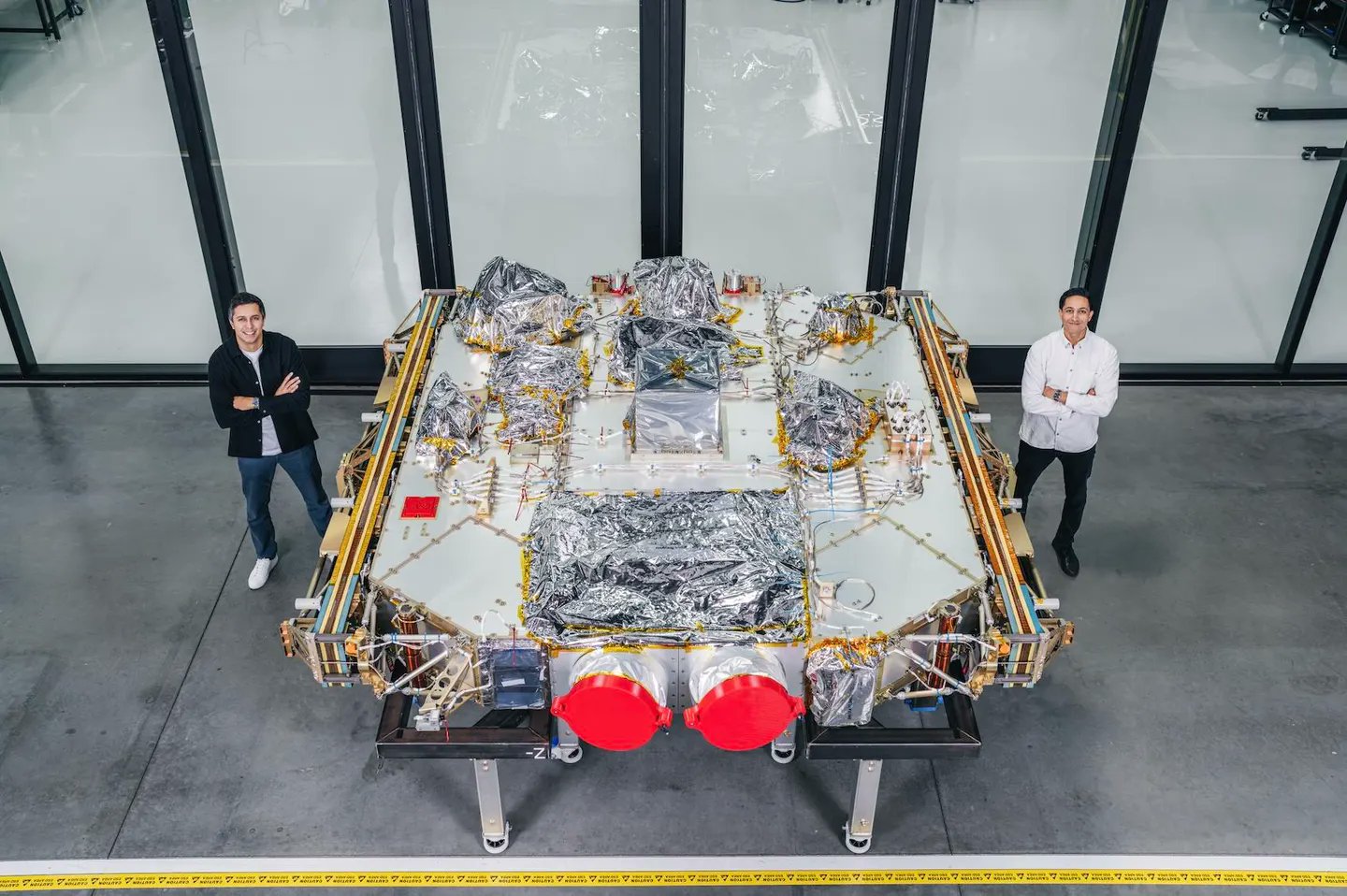
In addition to FLIP, Astrolab is developing a larger rover, FLEX, that is about the size of a minivan. This vehicle has a horseshoe-shaped chassis that can accommodate about 3 cubic meters of payload. This allows for a broad array of activities, from carrying multiple scientific instruments across the Moon and providing a long-distance rover for two astronauts, to moving large equipment or, in the case of Interlune, serving as a mobile harvester.

“Our thesis is to make the most versatile platform possible so we can serve a wide array of customers and achieve NASA’s goal of being one customer among many,” said Jaret Matthews, Astrolab founder and chief executive, in an interview. “So we have essentially a modular approach that allows us to either pick up cargo or implements or payloads. And so in this case, the excavating equipment that Interlune is developing would basically go under the belly of the rover.”

https://arstechnica.com/space/2026/03/as-moon-interest-heats-up-two-companies-unveil-plans-for-a-lunar-harvester/




Former NASA chief turned ULA lobbyist seeks law to limit SpaceX funding

A highly regarded administrator

A former Republican House member from Oklahoma, Bridenstine served a generally well-regarded term as NASA administrator from April 2018 to January 2021 during President Trump’s first term.

The high point of his tenure in office came in May 2020, thanks to SpaceX. That summer, with the Crew Dragon vehicle, SpaceX and NASA successfully flew two astronauts to the International Space Station, breaking America’s dependence on Russia for low-Earth orbit transportation. Bridenstine relished this with an oft-repeated mantra of launching American astronauts on American rockets from American soil.

However, after leaving NASA, Bridenstine has appeared to become hostile to the dominant company founded by Elon Musk. He joined the board of a competitor, Viasat. Later, Bridenstine became the executive of Government Operations for United Launch Alliance, while his firm also collected a hefty lobbying fee.

All of this is not particularly abnormal for the revolving door in Washington, DC, where senior officials go between government positions and industry. Nevertheless, some observers were surprised by the striking nature of Bridenstine’s attack on NASA for the decision to award a Human Landing System contract to SpaceX in April 2021, three months after he left office. A new administrator had not yet been confirmed at NASA at the time, so a senior NASA engineer, Steve Jurczyk, served as acting administrator for the space agency.

Attacking his own process

Bridenstine sharply criticized this lander decision during testimony before Cruz’s committee last September.

“There was a moment in time when we had no NASA administrator,” he said at 42 minutes into the hearing. “It was after I was gone, and before Senator Nelson became the NASA administrator. An architecture was selected. And I don’t know how this happens, but the biggest decision in the history of NASA, at least since I’ve been paying attention, the biggest decision happened in the absence of a NASA administrator. And that decision was, instead of buying a Moon lander, we’re gonna buy a big rocket.”

https://arstechnica.com/space/2026/03/former-nasa-chief-turned-ula-lobbyist-seeks-law-to-limit-spacex-funding/


The Air Force’s new ICBM is nearly ready to fly, but there’s nowhere to put it

“We’ve gotten all the capability that we can out of the Minuteman,” said Gen. Stephen “S.L.” Davis, commander of Air Force Global Strike Command. Potential enemy threats to the Minuteman ICBM have “evolved significantly” since its initial deployment in the Cold War, Davis said.

The $141 billion figure is already out of date, as the Air Force announced last year that it would need to construct new silos for the Sentinel missile. The original plan was to adapt existing Minuteman III silos for the new weapons, but engineers determined that it would take too long and cost too much to modify the aging Minuteman facilities.

Instead, the Air Force, in partnership with contractors and the US Army Corps of Engineers, will dig hundreds of new holes across Colorado, Montana, Nebraska, North Dakota, and Wyoming. The new silos will include 24 new forward launch centers, three centralized wing command centers, and more than 5,000 miles of fiber connections to wire it all together, military and industry officials said.

Sentinel, which had its official start in 2016, will be the largest US government civil works project since the completion of the interstate highway system, and is the most complex acquisition program the Air Force has ever undertaken, wrote Sen. Roger Wicker (R-Mississippi) and Sen. Deb Fischer (R-Nebraska) in a 2024 op-ed published in the Wall Street Journal.

Gen. Dale White, the Pentagon’s director of critical major weapons systems, said Wednesday the Defense Department plans to complete a “restructuring” of the Sentinel program by the end of the year. Only then will an updated budget be made public.

The military stopped constructing new missile silos in the late 1960s and hasn’t developed a new ICBM since the 1980s. It shows.

https://arstechnica.com/space/2026/02/the-air-forces-new-icbm-is-nearly-ready-to-fly-but-theres-nowhere-to-put-them/


Hyperion author Dan Simmons dies from stroke at 77

Dan Simmons, the author of more than three dozen books, including the famed Hyperion Cantos, has died from a stroke. He was 77.

Simmons, who worked in elementary education before becoming an author in the 1980s, produced a broad portfolio of writing that spanned several genres, including horror fiction, historical fiction, and science fiction. Often, his books included elements of all of these. This obituary will focus on what is generally considered his greatest work, and what I believe is possibly the greatest science fiction novel of all time, Hyperion.

Published in 1989, Hyperion is set in a far-flung future in which human settlement spans hundreds of planets. The novel feels both familiar, in that its structure follows Chaucer’s Canterbury Tales, and utterly unfamiliar in its strange, far-flung setting.

Seven characters, seven stories

At its heart are the background stories of seven characters on a pilgrimage to the Time Tombs, which move backward in time. There, they may possibly confront a legendary, mythical, terrifying, and time-bending creature known as the Shrike. Each of the stories told by the seven characters is done so in a different subgenre, from tragedy to political thriller to military science fiction, and so on.

I went into Hyperion blind, decades ago, knowing almost nothing about it. I was never the same after finishing it. For a book that is, essentially, “hard” science fiction, Hyperion is also one of the most emotional books I have ever read.

The first tale is that of a priest, Lenar Hoyt, and the dying religion of Catholicism. By the end of this story of cruciforms, isolated civilizations, tesla trees, and more, I was floored. And that was just the first story of seven! Most powerful, for me, was the Scholar’s Tale, the story of Sol Weintraub and his daughter, Rachel. The first of my two daughters had just been born when I read this book, and for the first time ever, when reading, I cried. Cried like a baby.

https://arstechnica.com/culture/2026/02/hyperion-author-dan-simmons-dies-from-stroke-at-77/


NASA shakes up its Artemis program to speed up lunar return

At the core of Isaacman’s concerns is the low flight rate of the SLS rocket and Artemis missions. During past exploration missions, from Mercury through Gemini, Apollo, and the Space Shuttle program, NASA has launched humans on average about once every three months. It has been nearly 3.5 years since Artemis I launched.

“This is just not the right pathway forward,” Isaacman said.

A senior NASA official, speaking on background to Ars, noted that the space agency has experienced hydrogen and helium leaks during both the Artemis I and Artemis II pre-launch preparations, and these problems have led to monthslong delays in launch.

“If I recall, the timing between Apollo 7 and 8 was nine weeks,” the official said. “Launching SLS every three and a half years or so is not a recipe for success. Certainly, making each one of them a work of art with some major configuration change is also not helpful in the process, and we’re clearly seeing the results of it, right?”

The goal, therefore, is to standardize the SLS rocket into a single configuration to make it as reliable as possible and to launch it as frequently as every 10 months. NASA will fly the SLS vehicle until there are commercial alternatives to launch crew to the Moon, perhaps through Artemis V as Congress has mandated, or perhaps even a little longer.

Is everyone on board?

The NASA official said all of the agency’s key contractors are on board with the change, and senior leaders in Congress have been briefed on the proposed changes.

The biggest opposition to these proposals would seemingly come from Boeing, which is the prime contractor for the Exploration Upper Stage, a contract worth billions of dollars to develop a more powerful rocket that was due to launch for the first time later this decade. However, in a NASA news release, Boeing appeared to offer at least some support for the revised plans.

https://arstechnica.com/staff/2026/02/nasa-shakes-up-its-artemis-program-to-speed-up-lunar-return/


Rocket Report: Vulcan “many months” from flying; Falcon 9 extends reuse milestone

Studying the Ignorosphere … “I was surprised how big the event was, visually,” lead author Robin Wing, a researcher at the Leibniz Institute of Atmospheric Physics, said via email. He said people across northern Europe captured images of the burning debris, which was concentrated enough to enable high-resolution observations and to use atmospheric models to trace the lithium to its source. The study shows that instruments can detect rocket pollution “in the ‘Ignorosphere’ (upper atmosphere near space),” he wrote. “There is hope that we can get ahead of the problem and that we don’t run blind into a new era of emissions from space.”

Ambitious Chinese launch company moves into development. Chinese launch startup Space Epoch has secured B-round funding as the company moves toward a first orbital launch and recovery attempt late this year, Space News reports. The company says the funding means Space Epoch has entered a stage of large-scale development. “Three Yuanxingzhe-1 rockets already in production will undergo ground testing in the second half of the year, with the goal of achieving a successful first orbital launch and recovery by year’s end,” Space Epoch said in a statement.

Funding amount undisclosed … Yuanxingzhe-1 (YXZ-1) is a methane-liquid oxygen rocket designed for reusability. Space Epoch says it has a payload capacity of 13,800 kilograms to a 200-kilometer orbit and 9,000 kg to a 1,100 km orbit—the latter altitude being one associated with the national Guowang megaconstellation. It also claims a price of no more than 20,000 yuan per kilogram (about $2,900 per kg), with the rocket designed to be reusable 20 times. The company conducted a vertical takeoff and splashdown test in May 2025 using a YXZ-1 verification rocket, carrying out a reuse test two months later.

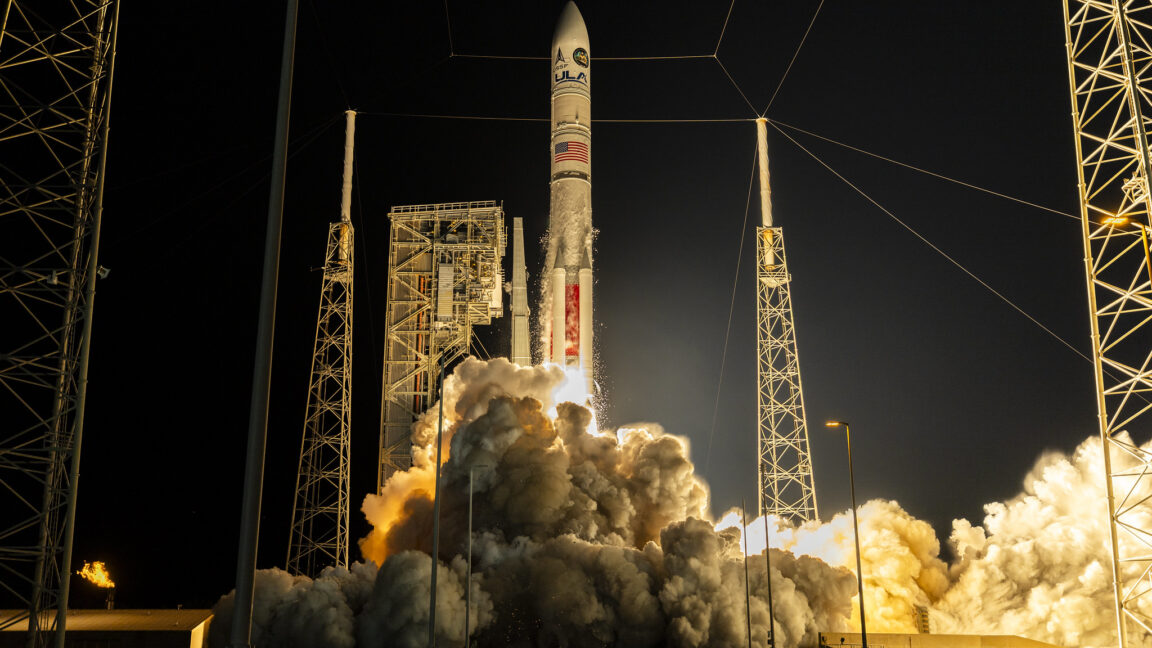
Vulcan likely “many months” from flying again. Twice, once in 2024 and again earlier this month, United Launch Alliance’s Vulcan rocket experienced issues with the nozzle on one of its solid rocket boosters during a launch. In both cases, the rocket’s main engines compensated for the issues, but the US military is not eager to test Vulcan’s ability to overcome such a dramatic problem again, Ars reports. “Any time there’s an anomaly, my team is going to be actively engaged with the contractors to make sure we understand what happened and we correct that issue,” said Col. Eric Zarybnisky, program acquisition executive for Space Systems Command’s space access program.

A nettlesome nozzle issue … Zarybnisky spoke with reporters Wednesday in a roundtable at the Air Force and Space Force Association’s Warfare Symposium near Denver. He said it was too early to provide details on the direction of the investigation but predicted it would be a “many months process” to identify the “exact technical issue” and the corrective actions required to prevent it from happening again. After the first booster issue in 2024, investigators identified a manufacturing defect in a carbon composite insulator, or heat shield, inside the nozzle. The latest incident suggests the defect was not fixed or that there is a separate problem with Northrop’s boosters. (submitted by philip verdieck)

https://arstechnica.com/space/2026/02/rocket-report-neutron-launch-date-is-delayed-again-vector-launch-is-back-sort-of/


A non-public document reveals that science may not be prioritized on next Mars mission

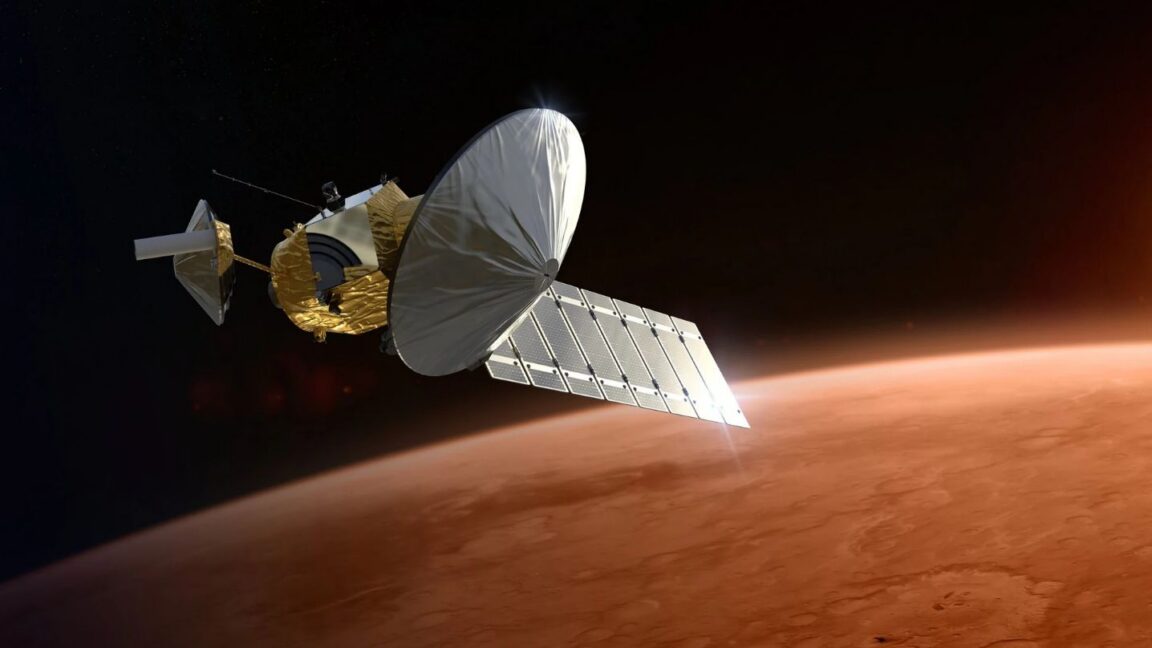
The way this document is written suggests that when NASA scores bidders for the Mars Telecommunications Network, the addition of a camera or other scientific payloads won’t be a net positive. However, if they pose an overall risk to the mission, they would be a net negative.

New award to Rocket Lab may complicate things

One of the other intriguing parts of this mission is that it sets up a battle royale of sorts for some of NASA’s most prominent contractors. Rocket Lab and Blue Origin have both waged very public campaigns that tout their solutions to NASA’s needs. SpaceX is also interested in winning a Mars mission for its Starship launch system. Then there are traditional contractors, such as Lockheed Martin, which have a long and storied history of building robust (if costly) Mars missions.

If NASA is going to launch the Mars Telecommunications Network by late 2028 to make the next “window” to the red planet, it must move quickly with this solicitation. In particular, industry protests after a decision is made could hold up the project for months and would almost certainly doom NASA’s hopes of making the 2028 launch opportunity.

On Monday, the space agency awarded Rocket Lab a $390,936 contract to study “Mars End-to-End Communication Service Architectures.” The award is not significant monetarily, but it does indicate that NASA is interested in Rocket Lab’s ideas for improving communications between Earth and Mars, and potentially a Mars Sample Return mission down the road. However, one source suggested to Ars that the award is a potential conflict of interest.

The contracting office for the Rocket Lab award is Goddard Space Flight Center, which is also responsible for managing the Mars Telecommunications Network. That Rocket Lab, alone, received an award like this from the NASA center that will also decide on the orbiting spacecraft—coterminous when such a decision will be made—is surely to be the basis of one or more protests should Rocket Lab win the Mars Telecommunications Network contract, the source told Ars.

https://arstechnica.com/space/2026/02/a-non-public-document-reveals-that-science-may-not-be-prioritized-on-next-mars-mission/


Pentagon buyer: We’re happy with our launch industry, but payloads are lagging

DALLAS—The Space Force officer tasked with overseeing more than $24 billion in research and development spending says the Pentagon is more interested in supporting startups building new space sensors and payloads than adding yet another rocket company to its portfolio.

The statement, made at a space finance conference in Dallas last week, was one of several points Maj. Gen. Stephen Purdy wanted to get across to a room full of investors and commercial space executives.

The other points on Purdy’s agenda were that the Space Force is more interested in high-volume production than spending money to develop the latest technologies, and that the military has, at least for now, lost one of its most important tools for supporting and diversifying the space industrial base.

The rhetoric around prioritizing payloads over launchers aligns with the Space Force’s recent history of supporting small startups. Since 2020, SpaceWERX, the Space Force’s commercial innovation program, has awarded 23 funding agreements—called Strategic Funding Increases (STRATFIs)—to commercial space startups developing new sensors, software, satellite components, spacecraft buses, and orbital transfer vehicles. SpaceWERX awarded a single STRATFI agreement to a launch company—ABL Space Systems—and that firm has since exited the space launch market.

“We’re on path for mass-produced launch,” said Purdy, the military deputy for space acquisition in the Department of the Air Force. “We have got our ranges situated so we can do mass-produced launch. We’ve got our data centers and our data structure for mass-production. We’ve got AI pieces that are mass-produced, satellite buses are nearly there, and our payloads are the last element. Payloads at mass-produced affordability, at scale, is the key element.”

K2’s Gravitas satellite, set for launch next month, will test the company’s Hall-effect thruster, solar arrays, and other systems.

Credit: K2

K2’s Gravitas satellite, set for launch next month, will test the company’s Hall-effect thruster, solar arrays, and other systems. Credit: K2

Putting the money in

Payloads, Purdy told Ars after his talk, are “the last frontier” for scaling space missions. “The point is to get missions out the door as fast as possible. Two to three years is too slow. We’ve got to get down to one week. I’m not talking about super exquisite [payloads]. That’s not most of our missions. The commercial industry, your Kuipers [Amazon LEO], your Starlinks, have sort of got the comm piece down, but we’re still struggling in a lot of other stuff.”

https://arstechnica.com/space/2026/02/pentagon-buyer-were-happy-with-our-launch-industry-but-payloads-are-lagging/


Study shows how rocket launches pollute the atmosphere

Atmospheric scientist Laura Revell, with the University of Canterbury in New Zealand, presented research showing that rocket exhaust in the atmosphere can erase some of the hard-won gains in mitigating ozone depletion.

In a high-growth scenario for the space industry, there could be as many as 2,000 launches per year, which her modeling shows could result in about 3 percent ozone loss, equal to the atmospheric impacts of a bad wildfire season in Australia. She said most of the damage comes from chlorine-rich solid rocket fuels and black carbon in the plumes.

The black carbon could also warm parts of the stratosphere by about half-a-degree Celsius as it absorbs sunlight. That heats the surrounding air and can shift winds that steer storms and areas of precipitation.

“This is probably not a fuel type that we want to start using in massive quantities in the future,” she added.

Researchers at the conference estimated that in the past five years, the mass of human‑made material injected into the upper atmosphere by re‑entries has doubled to nearly a kiloton a year. For some metals like lithium, the amount is already much larger than that contributed by disintegrating meteors.

In the emerging field of space sustainability science, researchers say orbital space and near-space should be considered part of the global environment. A 2022 journal article co-authored by Moriba Jah, a professor of aerospace engineering and engineering mechanics at the University of Texas at Austin, argued that the upper reaches of the atmosphere are experiencing increased impacts from human activities.

The expanding commercial use of what appears to be a free resource is actually shifting its real costs onto others, the article noted.

At last year’s European Geosciences Union conference, Leonard Schulz, who studies space pollution at the Technical University Braunschweig in Germany, said, “If you put large amounts of catalytic metals in the atmosphere, I immediately think about geoengineering.”

There may not be time to wait for more scientific certainty, Schulz said: “In 10 years, it might be too late to do anything about it.”

Bob Berwyn is an Austria-based reporter who has covered climate science and international climate policy for more than a decade. Previously, he reported on the environment, endangered species and public lands for several Colorado newspapers, and also worked as editor and assistant editor at community newspapers in the Colorado Rockies.

This story originally appeared on Inside Climate News.

https://arstechnica.com/space/2026/02/study-shows-how-rocket-launches-pollute-the-atmosphere/


NASA says it needs to haul the Artemis II rocket back to the hangar for repairs

The helium system on the SLS upper stage—officially known as the Interim Cryogenic Propulsion Stage (ICPS)—performed well during both of the Artemis II countdown rehearsals. “Last evening, the team was unable to get helium flow through the vehicle. This occurred during a routine operation to repressurize the system,” Isaacman wrote.

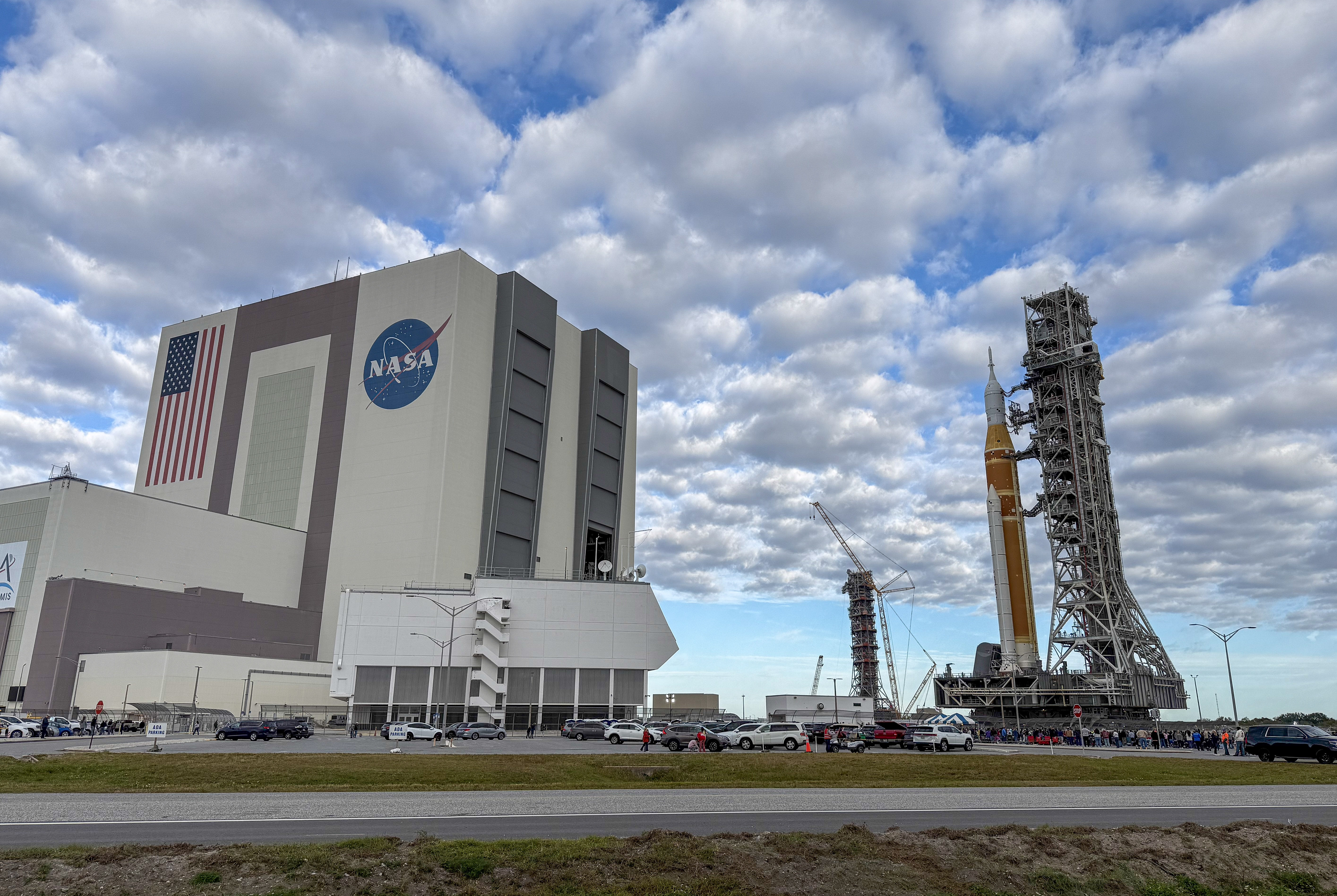
The Space Launch System rocket emerges from the Vehicle Assembly Building to begin the rollout to Launch Pad 39B last month.

Credit: Stephen Clark/Ars Technica

The Space Launch System rocket emerges from the Vehicle Assembly Building to begin the rollout to Launch Pad 39B last month. Credit: Stephen Clark/Ars Technica

Another molecule, another problem

Helium is used to purge the upper stage engine and pressurize its propellant tanks. The rocket is in a “safe configuration,” with a backup system providing purge air to the upper stage, NASA said in a statement.

NASA encountered a similar failure signature during preparations for launch of the first SLS rocket on the Artemis I mission in 2022. On Artemis I, engineers traced the problem to a failed check valve on the upper stage that needed replacement. NASA officials are not sure yet whether the helium issue Friday was caused by a similar valve failure, a problem with an umbilical interface between the rocket and the launch tower, or a fault with a filter, according to Isaacman.

In any case, technicians are unable to reach the problem area with the rocket at the launch pad. Inside the VAB, ground teams will extend work platforms around the rocket to provide physical access to the upper stage and its associated umbilical connections.

NASA said moving into preparations for rollback now will allow managers to potentially preserve the April launch window, “pending the outcome of data findings, repair efforts, and how the schedule comes to fruition in the coming days and weeks.”

It’s not clear if NASA will perform another fueling test on the SLS rocket after it returns to Launch Pad 39B, or whether technicians will do any more work on the delicate hydrogen umbilical near the bottom of the rocket responsible for recurring leaks during the Artemis I and Artemis II launch campaigns. Managers were pleased with the performance of newly-installed seals during Thursday’s countdown demonstration, but NASA officials have previously said vibrations from transporting the rocket to and from the pad could damage the seals.

https://arstechnica.com/space/2026/02/nasa-says-it-needs-to-haul-the-artemis-ii-rocket-back-to-the-hangar-for-repairs/