After fueling test, optimism grows for March launch of Artemis II to the Moon

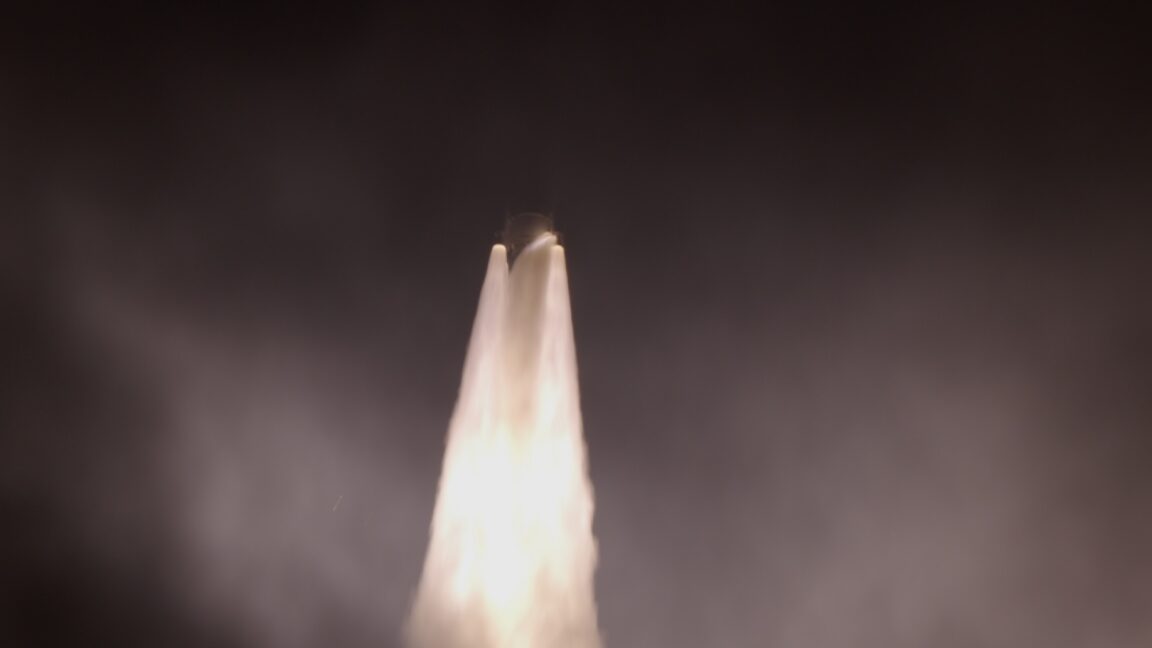
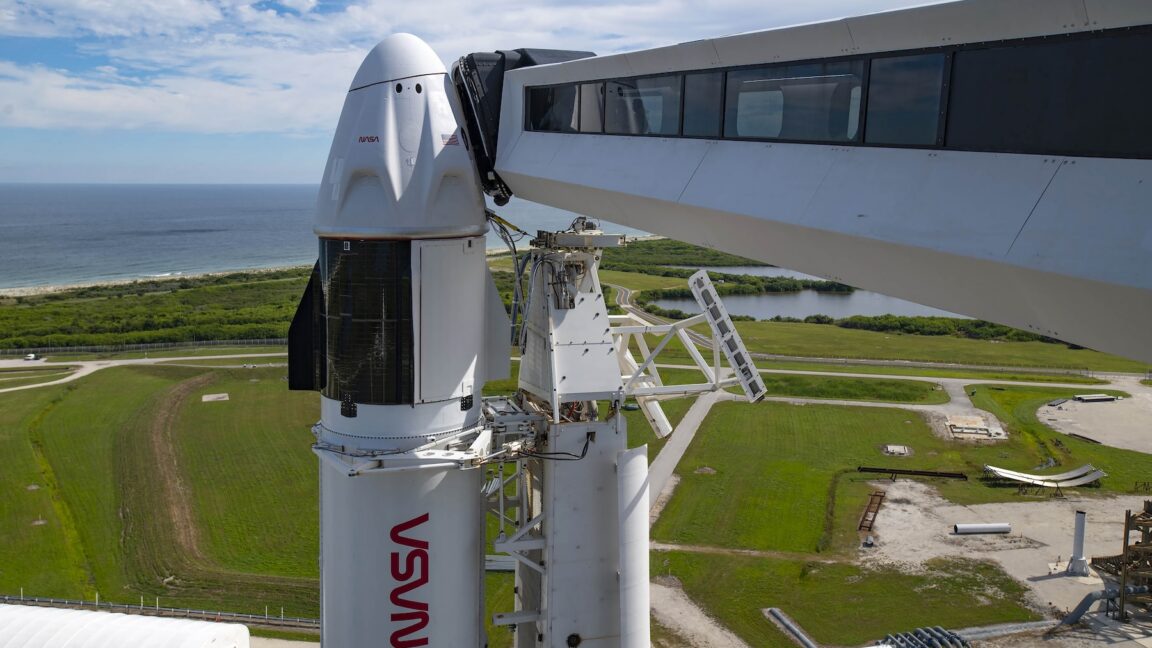
A second fueling test on NASA’s Space Launch System rocket ended Thursday night, giving senior managers enough confidence to move forward with plans to launch four astronauts around the Moon as soon as March 6.

Unlike the first attempt to load propellants into the SLS rocket on February 2, there were no major leaks during Thursday’s practice countdown at Kennedy Space Center in Florida. Technicians swapped seals at the launch pad after hydrogen gas leaked from the rocket’s main fueling line earlier this month. This time, the seals held.

“For the most part, those fixes all performed pretty well yesterday,” said Lori Glaze, acting associate administrator for NASA’s exploration programs. “We were able to fully fuel the SLS rocket within the planned timeline.”

The results keep the Artemis II mission on track for liftoff as soon as next month. NASA gave up on a series of February launch opportunities after encountering a persistent hydrogen leak during the first Wet Dress Rehearsal (WDR).

“We’re now targeting March 6 as our earliest launch attempt,” Glaze said. “I am going to caveat that. I want to be open, transparent with all of you that there is still pending work. There’s work, a lot of forward work, that remains.”

If teams complete all of that work, liftoff of the Artemis II mission could occur within a two-hour window opening at 8:29 pm EST on March 6 (01:29 UTC on March 7). NASA has other launch dates available on March 7, 8, 9, and 11, but the mission may have to wait until April. There are approximately five days per month that the mission can depart the Earth after accounting for the position of the Moon in its orbit, the flight’s trajectory, and thermal and lighting constraints.

The Artemis II mission will last between nine and 10 days, taking NASA’s Orion spacecraft with commander Reid Wiseman, pilot Victor Glover, and mission specialists Christina Koch and Jeremy Hansen around the far side of the Moon before returning to Earth for splashdown in the Pacific Ocean. Wiseman’s crew will set the record for the farthest humans have ever traveled from Earth, and will become the first people to fly to the vicinity of the Moon since 1972.

https://arstechnica.com/space/2026/02/nasa-reports-no-significant-leaks-in-artemis-ii-fueling-test-eyes-march-6-launch/


NASA chief classifies Starliner flight as “Type A” mishap, says agency made mistakes

Still, after astronauts Butch Wilmore and Suni Williams eventually docked at the station, Boeing officials declared success. “We accomplished a lot, and really more than expected,” said Mark Nappi, vice president and manager of Boeing’s Commercial Crew Program, during a post-docking news conference. “We just had an outstanding day.”

Over the subsequent weeks of the summer of 2024, NASA mostly backed Boeing, saying that its primary option was bringing the crew home on Starliner.

Finally, by early August, NASA publicly wavered and admitted that Wilmore and Williams might return on a SpaceX Crew Dragon spacecraft. Yet Boeing remained steadfast. On a Boeing website called “Starliner Updates” that has since gone offline, as late as August 2, 2024, the company was declaring that its “confidence remains high” in Starliner’s return with crew (see archive).

It was, in fact, not outstanding

However, on August 24, NASA made it official and decided that Wilmore and Williams would not fly back on Starliner. Instead, the crew would come home on a Crew Dragon. Wilmore and Williams safely eventually returned to Earth in March 2025 as part of the Crew 9 mission.

The true danger the astronauts faced on board Starliner was not publicly revealed until after they landed and flew back to Houston. In an interview with Ars, Wilmore described the tense minutes when he had to take control of Starliner as its thrusters began to fail, one after the other.

Essentially, Wilmore could not fully control Starliner any longer. But simply abandoning the docking attempt was not a palatable solution. Just as the thrusters were needed to control the vehicle during the docking process, they were also necessary to position Starliner for its deorbit burn and reentry to Earth’s atmosphere. So Wilmore had to contemplate whether it was riskier to approach the space station or try to fly back to Earth.

“I don’t know that we can come back to Earth at that point,” he said. “I don’t know if we can. And matter of fact, I’m thinking we probably can’t. So there we are, loss of 6DOF control, four aft thrusters down, and I’m visualizing orbital mechanics. The space station is nose down. So we’re not exactly level with the station, but below it. If you’re below the station, you’re moving faster. That’s orbital mechanics. It’s going to make you move away from the station. So I’m doing all of this in my mind. I don’t know what control I have. What if I lose another thruster? What if we lose comm? What am I going to do?”

One thing that has surprised outside observers since publication of Wilmore’s harrowing experience is how NASA, knowing all of this, could have seriously entertained bringing the crew home on Starliner.

https://arstechnica.com/space/2026/02/nasa-chief-classifies-starliner-flight-as-type-a-mishap-says-agency-made-mistakes/


There’s a lot of big talk about sovereign launch—who is doing something about it?

Many European nations have their own satellite projects. Historically, their preference for launching on European rockets has not been as strong as it is for pan-European programs managed by ESA and the EU. So it has never been unusual to see a British, German, Spanish, or Italian satellite launching on a foreign rocket.

This posture is starting to change. All four of these nations have invested in homegrown rockets in recent years. Germany made the biggest splash last year when the government announced $41 billion (35 billion euros) in space spending over the next five years. “Satellite networks today are an Achilles’ heel of modern societies. Whoever attacks them paralyzes entire nations,” said Boris Pistorius, Germany’s defense minister, during the announcement.

Every satellite network needs a launch pad and a rocket. In late 2024, the German federal government made more than $110 million (95 million euros) available to three German launch startups: Isar Aerospace, Rocket Factory Augsburg, and HyImpulse. All three are also backed by private funding, with Isar leading the pack with approximately $650 million (550 million euros) from investors. None have reached orbit yet. For comparison, Rocket Lab, the world’s most successful launch startup not founded by a billionaire, raised $148 million (approximately $200 million adjusted for inflation) before reaching orbit in 2018. Nearly all of it came from private sources.

Rocket Lab, which operates the Electron small satellite launcher seen in this image, is the most successful modern commercial launch startup not founded by a billionaire. Rocket Lab went public in 2021, three years after its first successful orbital launch.

Credit: Rocket Lab

Rocket Lab, which operates the Electron small satellite launcher seen in this image, is the most successful modern commercial launch startup not founded by a billionaire. Rocket Lab went public in 2021, three years after its first successful orbital launch. Credit: Rocket Lab

In 2023, the Italian government committed more than $300 million in support of Avio, the company that already builds and operates the Vega satellite launcher. Avio is based in Italy and is using the funds to develop methane propulsion, among other things.

With help from other ESA member states, Italy is one of the countries that already has a rocket made largely of domestic or European components. The United States, Russia, China, France, Japan, the United Kingdom, India, Israel, Iran, North Korea, South Korea, and New Zealand have also successfully launched satellites using their own rockets.

https://arstechnica.com/space/2026/02/which-countries-are-actually-serious-about-developing-their-own-rockets/


Space Station returns to a full crew complement after a month

Running solo

After these astronauts departed on January 15, just a single NASA astronaut, Chris Williams, remained in orbit. He had reached space on board a Russian Soyuz spacecraft in November, alongside two Russian cosmonauts, Sergey Kud-Sverchkov and Sergei Mikaev. The space station is a big place, and with much of the facility now more than two decades old, Williams had to spend the majority of his time on maintenance and monitoring activities.

Back on Earth, NASA and SpaceX engineers were busy too. Because Crew 11 was brought home more than a month early, NASA and SpaceX scrambled to launch the Crew-12 vehicle a little sooner than expected, to minimize the time Williams had to manage the large US segment of the station on his own.

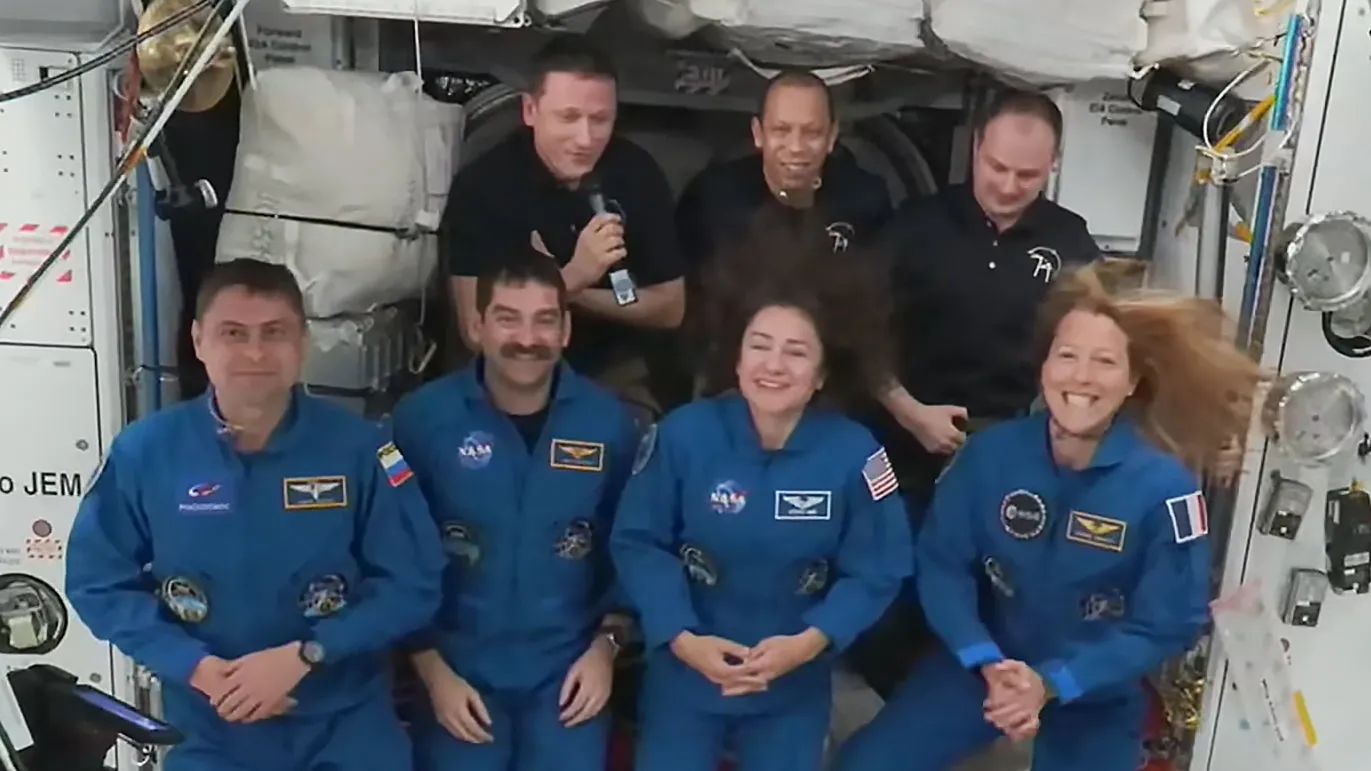
Expedition 74 welcomes NASA’s SpaceX Crew-12 members aboard the International Space Station. In the front from left are Andrey Fedyaev of Roscosmos;Jack Hathaway and Jessica Meir, both from NASA; and Sophie Adenot from ESA (European Space Agency). In the back are Sergey Kud-Sverchkov of Roscosmos, Chris Williams of NASA, and Sergei Mikaev of Roscosmos.

Expedition 74 welcomes NASA’s SpaceX Crew-12 members aboard the International Space Station. In the front from left are Andrey Fedyaev of Roscosmos;Jack Hathaway and Jessica Meir, both from NASA; and Sophie Adenot from ESA (European Space Agency). In the back are Sergey Kud-Sverchkov of Roscosmos, Chris Williams of NASA, and Sergei Mikaev of Roscosmos.

That culminated with a successful Dragon launch early on Friday, with the reinforcements reaching the space station on Saturday evening.

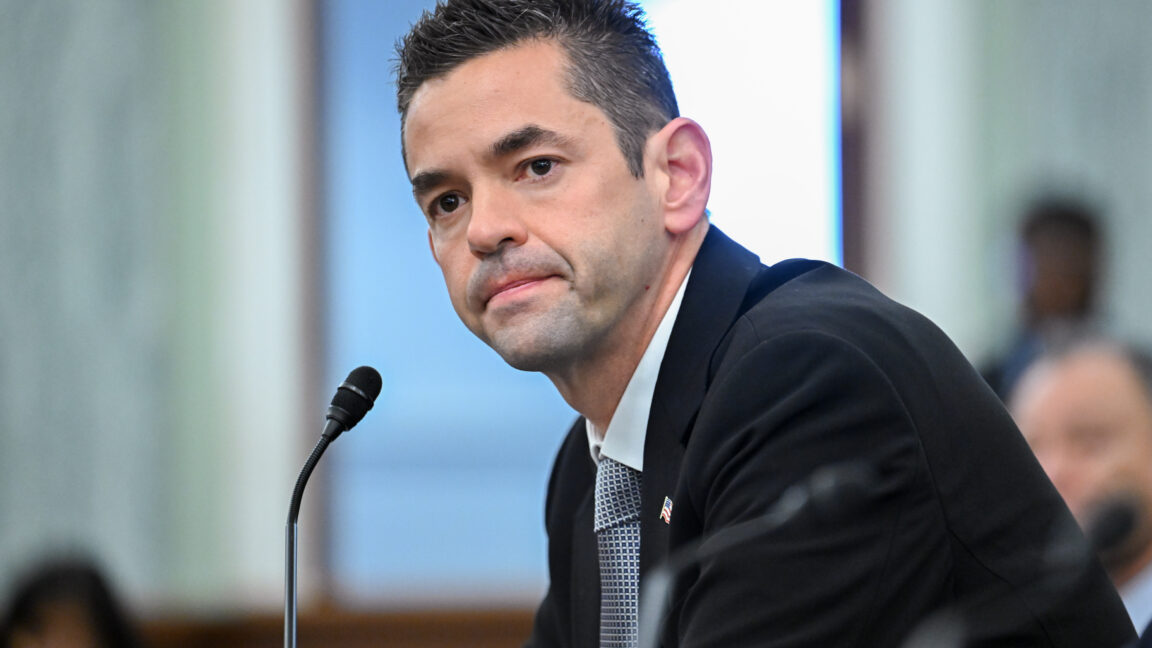
“This mission has shown, in many ways, what it means to be mission focused at NASA,” said the space agency’s administrator, Jared Isaacman, during a post-launch news conference. “In the last couple of weeks we brought Crew 11 home early, we pulled forward Crew 12, all while simultaneously making launch preparations for the Artemis II mission. It’s only possible because of the incredibly talented workforce we have here at NASA alongside our contractors, and our commercial and international partners.”

https://arstechnica.com/space/2026/02/space-station-returns-to-a-full-crew-complement-after-a-month/


NASA has a new problem to fix before the next Artemis II countdown test

John Honeycutt, chair of NASA’s Artemis II mission management team, said the decision to relax the safety limit between Artemis I and Artemis II was grounded in test data.

“The SLS program, they came up with a test campaign that actually looked at that cavity, the characteristics of the cavity, the purge in the cavity … and they introduced hydrogen to see when you could actually get it to ignite, and at 16 percent, you could not,” said Honeycutt, who served as NASA’s SLS program manager before moving to his new job.

Hydrogen is explosive in high concentrations when mixed with air. This is what makes hydrogen a formidable rocket fuel. But it is also notoriously difficult to contain. Molecular hydrogen is the smallest molecule, meaning it can readily escape through leak paths, and poses a materials challenge for seals because liquified hydrogen is chilled to minus 423 degrees Fahrenheit (minus 253 degrees Celsius).

So, it turns out NASA used the three-year interim between Artemis I and Artemis II to get comfortable with a more significant hydrogen leak, instead of fixing the leaks themselves. Isaacman said that will change before Artemis III, which likewise is probably at least three years away.

“I will say near-conclusively for Artemis III, we will cryoproof the vehicle before it gets to the pad, and the propellant loading interfaces we are troubleshooting will be redesigned,” Isaacman wrote.

Isaacman took over as NASA’s administrator in December, and has criticized the SLS program’s high costestimated by NASA’s inspector general at more than $2 billion per rocket—along with the launch vehicle’s torpid flight rate.

NASA’s expenditures for the rocket’s ground systems at Kennedy Space Center are similarly enormous. NASA spent nearly $900 million on Artemis ground support infrastructure in 2024 alone. Much of the money went toward constructing a new launch platform for an upgraded version of the Space Launch System that may never fly.

All of this makes each SLS rocket a golden egg, a bespoke specimen that must be treated with care because it is too expensive to replace. NASA and Boeing, the prime contractor for the SLS core stage, never built a full-size test model of the core stage. There’s currently no way to completely test the cryogenic interplay between the core stage and ground equipment until the fully assembled rocket is on the launch pad.

Existing law requires NASA continue flying the SLS rocket through the Artemis V mission. Isaacman wrote that the Artemis architecture “will continue to evolve as we learn more and as industry capabilities mature.” In other words, NASA will incorporate newer, cheaper, reusable rockets into the Artemis program.

The next series of launch opportunities for the Artemis II mission begin March 3. If the mission doesn’t lift off in March, NASA will need to roll the rocket back to the Vehicle Assembly Building to refresh its flight termination system. There are more launch dates available in April and May.

“There is still a great deal of work ahead to prepare for this historic mission,” Isaacman wrote. “We will not launch unless we are ready and the safety of our astronauts will remain the highest priority. We will keep everyone informed as NASA prepares to return to the Moon.”

https://arstechnica.com/space/2026/02/nasa-chief-vows-to-solve-sls-rocket-fueling-issues-before-artemis-iii/


Why is Bezos trolling Musk on X with turtle pics? Because he has a new Moon plan.

The founder of Amazon, Jeff Bezos, does not often post on the social media site owned by his rival Elon Musk. But on Monday, Bezos did, sharing a black-and-white image of a turtle emerging from the shadows on X.

The photo, which included no text, may have stumped some observers. Yet for anyone familiar with Bezos’ privately owned space company, Blue Origin, the message was clear. The company’s coat of arms prominently features two turtles, a reference to one of Aesop’s Fables, “The Tortoise and the Hare,” in which the slow and steady tortoise wins the race over a quicker but overconfident hare.

Bezos’ foray into social media turtle trolling came about 12 hours after Musk made major waves in the space community by announcing that SpaceX was pivoting toward the Moon, rather than Mars, as a near-term destination. It represented a huge shift in Musk’s thinking, as the SpaceX founder has long spoken of building a multi-planetary civilization on Mars.

Welcome to the Club

It must have provided Bezos with some self-satisfaction. He is also a believer in human settlement of space, but he has espoused the view that our spacefaring species should begin on the Moon and then build orbital space habitats. Back in 2019, when unveiling his vision, Bezos spoke about NASA’s goal of returning humans to the Moon through the Artemis Program. “I love this,” Bezos said. “It’s the right thing to do. We can help meet that timeline but only because we started three years ago. It’s time to go back to the Moon—this time to stay.”

https://arstechnica.com/space/2026/02/why-is-bezos-trolling-musk-on-x-with-turtle-pics-because-he-has-a-new-moon-plan/


Rocket Report: Say cheerio to Orbex; China is getting good at booster landings

Starship nearing next test flight. The upgraded Super Heavy booster slated to launch SpaceX’s next Starship flight has completed cryogenic proof testing, clearing a hurdle that resulted in the destruction of the company’s previous booster, Ars reports. The proof test is notable because it moves engineers closer to launching the first test flight of an upgraded version of SpaceX’s mega-rocket named Starship V3, or Block 3.

Launch possible within the next six to eight weeks … SpaceX launched the previous version, Starship V2, five times last year, but the first three test flights failed. The last two flights achieved SpaceX’s goals, and the company moved on to V3. Assuming that the remaining test work goes according to plan, SpaceX could be in position to launch the first Starship V3 test flight before the end of March.

New Glenn pushing on second stage reuse again. Engineers at Blue Origin have been grappling with a seemingly eternal debate that involves the New Glenn rocket and the economics of flying it. The debate goes back at least 15 years, to the early discussions around the design of the heavy lift rocket. The first stage, of course, would be fully reusable. But what about the upper stage of New Glenn, powered by two large BE-3U engines?

Do you want a job? … Now, Ars reports, reuse is back on the menu. Blue Origin has posted a new job listing for a director of Reusable Upper Stage Development, which says, “As the Director of Program Management for the New Glenn Upper Stage and Payload Accommodations (GS2PA), you will work with the Vice President of New Glenn GS2PA and directly support the execution of a lean engineering initiative to incrementally develop a reusable upper stage.” Ars estimates it presently costs Blue Origin more than $50 million to manufacture a New Glenn second stage.

Next three launches

February 12: Falcon 9 | Crew-12 | Cape Canaveral Space Force Station, Fla. | 10:15 UTC

February 14: Falcon 9 | Starlink 17-13 | Vandenberg Space Force Base, California | 22:00 UTC

February 16: Falcon 9 | Starlink 6-103 | Cape Canaveral Space Force Station, Florida | 05:00 UTC

https://arstechnica.com/space/2026/02/rocket-report-say-cheerio-to-orbex-china-is-getting-good-at-booster-landings/


When Amazon badly needed a ride, Europe’s Ariane 6 rocket delivered

The Ariane 64 flew with an extended payload shroud to fit all 32 Amazon Leo satellites. Combined, the payload totaled around 20 metric tons, or about 44,000 pounds, according to Arianespace. This is close to maxing out the Ariane 64’s lift capability.

Amazon has booked more than 100 missions across four launch providers to populate the company’s planned fleet of more than 3,200 satellites. With Thursday’s launch, Amazon has launched 214 production satellites on eight missions with United Launch Alliance, SpaceX, and now Arianespace.

The Amazon Leo constellation is a competitor with SpaceX’s Starlink Internet network. SpaceX now has more than 9,000 satellites in orbit beaming broadband to more than 9 million subscribers, and all have launched on the company’s own Falcon 9 rockets. Amazon, meanwhile, initially bypassed SpaceX when selecting which companies would launch satellites for the Amazon Leo program, formerly known as Project Kuiper.

Amazon booked the last nine launches on ULA’s soon-to-retire Atlas V, five of which have now flown, and reserved the rest of its launches in 2022 on rockets that had never launched before: 38 flights on ULA’s new Vulcan rocket, 24 launches on Blue Origin’s New Glenn, and 18 on Europe’s Ariane 6.

An artist’s illustration of the Ariane 6’s upper stage in orbit with a stack of Amazon Leo satellites awaiting deployment.

Credit: Arianespace

An artist’s illustration of the Ariane 6’s upper stage in orbit with a stack of Amazon Leo satellites awaiting deployment. Credit: Arianespace

Meanwhile, in Florida

All three new rockets suffered delays but are now in service. The Ariane 6 has enjoyed the fastest ramp-up in launch cadence, with six flights under its belt after Thursday’s mission from French Guiana. ULA’s Vulcan rocket has flown four times, and Amazon says its first batch of satellites to fly on Vulcan is now complete. But a malfunction with one of the Vulcan launcher’s solid rocket boosters on a military launch from Florida early Thursday—the second such anomaly in three flights—raises questions about when Amazon will get its first ride on Vulcan.

Blue Origin, owned by Amazon founder Jeff Bezos, is gearing up for the third flight of its heavy-lift New Glenn rocket from Florida as soon as next month. Amazon and Blue Origin have not announced when the first group of Amazon Leo satellites will launch on New Glenn.

https://arstechnica.com/space/2026/02/when-amazon-badly-needed-a-ride-europes-ariane-6-rocket-delivered/


ULA’s Vulcan rocket suffers another booster problem on the way to orbit

Moments after liftoff from Florida’s Space Coast early Thursday morning, a shower of sparks emerged in the exhaust plume of United Launch Alliance’s Vulcan rocket. Seconds later, the rocket twisted on its axis before recovering and continuing the climb into orbit with a batch of US military satellites.

The sight may have appeared familiar to seasoned rocket watchers. Sixteen months ago, a Vulcan rocket lost one of its booster nozzles shortly after launch from Cape Canaveral Space Force Station. The rocket recovered from the malfunction and still reached the mission’s planned orbit.

Details of Thursday’s booster problem remain unclear. An investigation into the matter is underway, according to ULA, a 50-50 joint venture between Boeing and Lockheed Martin. But the circumstances resemble those of the booster malfunction in October 2024. Closeup video from Thursday’s launch shows a fiery plume near the throat of one of the rocket’s four solid-fueled boosters, the area where the motor’s propellant casing connects to its bell-shaped exhaust nozzle. The throat drives super-hot gas from the burning solid propellant through the nozzle to generate thrust.

Anomalous plume

The plume first appeared less than 30 seconds after liftoff at 4:22 am EST (09:22 UTC) on Thursday. The rocket later released a cloud of sparks and debris a little more than a minute into the flight. That was followed by a sudden rolling motion along the long axis of the Vulcan launcher. Finally, the rocket’s four strap-on boosters burned out and were jettisoned, falling into the Atlantic Ocean, and ULA said the rest of the mission continued without incident.

“Early during flight, the team observed a significant performance anomaly on one of the four solid rocket motors. Despite the observation, the Vulcan booster and Centaur performed nominally and delivered the spacecraft directly to geosynchronous orbit,” said Gary Wentz, ULA’s vice president of Atlas and Vulcan programs. “The integrated US government and contractor team is reviewing the technical data, available imagery, and establishing a recovery team to collect any debris. We will conduct a thorough investigation, identify root cause, and implement any corrective action necessary before the next Vulcan mission.”

https://arstechnica.com/space/2026/02/ulas-vulcan-launcher-still-has-a-solid-rocket-booster-problem/


SpaceX takes down Dragon crew arm, giving Starship a leg up in Florida

Pad 40 has been the primary Falcon 9 launch site for most of the rocket’s history, while Pad 39A provided a location for crew launches and an augmentation to support SpaceX’s growing launch cadence. But there are signs the Falcon 9 launch cadence, which reached 165 missions last year, may be peaking as the company turns its attention to Starship. And SpaceX has steadily reduced the time it takes to reconfigure Pad 40 between launches, cutting the turnaround time to less than 48 hours.

If needed, SpaceX officials said they could reinstall the crew arm for Dragon missions launching from Pad 39A.

Repairs required

Bill Gerstenmaier, SpaceX’s vice president of build and flight reliability, said there’s another pressing reason for removing the crew arm at Pad 39A. The bearings that connect the arm to the launch pad’s tower need repairs.

“To physically get access to those, the arm needs to be removed,” Gerstenmaier said. “Those bearings have to come out and they have to be reinstalled. We’ll do that work at the Kennedy Space Center. And the intent there is, we don’t need to put the arm back up … When we get a call-up for a mission and we have to go fly a mission, if it requires that, we have plenty of time to get the arm back up.”

SpaceX has continued launching Falcon 9 and Falcon Heavy rockets from Pad 39A amid the nearby construction work to prepare for Starship flights. “That doesn’t impact our ability to launch from the pad,” Gerstenmaier said.

That could change as SpaceX begins testing and launching Starships from Kennedy Space Center. Starship launch operations may routinely force the closure of Pad 39A to personnel.

“The right thing to do is get those bearings replaced in the environment on the ground, make some upgrades to them, and then we’ll be ready to go and put the arm back up when it’s time to go fly, if we need to go fly,” Gerstenmaier said.

https://arstechnica.com/space/2026/02/heres-why-americas-most-historic-launch-pad-is-getting-yet-another-facelift/