Rocket Report: A new super-heavy launch site in California; 2025 year in review

International launches… China, which attempted 92 orbital launches in 2025, is second, followed by Russia, with 17 launches last year, and Europe with eight. Rounding out the 2025 orbital launch manifest were five orbital launch attempts from India, four from Japan, two from South Korea, and one each from Israel, Iran, and Australia, the analysis shows. The global launch tally has been on an upward trend since 2019, but the numbers may plateau this year. SpaceX expects to launch about the same number of Falcon 9 rockets this year as it did last year as the company prepares to ramp up the pace of Starship flights.

The easiest way to keep up with Eric Berger’s and Stephen Clark’s reporting on all things space is to sign up for our newsletter. We’ll collect their stories and deliver them straight to your inbox.

Sign Me Up!

South Korean startup suffers launch failure. The first commercial rocket launched at Brazil’s Alcantara Space Center crashed soon after liftoff on December 22, dealing a blow to Brazilian aerospace ambitions and the South Korean satellite launch company Innospace, Reuters reports. The rocket began its vertical trajectory as planned after liftoff but fell to the ground after something went wrong 30 seconds into its flight, according to Innospace, the South Korean startup that developed the launch vehicle. The craft crashed within a pre-designated safety zone and did not harm anyone, officials said.

An unsurprising result... This was the first flight of Innospace’s nano-launcher, named Hanbit-Nano. The rocket was loaded with eight small payloads, including five deployable satellites, heading for low-Earth orbit. But rocket debuts don’t have a good track record, and Innospace’s rocket made it a bit farther than some new launch vehicles do. The rocket is designed to place up to 200 pounds (90 kilograms) of payload mass into Sun-synchronous orbit. It has a unique design, with hybrid engines consuming a mix of paraffin as the fuel and liquid oxygen as the oxidizer. Innospace said it intends to launch a second test flight in 2026. (submitted by EllPeaTea)

Take two for Germany’s Isar Aerospace. Isar Aerospace is gearing up for a second launch attempt of its light-class Spectrum rocket after completing 30-second integrated static test firings for both stages late last year, Aviation Week & Space Technology reports. The endeavor would be the first orbital launch for Spectrum and an effort at a clean mission after a March 30 flight ended in failure because a vent valve inadvertently opened soon after liftoff, causing a loss of control. “Rapid iteration is how you win in this domain. Being back on the pad less than nine months after our first test flight is proof that we can operate at the speed the world now demands,” said Daniel Metzler, co-founder and CEO of Isar Aerospace.

https://arstechnica.com/space/2026/01/rocket-report-spacex-and-china-led-the-way-in-2025-vandenberg-has-room-to-grow/


NASA orders “controlled medical evacuation” from the International Space Station

NASA officials said Thursday they have decided to bring home four of the seven crew members on the International Space Station after one of them experienced a “medical situation” earlier this week.

The space agency has said little about the incident, and officials have not identified which crew member suffered the medical issue. James “JD” Polk, NASA’s chief health and medical officer, told reporters Thursday the crew member is “absolutely stable” but that the agency is “erring on the side of caution” with the decision to return the astronaut to Earth.

The ailing astronaut is part of the Crew-11 mission, which launched to the station August 1 and was slated to come back to Earth around February 20. Instead, the Crew-11 astronauts will depart the International Space Station (ISS) in the coming days and head for reentry and a parachute-assisted splashdown in the Pacific Ocean off the coast of California.

After discussions with our chief health and medical officer, Dr. JD Polk, and leadership across the agency, I’ve come to the decision that it’s in the best interests of our astronauts to return Crew-11 ahead of their planned departure,” NASA Administrator Jared Isaacman said Thursday.

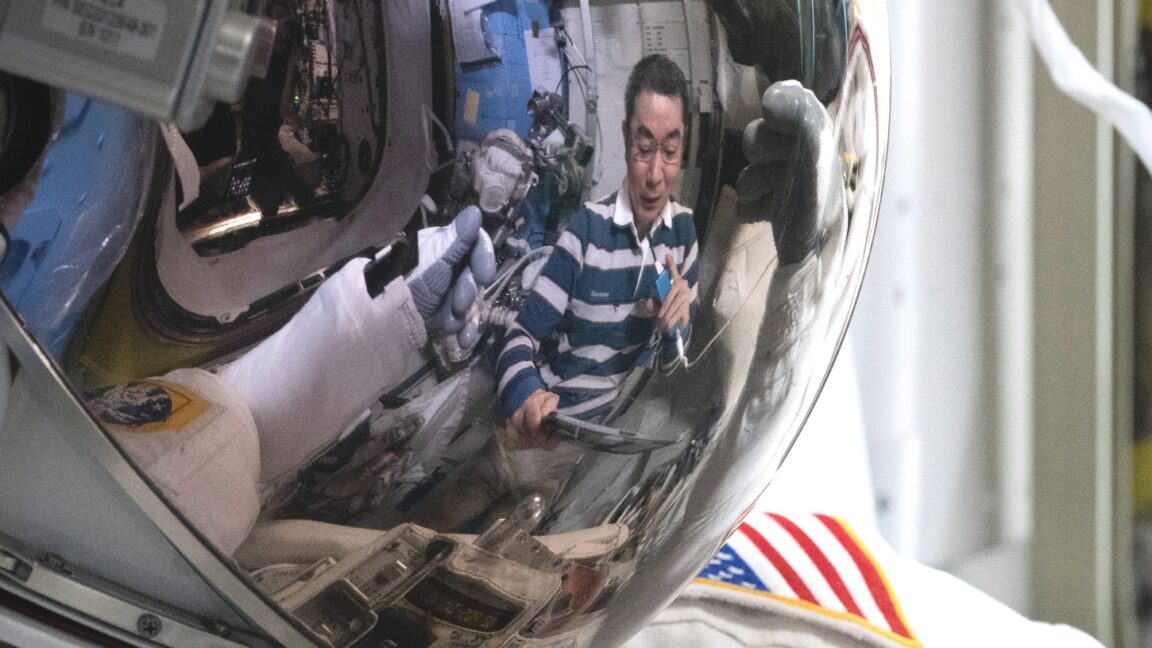
The Crew-11 mission is led by commander Zena Cardman, 38, who is wrapping up her first mission to space. Second in command is pilot Mike Fincke, a 58-year-old astronaut on his fourth spaceflight. Japanese astronaut Kimiya Yui, 55, and Russian cosmonaut Oleg Platonov, 39, round out the crew.

Isaacman said NASA will release more information about the schedule for Crew-11’s undocking and reentry within the next 48 hours. The crew will come home aboard the same SpaceX Crew Dragon spacecraft they launched in more than five months ago. The entire crew must return to Earth together because they rely on the same Dragon spacecraft as a lifeboat.

“For over 60 years, NASA has set the standard for safety and security in crewed spaceflight,” Isaacman said. “In these endeavors, including the 25 years of continuous human presence onboard the International Space Station, the health and well-being of our astronauts is always and will be our highest priority.”

From left to right: Crew-11 mission specialist Oleg Platonov, pilot Mike Fincke, commander Zena Cardman, and mission specialist Kimiya Yui. This photo was taken during training at SpaceX’s facility in Hawthorne, California.

Credit: SpaceX

From left to right: Crew-11 mission specialist Oleg Platonov, pilot Mike Fincke, commander Zena Cardman, and mission specialist Kimiya Yui. This photo was taken during training at SpaceX’s facility in Hawthorne, California. Credit: SpaceX

Lingering risk

Polk, a physician who has served as NASA’s chief medical officer since 2016, said the agency is not ready to release details about the medical issue, citing privacy concerns. “I’m not going to speak about any particular astronaut or any particular specific diagnosis,” Polk said. “I’d ask that we still respect the privacy of the astronaut.”

https://arstechnica.com/space/2026/01/in-a-first-nasa-orders-astronauts-home-after-unspecified-medical-issue/


Former Google CEO plans to singlehandedly fund a Hubble telescope replacement

Prior to World War II the vast majority of telescopes built around the world were funded by wealthy people with an interest in the heavens above.

However, after the war, two significant developments in the mid-20th century caused the burden of funding large astronomical instruments to largely shift to the government and academic institutions. First, as mirrors became larger and larger to see deeper into the universe, their costs grew exponentially. And then, with the advent of spaceflight, the expense of space-based telescopes expanded even further.

But now the tide may be turning again.

On Wednesday evening, former Google CEO Eric Schmidt and his wife, Wendy, announced a major investment in not just one telescope project, but four. Each of these new telescopes brings a novel capability online; however, the most intriguing new instrument is a space-based telescope named Lazuli. This spacecraft, if successfully launched and deployed, would offer astronomers a more capable and modern version of the Hubble Space Telescope, which is now three decades old.

A billionaire with a keen interest in science and technology, Schmidt and his wife did not disclose the size of his investment in the four telescopes, which collectively will be known as the Schmidt Observatory System. However, it likely is worth half a billion dollars, at a minimum.

“For 20 years, Eric and I have pursued philanthropy to seek new frontiers, whether in the deep sea or in the profound connections that link people and our planet, committing our resources to novel research that reaches beyond what might be funded by governments or the private sector,” Wendy Schmidt said in a statement to Ars. “With the Schmidt Observatory System, we’re enabling multiple approaches to understanding the vast universe where we find ourselves stewards of a living planet.”

Essentially the Schmidts have taken innovative telescope concepts that scientists have proposed for government funding and will provide the money needed to build them. Their gift has enormous potential to advance the study of astronomy and astrophysics.

https://arstechnica.com/space/2026/01/eric-schmidt-will-massively-invest-in-private-telescopes-including-hubble-replacement/


NASA considers evacuating ailing crew member from International Space Station

Someone on the International Space Station suffered an unspecified “medical situation” Wednesday, prompting the postponement of a planned spacewalk and raising the possibility of an early return for a portion of the lab’s seven-person crew, NASA said in a statement.

NASA has never ordered a medical evacuation from space before, but the option has always been available at the International Space Station with lifeboats ready for activation.

The space agency announced the spacewalk postponement Wednesday afternoon due to a “medical concern” with a member of the space station’s crew. NASA officials declined to identify the crew member or release further details about their condition, citing medical privacy restrictions.

A late-night update

It is rare, but not unprecedented, for NASA to postpone a spacewalk because of a medical issue. It last happened in 2021, when an astronaut was unable to perform a spacewalk due to a pinched nerve. NASA initially said managers would reschedule Thursday’s planned excursion for another date.

But the situation on the ISS appeared more serious after a second statement was released by NASA late Wednesday night. NASA confirmed the medical issue involved a single crew member and said the person was stable. Then, NASA said managers were considering bringing home the ailing crew member on a SpaceX Crew Dragon capsule.

The Dragon spacecraft docked at the ISS launched August 1 with NASA astronauts Zena Cardman and Mike Fincke, Japanese astronaut Kimiya Yui, and Russian cosmonaut Oleg Platonov. This mission, designated Crew-11, was slated to end with the crew’s undocking and return to Earth around February 20.

“Safely conducting our missions is our highest priority, and we are actively evaluating all options, including the possibility of an earlier end to Crew-11’s mission,” NASA said. “These are the situations NASA and our partners train for and prepare to execute safely. We will provide further updates within the next 24 hours.”

https://arstechnica.com/space/2026/01/nasa-postpones-space-station-spacewalk-due-to-crew-members-medical-concern/


Here are the launches and landings we’re most excited about in 2026

Last year delivered doses of drama and excitement in the space business, with a record number of launches, breathtaking vistas of other worlds, and a multitude of breakthroughs and setbacks. 2026 is shaping up to be another thrilling year in the cosmos.

For the first time in more than 54 years, astronauts are training to travel to the vicinity of the Moon, perhaps within the next couple of months. NASA, SpaceX, Blue Origin, and other companies are poised to take major steps toward actually landing humans on the Moon, perhaps within a few years.

New rockets are slated to debut in 2026, and scientists hope to open new windows on the Universe. Here, we list the most anticipated space missions scheduled for this year, ranked according to our own anticipation for them. We also assess the chances of these missions actually happening in the next 12 months. Unless specified, we don’t assess the chances of a successful outcome.

1. Artemis II

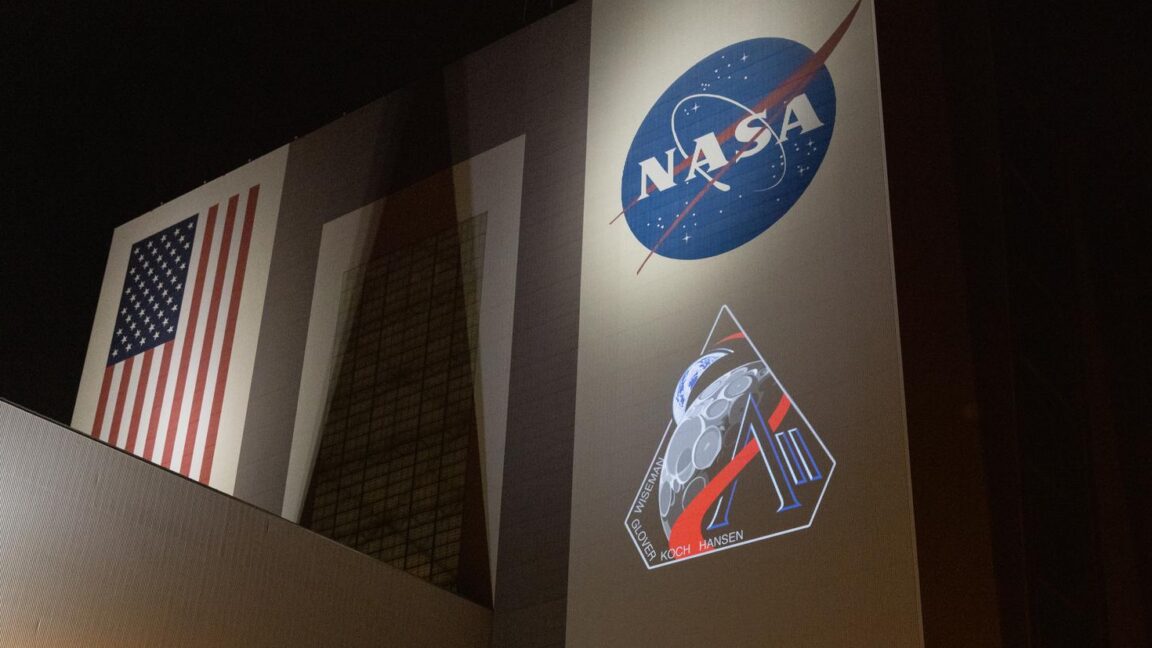
Final preparations for the Artemis II mission are well underway at NASA’s Kennedy Space Center in Florida, with the Space Launch System rocket and Orion spacecraft fully integrated inside the Vehicle Assembly Building. Within a couple of weeks, the SLS rocket could roll to Launch Complex 39B for a countdown dress rehearsal. Then, perhaps in February, the Artemis II mission is scheduled to depart Florida’s Space Coast on a 10-day flight that will carry astronauts Reid Wiseman, Victor Glover, Christina Koch, and Jeremy Hansen around the far side of the Moon and back to Earth. This will be the first crew flight on the SLS rocket and Orion capsule. Even if delays prevent a launch in February, Artemis II is well-positioned to fly by spring or summer. Chance of Artemis II happening in 2026: 90 percent.

https://arstechnica.com/space/2026/01/here-are-the-launches-and-landings-were-most-excited-about-in-2026/


Private equity deal shows just how far America’s legacy rocket industry has fallen

If you are a student of space history or tracked the space industry before billionaires and venture capital changed it forever, you probably know the name Rocketdyne.

A half-century ago, Rocketdyne manufactured almost all of the large liquid-fueled rocket engines in the United States. The Saturn V rocket that boosted astronauts toward the Moon relied on powerful engines developed by Rocketdyne, as did the Space Shuttle, the Atlas, Thor, and Delta rockets, and the US military’s earliest ballistic missiles.

Rocketdyne’s dominance began to erode after the end of the Cold War. The company started in 1955 as a division of North American Aviation, then became part of Rockwell International until Boeing acquired Rockwell’s aerospace division in 1996. Rocketdyne continually designed and tested large new rocket engines from the 1950s through the 1980s. Since then, Rocketdyne has developed and qualified just one large engine design from scratch—the RS-68—and it retired from service in 2024.

Read full article

Comments

https://arstechnica.com/space/2026/01/a-private-equity-deal-reviving-rocketdyne-seems-more-like-a-corporate-breakup/


NASA’s science budget won’t be a train wreck after all

In June, the White House released a budget proposal for fiscal year 2026 that slashed funding for NASA’s science programs by nearly 50 percent. Then, in July, the Trump administration began telling the leaders of dozens of space science missions to prepare “closeout” plans for their spacecraft.

Things looked pretty grim for a while, but then Congress stepped in. Congress, of course, sets the federal government’s budget. In many ways, Congress abdicated authority to the Trump administration last year. But not so, it turns out, with federal spending.

Throughout the summer and fall, as the White House and Congress wrangled over various issues, lawmakers made it clear they intended to fund most of NASA’s science portfolio. Preliminary efforts to shut down active missions were put on hold.

Read full article

Comments

https://arstechnica.com/space/2026/01/nasas-science-budget-wont-be-a-train-wreck-after-all/


Our annual power ranking of US rocket companies has changes near the top and bottom

Which US rocket companies achieved the most during 2025?

Once again, Ars Technica is here to provide some answers in the form of our annual power ranking of US launch companies. We began doing this in 2022 and have since put out a top-10 list every year (see 2023 and 2024). Our intent, as always, is to spark debate, discussion, and appreciation for the challenge of operating a successful rocket company. It’s a demanding business, both technically and financially. We respect the grit and hustle because we know just how hard this stuff is.

Please also note that this is a subjective list, although hard metrics such as total launches, tonnage to orbit, success rate, and more were all important factors in the decision. And finally, our focus remains on what each company accomplished in 2025, not on what they might do in the future.

Read full article

Comments

https://arstechnica.com/space/2026/01/theres-a-big-shake-up-near-the-top-of-our-annual-us-launch-company-rankings/


SpaceX begins “significant reconfiguration” of Starlink satellite constellation

The year 2025 ended with more than 14,000 active satellites from all nations zooming around the Earth. One-third of them will soon move to lower altitudes.

The maneuvers will be undertaken by SpaceX, the owner of the largest satellite fleet in orbit. About 4,400 of the company’s Starlink Internet satellites will move from an altitude of 341 miles (550 kilometers) to 298 miles (480 kilometers) over the course of 2026, according to Michael Nicolls, SpaceX’s vice president of Starlink engineering.

“Starlink is beginning a significant reconfiguration of its satellite constellation focused on increasing space safety,” Nicolls wrote Thursday in a post on X.

The maneuvers undertaken with the Starlink satellites’ plasma engines will be gradual, but they will eventually bring a large fraction of orbital traffic closer together. The effect, perhaps counterintuitively, will be a reduced risk of collisions between satellites whizzing through near-Earth space at nearly 5 miles per second. Nicolls said the decision will “increase space safety in several ways.”

Why now?

There are fewer debris objects at the lower altitude, and although the Starlink satellites will be packed more tightly, they follow choreographed paths distributed in dozens of orbital lanes. “The number of debris objects and planned satellite constellations is significantly lower below 500 km, reducing the aggregate likelihood of collision,” Nicolls wrote.

The 4,400 satellites moving closer to Earth make up nearly half of SpaceX’s Starlink fleet. At the end of 2025, SpaceX had nearly 9,400 working satellites in orbit, including more than 8,000 Starlinks in operational service and hundreds more undergoing tests and activation.

There’s another natural reason for reconfiguring the Starlink constellation. The Sun is starting to quiet down after reaching the peak of the 11-year solar cycle in 2024. The decline in solar activity has the knock-on effect of reducing air density in the uppermost layers of the Earth’s atmosphere, a meaningful factor in planning satellite operations in low-Earth orbit.

With the approaching solar minimum, Starlink satellites will encounter less aerodynamic drag at their current altitude. In the rare event of a spacecraft failure, SpaceX relies on atmospheric resistance to drag Starlink satellites out of orbit toward a fiery demise on reentry. Moving the Starlink satellites lower will allow them to naturally reenter the atmosphere and burn up within a few months. At solar minimum, it might take more than four years for drag to pull the satellites out of their current 550-kilometer orbit, according to Nicolls. At the lower altitude, it will take just a few months.

https://arstechnica.com/space/2026/01/spacex-begins-significant-reconfiguration-of-starlink-satellite-constellation/


After half a decade, the Russian space station segment stopped leaking

A small section of the International Space Station that has experienced persistent leaks for years appears to have stopped venting atmosphere into space.

The leaks were caused by microscopic structural cracks inside the small PrK module on the Russian segment of the space station, which lies between a Progress spacecraft airlock and the Zvezda module. The problem has been a long-running worry for Russian and US operators of the station, especially after the rate of leakage doubled in 2024. This prompted NASA officials to label the leak as a “high likelihood” and “high consequence” risk.

However, recently two sources indicated that the leaks have stopped. And NASA has now confirmed this.

“Holding steady”

“Following additional inspections and sealing activities, the pressure in the transfer tunnel attached to the Zvezda Service Module of the International Space Station, known as the PrK, is holding steady in a stable configuration,” a space agency spokesman, Josh Finch, told Ars. “NASA and Roscosmos continue to monitor and investigate the previously observed cracks for any future changes that may occur.”

For the better part of half a decade, Russian cosmonauts have been searching for the small leaks like a proverbial needle in a haystack. They would periodically close the hatch leading to the PrK module and then, upon re-opening it, look for tiny accumulations of dust to indicate the leak sites.

Then the Russian cosmonauts would apply a sealant known as Germetall-1 (which has now been patented) to the cracks. They would close the hatch again, monitor the pressure inside the PrK module, and begin the search anew for additional leaks. This process went on for years.

https://arstechnica.com/space/2026/01/finally-some-good-news-for-russia-the-space-station-is-no-longer-leaking/