China just carried out its second reusable launch attempt in three weeks
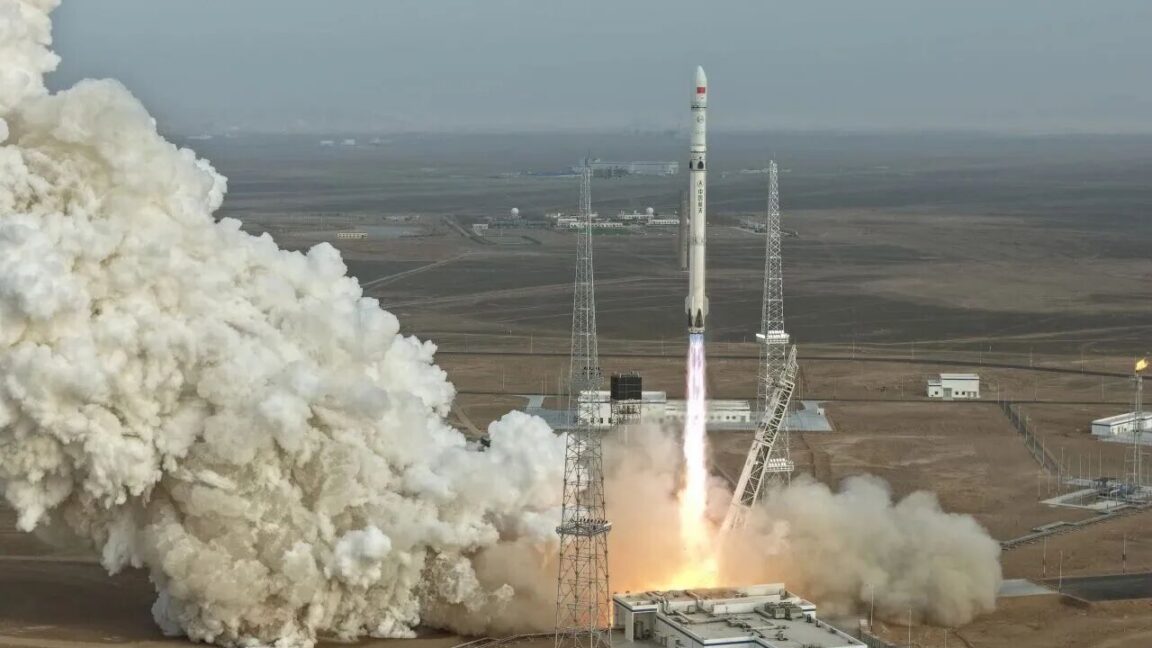
For the second time this month, a Chinese rocket designed for reuse successfully soared into low-Earth orbit on its first flight Monday, defying the questionable odds that burden the debuts of new launch vehicles.

The first Long March 12A rocket, roughly the same height and diameter of SpaceX’s workhorse Falcon 9, lifted off from the Jiuquan Satellite Launch Center at 9:00 pm EST Monday (02:00 UTC Tuesday).

Less than 10 minutes later, rocket’s methane-fueled first stage booster hurtled through the atmosphere at supersonic speed, impacting in a remote region about 200 miles downrange from the Jiuquan spaceport in northwestern China. The booster failed to complete a braking burn to slow down for landing at a prepared location near the edge of the Gobi Desert.

The Long March 12A’s upper stage performed as intended, successfully reaching the mission’s “predetermined orbit,” said the China Aerospace Science and Technology Corporation (CASC), the state-owned enterprise that leads the country’s space industry.

“The first stage failed to be successfully recovered,” the corporation said in a statement. “The specific reasons are currently under further analysis and investigation.”

A stable of reusable rockets

This outcome resembles the results from the first flight of another medium-class Chinese rocket, the Zhuque-3, on December 2. The Zhuque-3 rocket was developed by a privately-funded startup named LandSpace. Similar in size and performance to the Long March 12A, the Zhuque-3 also reached orbit on its first launch, and its recoverable booster stage crashed during a downrange landing attempt. The Zhuque-3’s first stage came down next to its landing zone, while the Long March 12A appears to have missed by at least a couple of miles.

“Although this mission did not achieve the planned recovery of the rocket’s first stage, it obtained critical engineering data under the rocket’s actual flight conditions, laying an important foundation for subsequent launches and reliable recovery of the stages,” CASC said. “The research and development team will promptly conduct a comprehensive review and technical analysis of this test process, fully investigate the cause of the failure, continuously optimize the recovery plan, and continue to advance reusable technology verification.”

https://arstechnica.com/space/2025/12/china-just-carried-out-its-second-reusable-launch-attempt-in-three-weeks/



In a surprise announcement, Tory Bruno is out as CEO of United Launch Alliance

The retirement of the Atlas V and Delta IV led to a period of downsizing for United Launch Alliance, with layoffs and facility closures in Florida, California, Alabama, Colorado, and Texas. In a further sign of ULA’s troubles, SpaceX won a majority of US military launch contracts for the first time last year.

Bruno, 64, served as a genial public face for ULA amid the company’s difficult times. He routinely engaged with space enthusiasts on social media, fielded questions from reporters, and even started a podcast. Bruno’s friendly and accessible demeanor was unusual among industry leaders, especially those with ties to large legacy defense contractors.

ULA is a 50-50 joint venture between Boeing and Lockheed Martin, which merged their rocket divisions in 2006. Bruno’s plans did not always enjoy full support from ULA’s corporate owners. For example, Boeing and Lockheed initially only approved tranches of funding for developing the new Vulcan rocket on a quarterly basis. Beginning before Bruno’s arrival and extending into his tenure as CEO, ULA’s owners slow-walked development of an advanced upper stage that might have become a useful centerpiece for an innovative in-space transport and refueling infrastructure.

There were also rumors in recent years of an impending sale of ULA by Boeing and Lockheed Martin, but nothing has materialized so far.

The third flight of the Vulcan rocket lifted off from Cape Canaveral Space Force Station, Florida, on August 12, 2025. Credit: United Launch Alliance

A statement from the co-chairs of ULA’s board, Robert Lightfoot of Lockheed Martin and Kay Sears of Boeing, did not identify a reason for Bruno’s resignation, other than saying he is stepping down “to pursue another opportunity.”

“We are grateful for Tory’s service to ULA and the country, and we thank him for his leadership,” the board chairs said in a statement.

John Elbon, ULA’s chief operating officer, will take over as interim CEO effective immediately, the company said.

“We have the greatest confidence in John to continue strengthening ULA’s momentum while the board proceeds with finding the next leader of ULA,” the company said. “Together with Mark Peller, the new COO, John’s career in aerospace and his launch expertise is an asset for ULA and its customers, especially for achieving key upcoming Vulcan milestones.”

In a post on X, Bruno thanked ULA’s owners for the opportunity to lead the company. “It has been a great privilege to lead ULA through its transformation and to bring Vulcan into service,” he wrote. “My work here is now complete and I will be cheering ULA on.”

https://arstechnica.com/space/2025/12/in-a-surprise-announcement-tory-bruno-is-out-as-ceo-of-united-launch-alliance/


Safety panel says NASA should have taken Starliner incident more seriously

Invoking the designation also ensures an independent investigation detached from the teams involved in the incident itself, according to retired Air Force Lt. Gen. Susan Helms, chair of the safety panel. “We just, I think, are advocates of safety investigation best practices, and that clearly is one of the top best practices,” Helms said.

Another member of the safety panel, Mark Sirangelo, said NASA should formally declare mishaps and close calls as soon as possible. “It allows for the investigative team to be starting to be formed a lot sooner, which makes them more effective and makes the results quicker for everyone,” Sirangelo said.

In the case of last year’s Starliner test flight, NASA’s decision not to declare a mishap or close call created confusion within the agency, safety officials said.

A few weeks into the Starliner test flight last year, the manager of NASA’s Commercial Crew Program, Steve Stich, told reporters the agency’s plan was “to continue to return [the astronauts] on Starliner and return them home at the right time.” Mark Nappi, then Boeing’s Starliner program manager, regularly appeared to downplay the seriousness of the thruster issues during press conferences throughout Starliner’s nearly three-month mission.

“Specifically, there’s a significant difference, philosophically, between we will work toward proving the Starliner is safe for crew return, versus a philosophy of Starliner is no-go for return, and the primary path is on an alternate vehicle, such as Dragon or Soyuz, unless and until we learn how to ensure the on-orbit failures won’t recur on entry with the Starliner,” Precourt said.

“The latter would have been the more appropriate direction,” he said. “However, there were many stakeholders that believed the direction was the former approach. This ambiguity continued throughout the summer months, while engineers and managers pursued multiple test protocols in the Starliner propulsion systems, undoubtedly affecting the workforce.”

After months of testing and analysis, NASA officials were unsure if the thruster problems would recur on Starliner’s flight home. They decided in August 2024 to return the spacecraft to the ground without the astronauts, and the capsule safely landed in New Mexico the following month. The next Starliner flight will carry only cargo to the ISS.

The safety panel recommended that NASA review its criteria and processes to ensure the language is “unambiguous” in requiring the agency to declare an in-flight mishap or a high-visibility close call for any event involving NASA personnel “that leads to an impact on crew or spacecraft safety.”

https://arstechnica.com/space/2025/12/safety-panel-says-nasa-should-have-taken-starliner-incident-more-seriously/


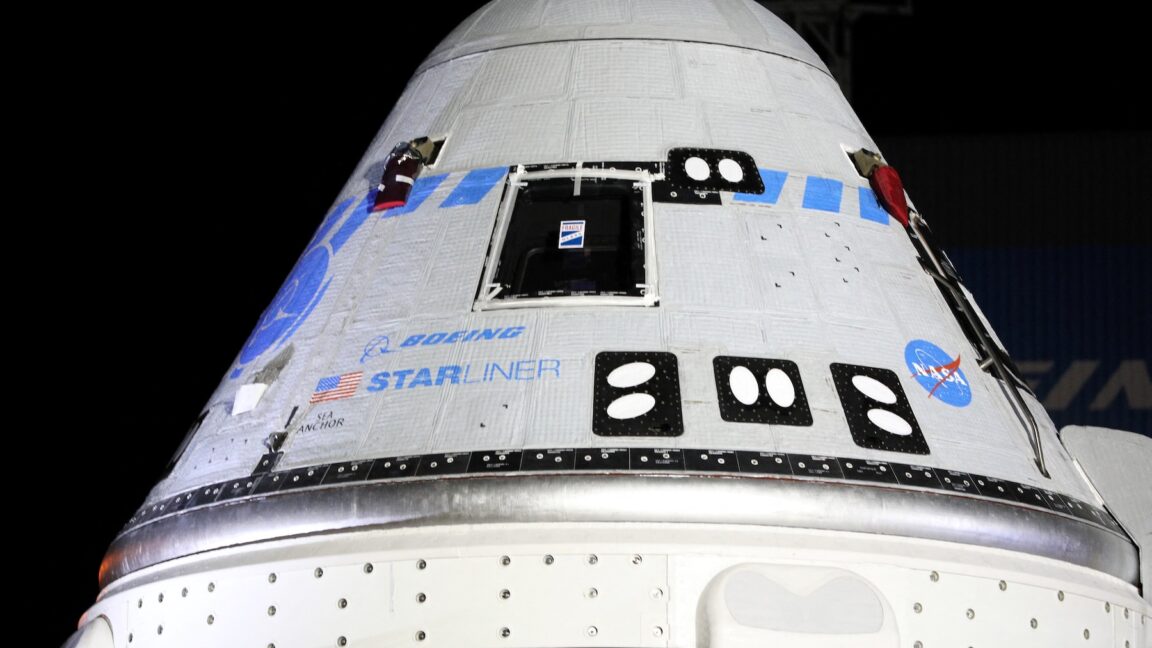
NASA rewraps Boeing Starliner Astrovan II for Artemis II ride to launch pad

Artemis II, meet Astrovan II.

NASA’s first astronauts who will fly by the moon in more than 50 years participated in a practice launch countdown on Saturday, December 20, including taking their first trip on a transport vehicle steeped in almost the entire span of US space history—from Apollo through to the ongoing commercial crew program.

Three men and a woman wearing bright orange pressure suits pose for a photo next to a motor coach.

Artemis II astronauts (from right to left) Reid Wiseman, Victor Glover, Christina Koch, and Jeremy Hansen pose for photographs before boarding the Astrovan II crew transport vehicle for a ride to their rocket during a rehearsal of their launch-day activities at NASA’s Kennedy Space Center in Florida on Saturday, Dec. 20, 2025. Credit: NASA/Aubrey Gemignani

Artemis II commander Reid Wiseman, pilot Victor Glover, and mission specialist Christina Koch (all with NASA) and mission specialist Jeremy Hansen, an astronaut with the Canadian Space Agency, began the rehearsal at the Kennedy Space Center in Florida, proceeding as they will when they are ready to fly next year (the Artemis II launch is slated for no earlier than the first week of February and no later than April 2026).

Parked outside of their crew quarters and suit-up room was their ride to their rocket, “Astrovan II,” a modified Airstream motorhome. The almost 25-foot-long (8-meter) crew transport vehicle (CTV) was custom-wrapped with graphics depicting the moon, the Artemis II mission patch, and program insignia.

From Canoo to coach

Airstream’s Atlas Touring Coach, though, was not originally planned as NASA’s Artemis CTV. In July 2023, NASA took delivery of three fully electric vans from Canoo Technologies after the company, a startup based in Torrance, California, was awarded the contract the year before. At the time, NASA touted its selection as focusing on the “crews’ safety and comfort on the way to the [launch] pad.”

Three vans with rounded corners are parked side by side in front of a large building and an overcast sky.

The three Canoo Technologies’ specially designed, fully-electric, environmentally friendly crew transportation vehicles for Artemis missions arrived at Kennedy Space Center on July 11, 2023. The company now bankrupt, the CTVs will serve as a backup to the Astrovan II. Credit: NASA/Isaac Watson

Six months later, Canoo filed for bankruptcy, and NASA ceased active use of the electric vans, citing a lack of support for its mission requirements. Instead, the agency turned to another of its commercial partners, Boeing, which had its own CTV but no astronauts at present to use it.

https://arstechnica.com/space/2025/12/nasa-rewraps-boeing-starliner-astrovan-ii-for-artemis-ii-ride-to-launch-pad/


Russia is about to do the most Russia thing ever with its next space station

Meanwhile, the Russian core will fly onward. Some elements will have been in orbit for more than 30 years.

Some in Russia are not happy

In a scathing article on the decision, the Russian newspaper New Izvestia explored its consequences. The article, translated for Ars by Rob Mitchell, recalled comments from Orlov in 2022 about the dangerous bacteria and fungi that have accumulated on the International Space Station over its extended lifetime. Because of these microorganisms from hundreds of visiting astronauts, he said, there is danger to both humans and degraded electrical components. At the time, Orlov was seeking to justify funding for a new station. “Have bacteria and fungi suddenly become less dangerous over the past three years?” the Russian article asks.

There may also not be much time for new research. Russian cosmonauts on the space station currently spend about 50 percent of their time on station maintenance due to the aging infrastructure.

So, at a time when China will have its own Tiangong space station, NASA should have one or more privately operated space stations to visit, and India may also begin the construction of its own orbital outpost, Russian cosmonauts will be left with what, exactly?

“Russia, meanwhile, will be left to carry on the legacy of the ISS, with all its problems,” the New Izvestia article states. “We won’t have a new orbital station with modern capabilities yet, and the Vostochny Cosmodrome is losing much of its significance, meaning investments in a launch pad for manned flights could go down the drain. But let’s be happy for Kazakhstan—its authorities will continue to receive rent from Baikonur.”

This is clearly a money-saving move for Russia. Given its war-strapped economy, the country cannot afford major investments in civil space projects. It has been clear for some time that ROS was largely a vaporware project. However, basing a new station on decades-old elements of the space station, which have shown signs of cracking and leaking, is remarkable even for Russia’s threadbare space program.

Russia’s justification for the change is amusing. Manturov and the chief of Roscosmos, Dmitry Bakanov, have said that putting ROS at an inclination of 51.6 degrees would enable interaction with an Indian station, which may fly in a similar orbit. So maybe there can be some collaboration in the time before Russia’s station falls apart and India’s begins to fly?

That is thin gruel, indeed, upon which to justify such a monumental decision.

https://arstechnica.com/space/2025/12/russia-is-about-to-do-the-most-russia-thing-ever-with-its-next-space-station/


Rocket Report: Russia pledges quick fix for Soyuz launch pad; Ariane 6 aims high

The easiest way to keep up with Eric Berger’s and Stephen Clark’s reporting on all things space is to sign up for our newsletter. We’ll collect their stories and deliver them straight to your inbox.

Sign Me Up!

SpaceX warns of dangerous Chinese launch. China’s recent deployment of nine satellites occurred dangerously close to a Starlink satellite, SpaceX’s vice president of Starlink engineering said. Michael Nicolls wrote in a December 12 social media post that there was a 200-meter close approach between a satellite launched December 10 on a Chinese Kinetica-1 rocket and SpaceX’s Starlink-6079 spacecraft at 560 kilometers (348 miles) altitude, Aviation Week and Space Technology reports. “Most of the risk of operating in space comes from the lack of coordination between satellite operators—this needs to change,” Nicolls wrote.

Blaming the customer... The company in charge of the Kinetica-1 rocket, CAS Space, responded to Nicolls’ post on X saying it would “work on identifying the exact details and provide assistance.” In a follow-up post on December 13, CAS Space said the close call, if confirmed, occurred nearly 48 hours after the satellite separated from the Kinetica-1 rocket, by which time the launch mission had long concluded. “CAS Space will coordinate with satellite operators to proceed.”

A South Korean startup is ready to fly. Innospace, a South Korean space startup, will launch its independently developed commercial rocket, Hanbit-Nano, as soon as Friday, the Maeil Business Newspaper reports. The rocket will lift off from the Alcântara Space Center in Brazil. The small launcher will attempt to deliver eight small payloads, including five deployable satellites, into low-Earth orbit. The launch was delayed two days to allow time for technicians to replace components of the first stage oxidizer supply cooling system.

Hybrid propulsion… This will be the first launch of Innospace’s Hanbit-Nano rocket. The launcher has two stages and stands 71 feet (21.7 meters) tall with a diameter of 4.6 feet (1.4 meters). Hanbit-Nano is a true micro-launcher, capable of placing up to 200 pounds (90 kilograms) of payload mass into Sun-synchronous orbit. It has a unique design, with hybrid engines consuming a mix of paraffin as the fuel and liquid oxygen as the oxidizer.

Ten years since a milestone in rocketry. On December 21, 2015, SpaceX launched the Orbcomm-2 mission on an upgraded version of its Falcon 9 rocket. That night, just days before Christmas, the company successfully landed the first stage for the first time. Ars has reprinted a slightly condensed chapter from the book Reentry, authored by Senior Space Editor Eric Berger and published in 2024. The chapter begins in June 2015 with the failure of a Falcon 9 rocket during launch of a resupply mission to the International Space Station and ends with a vivid behind-the-scenes recounting of the historic first landing of a Falcon 9 booster to close out the year.

https://arstechnica.com/space/2025/12/rocket-report-russia-pledges-quick-fix-for-soyuz-launch-pad-ariane-6-aims-high/


These are the flying discs the government wants you to know about

CubeSats have been a ubiquitous part of the satellite industry for nearly a quarter-century. They are based on a cube-shaped design, measuring about 10 centimeters per side, but can be scaled from a single cube “unit” to three, six, 12, or more, depending on mission requirements. The CubeSat standard has become a popular choice for commercial companies, the military, NASA, and universities looking to build small satellites on a tight budget.

By one measure, nearly 3,000 CubeSats have launched since the first one soared into orbit in 2003. After originally being confined to low-Earth orbit, they have now flown to high-altitude orbits, to the Moon, and to Mars.

While CubeSats are now prolific, engineers at the Aerospace Corporation saw an opportunity to improve on the concept. Debra Emmons, Aerospace’s chief technology officer, said the idea originated from Rich Welle, a scientist recently retired from the center’s Experiments Lab, or xLab, division.

“They were asking questions,” Emmons recounted in an interview with Ars. “They were looking at CubeSat studies and looking at some alternatives. The typical CubeSat is, in fact, a cube. So, the idea was could you look at some different types of form factors that might be able to generate more power … and offer up benefit for certain mission applications?”

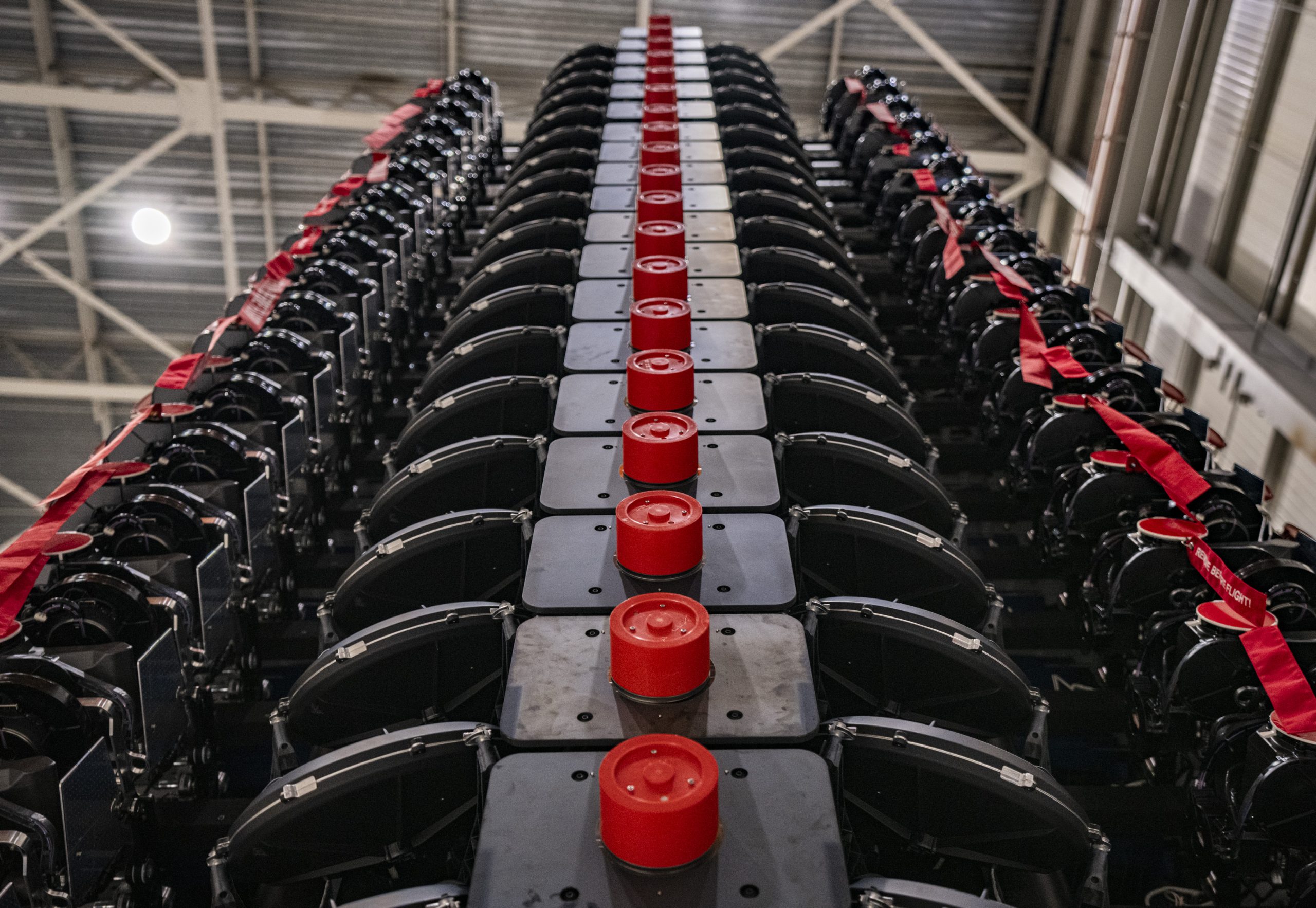
Aerospace’s research team arrived at the DiskSat design. Emmons said the stackable flat-panel format is easier to pack for launch than a CubeSat. The concept is similar to SpaceX’s pioneering approach to launching stackable Starlink Internet satellites, but DiskSats are significantly smaller, lighter, and adaptable to different kinds of missions.

A batch of Starlink satellites prior to launch

A stack of Starlink satellites prior to launch. Credit: SpaceX

DiskSats have several advantages over CubeSats, according to the Aerospace Corporation. Each of the four DiskSats launched Thursday has a mass of about 35 pounds (16 kilograms), less than that of a typical 12U CubeSat. But a DiskSat has more than 13 times the surface area on a single side, providing valuable real estate for developers to load up the satellite with power-generating solar arrays, sensors, antennas, or other payloads that simply won’t fit on a CubeSat.

https://arstechnica.com/science/2025/12/heres-why-nasa-and-the-space-force-are-interested-in-pizza-shaped-satellites/


Trump commits to Moon landing by 2028, followed by a lunar outpost two years later

Strikingly, there is no mention of a concrete plan to send humans to Mars in this document. There are just two references to the red planet, both of which talk about sending humans there as a far-off goal. One source recently told Ars that as soon as Trump learned there was no way humans could land on Mars during his second term, he was no longer interested in that initiative.

OMB in the picture

Also absent from this document is much reference to space science, with only a mention of “optimizing space research-and-development investments to achieve my Administration’s near-term space objectives.”

The architect of the Trump Administration’s proposed deep cuts in space science (which Congress has largely forestalled) was Russ Vought, head of the Office of Management and Budget. It’s probably not a great indicator for science missions that Isaacman is directed to coordinate with Vought’s office to achieve policy objectives in the executive order.

All told, the policies Trump signed are generally forward-looking, seeking to modernize NASA’s exploration efforts. Isaacman will face many challenges, including landing humans on the Moon by 2028 and working with industry to develop an on-time successor to the International Space Station. Whether and how he meets these challenges will be an intriguing storyline in the coming months and years.

https://arstechnica.com/space/2025/12/trump-commits-to-moon-landing-by-2028-followed-by-a-lunar-outpost-two-years-later/


NASA will soon find out if the Perseverance rover can really persevere on Mars

When the Perseverance rover arrived on Mars nearly five years ago, NASA officials thought the next American lander to take aim on the red planet would be taking shape by now.

At the time, the leaders of the space agency expected this next lander could be ready for launch as soon as 2026—or more likely in 2028. Its mission would have been to retrieve Martian rock specimens collected by the Perseverance rover, then billed as the first leg of a multilaunch, multibillion-dollar Mars Sample Return campaign.

Here we are on the verge of 2026, and there’s no sample retrieval mission nearing the launch pad. In fact, no one is building such a lander at all. NASA’s strategy for a Mars Sample Return, or MSR, mission remains undecided after the projected cost of the original plan ballooned to $11 billion. If MSR happens at all, it’s now unlikely to launch until the 2030s.

That means the Perseverance rover, which might have to hand off the samples to a future retrieval lander in some circumstances, must continue weathering the harsh, cold, dusty environment of Mars. The good news is that the robot, about the size of a small SUV, is in excellent health, according to Steve Lee, Perseverance’s deputy project manager at NASA’s Jet Propulsion Laboratory (JPL).

“Perseverance is approaching five years of exploration on Mars,” Lee said in a press briefing Wednesday at the American Geophysical Union’s annual fall meeting. “Perseverance is really in excellent shape. All the systems onboard are operational and performing very, very well. All the redundant systems onboard are available still, and the rover is capable of supporting this mission for many, many years to come.”

The rover’s operators at JPL are counting on sustaining Perseverance’s good health. The rover’s six wheels have carried it a distance of about 25 miles, or 40 kilometers, since landing inside the 28-mile-wide (45-kilometer) Jezero Crater in February 2021. That is double the original certification for the rover’s mobility system and farther than any vehicle has traveled on the surface of another world.

This enhanced-color mosaic is made from three separate images taken on September 8, 2025, each of which was acquired using the Perseverance rover’s Mastcam-Z instrument. The images were processed to improve visual contrast and enhance color differences. The view shows a location known as “Mont Musard” and another region named “Lac de Charmes,” where the rover’s team will be looking for more rock core samples to collect in the year ahead. The mountains in the distance are approximately 52 miles (84 kilometers) away.

Going for 100

Now, engineers are asking Perseverance to perform well beyond expectations. An evaluation of the rover’s health concluded it can operate until at least 2031. The rover uses a radioactive plutonium power source, so it’s not in danger of running out of electricity or fuel any time soon. The Curiosity rover, which uses a similar design, has surpassed 13 years of operations on Mars.

https://arstechnica.com/space/2025/12/nasa-will-soon-find-out-if-the-perseverance-rover-can-really-persevere-on-mars/


NASA finally—and we really do mean it this time—has a full-time leader

Now, finally, he will get a chance to act, rather than react to everyone else.

As the Project Athena plan clearly demonstrates, Isaacman has a good handle on the problems besetting NASA, an aging and increasingly bureaucratic agency. NASA can still do great things, but it has become almost infinitely harder since the heady days of Apollo six decades ago.

Isaacman has ideas to shake things up, but not to the extent of wanton change for the sake of change. It is clear from the interviews he has given to others, and in talking to him myself, that Isaacman is also a good listener. He wants to understand problems to he can work with others to apply thoughtful solutions.

Perhaps most importantly for NASA, unlike some other Trump administration nominees, he appears to be a builder, not a leveler.

His toughest mission yet

Isaacman is coming into a beleaguered and bruised agency that has faced an extraordinarily difficult year. Thanks in part to Musk’s Department of Government Efficiency, about 20 percent of the agency’s 17,500 employees took buyouts or early retirements. There have been significant layoffs at NASA’s Jet Propulsion Laboratory, and there are concerns about the future of Goddard Space Flight Center in Maryland. Moreover, the agency is locked into a high-stakes race with China to return humans to the Moon, which, over the last 12 months, has swung in China’s favor.

NASA’s administrator is responsible for carrying out the administration’s policies and working with Congress to secure funding to do so. In this, Isaacman finds himself between a Trump administration that sought to cut NASA’s budget by 24 percent, and a House and Senate that rejected the vast majority of those cuts in budget bills.

These are big hills to climb.

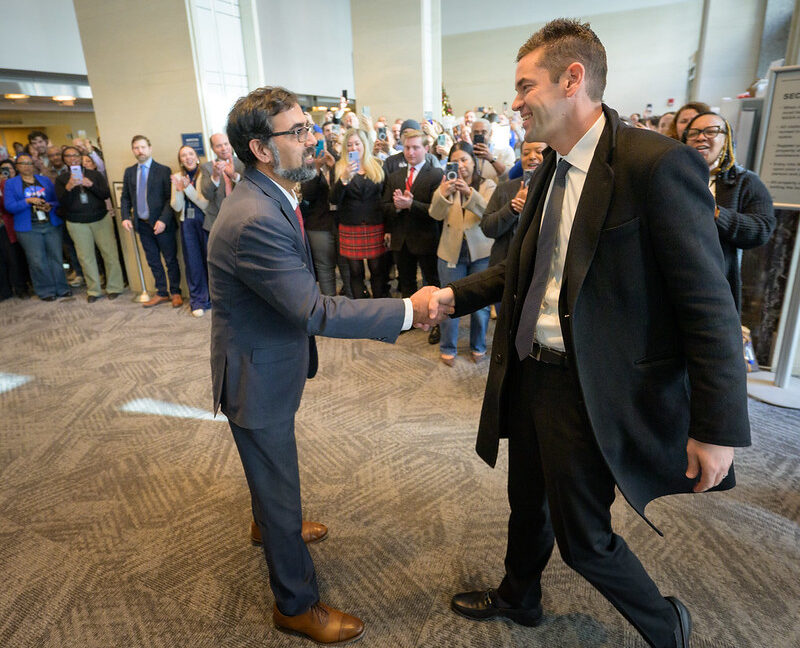
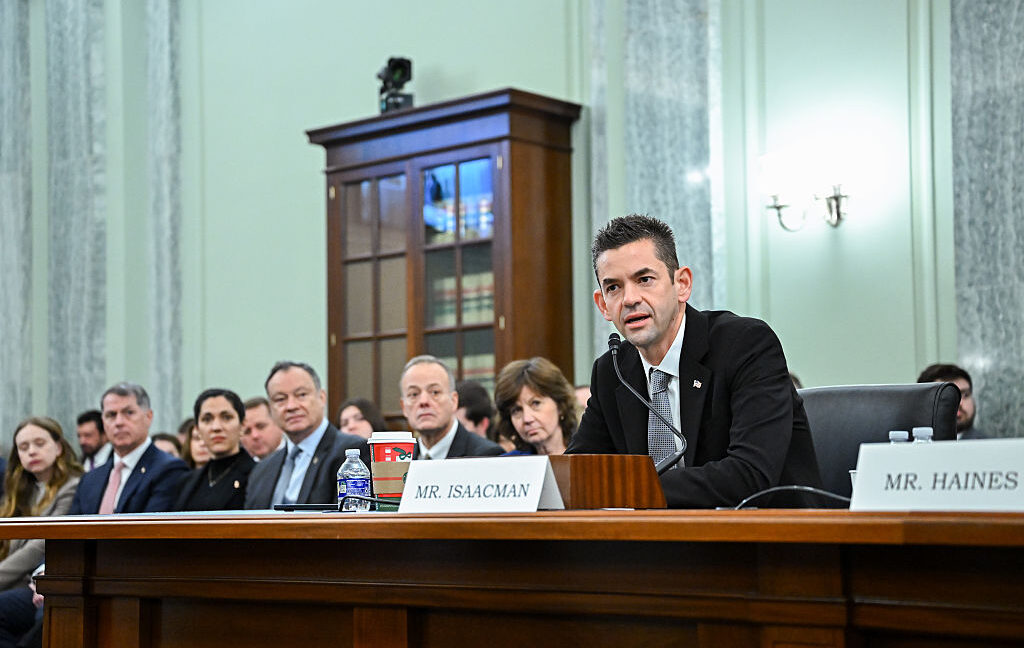
Looking over the last year, it would be easy to say NASA and Isaacman have lost more than half a year because of the withdrawal of Isaacman’s nomination in late May, when he was within days of bipartisan Senate approval. However, in the intervening months, Isaacman has made strong contacts within the US Senate and the White House. As part of the campaign to build support for his renomination, Isaacman emerges with considerably more political experience, a much closer relationship with Trump, and a deeper roster of contacts in his phone.

All of which is good, because for all of the fancy flying Isaacman has done to reach this point, his most difficult sorties lie ahead of him.

https://arstechnica.com/space/2025/12/nasa-finally-and-we-really-do-mean-it-this-time-has-a-full-time-leader/