The $4.3 billion space telescope Trump tried to cancel is now complete
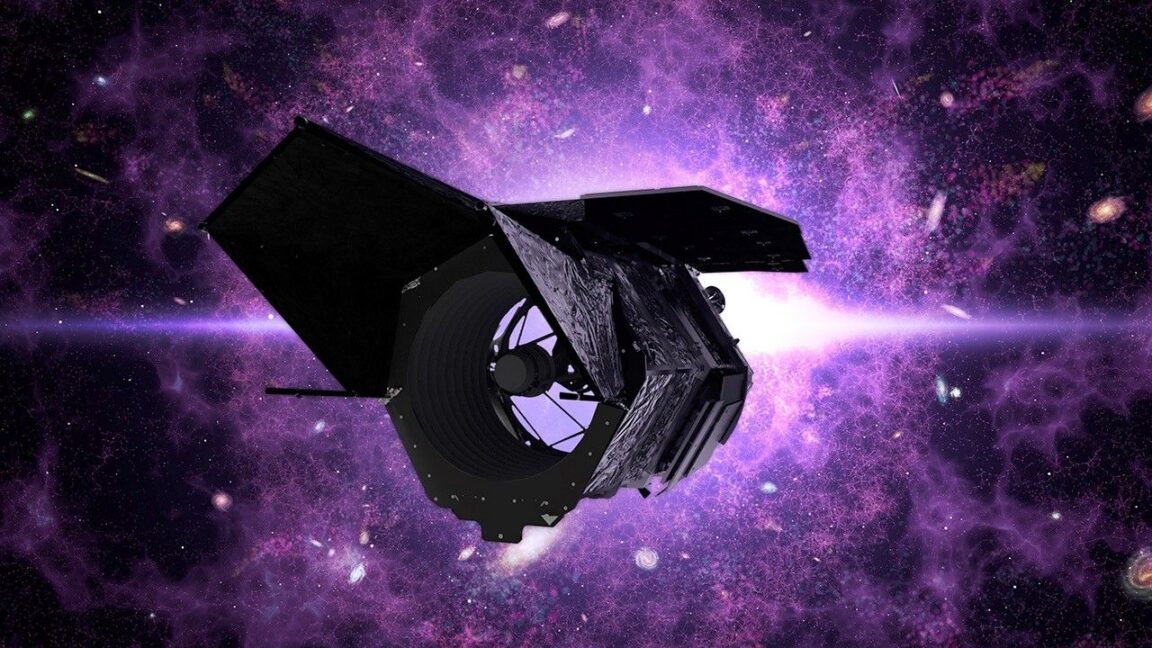
“We don’t have moments of terror for the deployment,” Townsend said. “Obviously, launch is always a risk, the tip-off rates that you have when you separate from the launch vehicle… Then, obviously, getting the aperture door open so that it’s deployed is another one. But these feel like normal aerospace risks, not unusual, harrowing moments for Roman.”

It also helps that Roman will use a primary mirror gifted to NASA by the National Reconnaissance Office, the US government’s spy satellite agency. The NRO originally ordered the mirror for a telescope that would peer down on the Earth, but the spy agency no longer needed it. Before NASA got its hands on the surplus mirror in 2012, scientists working on the preliminary design for what became Roman were thinking of a smaller telescope.

The larger telescope will make Roman a more powerful tool for science, and the NRO’s donation eliminated the risk of a problem or delay manufacturing a new mirror. But the upside meant NASA had to build a more massive spacecraft and use a bigger rocket to accommodate it, adding to the observatory’s cost.

Tests of Roman’s components have gone well this year. Work on Roman continued at Goddard through the government shutdown in the fall. On Webb, engineers uncovered one problem after another as they tried to verify the observatory would perform as intended in space. There were leaky valves, tears in the Webb’s sunshield, a damaged transducer, and loose screws. With Roman, engineers so far have found no “significant surprises” during ground testing, Townsend said.

“What we always hope when you’re doing this final round of environmental tests is that you’ve wrung out the hardware at lower levels of assembly, and it looks like, in Roman’s case, we did a spectacular job at the lower level,” she said.

With Roman now fully assembled, attention at Goddard will turn to an end-to-end functional test of the observatory early next year, followed by electromagnetic interference testing, and another round of acoustic and vibration tests. Then, perhaps around June of next year, NASA will ship the observatory to Kennedy Space Center, Florida, to prepare for launch on a SpaceX Falcon Heavy rocket.

“We’re really down to the last stretch of environmental testing for the system,” Townsend said. “It’s definitely already seen the worst environment until we get to launch.”

https://arstechnica.com/space/2025/12/the-4-3-billion-space-telescope-trump-tried-to-cancel-is-now-complete/

Oh look, yet another Starship clone has popped up in China

Every other week, it seems, a new Chinese launch company pops up with a rocket design and a plan to reach orbit within a few years. For a long time, the majority of these companies revealed designs that looked a lot like SpaceX’s Falcon 9 rocket.

The first of these copy cats, the medium-lift Zhuque-3 rocket built by LandSpace, launched earlier this month. Its primary mission was nominal, but the Zhuque-3 rocket failed its landing attempt, which is understandable for a first flight. Doubtless there will be more Chinese Falcon 9-like rockets making their debut in the near future.

However, over the last year, there has been a distinct change in announcements from China when it comes to new launch technology. Just as SpaceX is seeking to transition from its workhorse Falcon 9 rocket—which has now been flying for a decade and a half—to the fully reusable Starship design, so too are Chinese companies modifying their visions.

Everyone wants a Starship these days

The trend began with the Chinese government. In November 2024 the government announced a significant shift in the design of its super-heavy lift rocket, the Long March 9. Instead of the previous design, a fully expendable rocket with three stages and solid rocket boosters strapped to the sides, the country’s state-owned rocket maker revealed a vehicle that mimicked SpaceX’s fully reusable Starship.

Around the same time, a Chinese launch firm named Cosmoleap announced plans to develop a fully reusable “Leap” rocket within the next few years. An animated video that accompanied the funding announcement indicated that the company seeks to emulate the tower catch-with-chopsticks methodology that SpaceX has successfully employed.

But wait, there’s more. In June a company called Astronstone said it too was developing a stainless steel, methane-fueled rocket that would also use a chopstick-style system for first stage recovery. Astronstone didn’t even pretend to not copy SpaceX, saying it was “fully aligning its technical approach with Elon Musk’s SpaceX.”

https://arstechnica.com/space/2025/12/oh-look-yet-another-starship-clone-has-popped-up-in-china/


Investors commit quarter-billion dollars to startup designing “Giga” satellites

A startup established three years ago to churn out a new class of high-power satellites has raised $250 million to ramp up production at its Southern California factory.

The company, named K2, announced the cash infusion on Thursday. K2’s Series C fundraising round was led by Redpoint Ventures, with additional funding from investment firms in the United States, the United Kingdom, and Germany. K2 has now raised more than $400 million since its founding in 2022 and is on track to launch its first major demonstration mission next year, officials said.

K2 aims to take advantage of a coming abundance of heavy- and super-heavy-lift launch capacity, with SpaceX’s Starship expected to begin deploying satellites as soon as next year. Blue Origin’s New Glenn rocket launched twice this year and will fly more in 2026 while engineers develop an even larger New Glenn with additional engines and more lift capability.

Underscoring this trend toward big rockets are other launchers like SpaceX’s Falcon 9 and Falcon Heavy, United Launch Alliance’s Vulcan, and new vehicles from companies like Rocket Lab, Relativity Space, and Firefly Aerospace. K2’s founders believe satellites will follow a similar progression, reversing a trend toward smaller spacecraft in recent years, to address emerging markets like in-space computing and data processing.

Mega, then Giga

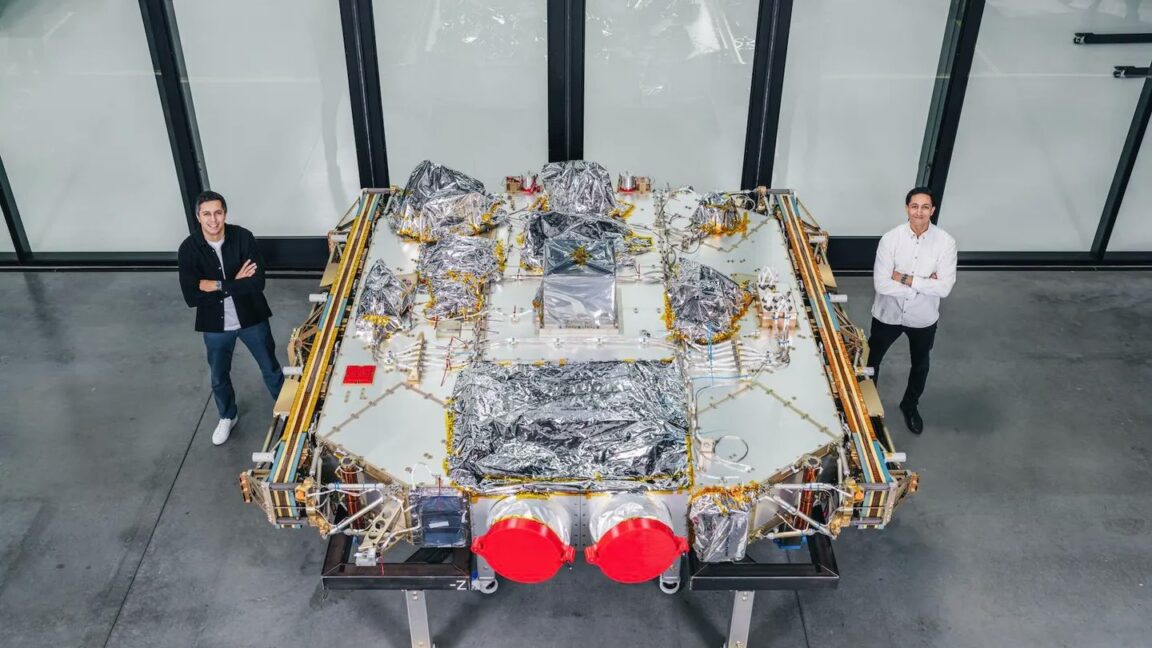
K2 is designing two classes of satellites—Mega and Giga—that it will build at an 180,000-square-foot factory in Torrance, California. The company’s first “Mega Class” satellite is named Gravitas. It is scheduled to launch in March 2026 on a Falcon 9 rocket. Once in orbit, Gravitas will test several systems that are fundamental to K2’s growth strategy. One is a 2o-kilowatt Hall-effect thruster that K2 says will be four times more powerful than any such thruster flown to date. Gravitas will also deploy twin solar arrays capable of generating 20 kilowatts of power.

“Gravitas brings our full stack together for the first time,” said Karan Kunjur, K2’s co-founder and CEO, in a company press release. “We are validating the architecture in space, from high-voltage power and large solar arrays to our guidance and control algorithms, and a 20 kW Hall thruster, and we will scale based on measured performance.”

https://arstechnica.com/science/2025/12/investors-commit-quarter-billion-dollars-to-startup-designing-giga-satellites/


Rocket Report: Neutron’s Hungry Hippo is deemed ready, whither Orbex?

Orbex not in prime position … Those companies were chosen in July based on technical and business maturity, and each could receive up to 169 million euros. They were: Isar Aerospace, MaiaSpace, Orbex, PLD Space, and Rocket Factory Augsburg (RFA). Isar, MaiaSpace, PLD Space, and RFA each received at least 169 million euros, while Orbex received just 34.9 million euros. The UK left 112.3 million euros unallocated, a move that puzzled many industry observers. “We are working with multiple partners to ensure this funding delivers our requirements for assured access to space and benefits U.K. taxpayers,” a UK Space Agency spokesperson said. This was not exactly a ringing endorsement of the UK-based launch company. (submitted by EllPeaTea)

The easiest way to keep up with Eric Berger’s and Stephen Clark’s reporting on all things space is to sign up for our newsletter. We’ll collect their stories and deliver them straight to your inbox.

Sign Me Up!

Europe takes a tentative step toward crewed launch. The European Space Agency has published a call for tenders to develop a launch abort system for a future crewed launch capability, European Spaceflight reports. The system would be used in the event of an emergency, either on the launch pad or during the initial stages of flight.

Looking beyond ISS … The new call is part of the European agency’s post-ISS low-Earth orbit strategy. This strategy, the material explains, includes the development of an end-to-end European crewed flight solution. In addition to developing a crewed launch capability, the agency’s post-ISS strategy includes options for low-Earth orbit infrastructure. These options include partnering with a commercial space station or building a European station. (submitted by EllPeaTea)

After Russian launch incident, NASA brings Dragon launches forward. With a key Russian launch pad out of service, NASA is accelerating the launch of two Cargo Dragon spaceships in order to ensure that astronauts on board the International Space Station have all the supplies they need next year, Ars reports. According to the space agency’s internal schedule, the next Dragon supply mission, CRS-34, is moving forward one month, from June 2026 to May. And the next Dragon supply mission after this, CRS-35, has been advanced three months, from November to August.

https://arstechnica.com/space/2025/12/rocket-report-neutrons-hungry-hippo-is-deemed-ready-whither-orbex/


NASA astronauts will have their own droid when they go back to the Moon

Artemis IV will mark the second lunar landing of the Artemis program and build upon what is learned at the moon’s south pole on Artemis III.

“After his voyage to the Moon’s surface during Apollo 17, astronaut Gene Cernan acknowledged the challenge that lunar dust presents to long-term lunar exploration. Moon dust sticks to everything it touches and is very abrasive,” read NASA’s announcement of the Artemis IV science payloads.

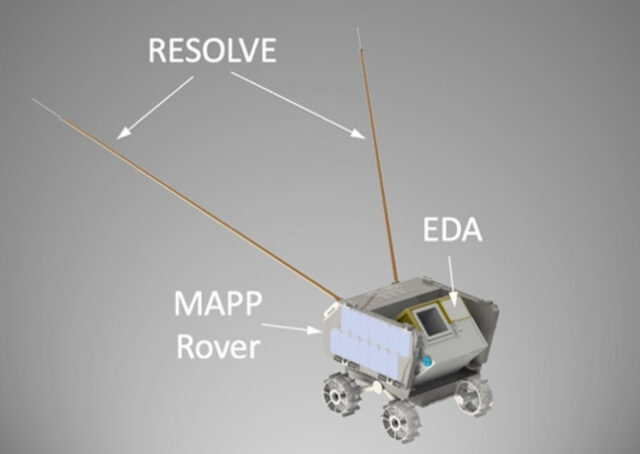
A simple rendering a small moon rover labeled to show its science instruments

Rendering of Lunar Outpost’s MAPP lunar rover with its Artemis IV DUSTER science instruments, including the Electrostatic Dust Analyzer (EDA) and Relaxation SOunder and differentiaL VoltagE (RESOLVE). Credit: LASP/CU Boulder/Lunar Outpost

To that end, the solar-powered MAPP will support DUSTER (DUst and plaSma environmenT survEyoR), a two-part investigation from the Laboratory for Atmospheric and Space Physics (LASP) at the University of Colorado, Boulder. The autonomous rover’s equipment will include the Electrostatic Dust Analyzer (EDA), which will measure the charge, velocity, size, and flux of dust particles lofted from the lunar surface, and the RElaxation SOunder and differentiaL VoltagE (RESOLVE) instrument, which will characterize the average electron density above the lunar surface using plasma sounding.

The University of Central Florida and University of California, Berkeley, have joined with LASP to interpret measurements taken by DUSTER. The former will look at the dust ejecta generated during the Human Landing System (HLS, or lunar lander) liftoff from the Moon, while the latter will analyze upstream plasma conditions.

Lunar dust attaches to almost everything it comes into contact with, posing a risk to equipment and spacesuits. It can also obstruct solar panels, reducing their ability to generate electricity and cause thermal radiators to overheat. The dust can also endanger astronauts’ health if inhaled.

“We need to develop a complete picture of the dust and plasma environment at the lunar south pole and how it varies over time and location to ensure astronaut safety and the operation of exploration equipment,” said Xu Wang, senior researcher at LASP and principal investigator of DUSTER, in a University of Colorado statement. “By studying this environment, we gain crucial insights that will guide mitigation strategies and methods to enable long-term, sustained human exploration on the Moon.”

https://arstechnica.com/space/2025/12/lunar-outpost-rover-to-study-lunar-dust-alongside-artemis-astronauts-on-moon/


In a major new report, scientists build rationale for sending astronauts to Mars

Sending astronauts to the red planet will be a decades-long activity and cost many billions of dollars. So why should NASA undertake such a bold mission?

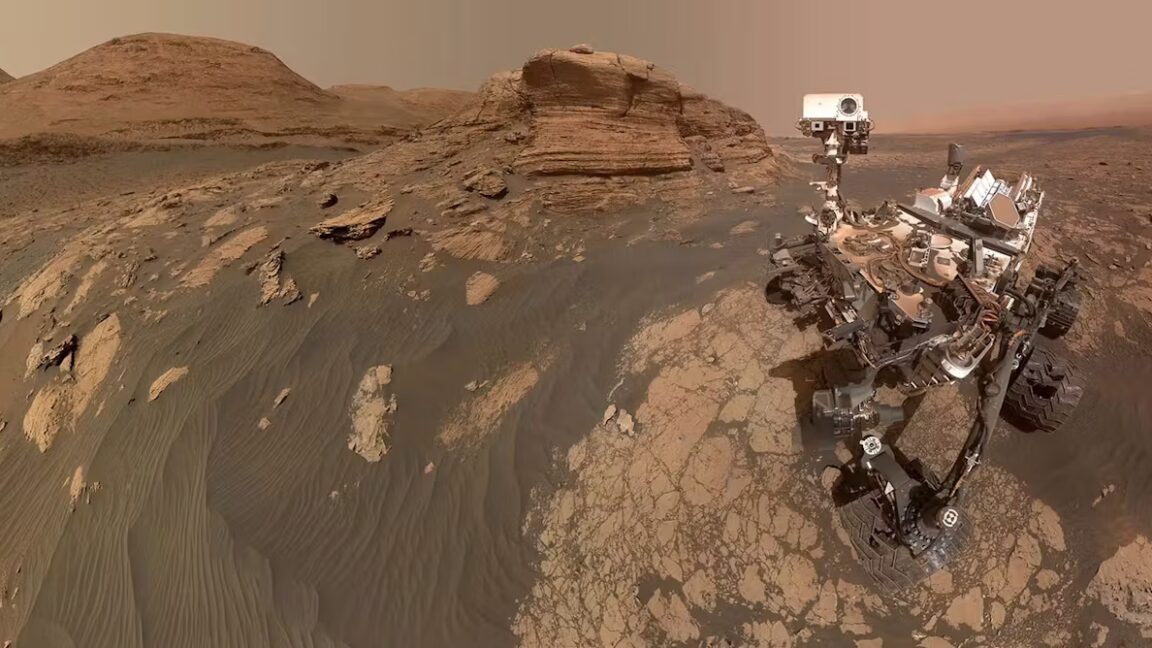
A new report published Tuesday, titled “A Science Strategy for the Human Exploration of Mars,” represents the answer from leading scientists and engineers in the United States: finding whether life exists, or once did, beyond Earth.

“We’re searching for life on Mars,” said Dava Newman, a professor in the Department of Aeronautics and Astronautics at Massachusetts Institute of Technology and co-chair of the committee that wrote the report, in an interview with Ars. “The answer to the question ‘are we alone is always going to be ‘maybe,’ unless it becomes yes.”

The report, two years in the making and encompassing more than 200 pages, was published by the National Academies of Sciences, Engineering, and Medicine. Essentially, the committee co-chaired by Newman and Linda T. Elkins-Tanton, director of the University of California, Berkeley Space Sciences Laboratory, was asked to identify the highest-priority science objectives for the first human missions to Mars.

‘No turning back’

Although coincidental, the report’s publication on Tuesday comes as NASA’s next administrator, private astronaut Jared Isaacman, is expected to be confirmed by the full US Senate in the next week or so. Isaacman is interested in laying the groundwork for future human missions to Mars as SpaceX and Blue Origin take steps toward building reusable in-space transportation systems that could send humans to Mars within the next two decades.

“There’s no turning back,” Newman said. “Everyone is inspired by this because it’s becoming real. We can get there. Decades ago, we didn’t have the technologies. This would have been a study report.”

The goal of the report is to help build a case for meaningful science to be done on Mars alongside human exploration. The report outlines 11 top-priority science objectives. In order of priority, they are:

  • Search for Life: Is there evidence of life, past or present, on Mars?
  • Water and carbon dioxide: Understand how water and carbon cycles changed over time
  • Mars geology: Better understand the geological history of the planet
  • Crew health: How do humans fare psychologically, cognitively, and physically in the Martian environment?
  • Dust storms: Understand the origin and nature of large dust storms on the planet
  • Search for resources: Develop in situ resource utilization, focusing initially on water and propellant
  • Mars and genomes: Determine whether Mars changes reproduction and genome function in plant and animal species
  • Understand microbes: Are microbial populations stable on Mars?
  • Martian dust: How harmful and invasive is dust on humans and their hardware?
  • Plants and animals: Does Mars affect plant and animal physiology and development across generations?
  • Radiation sampling: Better understand the level and impact of radiation on the surface of Mars

https://arstechnica.com/space/2025/12/in-a-major-new-report-scientists-build-rationale-for-sending-astronauts-to-mars/


Asked why we need Golden Dome, the man in charge points to a Hollywood film

Near the end of the film A House of Dynamite, a fictional American president portrayed by Idris Elba sums up the theory of nuclear deterrence.

“Just being ready is the point, right?” Elba says. “It keeps people in check. Keeps the world straight. If they see how prepared we are, no one starts a nuclear war.”

There’s a lot that goes wrong in the film, namely the collapse of deterrence itself. For more than 60 years, the US military has used its vast arsenal of nuclear weapons, constantly deployed on Navy submarines, at Air Force bomber bases, and in Minuteman missile fields, as a way of saying, “Don’t mess with us.” In the event of a first strike against the United States, an adversary would be assured of an overwhelming nuclear response, giving rise to the concept of mutual assured destruction.

The Pentagon’s Golden Dome missile defense shield, still in its nascent phase, could fundamentally transform nuclear strategy. One might argue that Golden Dome, if demonstrated as successful, could reshape deterrence in ways not seen since the United States and the Soviet Union first escalated their nuclear arms race in the 1950s.

Theory of deterrence

Production of A House of Dynamite, released in October, began well before President Donald Trump retook the White House and started issuing a bevy of executive orders, one of which directed the Pentagon to start work on a defense shield to protect the US homeland from missile and drone attacks. This initiative was later named Golden Dome, a twist on Israel’s Iron Dome missile defense system.

Proponents of the Golden Dome program say it’s necessary to defend the United States against evolving threats, especially in a time of “great power competition” with nuclear-armed China. Golden Dome is supposed to defend against traditional ballistic missiles, maneuverable hypersonic missiles, cruise missiles, and slower-moving drones. All of these types of weapons have seen use on battlefields in the Middle East, Ukraine, and Russia in the last several years.

https://arstechnica.com/space/2025/12/asked-why-we-need-golden-dome-the-man-in-charge-points-to-a-hollywood-film/


Before a Soyuz launch Thursday someone forgot to secure a 20-ton service platform

A Soyuz rocket launched on Thursday carrying Roscosmos cosmonauts Sergei Kud-Sverchkov and Sergei Mikayev, as well as NASA astronaut Christopher Williams, for an eight-month mission to the International Space Station. The trio of astronauts arrived at the orbiting laboratory without incident.

However, on the ground, there was a serious problem during the launch with the ground systems that support processing of the vehicle before liftoff at Site 31, located at the Baikonur Cosmodrome in Kazakhstan.

In a terse statement issued Thursday night on the social media site Telegram, the Russian space corporation that operates Soyuz appeared to downplay the incident: “The launch pad was inspected, as is done every time a rocket is launched. Damage to several launch pad components was identified. Damage can occur after launch, so such inspections are mandatory worldwide. The launch pad’s condition is currently being assessed.”

‘Significant’ damage

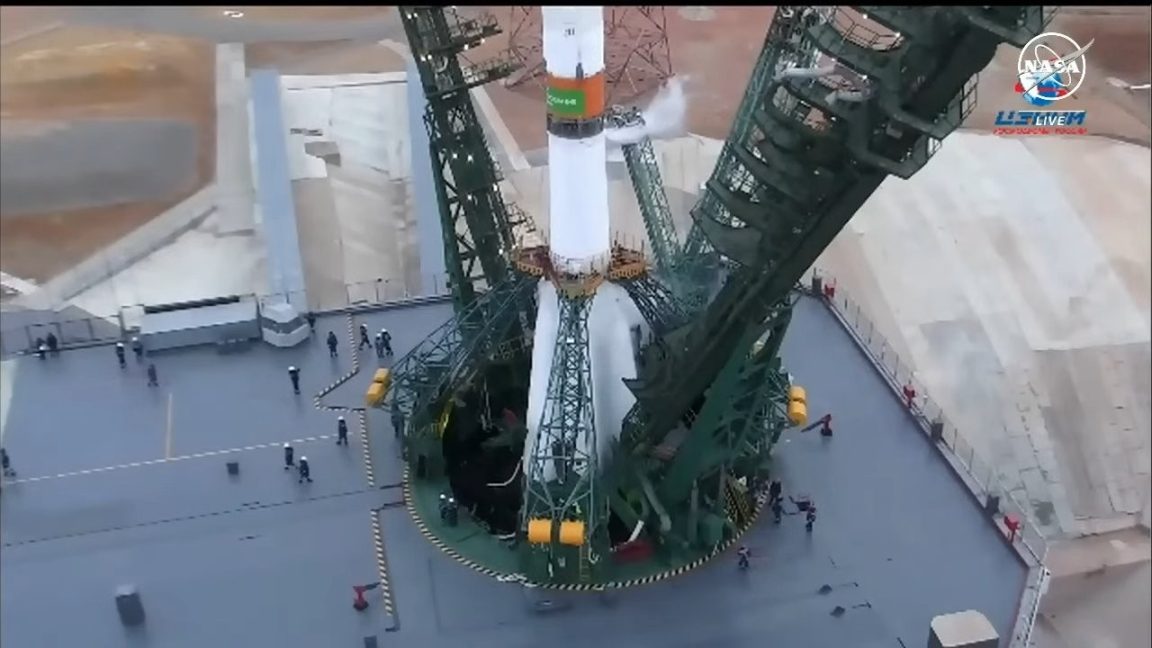
However video imagery of the launch site after liftoff showed substantial damage, with a large service platform appearing to have fallen into the flame trench below the launch table. According to one source, this is a platform located beneath the rocket, where workers can access the vehicle before liftoff. It has a mass of about 20 metric tons and was apparently not secured prior to launch, and the thrust of the vehicle ejected it into the flame trench. “There is significant damage to the pad,” said this source.

Russia has plenty of launch pads, both in Russia and neighboring countries, including Kazakhstan, that were formerly part of the Soviet Union. However, Site 31 at Baikonur is the country’s only pad presently configured to handle launches of the Soyuz rocket and two spacecraft critical to the space station, the cargo-only Progress vehicle and the Soyuz crew capsule.

https://arstechnica.com/space/2025/11/russian-launch-pad-incident-raises-concerns-about-future-of-space-station/


ULA aimed to launch up to 10 Vulcan rockets this year—it will fly just once

Engineers traced the problem to a manufacturing defect in an insulator on the solid rocket motor, and telemetry data from all four boosters on the following flight in August exhibited “spot-on” performance, according to Bruno. But officials decided to recover the spent expendable motor casings from the Atlantic Ocean for inspections to confirm there were no other surprises or close calls.

The hangup delaying the next Vulcan launches isn’t in rocket production. ULA has hardware for multiple Vulcan rockets in storage at Cape Canaveral Space Force Station, Florida.

Instead, one key reason for Vulcan’s past delays has been the rocket’s performance, particularly its solid rocket boosters. It isn’t clear whether the latest delays are related to the readiness of the Space Force’s GSSAP satellites (the next GPS satellite to fly on Vulcan has been available for launch since 2022), the inspections of Vulcan’s solid rocket motors, or something else.

Vulcan booster cores in storage at Cape Canaveral Space Force Station, Florida. Credit: United Launch Alliance

A Space Systems Command spokesperson told Ars that “appropriate actions are being executed to ensure a successful USSF-87 mission … The teams analyze all hardware as well as available data from previous missions to evaluate space flight worthiness of future missions.”

The spokesperson did not provide a specific answer to a question from Ars about inspections on the solid rocket motors from the most recent Vulcan flight.

ULA’s outfitting of a new rocket assembly hangar and a second mobile launch platform for the Vulcan rocket at Cape Canaveral has also seen delays. With so many launches in its backlog, ULA needs capacity to stack and prepare at least two rockets in different buildings at the same time. Eventually, the company’s goal is to launch at an average clip of twice per month.

On Monday, ground crews at Cape Canaveral moved the second Vulcan launch platform to the company’s launch pad for fit checks and “initial technical testing.” This is a good sign that the company is moving closer to ramping up the Vulcan launch cadence, but it’s now clear it won’t happen this year.

Vulcan’s slow launch rate since its first flight in January 2024 is not unusual for new rockets. It took 28 months for SpaceX’s Falcon 9 and ULA’s Atlas V to reach their fourth flight, a timeline that the Vulcan vehicle will reach in May 2026.

The Delta IV rocket from ULA flew its fourth mission 25 months after debuting in 2002. Europe’s Ariane 6 rocket reached its fourth flight in 16 months, but it shares more in common with its predecessor than the others. SpaceX’s Starship also had a faster ramp-up, with its fourth test flight coming less than 14 months after the first.

https://arstechnica.com/space/2025/11/ula-aimed-to-launch-up-to-10-vulcan-rockets-this-year-it-will-fly-just-once/


Russia’s Soyuz 5 will soon come alive. But will anyone want to fly on it?

The Soyuz 5 rocket is ready to depart Samara.

Roscosmos

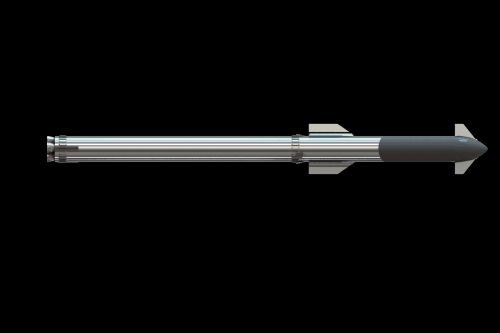
Apparently the rocket will use hot-staging to increase performance.

Roscosmos

A close-up view of the second-stage engine.

Roscosmos

A close-up view of the interstage of the rocket.

Roscosmos

The Soyuz 5 rocket, also named Irtysh for a river that flows through Russia and Kazakhstan, answers to that purpose. Its first stage is powered by a single RD-171MV engine, which at sea level has three times the thrust of a single Raptor 3 engine, and is part of a family of engines that are the most powerful liquid-fueled rocket engines in the world. The RD-171MV uses only Russian components.

Russian officials also plan to use the Soyuz 5 rocket as the “boost” stage of a super-heavy lift rocket, known as Yenisei, that would be used for a human lunar program. However the Yenisei rocket seems to be one of those Russian space initiatives that is forever mired in a nebulous development stage—often talked about as a national priority, but rarely advanced.

What market is there?

But the Soyuz 5 rocket now is very real, and it should launch within the next month. The question is, what market will it serve? Russia presently has the Soyuz 2, which has about half the lift capacity, for crew and cargo missions to the International Space Station, as well as the launch of smaller spacecraft. There is also the line of Angara rockets that has come online during the last decade.

The Soyuz 5 slots in between the Soyuz 2 and Angara A5 rocket in terms of performance. So what demand is there for a rocket with 18 tons of capacity to low-Earth orbit? One concern is that the number of geostationary satellites launched annually, once the bread and butter of the Proton vehicle, has dropped precipitously.

Another is Russia’s invasion of Ukraine, which has taken Russian rockets off the table for many Western satellite operators. At the same time, international competition in the medium-lift market has stiffened. China has an increasing number of government and commercial options, and India’s launch offerings are growing as well. And for any company or country mostly concerned about price, Russia almost certainly can’t beat the reusable Falcon 9 booster offered by SpaceX.

https://arstechnica.com/space/2025/11/after-a-decade-russias-native-built-soyuz-5-rocket-finally-reaches-the-launch-site/