There’s another leak on the ISS, but NASA is not saying much about it

No one is certain. The best guess is that the seals on the hatch leading to the PrK module are, in some way, leaking. In this scenario, pressure from the station is feeding the leak inside the PrK module through these seals, leading to a stable pressure inside—making it appear as though the PrK module leaks are fully repaired.

At this point, NASA is monitoring the ongoing leak and preparing for any possibility. A senior industry source told Ars that the NASA leadership of the space station program is “worried” about the leak and its implications.

This is one reason the space agency delayed the launch of a commercial mission carrying four astronauts to the space station, Axiom-4, on Thursday.

“The postponement of Axiom Mission 4 provides additional time for NASA and Roscosmos to evaluate the situation and determine whether any additional troubleshooting is necessary,” NASA said in a statement. “A new launch date for the fourth private astronaut mission will be provided once available.”

One source indicated that the new tentative launch date is now June 18. However, this will depend on whatever resolution there is to the leak issue.

What’s the worst that could happen?

The worst-case scenario for the space station is that the ongoing leaks are a harbinger of a phenomenon known as “high cycle fatigue,” which affects metal, including aluminum. Consider that if you bend a metal clothes hanger once, it bends. But if you bend it back and forth multiple times, it will snap. This is because, as the metal fatigues, it hardens and eventually snaps. This happens suddenly and without warning, as was the case with an Aloha Airlines flight in 1988.

The concern is that some of these metal structures on board the station could fail quickly and catastrophically. Accordingly, in its previous assessments, NASA has classified the structural cracking issue on the space station as the highest level of concern on its 5v5 risk matrix to gauge the likelihood and severity of risks to the space station.

In the meantime, the space agency has not been forthcoming with any additional information. Despite many questions from Ars Technica and other publications, NASA has not scheduled a press conference or said anything else publicly about the leaks beyond stating, “The crew aboard the International Space Station is safely conducting normal operations.”

https://arstechnica.com/space/2025/06/theres-another-leak-on-the-iss-but-nasa-is-not-saying-much-about-it/



Rocket Report: New delay for Europe’s reusable rocket; SpaceX moves in at SLC-37

SpaceX tries something new with Falcon 9. With nearly 500 launches under its belt, SpaceX’s Falcon 9 rocket isn’t often up to new tricks. But the company tried something new following a launch on June 7 with a radio broadcasting satellite for SiriusXM. The Falcon 9’s upper stage placed the SXM-10 satellite into an elongated, high-altitude transfer orbit, as is typical for payloads destined to operate in geosynchronous orbit more than 22,000 miles (nearly 36,000 kilometers) over the equator. When a rocket releases a satellite in this type of high-energy orbit, the upper stage has usually burned almost all of its propellant, leaving little fuel to steer itself back into Earth’s atmosphere for a destructive reentry. This means these upper stages often remain in space for decades, becoming a piece of space junk that transits across the orbits of many other satellites.

Now, a solution … SpaceX usually deorbits rockets after they deploy payloads like Starlink satellites into low-Earth orbit, but deorbiting a rocket from a much higher geosynchronous transfer orbit is a different matter. “Last week, SpaceX successfully completed a controlled deorbit of the SiriusXM-10 upper stage after GTO payload deployment,” wrote Jon Edwards, SpaceX’s vice president of Falcon and Dragon programs. “While we routinely do controlled deorbits for LEO stages (e.g., Starlink), deorbiting from GTO is extremely difficult due to the high energy needed to alter the orbit, making this a rare and remarkable first for us. This was only made possible due to the hard work and brilliance of the Falcon GNC (guidance, navigation, and control) team and exemplifies SpaceX’s commitment to leading in both space exploration and public safety.”

New Glenn gets a tentative launch date. Five months have passed since Blue Origin’s New Glenn rocket made its mostly successful debut in January. At one point, the company targeted “late spring” for the second launch of the rocket. However, on Monday, Blue Origin’s CEO, Dave Limp, acknowledged on social media that the rocket’s next flight will now no longer take place until at least August 15, Ars reports. Although he did not say so, this may well be the only other New Glenn launch this year. The mission, with an undesignated payload, will be named “Never Tell Me the Odds,” due to the attempt to land the booster. “One of our key mission objectives will be to land and recover the booster,” Limp wrote. “This will take a little bit of luck and a lot of excellent execution. We’re on track to produce eight GS2s [second stages] this year, and the one we’ll fly on this second mission was hot-fired in April.”

https://arstechnica.com/space/2025/06/rocket-report-new-delay-for-europes-reusable-rocket-spacex-moves-in-at-slc-37/


Isaacman’s bold plan for NASA: Nuclear ships, seven-crew Dragons, accelerated Artemis

Nearly two weeks have passed since Jared Isaacman received a fateful, brief phone call from two officials in President Trump’s Office of Personnel Management. In those few seconds, the trajectory of his life over the next three and a half years changed dramatically.

The president, the callers said, wanted to go in a different direction for NASA’s administrator. At the time, Isaacman was within days of a final vote on the floor of the US Senate and assured of bipartisan support. He had run the gauntlet of six months of vetting, interviews, and a committee hearing. He expected to be sworn in within a week. And then, it was all gone.

“I was very disappointed, especially because it was so close to confirmation and I think we had a good plan to implement,” Isaacman told Ars on Wednesday.

Isaacman’s nomination was pulled for political reasons. As SpaceX founder and one-time President Trump confidant Elon Musk made his exit from the White House, key officials who felt trampled on by Musk took their revenge. They knifed a political appointment, Isaacman, who shared Musk’s passion for extending humanity’s reach to Mars. The dismissal was part of a chain of events that ultimately led to a break in the relationship between Trump and Musk, igniting a war of words.

When I spoke with Isaacman this week, I didn’t want to rehash the political melee. I preferred to talk about his plan. After all, he had six months to look under the hood of NASA, identify the problems that were holding the space agency back, and release its potential in this new era of spaceflight.

A man with a plan

“It shouldn’t be a surprise, the organizational structure is very heavy with management and leadership,” Isaacman said. “Lots of senior leadership with long meetings, who have their deputies, who have their chiefs of staff, who have deputy chiefs of staff and associate deputies. It is not just a NASA problem; across government, there are principal, deputy, assistant-to-the-deputy roles. It makes it very hard to have a culture of ownership and urgent decision-making.”

https://arstechnica.com/space/2025/06/what-might-have-been-at-jared-isaacmans-nasa/


5 things in Trump’s budget that won’t make NASA great again

If signed into law as written, the White House’s proposal to slash nearly 25 percent from NASA’s budget would have some dire consequences.

It would cut the agency’s budget from $24.8 billion to $18.8 billion. Adjusted for inflation, this would be the smallest NASA budget since 1961, when the first American launched into space.

The proposed funding plan would halve NASA’s funding for robotic science missions and technology development next year, scale back research on the International Space Station, turn off spacecraft already exploring the Solar System, and cancel NASA’s Space Launch System rocket and Orion spacecraft after two more missions in favor of procuring lower-cost commercial transportation to the Moon and Mars.

Read full article

Comments

https://arstechnica.com/science/2025/06/5-things-in-trumps-budget-that-wont-make-nasa-great-again/


She was a Disney star with platinum records, but Bridgit Mendler gave it up to change the world

My two daughters were among them. They were a decade younger than Mendler, who was 18 when the first episodes aired in 2010. I would sometimes watch the show with my girls. Mendler’s character was endearing, and her advice to Charlie, I believe, helped my own younger daughters anticipate their teenage years. A decade and a half later, my kids still look up to her not just for being on television but for everything else she has accomplished.

As her star soared on the Disney Channel, Mendler moved into music. She recorded gold and platinum records, including her biggest hit, “Ready or Not,” in 2012.

Prominent childhood actors have always struggled with the transition to adulthood. Disney stars like Lindsay Lohan and Demi Lovato developed serious substance abuse problems, while others, such as Miley Cyrus and Selena Gomez, abruptly adopted new, much more mature images that contrasted sharply with their characters on children’s TV shows.

Mendler chose a different path.

Making an impact

As a pre-teen, Mendler would lie in bed at night listening to her mom working upstairs in the kitchen. They lived in a small house amid the redwoods north of Sausalito, California. When Mendler awoke some mornings, her mom would still be tapping away at her architectural designs. “That’s kind of how I viewed work,” Mendler said.

One of her favorite books as a kid was Miss Rumphius, about a woman who spread lupine seeds (also known as bluebonnets) along the coast of Maine to make the countryside more beautiful. The picture book offered an empowering message: Every person has a choice about how to make an impact on the world.

This environment shaped Mendler. She saw her mom work all night, saw experimental engines built by her dad scattered around the house, and had conversations around the dinner table about the future and how she could find her place in it. As she aged into adulthood, performing before thousands of people on stage and making TV shows and movies, Mendler felt like she was missing something. In her words, life in Los Angeles felt “anemic.” She had always liked to create things herself, and she wasn’t doing that.

https://arstechnica.com/space/2025/06/she-was-a-disney-star-with-platinum-records-but-bridgit-mendler-gave-it-up-to-change-the-world/


Ars Live recap: Where does NASA go from here?

[embedded content]

Our discussion with Reuters’ Joey Roulette and WaPo’s Christian Davenport. Click here for transcript.

Recently, during the first Ars Live event of this year, two noted space journalists joined Ars space editor Eric Berger for a discussion of NASA’s future in the age of the second Trump administration.

During the hour-long discussion, Christian Davenport of The Washington Post and Joey Roulette of Reuters covered a range of issues, from uncertainty at the space agency to the likelihood of NASA sponsoring a humans-to-Mars mission any time soon.

This is an especially frenetic time in space policy. In the days since this video was recorded, President Trump canceled the longstanding nomination of private astronaut Jared Isaacman to become NASA administrator—at the time we recorded the video, Senate approval was assured, and a vote was imminent. Then Trump and SpaceX founder Elon Musk had a serious falling out, with the two trading nasty words on social media and culminating in Musk threatening to end Dragon spacecraft missions before pulling back.

“It’s a fascinating time right now to be a space journalist, to do what we get to do, to write about what we get to write about at this time,” Davenport said. “Everyone says, you know, journalism, it’s a first rough draft of history. I believe that to be true. I think people are gonna look back at this time, 10, 20, 30 years from now, as a seminal moment.”

https://arstechnica.com/space/2025/06/ars-live-recap-where-does-nasa-go-from-here/


A long-shot plan to mine the Moon comes a little closer to reality

The road ahead

Meyerson said the company’s current plan is to fly a prospecting mission in 2027, a payload of less than 100 kg, likely on a commercial lander that is part of NASA’s Commercial Lunar Payload Services program. Two years later, the company seeks to fly a pilot plant. Meyerson said the size of this plant will depend on the launch capability available (i.e., if Starship is flying to the Moon, they’ll go big, and smaller if not).

Following this, Interlune is targeting 2032 for the launch of a solar-powered operating plant, which would include five mobile harvesters. The operation would also be able to return material mined to Earth. The total mass for this equipment would be about 40 metric tons, which could fly on a single Starship or two New Glenn Mk 2 landers. This would, understandably, be highly ambitious and capital-intensive. After raising $15 million last year, Meyerson said Interlune is planning a second fundraising round that should begin soon.

There are some outside factors that may be beneficial for Interlune. One is that China has a clear and demonstrated interest in sending humans to the Moon and has already sent rovers to explore for helium-3 resources. Moreover, with the exit of Jared Isaacman as a nominee to lead NASA, the Trump administration is likely to put someone in the position who is more focused on lunar activities. One candidate, a retired Air Force General named Steve Kwast, is a huge proponent of mining helium-3.

Interlune has a compelling story, as there are almost no other lunar businesses focused solely on commercial activities that will drive value from mining the lunar surface. In that sense, they could be a linchpin of a lunar economy. However, they have a long way to go, and a lot of lunar regolith to plow through, before they start delivering for customers.

https://arstechnica.com/space/2025/06/a-long-shot-plan-to-mine-the-moon-comes-a-little-closer-to-reality/


Jared Isaacman speaks out, and it’s clear that NASA lost a visionary leader

“There’s enough hardware now to fly a couple of missions and make sure you beat China back to the Moon,” he said. “But you can’t be stuck on this forever. This is literally the equivalency, by the way, of taking P-51 Mustangs [a fighter aircraft] from World War II and using them in Desert Storm, because we got to keep the plants open.
And that obviously makes no logical sense whatsoever.”

On his de-nomination

Isaacman said he is, politically, a moderate, although he leans right. He supports Trump’s desire to cut alleged waste and fraud from the US government, and that is what he intended to do at NASA. He also did not blame Trump for his departure, saying that a president makes a thousand decisions a day, often with a few seconds of information.

He also said he enjoyed the Senate confirmation process, which allowed him to candidly discuss his positions on NASA with individual US senators.

As for why he was removed, Isaacman said the following: “I had a pretty good idea, I don’t think the timing was much of a coincidence,” he said. “Obviously, there was more than one departure that was covered on that day.”

The phone call to Isaacman saying his nomination was being pulled came the same day that SpaceX founder Elon Musk left his position as a special advisor to the president. Musk had been supportive of Isaacman’s nomination. However, in his time running the Department of Government Efficiency, Musk had made enemies within the US government.

“There were some people who had some axes to grind, and I was a good, visible target,” Isaacman said. “I want to be overwhelmingly clear: I don’t fault the president.”

Although Isaacman did not name anyone, multiple sources have told Ars that it was Sergio Gor, an official in the White House Presidential Personnel Office, who moved against Isaacman after Musk left the White House. Gor was irked by Musk’s failure to consult him and other personnel officials on some decisions.

As a result of what appears to be political pettiness, NASA lost a visionary leader who had the potential to lead the space agency into the middle of the 21st century at a time when an aging agency needs to modernize. If you listen to him, losing that potential in such a way is downright painful. It’s a damn shame.

https://arstechnica.com/space/2025/06/jared-isaacman-speaks-out-and-its-clear-that-nasa-lost-a-visionary-leader/


An in-space propulsion company just raised a staggering amount of money

Starting small

The company’s initial product was the Mira spacecraft, powered by nitrous oxide and ethane thrusters. It can move payloads up to 300 kg around in space, and for a 100 kg payload it offers 900 m/s of Delta-V. With Mira, Impulse sought to tackle the problem of mobility once a spacecraft got into orbit.

Mira proved a success almost immediately, with the first vehicle launching in 2023 and operating for a year in space, demonstrating ample mobility before finally depleting its propellant tanks. A second mission, LEO Express-2, launched in January with several hosted payloads and, so far, has met all of its objectives. The mission remains ongoing.

Initially, it was believed that this vehicle would be useful for providing “last mile” services for spacecraft launched as a part of rideshare missions.

“The reality is the market for that is not very good,” Romo said. “If you’re gonna size that market, it’s basically the market Rocket Lab serves today, which is 25 to 30 flights a year, which is fine. You can do that, but not economically very well. Your gross margins won’t be good. Your working capital kind of sucks. So that’s not at all the market that we’re after with Mira.”

Since Mira has had ample success during its first two flights, other customers have taken notice.

“It’s a high-thrust, high-maneuverability spacecraft that can operate anywhere up to GEO,” Romo said. “And so when you’re thinking about space defense and space control, they need rapid response. So we’ll move from one part of GEO to another very rapidly. And we can host payloads, like what Anduril makes, such as electronic warfare payloads, and then potentially doing proximity ops missions. So Mira wasn’t necessarily designed out of the gate for that, but what we found out after we flew it successfully was, the Space Force said, ‘Hey, we know what that thing’s for.'”

https://arstechnica.com/space/2025/06/an-in-space-propulsion-company-just-raised-a-staggering-amount-of-money/


Some parts of Trump’s proposed budget for NASA are literally draconian

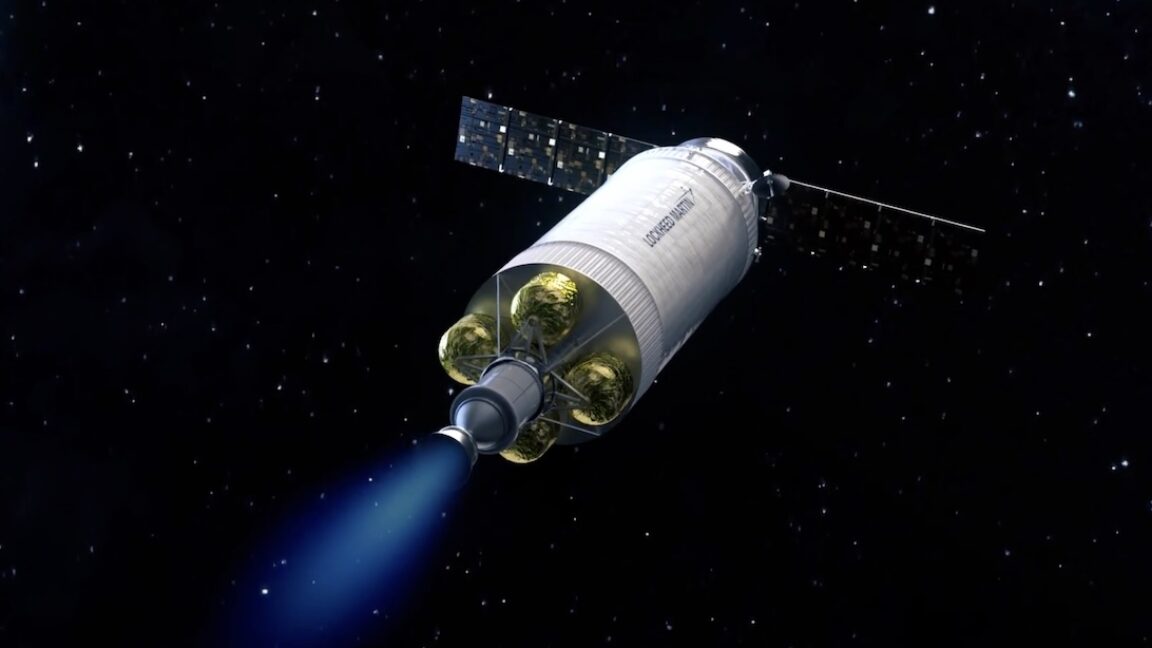
New details of the Trump administration’s plans for NASA, released Friday, revealed the White House’s desire to end the development of an experimental nuclear thermal rocket engine that could have shown a new way of exploring the Solar System.

Trump’s NASA budget request is rife with spending cuts. Overall, the White House proposes reducing NASA’s budget by about 24 percent, from $24.8 billion this year to $18.8 billion in fiscal year 2026. In previous stories, Ars has covered many of the programs impacted by the proposed cuts, which would cancel the Space Launch System rocket and Orion spacecraft and terminate numerous robotic science missions, including the Mars Sample Return, probes to Venus, and future space telescopes.

Instead, the leftover funding for NASA’s human exploration program would go toward supporting commercial projects to land on the Moon and Mars.

NASA’s initiatives to pioneer next-generation space technologies are also hit hard in the White House’s budget proposal. If the Trump administration gets its way, NASA’s Space Technology Mission Directorate, or STMD, will see its budget cut nearly in half, from $1.1 billion to $568 million.

Trump’s budget request isn’t final. Both Republican-controlled houses of Congress will write their own versions of the NASA budget, which must be reconciled before going to the White House for President Trump’s signature.

“The budget reduces Space Technology by approximately half, including eliminating failing space propulsion projects,” the White House wrote in an initial overview of the NASA budget request released May 2. “The reductions also scale back or eliminate technology projects that are not needed by NASA or are better suited to private sector research and development.”

Breathing fire

Last week, the White House and NASA put a finer point on these “failing space propulsion projects.”

“This budget provides no funding for Nuclear Thermal Propulsion and Nuclear Electric Propulsion projects,” officials wrote in a technical supplement released Friday detailing Trump’s NASA budget proposal. “These efforts are costly investments, would take many years to develop, and have not been identified as the propulsion mode for deep space missions. The nuclear propulsion projects are terminated to achieve cost savings and because there are other nearer-term propulsion alternatives for Mars transit.”

https://arstechnica.com/space/2025/06/some-parts-of-trumps-proposed-budget-for-nasa-are-literally-draconian/