Finally, Artemis delivers some exceptional, high-quality photos of the Moon

The eclipse glasses are identical to what NASA produced for the 2024 total solar eclipse.

Credit: NASA

The eclipse glasses are identical to what NASA produced for the 2024 total solar eclipse. Credit: NASA

During their flyby of the Moon, the spacecraft got to within 4,067 miles (6,545 km) of the Moon’s surface.

The Artemis II crew captures a portion of the Moon coming into view along the terminator.

Credit: NASA

The Artemis II crew captures a portion of the Moon coming into view along the terminator. Credit: NASA

Only a portion of the Moon is visible in frame below, with its curved edge revealing a bright sliver of sunlight returning after nearly an hour of darkness.

This image shows the Sun beginning to peek out from behind the Moon as the eclipse transitions out of totality.

Credit: NASA

This image shows the Sun beginning to peek out from behind the Moon as the eclipse transitions out of totality. Credit: NASA

Each astronaut took turns photographing and documenting the Moon, both for audiences back on Earth and for the lunar science community.

Glover, the pilot on Artemis II, said the astronauts had trouble taking photos that did the view justice.

“What we’re seeing, we’re just not picking up on the cameras,” Glover said. “After all the amazing sights that we saw earlier, we just went sci-fi. It just looks unreal. You can see the surface of the Moon [from] the Earthshine. You can actually see a majority of the Moon. It is the strangest-looking thing.”

Artemis II Pilot Victor Glover and Mission Specialist Christina Koch gather images and observations of the lunar surface.

Credit: NASA

Artemis II Pilot Victor Glover and Mission Specialist Christina Koch gather images and observations of the lunar surface. Credit: NASA

Humanity has seen similar images to the one below, beginning with the iconic Earthrise image captured by Apollo 8. But these are the highest-resolution images of the phenomenon and hint at a future with far more time spent near, and on, the Moon’s surface.

Earthset captured through the Orion spacecraft window at 6:41 pm EDT, April 6, 2026.

Credit: NASA

Earthset captured through the Orion spacecraft window at 6:41 pm EDT, April 6, 2026. Credit: NASA

The Artemis II mission is now speeding back toward Earth, with the spacecraft due to splash down on Friday evening off the coast of California.

https://arstechnica.com/space/2026/04/the-artemis-ii-mission-sends-back-stunning-images-of-the-far-side-of-the-moon/


Why is NASA bothering to go back to the Moon if we’ve already been there?

KENNEDY SPACE CENTER, Fla.—The first time NASA launched humans toward the Moon, in December 1968, the United States was a deeply fractured nation.

The historic flight of three people into the unknown brought a measure of solace to a country riven by assassinations, riots, political discord, and a deeply unpopular foreign war.

If history does not repeat itself, it certainly rhymes. Today, four humans are on the way to the Moon, Reid Wiseman, Victor Glover, Christina Koch, and Jeremy Hansen. They do so, once again, amid a troubled world.

Will Artemis II have a similar impact? Does it even matter?

Artemis II was not a global event

The world of today is, of course, incredibly different from that of the 1960s, especially the landscape of media competing for public attention. Just three US television networks graced the airwaves then, compared to hundreds today and a bazillion more online through viewing options like YouTube and social media. And increasingly, younger generations are as interested in creating content as they are in consuming it.

The world population in 1968 was about 3.5 billion people, or a little less than half of today’s. Yet an estimated one-quarter of them watched broadcasts from the Moon. The stunning “Earthrise” photo, which poetically illustrated how humanity was all in this together, captured worldwide attention.

We don’t have concrete viewer numbers of the Artemis II launch. Based on preliminary estimates, though, the total viewership of NASA’s livestream reached about 16 million people, with perhaps that many more watching television broadcasts and online streams. Undoubtedly millions of people will see snippets on social media accounts. But by any measure, the launch of Artemis II does not seem to have been a global event.

https://arstechnica.com/space/2026/04/artemis-ii-is-unlikely-to-be-the-cultural-touchstone-apollo-8-was-and-thats-ok/


Amazon is trying to buy Globalstar to compete with SpaceX’s Starlink

Apple invested $1.5 billion in Globalstar in 2024, taking a 20 percent stake in the company. As part of the agreement, Globalstar agreed to reserve 85 percent of its network capacity for the iPhone maker for satellite-based texting when outside cellular tower coverage.

Bloomberg reported in October that Globalstar was exploring a sale and had held early talks with SpaceX.

Amazon has been pushing forward with its own effort, dubbed Leo, launching the first batch of satellites for its Internet constellation last year.

The company has more than 180 satellites in orbit, but its deployment is dwarfed by the more than 10,000 active satellites operated by SpaceX.

Amazon in February was forced to seek a two-year extension to a July deadline from the Federal Communications Commission for the launch of 1,600 satellites.

Amazon plans to have about 700 satellites in space by the middle of this year but has said that a launch capacity shortage is hampering the build-out of its service, according to regulatory filings.

Amazon has signed deals with JetBlue and Delta for Internet services on flights commencing in 2027 and 2028, respectively.

Andy Jassy, Amazon’s chief executive, told investors in February that Leo was part of a suite of “incremental opportunities” that the $2.2 trillion e-commerce group would pursue.

Globalstar reported full-year revenue of $273 million in its latest annual results, a 9 percent increase from 2024. Income from operations was $7.4 million in 2025, after a narrow loss in the year before.

Additional reporting from Rafe Rosner-Uddin and Stephen Morris.

© 2026 The Financial Times Ltd. All rights reserved. Not to be redistributed, copied, or modified in any way.

https://arstechnica.com/tech-policy/2026/04/amazon-is-trying-to-buy-globalstar-to-compete-with-spacexs-starlink/


Artemis II, NASA’s boldest mission in generations, launches crew to the Moon

KENNEDY SPACE CENTER, Fla.—Three Americans and one Canadian launched into orbit from Florida’s Space Coast on Wednesday, flying the most powerful rocket ridden by humans on the first leg of a nine-day voyage around the Moon.

Perched atop the 322-foot-tall (98-meter) Space Launch System rocket, the four astronauts lifted off from NASA’s Kennedy Space Center at 6:35 pm EDT (22:35 UTC).

Four hydrogen-fueled RS-25 engines and two solid rocket boosters flashed to life to push the nearly 6 million-pound rocket from its moorings at Launch Complex 39B. The engines and boosters collectively generated 8.8 million pounds of thrust, outclassing NASA’s Saturn V rocket used for Apollo lunar missions.

Moments later, a wave of sound reached spectators a few miles away as the rocket thundered into the sky, leaving an incandescent plume of fire and smoke in its wake.

Commander Reid Wiseman, a 50-year-old Navy captain and former test pilot, calmly radioed updates from the cockpit of the Orion spacecraft at the tip of the SLS rocket. He was joined in the cockpit by pilot Victor Glover (another Navy captain), mission specialist Christina Koch, and Canadian astronaut Jeremy Hansen.

A few minutes after liftoff, as Artemis II headed east over the Atlantic Ocean, the astronauts got their first glimpse of the full Moon through their forward windows.

“We have a beautiful Moonrise,” Wiseman reported. “We’re heading right at it.”

In the limelight

The liftoff of Artemis II is a key moment for NASA. The agency has spent close to $100 billion on elements of the Artemis program over 20 years and now finds itself in competition with China to return humans to the Moon’s surface. Artemis II is also making history in the annals of space exploration. Astronauts last left the Moon in 1972, and no one has been back since.

https://arstechnica.com/space/2026/04/four-astronauts-depart-for-the-moon-with-a-fiery-send-off-from-cape-canaveral/


Launch day has arrived for NASA’s Artemis II mission—here’s what to expect

KENNEDY SPACE CENTER, Florida—Launching to the Moon is an all-day undertaking, something the four astronauts waiting to climb aboard NASA’s Artemis II rocket know well.

“It is actually a very long day,” said Victor Glover, the pilot on Artemis II. “We wake up about eight hours before launch, and there’s a pretty tight schedule of things to get out there.”

Glover and his three crewmates have their schedules planned to the minute throughout the nine-day Artemis II mission. If all goes according to plan, their mission will carry them more than a quarter-million miles from Earth, farther from home than anyone has ventured in human history. After looping behind the Moon, the astronauts and their Orion capsule will fall back to Earth at some 25,000 mph (40,000 km/hr), setting another record for the fastest that humans have ever traveled.

Reid Wiseman, the mission commander, will join Glover at the controls inside the Orion spacecraft’s cockpit. Mission specialist Christina Koch and Canadian astronaut Jeremy Hansen round out the crew. All four have critical roles during the mission to test the Orion spaceship, which is flying with humans for the first time after 20 years in development.

The journey could begin as soon as Wednesday at NASA’s Kennedy Space Center in Florida. The mission has a two-hour launch window opening at 6:24 pm EDT (22:24 UTC). You can watch NASA’s live coverage of the countdown and launch in the YouTube stream embedded below.

[embedded content]

The full Moon, Artemis II’s destination, will rise over the eastern horizon at the spaceport during the launch window.

Looking at the Moon has taken on a new meaning for the Artemis II astronauts since their selection for the mission three years ago. Artemis II is the first crew mission for NASA’s Artemis program. The long-term goal of Artemis is to build a sustained human presence at the Moon, with a lunar base at the Moon’s south pole, to set the stage for future expeditions to Mars.

https://arstechnica.com/space/2026/04/launch-day-has-arrived-for-nasas-artemis-ii-mission-heres-what-to-expect/


NASA is leading the way to the Moon, but the military won’t be far behind

But observing objects in cislunar space from the Earth is not easy. First, the Moon is a quarter-million miles away, so spacecraft or debris will appear vanishingly faint to sensors near the Earth. The Moon and the Sun far outshine these objects. Second, using a satellite stationed near the Moon to obtain a fix and vector for an object requires precise navigation, a capability not readily available without reliable GPS signals.

If anyone knows exactly where a satellite is around the Moon today, it is due to the generosity of its operator. If they choose to, spacecraft owners can provide detailed ephemeris data, revealing their location and movement, but there’s no way to force any operator to publish this information. Some operators may not want to share their location for competitive or strategic advantage.

There is also the risk of a satellite breakup in lunar orbit that could create a field of space debris. There is currently no way to track such small fragments at lunar distances, raising the risk of damaging or destructive collisions. If a lunar satellite disintegrated, it could “compromise international science missions and destabilize emerging lunar economic activity,” according to a 2025 report from the Mitre Corporation, a not-for-profit organization that manages several federally funded research centers.

Some generals bring the subject of lunar military operations back to Earth. In 2024, Ars asked Space Force Maj. Gen. Anthony Mastalir, then a one-star general, about the military’s view of the Moon. He identified a potential adversary’s use of the Moon or orbits around them as a launch point for an attack directed at US assets closer to the Earth.

“We’re not fighting over mineral deposits on an asteroid somewhere. We’re not, right now, shepherding convoys to Mars,” Mastalir said. “These are terrestrial conflicts that we hope we can deter. We also don’t want them to, although it’s more and more likely that they may, extend into space or even start in space.

“Someday in the future, that may change, but for now, I’d be more concerned just about what these new orbits present, what that does for potential attack vectors to our traditional operating [areas].”

https://arstechnica.com/space/2026/03/nasa-is-leading-the-way-to-the-moon-but-the-military-wont-be-far-behind/


Starlink satellite breaks apart into “tens of objects”; SpaceX confirms “anomaly”

“These events illustrate the need for rapid characterization of anomalous events to enable clarity of the operating environment,” it said.

Starlink provided a few details shortly after the December 2025 incident, saying on December 18 that an “anomaly led to venting of the propulsion tank, a rapid decay in semi-major axis by about 4 km, and the release of a small number of trackable low relative velocity objects.” Starlink added that the satellite was “largely intact” but “tumbling,” and would reenter the Earth’s atmosphere and “fully demise” within weeks.

In December, Starlink seemed confident that it could prevent future anomalies. “Our engineers are rapidly working to [identify the] root cause and mitigate the source of the anomaly and are already in the process of deploying software to our vehicles that increases protections against this type of event,” Starlink said in the December 18 post.

We asked SpaceX today whether it has determined the cause of the December anomaly or the one on Sunday, and will update this article if we get a response.

Starlink reported near-crash after Chinese launch

Starlink also had a near-crash in December, in a different incident about a week before the “tumbling” satellite. Starlink Senior VP Michael Nicolls wrote on December 12 that a Chinese company had launched nine satellites without coordinating with other space users. Lack of coordination increases the risk of collisions, he said.

“As far as we know, no coordination or deconfliction with existing satellites operating in space was performed, resulting in a 200 meter close approach between one of the deployed satellites and STARLINK-6079 (56120) at 560 km altitude,” Nicolls wrote at the time, referring to the Chinese launch. “Most of the risk of operating in space comes from the lack of coordination between satellite operators—this needs to change.”

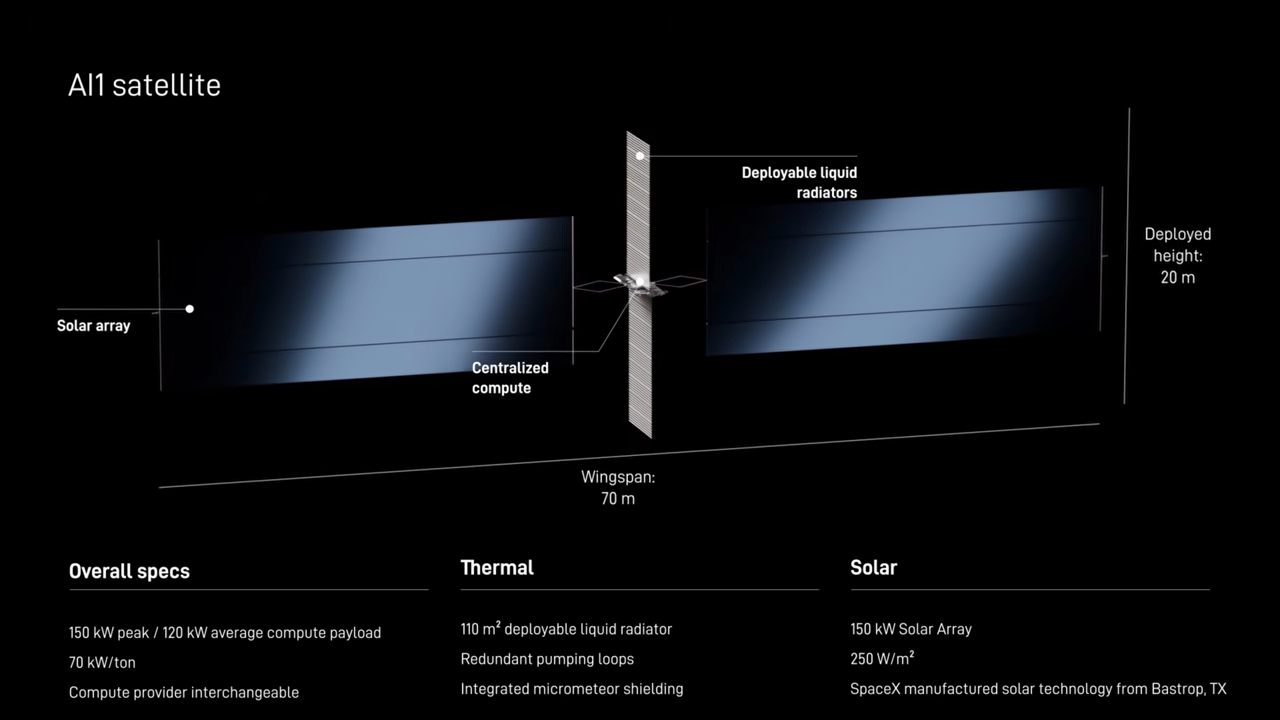
Coordination can only become more important if SpaceX goes through with its stated plan of launching a million satellites to create an orbital data center.

Under normal circumstances, Starlink satellites reaching their end-of-life date follow “a targeted reentry approach to deorbit satellites over the open ocean, away from populated islands and heavily trafficked airline and maritime routes,” Starlink says in a document on “satellite demisability.” But satellites that fall to Earth unexpectedly should pose no risk to people on the ground because they are designed to “demise with extremely low impact energy,” according to Starlink.

“A critical aspect of sustainable satellite design is demisability, which ensures that satellites fully break up and burn up during atmospheric reentry,” Starlink says in the document. “Any fragments that do not completely demise should have negligible impact energy.”

https://arstechnica.com/tech-policy/2026/03/starlink-satellite-breaks-apart-into-tens-of-objects-spacex-confirms-anomaly/


After more than 53 years, humans may finally return to the Moon this week

The mission will last more than nine days from liftoff to splashdown. After separation from the SLS rocket, the Orion spacecraft will spend a little more than a day in an elliptical high-altitude orbit ranging more than 40,000 miles from Earth. The astronauts and mission controllers in Houston will spend this time activating and testing the spacecraft, with a particular focus on Orion’s environmental control and life support systems, which were not part of an unpiloted Orion test flight four years ago.

Glover and Wiseman will take manual control of the spacecraft to assess Orion’s handling characteristics, commanding thrusters to guide the capsule back toward the SLS rocket’s upper stage to practice for docking maneuvers on future Artemis missions. Assuming everything checks out, Orion will fire its main engine for a translunar injection, or TLI, burn about 25 hours into the mission. This is the event that will send the astronauts toward the Moon.

This mission will not land. That will come on a future Artemis mission—currently slated for Artemis IV—no earlier than 2028. NASA is working with SpaceX and Blue Origin to develop commercial human-rated landers to ferry astronauts from the Orion spacecraft in lunar orbit down to the Moon’s surface and back. Those landers, along with new lunar spacesuits, won’t be ready for a landing mission next year, as NASA officials hoped.

NASA Administrator Jared Isaacman announced a shakeup of the Artemis program last week, shifting focus from building a space station in orbit around the Moon to constructing a base on the lunar surface. The program changes also included replanning the next Artemis mission—Artemis III—from a landing mission to a flight to dock an Orion crew capsule with one or both commercial landers closer to Earth.

The change will increase the chances of launching Artemis III next year. Sending SpaceX or Blue Origin’s landers to the Moon will require a mastery of in-orbit refueling, and neither company has demonstrated the capability yet. Refueling is not required for a test mission in low-Earth orbit on Artemis III.

“Over the last 10 weeks, the agency has prepared a crewed lunar test vehicle and also restructured the program that it belongs to,” said Amit Kshatriya, NASA’s associate administrator. “This was done deliberately. A crew that understands that campaign flies with greater purpose, a workforce that sees the road ahead holds a higher standard. This flight and the future reinforce each other. This is how Apollo worked, and this is how we will work.

“Behind this flight stands a campaign, landings, a lunar base, nuclear propulsion into deep space. That begins, not ends, with what happens on Wednesday evening,” Kshatriya said.

https://arstechnica.com/space/2026/03/after-more-than-53-years-humans-may-finally-return-to-the-moon-this-week/


No one is happy with NASA’s new idea for private space stations

After speaking with a number of officials both in industry and the government, here’s an overview of what I believe is happening.

How we got here

NASA has never been good at transitions, be it from the end of Apollo to the space shuttle or the painful period from 2011 to 2020 when the shuttle stopped flying and the US space agency had to turn, hat in hand, to Russia to get its astronauts to the International Space Station.

As far back as 2018, then-NASA Administrator Jim Bridenstine was sounding the alarm about the need to find a replacement for the space station if the United States wanted to maintain an ongoing human presence in low-Earth orbit. By December 2021, NASA had established support, generally at the level of a few hundred million dollars, for four different companies to work on developing private stations: Axiom Space, Blue Origin, Nanoracks (later became Voyager), and Northrop Grumman (which later withdrew).

Since then, each company has substantially modified its approach, and a new player, Vast Space, has entered the competition. All were waiting for clarity from NASA on what, exactly, it wanted. This would come as part of a “requirements” document that would kick off a second round of competition. It was generally expected that this second phase would winnow the competition to two private vendors. NASA intended to help the companies develop their stations with funding and expertise and then become one of several customers.

Since 2021, the companies have faced a series of difficulties, and from the outside, it was never clear that any were on track to have a viable, independent station by 2030, when NASA intended to deorbit the space station.

At the same time, the US space agency has dragged its feet on initiating the second phase of the competition. Then, last August, the acting director of NASA, Sean Duffy, issued a “directive” that brought significant revisions to the program. Almost immediately, though, it seemed like key elements of this directive might be walked back, leading to additional months of confusion.

https://arstechnica.com/space/2026/03/what-happens-next-with-nasas-plan-to-replace-the-iss-source-it-could-get-ugly/


Rocket Report: Russia reopens gateway to ISS; Cape Canaveral hosts missile test

More to come?… Lt. Gen. Doug Schiess, the Space Force’s deputy chief of operations, told a House subcommittee Wednesday that the military was looking at moving more missions off of ULA’s Vulcan rocket to other providers. Currently, only ULA’s Vulcan and SpaceX’s Falcon 9 and Falcon Heavy rockets are certified for national security launches. The Vulcan rocket is expected to be grounded until at least this summer as engineers investigate a recurring problem with the vehicle’s solid rocket boosters.

NASA is blowing things up. A team of NASA engineers is intentionally blowing up models of methane-fueled rockets in Florida to see just how big of a bang they make when they explode, Ars reports. Methane is the launch industry’s chic new rocket fuel because it is better suited for reusable engines. Heavy- and super-heavy-lift rockets like Blue Origin’s New Glenn, ULA’s Vulcan, and SpaceX’s Starship now use it. But rockets sometimes blow up. The US Space Force and NASA, the agencies responsible for range safety at America’s federally owned spaceports, want to better understand how the hazards from an exploding methane-fueled rocket might differ from those of other launchers. This is important as launches become more routine, with companies foreseeing multiple flights per day from launch pads that are, in some cases, just 1 or 2 miles apart.

For good reason… Federal safety officials require the evacuation of blast danger areas around each launch pad as rockets are fueled for flight, and some companies have raised concerns that SpaceX, which has the largest of the methane-burning rockets, could disrupt their operations on neighboring launch pads. The ongoing explosive yield tests at Eglin Air Force Base, Florida, are meant to help officials fine-tune their hazard analyses to determine the proper size of the danger areas for methane-fueled rockets. Hopefully, the data will show the danger areas are too conservative, and the keep-out zones will shrink. The concept is simple. “We put fuel in a rocket, blow it up in a remote location, and measure how big the boom is,” said Jason Hopper, deputy manager for the methalox assessment project at NASA’s Stennis Space Center.

Next three launches

March 28: Electron | Daughter of the Stars | Māhia Peninsula, New Zealand | 09:14 UTC

March 28: Spectrum | Onward and Upward | Andøya Rocket Range, Norway | 20:00 UTC

March 29: Atlas V | Amazon Leo LA-05 | Cape Canaveral Space Force Station, Florida | 07:53 UTC

https://arstechnica.com/space/2026/03/rocket-report-russian-megaconstellation-takes-off-isar-preps-for-second-launch/