Testing a robot that could drill into Europa and Enceladus
Europa and Enceladus are two ocean moons that scientists have concluded have liquid water oceans underneath their outer icy shells. The Europa Clipper mission should reach Europa around April of 2030. If it collects data hinting at the moon’s potential habitability, robotic lander missions could be the only way to confirm if there’s really life in there or not.
To make these lander missions happen, NASA’s Jet Propulsion Laboratory team has been working on a robot that could handle the search for life and already tested it on the Matanuska Glacier in Alaska. “At this point this is a pretty mature concept,” says Kevin Hand, a planetary scientist at JPL who led this effort.
Into the unknown
There are only a few things we know for sure about conditions on the surface of Europa, and nearly all of them don’t bode well for lander missions. First, Europa is exposed to very harsh radiation, which is a problem for electronics. The window of visibility—when a potential robotic lander could contact Earth—lasts less than half of the 85 hours it takes for the moon to complete its day-night cycle due to the Europa-Jupiter orbit. So, for more than half the mission, the robot would need to fend for itself, with no human ground teams to get it out of trouble. The lander would also need to run on non-rechargeable batteries, because the vast distance to the Sun would make solar panels prohibitively massive.
And that’s just the beginning. Unlike on Mars, we don’t have any permanent orbiters around Europa that could provide a communication infrastructure, and we don’t have high-resolution imagery of the surface, which would make the landing particularly tricky. “We don’t know what Europa’s surface looks like at the centimeter to meter scale. Even with the Europa Clipper imagery, the highest resolution will be about half a meter per pixel across a few select regions,” Hand explains.
Rocket Report: SpaceX’s expansion at Vandenberg; India’s PSLV fails in flight
SES makes a booking with Impulse Space. SES, owner of the world’s largest fleet of geostationary satellites, plans to use Impulse Space’s Helios kick stage to take advantage of lower-cost, low-Earth-orbit (LEO) launch vehicles and get its satellites quickly into higher orbits, Aviation Week & Space Technology reports. SES hopes the combination will break a traditional launch conundrum for operators of medium-Earth-orbit (MEO) and geostationary orbit (GEO). These operators often must make a trade-off between a lower-cost launch that puts them farther from their satellite’s final orbit, or a more expensive launch that can expedite their satellite’s entry into service.
A matter of hours … On Thursday, SES and Impulse Space announced a multi-launch agreement to use the methane-fueled Helios kick stage. “The first mission, currently planned for 2027, will feature a dedicated deployment from a medium-lift launcher in LEO, followed by Helios transferring the 4-ton-class payload directly to GEO within eight hours of launch,” Impulse said in a statement. Typically, this transit to GEO takes several weeks to several months, depending on the satellite’s propulsion system. “Today, we’re not only partnering with Impulse to bring our satellites faster to orbit, but this will also allow us to extend their lifetime and accelerate service delivery to our customers,” said Adel Al-Saleh, CEO of SES. “We’re proud to become Helios’ first dedicated commercial mission.”
Unpacking China’s spaceflight patches. There’s a fascinating set of new patches Chinese officials released for a series of launches with top-secret satellites over the last two months, Ars reports. These four patches depict Buddhist gods with a sense of artistry and sharp colors that stand apart from China’s previous spaceflight emblems, and perhaps—or perhaps not—they can tell us something about the nature of the missions they represent. The missions launched so-called TJS satellites toward geostationary orbit, where they most likely will perform missions in surveillance, signals intelligence, or missile warning.
Making connections … It’s not difficult to start making connections between the Four Heavenly Gods and the missions that China’s TJS satellites likely carry out in space. A protector with an umbrella? An all-seeing entity? This sounds like a possible link to spy craft or missile warning, but there’s a chance Chinese officials approved the patches to misdirect outside observers, or there’s no connection at all.
Space Force official: Commercial satellites can do a lot more than we thought
“So, we’re off working now with that program office to go start off a more commercial line,” Purdy said. “And when I say commercial in this particular aspect, just to clarify, this is accomplishing the same GSSAP mission. Our operators will fly the GSSAP system using the same ground systems and data they do now, but these would be using faster, commercial build times… and cheaper, less expensive parts in order to bring that together in a faster sense.”
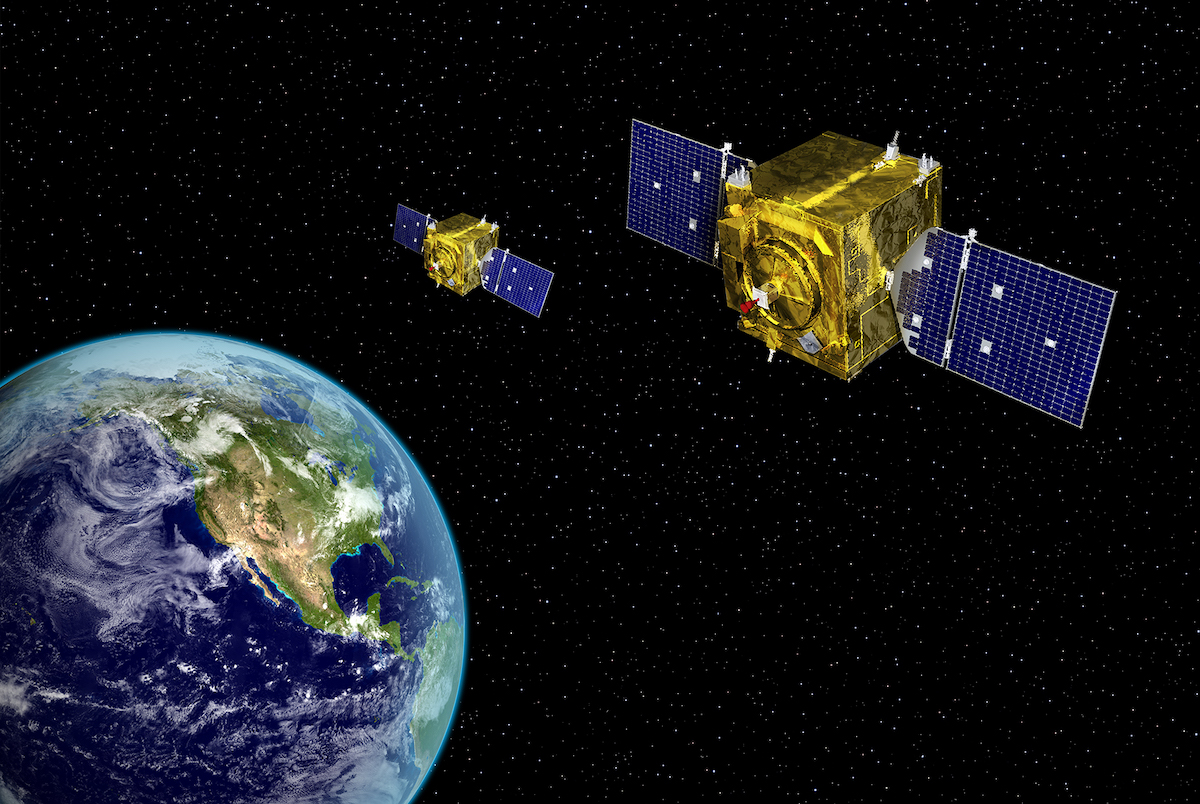
An artist’s illustration of two of the Space Force’s GSSAP surveillance satellites, built by Northrop Grumman. Credit: US Space Force
The next-gen GSSAP spacecraft may not meet the same standards as the Space Force’s existing inspector satellites, but the change comes with benefits beyond lower costs and faster timelines. It will be unclassified and will be open to multiple vendors to build and launch space surveillance satellites, injecting some level of competition into the program. It will also be eligible for sales to other countries.
More for less with GPS
There’s another area where Purdy said the Space Force was surprised by what commercial satellite builders were offering. Last year, the Pentagon used a new “Quick Start” procurement model authorized by Congress to establish a program to bolster the GPS navigation network, which is run by the Space Force but relied upon by commercial users and private citizens around the world.
The Space Force has more than 30 GPS satellites in medium-Earth orbit (MEO) at an altitude of roughly 12,550 miles (20,200 kilometers). Purdy said the network is “vulnerable” because the constellation has a relatively small number of satellites, at least relative to the Space Force’s newest programs. In MEO, the satellites are within range of direct ascent anti-satellite weapons. Many of the GPS satellites are aging, and the newer ones, built by Lockheed Martin, cost about $250 million apiece. With the Resilient GPS program, the Space Force aims to reduce the cost to $50 million to $80 million per satellite.
The satellites will be smaller than the GPS satellites flying today and will transmit a core set of signals. “We’re looking to add more resiliency and more numbers,” Purdy said.
“We actually didn’t think that we were going to get much, to be honest with you, and it was a surprise to us, and a major learning [opportunity] for us, learning last year that satellite prices had—they were low in LEO already, but they were lowering in MEO,” Purdy said. “So, that convinced us that we should proceed with it. The results have actually been more surprising and encouraging than we thought.
“The [satellite] buses actually bring a higher power level than our current program of record does, which allows us to punch through jamming in a better sense. We can achieve better results, we think, over time, going after these commercial buses,” Purdy said. “So that’s caused me to think, for our mainline GPS system, we’re actually looking at that for alternative ways to get after that.”
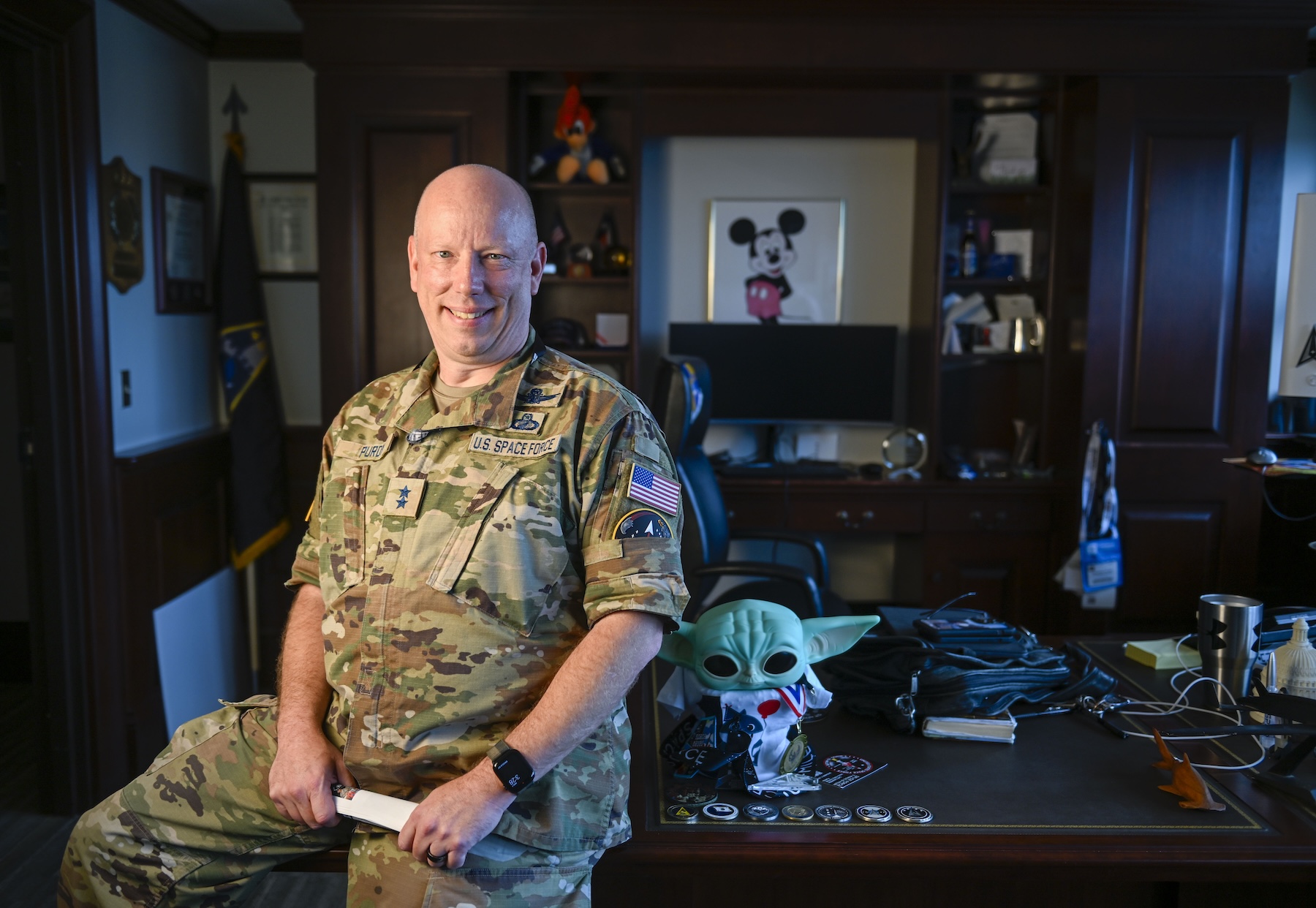
Maj. Gen. Stephen Purdy oversees the Space Force’s acquisition programs at the Pentagon. Credit: Jonathan Newton/The Washington Post via Getty Images
In September, the Space Force awarded four agreements to Astranis, Axient, L3Harris, and Sierra Space to produce design concepts for new Resilient GPS satellites. Astranis and Axient are relatively new to satellite manufacturing. Astranis is a pioneer in low-mass Internet satellites in geosynchronous orbit, and a non-traditional defense contractor. Axient, acquired by a company named Astrion last year, has focused on producing small CubeSats.
The military will later select one or more of these companies to move forward with producing up to eight Resilient GPS satellites for launch as soon as 2028. Early planning is already underway for a follow-on set of Resilient GPS satellites with additional capabilities, according to the Space Force.
The experience with the R-GPS program inspired the Space Force to look at other mission areas that might be well-served with a similar procurement approach. They settled on GSSAP as the next frontier.
Scolese, director of the NRO, said his agency is examining how to use commercial satellite constellations for other purposes beyond Earth imaging. This might include a program to employ commercially procured satellites for signals intelligence (SIGINT) missions, he said.
“It’s not just the commercial imagery,” Scolese said. “It’s also commercial RF (Radio Frequency, or SIGINT) and newer phenomenologies as where we’re working with that industry to go off and help advance those.”
Do these Buddhist gods hint at the purpose of China’s super-secret satellites?
Mission patches are a decades-old tradition in spaceflight. They can range from the figurative to the abstract, prompting valuable insights or feeding confusion. Some are just plain weird.
Ars published a story a few months ago on spaceflight patches from NASA, SpaceX, Russia, and the NRO, the US government’s spy satellite agency, which is responsible for some of the most head-scratching mission logos.
Until recently, China’s entries in the realm of spaceflight patches often lacked the originality found in patches from the West. For example, a series of patches for China’s human spaceflight missions used a formulaic design with a circular shape and a mix of red and blue. The patch for China’s most recent Shenzhou crew to the country’s Tiangong space station last month finally broke the mold with a triangular shape after China’s human spaceflight agency put the patch up for a public vote.
But there’s a fascinating set of new patches Chinese officials released for a series of launches with top secret satellites over the last two months. These four patches depict Buddhist gods with a sense of artistry and sharp colors that stand apart from China’s previous spaceflight emblems, and perhaps—or perhaps not—they can tell us something about the nature of the missions they represent.
Guardians of the Dharma
The four patches show the Four Heavenly Kings, protector deities in Buddhism who guard against evil forces in the four cardinal directions, according to the Kyoto National Museum. The gods also shield the Dharma, the teachings of the Buddha, from external threats.
These gods have different names, but in China, they are known as Duōwén, Zēngzhǎng, Chíguó, and Guăngmù. Duōwén is the commander and the guardian of the north, the “one who listens to many teachings,” who is often depicted with an umbrella. Zēngzhǎng, guardian of the south, is a god of growth shown carrying a sword. The protector of the east is Chíguó, defender of the nation, who holds a stringed musical instrument. And guarding the west is Guăngmù, an all-seeing god usually depicted with a serpent.
Rocket Report: How is your payload fairing? Poland launches test rocket.
Gilmour Space has a payload fairing mishap. Gilmour Space, a venture-backed startup based in Australia, said this week it was ready to launch a small rocket from its privately owned spaceport on a remote stretch of the country’s northeastern coastline, Ars reports. Gilmour’s three-stage rocket, named Eris, was prepped for a launch as early as Wednesday, but a ground systems issue delayed an attempt until Thursday US time. And then on Thursday, something odd happened: “Last night, during final checks, an unexpected issue triggered the rocket’s payload fairing,” the company said Thursday afternoon, US time.
Always more problems to solve… Gilmour, based in Gold Coast, Australia, was founded in 2012 by two brothers, Adam and James Gilmour, who came to the space industry after careers in banking and marketing. Today, Gilmour employs more than 200 people, mostly engineers and technicians. The debut launch of Gilmour’s Eris rocket is purely a test flight. Gilmour has tested the rocket’s engines and rehearsed the countdown last year, loading propellant and getting within 10 seconds of launch. But Gilmour cautioned in a post on LinkedIn early Wednesday that “test launches are complex.” And it confirmed that on Thursday. Now the company will need to source a replacement fairing, which will probably take a while.
The easiest way to keep up with Eric Berger’s and Stephen Clark’s reporting on all things space is to sign up for our newsletter. We’ll collect their stories and deliver them straight to your inbox.
Is an orbital launch from Argentina imminent? We don’t know much about the Argentinian launch company TLON Space, which is developing a (very) small-lift orbital rocket called Aventura 1. According to the company’s website, this launch vehicle will be capable of lofting 25 kg to low-Earth orbit. Some sort of flight test took place two years ago, but the video cuts off after a minute, suggesting that the end of the flight was less than nominal.
Maybe, maybe not… Now, a publication called Urgente24 reports that an orbital launch attempt is underway. It is not clear exactly what this means, and details about what is actually happening at the Malacara Spaceport in Argentina are unclear. I could find no other outlets reporting on an imminent launch attempt. So my guess is that nothing will happen soon, but it is something we’ll keep an eye on regardless. (Submitted by fedeng.)
The top fell off Australia’s first orbital-class rocket, delaying its launch
This was unusual
Payload fairing problems have caused a number of rocket failures, usually because they don’t jettison during launch, or only partially deploy, leaving too much extra weight on the launch vehicle for it to reach orbit.
Gilmour said it is postponing the Eris launch campaign “to fully understand what happened and make any necessary updates.” The company was founded by two brothers—Adam and James Gilmour—in 2012, and has raised approximately $90 million from venture capital firms and government funds to get the first Eris rocket to the launch pad.
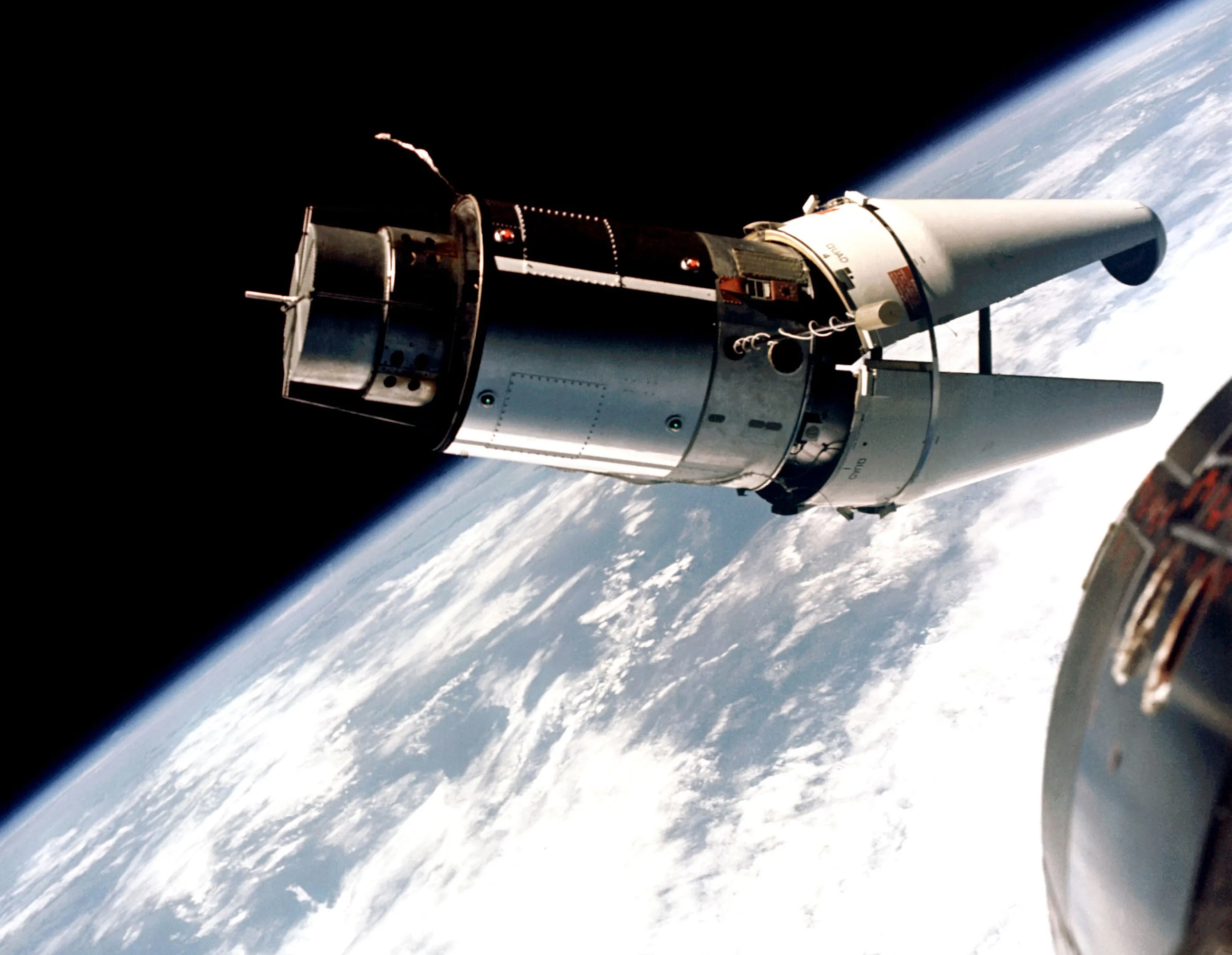
The astronauts on NASA’s Gemini 9A mission snapped this photo of a target vehicle they were supposed to dock with in orbit. But the rocket’s nose shroud only partially opened, inadvertently illustrating the method in which payload fairings are designed to jettison from their rockets in flight. Credit: NASA
The Eris rocket was aiming to become the first all-Australian launcher to reach orbit. Australia hosted a handful of satellite launches by US and British rockets more than 50 years ago.
Gilmour is headquartered in Gold Coast, Australia, about 600 miles south of the Eris launch pad near the coastal town of Bowen. In a statement, Gilmour said it has a replacement payload fairing in its factory in Gold Coast. The company will send it to the launch site and install it on the Eris rocket after a “full investigation” into the cause of the premature fairing deployment.
“While we’re disappointed by the delay, our team is already working on a solution and we expect to be back at the pad soon,” Gilmour said.
Officials did not say how long it might take to investigate the problem, correct it, and fit a new nose cone on the Eris rocket.
This setback follows more than a year of delays Gilmour blamed primarily on holdups in receiving regulatory approval for the launch from the Australian government.
Like many rocket companies have done before, Gilmour set modest expectations for the first test flight of Eris. While the rocket has everything needed to fly to low-Earth orbit, officials said they were looking for just 10 to 20 seconds of stable flight on the first launch, enough to gather data about the performance of the rocket and its unconventional hybrid propulsion system.
After back-to-back failures, SpaceX tests its fixes on the next Starship
But that didn’t solve the problem. Once again, Starship’s engines cut off too early, and the rocket broke apart before falling to Earth. SpaceX said “an energetic event” in the aft portion of Starship resulted in the loss of several Raptor engines, followed by a loss of attitude control and a loss of communications with the ship.
The similarities between the two failures suggest a likely design issue with the upgraded “Block 2” version of Starship, which debuted in January and flew again in March. Starship Block 2 is slightly taller than the ship SpaceX used on the rocket’s first six flights, with redesigned flaps, improved batteries and avionics, and notably, a new fuel feed line system for the ship’s Raptor vacuum engines.
SpaceX has not released the results of the investigation into the Flight 8 failure, and the FAA hasn’t yet issued a launch license for Flight 9. Likewise, SpaceX hasn’t released any information on the changes it made to Starship for next week’s flight.
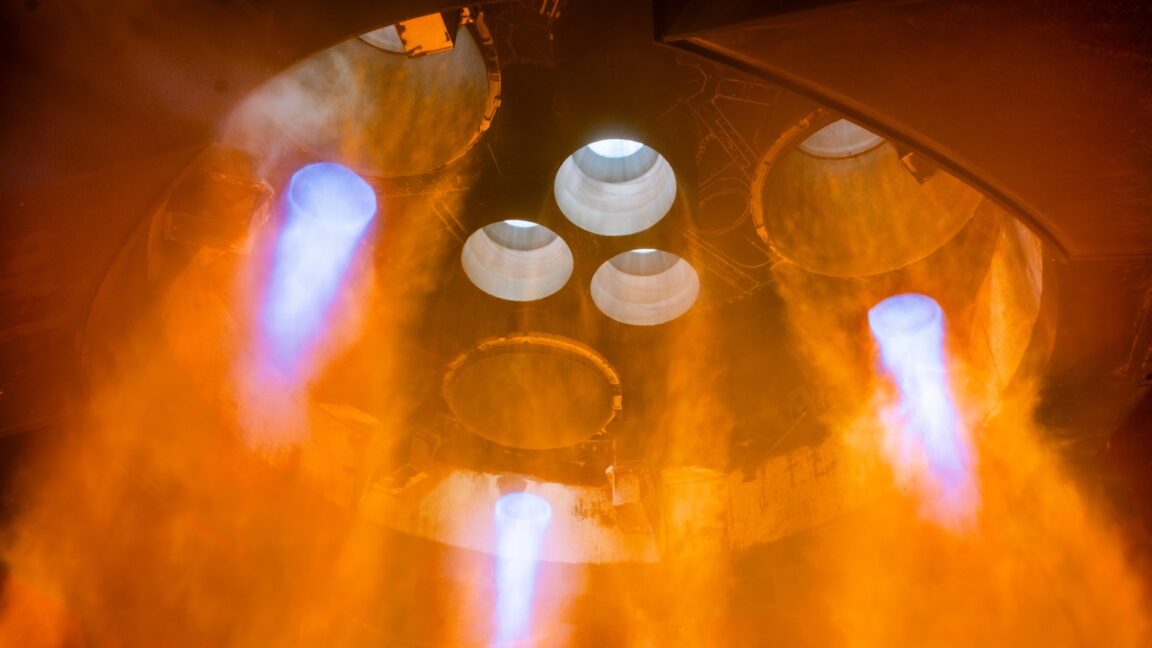
What we do know about the Starship vehicle for Flight 9—designated Ship 35—is that it took a few tries to complete a full-duration test-firing. SpaceX completed a single-engine static fire on April 30, simulating the restart of a Raptor engine in space. Then, on May 1, SpaceX aborted a six-engine test-firing before reaching its planned 60-second duration. Videos captured by media observing the test showed a flash in the engine plume, and at least one piece of debris was seen careening out of the flame trench below the ship.
SpaceX ground crews returned Ship 35 to the production site a couple of miles away, perhaps to replace a damaged engine, before rolling Starship back to the test stand over the weekend for Monday’s successful engine firing.
Now, the ship will head back to the Starbase build site, where technicians will make final preparations for Flight 9. These final tasks may include loading mock-up Starlink broadband satellites into the ship’s payload bay and touchups to the rocket’s heat shield.
These are two elements of Starship that SpaceX engineers are eager to demonstrate on Flight 9, beyond just fixing the problems from the last two missions. Those failures prevented Starship from testing its satellite deployer and an upgraded heat shield designed to better withstand scorching temperatures up to 2,600° Fahrenheit (1,430° Celsius) during reentry.
If Congress actually cancels the SLS rocket, what happens next?
The extent of an Artemis lunar surface presence would be determined by several factors, including the cost and safety of this transportation program and whether there are meaningful things for astronauts to do on the Moon.
What about Mars?
The skinny budget contained some intriguing language about Mars exploration: “By allocating over $7 billion for lunar exploration and introducing $1 billion in new investments for Mars-focused programs, the Budget ensures that America’s human space exploration efforts remain unparalleled, innovative, and efficient.”
This was, in fact, the only budget increase proposed by the Trump White House. So what does it mean?
No one is saying for sure, but this funding would probably offer a starting point for a robust Mars COTS program. This would begin with cargo missions to Mars. But eventually it would expand to include crewed missions, thus fulfilling Trump’s promise to land humans on the red planet.
Is this a gift to Elon Musk? Critics will certainly cast it as such, and that is understandable. But the plan would be open to any interested companies, and there are several. Rocket Lab, for example, has already expressed its interest in sending cargo missions to Mars. Impulse Space, too, has said it is building a spacecraft to ferry cargo to Mars and land there.
The Trump budget proposal also kills a key element of NASA’s Mars exploration plans, the robotic Mars Sample Return mission to bring rocks and soil from the red planet to Earth in the 2030s. However, this program was already frozen by the Biden administration because of delays and cost overruns.
Sources said the goal of this budget cut, rather than having a single $8 billion Mars Sample Return mission, is to create an ecosystem in which such missions are frequent. The benefit of opening a pathway to Mars with commercial companies is that it would allow for not just a single Mars Sample Return mission, but multiple efforts at a lower cost.
“The fact is we want to land large things, including crew cabins, on the Moon and Mars and bring them back to Earth,” one Republican space policy consultant said. “Instead of building a series of expensive bespoke robotic landers to do science, let’s develop cost-effective reusable landers that can, with minimal changes, support both cargo and crew missions to the Moon and Mars.”
We finally know a little more about Amazon’s super-secret satellites
“Elon thinks we can do the job with cheaper and simpler satellites, sooner,” a source told Reuters at the time of Badyal’s dismissal. Earlier in 2018, SpaceX launched a pair of prototype cube-shaped Internet satellites for demonstrations in orbit. Then, less than a year after firing Badyal, Musk’s company launched the first full stack of Starlink satellites, debuting the now-standard flat-panel design.
In a post Friday on LinkedIn, Badyal wrote the Kuiper satellites have had “an entirely nominal start” to their mission. “We’re just over 72 hours into our first full-scale Kuiper mission, and the adrenaline is still high.”
The Starlink and Kuiper constellations use laser inter-satellite links to relay Internet signals from node-to-node across their networks. Starlink broadcasts consumer broadband in Ku-band frequencies, while Kuiper will use Ka-band.
Ultimately, SpaceX’s simplified Starlink deployment architecture has fewer parts and eliminates the need for a carrier structure. This allows SpaceX to devote a higher share of the rocket’s mass and volume capacity to the Starlink satellites themselves, replacing dead weight with revenue-earning capability. The dispenser architecture used by Amazon is a more conventional design, and gives satellite engineers more flexibility in designing their spacecraft. It also allows satellites to spread out faster in orbit.
Others involved in the broadband megaconstellation rush have copied SpaceX’s architecture.
China’s Qianfan, or Thousand Sails, satellites have a “standardized and modular” flat-panel design that “meets the needs of stacking multiple satellites with one rocket,” according to the company managing the constellation. While Chinese officials haven’t released any photos of the satellites, which could eventually number more than 14,000, this sounds a lot like the design of SpaceX’s Starlink satellites.
Another piece of information released by United Launch Alliance helps us arrive at an estimate of the mass of each Kuiper satellite. The collection of 27 satellites that launched earlier this week added up to be the heaviest payload ever flown on ULA’s Atlas V rocket. ULA said the total payload the Atlas V delivered to orbit was about 34,000 pounds, equivalent to roughly 15.4 metric tons.
It wasn’t clear whether this number accounted for the satellite dispenser, which likely weighed somewhere in the range of 1,000 to 2,000 pounds at launch. This would put the mass of each Kuiper satellite somewhere between 1,185 and 1,259 pounds (537 and 571 kilograms).
This is not far off the estimated mass of SpaceX’s most recent iteration of Starlink satellites, a version known as V2 Mini Optimized. SpaceX’s Falcon 9 rocket has launched up to 28 of these flat-packed satellites on a single launch.
Firefly’s rocket suffers one of the strangest launch failures we’ve ever seen
There are several European launchers in operation or development—Arianespace’s Vega, Isar Aerospace’s Spectrum, and Rocket Factory Augsburg’s RFA One—with lift capacities comparable or slightly higher than Firefly’s Alpha.
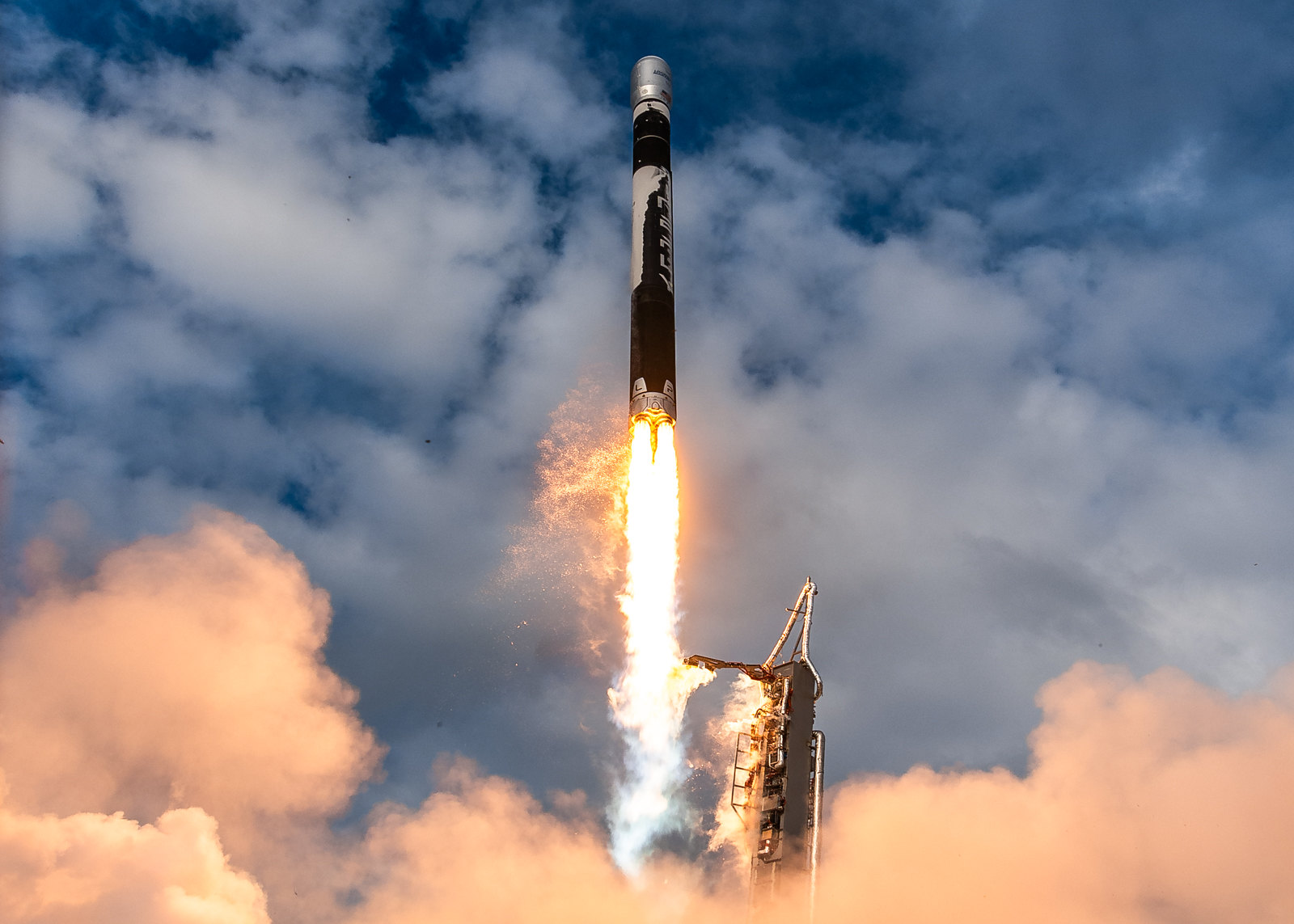
File photo of a Firefly Alpha rocket lifting off in 2023. The launch on Tuesday occurred in foggy conditions.
Firefly argues that its Alpha rocket services a niche in the market for satellites too large to fly with Rocket Lab or too small to merit a dedicated flight with SpaceX. Firefly has some contract wins to bear this out. The launch on Tuesday was the first of up to 25 Alpha flights booked by Lockheed Martin to launch a series of tech demo satellites. The first of these was Lockheed Martin’s 3,836-pound (1,740-kilogram) LM-400 satellite, which was lost on Tuesday’s mission.
NASA, the National Oceanic and Atmospheric Administration, the National Reconnaissance Office, the US Space Force, and several more commercial customers have also reserved slots on Firefly’s launch schedule. With these contracts, Firefly has the fourth-largest launch confirmed backlog of any US launch company, following SpaceX, United Launch Alliance, and Rocket Lab.
While Firefly continues flying the Alpha rocket, its engineers are developing a larger Medium Launch Vehicle in partnership with Northrop Grumman. Last month, Firefly celebrated the most significant accomplishment in its 11-year history—the first fully successful landing on the Moon by a commercial entity.
But while Firefly’s first missions at its founding were to build rocket engines and launch small satellites, other markets may ultimately prove more lucrative.
Peter Beck, Rocket Lab’s founder and CEO, argues rockets like Firefly’s Alpha are in a “no man’s land” in the launch market. “It’s too small to be a useful rideshare mission, and it’s too big to be a useful dedicated rocket” for smallsats, Beck told Space News.
Firefly might have a good strategy to prove Beck wrong. But first, it needs a more reliable rocket.