SpinLaunch—yes, the centrifuge rocket company—is making a hard pivot to satellites
Outside of several mentions in the Rocket Report newsletter dating back to 2018, Ars Technica has not devoted too much attention to covering a novel California space company named SpinLaunch.

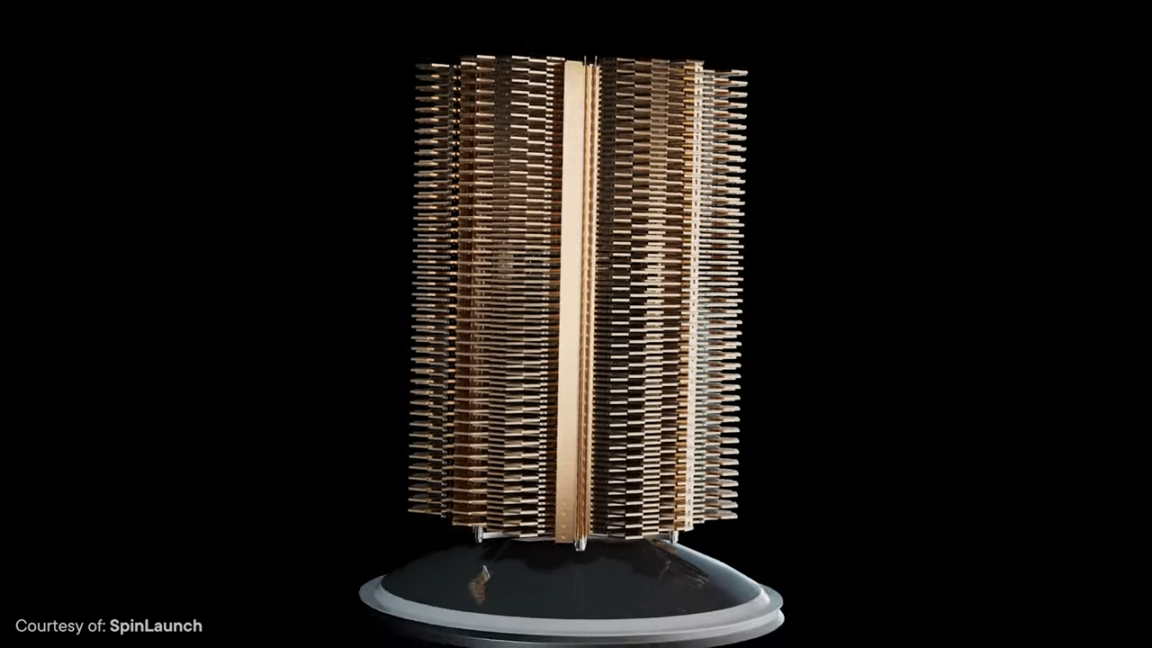
That’s because the premise is so outlandish as to almost not feel real. The company aims to build a kinetic launch system that spins a rocket around at speeds up to 4,700 mph (7,500 km/h) before sending it upward toward space. Then, at an altitude of 40 miles (60 km) or so, the rocket would ignite its engines to achieve orbital velocity. Essentially, SpinLaunch wants to yeet things into space.

But the company was no joke. After being founded in 2014, it raised more than $150 million over the next decade. It built a prototype accelerator in New Mexico and performed a series of flight tests. The flights reached altitudes of “tens of thousands” of feet, according to the company, and were often accompanied by slickly produced videos.

SpinLaunch goes quiet

Following this series of tests, by the end of 2022, the company went mostly quiet. It was unclear whether it ran out of funding, had hit some technical problems in trying to build a larger accelerator, or what. Somewhat ominously, SpinLaunch’s founder and chief executive, Jonathan Yaney, was replaced without explanation last May. The new leader would be David Wrenn, then serving as chief operating officer.

“I am confident in our ability to execute on the company’s mission and bring our integrated tech stack of low-cost space solutions to market,” Wrenn said at the time. “I look forward to sharing more details about our near- and long-term strategy in the coming months.”

Words like “tech stack” and “low-cost space solutions” sounded like nebulous corporate speak, and it was not clear what they meant. Nor did Wrenn immediately deliver on that promise, nearly a year ago, to share more details about the company’s near- and long-term strategy.

https://arstechnica.com/space/2025/04/spinlaunch-yes-the-centrifuge-rocket-company-is-making-a-hard-pivot-to-satellites/



Rocket Report: Next Starship flight to reuse booster; FAA clears New Glenn

PLD Space signs launch agreement with D-Orbit. The Spanish launch company, PLD Space, announced an agreement this week with an Italy-based space transportation company, D-Orbit. As part of the agreement, D-Orbit’s ION orbital transfer vehicle will launch on PLD Space’s forthcoming rocket, the Miura 5. Although the announcement did not specify terms of the agreement, PLD Space said it has now filled “more than 80 percent” of the launch slots on its manifest until 2027.

Waiting on the rocket … The ION vehicle, essentially a dispenser of CubeSats, has previously flown several missions. The real question, therefore, concerns the readiness of the Miura 5 small rocket. PLD Space said it is currently ramping up serial production for the Miura 5 using technology from a prototype rocket, with the aim of starting its test flight campaign by the end of 2025. Commercial flights of Miura 5 could begin in 2026 with the objective of scaling up to 30 launches per year by 2030. We shall see about that.

The easiest way to keep up with Eric Berger’s and Stephen Clark’s reporting on all things space is to sign up for our newsletter. We’ll collect their stories and deliver them straight to your inbox.

Sign Me Up!

China shooting for record number of launches. Early on Tuesday morning, a Long March 2D rocket lifted off from Jiuquan Satellite Launch Center in the Gobi Desert, Space News reports. The Shanghai Academy of Spaceflight Technology, a state-owned rocket maker, announced the success of the launch, revealing the payload to be a satellite Internet technology test satellite. Tuesday’s mission was China’s 17th orbital launch of 2025, following the launch of the classified TJS-16 satellite into geosynchronous transfer orbit on March 29 via a Long March 7A rocket.

Shooting for a century … This puts the country on pace to launch 68 rockets for the year. This is in line with China’s total orbital launches for each of the last three years (64, 67, and 68 launches respectively). However, Chinese space watcher Andrew Jones believes the country may attempt to go as high as 100 launches this year. This would be driven by growing commercial activity, megaconstellation projects, and new launcher development. A number of new, medium-lift and potentially reusable rockets are targeting debut flights this year, he reports.

https://arstechnica.com/space/2025/04/rocket-report-next-starship-flight-to-reuse-booster-faa-clears-new-glenn/


Europe’s quest to finally land on Mars takes another turn

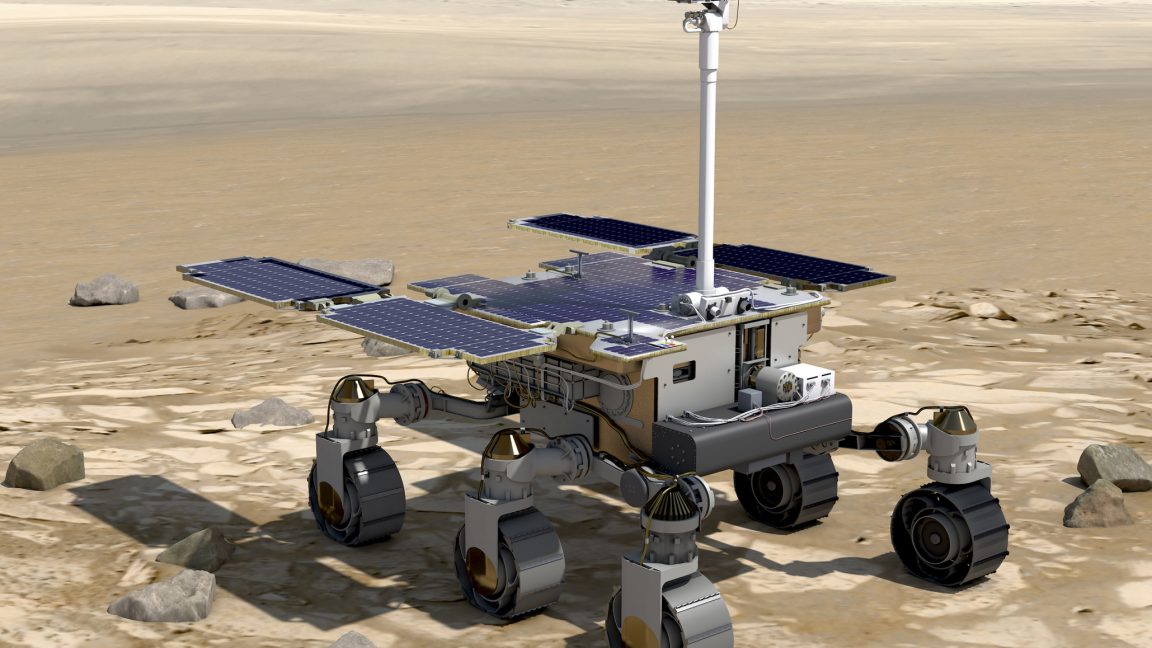
Four years later, citing budget issues and cost overruns with the James Webb Space Telescope, NASA ended its participation in ExoMars. This was a bitter decision for European space policy officials to swallow, and it pushed them to strengthen ties to Roscosmos. The Russians became major partners, contributing not just a launch vehicle but also providing the critical entry, descent, and landing vehicle that would carry ExoMars down to the surface of Mars.

Then more traditional problems began to hamper the ExoMars mission. Namely, it ran into budgetary and technical problems. A launch date that had already slipped from 2011 to 2018 moved again, to 2020. In the run-up to a launch attempt, testing of the mission’s parachutes did not go well. There were successive failures during tests in 2019. By that time, NASA had started to offer some technical help with the parachutes.

More delays

In March 2020, the European Space Agency finally made it official: There would be another delay. The launch of the mission was moving to the next Mars launch window in 2022. The onset of the COVID-19 pandemic proved to be the final straw in pushing back the launch date.

As the opening of the Mars window neared in 2022, with the mission in a final state of preparations, Russia invaded Ukraine. European officials were understandably uncomfortable proceeding jointly with Russia on the project, and in July, they officially terminated work with Russia. Dmitry Rogozin, then the director of Roscomos, responded with an angry message on this Telegram account, calling ESA chief Josef Aschbacher an “irresponsible bureaucrat.”

Russia’s war against Ukraine—at least at the time—led to a strengthening of ties between Europe and the United States across a number of fronts, including space. Cooperation on the ExoMars was put back on the table. NASA agreed to contribute a rocket for the mission, an engine for the descent module with adjustable thrust, and radioactive heating units. All in all, it was a rather extraordinary resurrection of the mission by European officials, and it was nice to see NASA helping to save the day.

https://arstechnica.com/space/2025/03/four-different-rockets-three-landers-and-two-decades-will-exomars-ever-launch/


The first flight of Isar Aerospace’s Spectrum rocket lasted just 40 seconds

Robert Habeck, Germany’s vice chancellor and economy minister, said Europe’s “unhindered access to space is strategically crucial.”

“With the first launch of Isar Aerospace’s Spectrum rocket, Germany has impressively demonstrated that it is an important location for the development of innovative space technologies,” Habeck wrote on LinkedIn. “The first flight provided important data and experience for the rocket’s next flight… Isar Aerospace can and will make a decisive contribution to securing Europe’s independent access to space!”

The Spectrum rocket is the largest launch vehicle primarily built in Germany, supplanting the V-2 missile from World War II.

In the last few months, European government officials have emphasized their desire to break free of relying on other countries for defense and space technology. Europe was a longtime customer for Russia’s Soyuz rocket, but the partnership ended in 2022 with Russia’s invasion of Ukraine. Delays in the debut of the Ariane 6 rocket and failures with the smaller Vega rocket forced European governments to sign contracts with SpaceX to launch several scientific and security-related satellites.

Daniel Metzler, co-founder and CEO of Isar Aerospace, speaks at an event in Munich on January 12, 2024. Credit: Matthias Balk/picture alliance via Getty Images

Metzler, Isar’s chief executive, was asked last year what he would consider a successful inaugural flight of Spectrum.

“For me, the first flight will be a success if we don’t blow up the launch site,” he said at the Handelsblatt innovation conference. “That would probably be the thing that would set us back the most in terms of technology and time.”

This tempering of expectations sounds remarkably similar to statements made by Elon Musk about SpaceX’s first flight of the Starship rocket in 2023.

By this measure, Isar officials can be content with Sunday’s result. The company is modeling its test strategy on SpaceX’s iterative development cycle, where engineers test early, make fixes, and fly again. This is in stark contrast to the way Europe has traditionally developed rockets. The alternative to Isar’s approach could be to “spend 15 years researching, doing simulations, and then getting it right the first time,” Metzler said.

With the first launch of Spectrum, Isar has tested the rocket. Now, it’s time to make fixes and fly again. That, Isar’s leaders argue, will be the real measure of success.

“We’re super happy,” Metzler said in a press call after Sunday’s flight. “It’s a time for people to be proud of, and for Europe, frankly, also to be proud of.”

https://arstechnica.com/space/2025/03/europes-first-private-launch-company-is-learning-to-embrace-failure/


NASA’s Curiosity rover has found the longest chain carbon molecules yet on Mars

NASA’s Curiosity Mars rover has detected the largest organic (carbon-containing) molecules ever found on the red planet. The discovery is one of the most significant findings in the search for evidence of past life on Mars. This is because, on Earth at least, relatively complex, long-chain carbon molecules are involved in biology. These molecules could actually be fragments of fatty acids, which are found in, for example, the membranes surrounding biological cells.

Scientists think that, if life ever emerged on Mars, it was probably microbial in nature. Because microbes are so small, it’s difficult to be definitive about any potential evidence for life found on Mars. Such evidence needs more powerful scientific instruments that are too large to be put on a rover.

The organic molecules found by Curiosity consist of carbon atoms linked in long chains, with other elements bonded to them, like hydrogen and oxygen. They come from a 3.7-billion-year-old rock dubbed Cumberland, encountered by the rover at a presumed dried-up lakebed in Mars’s Gale Crater. Scientists used the Sample Analysis at Mars (SAM) instrument on the NASA rover to make their discovery.

Scientists were actually looking for evidence of amino acids, which are the building blocks of proteins and therefore key components of life as we know it. But this unexpected finding is almost as exciting. The research is published in Proceedings of the National Academies of Science.

Among the molecules were decane, which has 10 carbon atoms and 22 hydrogen atoms, and dodecane, with 12 carbons and 26 hydrogen atoms. These are known as alkanes, which fall under the umbrella of the chemical compounds known as hydrocarbons.

It’s an exciting time in the search for life on Mars. In March this year, scientists presented evidence of features in a different rock sampled elsewhere on Mars by the Perseverance rover. These features, dubbed “leopard spots” and “poppy seeds,” could have been produced by the action of microbial life in the distant past, or not. The findings were presented at a US conference and have not yet been published in a peer-reviewed journal.

https://arstechnica.com/science/2025/03/nasas-curiosity-rover-has-found-the-longest-chain-carbon-molecules-yet-on-mars/


NASA to put Starliner’s thrusters through an extensive workout before next launch

More than half a year after an empty Starliner spacecraft safely landed in a New Mexico desert, NASA and Boeing still have not decided whether the vehicle’s next flight will carry any astronauts.

In an update this week, the US space agency said it is still working through the process to certify Starliner for human missions. Whether it carries cargo or humans, Starliner’s next flight will not occur until late this year or, more likely, sometime in 2026.

Two things stand out in the new information provided by NASA. First, there remains a lot of work left to do this year before Starliner will fly again, including extensive testing of the vehicle’s propulsion system. And secondly, it is becoming clear that Starliner will only ever fly a handful of missions to the space station, if that, before the orbiting laboratory is retired.

Long line of tests

Several issues marred Starliner’s first crew flight to the space station last June, but the most serious of these was the failure of multiple maneuvering thrusters. Concerns about these thrusters prompted NASA to fly Starliner’s crew, Butch Wilmore and Suni Williams, home on a Crew Dragon vehicle instead. They safely landed earlier this month.

Starliner returned autonomously in early September. Since then, NASA and Boeing have been reviewing data from the test flight. (Unfortunately, the errant thrusters were located on the service module of the spacecraft, which is jettisoned before reentry and was not recovered.)

Although engineers from NASA and Boeing have worked through more than 70 percent of the observations and anomalies that occurred during Starliner’s flight, the propulsion system issues remain unresolved.

https://arstechnica.com/space/2025/03/nasa-to-put-starliners-thrusters-through-an-extensive-workout-before-next-launch/


Rocket Report: Stoke is stoked; sovereignty is the buzzword in Europe

Welcome to Edition 7.37 of the Rocket Report! It’s been interesting to watch how quickly European officials have embraced ensuring they have a space launch capability independent of other countries. A few years ago, European government satellites regularly launched on Russian Soyuz rockets, and more recently on SpaceX Falcon 9 rockets from the United States. Russia is now non grata in European government circles, and the Trump administration is widening the trans-Atlantic rift. European leaders have cited the Trump administration and its close association with Elon Musk, CEO of SpaceX, as prime reasons to support sovereign access to space, a capability currently offered only by Arianespace. If European nations can reform how they treat their commercial space companies, there’s enough ambition, know-how, and money in Europe to foster a competitive launch industry.

As always, we welcome reader submissions. If you don’t want to miss an issue, please subscribe using the box below (the form will not appear on AMP-enabled versions of the site). Each report will include information on small-, medium-, and heavy-lift rockets as well as a quick look ahead at the next three launches on the calendar.

Isar Aerospace aims for weekend launch. A German startup named Isar Aerospace will try to launch its first rocket Saturday, aiming to become the first in a wave of new European launch companies to reach orbit, Ars reports. The Spectrum rocket consists of two stages, stands about 92 feet (28 meters) tall, and can haul payloads up to 1 metric ton (2,200 pounds) into low-Earth orbit. Based in Munich, Isar was founded by three university graduate students in 2018. Isar scrubbed a launch attempt Monday due to unfavorable winds at the launch site in Norway.

From the Arctic … Notably, this will be the first orbital launch attempt from a launch pad in Western Europe. The French-run Guiana Space Center in South America is the primary spaceport for European rockets. Virgin Orbit staged an airborne launch attempt from an airport in the United Kingdom in 2023, and the Plesetsk Cosmodrome is located in European Russia. The launch site for Isar is named Andøya Spaceport, located about 650 miles (1,050 kilometers) north of Oslo, inside the Arctic Circle. (submitted by EllPeaTea)

https://arstechnica.com/space/2025/03/rocket-report-stoke-is-stoked-sovereignty-is-the-buzzword-in-europe/


Maybe Trump should go back to calling his missile shield the Iron Dome

“$10 billion in the near term, plussing up our current resources, we can spend that,” Saltzman said. “We can jump start that, and then you get into that steady state kind of growth that’s necessary to continue to add the capabilities, continue to close the programs. So that’s what we’re really trying to sell inside the department first because there’s a lot of priorities, a lot of constraints.”

Defense officials are waiting for the Trump administration to release its budget request for fiscal year 2026. For now, the White House is holding the figures close to the vest. Details of the budget proposal should reveal whether the Pentagon, and particularly the Space Force, will prevail in a climate of government downsizing.

For now, the Space Force is under a civilian hiring freeze imposed by the White House. Some military civilians took the Trump administration’s offer of early retirement, and the Space Force doesn’t have a way to replace them.

Last month, Defense Secretary Pete Hegseth directed military leaders to redirect 8 percent of the defense budget from “non-lethal” programs toward Trump’s priorities. Saltzman didn’t identify which programs the Space Force deemed lowest priority, but he said the savings will go into a “war chest” to shift to other missions.

“I’m very hopeful that the case that the Space Force makes means that a lot of that money will come back into our budget, and potentially, with initiatives like Golden Dome, we’ll even get more money and more resources because we play such a central role in that,” Saltzman said.

We’ll find out soon just how gilded Trump wants to make the Golden Dome. Military officials owe the White House a report on possible Golden Dome architectures at the end of this week. Presumably, we’ll see something about initial costs for the Golden Dome in the White House’s fiscal year 2026 budget request to Congress.

There’s a good chance lawmakers will conclude the government can’t afford to add any superfluous bells and whistles to the proposed missile defense shield, if it goes forward at all. Maybe, with due deference to Israel’s system, it makes sense to name something that’s supposed to save millions of lives after a stronger, more affordable metal—like iron.

https://arstechnica.com/space/2025/03/maybe-trump-should-go-back-to-calling-his-missile-shield-the-iron-dome/


After a spacecraft was damaged en route to launch, NASA says it won’t launch

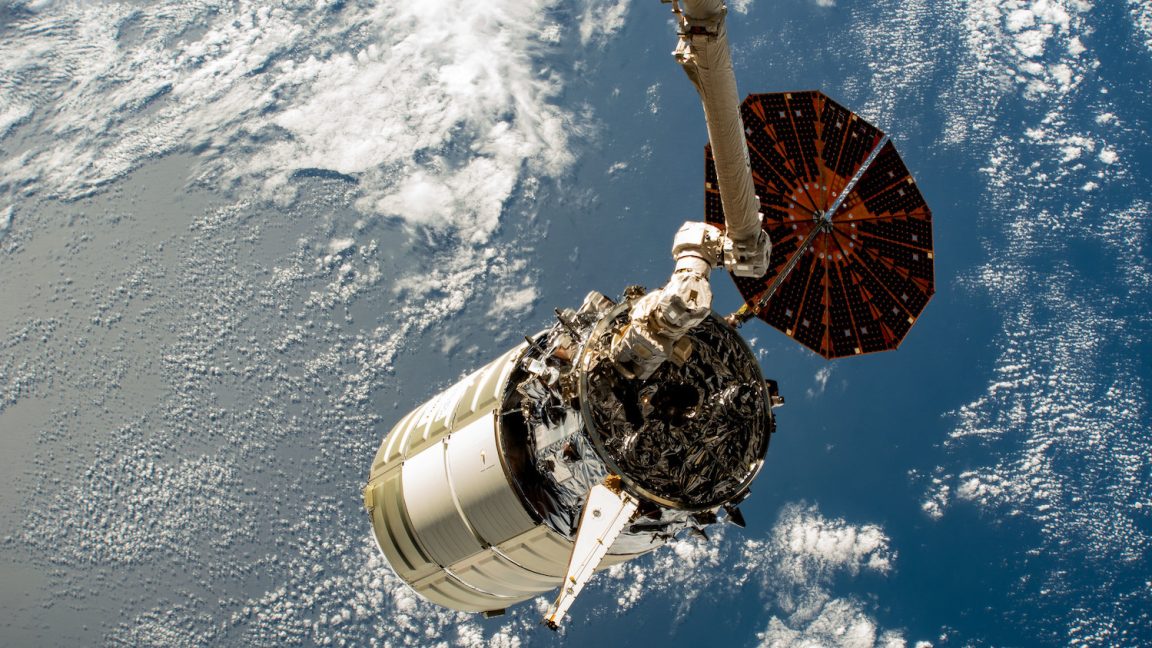
Three weeks ago, NASA revealed that a shipping container protecting a Cygnus spacecraft sustained “damage” while traveling to the launch site in Florida.

Built by Northrop Grumman, Cygnus is one of two Western spacecraft currently capable of delivering food, water, experiments, and other supplies to the International Space Station. This particular Cygnus mission, NG-22, had been scheduled for June. As part of its statement in early March, the space agency said it was evaluating the NG-22 Cygnus cargo supply mission along with Northrop.

On Wednesday, after a query from Ars Technica, the space agency acknowledged that the Cygnus spacecraft designated for NG-22 is too damaged to fly, at least in the nearterm.

Loading up Dragon

“Following initial evaluation, there also is damage to the cargo module,” the agency said in a statement. “The International Space Station Program will continue working with Northrop Grumman to assess whether the Cygnus cargo module is able to safely fly to the space station on a future flight.” That future flight, NG-23, will launch no earlier than this fall.

As a result, NASA is modifying the cargo on its next cargo flight to the space station, the 32nd SpaceX Cargo Dragon mission, due to launch in April. The agency says it will “add more consumable supplies and food to help ensure sufficient reserves of supplies aboard the station” to the Dragon vehicle.

As it mulls stopgap measures, one option available to NASA may be to try to slot in a cargo mission on Boeing’s Starliner spacecraft. After the propulsion issues experienced on Starliner’s first crew flight to the space station last June, NASA is still evaluating whether the vehicle can be certified for an operational crew mission, or whether it would be better to perform an uncrewed test flight.

https://arstechnica.com/space/2025/03/nasa-sidelines-cygnus-spacecraft-after-damage-in-transit-to-launch-site/


Firm wins Space Force funding to provide an “aircraft carrier” in orbit

In recent years, the US military has made much of a concept known as tactically responsive launch. This essentially means that if there is some rapidly developing threat in space—say an adversary takes out a key national defense satellite—the military would like the capability to rapidly fuel a satellite on Earth, mate it to a rocket, and launch it into space.

The US Space Force first demonstrated this tactically responsive capability with a launch on Firefly’s Alpha rocket in 2023. As part of this “Victus Nox” test flight, a satellite was encapsulated into a payload fairing and mated to the rocket and completed all final launch preparations within 27 hours.

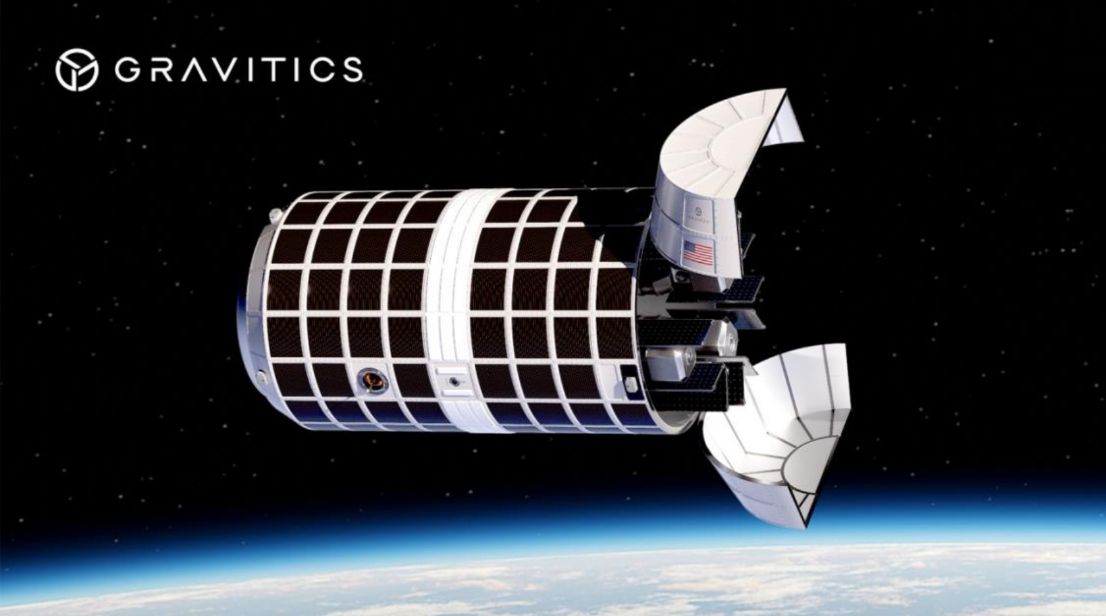
But what if there were an even faster way to respond? That’s the vision behind a new, $60 million federal award to a new space company named Gravitics for a concept called an orbital carrier.

“In many ways it’s kind of like what an aircraft carrier does,” said Jon Goff, director of advanced concepts for the Seattle-based company.

Shielding satellites

In interviews about the concept with Ars, company officials were fairly vague about specific details of what orbital carriers will be able to do. A news release published on Wednesday morning, highlighting the Strategic Funding Increase, or STRATFI grant from the United States Space Force, also lacks specifics. The Space Force would prefer to keep the vehicle’s operational capabilities under wraps.

But in general, the idea is to provide an unpressurized module in which one or more satellites can be pre-positioned in orbit.

Such a module would isolate the satellites from the space environment, sparing their batteries and sensitive electronics from harsh thermal cycles every 90 minutes, and provide some shielding from radiation. In addition, the orbital carrier would obfuscate the satellites inside from observation by other nations or hostile actors in space. Then, when a satellite is needed, it can be deployed into multiple orbits by the carrier.

https://arstechnica.com/space/2025/03/firm-wins-space-force-funding-to-provide-an-aircraft-carrier-in-orbit/