ESA finally has a commercial launch strategy, but will member states pay?

Open your checkbook, please

ESA’s governance structure isn’t favorable for taking quick action. On one hand, ESA member states approve the agency’s budget in multiyear increments, giving its projects a sense of stability over time. However, it takes time to get new projects approved, and ESA’s member states expect to receive benefits—jobs, investment, and infrastructure—commensurate with their spending on European space programs. This policy is known as geographical return, or geo-return.

For example, France has placed a high strategic importance on fielding an independent European launch capability for more than 60 years. The administration of French President Charles de Gaulle made this determination during the Cold War, around the same time he decided France should have a nuclear deterrent fully independent of the United States and NATO.

In order to match this policy, France has been more willing than other European nations to invest in launchers. This means the Ariane rocket family, developed and funded through ESA contracts, has been largely a French enterprise since the first Ariane launch in 1979.

This model is becoming antiquated in the era of commercial spaceflight. Startups across Europe, primarily in France, Germany, the United Kingdom, and Spain, are developing small launchers designed to carry up to 1.5 metric tons of payload to low-Earth orbit. This is too small to directly compete with the Ariane 6 rocket, but eventually, these companies would like to develop larger launchers.

Some European officials, including the former head of the French space agency, blamed geo-return as a reason the Ariane 6 rocket missed its price target.

Toni Tolker-Nielsen, ESA’s acting director of space transportation, speaks at an event in 2021. Credit: ESA/V. Stefanelli

With the European Launcher Challenge, ESA will experiment with a new funding model for the first time. This new “fair contribution” approach will see ESA leadership put forward a plan to its member states at the next big ministerial conference in November. The space agency will ask the countries that benefit most from the winners of the launcher challenge to provide the bulk of the funding for the challengers’ contracts.

https://arstechnica.com/space/2025/03/esa-finally-has-a-commercial-launch-strategy-but-will-member-states-pay/


As preps continue, it’s looking more likely that NASA will fly the Artemis II mission

Late Saturday night, technicians at Kennedy Space Center in Florida moved the core stage for NASA’s second Space Launch System rocket into position between the vehicle’s two solid-fueled boosters.

Working inside the iconic 52-story-tall Vehicle Assembly Building, ground teams used heavy-duty cranes to first lift the butterscotch orange core stage from its cradle in the VAB’s cavernous transfer aisle, the central passageway between the building’s four rocket assembly bays. The cranes then rotated the structure vertically, allowing workers to disconnect one of the cranes from the bottom of the rocket.

That left the rocket hanging on a 325-ton overhead crane, which would lift it over the transom into the building’s northeast high bay. The Boeing-built core stage weighs about 94 tons (85 metric tons), measures about 212 feet (65 meters) tall, and will contain 730,000 gallons of cryogenic propellant at liftoff. It is the single largest element for NASA’s Artemis II mission, which is slated to ferry a crew of astronauts around the far side of the Moon as soon as next year.

Finally, ground crews lowered the rocket between the Space Launch System’s twin solid rocket boosters already stacked on a mobile launch platform inside High Bay 3, where NASA assembled Space Shuttles and Saturn V rockets for Apollo lunar missions.

On Sunday, teams inside the VAB connected the core stage to each booster at forward and aft load-bearing attach points. After completing electrical and data connections, engineers will stack a cone-shaped adapter on top of the core stage, followed by the rocket’s upper stage, another adapter ring, and finally the Orion spacecraft that will be home to the four-person Artemis II crew for their 10-day journey through deep space.

Four RS-25 engines left over from NASA’s Space Shuttle program will power the SLS core stage. Credit: NASA/Frank Michaux

Through the motions

This will be the first crewed flight of NASA’s Artemis program, which aims to land astronauts on the lunar south pole and eventually build a sustainable human presence on the Moon, with an eye toward future expeditions to Mars. The program’s first crewed lunar landing is penciled in for the Artemis III mission, again using SLS and Orion, but adding a new piece: SpaceX’s enormous Starship rocket will be used as a human-rated lunar lander. Artemis II won’t land, but it will carry people to the vicinity of the Moon for the first time since 1972.

https://arstechnica.com/space/2025/03/as-preps-continue-its-looking-more-likely-nasa-will-fly-the-artemis-ii-mission/


What’s behind the changed relationship between Jeff Bezos and Donald Trump?

But the Post has struggled to hold on to the commercial success it had reached during the first Trump administration, falling far behind its biggest competitor, The New York Times. Its audience has shrunk and financial losses have ballooned.

“He’s a highly rational person. I think he was comfortable losing $20 million a year. When it gets to $100 million a year, I don’t know what his appetite is for that,” says a former executive who worked closely with Bezos. “I don’t think for him it’s like a mission business in the same way it would be for [the Graham family] or for the Sulzbergers [who own the New York Times].”

The Washington Post chief executive Will Lewis answers employees’ questions last year. Bezos’ turn toward Trump has alarmed editorial staff, fueling an exodus of talent and subscribers.

Credit: Robert Miller/The Washington Post/Getty Images

The Washington Post chief executive Will Lewis answers employees’ questions last year. Bezos’ turn toward Trump has alarmed editorial staff, fueling an exodus of talent and subscribers. Credit: Robert Miller/The Washington Post/Getty Images

This commercial struggle occurred at the same time that Bezos cozied up to Trump and began intervening on the Opinion section, further sinking morale across the newspaper. At least a dozen seasoned journalists have left to work for competitors.

Many saw a direct link between his muzzling of the newspaper and rewards for his other enterprises. Hours after Bezos spiked the paper’s endorsement of Harris, Blue Origin chief executive David Limp met Trump at a rally in Texas. Former Post editor-at-large Robert Kagan criticized the meeting as a “quid pro quo.”

In the latest fracas, veteran journalist Ruth Marcus resigned last week, claiming that chief executive Sir Will Lewis had axed a column she had written criticizing Bezos’ overhaul of the Opinion section. “The Washington Post I joined, the one I came to love, is not The Washington Post I left,” Marcus said of the decision.

Yet for all the drama in the newsroom, public grievances lodged by senior journalists, and relentless media coverage depicting the Post in crisis, there is little indication that Bezos is fazed.

“He’s a really tough guy. He’s totally charming, but he didn’t get where he was by being kind and gentle. In that sense, I don’t know that he’s changed,” says the former Post executive. “I remember him talking about the people he gets for the Amazon board, and he specifically picks people who don’t give a shit what other people think. He doesn’t want people on the board like ‘oh my god, we don’t air condition the warehouses?’ I think he himself is like that, too.”

In January, more than 400 Post journalists signed a letter imploring Bezos to meet them about their concerns. He did not respond.

“He’s taken the organization in a certain direction and seems determined to do that, for whatever reason that he hasn’t fully explained,” says Baron, who adds that he has not tried to contact Bezos about his objections.

“Quite simply, I do not think he cares what I think.”

© 2025 The Financial Times Ltd. All rights reserved. Not to be redistributed, copied, or modified in any way.

https://arstechnica.com/space/2025/03/how-jeff-bezos-made-peace-with-donald-trump/


Crew-10 launches, finally clearing the way for Butch and Suni to fly home

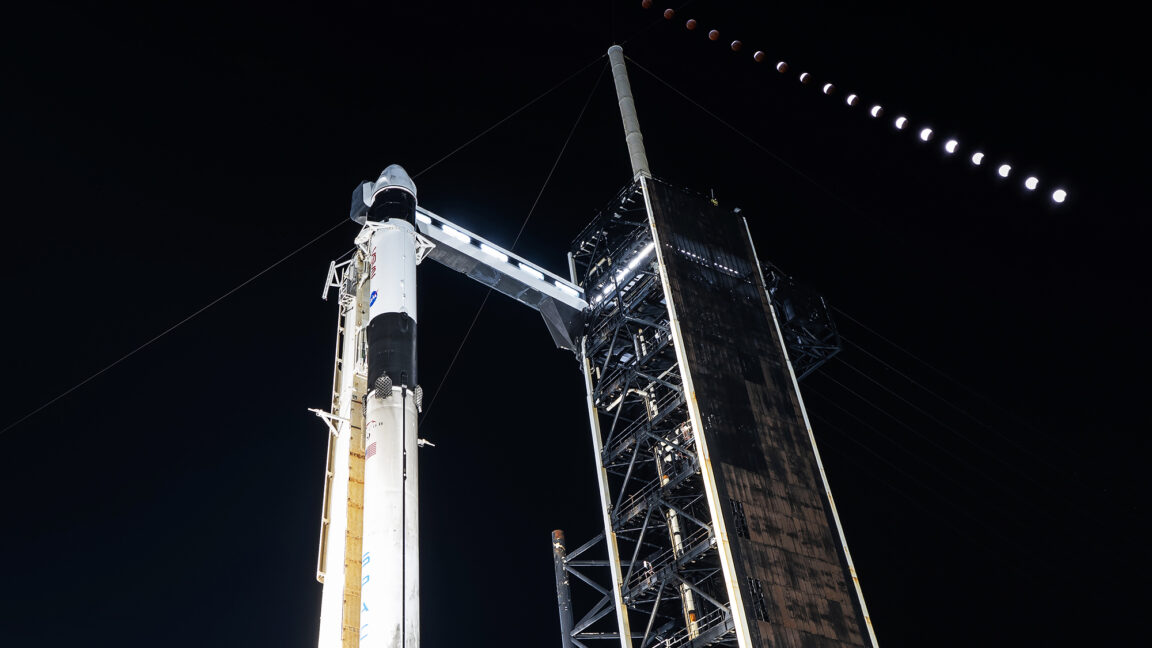
A Falcon 9 rocket launched four astronauts safely into orbit on Friday evening, marking the official beginning of the Crew-10 mission to the International Space Station.

Although any crew launch into orbit is notable, this mission comes with an added bit of importance as its success clears the way for two NASA astronauts, Butch Wilmore and Suni Williams, to finally return home from space after a saga spanning nine months.

Friday’s launch came two days after an initial attempt was scrubbed on Wednesday evening. This was due to a hydraulic issue with the ground systems that handle the Falcon 9 rocket at Launch Complex 39A in Florida.

There were no technical issues on Friday, and with clear skies NASA astronauts Anne McClain and Nichole Ayers, Japanese astronaut Takuya Onishi, and Roscosmos cosmonaut Kirill Peskov rocketed smoothly into orbit.

If all goes well, the Crew Dragon spacecraft carrying the four astronauts will dock with the space station at 11:30 pm ET on Saturday. They will spend about six months there.

A long, strange trip

Following their arrival at the space station, the members of Crew-10 will participate in a handover ceremony with the four astronauts of Crew-9, which includes Wilmore and Williams. This will clear the members of Crew 9 for departure from the station as early as next Wednesday, March 19, pending good weather in the waters surrounding Florida for splashdown of Dragon.

https://arstechnica.com/space/2025/03/crew-10-launches-finally-clearing-the-way-for-butch-and-suni-to-fly-home/


To avoid the Panama Canal, Relativity Space may move some operations to Texas

Although Baytown does not have any historical affinity with aerospace, its location on the water offers far more straightforward access to Relativity’s test facilities in Mississippi and its launch site in Florida. There are other benefits. The cost of living in the region is far lower than Southern California, and due to the location of Johnson Space Center just 20 miles away, there is a reservoir of space talent in the region.

A spokesperson for Relativity Space did not confirm the move.

“As we scale Terran R production to meet growing customer demand, we are exploring options to expand our manufacturing capabilities,” the spokesperson said. “Our focus is on ensuring we have the right footprint to achieve the production cadence required to serve our customers.”

Texas space is on the rise

For logistics and other reasons, Relativity has been evaluating locations across several states that border the Gulf of Mexico, including Texas, over recent years, multiple sources said. The company is expected to continue operating its large “Wormhole” factory in Long Beach, California, which is more than 1 million square feet in size. A second factory in Texas would likely be used to build propellant tanks and assemble stages for testing in Mississippi and launch in Florida.

The addition of a second factory in Texas would underscore the investment to which Schmidt appears committed to making Relativity a major player in US launch.

It is unclear whether state or local officials have provided any incentives to Relativity for relocating a significant chunk of its manufacturing operations to Texas. Last year the state legislature created the Texas Space Commission and provided $350 million in funding to support commercial space operations. In February the commission awarded the first of these grants, valued at $47.7 million, to five companies with Texas-based operations: Starlab Space, Intuitive Machines, Firefly Aerospace, SpaceX, and Blue Origin.

A leading figure behind the commission is State Rep. Greg Bonnen, whose district includes Johnson Space Center. Bonnen has signaled that the commission is a long-term project by the state to ensure its economic prosperity in the 21st century by continuing to grow existing businesses in Texas, but also to attract new companies to the state.

SpaceX and Firefly already manufacture rockets in Texas. Adding Relativity Space would be a significant coup for a state that, only a decade ago, was known primarily in space for being the home of NASA’s human spaceflight activities.

https://arstechnica.com/space/2025/03/relativity-space-may-soon-move-a-majority-of-its-operations-to-texas/


Former Google CEO Eric Schmidt is the new leader of Relativity Space

Another Silicon Valley investor is getting into the rocket business.

Former Google chief executive Eric Schmidt has taken a controlling interest in the Long Beach, California-based Relativity Space. The New York Times first reported the change becoming official, after Schmidt told employees in an all-hands meeting on Monday.

Schmidt’s involvement with Relativity has been quietly discussed among space industry insiders for a few months. Multiple sources told Ars that he has largely been bankrolling the company since the end of October, when the company’s previous fundraising dried up.

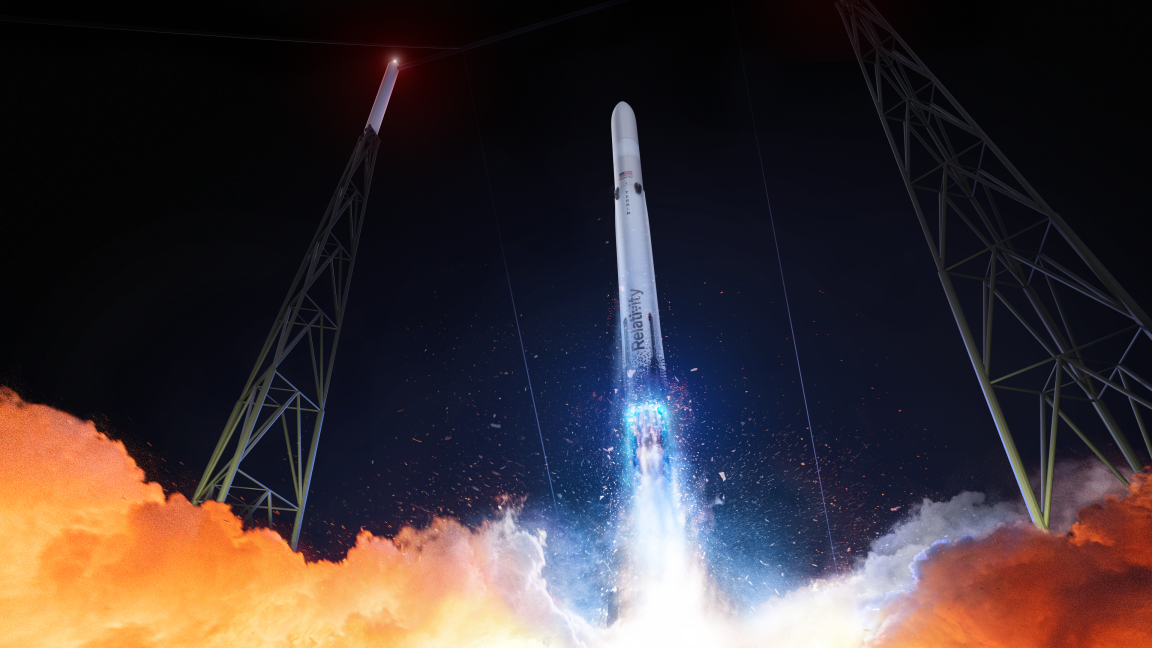
It is not immediately clear why Schmidt is taking a hands-on approach at Relativity. However, it is one of the few US-based companies with a credible path toward developing a medium-lift rocket that could potentially challenge the dominance of SpaceX and its Falcon 9 rocket. If the Terran R booster becomes commercially successful, it could play a big role in launching megaconstellations.

Schmidt’s ascension also means that Tim Ellis, the company’s co-founder, chief executive, and almost sole public persona for nearly a decade, is now out of a leadership position.

“Today marks a powerful new chapter as Eric Schmidt becomes Relativity’s CEO, while also providing substantial financial backing,” Ellis wrote on the social media site X. “I know there’s no one more tenacious or passionate to propel this dream forward. We have been working together to ensure a smooth transition, and I’ll proudly continue to support the team as Co-founder and Board member.”

Terran R’s road to launch

On Monday, Relativity also released a nearly 45-minute video that outlines the development of the Terran R rocket to date and the lengths to which it must go to reach the launch pad. Tellingly, Ellis appears only briefly in the video, which features several other senior officials who presumably will remain with the company, including Chief Operating Officer Zach Dunn.

https://arstechnica.com/space/2025/03/former-google-ceo-eric-schmidt-is-the-new-leader-of-relativity-space/


Yes, we are about to be treated to a second lunar landing in a week

Because the space agency now has some expectation that Intuitive Machines will be fully successful with its second landing attempt, it has put some valuable experiments on board. Principal among them is the PRIME-1 experiment, which has an ice drill to sample any ice that lies below the surface. Drill, baby, drill.

The Athena lander also is carrying a NASA-funded “hopper” that will fire small hydrazine rockets to bounce around the Moon and explore lunar craters near the South Pole. It might even fly into a lava tube. If this happens it will be insanely cool.

Because this is a commercial program, NASA has encouraged the delivery companies to find additional, private payloads. Athena has some nifty ones, including a small rover from Lunar Outpost, a data center from Lonestar Data Holdings, and a 4G cellular network from Nokia. So there’s a lot riding on Athena‘s success.

So will it be a success?

“Of course, everybody’s wondering, are we gonna land upright?” Tim Crain, Intuitive Machines’ chief technology officer, told Ars. “So, I can tell you our laser test plan is much more comprehensive than those last time.”

During the first landing about a year ago, Odysseus‘ laser-based system for measuring altitude failed during the descent. Because Odysseus did not have access to altitude data, the spacecraft touched down faster, and on a 12-degree slope, which exceeded the 10-degree limit. As a result, the lander skidded across the surface, and one of its six legs broke, causing it to fall over.

Crain said about 10 major changes were made to the spacecraft and its software for the second mission. On top of that, about 30 smaller things, such as more efficient file management, were updated on the new vehicle.

In theory, everything should work this time. Intuitive Machines has the benefit of all of its learnings from the last time, and nearly everything worked right during this first attempt. But the acid test comes on Thursday.

The company and NASA will provide live coverage of the attempt beginning at 11:30 am ET (16:30 UTC) on NASA+, with landing set for just about one hour later. The Moon may be a harsh mistress, but hopefully not too harsh.

https://arstechnica.com/space/2025/03/after-skidding-into-the-moon-intuitive-machines-hopes-to-stick-second-landing/


Butch Wilmore says Elon Musk is “absolutely factual” on Dragon’s delayed return

For what it is worth, all of the reporting done by Ars over the last nine months suggests the decision to return Wilmore and Williams this spring was driven by technical reasons and NASA’s needs on board the International Space Station, rather than because of politics.

Q. How do you feel about waking up and finding yourself in a political storm?

Wilmore: I can tell you at the outset, all of us have the utmost respect for Mr. Musk, and obviously, respect and admiration for our president of the United States, Donald Trump. We appreciate them. We appreciate all that they do for us, for human space flight, for our nation. The words they said, politics, I mean, that’s part of life. We understand that. And there’s an important reason why we have a political system, a political system that we do have, and we’re behind it 100 percent. We know what we’ve lived up here, the ins and outs, and the specifics that they may not be privy to. And I’m sure that they have some issues that they are dealing with, information that they have, that we are not privy to. So when I think about your question, that’s part of life, we are on board with it.

Q. Did politics influence NASA’s decision for you to stay longer in space?

Wilmore: From my standpoint, politics is not playing into this at all. From our standpoint, I think that they would agree, we came up prepared to stay long, even though we plan to stay short. That’s what we do in human spaceflight. That’s what your nation’s human space flight program is all about, planning for unknown, unexpected contingencies. And we did that, and that’s why we flowed right into Crew 9, into Expedition 72 as we did. And it was somewhat of a seamless transition, because we had planned ahead for it, and we were prepared.

https://arstechnica.com/space/2025/03/butch-and-suni-send-mixed-messages-on-whether-politics-delayed-their-return/


The modern era of low-flying satellites may begin this week

Clarity-1 at the pad

Albedo’s first big test may come within the next week and the launch of the “Transporter-13” mission on SpaceX’s Falcon 9 rocket. The company’s first satellite, Clarity-1, is 530 kg (1170 pounds) and riding atop the stack of ridesharing spacecraft. The mission could launch as soon as this coming weekend from Vandenberg Space Force Base in California.

The Clarity-1 satellite will be dropped off between 500 and 600 km orbit and then attempt to lower itself to an operational orbit 274 km (170 miles) above the planet.

This is a full-up version of Albedo’s satellite design. The spacecraft is larger than a full-size refrigerator, similar to a phone booth, and is intended to operate for a lifetime of about five years, depending on the solar cycle. Clarity-1 is launching near the peak of the 11-year solar cycle, so this could reduce its active lifetime.

Albedo recently won a contract from the US Air Force Research Laboratory that is worth up to $12 million to share VLEO-specific, on-orbit data and provide analysis to support the development of new missions and payloads beyond its own optical sensors.

Serving many different customers

The advantages of such a platform include superior image quality, less congested orbits, and natural debris removal as inoperable satellites are pulled down into Earth’s atmosphere and burnt up.

But what about the drawbacks? In orbits closer to Earth the primary issue is atomic oxygen, which is highly reactive and energetic. There are also plasma eddies and other phenomena that interfere with the operation of satellites and degrade their materials. This makes VLEO far more hazardous than higher altitudes. It’s also more difficult to capture precise imagery.

“The hardest part is pointing and attitude control,” Haddad said, “because that’s already hard in LEO, when you have a big telescope and you’re trying to get a high resolution. Then you put it in VLEO, where the Earth’s rotation beneath is moving faster, and it just exacerbates the problem.”

In the next several years, Albedo is likely to reach a constellation sized at about 24 satellites, but that number will depend on customer demand, Haddad said. Albedo has previously announced about half a dozen of its commercial customers who will task Clarity-1 for various purposes, such as power and pipeline monitoring or solar farm maintenance.

But first, it has to demonstrate its technology.

https://arstechnica.com/space/2025/03/how-low-can-you-go-firm-near-launch-of-atmosphere-skimming-satellite/


SpaceX readies a redo of last month’s ill-fated Starship test flight

FAA’s green light

The FAA confirmed Friday it issued a launch license earlier this week for Starship Flight 8.

“The FAA determined SpaceX met all safety, environmental and other licensing requirements for the suborbital test flight,” an FAA spokesperson said in a statement.

The federal regulator oversaw a SpaceX-led investigation into the failure of Flight 7. SpaceX said NASA, the National Transportation Safety Board, and the US Space Force also participated in the investigation, which determined that propellant leaks and fires in an aft compartment, or attic, of Starship led to the shutdown of its engines and eventual breakup.

Engineers concluded the leaks were most likely caused by a harmonic response several times stronger than predicted, suggesting the vibrations during the ship’s climb into space were in resonance with the vehicle’s natural frequency. This would have intensified the vibrations beyond the levels engineers expected from ground testing.

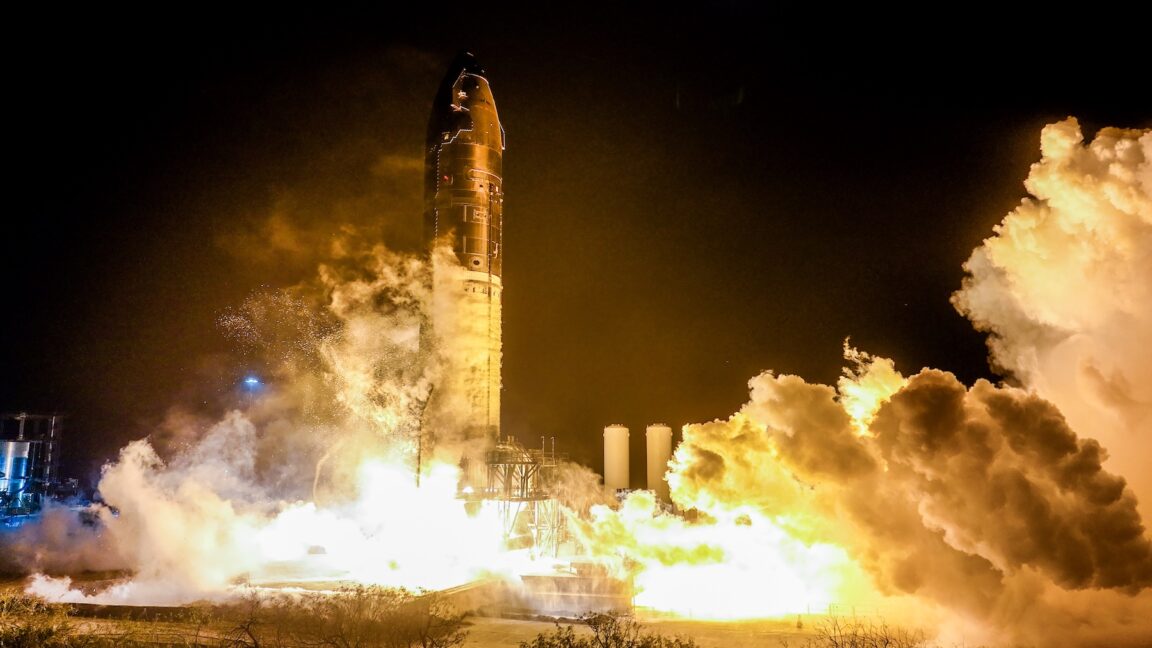
Earlier this month, SpaceX completed an extended-duration static fire of the next Starship upper stage to test hardware modifications at multiple engine thrust levels. According to SpaceX, findings from the static fire informed changes to the fuel feed lines to Starship’s Raptor engines, adjustments to propellant temperatures, and a new operating thrust for the next test flight.

“To address flammability potential in the attic section on Starship, additional vents and a new purge system utilizing gaseous nitrogen are being added to the current generation of ships to make the area more robust to propellant leakage,” SpaceX said. “Future upgrades to Starship will introduce the Raptor 3 engine, reducing the attic volume and eliminating the majority of joints that can leak into this volume.”

FAA officials were apparently satisfied with all of this. The agency’s commercial spaceflight division completed a “comprehensive safety review” and determined Starship can return to flight operations while the investigation into the Flight 7 failure remains open. This isn’t new. The FAA also used this safety determination to expedite SpaceX launch license approvals last year as officials investigated mishaps on Starship and Falcon 9 rocket flights.

https://arstechnica.com/space/2025/02/spacex-readies-a-redo-of-last-months-ill-fated-starship-test-flight/