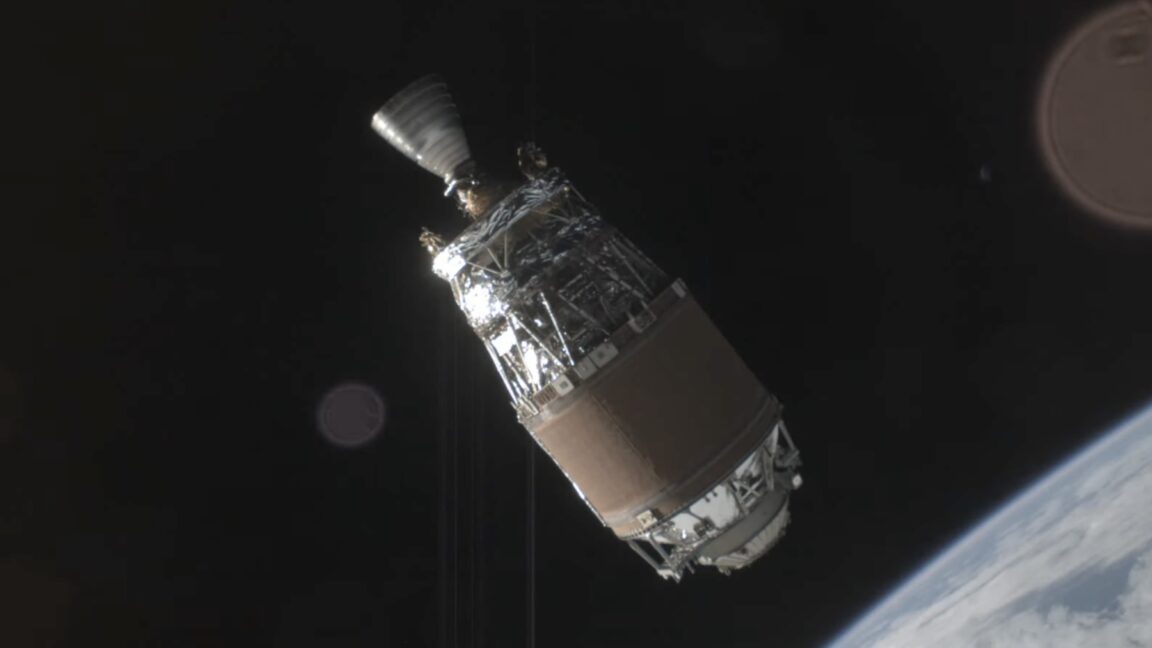
Astroscale aced the world’s first rendezvous with a piece of space junk
Astroscale’s US subsidiary won a $25.5 million contract from the US Space Force in 2023 to build a satellite refueler that can hop around geostationary orbit. Like the ADRAS-J mission, this project is a public-private partnership, with Astroscale committing $12 million of its own money. In January, the Japanese government selected Astroscale for a contract worth up to $80 million to demonstrate chemical refueling in low-Earth orbit.

The latest win for Astroscale came Thursday, when the Japanese Ministry of Defense awarded the company a contract to develop a prototype satellite that could fly in geostationary orbit and collect information on other objects in the domain for Japan’s military and intelligence agencies.

“We are very bullish on the prospects for defense-related business,” said Nobu Matsuyama, Astroscale’s chief financial officer.

Astroscale’s other projects include a life extension mission for an unidentified customer in geostationary orbit, providing a similar service as Northrop Grumman’s Mission Extension Vehicle (MEV).

So, can Astroscale really do all of this? In an era of a militarized final frontier, it’s easy to see the usefulness of sidling up next to a “non-cooperative” satellite—whether it’s to refuel it, repair it, de-orbit it, inspect it, or (gasp!) disable it. Astroscale’s demonstration with ADRAS-J showed it can safely operate near another object in space without navigation aids, which is foundational to any of these applications.

So far, governments are driving demand for this kind of work.

Astroscale raised nearly $400 million in venture capital funding before going public on the Tokyo Stock Exchange last June. After quickly spiking to nearly $1 billion, the company’s market valuation has dropped to about $540 million as of Thursday. Astroscale has around 590 full-time employees across all its operating locations.

Matsuyama said Astroscale’s total backlog is valued at about 38.9 billion yen, or $260 million. The company is still in a ramp-up phase, reporting operating losses on its balance sheet and steep research and development spending that Matsuyama said should max out this year.

“We are the only company that has proved RPO technology for non-cooperative objects, like debris, in space,” Okada said last month.

“In simple terms, this means approach and capture of objects,” Okada continued. “This capability did not exist before us, but one’s mastering of this technology enables you to provide not only debris removal service, but also orbit correction, refueling, inspection, observation, and eventually repair and reuse services.”

https://arstechnica.com/space/2025/02/astroscale-aced-the-worlds-first-rendezvous-with-a-piece-of-space-junk/


German startup to attempt the first orbital launch from Western Europe

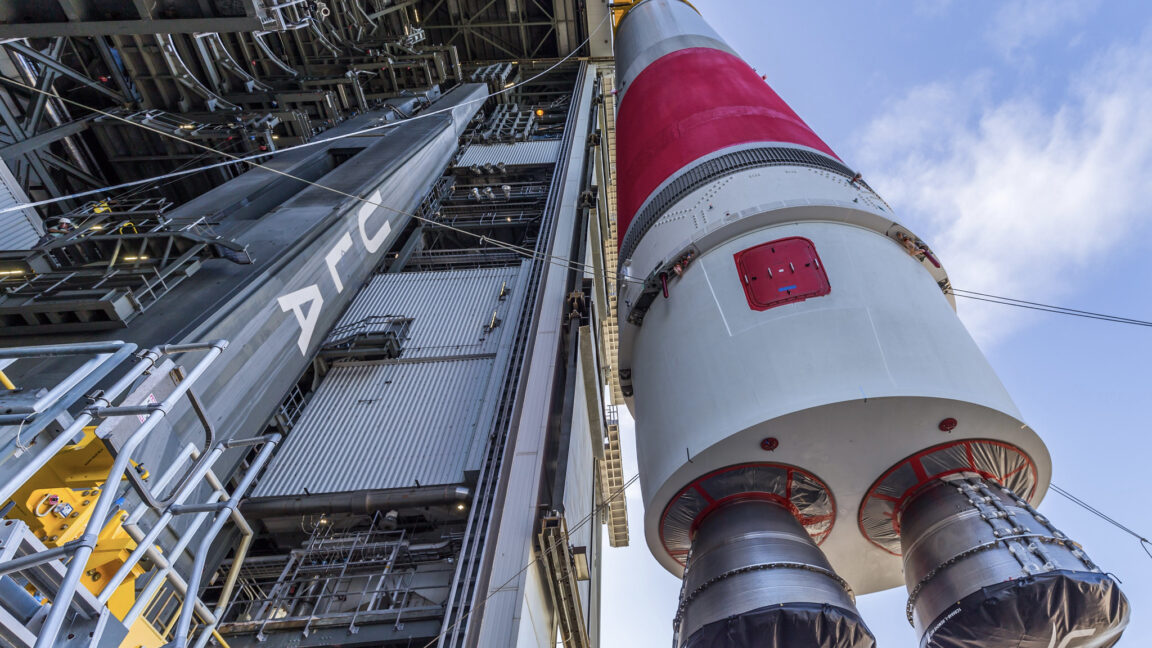
The nine-engine first stage for Isar Aerospace’s Spectrum rocket lights up on the launch pad on February 14. Credit: Isar Aerospace

Isar builds almost all of its rockets in-house, including Spectrum’s Aquila engines.

“The flight will be the first integrated test of tens of thousands of components,” said Josef Fleischmann, Isar’s co-founder and chief technical officer. “Regardless of how far we get, this first test flight will hopefully generate an enormous amount of data and experience which we can apply to future missions.”

Isar is the first European startup to reach this point in development. “Reaching this milestone is a huge success in itself,” Meltzer said in a statement. “And while Spectrum is ready for its first test flight, launch vehicles for flights two and three are already in production.”

Another Bavarian company, Rocket Factory Augsburg, destroyed its first booster during a test-firing on its launch pad in Scotland last year, ceding the frontrunner mantle to Isar. RFA received its launch license from the UK government last month and aims to deliver its second booster to the launch site for hot-fire testing and a launch attempt later this year.

There’s an appetite within the European launch industry for new companies to compete with Arianespace, the continent’s sole operational launch services provider backed by substantial government support. Delays in developing the Ariane 6 rocket and several failures of Europe’s smaller Vega launcher forced European satellite operators to look abroad, primarily to SpaceX, to launch their payloads.

The European Space Agency is organizing the European Launcher Challenge, a competition that will set aside some of the agency’s satellites for launch opportunities with a new crop of startups. Isar is one of the top contenders in the competition to win money from ESA. The agency expects to award funding to multiple European launch providers after releasing a final solicitation later this year.

The first flight of the Spectrum rocket will attempt to reach a polar orbit, flying north from Andøya Spaceport. Located at approximately 69 degrees north latitude, the spaceport is poised to become the world’s northernmost orbital launch site.

Because the inaugural launch of the Spectrum rocket is a test flight, it won’t carry any customer payloads, an Isar spokesperson told Ars.

https://arstechnica.com/space/2025/02/german-startup-to-attempt-the-first-orbital-launch-from-western-europe/


SpaceX engineers brought on at FAA after probationary employees were fired

Kiernan is currently a lead software engineer at SpaceX, according to his LinkedIn page. Before joining SpaceX in May 2020, he worked at Wayfair and is a 2017 Dartmouth graduate.

Smeal is a software engineer who has worked at SpaceX since September 2021, according to his LinkedIn. He graduated from Saint Vincent College in 2018.

Glantz is a software engineer who has worked at SpaceX since May 2024 and worked as an engineering analyst at Goldman Sachs from 2019 to 2021, according to his LinkedIn, and graduated from the University of Michigan in 2019.

Malaska, Kiernan, Smeal, and Glantz did not immediately respond to requests for comment. The FAA also did not immediately respond to requests for comment.

In his post on X, Duffy wrote, “Because I know the media (and Hillary Clinton) will claim Elon’s team is getting special access, let me make clear that the @FAANews regularly gives tours of the command center to both media and companies.”

But on Wednesday, FAA acting administrator Chris Rocheleau wrote in an email to FAA staff, viewed by WIRED, that DOGE and the teams of special government employees deployed in federal agencies were “top-of-mind,” before noting that the agency had “recently welcomed” a team of special government employees who had already toured some FAA facilities. “We are asking for their help to engineer solutions while we keep the airspace open and safe,” he wrote, adding that the new employees had already visited the FAA Command Center and Potomac TRACON, a facility that controls the airspace around and provides air traffic control services to airports in the DC, Maryland, and Virginia areas.

In a Department of Transportation all-hands meeting late last week, Duffy responded to a question about DOGE’s role in national airspace matters, and without explicitly mentioning the new employees, suggested help was needed on reforming Notice to Air Mission (NOTAM) alerts, a critical system that distributes real-time data and warnings to pilots but which has had significant outages, one as recently as this month. “If I can get ideas from really smart engineers on how we can fix it, I’m going to take those ideas,” he said, according to a recording of the meeting reviewed by WIRED. “Great engineers” might also work on airspace issues, he said.

https://arstechnica.com/space/2025/02/spacex-engineers-brought-on-at-faa-after-probationary-employees-were-fired/


In a last-minute decision, White House decides not to terminate NASA employees

So what changed?

It was not immediately clear why. A NASA spokesperson in Washington, DC, offered no comment on the updated guidance. Two sources indicated that it was plausible that private astronaut Jared Isaacman, whom President Trump has nominated to lead the space agency, asked for the cuts to be put on hold.

Although this could not be confirmed, it seems reasonable that Isaacman would want to retain some control over where cuts at the agency are made. Firing all probationary employees—which is the most expedient way to reduce the size of government—is a blunt instrument. It whacks new hires that the agency may have recruited for key positions, as well as high performers who earned promotions.

The reprieve in these terminations does not necessarily signal that NASA will escape significant budget or employment cuts in the coming months.

The administration could still seek to terminate probationary employees. In addition, Ars reported earlier that directors at the agency’s field centers have been told to prepare options for a “significant” reduction in force in the coming months. The scope of these cuts has not been defined, and it’s likely they would need to be negotiated with Congress.

https://arstechnica.com/space/2025/02/nasa-receives-11th-hour-reprieve-from-probationary-employee-cuts/


By the end of today, NASA’s workforce will be about 10 percent smaller

Spread across NASA’s headquarters and 10 field centers, which dot the United States from sea to sea, the space agency has had a workforce of nearly 18,000 civil servants.

However, by the end of today, that number will have shrunk by about 10 percent since the beginning of the second Trump administration four weeks ago. And the world’s preeminent space agency may still face significant additional cuts.

According to sources, about 750 employees at NASA accepted the “fork in the road” offer to take deferred resignation from the space agency later this year. This sounds like a lot of people, but generally about 1,000 people leave the agency every year, so effectively, many of these people might just be getting paid to leave jobs they were already planning to exit from.

The culling of “probationary” employees will be more impactful. As it has done at other federal agencies, the Trump administration is generally firing federal employees who are in the “probationary” period of their employment, which includes new hires within the last one or two years or long-time employees who have moved into or been promoted into a new position. About 1,000 or slightly more employees at NASA were impacted by these cuts.

Adding up the deferred resignations and probationary cuts, the Trump White House has now trimmed about 10 percent of the agency’s workforce.

However, the cuts may not stop there. Two sources told Ars that directors at the agency’s field centers have been told to prepare options for a “significant” reduction in force in the coming months. The scope of these cuts has not been defined, and it’s possible they may not even happen, given that the White House must negotiate budgets for NASA and other agencies with the US Congress. But this directive for further reductions in force casts more uncertainty on an already demoralized workforce and signals that the Trump administration would like to make further cuts.

https://arstechnica.com/space/2025/02/by-the-end-of-today-nasas-workforce-will-be-about-10-percent-smaller/


ULA’s Vulcan rocket still doesn’t have the Space Force’s seal of approval

ULA crews at Cape Canaveral have already stacked the next Vulcan rocket on its mobile launch platform in anticipation of launching the USSF-106 mission. But with the Space Force’s Space Systems Command still withholding certification, there’s no confirmed launch date for USSF-106.

So ULA is pivoting to another customer on its launch manifest.

Amazon’s first group of production satellites for the company’s Kuiper Internet network is now first in line on ULA’s schedule. Amazon confirmed last month that it would ship Kuiper satellites to Cape Canaveral from its factory in Kirkland, Washington. Like ULA, Amazon has run into its own delays with manufacturing Kuiper satellites.

“These satellites, built to withstand the harsh conditions of space and the journey there, will be processed upon arrival to get them ready for launch,” Amazon posted on X. “These satellites will bring fast, reliable Internet to customers even in remote areas. Stay tuned for our first launch this year.”

Amazon and the Space Force take up nearly all of ULA’s launch backlog. Amazon has eight flights reserved on Atlas V rockets and 38 missions booked on the Vulcan launcher to deploy about half of its 3,232 satellites to compete with SpaceX’s Starlink network. Amazon also has launch contracts with Blue Origin, which is owned by Amazon founder Jeff Bezos, along with Arianespace and SpaceX.

The good news is that United Launch Alliance has an inventory of rockets awaiting an opportunity to fly. The company plans to finish manufacturing its remaining 15 Atlas V rockets within a few months, allowing the factory in Decatur, Alabama, to focus solely on producing Vulcan launch vehicles. ULA has all the major parts for two Vulcan rockets in storage at Cape Canaveral.

“We have a stockpile of rockets, which is kind of unusual,” Bruno said. “Normally, you build it, you fly it, you build another one… I would certainly want anyone who’s ready to go to space able to go to space.”

Space Force officials now aim to finish the certification of the Vulcan rocket in late February or early March. This would clear the path for launching the USSF-106 mission after the next Atlas V. Once the Kuiper launch gets off the ground, teams will bring the Vulcan rocket’s components back to the hangar to be stacked again.

The Space Force has not set a launch date for USSF-106, but the service says liftoff is targeted for sometime between the beginning of April and the end of June, nearly five years after ULA won its lucrative contract.

https://arstechnica.com/space/2025/02/ulas-vulcan-rocket-still-doesnt-have-the-space-forces-seal-of-approval/


Boeing has informed its employees that NASA may cancel SLS contracts

The primary contractor for the Space Launch System rocket, Boeing, is preparing for the possibility that NASA cancels the long-running program.

On Friday, with less than an hour’s notice, David Dutcher, Boeing’s vice president and program manager for the SLS rocket, scheduled an all-hands meeting for the approximately 800 employees working on the program. The apparently scripted meeting lasted just six minutes, and Dutcher didn’t take questions.

During his remarks, Dutcher said Boeing’s contracts for the rocket could end in March and that the company was preparing for layoffs in case the contracts with the space agency were not renewed. “Cold and scripted” is how one person described Dutcher’s demeanor.

Giving a 60-day notice

The aerospace company, which is the primary contractor for the rocket’s large core stage, issued the notifications as part of the Worker Adjustment and Retraining Notification (or WARN) Act, which requires US employers with 100 or more full-time employees to provide a 60-day notice in advance of mass layoffs or plant closings.

“To align with revisions to the Artemis program and cost expectations, today we informed our Space Launch Systems team of the potential for approximately 400 fewer positions by April 2025,” a Boeing spokesperson told Ars. “This will require 60-day notices of involuntary layoff be issued to impacted employees in coming weeks, in accordance with the Worker Adjustment and Retraining Notification Act. We are working with our customer and seeking opportunities to redeploy employees across our company to minimize job losses and retain our talented teammates.”

The timing of Friday’s hastily called meeting aligns with the anticipated release of President Trump’s budget proposal for fiscal year 2026. This may not be an entire plan but rather a “skinny” budget that lays out a wish list of spending requests for Congress and some basic economic projections. Congress does not have to act on Trump’s budget priorities.

https://arstechnica.com/space/2025/02/boeing-has-informed-its-employees-that-nasa-may-cancel-sls-contracts/


Chat, are you ready to go to space with NASA?

The US space agency said Wednesday it will host a live Twitch stream from the International Space Station on February 12.

NASA, which has 1.3 million followers on the live-streaming video service, has previously broadcast events on its Twitch channel. However, this will be the first time the agency has created an event specifically for Twitch.

During the live event, beginning at 11:45 am ET (16:45 UTC), viewers will hear from NASA astronaut Don Pettit, who is currently on board the space station, as well as Matt Dominick, who recently returned to Earth after the agency’s Crew-8 mission. Viewers will have the opportunity to ask questions about living in space.

Twitch is owned by Amazon, and it has become especially popular in the online gaming community for the ability to stream video games and chat with viewers.

Meeting people where they are

“We spoke with digital creators at TwitchCon about their desire for streams designed with their communities in mind, and we listened,” said Brittany Brown, director of the Office of Communications Digital and Technology Division. “In addition to our spacewalks, launches, and landings, we’ll host more Twitch-exclusive streams like this one. Twitch is one of the many digital platforms we use to reach new audiences and get them excited about all things space.”

https://arstechnica.com/space/2025/02/nasa-has-entered-the-chat-space-agency-to-twitch-stream-from-orbit/


Europe has the worst imaginable idea to counter SpaceX’s launch dominance

It is not difficult to understand the unease on the European continent about the rise of SpaceX and its controversial founder, Elon Musk.

SpaceX has surpassed the European Space Agency and its institutional partners in almost every way when it comes to accessing space and providing secure communications. Last year, for example, SpaceX launched 134 orbital missions. Combined, Europe had three. SpaceX operates a massive constellation of more than 7,000 satellites, delivering broadband Internet around the world. Europe hopes to have a much more modest capability online by 2030 serving the continent at a cost of $11 billion.

And Europe has good reasons for being wary about working directly with SpaceX. First, Europe wants to maintain sovereign access to space, as well as a space-based communication network. Second, buying services from SpaceX undermines European space businesses. Finally, and perhaps most importantly, Musk has recently begun attacking governments in European capitals such as Berlin and London, taking up the “Make Europe Great Again” slogan. This seems to entail throwing out the moderate coalitions governing European nations and replacing them with authoritarian, hard-right leaders.

All of that to say, it is understandable that Europe would like to provide a reasonable answer to the dominance of SpaceX.

Bring on the bankers

However, the approach being pursued by Airbus—a European aerospace corporation that is, on a basic level, akin to Boeing—seems like the dumbest idea imaginable. According to Bloomberg, “Airbus has hired Goldman Sachs Group Inc. for advice on an effort to forge a new European space and satellite company that can better compete with Elon Musk’s dominant SpaceX.”

The publication reports that talks are preliminary and include France-based Thales and Italy’s Leonardo S.p.A. to create a portfolio of space services. Leonardo has hired Bank of America Inc. for the plan, which has been dubbed Project Bromo. (According to Merriam-Webster, “bromo” is a form of bromide, which originates from the Greek word brōmos, meaning bad smell.)

https://arstechnica.com/space/2025/02/europe-has-the-worst-imaginable-idea-to-counter-spacexs-launch-dominance/


Concern about SpaceX influence at NASA grows with new appointee

Like a lot of the rest of the federal government right now, NASA is reeling during the first turbulent days of the Trump administration.

The last two weeks have brought a change in leadership in the form of interim administrator Janet Petro, whose ascension was a surprise. Her first act was to tell agency employees to remove diversity, equity, inclusion, and accessibility contracts and to “report” on anyone who did not carry out this order. Soon, civil servants began receiving emails from the US Office of Personnel Management that some perceived as an effort to push them to resign.

Then there are the actions of SpaceX founder Elon Musk. Last week he sowed doubt by claiming NASA had “stranded” astronauts on the space station. (The astronauts are perfectly safe and have a ride home.) Perhaps more importantly, he owns the space agency’s most important contractor and, in recent weeks, has become deeply enmeshed in operating the US government through his Department of Government Efficiency. For some NASA employees, whether or not it is true, there is now an uncomfortable sense that they are working for Musk and to dole out contracts to SpaceX.

This concern was heightened late Friday when Petro announced that a longtime SpaceX employee named Michael Altenhofen had joined the agency “as a senior advisor to the NASA Administrator.” Altenhofen is an accomplished engineer who interned at NASA in 2005 but has spent the last 15 years at SpaceX, most recently as a leader of human spaceflight programs. He certainly brings expertise, but his hiring also raises concerns about SpaceX’s influence over NASA operations. Petro did not respond to a request for comment on Monday about potential conflicts of interest and the scope of Altenhofen’s involvement.

I spent this weekend talking and texting with NASA sources at various centers around the country, and the overriding message is that morale at the agency is “absurdly low.” Meetings between civil servants and their leadership, such as an all-hands gathering at NASA’s Langley Research Center in Virginia recently, have been fraught with tension. No one knows what will happen next.

https://arstechnica.com/space/2025/02/as-nasa-flies-into-turbulence-the-agency-could-use-a-steady-hand/