Starlink profit growing rapidly as it faces a moment of promise and peril

Estimates of Starlink’s consumer revenues.

Credit: Quilty Space

Estimates of Starlink’s consumer revenues. Credit: Quilty Space

Both of the new analyses indicate that over the course of the last decade, SpaceX has built a robust space-Internet business with affordable ground terminals, sophisticated gateways around the world, more than 7,000 satellites in orbit, and a reusable launch business to service the network. There is new technology coming, with larger V3 satellites on the horizon—to be launched by SpaceX’s Starship vehicle—and the promise of direct-to-cell Internet connectivity that bypasses the need for a ground terminal.

There is also plenty of room for growth in market share in both existing territories as well as large nations such as India, where SpaceX is seeking access to the market and providing Internet service.

Some risk on the horizon

In all of this, Starlink now faces a moment of promise and peril. The company has all of the potential described above, but SpaceX founder Elon Musk has become an increasingly prominent and controversial figure both in US and global politics. Many people and governments are becoming more uncomfortable with Musk’s behavior, his insertion into domestic and foreign politics, and the power he is wielding within the Trump administration.

In the near term, this may be good for Starlink’s business. The Financial Times reported that corporate America, in an effort to deepen ties with the Trump Administration, has been “cozying” up to Musk and his business empire. This includes Starlink, with United Airlines accelerating a collaboration for use of the service on its fleet, as well as deals with Oracle and Apple.

At the same time, Musk’s activities may make it challenging for Starlink in the long term in countries that seek to punish him and his companies. For example, the Canadian Broadcasting Corporation reported Monday that Progressive Conservative Leader Doug Ford will rip up Ontario’s nearly $100 million contract with Starlink in the wake of US tariffs on virtually all Canadian goods.

The contract, signed in November, was intended to provide high-speed Internet to 15,000 eligible homes and businesses in rural, remote, and northern communities by June of this year. Musk is “part of the Trump team that wants to destroy families, incomes, destroy businesses,” Ford said at a news conference Monday. “He wants to take food off the table of people—hard-working people—and I’m not going to tolerate it.”

https://arstechnica.com/space/2025/02/starlink-profit-growing-rapidly-as-it-faces-a-moment-of-promise-and-peril/



It seems the FAA office overseeing SpaceX’s Starship probe still has some bite

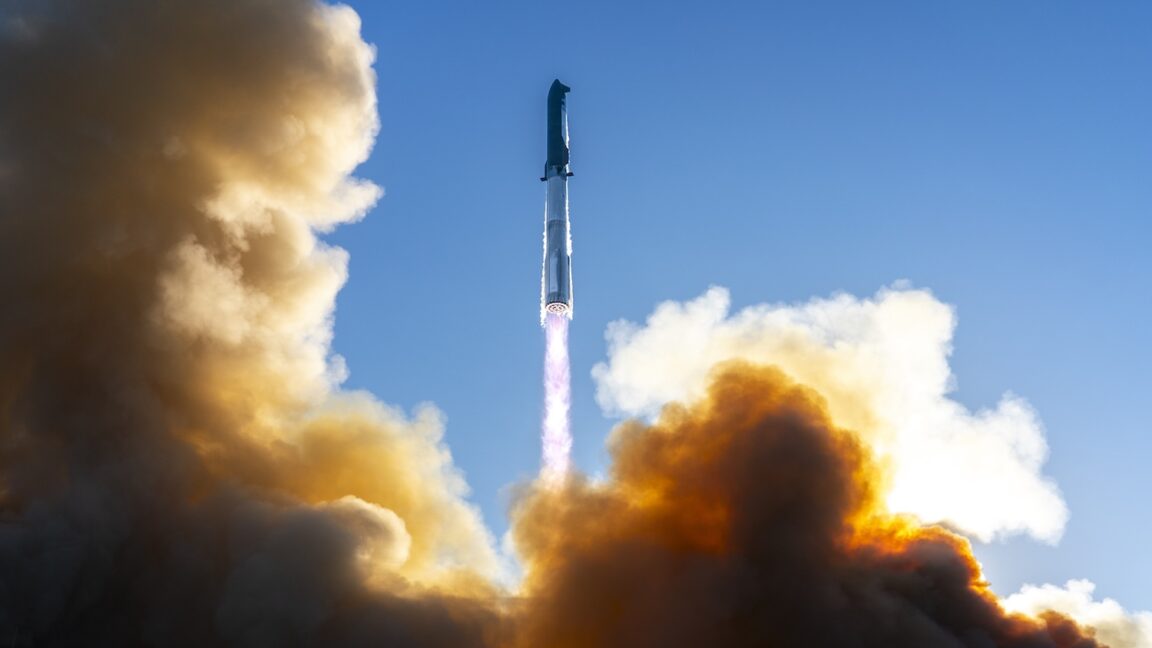
These actions followed pre-established protocols. However, it highlighted the small but non-zero risk of rocket debris falling to Earth after a launch failure. “The potential for a bad day downrange just got real,” Lori Garver, a former NASA deputy administrator, posted on X.

Public safety is not sole mandate of the FAA’s commercial space office. It is also chartered to “encourage, facilitate, and promote commercial space launches and reentries by the private sector,” according to an FAA website. There’s a balance to strike.

Lawmakers last year urged the FAA to speed up its launch approvals, primarily because Starship is central to strategic national objectives. NASA has contracts with SpaceX to develop a variant of Starship to land astronauts on the Moon, and Starship’s unmatched ability to deliver more than 100 tons of cargo to low-Earth orbit is attractive to the Pentagon.

While Musk criticized the FAA in 2024, SpaceX officials in 2023 took a different tone, calling for Congress to increase the budget for the FAA’s Office of Commercial Spaceflight and for the regulator to double the space division’s workforce. This change, SpaceX officials argued, would allow the FAA to more rapidly assess and approve a fast-growing number of commercial launch and reentry applications.

In September, SpaceX released a statement accusing the former administrator of the FAA, Michael Whitaker, of making inaccurate statements about SpaceX to a congressional subcommittee. In a different post on X, Musk directly called for Whitaker’s resignation.

That’s exactly what happened. Whitaker, who took over the FAA’s top job in 2023 under the Biden administration, announced in December he would resign on Inauguration Day. Since the agency’s establishment in 1958, three FAA administrators have similarly resigned when a new administration takes power, but the office has been largely immune from presidential politics in recent decades. Since 1993, FAA administrators have stayed in their post during all presidential transitions.

https://arstechnica.com/space/2025/02/it-seems-the-faa-office-overseeing-spacexs-starship-probe-still-has-some-bite/


Rocket Report: SpaceX tosses away a Falcon 9; a Somalian spaceport?

SpaceX expends a Falcon 9 rocket. On Wednesday, SpaceX launched the SpainSat NG-1 satellite from Kennedy Space Center’s Pad 39A. The Falcon 9 first-stage booster used on this launch saw its 21st and final flight, Florida Today reports. SpaceX said the reason it was not trying to recover the booster was due to the extra power needed to reach the satellite’s intended orbit.

Into the drink … The well-traveled booster had launched a variety of missions during its lifetime: 13 Starlink missions, SES-22, ispace’s HAKUTO-R MISSION 1, Amazonas-6, CRS-27, Bandwagon-1, GSAT-20, and Thuraya-4. The Airbus-built satellite, known as SpainSat NG-1 (New Generation), is the first of two satellites for Hisdesat. It was developed under a partnership with the European Space Agency, making its launch on a Falcon 9 somewhat notable.

India marks first launch of 2025. India conducted its first launch of the year late Tuesday, sending a new-generation navigation satellite toward geostationary orbit, Space News reports. A Geosynchronous Satellite Launch Vehicle Mk II lifted off from Satish Dhawan Space Centre. Aboard was the NVS-02 satellite, sent into geosynchronous transfer orbit. The satellite is the second of five new-generation spacecraft for the Navigation with Indian Constellation.

A busy year planned … The mission was the first of 10 orbital launches planned by India in 2025, which would mark a domestic launch record. Major missions include a joint Earth science mission between NASA and ISRO, named NASA-ISRO Synthetic Aperture Radar, expected to launch around March on a GSLV rocket, and an uncrewed test flight for the Gaganyaan human spaceflight program on a human-rated LVM-3 launcher. The first launch of the Vikram-1 for private company Skyroot Aerospace could also take place this year. (submitted by EllPeaTea)

New Glenn represents a milestone moment for Blue Origin. In a feature, Ars Technica explores what the successful launch of the New Glenn rocket means for Blue Origin. The near-term step is clear: getting better at building engines and rockets and flying New Glenn regularly. In an interview, Blue Origin founder Jeff Bezos sounded a lot like SpaceX founder Elon Musk, who has spoken about “building the machine that builds the machine” over the last decade with respect to both Tesla vehicles and SpaceX rockets. Asked about Blue’s current priorities, Bezos responded, “Rate manufacturing and driving urgency around the machine that makes the machine.”

https://arstechnica.com/space/2025/01/rocket-report-spacex-tosses-away-a-falcon-9-a-somalian-spaceport/


The long-planned return of two astronauts from space is now a political issue

On Thursday NASA astronauts Suni Williams and Butch Wilmore are scheduled to don spacesuits to exit the International Space Station. However, despite a plea from President Trump to bring them home as soon as possible, the pair won’t be coming home just yet. This will be a routine spacewalk outside the space station.

In the meantime, NASA is struggling to contain the fallout from what appears to be a disingenuous political effort by Trump to shame the space agency and Biden administration for the fact that Williams and Wilmore, nearly eight months after they launched into orbit on Boeing’s Starliner spacecraft, are still there.

The brouhaha began on Tuesday evening when SpaceX founder and Trump confidant Elon Musk posted on X that the president had asked SpaceX to bring the two “stranded” astronauts back to Earth. Musk added that SpaceX would do so, and, “Terrible that the Biden administration left them there so long.”

A few hours later, Trump himself weighed in, saying, “I have just asked Elon Musk and @SpaceX to ‘go get’ the 2 brave astronauts who have been virtually abandoned in space by the Biden Administration. They have been waiting for many months on Space Station. Elon will soon be on his way. Hopefully, all will be safe. Good luck.”

This is off-nominal

Now this is all pretty bonkers for a lot of reasons, but here are two of the biggest ones. First, Williams and Wilmore are not stranded. Their ride home, the Crew-9 Dragon spacecraft, has been docked to the station since September. They can come home at any time. In that sense, SpaceX has already “rescued” the two former Starliner astronauts.

Second, the pair was due to come back in late February—mere weeks from now—before an issue with a Crew Dragon spacecraft delayed the launch of the Crew-10 mission. This pushed the Crew-10 launch until late March, and because NASA wants a few days for a handover in orbit, this moved the return of Crew 9—with Williams and Wilmore on board—to early April.

So, to summarize, any talk about needing to “go and get” Williams and Wilmore in space is folderol. NASA had been planning, literally for months, to bring the crew home in February. Then a problem with a SpaceX vehicle delayed that return until April.

https://arstechnica.com/space/2025/01/the-long-planned-return-of-two-astronauts-from-space-is-now-a-political-issue/


Rocket Report: Did China’s reusable rocket work?; DOT may review SpaceX fines

A timely launch for Rocket Lab. A dedicated flight of Rocket Lab’s Electron launcher will soon deploy eight small spacecraft for a German company building a constellation of wildfire-monitoring satellites. Rocket Lab announced the deal Wednesday, saying the mission will launch from the company’s spaceport in New Zealand. The eight satellites are owned by the German startup OroraTech. Rocket Lab said the launch will take place within “just a few weeks,” representing a relatively quick turnaround from contract signing to liftoff. This schedule will allow OroraTech to “meet the season-sensitive requirements of its wildfire-detection mission,” Rocket Lab said.

Infrared eyes … OroraTech’s satellites will host thermal infrared cameras to provide 24/7 monitoring of wildfires globally, supporting better and faster wildfire response to protect forests, people, and infrastructure, according to Rocket Lab. These eight satellites follow the launch of OroraTech’s first three prototype wildfire-detection spacecraft since 2022. The company plans to expand its constellation with up to 100 satellites by 2028. While this launch isn’t directly tied to the ongoing wildfire crisis in Southern California, OroraTech’s mission highlights the role of space-based detection for future firefighters. (submitted by EllPeaTea)

The easiest way to keep up with Eric Berger’s and Stephen Clark’s reporting on all things space is to sign up for our newsletter. We’ll collect their stories and deliver them straight to your inbox.

Sign Me Up!

US green-lights space-related exports to Norway. The United States and Norway have signed an agreement to allow the export of American space hardware to Norway for launches there, Space News reports. The Technology Safeguards Agreement, or TSA, ensures the protection of US space technology exported to Norway. It allows for American satellites and potentially launch vehicles to operate from Andøya Spaceport, located on an island above the Arctic Circle in Norway.

A valuable alliance … There are no US companies with publicly known plans to launch from Andøya, but the US military has touted the value of allies in funding, launching, and operating space-based platforms for communications, navigation, and reconnaissance. This agreement, announced on January 16 in the final days of the Biden administration, follows similar space tech transfer agreements with New Zealand, the United Kingdom, Australia, and Canada. The German rocket startup Isar Aerospace is scheduled to launch its first Spectrum rocket from the Norwegian spaceport as soon as this year. (submitted by EllPeaTea)

https://arstechnica.com/space/2025/01/rocket-report-dot-may-review-spacex-fines-did-chinas-reusable-rocket-work/


Rocket Report: Starship experiences a RUD; Blue Origin nails its debut launch

Seeking to scale up quickly… The launch was carried out using facilities belonging to the Haiyang Eastern spaceport for sea launches. The spaceport plans more than 10 for 2025, having conducted six sea launches in 2024. The launch was China’s second orbital launch attempt of 2025 and the second success in as many tries.

The easiest way to keep up with Eric Berger’s and Stephen Clark’s reporting on all things space is to sign up for our newsletter. We’ll collect their stories and deliver them straight to your inbox.

Sign Me Up!

Utah considering a spaceport. State Sen. Jerry Stevenson has introduced a bill to form a committee that would investigate whether Utah should invest in a spaceport and what benefits it could bring to the state, KUTV Salt Lake City reports. The legislation would provide $500,000 for a committee to study the potential benefits of a launch site. Stevenson said the committee would look into both scientific uses and opportunities to expand Utah’s tourism industry, but questions remain over whether such a taxpayer-funded investment makes financial sense.

Something to build on… When asked how the state would get a return on its investment, Stevenson said the spaceport would align with Utah’s current industries and infrastructure. “We think that this fits very well into what’s going on in the state of Utah and what’s already here and what we can build on,” Stevenson said. Still, critics wondered if the state should focus on space tourism, especially given the potential costs, possibly on the order of hundreds of millions of dollars.

Stoke Space goes nova in fundraising round. The Washington-based launch company announced Wednesday that it had raised $260 million in Series C funding, a significant capital raise at a time when it has become more difficult for some space companies to attract funding, Ars reports. “The market is tough, but I think what we’re doing is poised to go straight to the end state of the industry, and I think investors recognize that,” said Andy Lapsa, Stoke Space’s co-founder and chief executive officer.

Full reuse right out of the gate… By “end state of the industry,” Lapsa means that Stoke is developing a fully reusable medium-lift rocket named Nova. The vehicle’s first stage will land vertically, similar to a Falcon 9 rocket, and the second stage, which has a novel metallic heat shield and engine design, will also land back on Earth. Historically, it is unlikely for a company to move from engine testing to a first orbital launch attempt in the same year, so a Nova debut in 2026 seems more likely. Nevertheless, the new funding from investors signals confidence that Stoke is making credible technical progress on its vehicle development. (submitted by EllPeaTea)

https://arstechnica.com/space/2025/01/rocket-report-starship-experiences-a-rud-blue-origin-nails-its-debut-launch/


Fire destroys Starship on its seventh test flight, raining debris from space

This launch debuted a more advanced, slightly taller version of Starship, known as Version 2 or Block 2, with larger propellant tanks, a new avionics system, and redesigned feed lines flowing methane and liquid oxygen propellants to the ship’s six Raptor engines. SpaceX officials did not say whether any of these changes might have caused the problem on Thursday’s launch.

SpaceX officials have repeatedly and carefully set expectations for each Starship test flight. They routinely refer to the rocket as experimental, and the primary focus of the rocket’s early demo missions is to gather data on the performance of the vehicle. What works, and what doesn’t work?

Still, the outcome of Thursday’s test flight is a clear disappointment for SpaceX. This was the seventh test flight of SpaceX’s enormous rocket and the first time Starship failed to complete its launch sequence since the second flight in November 2023. Until now, SpaceX has made steady progress, and each Starship flight has achieved more milestones than the one before.

On the first flight in April 2023, the rocket lost control a little more than two minutes after liftoff, and the ground-shaking power of the booster’s 33 engines shattered the concrete foundation beneath the launch pad. Seven months later, on Flight 2, the rocket made it eight minutes before failing. On that mission, Starship failed at roughly the same point of its ascent, just before the cutoff of the vehicle’s six methane-fueled Raptor engines.

Back then, a handful of photos and images from the Florida Keys and Puerto Rico showed debris in the sky after Starship activated its self-destruct mechanism due to an onboard fire caused by a dump of liquid oxygen propellant. But that flight occurred in the morning, with bright sunlight along the ship’s flight path.

This time, the ship disintegrated and reentered the atmosphere at dusk, with impeccable lighting conditions accentuating the debris cloud’s appearance. These twilight conditions likely contributed to the plethora of videos posted to social media on Thursday.

Starship and Super Heavy head downrange from SpaceX’s launch site near Brownsville, Texas. Credit: SpaceX

The third Starship test flight last March saw the spacecraft reach its planned trajectory and fly halfway around the world before succumbing to the scorching heat of atmospheric reentry. In June, the fourth test flight ended with controlled splashdowns of the rocket’s Super Heavy booster in the Gulf of Mexico and of Starship in the Indian Ocean.

In October, SpaceX caught the Super Heavy booster with mechanical arms at the launch pad for the first time, proving out the company’s audacious approach to recovering and reusing the rocket. On this fifth test flight, SpaceX modified the ship’s heat shield to better handle the hot temperatures of reentry, and the vehicle again made it to an on-target splashdown in the Indian Ocean.

Most recently, Flight 6 on November 19 demonstrated the ship’s ability to reignite its Raptor engines in space for the first time and again concluded with a bullseye splashdown. But SpaceX aborted an attempt to again catch the booster back at Starbase due to a problem with sensors on the launch pad’s tower.

With Flight 7, SpaceX hoped to test more changes to the heat shield protecting Starship from reentry temperatures up to 2,600° Fahrenheit (1,430° Celsius). Musk has identified the heat shield as one of the most difficult challenges still facing the program. In order for SpaceX to reach its ambition for the ship to become rapidly reusable, with minimal or no refurbishment between flights, the heat shield must be resilient and durable.

https://arstechnica.com/space/2025/01/fire-destroys-starship-on-its-seventh-test-flight-raining-debris-from-space/


Here’s what NASA would like to see SpaceX accomplish with Starship this year

Ars: For the docking system, Orion uses the NASA Docking System, and SpaceX brings its own design to bear on Starship?

Lisa Watson-Morgan: This is something that I think the Human Landing System has done exceptionally well. When we wrote our high-level set of requirements, we also wrote it with a bigger picture in mind—looked into the overall standards of how things are typically done, and we just said it has to be compliant with it. So it’s a docking standard compliance, and SpaceX clearly meets that. They certainly do have the Dragon heritage, of course, with the International Space Station. So, because of that, we have high confidence that they’re all going to work very well. Still, it’s important to go ahead and perform the ground testing and get as much of that out of the way as we can.

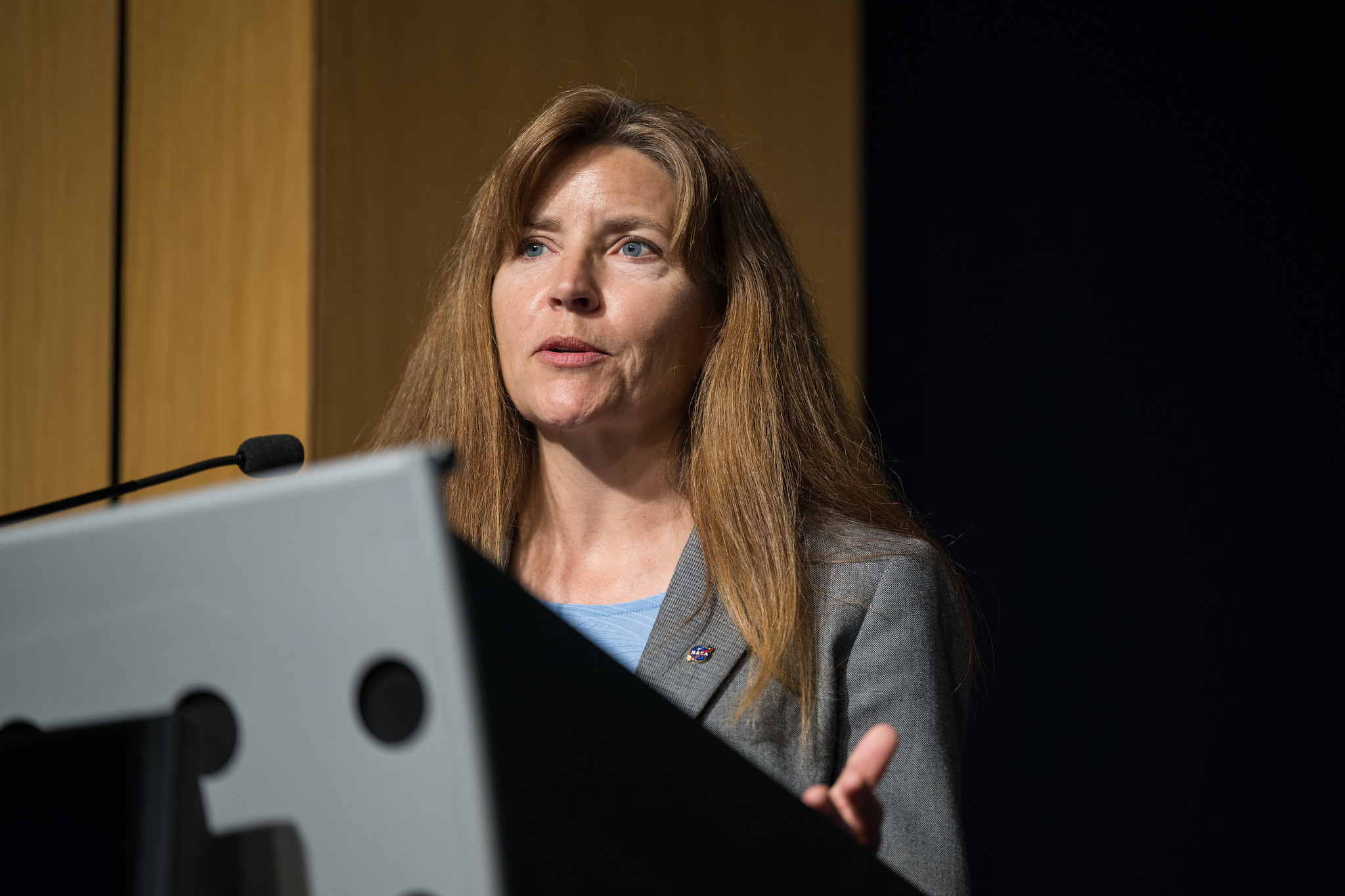
Lisa Watson-Morgan, NASA’s HLS program manager, is based at Marshall Space Flight Center in Huntsville, Alabama. Credit: ASA/Aubrey Gemignani

Ars: How far along is the development and design of the layout of the crew compartment at the top of Starship? Is it far along, or is it still in the conceptual phase? What can you say about that?

Lisa Watson-Morgan: It’s much further along there. We’ve had our environmental control and life support systems, whether it’s carbon dioxide monitoring fans to make sure the air is circulating properly. We’ve been in a lot of work with SpaceX on the temperature. It’s… a large area (for the crew). The seats, making sure that the crew seats and the loads on that are appropriate. For all of that work, as the analysis work has been performed, the NASA team is reviewing it. They had a mock-up, actually, of some of their life support systems even as far back as eight-plus months ago. So there’s been a lot of progress on that.

Ars: Is SpaceX planning to use a touchscreen design for crew displays and controls, like they do with the Dragon spacecraft?

Lisa Watson-Morgan: We’re in talks about that, about what would be the best approach for the crew for the dynamic environment of landing.

Ars: I can imagine it is a pretty dynamic environment with those Raptor engines firing. It’s almost like a launch in reverse.

Lisa Watson-Morgan: Right. Those are some of the topics that get discussed in the crew office hours. That’s why it’s good to have the crew interacting directly, in addition to the different discipline leads, whether it’s structural, mechanical, propulsion, to have all those folks talking guidance and having control to say, “OK, well, when the system does this, here’s the mode we expect to see. Here’s the impact on the crew. And is this condition, or is the option space that we have on the table, appropriate for the next step, with respect to the displays.”

https://arstechnica.com/space/2025/01/heres-what-nasa-would-like-to-see-spacex-accomplish-with-starship-this-year/


Two lunar landers are on the way to the Moon after SpaceX’s double moonshot

Julianna Scheiman, director of NASA science missions for SpaceX, said it made sense to pair the Firefly and ispace missions on the same Falcon 9 rocket.

“When we have two missions that can each go to the Moon on the same launch, that is something that we obviously want to take advantage of,” Scheiman said. “So when we found a solution for the Firefly and ispace missions to fly together on the same Falcon 9, it was a no-brainer to put them together.”

SpaceX stacked the two landers, one on top of the other, inside the Falcon 9’s payload fairing. Firefly’s lander, the larger of the two spacecraft, rode on top of the stack and deployed from the rocket first. The Resilience lander from ispace launched in the lower position, cocooned inside a specially designed canister. Once Firefly’s lander separated from the Falcon 9, the rocket jettisoned the canister, performed a brief engine firing to maneuver into a slightly different orbit, then released ispace’s lander.

This dual launch arrangement resulted in a lower launch price for Firefly and ispace, according to Scheiman.

“At SpaceX, we are really interested in and invested in lowering the cost of launch for everybody,” she said. “So that’s something we’re really proud of.”

The Resilience lunar lander is pictured at ispace’s facility in Japan last year. The company’s small Tenacious rover is visible on the upper left part of the spacecraft. credit: ispace Credit: ispace

The Blue Ghost and Resilience landers will take different paths toward the Moon.

Firefly’s Blue Ghost will spend about 25 days in Earth orbit, then four days in transit to the Moon. After Blue Ghost enters lunar orbit, Firefly’s ground team will verify the readiness of the lander’s propulsion and navigation systems and execute several thruster burns to set up for landing.

Blue Ghost’s final descent to the Moon is tentatively scheduled for March 2. The target landing site is in Mare Crisium, an ancient 350-mile-wide (560-kilometer) impact basin in the northeast part of the near side of the Moon.

After touchdown, Blue Ghost will operate for about 14 days (one entire lunar day). The instruments aboard Firefly’s lander include a subsurface drill, an X-ray imager, and an experimental electrodynamic dust shield to test methods of repelling troublesome lunar dust from accumulating on sensitive spacecraft components.

The Resilience lander from ispace will take four to five months to reach the Moon. It carries several intriguing tech demo experiments, including a water electrolyzer provided by a Japanese company named Takasago Thermal Engineering. This demonstration will test equipment that future lunar missions could use to convert the Moon’s water ice resources into electricity and rocket fuel.

The lander will also deploy a “micro-rover” named Tenacious, developed by an ispace subsidiary in Luxembourg. The Tenacious rover will attempt to scoop up lunar soil and capture high-definition imagery of the Moon.

Ron Garan, CEO of ispace’s US-based subsidiary, told Ars that this mission is “pivotal” for the company.

“We were not fully successful on our first mission,” Garan said in an interview. “It was an amazing accomplishment, even though we didn’t have a soft landing… Although the hardware worked flawlessly, exactly as it was supposed to, we did have some lessons learned in the software department. The fixes to prevent what happened on the first mission from happening on the second mission were fairly straightforward, so that boosts our confidence.”

The ispace subsidiary led by Garan, a former NASA astronaut, is based in Colorado. While the Resilience lander launched Wednesday is not part of the CLPS program, the company will build an upgraded lander for a future CLPS mission for NASA, led by Draper Laboratory.

“I think the fact that we have two lunar landers on the same rocket for the first time in history is pretty substantial,” Garan said. I think we all are rooting for each other.”

Investors need to see more successes with commercial lunar landers to fully realize the market’s potential, Garan said.

“That market, right now, is very nascent. It’s very, very immature. And one of the reasons for that is that it’s very difficult for companies that are contemplating making investments on equipment, experiments, etc., to put on the lunar surface and lunar orbit,” Garan said. “It’s very difficult to make those investments, especially if they’re long-term investments, because there really hasn’t been a proof of concept yet.”

“So every time we have a success, that makes it more likely that these companies that will serve as the foundation of a commercial lunar market movement will be able to make those investments,” Garan said. “Conversely, every time we have a failure, the opposite happens.”

https://arstechnica.com/science/2025/01/two-lunar-landers-are-on-the-way-to-the-moon-after-spacexs-double-moonshot/


Firm developing a fully reusable rocket raises a quarter of a billion dollars

The company continues to make technical progress, Lapsa said.

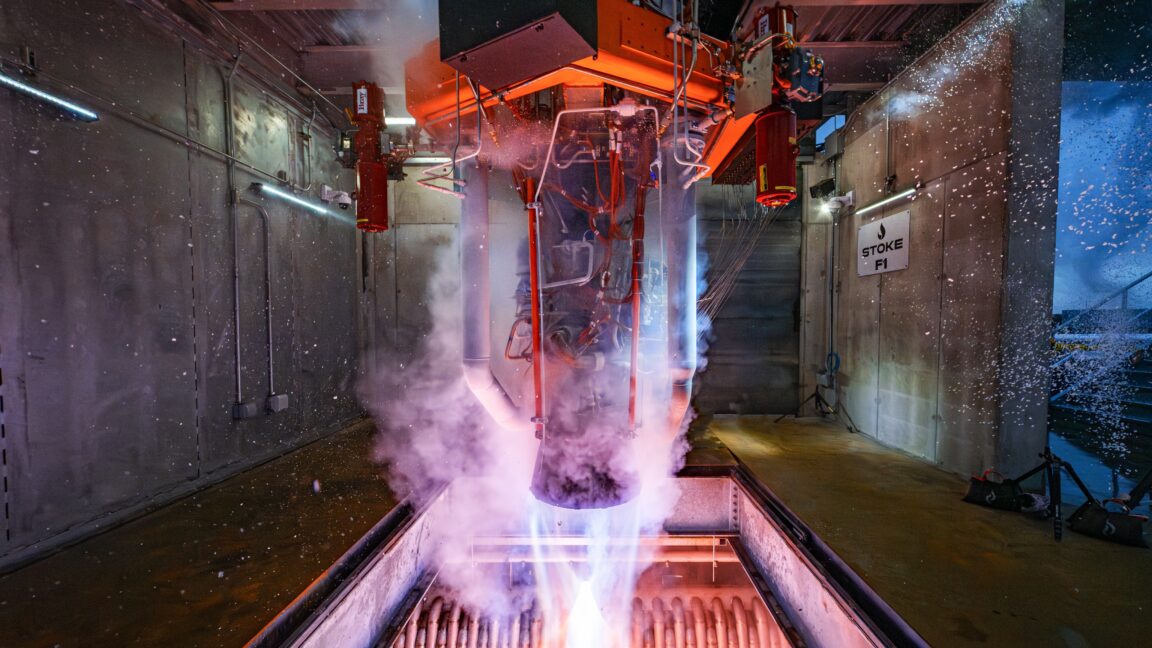
A few weeks ago, Stoke successfully tested the Nova rocket’s main engine, Zenith, in a vertical position. Lapsa said the company will probably make one more iterative block change on the Zenith engine before it gets into a “nice, tight” flight configuration. Similarly, the second stage engine has gone through a design upgrade to get it ready for flight. After the engines are complete, the company will assemble a flight vehicle and put it through the final phases of testing.

Pads and permitting

At the same time, Stoke is working to complete construction at Launch Complex 14 at Cape Canaveral Space Force Station in Florida and finalize environmental permitting for launches from there.

“We’re pushing really hard to have the pad ready, and it will be activated well before the end of the year,” Lapsa said. “And the vehicle will be right there with it.”

Historically, it’s unlikely for a company to move from engine testing to a first orbital launch attempt in the same year, so a Nova debut in 2026 seems more likely. Nevertheless, the new funding from investors signals confidence that Stoke is making credible technical progress on its vehicle development.

The space capital market has changed significantly since Stoke was founded by Lapsa and Tom Feldman in 2020. At the time, there were dozens of US launch companies at work on small- and medium-lift vehicles. Today, arguably, there are just half a dozen credible US-based entities developing medium-lift rockets.

“It’s a very different conversation with investors than it was five years ago,” Lapsa said.

The winnowing of competitors is also a stark reminder of both the technical and financial challenges of operating a launch company.

https://arstechnica.com/space/2025/01/stoke-space-raises-a-ton-of-money-as-it-moves-closer-to-debut-launch/