NASA believes it understands why Ingenuity crashed on Mars

Eleven months after the Ingenuity helicopter made its final flight on Mars, engineers and scientists at NASA and a private company that helped build the flying vehicle said they have identified what probably caused it to crash on the surface of Mars.

In short, the helicopter’s on-board navigation sensors were unable to discern enough features in the relatively smooth surface of Mars to determine its position, so when it touched down, it did so moving horizontally. This caused the vehicle to tumble, snapping off all four of the helicopter’s blades.

Delving into the root cause

It is not easy to conduct a forensic analysis like this on Mars, which is typically about 100 million miles from Earth. Ingenuity carried no black box on board, so investigators have had to piece together their findings from limited data and imagery.

“While multiple scenarios are viable with the available data, we have one we believe is most likely: Lack of surface texture gave the navigation system too little information to work with,” said Ingenuity’s first pilot, Håvard Grip of NASA’s Jet Propulsion Laboratory, in a news release.

A team from NASA and a company that specializes in unmanned aerial vehicles, AeroVironment, started by looking at the terrain where Ingenuity was operating over during its 72nd flight, on January 18 of this year. The helicopter’s navigation system tracked visual features on the surface using a downward-looking camera. During its initial flights, Ingenuity was able to discern pebbles and other features to determine its position. But nearly three years later, Ingenuity was flying in a region of Jezero Crater filled with steep, relatively featureless sand ripples.

https://arstechnica.com/space/2024/12/nasa-believes-it-understands-why-ingenuity-crashed-on-mars/


In a not-so-subtle signal to regulators, Blue Origin says New Glenn is ready

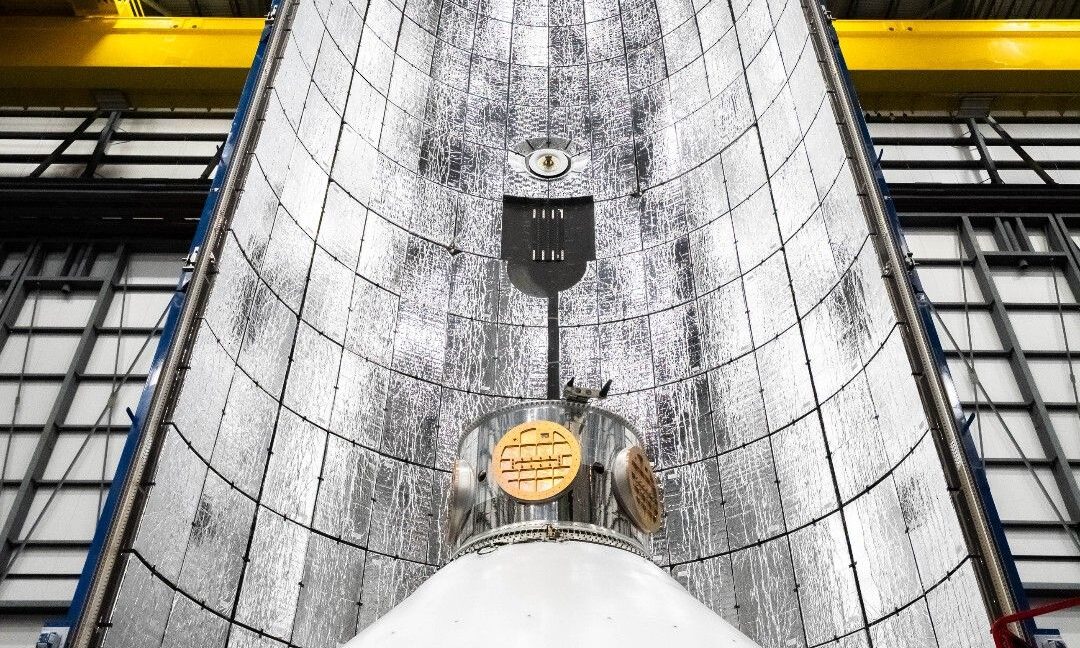
Blue Origin said Tuesday that the test payload for the first launch of its new rocket, New Glenn, is ready for liftoff. The company published an image of the “Blue Ring” pathfinder nestled up against one half of the rocket’s payload fairing.

“There is a growing demand to quickly move and position equipment and infrastructure in multiple orbits,” the company’s chief executive, Dave Limp, said on LinkedIn. “Blue Ring has advanced propulsion and communication capabilities for government and commercial customers to handle these maneuvers precisely and efficiently.”

This week’s announcement—historically Blue Origin has been tight-lipped about new products, but is opening up more as it nears the debut of its flagship New Glenn rocket—appears to serve a couple of purposes.

All Blue wants for Christmas is…

First of all, the relatively small payload contrasted with the size of the payload fairing highlights the greater volume the rocket offers over most conventional boosters. New Glenn’s payload fairing is 7 meters (23 feet) in diameter as opposed to the more conventional 5 meters (16.4 feet). It looks roomy inside.

Additionally, the company appears to be publicly signaling the Federal Aviation Administration and other regulatory agencies that it believes New Glenn is ready to fly, pending approval to conduct a hot fire test at Launch Complex-36, and then for a liftoff from Florida. This is a not-so-subtle message to regulators to please hurry up and complete the paperwork necessary for launch activities. It is not clear what is holding up the hot-fire and launch approval in this case, but it is often environmental issues or certification of a flight termination system.

Blue Origin’s release on Tuesday was carefully worded. The headline said New Glenn was “on track” for a launch this year and stated that the Blue Ring payload is “ready” for a launch this year. As yet there is no notional or public launch date. The hot-fire test has been delayed multiple times since the company put the rocket on its launch pad on Nov. 23. It had been targeting November for the test, and more recently, this past weekend.

After years of delays for the rocket, originally due to debut in 2020, Blue Origin founder Jeff Bezos hired a new chief executive to run the company a little more than a year ago. Limp, an executive from Amazon, was given the mandate to change Blue Origin’s slower-moving culture to be more nimble and urgent and was told to launch New Glenn by the end of 2024.

https://arstechnica.com/space/2024/12/intrigue-swirls-as-blue-origin-races-toward-year-end-deadline-for-new-glenn/


After critics decry Orion heat shield decision, NASA reviewer says agency is correct

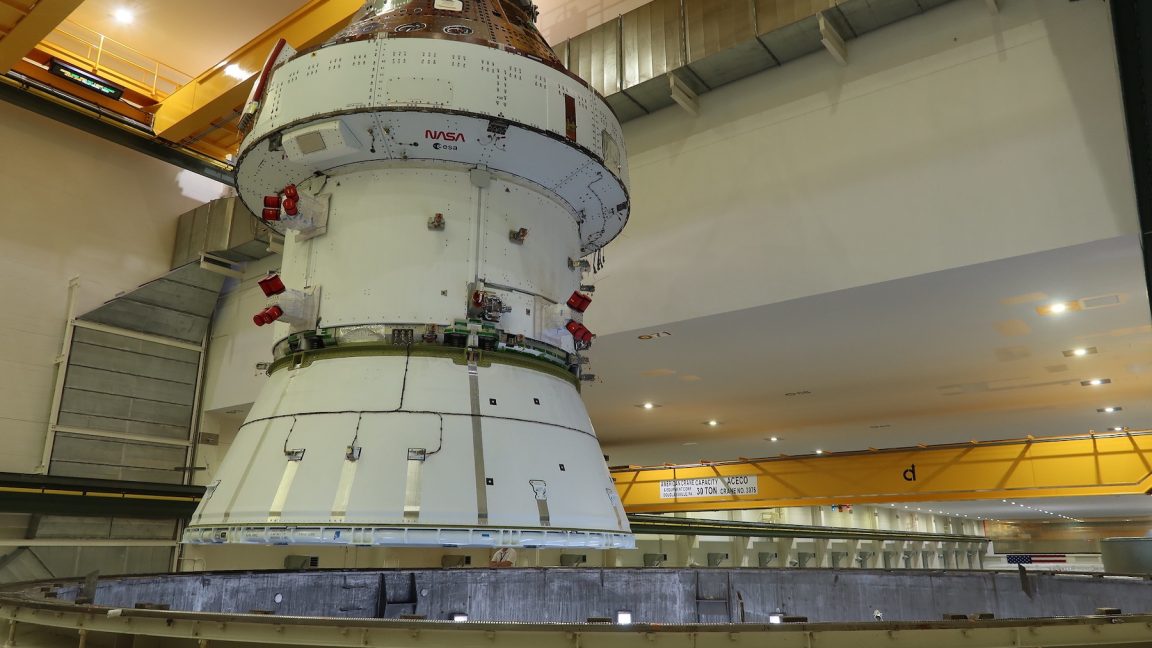
“Every one of our conclusions, every one of our recommendations, was unanimously agreed to by our team,” Hill said. “We went through a lot of effort, arguing sentence by sentence, to make sure the entire team agreed. To get there we definitely had some robust and energetic discussions.”

Hill did acknowledge that, at the outset of the review team’s discussions, two people were opposed to NASA’s plan to fly the heat shield as is. “There was, early on, definitely a difference of opinion with a couple of people who felt strongly that Orion’s heat shield was not good enough to fly as built,” he said.

However, Hill said the IRT was won over by the depth of NASA’s testing and the openness of agency engineers who worked with them. He singled out Luis Saucedo, a NASA engineer at NASA’s Johnson Space Center who led the agency’s internal char loss investigation.

“The work that was done by NASA, it was nothing short of eye-watering, it was incredible,” Hill said.

At the base of Orion, which has a titanium shell, there are 186 blocks of a material called Avcoat individually attached to provide a protective layer that allows the spacecraft to survive the heating of atmospheric reentry. Returning from the Moon, Orion encounters temperatures of up to 5,000° Fahrenheit (2,760° Celsius). A char layer that builds up on the outer skin of the Avcoat material is supposed to ablate, or erode, in a predictable manner during reentry. Instead, during Artemis I, fragments fell off the heat shield and left cavities in the Avcoat material.

Work by Saucedo and others, including substantial testing in ground facilities, wind tunnels, and high-temperature arc jet chambers, allowed engineers to find the root cause of gases getting trapped in the heat shield and leading to cracking. Hill said his team was convinced that NASA successfully recreated the conditions observed during reentry and were able to replicate during testing the Avcoat cracking that occurred during Artemis I.

https://arstechnica.com/space/2024/12/former-flight-director-who-reviewed-orion-heat-shield-data-says-there-was-no-dissent/


How did the CEO of an online payments firm become the nominee to lead NASA?

So how would NASA astronauts get to the Moon without the SLS rocket? Nothing is final, and the trade space is open. One possible scenario being discussed for future Artemis missions is to launch the Orion spacecraft on a New Glenn rocket into low-Earth orbit. There, it could dock with a Centaur upper stage that would launch on a Vulcan rocket. This Centaur stage would then boost Orion toward lunar orbit.

NASA’s Space Launch System rocket is seen on the launch pad at Kennedy Space Center in April 2022.

Credit: Trevor Mahlmann

NASA’s Space Launch System rocket is seen on the launch pad at Kennedy Space Center in April 2022. Credit: Trevor Mahlmann

Such a scenario is elegant because it uses rockets that would cost a fraction of the SLS and also includes all key contractors currently involved in the Artemis program, with the exception of Boeing, which would lose out financially. (Northrop Grumman will still make solids for Vulcan, and Aerojet Rocketdyne will make the RL-10 upper stage engines for that rocket.)

As part of the Artemis program, NASA is competing with China to not only launch astronauts to the south pole of the Moon but also to develop a sustainable base of operations there. While there is considerable interest in Mars, sources told Ars that the focus of the space agency is likely to remain on a program that goes to the Moon first and then develops plans for Mars.

This competition is not one between Elon Musk, who founded SpaceX, and Jeff Bezos, who founded Blue Origin. Rather, they are both seen as players on the US team. The Trump administration seems to view entrepreneurial spirit as the key advantage the United States has over China in its competition with China. This op-ed in Space News offers a good overview of this sentiment.

So whither NASA? Under the Trump administration, NASA’s role is likely to focus on stimulating the efforts by commercial space entrepreneurs. Isaacman’s marching orders for NASA will almost certainly be two words: results and speed. NASA, they believe, should transition to become more like its roots in the National Advisory Committee for Aeronautics, which undertook, promoted, and institutionalized aeronautical research—but now for space.

It is not easy to turn a big bureaucracy, and there will undoubtedly be friction and pain points. But the opportunity here is enticing: NASA should not be competing with things that private industry is already doing better, such as launching big rockets. Rather, it should find difficult research and development projects at the edge of the possible. This will certainly be Isaacman’s most challenging mission yet.

https://arstechnica.com/space/2024/12/how-did-the-ceo-of-an-online-payments-firm-become-the-nominee-to-lead-nasa/


Trump nominates Jared Isaacman to become the next NASA administrator

President-elect Donald Trump announced Wednesday he has selected Jared Isaacman, a billionaire businessman and space enthusiast who twice flew to orbit with SpaceX, to become the next NASA administrator.

“I am delighted to nominate Jared Isaacman, an accomplished business leader, philanthropist, pilot, and astronaut, as Administrator of the National Aeronautics and Space Administration (NASA),” Trump posted on his social media platform, Truth Social. “Jared will drive NASA’s mission of discovery and inspiration, paving the way for groundbreaking achievements in space science, technology, and exploration.”

In a post on X, Isaacman said he was “honored” to receive Trump’s nomination.

“Having been fortunate to see our amazing planet from space, I am passionate about America leading the most incredible adventure in human history,” Isaacman wrote. “On my last mission to space, my crew and I traveled farther from Earth than anyone in over half a century. I can confidently say this second space age has only just begun.”

Top officials who served at NASA under President Trump and President Obama endorsed Isaacman as the next NASA boss.

“Jared Isaacman will be an outstanding NASA Administrator and leader of the NASA family,” said Jim Bridenstine, who led NASA as administrator during Trump’s first term in the White House. “Jared’s vision for pushing boundaries, paired with his proven track record of success in private industry, positions him as an ideal candidate to lead NASA into a bold new era of exploration and discovery. I urge the Senate to swiftly confirm him.”

Lori Garver, NASA’s deputy administrator during the Obama administration, wrote on X that Isaacman’s nomination was “terrific news,” adding that “he has the opportunity to build on NASA’s amazing accomplishments to pave our way to an even brighter future.”

Isaacman, 41, is the founder and CEO of Shift4, a mobile payment processing platform, and co-founded Draken International, which owns a fleet of retired fighter jets to pose as adversaries for military air combat training. If the Senate confirms his nomination, Isaacman would become the 15th NASA administrator, and the fourth who has flown in space.

https://arstechnica.com/space/2024/12/jared-isaacman-entrepreneur-and-private-astronaut-is-trumps-choice-to-lead-nasa/


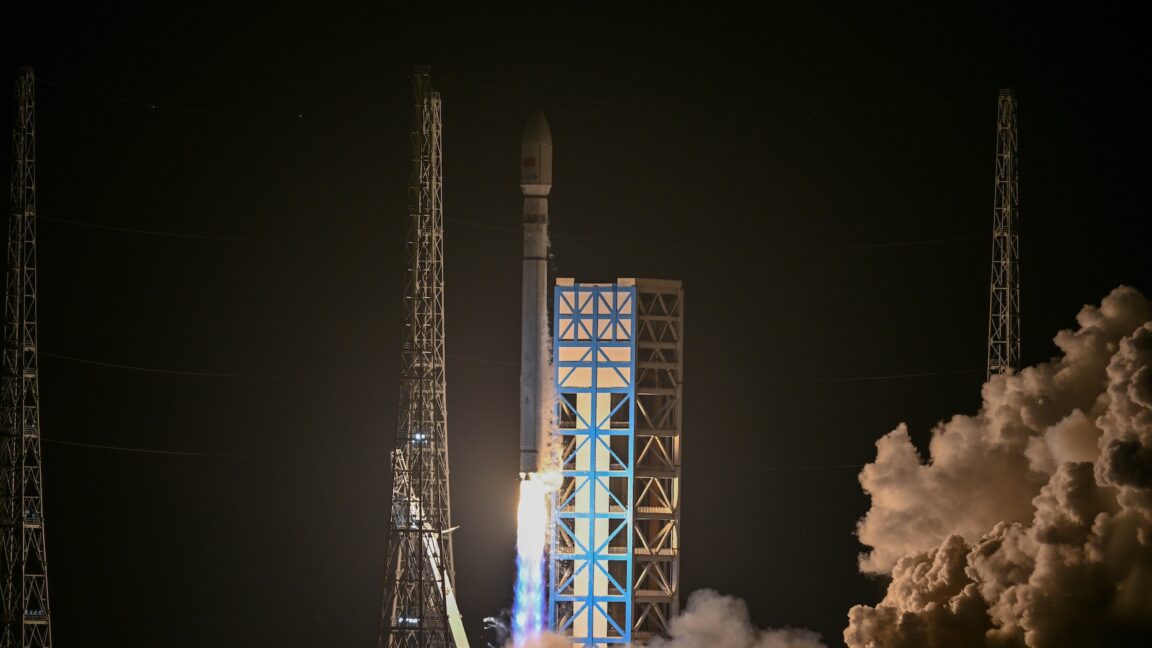
Over the weekend, China debuted a new rocket on the nation’s path to the Moon

These startups operate with the blessing of China’s government and, in many cases, got their start by utilizing surplus military equipment and investment from Chinese local or provincial governments. However, the Chinese Communist Party has allowed them to raise capital from private sources, and they operate on a commercial basis, almost exclusively to serve domestic Chinese markets.

In some cases, these launch startups compete for commercial contracts directly with the government-backed Long March rocket family. The Long March 12 could be in the mix for launching large batches of spacecraft for China’s planned satellite Internet networks.

Some of these launch companies are working on reusable rockets similar in appearance to SpaceX’s Falcon 9. All of these rockets, government and commercial, are part of an ecosystem of Chinese launchers tasked with hauling military and commercial satellites into orbit.

The Long March 12 launch Saturday was China’s 58th orbital launch attempt of 2024, and no single subvariant of a Chinese rocket has flown more than seven times this year. This is in sharp contrast to the United States, which has logged 142 orbital launch attempts so far this year, 119 of them by SpaceX’s Falcon 9 or Falcon Heavy rockets.

There are around a dozen US orbital-class launch vehicle types you might call operational. But a few of these, such as Northrop Grumman’s Pegasus XL and Minotaur, and NASA’s Space Launch System, haven’t flown for several years.

SpaceX’s Falcon 9 is now the dominant leader in the US launch industry. Most of the Falcon 9 launches are filled to capacity with SpaceX’s own Starlink Internet satellites, but many missions fly with their payload fairings only partially full. Still, the Falcon 9 is more affordable on a per-kilogram basis than any other US rocket.

In China, on the other hand, none of the commercial launch startups have emerged as a clear leader. When that happens, if China allows the market to function in a truly commercial manner, some of these Chinese rocket companies will likely fold.

However, China’s government has a strategic interest in maintaining a portfolio of rockets and launch sites, same as the US government. For example, Chinese officials said the new launch site at Wenchang, where the Long March 12 took off from over the weekend, can accommodate 10 or more different types of rockets.

https://arstechnica.com/space/2024/12/you-can-add-another-new-rocket-to-chinas-growing-stable-of-launch-vehicles/


Rocket Report: A good week for Blue Origin; Italy wants its own launch capability

NASA taps Falcon Heavy for another big launch. A little more than a month after SpaceX launched NASA’s flagship Europa Clipper mission on a Falcon Heavy rocket, the space agency announced its next big interplanetary probe will also launch on a Falcon Heavy, Ars reports. What’s more, the Dragonfly mission the Falcon Heavy will launch in 2028 is powered by a plutonium power source. This will be the first time SpaceX launches a rocket with nuclear materials onboard, requiring an additional layer of safety certification by NASA. The agency’s most recent nuclear-powered spacecraft have all launched on United Launch Alliance Atlas V rockets, which are nearing retirement.

The details … Dragonfly is one of the most exciting robotic missions NASA has ever developed. The mission is to send an automated rotorcraft to explore Saturn’s largest moon, Titan, where Dragonfly will soar through a soupy atmosphere in search of organic molecules, the building blocks of life. It’s a hefty vehicle, about the size of a compact car, and much larger than NASA’s Ingenuity Mars helicopter. The launch period opens July 5, 2028, to allow Dragonfly to reach Titan in 2034. NASA is paying SpaceX $256.6 million to launch the mission on a Falcon Heavy. (submitted by Ken the Bin)

New Glenn is back on the pad. Blue Origin has raised its fully stacked New Glenn rocket on the launch pad at Cape Canaveral Space Force Station ahead of pre-launch testing, Florida Today reports. The last time this new 322-foot-tall (98-meter) rocket was visible to the public eye was in March. Since then, Blue Origin has been preparing the rocket for its inaugural launch, which could yet happen before the end of the year. Blue Origin has not announced a target launch date.

But first, more tests … Blue Origin erected the New Glenn rocket vertical on the launch pad earlier this year for ground tests, but this is the first time a flight-ready (or close to it) New Glenn has been spotted on the pad. This time, the first stage booster has its full complement of seven methane-fueled BE-4 engines. Before the first flight, Blue Origin plans to test-fire the seven BE-4 engines on the pad and conduct one or more propellant loading tests to exercise the launch team, the rocket, and ground systems before launch day.

https://arstechnica.com/space/2024/11/rocket-report-a-good-week-for-blue-origin-italy-wants-its-own-launch-capability/


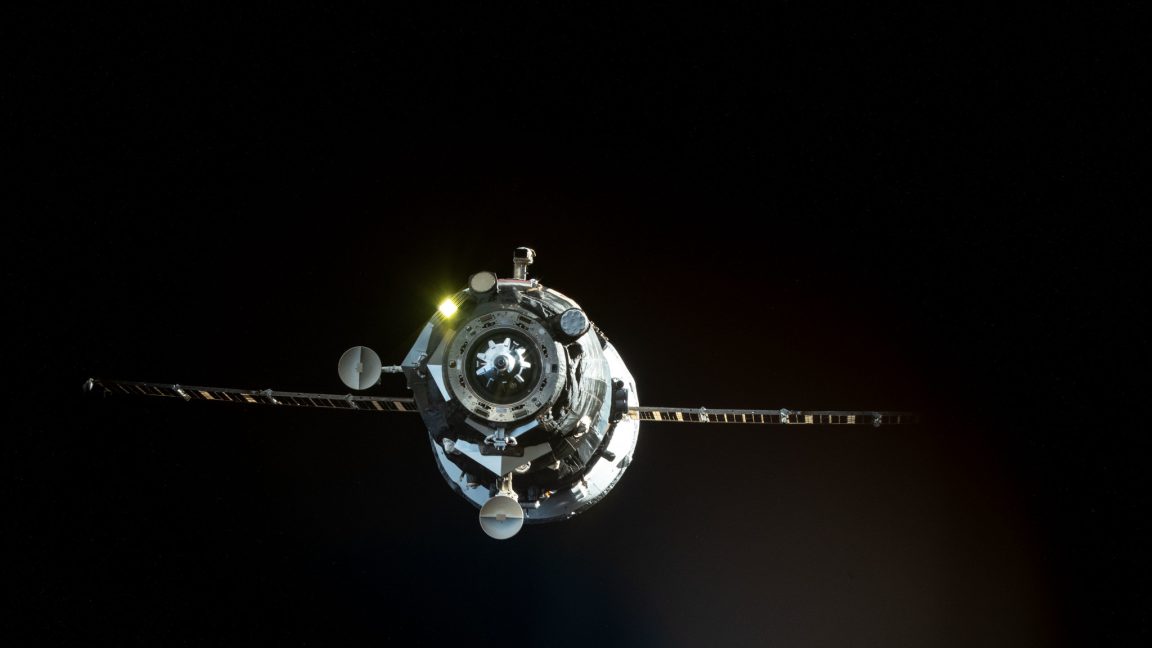
After Russian ship docks to space station, astronauts report a foul smell

Russian space program faces ongoing challenges

Zak reported that the cosmonauts aboard the Russian segment of the station donned protective equipment, and activated an extra air-scrubbing system aboard their side of the facility. On the US segment of the station, NASA astronaut Don Pettit said he smelled something akin to “spray paint.”

As of Sunday afternoon, NASA said there were no concerns for the crew, and that astronauts were working to open the hatch between the Poisk module and the Progress spacecraft. Attached to the space station in 2009, Poisk is a small element that connects to one of four docking ports on the Russian segment of the station.

It was not immediately clear what caused the foul odor to emanate from the Progress vehicle, however previous Russian vehicles have had leaks while in space. Most recently, in February 2023, a Progress vehicle attached to the station lost pressurization in its cooling system.

Facing financial and staffing pressures due to the ongoing Russian war against Ukraine, the main Russian space corporation, Roscosmos, has faced a series of technical problems as it has sought to fly people and supplies to the International Space Station in recent years.

https://arstechnica.com/space/2024/11/after-russian-ship-docks-to-space-station-astronauts-report-a-foul-smell/


A former Orion engineer has surprisingly credible plans to fly European astronauts

She found herself wanting to build something more modern. Looking across the Atlantic, she drew inspiration from what SpaceX was doing with its reusable Falcon 9 rocket. She watched humans launch into space aboard Crew Dragon and saw that same vehicle fly again and again. “I have a huge admiration for what SpaceX has done,” she said.

Huby also saw opportunity in that company’s success. SpaceX is the only provider of crew transportation in the Western world. It’s likely that Boeing’s Starliner spacecraft will never become a serious competitor. India’s human spaceflight program is making some progress, but it’s unclear whether the Gaganyaan vehicle will serve non-Indian customers.

The opportunity she saw was to provide an alternative to SpaceX based in Europe. This would yield 100 percent of the market in Europe and offer an option to countries like Saudi Arabia, the United Arab Emirates, Australia, and other nations interested in going to space.

“I know it’s super hard, and I know it was crazy,” Huby said. “But I wanted to try.”

Starting small

She founded The Exploration Company in August 2021 with $50,000 in the bank and a small team of four people. Three years later, the company has 200 employees and recently announced that it had raised $160 million in Series B funding. It marked the first time that two European sovereign funds, French Tech and Germany-based DTCF, invested together. The news even scored a congratulatory post on LinkedIn from French President Emmanuel Macron, who wrote, “The history of space continues to be written in Europeans.”

To date, then, Huby has raised nearly $230 million. Her company has already flown a mission, the “Bikini” reentry demonstrator, on the debut flight of the Ariane 6 rocket this last summer. The small capsule was intended to demonstrate the company’s reentry technology. Unfortunately, the rocket’s upper stage failed on its deorbit burn, so the Bikini capsule remains stuck in space.

Still, the company is already hard at work on a second demonstration vehicle, about 2.5 meters in diameter, that will have more than a dozen customers on board. The spacecraft for this demonstration flight, named Mission Possible, is fully assembled, Huby said, and it will launch on SpaceX’s Transporter 14 mission next summer, likely in July. This mission was developed in 2.5 years at a cost of $20 million, plus $10 million for the launch.

https://arstechnica.com/space/2024/11/how-real-is-this-european-space-startup-that-aims-to-launch-astronauts/


Russian ballistic missile attack on Ukraine portends new era of warfare

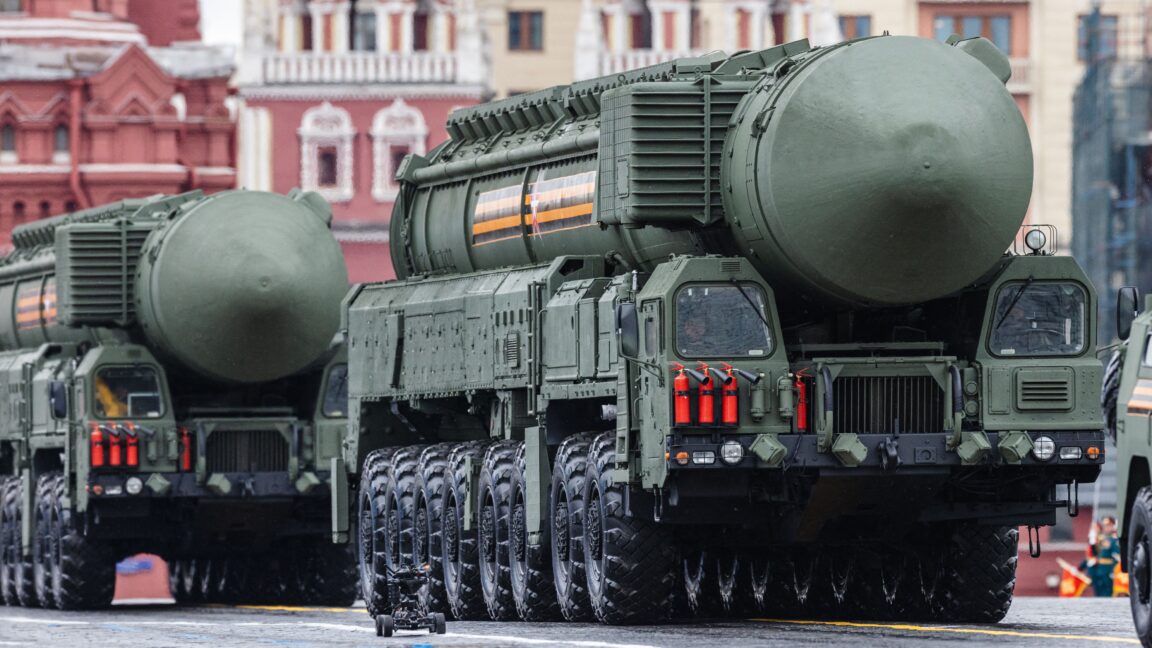
The Oreshnik missiles strike their targets at speeds of up to Mach 10, or 2.5 to 3 kilometers per second, Putin said. “The existing air defense systems around the world, including those being developed by the US in Europe, are unable to intercept such missiles.”

A global war?

In perhaps the most chilling part of his remarks, Putin said the conflict in Ukraine is “taking on global dimensions” and said Russia is entitled to use missiles against Western countries supplying weapons for Ukraine to use against Russian targets.

“In the event of escalation, we will respond decisively and in kind,” Putin said. “I advise the ruling elites of those countries planning to use their military forces against Russia to seriously consider this.”

The change in nuclear doctrine authorized by Putin earlier this week also lowers the threshold for Russia’s use of nuclear weapons to counter a conventional attack that threatens Russian “territorial integrity.”

This seems to have already happened. Ukraine launched an offensive into Russia’s Kursk region in August, taking control of more than 1,000 square kilometers of Russian land. Russian forces, assisted by North Korean troops, are staging a counteroffensive to try to retake the territory.

Singh called Russia’s invitation of North Korean troops “escalatory” and said Putin could “choose to end this war today.”

US officials say Russian forces are suffering some 1,200 deaths or injuries per day in the war. In September, The Wall Street Journal reported that US intelligence sources estimated that a million Ukrainians and Russians had been killed or wounded in the war.

The UN Human Rights Office most recently reported that 11,973 civilians have been killed, including 622 children, since the start of the full-scale Russian invasion in February 2022.

“We warned Russia back in 2022 not to do this, and they did it anyways, so there are consequences for that,” Singh said. “But we don’t want to see this escalate into a wider regional conflict. We don’t seek war with Russia.”

https://arstechnica.com/science/2024/11/russian-ballistic-missile-attack-on-ukraine-portends-new-era-of-warfare/