Here is NASA’s plan for nuking Gateway and sending it to Mars

In addition to efficiency, a nuclear-electric propulsion system has the benefit of using conventional plasma thrusters. But instead of using solar power to energize the thrusters’ xenon fuel, SR-1 will use electricity generated from a nuclear reactor.

“Our nuclear program, SR-1, is not about going and lobbying for billions of dollars to undertake a brand-new mission,” Isaacman said. “Honestly, we haven’t won the right to be able to do that after $20 billion worth of failed programs over time. This is why we’re taking hardware that we already have, a reactor that’s mostly built, fuel that’s mostly paid for over time.”

Gateway’s Power and Propulsion Element, seen here under construction last year, will form the centerpiece of the SR-1 Freedom mission.

Credit: Lanteris Space Systems

Gateway’s Power and Propulsion Element, seen here under construction last year, will form the centerpiece of the SR-1 Freedom mission. Credit: Lanteris Space Systems

NASA officials did not disclose an estimated cost for the SR-1 mission.

After proving nuclear propulsion works, “then you can come back and maybe ask for more [funding] in the future when you show that it can be done,” Isaacman said.

“SR-1 Freedom primarily has that one new system, the reactor, on a spacecraft bus that already exists,” Sinacore said. “The timeline will match the need with the next Mars launch window in December 2028. Orbital mechanics does not negotiate, and the scope must bend around this deadline.”

There are still some hurdles that won’t be easy to jump. Readying any large space mission, especially one as novel as a nuclear propulsion demo, for launch in less than three years will require sharp focus, resistance to mission creep, and near-perfect execution. Sinacore laid out an ambitious timeline for SR-1, with mission design complete by June and large-scale assembly beginning at the start of 2028. If the mission misses a launch opportunity in late 2028, the next Earth-Mars alignment won’t happen until early 2031.

“We are not trying to do everything,” Sinacore said. “We are trying to do the hard thing, which is operate a coupled nuclear reactor, power conversion, and electric propulsion thruster system beyond Earth orbit for the first time ever.”

Although NASA will be the “prime integrator” for SR-1, actually launching radioactive fuel into space requires input from multiple federal agencies, including the Department of Energy. Any rocket selected to launch a nuclear-powered mission must undergo a special certification. SpaceX’s Falcon Heavy, which NASA originally booked to launch the Gateway core module, is undergoing a nuclear certification to launch NASA’s Dragonfly mission to Saturn’s moon Titan.

https://arstechnica.com/space/2026/03/here-is-nasas-plan-for-nuking-gateway-and-sending-it-to-mars/


We got an audience with the “Lunar Viceroy” to talk how NASA will build a Moon base

At the end of a long day on Tuesday, NASA Administrator Jared Isaacman looked down at a table littered with microphones and jokingly referred to the space agency’s new Moon base manager, Carlos Garcia-Galan, as the “Lunar Viceroy.” It was a bit of humor, but it also seemed to represent affection from Isaacman for a long-time NASA employee so willingly taking on a major new challenge.

Garcia-Galan was, in many ways, the emerging star at the daylong Ignition event in Washington, DC. Heretofore he has largely been an anonymous engineer at NASA who has now been thrust into a very public role of leading the agency’s ambitious Moon base initiative. (His official title, by the way, is program executive.)

Ars had a chance to speak with Garcia-Galan about NASA’s plans and, more importantly, how they might be implemented. Here is a lightly edited (for clarity) transcript of that conversation.

Ars: You were previously involved with the Lunar Gateway, which has effectively been canceled to build a Moon base, so I’d love to hear about whether this is a difficult transition for you.

Carlos Garcia-Galan: So change is always hard. But it was not hard from the perspective of having the focus on doing something that’s directly related to the objectives we have at hand, which are bringing humans back to the surface of the Moon and building an outpost. So while I do believe that an orbiting outpost has value in the overall exploration goals, it doesn’t mean that we can’t do it later. We need to be focused on the surface, and everybody wants to be on the surface. So I’m super excited, and I’m sure the rest of the Gateway team will be, once they pivot and start shifting their focus to that.

Ars: I could tell from your talk that you were really fired up about this.

Carlos Garcia-Galan: Absolutely. Who wouldn’t be? Yeah.

Ars: I mean, I would be. But I also recognize, as you said, that this is a huge challenge. What is the most pressing thing you want to do first to tackle this?

Carlos Garcia-Galan: So first of all, one of the things that we talked about today is bringing the entire NASA might and resources to bear on this. So I think, immediately, we’re going to be working with all the programs and projects that are doing something related to lunar exploration, including Gateway with the previous architecture, and trying to stitch it all together. Because there’s great work that has happened so far. We just need to basically focus on the things that are more relevant to the critical path.

https://arstechnica.com/space/2026/03/we-got-an-audience-with-the-lunar-viceroy-to-talk-how-nasa-will-build-a-moon-base/


A unique NASA satellite is falling out of orbit—this team is trying to rescue it

But the Swift spacecraft will surely crash back to Earth, likely before the end of this year, without a reboost. That’s where Katalyst comes in. The company’s robotic servicing spacecraft, named Link, will attempt to rendezvous and dock with the Swift satellite, then raise its altitude to give the observatory a new lease on life.

That is, if everything goes according to plan.

Artist’s illustration of Katalyst’s Link spacecraft (top) approaching NASA’s Swift observatory (bottom).

Credit: Katalyst Space Technologies

Artist’s illustration of Katalyst’s Link spacecraft (top) approaching NASA’s Swift observatory (bottom). Credit: Katalyst Space Technologies

Deadline looming

There are a few things you should know about this venture. First, Swift was never designed to be captured or reboosted in orbit. Second, this mission is the first time Katalyst will attempt to dock with another satellite in space. And third, NASA gave Katalyst a daunting timetable of just nine months to build, test, and launch the rescue mission before Swift’s altitude falls too low for a safe rendezvous.

“This is really technically ambitious,” said Ghonhee Lee, founder and CEO of Katalyst.

Launch is scheduled for June 1, and there’s little margin for error. By late summer or early fall, Swift will slip below 200 miles (320 kilometers), too low for Katalyst to have confidence in controlling its spacecraft. “It’s a lot of drag with two big spacecraft docking together, ” Lee said. “Originally, we thought we had more time.”

NASA’s goals are twofold: first, demonstrate an important capability for the future of space exploration, and second, save Swift from a fiery demise and continue its scientific observations.

“We realized that you can’t get 100 percent guaranteed success on this,” Lee said.

When Ars visited Katalyst in late February, technicians were heads-down at work stations, soldering parts, assembling solar panels, and preparing components for environmental testing. For a traditional government space mission, a project might be at this stage of manufacturing years before reaching the launch pad.

“This is not quite as mature as you would expect,” one company official said. “Keep in mind that we started this whole thing about five months ago, so we are making great progress by those standards.”

https://arstechnica.com/space/2026/03/a-unique-nasa-satellite-is-falling-out-of-orbit-this-team-is-trying-to-rescue-it/


Once again, ULA can’t deliver when the US military needs a satellite in orbit

Those statements suggested the Space Force was likely to transfer the GPS slated to fly on the next Vulcan rocket to a different launch vehicle. That’s exactly what happened. On Friday, Space Systems Command confirmed that GPS III SV10 will now launch on SpaceX’s Falcon 9 rocket in late April. Read our earlier story on why the Space Force is so eager to launch GPS satellites.

Each GPS III satellite weighs more than four tons at launch. SpaceX’s Falcon 9 and Falcon Heavy rockets and ULA’s Vulcan are the only launchers certified by the Space Force to launch these types of missions. With an inventory of reusable boosters flying several times per week, SpaceX can fit new missions in on relatively short notice.

“With this change, we are answering the call for rapid delivery of advanced GPS capability while the Vulcan anomaly investigation continues,” said Col. Ryan Hiserote, director of the National Security Space Launch program. “We are once again demonstrating our team’s flexibility and are fully committed to leverage all options available for responsive and reliable launch for the nation.”

The first Vulcan rocket fires off its launch pad in Florida in January 2024.

Credit: United Launch Alliance

The first Vulcan rocket fires off its launch pad in Florida in January 2024. Credit: United Launch Alliance

Fall from grace

This is not a good look for United Launch Alliance, once the US military’s sole launch provider. SpaceX began launching US national security missions in 2018 after winning the right to compete for military launch contracts with its Falcon 9 rocket. The company entered the military launch market after filing a lawsuit against the Air Force in 2014 protesting the Pentagon’s decision to award ULA a multibillion-dollar sole-source contract.

The military opened a series of launch contracts to the competition, and in 2020, it selected ULA for 60 percent and SpaceX for 40 percent of its missions up for awards through the end of 2023. Last year, Space Systems Command announced the winners of a follow-on competition covering launches through the end of the decade. This time, SpaceX won the majority of the contracts, with ULA relegated to second position. The Space Force added Blue Origin as a third launch provider.

The Pentagon has maintained a policy of assured access to space since the 1990s, when the military lost several expensive, high-priority payloads in launch failures. ULA was the only provider for these launches for more than a decade, with Atlas V and Delta IV rockets providing overlap in capability to deliver most, but not all, national security payloads to orbit. The Delta IV is now out of service, and the Atlas V is nearing retirement.

Today, SpaceX alone comes closest to providing assured access to space, despite ULA’s backlog of more than $8 billion in military launch contracts.

https://arstechnica.com/space/2026/03/spacex-swipes-yet-another-military-contract-from-united-launch-alliance/


NASA issues draft request for moving space shuttle Discovery—or Orion capsule

“My job now is to make sure that we can undertake such a transportation [of Discovery] within the budget dollars that we have available. And of course, most importantly, ensuring the safety of the vehicle,” said Isaacman in an interview with CNBC. “If we can’t do that, you know what? We’ve got spacecraft that are going around the moon with Artemis II, III, IV, and V.”

“Illustrative examples”

If NASA has a preference as to the two outcomes, the draft RFP does not say. Instead, it sets up both possibilities as “illustrative examples” and requests in-depth replies (no longer than 40 pages) on what it would take to accomplish each, including engineering analyses, transportation planning, preservation measures, specialized rigging systems, infrastructure coordination, regulatory compliance, and “coordinated multimodal transportation execution.”

“One example addresses the conceptual relocation of a large aerospace vehicle comparable in size and complexity to a space shuttle orbiter or solid rocket booster. The second example addresses the transportation of a smaller spacecraft capsule comparable to an Orion crew module or Mercury capsule,” reads the draft request. “These examples are intended to represent the range of transportation scenarios that NASA may need to support under this contract vehicle.”

NASA is also seeking cost estimates (though not binding price proposals) to plan and achieve each of the moves within a five-year period.

As noted by “multimodal” in the title, NASA expects the deliveries to use multiple types of transportation. It leaves those choices up to each respondent, but identifies possibilities to include “airlift, sealift, rail transport, overland heavy haul transport and barge transport,” among other specialized means of conveyance.

https://arstechnica.com/space/2026/03/nasa-issues-draft-request-for-moving-space-shuttle-discovery-or-orion-capsule/


NASA wants to know how the launch industry’s chic new rocket fuel explodes

For more than 60 years, nearly every large rocket used some combination of the same liquid and solid propellants. Refined kerosene was favored for its easy handling and non-toxicity, hydrazine for its storability and simplicity, hydrogen for its efficiency, and solid fuels for their long shelf life and rapid launch capability.

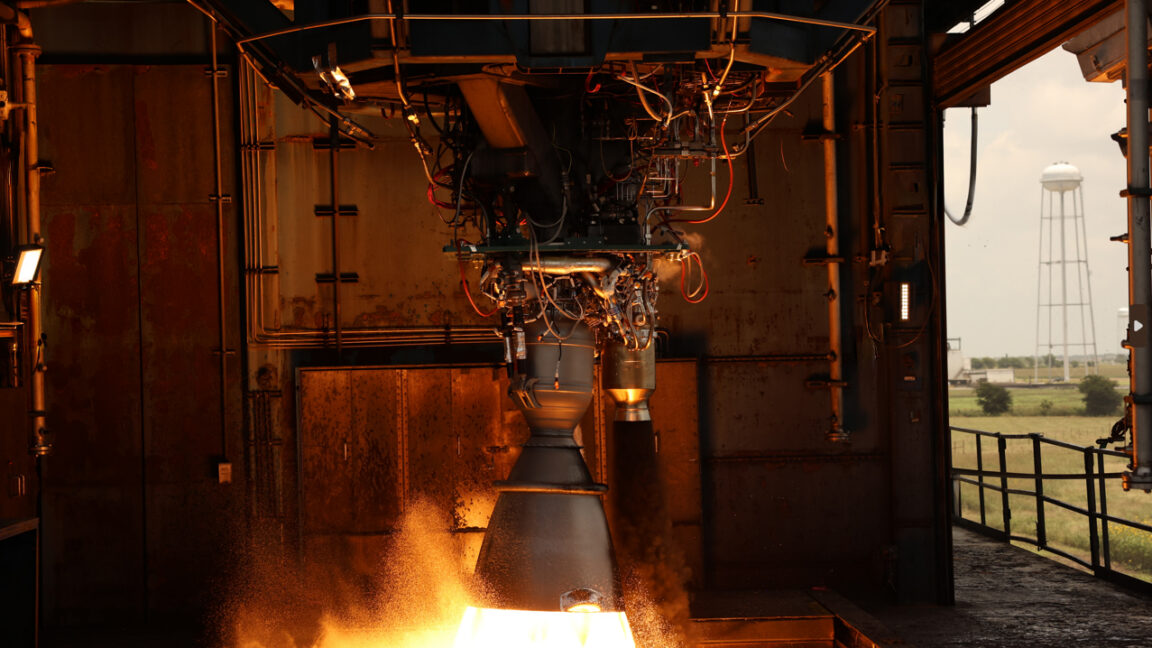
About 15 years ago, rocket companies started serious development of large methane-fueled engines. SpaceX and Blue Origin now build the most powerful of these new engines—the Raptor and BE-4—each capable of generating more than half a million pounds of thrust. SpaceX’s Starship rocket and its enormous booster are powered by 39 Raptors, while Blue Origin’s New Glenn and United Launch Alliance’s Vulcan rockets use a smaller number of BE-4s on their booster stages.

Burning methane in combination with liquid oxygen, these “methalox” engines have several advantages. Methane is better suited for reusable engines because they leave less behind sooty residue than kerosene, which SpaceX uses on the Falcon 9 rocket. Methane is easier to handle than liquid hydrogen, which is prone to leaks and must be stored at staggeringly cold temperatures of around minus 423 degrees Fahrenheit (minus 253 degrees Celsius). Methane is also a cryogenic liquid, but it has a warmer temperature closer to that of liquid oxygen, between minus 260 and minus 297 degrees Fahrenheit (minus 162 to minus 183 degrees Celsius).

A Chinese rocket became the first methane-fueled launcher to reach orbit in 2023. In the United States, Rocket Lab, Stoke Space, and Relativity Space are also developing methane-fueled engines for their next-generation launch vehicles.

But rockets sometimes blow up. The US Space Force and NASA, the agencies responsible for range safety at America’s federally owned spaceports, want to better understand how the hazards from an exploding methalox rocket might differ from those of other launchers. This is important as launches become more routine, with companies foreseeing multiple flights per day from launch pads that are, in some cases, just 1 or 2 miles apart.

“We just don’t have the analysis on those to be able to say, ‘Hey, from a testing perspective, how small can we reduce the BDA and be safe?’” said Col. Brian Chatman, commander of the Eastern Range at Cape Canaveral Space Force Station in Florida, at a roundtable with reporters last year.

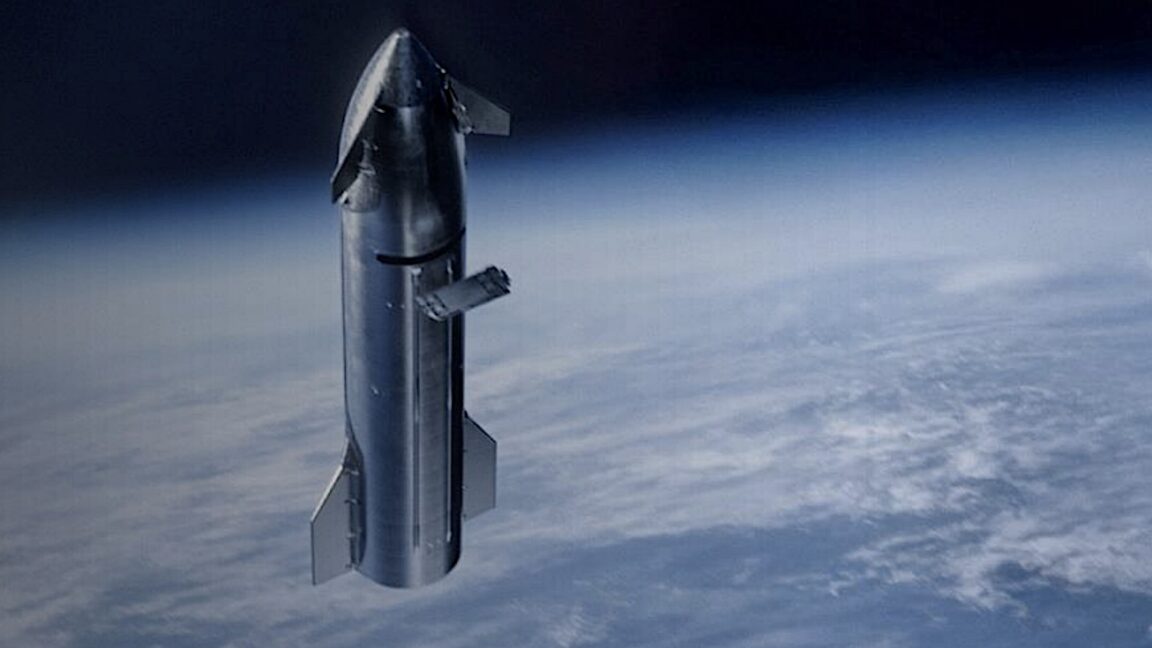
SpaceX’s 11th Starship flight climbs away from Starbase, Texas, in October 2025.

Credit: SpaceX

SpaceX’s 11th Starship flight climbs away from Starbase, Texas, in October 2025. Credit: SpaceX

A fine idea

Launch pads for methalox rockets are now operational or under construction on government property at Kennedy Space Center and Cape Canaveral Space Force Station in Florida, Vandenberg Space Force Base in California, and NASA’s Wallops Flight Facility in Virginia. SpaceX currently launches Starship test flights from South Texas on private property. The Federal Aviation Administration has jurisdiction for public safety there.

https://arstechnica.com/space/2026/03/nasa-is-blowing-stuff-up-to-study-the-explosive-potential-of-methalox-rockets/


Jeff Bezos just announced plans for a third megaconstellation—this one for data centers

A little more than a month ago, SpaceX founder Elon Musk put down a marker of his intent to saturate low-Earth orbit with up to 1 million satellites. Its purpose? Provide always-on data center services around the planet.

Now, Amazon and Blue Origin founder Jeff Bezos has done something similar with a filing to the Federal Communications Commission of his own, proposing a constellation of up to 51,600 satellites operating in Sun-synchronous orbits at altitudes ranging from 500 to 1,800 km. Bezos’ space company, Blue Origin, sought the authority to do this and is calling the constellation “Project Sunrise.”

In its filing, Blue Origin argues that terrestrial AI-based data centers will face difficulties scaling up to meet computing demand.

“The insatiable demand for AI workloads has led to the rapid buildout of terrestrial data centers globally,” the filing states. “Space-based data centers will be a complement to terrestrial infrastructure by introducing a new compute tier that operates independently of Earth-based constraints.”

A gold rush for land in space

In addition to SpaceX and Blue Origin, Starcloud, a smaller company backed by Nvidia, has also filed an application for an orbital data center megaconstellation of 88,000 satellites.

The new filings for these massive constellations—which none of these companies are prepared to populate just yet with actual satellites—likely represent a gold rush of sorts. Although low-Earth orbit is very large, there are only a select few orbits that provide continuous or nearly continuous sunlight (most orbits have periods of darkness when the Earth is between the satellite and the Sun).

Like SpaceX, Blue Origin is targeting these special polar orbits.

Its application seeks to put satellites in orbital inclinations between 97 and 104 degrees. These are known, generally, as Terminator Sun-synchronous orbits because the satellites remain in essentially permanent sunlight year-round. There is limited real estate there, even in outer space, and these regulatory filings are claims by the space companies to this territory.

Make that three for Jeff

This would be Bezos’ third megaconstellation. Amazon finally began launching its first satellites for the Amazon Leo (formerly Project Kuiper) constellation last year. This is intended to compete with SpaceX’s Starlink constellation, which will provide global Internet from low-Earth orbit. Then, in January, Blue Origin announced plans to launch the TeraWave constellation in low-Earth and medium-Earth orbit to provide high-speed connectivity for enterprise customers.

https://arstechnica.com/space/2026/03/jeff-bezos-throws-his-hat-in-the-ring-for-an-orbital-data-center-megaconstellation-too/


Rocket Report: Canada makes a major move, US Space Force says actually, let’s be hasty

Artemis II rocket to roll back out to the pad. Engineers are targeting 8 pm EDT on Thursday, March 19, to start rolling the Artemis II SLS (Space Launch System) rocket and Orion spacecraft to Launch Pad 39B at the agency’s Kennedy Space Center in Florida, the US space agency said. NASA’s crawler-transporter 2 will carry the 11-million-pound stack, including the mobile launcher, at about 1 mph along the four-mile route from Kennedy’s Vehicle Assembly Building to the launch pad. The journey can take up to 12 hours.

Astronauts enter quarantine again … Meanwhile, the Artemis II crew entered quarantine at 5 pm CDT Wednesday in Houston to ensure they stay healthy leading up to launch. NASA astronauts Reid Wiseman, Victor Glover, and Christina Koch, along with CSA (Canadian Space Agency) astronaut Jeremy Hansen will limit their exposure to others for the next week in Houston before flying to Kennedy approximately five days before launch. Both activities are key milestones on the way to a launch as early as Wednesday, April 1.

Booster 19 completes initial test campaign. The Super Heavy first stage that will be used for the 12th Starship flight test, Booster 19, completed an initial test campaign on the newly commissioned Pad 2 at Starbase, Texas, NASASpaceflight.com reports. Culminating in a short static firing of the rocket, the series of tests was a first for Pad 2, the new Block 3/V3 Super Heavy Booster, and for the upgraded Raptor 3 outside of single engine testing.

New and improved (?) rocket and pad … As the inaugural vehicle to undergo operations on this pad, Booster 19’s campaign served as both a booster qualification test and a commissioning milestone for the expanded launch infrastructure. Pad 2 features significant upgrades over Pad 1, most notably dual booster quick disconnects: one dedicated to liquid methane and another to liquid oxygen. This separation enables independent tank pressurization and more efficient loading, reducing risks associated with mixed propellants. After the static firing, SpaceX said the rocket performed well. Flight 12 is likely to occur no earlier than the second half of April.

Next three launches

March 20: Electron | Eight Days a Week | Māhia Peninsula, New Zealand | 16:10 UTC

March 20: Falcon 9 | Starlink 17-15 | Vandenberg Space Force Base, Calif. | 21:48 UTC

March 22: Soyuz 2.1a | Progress MS-33 | Baikonur Cosmodrome, Kazakhstan | 11:59 UTC

https://arstechnica.com/space/2026/03/rocket-report-canada-makes-a-major-move-us-space-force-says-actually-lets-be-hasty/


Dogfighting in space won’t look like the movies, but this company wants in on it

There was no commercial application for the P-51. The P-51 was there to be a fighter escort and sweep asset for air superiority missions. As operational concepts mature for space superiority, those operational concepts will drive a performance envelope for warfare that will be mutually exclusive of commercial applications. Not in all cases. There are spinoffs that can happen, to be clear, but we’re focused on getting the war-fighting technologies right, and we believe the market will support this thesis.

Ars: This is an interesting topic, the idea of developing doctrine and learning how to use new technologies in warfare. I read the first munition was dropped from an airplane in 1911, before World War I. It’s interesting to trace where the space domain is in that arc and compare it to how humans learned how to fight in the air.

Rogers: That’s what I spend most of my time thinking about. How are we going to use space systems for warfare in the future? We have all the applications for intelligence and missile warning and communications, but we’re just starting to think about space warfare, offense, and defense.

By the way, those decompose into different missions on the basis of the specific tactical tasks that need to be accomplished… That means that there are going to be, just like in every other domain, platforms that are purpose-built, that really only have a [military] function. There’s no other function for a guided bomb unit, a GBU, other than for warfare. The B-2 has no commercial application. Lockheed Martin doesn’t sell F-35 to United Airlines, right? That’s because the mission drives the design, so I’m just basically vehemently agreeing with you.

Ars: Is True Anomaly building sensors, weapons, or things for on-ship awareness? Or just the spacecraft bus?

Rogers: We are absolutely designing and building payloads. We hope to announce a few early payloads this year, but we really see ourselves as a full-stack mission solution provider across a wide variety of space superiority missions. We’re going to build a wide variety of sensors for different mission applications: optical sensors, active sensors, lidars, radars, you name it. We’ll leverage our existing supply base where we can, but for most missions, we’re going to provide the full stack of capability, payload, spacecraft, software, and then ops and sustainment, and tactics development and training as well.

https://arstechnica.com/space/2026/03/dogfighting-in-space-this-company-builds-satellites-for-high-tempo-engagement/


A private space company has a radical new plan to bag an asteroid

It may sound fanciful, but a Los Angeles-based company says it has conceived of a plan to fly out to a smallish, near-Earth asteroid, throw a large bag around it, and bring the body back to a “safe” gathering point near our planet.

The company, TransAstra, said Wednesday that an unnamed customer has agreed to fund a study of its proposed “New Moon” mission to capture and relocate an asteroid approximately the size of a house, with a mass of about 100 metric tons.

“We envision it becoming a base for robotic research and development on materials processing and manufacturing,” said Joel Sercel, chief executive officer of TransAstra. “Long term, instead of building space hardware on the ground and launching propellant up from the Earth, we could harvest it from raw materials in space.”

Lots of targets

Sercel said there are as many as 250 potential target asteroids, with a diameter of up to about 20 meters, that could be reached with reusable, robotic spacecraft over the next decade. He envisions aggregating dozens, and then hundreds, of small asteroids at the “New Moon” processing facility, which could potentially be located at the Earth-Sun L2 point, about 1.5 million km from Earth.

Such asteroids could provide water for use as propellant and minerals for everything from solar panels to radiation shielding. Various asteroids could be targeted for their content, such as C-type asteroids as a source of water or M-types for metals.

All of this may seem a little bit out there, and to some extent it is. That’s the point of the feasibility study, which Sercel said will be completed by May, which will further refine a mission plan and its trajectory and the spacecraft needed to fly it. If fully funded, the mission could rendezvous with an asteroid by as early as 2028 or 2029. TransAstra is working with the University of Central Florida, Purdue, and NASA’s Jet Propulsion Laboratory/Caltech to complete its analysis.

https://arstechnica.com/space/2026/03/a-private-space-company-has-a-radical-new-plan-to-bag-an-asteroid/