With Starfall, SpaceX eyes an edge in global cargo delivery from orbit
The FAA’s environmental review approved SpaceX’s proposal for two Starfall reentry demonstrations. It did not specify if these demos would happen on one or two missions. SpaceX intends to recover the vehicle, including parachutes and heat shields, “to the to the maximum extent practicable,” the FAA said.
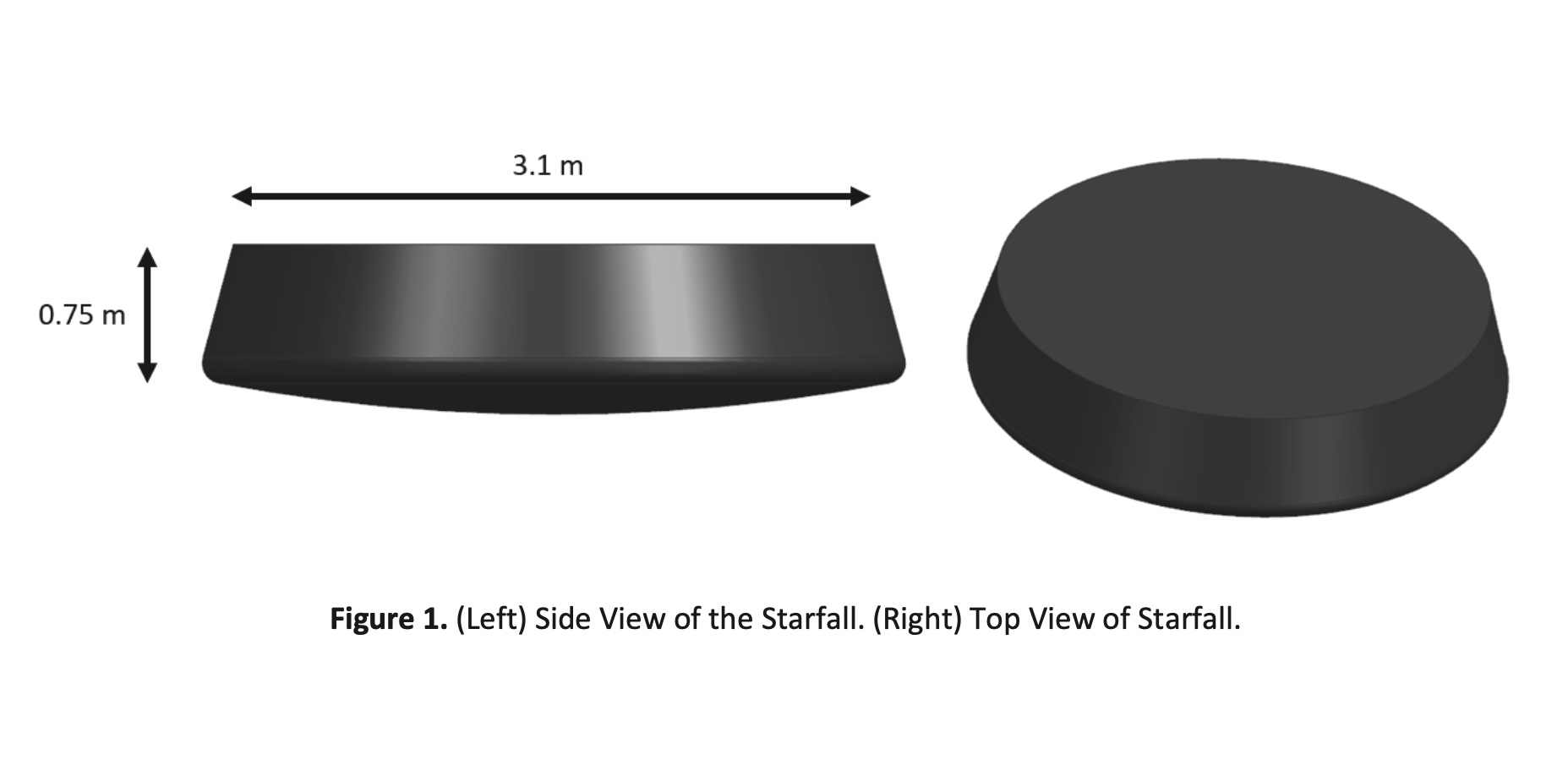
The Starfall vehicle is cylindrical in shape, with a diameter of 10.2 feet (3.1 meters) and a height of 2.5 feet (0.75 meters). Starfall weighs approximately 4,600 pounds (2.1 metric tons) with capacity for about 2,200 pounds (1 metric ton) of payload, for a total weight of 6,800 pounds (3.1 metric tons). Designed exclusively for cargo, Starfall is smaller than SpaceX’s human-rated Crew Dragon spacecraft used for ferrying astronauts to and from the International Space Station.
A closer look at the Starfall reentry vehicle.
Credit: SpaceX
A closer look at the Starfall reentry vehicle. Credit: SpaceX
The first Starfall Demo mission will spend a few hours in low-Earth orbit, but the vehicle could also fly on shorter suborbital trajectories after launching on either Falcon 9 or the much larger Starship rocket. This version of Starfall is not capable of de-orbiting itself, but instead relies upon its launch vehicle to guide it back into the atmosphere. After separating from its rocket carrier, the disc-shaped vehicle uses compressed nitrogen gas to point its heat shield in the right direction for reentry.
So who might use something like Starfall? The US military is one obvious answer. The Pentagon is already working with SpaceX on a concept named Rocket Cargo or Point-to-Point Delivery, which would use Starship to deliver massive loads of equipment and supplies to far-flung locations in less than an hour. Starship is an enormous vehicle, nearly 20 stories tall and 30 feet wide, that must land at prepared sites. Starfall could prove to be a more versatile option for lighter deliveries.
The military has also signed agreements with Blue Origin, Rocket Lab, and Anduril for studies and development of technologies for global cargo delivery from space. Notwithstanding Starship, which is still undergoing experimental flight tests, SpaceX may have an early advantage with the Starfall delivery vehicle.
Report: Kennedy Space Center not ready for era of super heavy rockets
NASA’s infrastructure at Kennedy Space Center, the crown jewel of US spaceports, is aging and approaching its limit due to increased demand from private companies, including SpaceX and Blue Origin, a new report finds.
“NASA’s launch infrastructure is vital to providing the agency, other government agencies, and commercial partners access to space for their most complex and expensive missions,” states the report, published by the NASA Office of Inspector General. “Nevertheless, NASA’s launch infrastructure is dated and often does not provide the capacity to meet the growing demands of the agency and its partners.”
The report covers NASA’s launch facilities at the Kennedy Space Center in Florida and Wallops Flight Facility in Virginia. However, the most noteworthy information in the report concerns the Florida spaceport, where demand from SpaceX’s Starship and Blue Origin’s New Glenn launch vehicles is expected to stress NASA.
Roads and gas lines
NASA only has a handful of launch pads at Kennedy. Launch Complex 39A is currently leased by SpaceX for Falcon 9 and Falcon Heavy launches, and also houses a new launch facility that will soon support Starship launches. Launch Complex 39B is home to NASA’s Space Launch System rocket, and Launch Complex 39C has not been used due to its proximity to this pad. Finally, NASA has built a 10-acre site, Launch Complex 48, that it may lease to small launch vehicle companies.
The space agency’s neighbor to the south, Cape Canaveral Space Force Station, has many more pads. This includes the Launch Complex 36A and 36B leased to Blue Origin for the New Glenn rocket.
A US military exercise in space got underway with barely anyone noticing
That is apparently what happened last week. Rocket Lab had another launch on its schedule for a commercial customer last week, but the company announced a postponement last Tuesday “to conduct additional checkouts,” without offering any additional details. Safety notices began to appear on aviation and maritime websites a couple of days later, just hours before the launch window for Victus Haze opened on Friday.
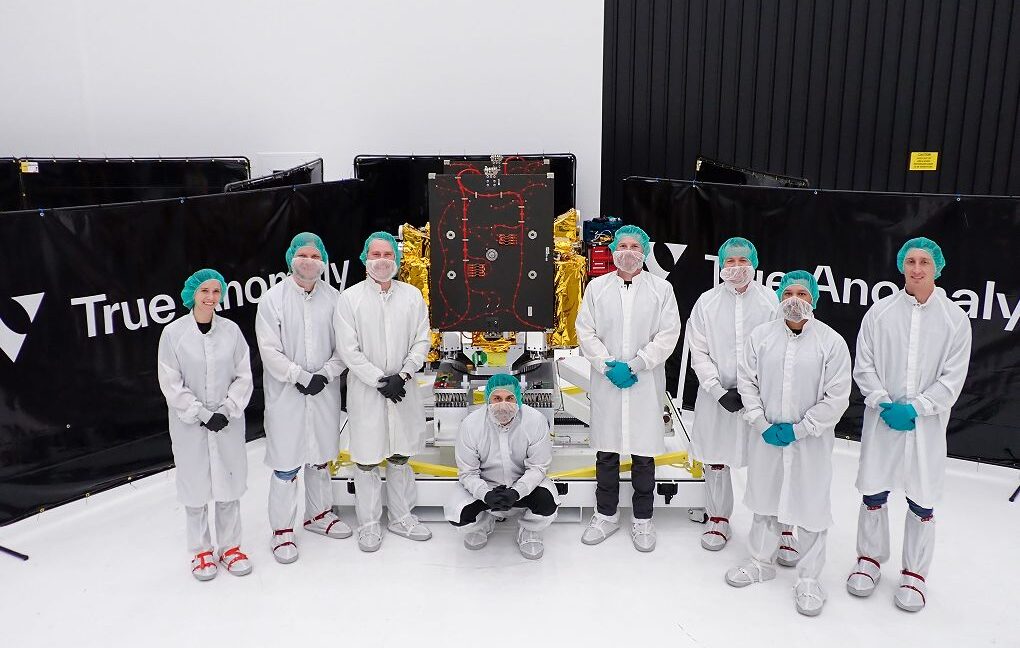
The launch time, estimated to be approximately 6:20 am EDT (10:20 UTC) on Friday, was set to coincide with the passage of the orbit of one of True Anomaly’s satellites over New Zealand. True Anomaly’s Jackal-0004 satellite launched from California on May 3 on a SpaceX rideshare mission. Publicly available orbit data indicated Rocket Lab’s Victus Haze Puma satellite approached within 60 miles (100 km) of the Jackal satellite just eight hours after launch, according to Jonathan McDowell, an astrophysicist who expertly tracks space activity using open source data.
Based on previous statements from officials, the Victus Haze mission will unfold with additional maneuvers to bring Rocket Lab’s Puma satellite closer to True Anomaly’s Jackal. Eventually, the satellites are expected to switch roles, with Jackal serving as the inspector and Puma acting as the target.
True Anomaly, a Colorado-based company specializing in building highly maneuverable satellites for national security missions, announced last Thursday that its latest Jackal spacecraft had achieved all of its “test objectives” following its arrival in orbit in early May to demonstrate the satellite’s capabilities for “end-to-end uncooperative rendezvous and proximity operations.”
“Jackal has been fully commissioned and is prepared for its next phase of mission,” True Anomaly said, without articulating what the next phase would entail.
Rocket Report: Rebuild begins at Blue Origin launch pad; Relativity targets Mars
New launch pad in the works at Cape Canaveral. Space Launch Delta 45, the military unit that runs Cape Canaveral Space Force Station, is exploring the potential creation of a new rocket launch complex for Naval Ordnance Test Unit and US Army missions, Florida Today reports. The new location, known as Launch Complex 51, would be located about 2 miles north of Port Canaveral, making it the spaceport’s closest pad to public areas. LC-51 would encompass about a 50-acre area.
Better real estate… The new pad would replace Launch Complex 46, which lies within the explosive clear zone of Blue Origin’s nearby Launch Complex 36. Blue Origin’s New Glenn rocket exploded on that launch pad during a preflight test last month. LC-46’s proximity to LC-36 means the two pads cannot operate simultaneously without disruption. LC-46 has hosted a handful of small satellite launches and hypersonic missile tests in recent years.
Changes in attitude at Latitude. French launch startup Latitude has removed all mentions of the Zephyr name from its website, now referring to its rocket simply as “Our Launcher,” European Spaceflight reports. The rocket, previously known as Zephyr, is a two-stage launch vehicle that will stand 19 meters (62 feet) tall and is designed to deliver up to 200 kilograms (440 pounds) to low-Earth orbit. The company is currently targeting the second half of 2027 for the rocket’s inaugural flight.
Due diligence… Latitude did not explain the reason for the change, but one plausible explanation is trademark risk. The Zephyr name is already trademarked within the aerospace sector by Airbus subsidiary AALTO, whose solar-powered High Altitude Platform Station aircraft bears the name. The Zephyr trademark filing, which was granted by the European Union Intellectual Property Office in 2005, covers unmanned aerial vehicles, satellites, parts and fittings, and “launching apparatus for the aforesaid goods.”
China’s Zhuque-2E breaks up in orbit. The upper stage from a commercial Chinese rocket that launched last week has broken apart in space, spreading debris in a heavily trafficked part of low-Earth orbit home to the International Space Station and a significant portion of SpaceX’s Starlink broadband network, Ars reports. The breakup occurred shortly after the Zhuque-2E rocket reached orbit on June 9 with two satellites providing direct-to-cell communications, perhaps around the time the upper stage was expected to perform a disposal burn. The US Space Force confirmed the breakup event in a post on space-track.org, a website used by the military to distribute orbit data to the public.
NASA asks Northrop Grumman to stop working on lunar HALO module
Three months ago, during a flashy event at its Washington, DC, headquarters, NASA announced that it was shifting the focus of its lunar plans from an orbital space station to a Moon base on the surface.
As part of this, officials said work would be paused on the Lunar Gateway planned to orbit the Moon. Of the two elements that were furthest along, NASA also revealed that one of them—the Power and Propulsion Element—would be repurposed to serve as a core module for a nuclear-electric propulsion demonstration in deep space.
Less was said about the fate of the other major component, the Habitation and Logistics Outpost (HALO). This is the large pressurized module, 6.1 meters long, in which visiting astronauts would spend the majority of their time when visiting the Lunar Gateway. NASA has awarded contracts worth $1.1 billion to Northrop Grumman to design, build, and integrate the habitation module with the Power and Propulsion Element.
After the NASA announcements in March, Northrop Grumman began lobbying NASA and others to include the HALO module as part of NASA’s Moon Base plans. However, Ars has learned this is now unlikely to happen.
Last week, a key contractor for the HALO module, Paragon Space Development Corp., was told to stop working on the space vehicle, two sources told Ars. In 2022, Paragon received a contract worth more than $100 million to develop the life-support system for HALO.
The first long-duration resident of the ISS, a cosmonaut, has died
Aleksandr Samokutyaev, Expedition 28 flight engineer, in the International Space Station’s Zvezda service module with a view of space shuttle Atlantis outside the window during the STS-135 mission on July 12, 2011.
Credit: NASA
Aleksandr Samokutyaev, Expedition 28 flight engineer, in the International Space Station’s Zvezda service module with a view of space shuttle Atlantis outside the window during the STS-135 mission on July 12, 2011. Credit: NASA
On July 10, 2011, the US space shuttle Atlantis arrived at the space station, and for nine days, the four STS-135 astronauts joined Samokutyaev and his Expedition 28 colleagues aboard the orbiting laboratory. Not only was it the last time that a shuttle would visit the ISS, but it was the final mission of the 30-year program.
On August 3, 2011, Samokutyaev performed his first spacewalk, venturing outside of the ISS with Volkov to relocate equipment, install a materials science experiment, and hand-deploy a micro-satellite.
After 164 days in Earth orbit, Samokutyaev returned to Earth on Soyuz TMA-21 with Borisenko and Garan, landing safely on the steppe of Kazakhstan.
Cosmonaut Aleksandr Samokutyaev on his first spacewalk outside of the International Space Station on August 3, 2011.
Credit: Roscosmos
Cosmonaut Aleksandr Samokutyaev on his first spacewalk outside of the International Space Station on August 3, 2011. Credit: Roscosmos
Samokutyaev returned to the ISS three years later, this time with Elena Serova—one of only two female cosmonauts in Roscosmos’ corps at the time and only the fourth to fly into space—and NASA astronaut Barry “Butch” Wilmore on board Soyuz TMA-14M. Samokutyaev spent about two months as an Expedition 41 flight engineer, sharing the space station with cosmonaut Max Surayev, NASA astronaut Reid Wiseman (later of Artemis II fame), and ESA astronaut Alexander Gerst from Germany.
On October 22, 2014, Samokutyaev went outside for his second career spacewalk, working with Surayev to jettison unneeded equipment and conduct a detailed photographic survey of the station’s Russian segment exterior. In total, Samokutyaev logged 10 hours and one minute on his two spacewalks.
Samokutyaev then transferred with Serova and Wilmore onto the Expedition 42 crew, working with his 2003 cosmonaut classmate Anton Shkaplerov, as well as NASA astronaut Terry Virts and ESA astronaut Samantha Cristoforetti from Italy. The three returned to Earth on March 11, 2015, adding 167 days to Samokutyaev’s time in space for a total of 331 days, 11 hours, and 23 minutes.
Among the large new rockets Amazon was counting on, only Europe has delivered
Amazon now has hundreds of flight-ready satellites standing idle in Florida, waiting to join the company’s low-Earth orbit Internet constellation, an Amazon official said Tuesday.
“They’re built, and sitting in a payload processing facility waiting for trips to orbit,” said Steve Metayer, vice president of Amazon Leo Production Operations, during a teleconference with reporters. “And we’re currently manufacturing several satellites a day.”
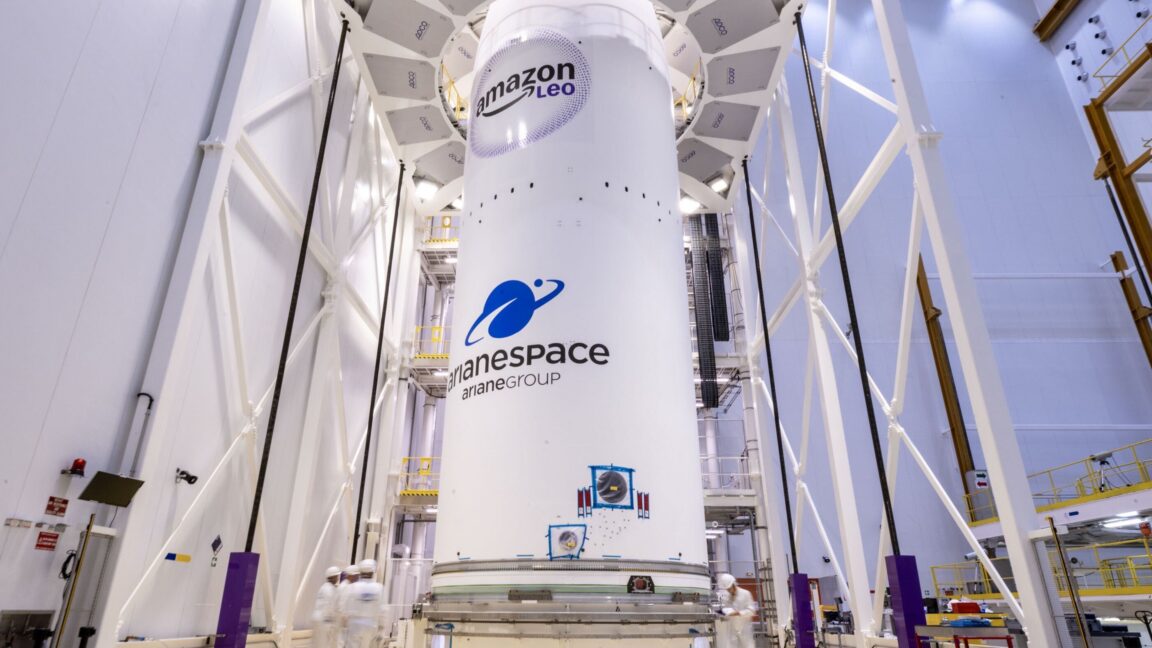
Metayer spoke on the eve of the company’s next mission, during which an Ariane 64 rocket will launch three dozen Amazon Leo satellites into orbit from a spaceport in French Guiana. Liftoff is targeted for 7:53 am ET (11:53 UTC) on Wednesday.
Arianespace steps up
France-based Arianespace has emerged as a critical partner for Amazon, which, to date, has had the majority of its 331 satellites launched on Atlas V rockets. However, Amazon has just one more mission booked on this rocket, which is operated by United Launch Alliance, as the vehicle is slated for retirement.
To launch the majority of its Leo constellation, Amazon booked rides on three large, new rockets four years ago: 18 launches on the Ariane 6 rocket, 12 launches on Blue Origin’s New Glenn rocket, with options for 15 additional launches; and 38 launches of the United Launch Alliance’s Vulcan rocket.
But of these new rockets, only Arianespace has delivered so far, with two launches completed this year, another on Wednesday, and more to come. Neither New Glenn (also owned by Amazon founder Jeff Bezos) nor Vulcan has launched Amazon satellites yet.
“As for Arianespace, they have definitely stepped up,” Metayer said. “They’re very reliable on their manifest dates, and they’re very reliable and safe on their insertions into orbit. So we definitely would continue to look forward to the next 16 launches with them on our existing contract, and we see them being a player long-term beyond that.”
How long will it take to rebuild Blue Origin’s launch pad? We asked some SpaceX vets.
The closest analog to what Blue Origin is attempting to do, therefore, concerns the rebuild of Space Launch Complex-40, which was largely destroyed by the AMOS-6 failure.
According to Muratore, SpaceX was not allowed to begin reconstruction work at the launch pad until January 2017. The delay stemmed from the ongoing investigation, which included a grid-by-grid examination of debris, cataloging recovered materials, and launch site remediation. Muratore and other SpaceX engineers spent these four months redesigning the launch pad.
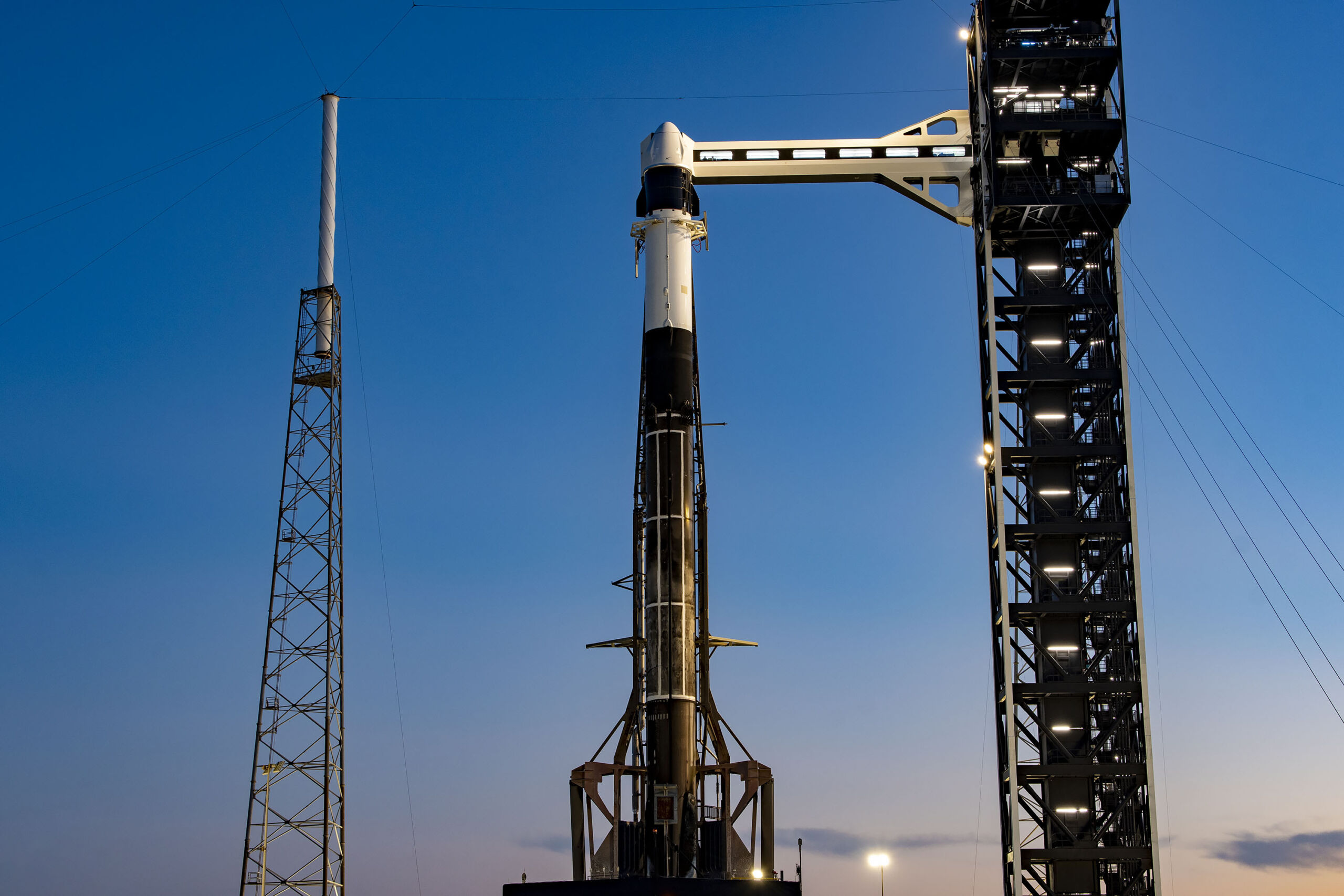
SpaceX’s Falcon 9 rocket and Cargo Dragon spacecraft, seen here with the new launch tower and access arm at SLC-40.
Credit: SpaceX
SpaceX’s Falcon 9 rocket and Cargo Dragon spacecraft, seen here with the new launch tower and access arm at SLC-40. Credit: SpaceX
Trip Harriss, who managed the Falcon 9 fleet operations in 2016, said everyone at the company pitched in to support the investigation and then the reconstruction of the SLC-40 pad. The search for debris lasted from shortly after the explosion until early October, when efforts had to be abandoned due to the approach of the powerful Hurricane Matthew.
During this time, SpaceX pulled out all of the stops, deploying drones and aircraft with sensitive equipment. “At one point, I got a submersible to take into the flame trench, where there was an accumulation of water, to see if we could find any rocket debris,” Harriss said. “But it was just large chunks of concrete.”
Going fast
Launch pads are among the most complex pieces of infrastructure involved in sending a rocket into space. They require a lot of braun, as evidenced by the need for tall and strong steel launch towers. Then there’s the large amount of concrete used for the foundation, flame trench, and surrounding areas.
Last Thursday, during the test failure, one of Blue Origin’s massive launch towers toppled, and the other appears to be seriously damaged. The concrete underneath the rocket also appears to have collapsed in some places. From a structural standpoint, there is likely a significant amount of work ahead.
On its 40th anniversary, we reassess 1986’s SpaceCamp
And into that post-Challenger disillusioned summer of 1986, Hollywood brought us SpaceCamp. It had all the right ingredients: A stacked cast with a solid leading duo (Kate Capshaw and Tom Skerritt), tons of real NASA location footage, and a big, brassy score by none other than John Williams. The film was completed before the Challenger disaster, leaving 20th Century Fox with something of a nightmarish choice on their hands—to shelve the film and lose millions, or send it to theaters and risk a PR disaster.
For better or for worse, Fox chose to release the film, which ultimately made about $9.6 million on a reported $25 million budget. Ouch. Audiences, it seemed, weren’t really interested in watching a bunch of kids in peril on a space shuttle. Today, on the rare occasions SpaceCamp comes up in film discussions at all—usually among geeks of a certain age who encountered it when they were younger—it’s often spoken of with derision. Kids! Robots! Thermal curtain failures! Preposterous!
But is it really a bad movie? It’s not currently available for streaming, but this is exactly the kind of scenario that physical media is made for. And so, with the movie’s 40th anniversary looming, Senior Space Editor Eric Berger and I grabbed the DVD and watched our way through it—and this is what we thought.
Lee: It’s been about 18 hours since we watched SpaceCamp, which is maybe just a bit longer than the kids spent in orbit. What did you think? Are we tearing the film apart here, or praising it?
Eric: We are bearing witness to it, I think. I had never seen the movie before, and as a 53-year-old who has read about and written about space for decades, the movie was clearly not made for me. But for what it was, an ’80s dramedy aimed at kids and teens, I think it did an admirable job of engaging its audience and building interest in the space program. You know, we decided to watch it because I wrote about the real Space Camp a couple of weeks ago, and we’re coming up on the 40th anniversary of the movie’s release in early June. All in all, it was fun to experience.
How about you? You watched it a lot as a kid and were right in the key demographic, a pre-teen in Houston. Does it hold up?
Lee: I damn near wore the VHS tape out watching it as a kid, so yeah, I was coming into this with a lot of old memories. It honestly held up a lot better than I was expecting it to! There’s epic levels of cheese—and we’ll get to that—but even in spite of the cheese, I don’t think anyone can deny that there was a lot of love put into this movie. For every huge detail they get wrong (why does the shuttle keep shaking after MECO?), there are countless minor details that they nail. Tiny stuff, that no one except insiders would notice—shuttle cockpit switch positions, authentic uniform patches, terminology. This was not a B-movie—money and care were spent, and that money and care are visible on-screen.
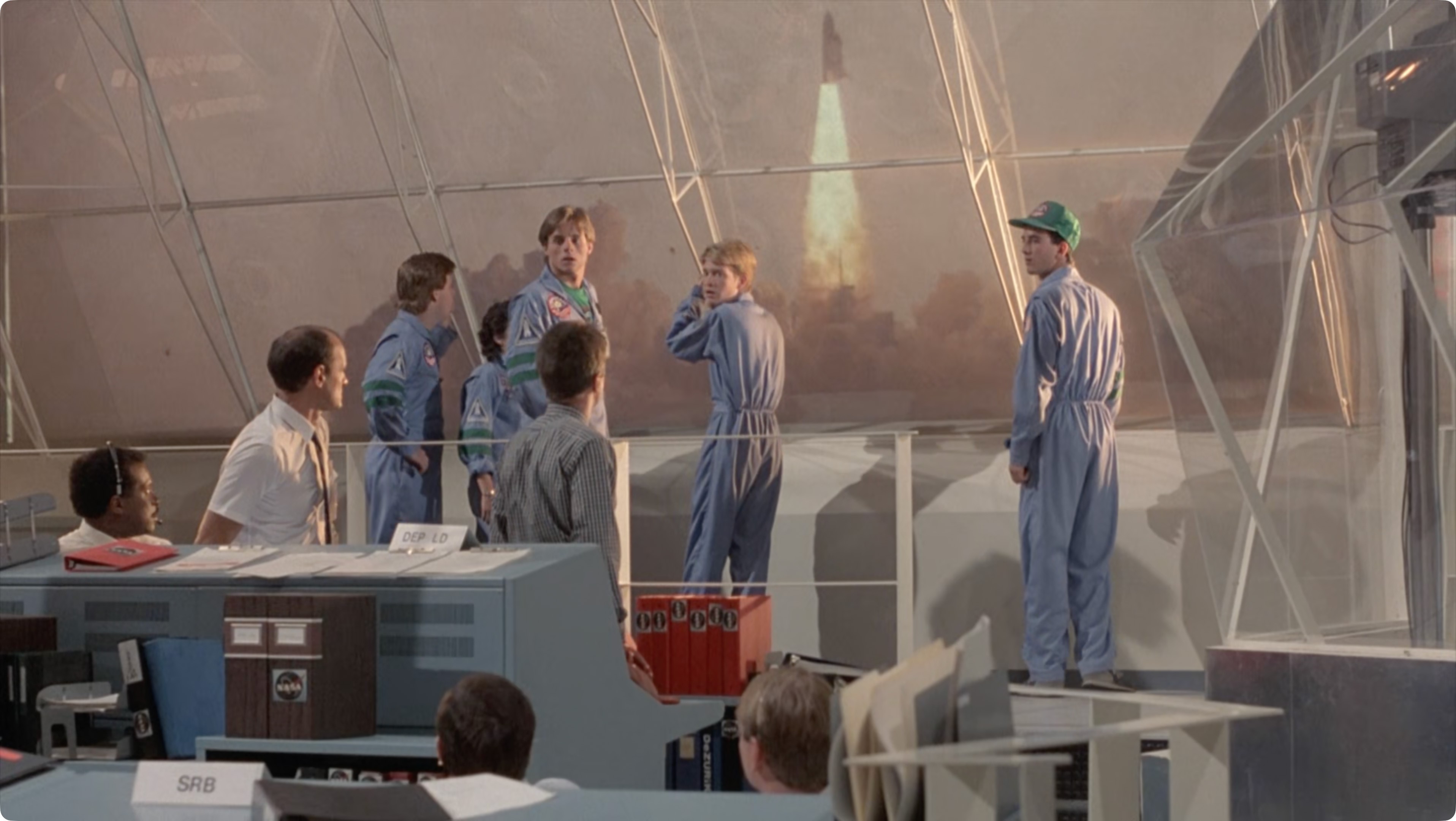
Kevin (Tate Donovan) separates the SRBs during launch. The shuttle flight deck and mid-deck sets were extremely realistic and built to spec.
20th Century Fox
Kevin (Tate Donovan) separates the SRBs during launch. The shuttle flight deck and mid-deck sets were extremely realistic and built to spec. 20th Century Fox
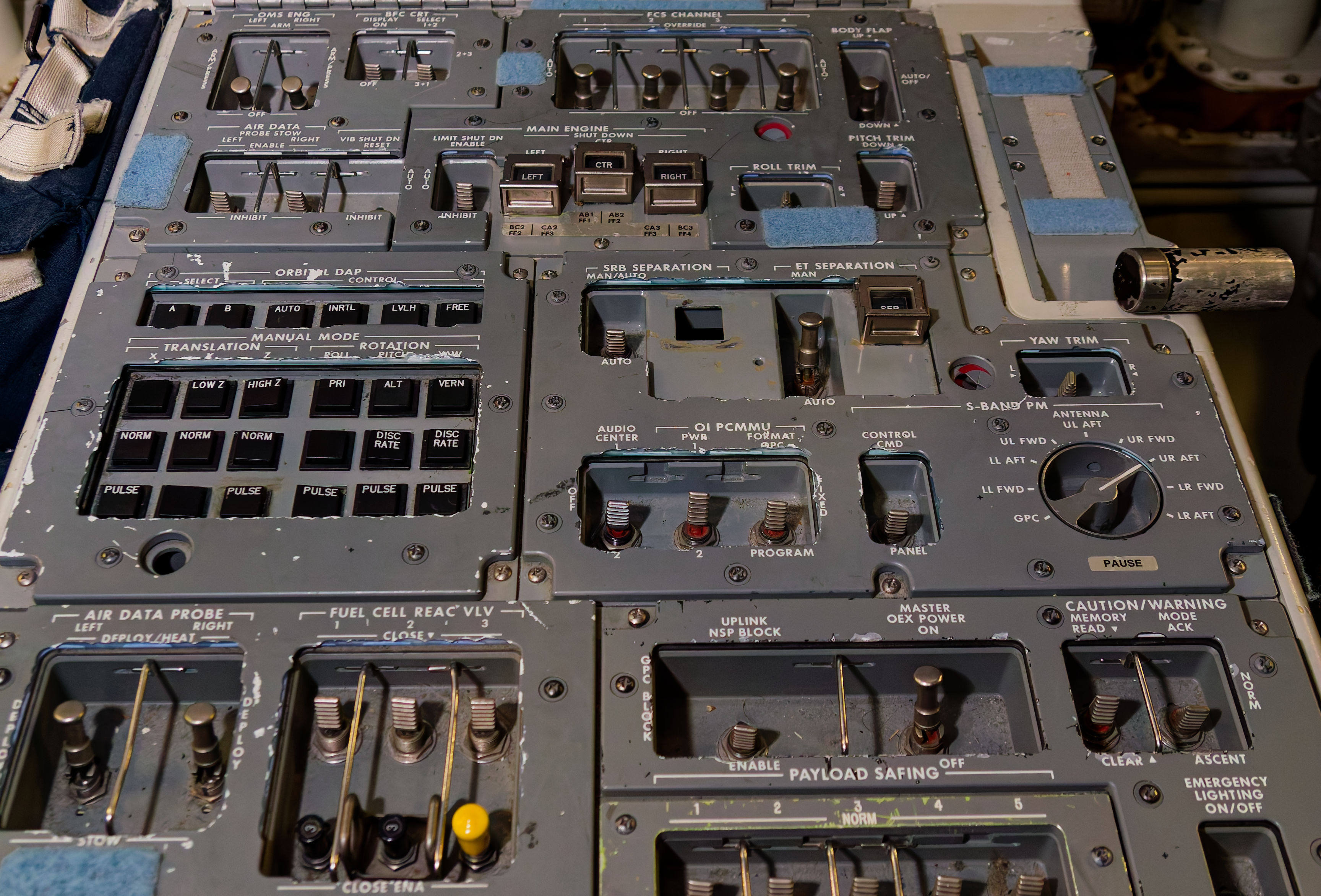
This 2013 image of shuttle Crew Compartment Trainer 2 at the Johnson Space Center shows that Kevin was more or less hitting the right buttons!
Lee Hutchinson
This 2013 image of shuttle Crew Compartment Trainer 2 at the Johnson Space Center shows that Kevin was more or less hitting the right buttons! Lee Hutchinson
Kevin (Tate Donovan) separates the SRBs during launch. The shuttle flight deck and mid-deck sets were extremely realistic and built to spec. 20th Century Fox
This 2013 image of shuttle Crew Compartment Trainer 2 at the Johnson Space Center shows that Kevin was more or less hitting the right buttons! Lee Hutchinson
Eric: There were also some cringeworthy details they missed, though. One jarring example for me was a reference to a “180×33” orbit shortly after Atlantis reaches space. I mean, that’s definitely an orbit. But it’s not a stable orbit. 180 miles is pretty low for an apogee to begin with, and 33 miles is, umm, not great. At perigee the shuttle would experience pretty serious atmospheric braking, rapidly lose energy, and would definitely not be going back up to its apogee. It would meet a bad end. Regarding it being a B-movie, all you have to do is look at the cast, a mix of established actors and young up-and-comers (Joaquin Phoenix, lolwut??!) to know that this was a serious effort. But it had poor timing.
Lee: Poor timing is the understatement of the (last) century. SpaceCamp made its theatrical debut on June 6, 1986, barely four months after the very public destruction of Challenger. A movie about a space near-disaster coming so soon on the heels of an actual space disaster proved to be box office poison—which is unfortunate, because there’s a lot to love about SpaceCamp. Especially if you’re a fan of both “space” and “camp.”
For folks unfamiliar, the film depicts a group of five kids and a rookie astronaut who are accidentally shot into space when a routine main engine test of the orbiter Atlantis goes sideways. (The root cause of the problem is Joaquin Phoenix’s robotic best friend Jinx, which…well, we’ll get to Jinx in a minute.) Stranded in low Earth orbit without a functioning space-to-ground voice link and with dwindling oxygen, it’s up to lone adult astronaut Andie Bergstrom (Kate Capshaw) and her husband, camp director Zach Bergstrom (Tom Skerritt) to bring the stricken shuttle home.
It sounds like an ’80s-flavored recipe for success! And, shot on location at the actual Space Camp facilities in Huntsville and the actual Launch Control Room at the Kennedy Space Center in Florida, it should have performed well—except for that pesky real-life shuttle explosion.
“Welp.”
Credit: 20th Century Fox
“Welp.” Credit: 20th Century Fox
Eric: What is striking to me is that, despite the movie’s poor timing, it has had a long shelf life. It only came out four years after the actual Space Camp opened in Huntsville, and I’ve spoken with more than one space enthusiast who watched the movie and then signed up for a week in Alabama. In its own way I think the film helped to fuel interest in the space program at a time, the late 1980s and 1990s, when quite frankly there was just not that much exciting happening in human spaceflight. The movie also correctly anticipates NASA having a large space station in orbit, called Daedalus, nearly a decade and a half before one exists. Man, I’ve got to tell you I could not get over the station’s truss design. There was so much metal for no apparent purpose, other than serving the plot I suppose.
Speaking of liberties taken by the writers, shall we talk about the biggest one? As an adult, what did you think about the mechanism by which NASA launched five kids into space?
Lee: THERMAL CURTAIN FAILURE! I’d have to leave it to you as the resident shuttle expert about whether or not there’s a thing called the “thermal curtain” that stops the shuttle’s solid rocket boosters from overheating during a Flight Readiness Firing—or maybe toss that to collectSpace’s Robert Pearlman, who basically knows everything about everything. I remember when I was younger scoffing at the idea that the SRBs would be fueled during a main engine test, but now that I’m older, I’m pretty sure that particular detail is accurate, and that the solid propellants are essentially “manufactured” into the boosters during their refurbishment between flights.
Of course, as noted above, the conversion of “FRF” into “actual launch” is the fault of Jinx, a spherical maintenance robot apparently exhibiting full artificial general intelligence (in 1986, no less!) and seemingly given unrestricted access to the entire space center. Jinx and Max (the aforementioned Joaquin Phoenix, credited as “Leaf Phoenix”) are friends forever, and Jinx conspires with the all-powerful NASA mainframe computer (another runaway AGI!) to arrange a “THERMAL CURTAIN FAILURE.” And just like that, Jinx puts Max in space, along with Bergstrom and four other campers chosen to ride out the FRF on board Atlantis.
I have to wonder if Jinx is supposed to be under the control of a project officer or a principal investigator somewhere, and if that person’s career survived this incident.
What’s your take on the FRF shown in the film? Did NASA do these kinds of tests on the shuttle fleet, and how often?
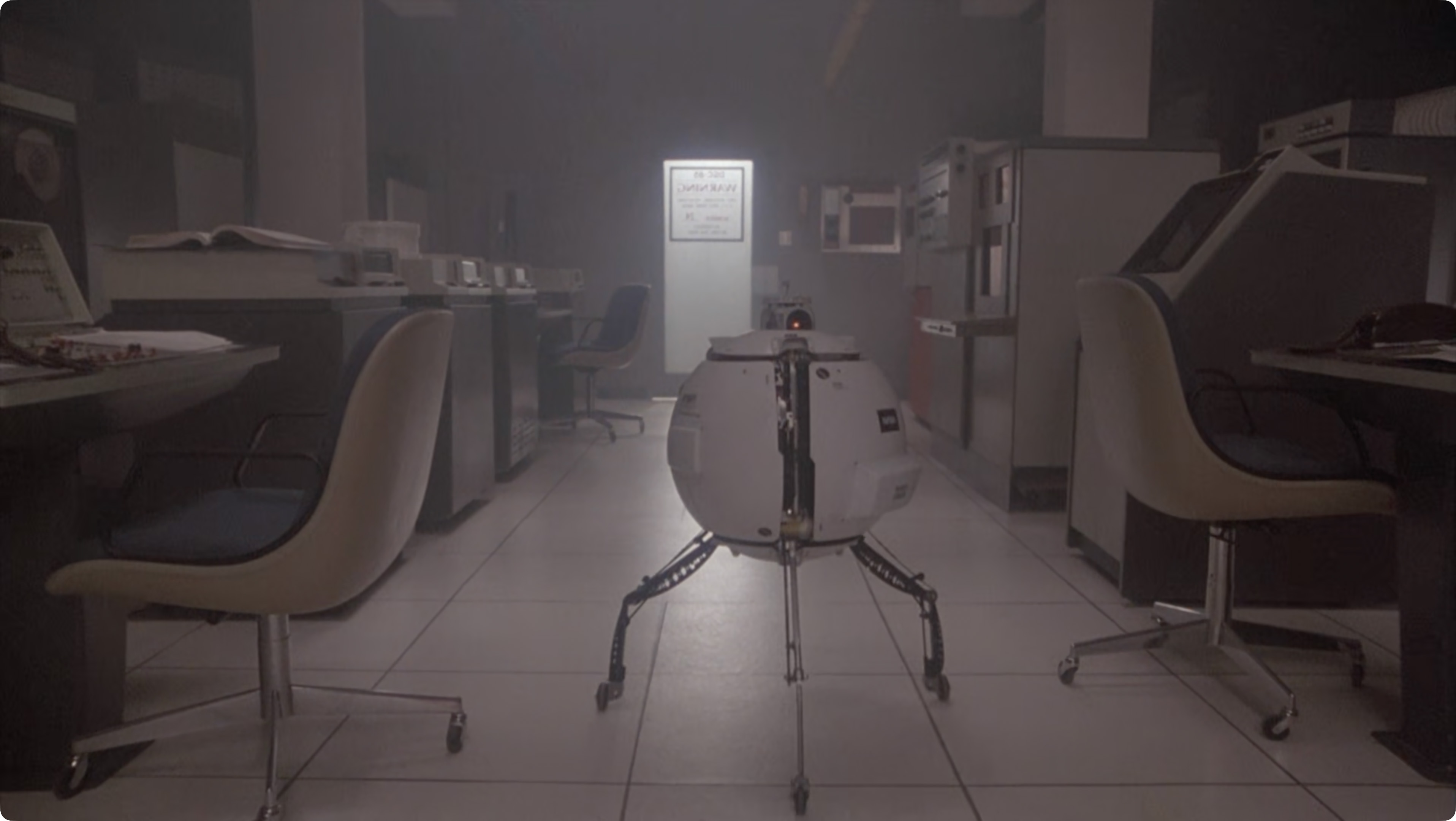
It wouldn’t be an ’80s adventure without a schlocky, dumb robot sidekick.
Credit: 20th Century Fox
It wouldn’t be an ’80s adventure without a schlocky, dumb robot sidekick. Credit: 20th Century Fox
Eric: Yes, NASA did perform FRFs in the early days of the Space Shuttle program, igniting the main engines on the pad for about 20 seconds. This happened for the first time in February 1981, in advance of the first shuttle launch, and maybe before half a dozen other launches. It’s common practice for a lot of new rockets, but once engineers are comfortable with a vehicle, they typically stop doing them unless there are anomalies to resolve.
Astronauts were typically on board for these tests, so the idea that people would be on the shuttle during a flight readiness firing is plausible. However, I think you and I both know just how restricted access to the Space Shuttle was during the run-up to missions, so “campers” from Space Camp never would have been allowed near the vehicle, let alone on board during such a dynamic test. And don’t get me started on “thermal curtain failure.” The solid rocket boosters were, of course, never ignited during a test like this, and I can’t really see how one of them could be ignited. There are a lot of other plot holes (like the total loss of voice communication with a hapless “Mission Control” being run out of the firing room at KSC), but all in all it’s good fun.
One theme of the movie is the desire of Lea Thompson’s character to become a space shuttle commander, and as part of that she has to learn to rely on other teammates. She also has trouble learning to fly the shuttle during reentry. And this represents the climax of the film, when Thompson (Kathryn Fairly in the movie) must pilot the shuttle during peak heating. How did you feel about this?
The movie uses real-life shuttle footage, including this shot of Atlantis about to undergo an actual real-life FRF, (possibly FRF 51-J). Note white FRF covers over the OMS engines.
20th Century Fox
The movie uses real-life shuttle footage, including this shot of Atlantis about to undergo an actual real-life FRF, (possibly FRF 51-J). Note white FRF covers over the OMS engines. 20th Century Fox
Columbia undergoes a real-life FRF in February 1981. Columbia sports white FRF OMS engine covers, similar to Atlantis.
NASA
Columbia undergoes a real-life FRF in February 1981. Columbia sports white FRF OMS engine covers, similar to Atlantis. NASA
The movie uses real-life shuttle footage, including this shot of Atlantis about to undergo an actual real-life FRF, (possibly FRF 51-J). Note white FRF covers over the OMS engines. 20th Century Fox
Columbia undergoes a real-life FRF in February 1981. Columbia sports white FRF OMS engine covers, similar to Atlantis. NASA
Lee: I mean, it’s screenwriting 101: If we seen the gun (or in this case, the multi-axis trainer) on the mantlepiece in Act 1, then chances are that gun’s going to shoot someone by Act 3. We see Thompson’s Fairly struggle with spin recovery on the ground, and so of course Atlantis gets away from her just before re-entry. Contrived, silly, unrealistic, but definitely genre-appropriate!
But like you said at the outset, this movie wasn’t for us, the two old farts who can quote shuttle abort mode procedures at each other—it was for the kid I used to be in 1986, the kid who positively knew he could do a way better job in space than Phoenix’s Star Wars-obsessed Max, if only I’d been given the chance. The movie has faults, giant gaping faults, but it’s also trying to condense a ton of real (or at least reality-adjacent) space flight concepts into forms that are understandable by viewers who can’t tell an AJ10-190 from an RS-25. Which is most people! Some glossing over of the details is expected.
Atlantis approaches “Daedalus,” a fictional space station resembling the early ’80s “Power Tower” station concepts.
Credit: 20th Century Fox
Atlantis approaches “Daedalus,” a fictional space station resembling the early ’80s “Power Tower” station concepts. Credit: 20th Century Fox
…though I still don’t like the autonomous AGI-exhibiting robot who can infiltrate NASA systems and launch shuttles at will. Seriously seems like someone would get fired over that.
When the film was done, we talked for a bit about what the aftermath of SpaceCamp might be like, if something as ludicrous as happened in the film had happened in real life. In a lot of ways, gaming that out was as fun as watching the movie. As someone who actively reports on NASA policy, what do you think might have happened if the agency had in fact accidentally shot five American teenagers into LEO?
Eric: What I know for sure is that it would be one hell of a story to cover. Not that I want NASA to accidentally send kids into space, but whooboy that would be extremely fun to dig into as a reporter if they did.
If such a thing happened today, I have to believe the NASA administrator would be fired or resign, and similarly the launch director at Kennedy Space Center. Also whoever was responsible for the SRBs igniting. Then, as you say, there would be the program manager or PI responsible for a robot that, in 1986, can magically communicate wirelessly with NASA’s mainframe. Even R2D2 required a scomp link to plug into computers back in that era’s movies. That person may end up in jail.
It would be devastating for NASA in so many ways, and it would undermine the trust the public has long held in an agency known for having the right stuff. I wish we had seen how the movie handled this, but it cuts to the credits after the shuttle lands in White Sands, New Mexico.
Lee: I’d have to imagine that if anyone comes out of it unscathed, it’d be Capshaw’s Andie Bergstrom, the one adult on board Atlantis. She survived injury and nearly lost her life bringing her crew home; that’s a solid PR opportunity if ever there was one. I’d figure Andie ends up with the Presidential Medal of Freedom or something similar, presented in a big fancy White House ceremony. The presidential speech practically writes itself: “Astronaut Bergstrom represents the highest ideals of the astronaut corps and of America—bravery, dedication to duty, and unwavering resolve…” Also, I’d bet she never flies in space again—her name attached to any shuttle flight from then on becomes a lightning rod of media attention. They probably park her in a senior position where she can be paraded out as needed and otherwise kept quiet.
I also have to imagine that SpaceCamp 2: The Joint Congressional Inquiry would be fascinating, as such things go. Watching the chairman of the Senate Committee on Commerce, Science, and Transportation rip Tom Skerritt’s character to shreds on live TV would make for extremely spicy viewing.
You think those flames are hot, Zach? Just wait until Congress comes for you…
Credit: 20th Century Fox
You think those flames are hot, Zach? Just wait until Congress comes for you… Credit: 20th Century Fox
Eric: Skerrit’s character was, as best I can tell, an astronaut who had recently flown to space, the head of Space Camp, and also apparently the mission director. He had a lot going on. Safe to say he probably never would be going to space again. Conversely, the delight of the movie for kids of all ages is that it allows us all to imagine, however briefly, how we might act were we accidentally launched into space. Speaking for myself, I’d have to say I’d hope it would be on Crew Dragon, which flies autonomously, and does so very well.
Lee: Coming back to the movie after decades away, I enjoyed it a hell of a lot more than I thought I would. It’s fun, it’s silly, and the inaccuracies ultimately serve the audience and solve narrative problems. Could they have tried harder? Sure—but it was the ’80s, and the cinematic bar for realism in summer blockbusters-to-be was, shall we say, perhaps a bit lower than today. I give the movie a final rating of two flaming SRBs up (which is a good rating on the flaming SRB scale that I just invented). Any final words from our space editor?
Eric: The movie was campy fun—see what I did there? I’m glad to have finally watched it, and I’m glad I’ll probably never watch it again. If I’m going to spend a couple of hours with a space-based movie that stretches the bounds of reality, give me Gravity.
Rocket Report: A dark day for Blue Origin; Pentagon eyes new launch site
Worst practices… The recent growth of Chinese upper stages has been driven by the country’s increased launch rate as it begins to deploy satellite megaconstellations, Shell said. China’s space industry is just at the beginning of launching megaconstellations to compete with SpaceX’s Starlink satellite service, suggesting that if the country does not curb this practice, it will deteriorate an already congested space environment. Chinese constellations such as Guowang and Spacesail are typically at higher altitudes, above 800 km, and China may launch 1,000 or more rockets over the next decade to support these constellations. That’s a lot of new junk if the trend continues.
The easiest way to keep up with Eric Berger’s and Stephen Clark’s reporting on all things space is to sign up for our newsletter. We’ll collect their stories and deliver them straight to your inbox.
DARPA, Voyager team up on solid rocket motors. The Defense Advanced Research Projects Agency (DARPA) has awarded Voyager Technologies a $16.5 million contract to continue development of a solid rocket motor thrust-control technology designed to make missile propulsion systems more adaptable across different missions and weapons programs, Space News reports. The contract is part of DARPA’s “Burn n’ Go” program. Solid rocket motors are used for a wide range of applications, from tactical missiles to space launch vehicles. The upside for solid rocket motors is their reliability and manufacturability. Solid rocket motors can vary their thrust, but these thrust profiles are predetermined by propellant grain patterns and the dimensions of the motor. In other words, the thrust profiles are locked in once the motor is manufactured. Unlike liquid-fueled rocket engines, solid-fueled rockets typically can’t be throttled up or down on the fly.
It’s in the propellant… Voyager is working with DARPA on a new “propellant-embedded” method of controlling the thrust of solid rocket motors after they are manufactured. The recent contract is for Phase 2 of the Burn n’ Go program. During Phase 1, Voyager worked on architecture concepts and preliminary designs. Voyager’s Phase 2 contract will culminate in “tailorable SRM hot-fire demonstrations,” the company said in a press release. “This award reflects confidence in our ability to translate advanced propulsion technologies into field-ready capabilities that support US national readiness and deterrence,” said Matt Magaña, president of space, defense, and national security programs at Voyager. “Our approach is designed not only to demonstrate performance gains at the system level, but to establish a credible path to industrialization that can reshape how solid rocket motors are produced, mission tailored and controlled.”