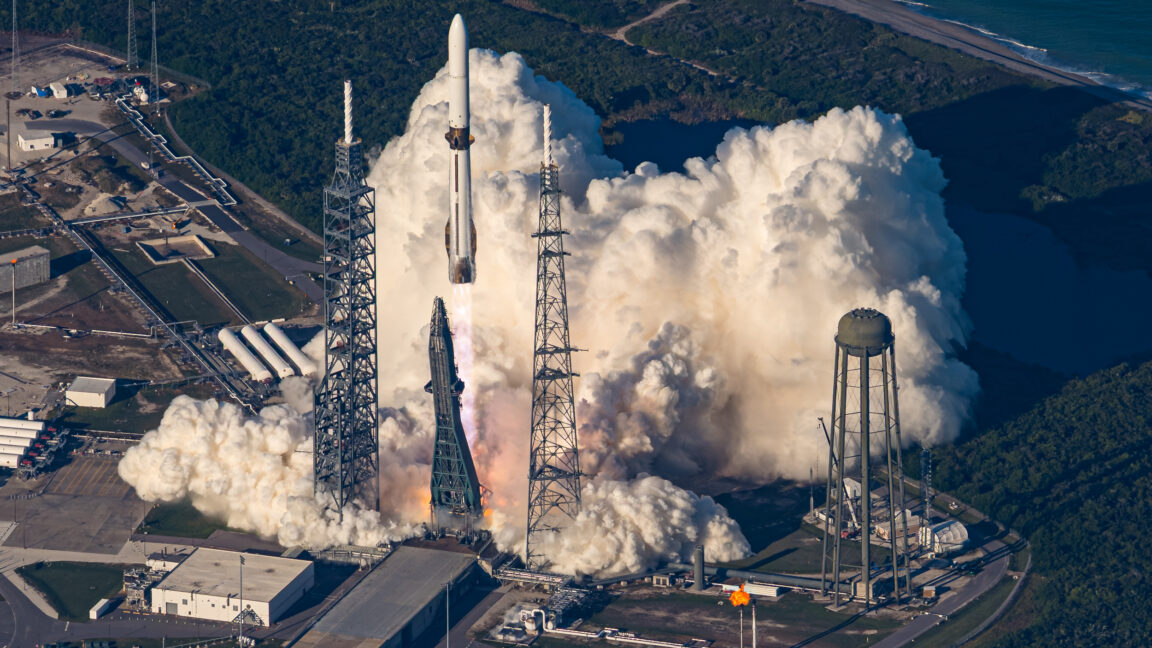
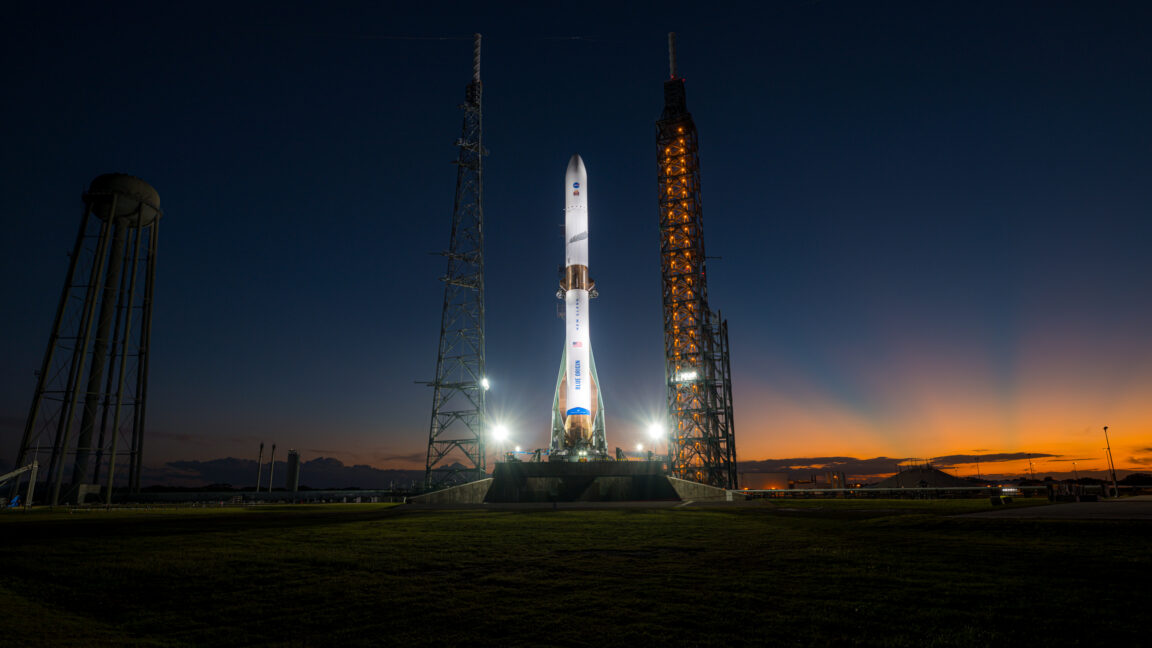
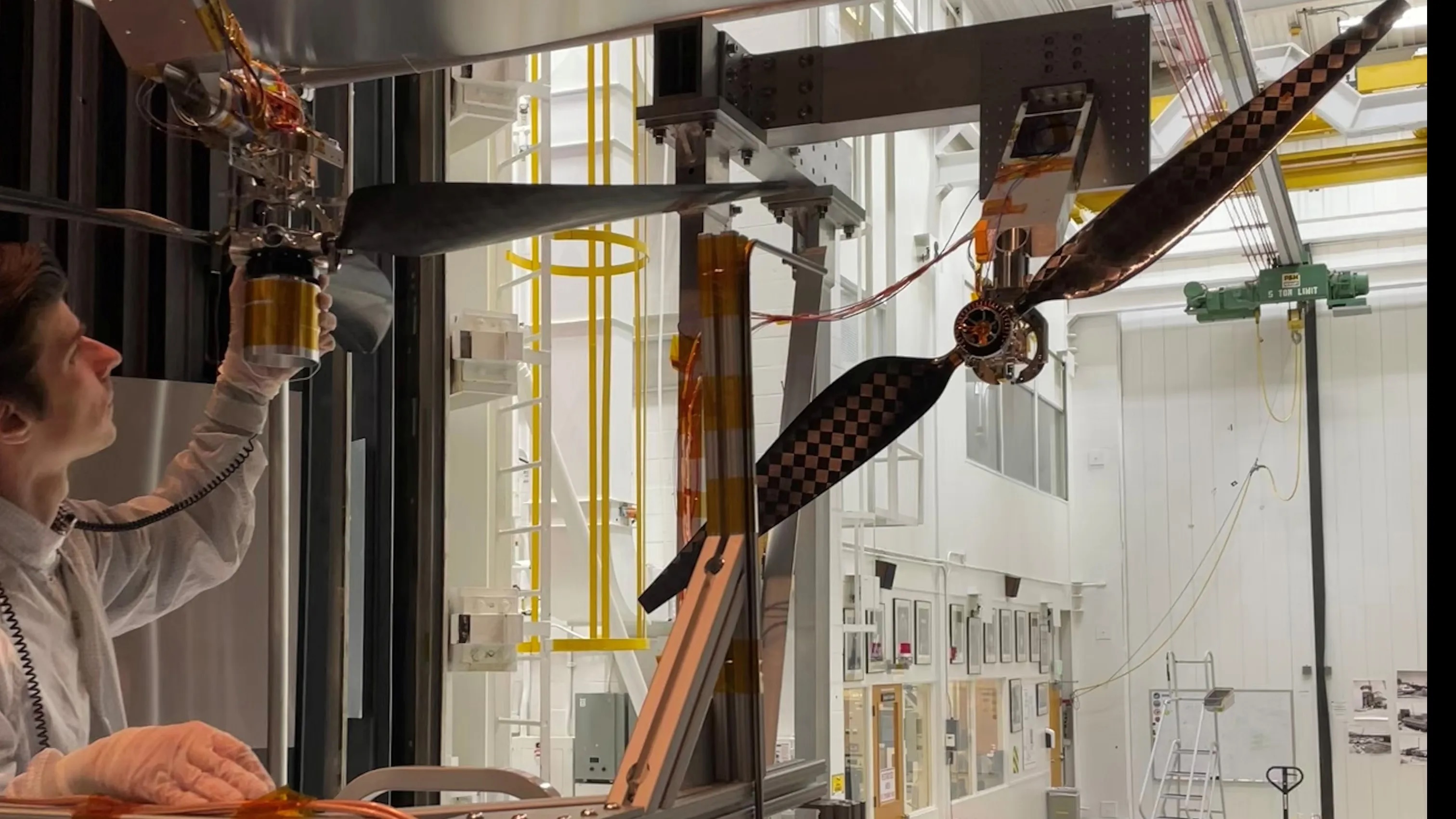
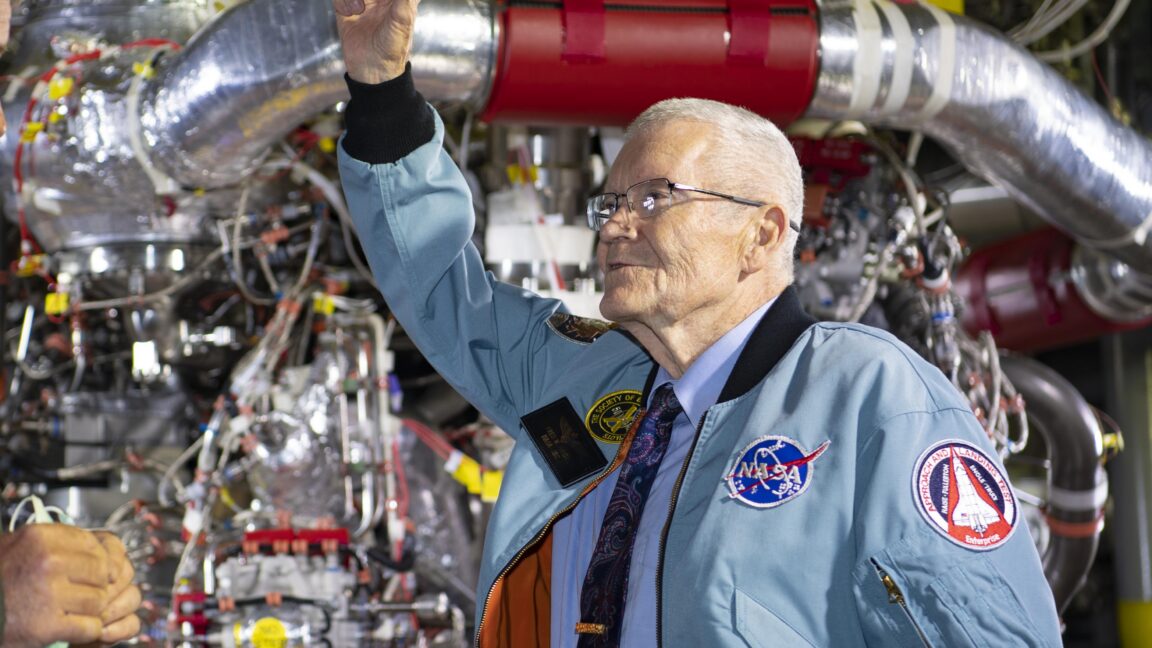
Rocket Report: SpaceX launch prices are going up; Russia fixes broken launch pad

CU later, EUS… “NASA must standardize its approach, increase flight rate safely, and execute on the president’s national space policy,” Isaacman said. “With credible competition from our greatest geopolitical adversary increasing by the day, we need to move faster, eliminate delays, and achieve our objectives.” The announced changes to the Artemis program include the cancellation of the Exploration Upper Stage and Block IB upgrade for SLS rocket, and future SLS missions, starting with Artemis IV, will use a “standardized” commercial upper stage. Artemis III will no longer land on the Moon. Instead, the Orion spacecraft will launch on SLS and dock with SpaceX’s Starship and/or Blue Origin’s Blue Moon landers in low-Earth orbit.

NASA favors ULA upper stage. United Launch Alliance’s Centaur V upper stage, used on the company’s Vulcan rocket, will replace the Exploration Upper Stage (EUS) on SLS missions beginning with Artemis IV, Bloomberg reports. ULA, a 50-50 joint venture between Boeing and Lockheed Martin, also built the interim upper stages flying on the Artemis I, II, and III missions. Those stages were based on designs used for ULA’s now-retired Delta IV Heavy rocket. With that production line shut down, ULA will now provide Centaur Vs to NASA. This means Boeing, which was on contract to develop the EUS, will still have a role in supplying upper stages for the SLS rocket. Boeing is also the prime contractor for the rocket’s massive core stage.

Building on a legacy… The Centaur V upper stage is the latest version of a design that dates back to the 1960s. Centaurs began flying in 1962, and the Centaur V is the most powerful variant, with a wider diameter and two hydrogen-fueled RL10 engines. The Centaur V still uses the ultra-thin, pressure-stabilized stainless steel structure used on all Centaur upper stages. The Centaur has a reliable track record, and the Centaur V’s predecessor, the Centaur III, was human-rated for launches of Boeing’s Starliner crew capsule.

https://arstechnica.com/space/2026/03/rocket-report-spacex-launch-prices-are-going-up-russia-fixes-broken-launch-pad/


Congress extends ISS and tells NASA to get moving on private space stations

Nominally, NASA plans to have one or more of these companies operating a commercial space station in low-Earth orbit by 2030. This is the date at which the US space agency has stated it will retire the aging laboratory, some elements of which are now nearly three decades old. However, some space policy officials have questioned whether any of the companies might be ready by then.

Cruz and other senators on the committee appear to share those concerns, as their legislation extends the International Space Station’s lifespan from 2030 to 2032 (an extension must still be approved by international partners, including Russia). Moreover, the authorization bill states, “The Administrator shall not initiate the de-orbit of the ISS until the date on which a commercial low-Earth orbit destination has reached an initial operational capability.”

With this legislation, the US Senate is making clear that it views a permanent human presence in low-Earth orbit as a high priority. This version of the authorization legislation must still be passed by the full Senate and work its way through the House of Representatives.

Reaction from the companies

After the legislation passed the Commerce committee, Axiom Space said on social media that it welcomes the changes: “Axiom Space is proud to support the NASA Authorization Act of 2026. The bill is a clear indicator that Chairman @SenTedCruz and the Senate Commerce Committee are determined to ensure the success of the entire human spaceflight enterprise.”

In an interview, the chief executive of Vast, Max Haot, said his company also welcomed the clarifying legislation—both for its language on commercial space stations as well as its reflection of the fact that NASA Administrator Jared Isaacman has been working overtime to set the Artemis lunar program on a better path for success.

“We are really impressed by what Jared has been able to do with the American space program and aligning all of the stakeholders,” he said. “As it relates to commercial space stations, we were happy to see the renewed commitment to transition from the ISS to commercial alternatives.”

Haot said there should not be a hard date for de-orbiting the International Space Station but that it should depend on the readiness of the commercial providers. He said Vast is confident that, should NASA issue an RFP and awards for private providers this year, Vast will be ready to support a continuous human presence in low-Earth orbit by the end of 2030.

https://arstechnica.com/space/2026/03/congress-steps-up-pressure-on-nasa-to-support-private-space-stations/


Space Command chief throws cold water on the question of UAPs in space

Judging from recent comments from Gen. Stephen Whiting, head of US Space Command, we shouldn’t expect anything like that in whatever the government might release in response to Trump’s pending order.

Gen. Stephen Whiting, commander of US Space Command.

Credit: US Air Force/Eric Dietrich

Gen. Stephen Whiting, commander of US Space Command. Credit: US Air Force/Eric Dietrich

“I can say, I, personally, was very interested in the president’s announcement,” Whiting told reporters last week at the Air and Space Forces Association’s Warfare Symposium in Colorado. “I look forward to seeing what data does come out. I can also tell you, as a space operator now of 36 years, having spent a lot of time with space domain awareness sensors, tracking things in space, I’ve never seen anything in space other than manmade objects, so I am not aware of anything that is extraterrestrial, other than comets and things like that.

“But I’m fascinated in the topic,” he continued. “And if something’s revealed, I’ll be interested as an American citizen.”

Space Command’s charge includes an area of responsibility (AOR) that extends from the top of Earth’s atmosphere to the Moon and beyond. One of its missions is to track, monitor, and catalog objects in space. Whiting suggested that everything he’s seen in orbit is attributable to a human-made or natural origin.

“We will respond to any presidential direction to go look at our files, but I think the term of art now is UAP, and the A is aerial, so these are things that are below the Kármán line (100 kilometers), that are in the atmosphere,” Whiting said. “I’ve seen some of the same videos and radar data that all of you have, and my guess is those relevant services and combatant commands will turn that data over. I’m very interested in the topic, but I have no personal experience with any of those phenomena.”

https://arstechnica.com/space/2026/03/space-command-chief-throws-cold-water-on-the-question-of-uaps-in-space/


The US Senate empowers NASA to fully engage in lunar space race

During a brief hearing on Wednesday morning, the Senate Committee on Commerce, Science, and Transportation spent only a few minutes “marking up” new legislation that provides guidance to NASA for its various initiatives, including the Artemis program to land humans on the Moon.

“Our bill authorizes critical funding for, and gives strategic direction to, the agency in line with the priorities of administrator Isaacman and the Trump administration,” said the committee’s chairman, Sen. Ted Cruz, (R-Texas).

The duration of the hearing, however, seems to be the inverse of its significance.

Elements of the legislation, now branded as The NASA Authorization Act of 2026 (see full text), have undergone significant revisions since just last week. The sweeping changes follow NASA Administrator Jared Isaacman’s announcement on Friday that he was shuffling the Artemis program to ensure that the US space agency would beat China back to the Moon and establish a long-term presence at the lunar south pole. In large part, the Senate’s bill endorses Isaacman’s plan of action.

“NASA faces a series of challenges,” Cruz said Wednesday. “Those challenges culminated in an announcement last Friday that NASA was making major changes to the Artemis missions and our eventual return to the lunar surface. Today, the Commerce committee will help guide those changes.”

Major changes to Artemis approved

With the revised legislation, Cruz and the Senate committee have empowered Isaacman and NASA to make significant changes to the Artemis Program. The revised plan for the space agency will likely lead to more launches and a much greater emphasis on the lunar surface.

https://arstechnica.com/space/2026/03/the-us-senate-empowers-nasa-to-fully-engage-in-lunar-space-race/


No fooling: NASA targets April 1 for Artemis II launch to the Moon

NASA has fixed the problem that forced the removal of the rocket for the Artemis II mission from its launch pad last month, but it will be a couple of weeks before officials are ready to move the vehicle back into the starting blocks at Kennedy Space Center in Florida.

The 322-foot-tall (98-meter) rocket could have launched as soon as this week after it passed a key fueling test on February 21. During that test, NASA loaded the Space Launch System rocket with super-cold propellants without any major problems, apparently overcoming a persistent hydrogen leak that prevented the mission from launching in early February.

However, another problem cropped up just one day after the successful fueling demo. Ground teams were unable to flow helium into the rocket’s upper stage. Unlike the connections to the core stage, which workers can repair at the launch pad, the umbilical lines leading to the upper stage higher up the rocket are only accessible inside the cavernous Vehicle Assembly Building (VAB) at Kennedy.

Mission managers quickly decided to roll the rocket back to the assembly building for troubleshooting. The rocket returned to the VAB on February 25, and within a week, engineers found the source of the helium flow issue. Inspections revealed that a seal in the quick disconnect, through which helium flows from ground systems into the rocket, was obstructing the pathway, according to NASA.

Sealing the deal

“The team removed the quick disconnect, reassembled the system, and began validating the repairs to the upper stage by running a reduced flow rate of helium through the mechanism to ensure the issue was resolved,” NASA said in an update posted Tuesday. “Engineers are assessing what allowed the seal to become dislodged to prevent the issue from recurring.”

https://arstechnica.com/space/2026/03/no-fooling-nasa-targets-april-1-for-artemis-ii-launch-to-the-moon/


As Moon interest heats up, two companies unveil plans for a lunar “harvester”

Starting smaller with FLIP

This is not the first time the two companies have worked together. Last August, Interlune announced that it would fly a multispectral camera on a smaller prototype rover being built by Astrolab. This camera will be used to estimate helium-3 quantities and concentration in Moon dirt, or regolith.

This FLIP rover, about the size of a go-kart, is due to launch later this year on a lunar lander built by Astrobotic. It will fly atop the Griffin lander, taking the place of NASA’s VIPER rover, which has been moved to another spacecraft.

The mission will therefore be a learning exercise for both Astrolab, in testing out its software and other features of a small lunar rover, as well as Interlune, which will seek to ground truth data about the concentration of Helium-3 that has previously been estimated from samples returned to Earth during the Apollo program.

In addition to FLIP, Astrolab is developing a larger rover, FLEX, that is about the size of a minivan. This vehicle has a horseshoe-shaped chassis that can accommodate about 3 cubic meters of payload. This allows for a broad array of activities, from carrying multiple scientific instruments across the Moon and providing a long-distance rover for two astronauts, to moving large equipment or, in the case of Interlune, serving as a mobile harvester.

“Our thesis is to make the most versatile platform possible so we can serve a wide array of customers and achieve NASA’s goal of being one customer among many,” said Jaret Matthews, Astrolab founder and chief executive, in an interview. “So we have essentially a modular approach that allows us to either pick up cargo or implements or payloads. And so in this case, the excavating equipment that Interlune is developing would basically go under the belly of the rover.”

https://arstechnica.com/space/2026/03/as-moon-interest-heats-up-two-companies-unveil-plans-for-a-lunar-harvester/


Former NASA chief turned ULA lobbyist seeks law to limit SpaceX funding

A highly regarded administrator

A former Republican House member from Oklahoma, Bridenstine served a generally well-regarded term as NASA administrator from April 2018 to January 2021 during President Trump’s first term.

The high point of his tenure in office came in May 2020, thanks to SpaceX. That summer, with the Crew Dragon vehicle, SpaceX and NASA successfully flew two astronauts to the International Space Station, breaking America’s dependence on Russia for low-Earth orbit transportation. Bridenstine relished this with an oft-repeated mantra of launching American astronauts on American rockets from American soil.

However, after leaving NASA, Bridenstine has appeared to become hostile to the dominant company founded by Elon Musk. He joined the board of a competitor, Viasat. Later, Bridenstine became the executive of Government Operations for United Launch Alliance, while his firm also collected a hefty lobbying fee.

All of this is not particularly abnormal for the revolving door in Washington, DC, where senior officials go between government positions and industry. Nevertheless, some observers were surprised by the striking nature of Bridenstine’s attack on NASA for the decision to award a Human Landing System contract to SpaceX in April 2021, three months after he left office. A new administrator had not yet been confirmed at NASA at the time, so a senior NASA engineer, Steve Jurczyk, served as acting administrator for the space agency.

Attacking his own process

Bridenstine sharply criticized this lander decision during testimony before Cruz’s committee last September.

“There was a moment in time when we had no NASA administrator,” he said at 42 minutes into the hearing. “It was after I was gone, and before Senator Nelson became the NASA administrator. An architecture was selected. And I don’t know how this happens, but the biggest decision in the history of NASA, at least since I’ve been paying attention, the biggest decision happened in the absence of a NASA administrator. And that decision was, instead of buying a Moon lander, we’re gonna buy a big rocket.”

https://arstechnica.com/space/2026/03/former-nasa-chief-turned-ula-lobbyist-seeks-law-to-limit-spacex-funding/


The Air Force’s new ICBM is nearly ready to fly, but there’s nowhere to put it

“We’ve gotten all the capability that we can out of the Minuteman,” said Gen. Stephen “S.L.” Davis, commander of Air Force Global Strike Command. Potential enemy threats to the Minuteman ICBM have “evolved significantly” since its initial deployment in the Cold War, Davis said.

The $141 billion figure is already out of date, as the Air Force announced last year that it would need to construct new silos for the Sentinel missile. The original plan was to adapt existing Minuteman III silos for the new weapons, but engineers determined that it would take too long and cost too much to modify the aging Minuteman facilities.

Instead, the Air Force, in partnership with contractors and the US Army Corps of Engineers, will dig hundreds of new holes across Colorado, Montana, Nebraska, North Dakota, and Wyoming. The new silos will include 24 new forward launch centers, three centralized wing command centers, and more than 5,000 miles of fiber connections to wire it all together, military and industry officials said.

Sentinel, which had its official start in 2016, will be the largest US government civil works project since the completion of the interstate highway system, and is the most complex acquisition program the Air Force has ever undertaken, wrote Sen. Roger Wicker (R-Mississippi) and Sen. Deb Fischer (R-Nebraska) in a 2024 op-ed published in the Wall Street Journal.

Gen. Dale White, the Pentagon’s director of critical major weapons systems, said Wednesday the Defense Department plans to complete a “restructuring” of the Sentinel program by the end of the year. Only then will an updated budget be made public.

The military stopped constructing new missile silos in the late 1960s and hasn’t developed a new ICBM since the 1980s. It shows.

https://arstechnica.com/space/2026/02/the-air-forces-new-icbm-is-nearly-ready-to-fly-but-theres-nowhere-to-put-them/


Hyperion author Dan Simmons dies from stroke at 77

Dan Simmons, the author of more than three dozen books, including the famed Hyperion Cantos, has died from a stroke. He was 77.

Simmons, who worked in elementary education before becoming an author in the 1980s, produced a broad portfolio of writing that spanned several genres, including horror fiction, historical fiction, and science fiction. Often, his books included elements of all of these. This obituary will focus on what is generally considered his greatest work, and what I believe is possibly the greatest science fiction novel of all time, Hyperion.

Published in 1989, Hyperion is set in a far-flung future in which human settlement spans hundreds of planets. The novel feels both familiar, in that its structure follows Chaucer’s Canterbury Tales, and utterly unfamiliar in its strange, far-flung setting.

Seven characters, seven stories

At its heart are the background stories of seven characters on a pilgrimage to the Time Tombs, which move backward in time. There, they may possibly confront a legendary, mythical, terrifying, and time-bending creature known as the Shrike. Each of the stories told by the seven characters is done so in a different subgenre, from tragedy to political thriller to military science fiction, and so on.

I went into Hyperion blind, decades ago, knowing almost nothing about it. I was never the same after finishing it. For a book that is, essentially, “hard” science fiction, Hyperion is also one of the most emotional books I have ever read.

The first tale is that of a priest, Lenar Hoyt, and the dying religion of Catholicism. By the end of this story of cruciforms, isolated civilizations, tesla trees, and more, I was floored. And that was just the first story of seven! Most powerful, for me, was the Scholar’s Tale, the story of Sol Weintraub and his daughter, Rachel. The first of my two daughters had just been born when I read this book, and for the first time ever, when reading, I cried. Cried like a baby.

https://arstechnica.com/culture/2026/02/hyperion-author-dan-simmons-dies-from-stroke-at-77/


NASA shakes up its Artemis program to speed up lunar return

At the core of Isaacman’s concerns is the low flight rate of the SLS rocket and Artemis missions. During past exploration missions, from Mercury through Gemini, Apollo, and the Space Shuttle program, NASA has launched humans on average about once every three months. It has been nearly 3.5 years since Artemis I launched.

“This is just not the right pathway forward,” Isaacman said.

A senior NASA official, speaking on background to Ars, noted that the space agency has experienced hydrogen and helium leaks during both the Artemis I and Artemis II pre-launch preparations, and these problems have led to monthslong delays in launch.

“If I recall, the timing between Apollo 7 and 8 was nine weeks,” the official said. “Launching SLS every three and a half years or so is not a recipe for success. Certainly, making each one of them a work of art with some major configuration change is also not helpful in the process, and we’re clearly seeing the results of it, right?”

The goal, therefore, is to standardize the SLS rocket into a single configuration to make it as reliable as possible and to launch it as frequently as every 10 months. NASA will fly the SLS vehicle until there are commercial alternatives to launch crew to the Moon, perhaps through Artemis V as Congress has mandated, or perhaps even a little longer.

Is everyone on board?

The NASA official said all of the agency’s key contractors are on board with the change, and senior leaders in Congress have been briefed on the proposed changes.

The biggest opposition to these proposals would seemingly come from Boeing, which is the prime contractor for the Exploration Upper Stage, a contract worth billions of dollars to develop a more powerful rocket that was due to launch for the first time later this decade. However, in a NASA news release, Boeing appeared to offer at least some support for the revised plans.

https://arstechnica.com/staff/2026/02/nasa-shakes-up-its-artemis-program-to-speed-up-lunar-return/