Rocket Report: Vulcan “many months” from flying; Falcon 9 extends reuse milestone

Studying the Ignorosphere … “I was surprised how big the event was, visually,” lead author Robin Wing, a researcher at the Leibniz Institute of Atmospheric Physics, said via email. He said people across northern Europe captured images of the burning debris, which was concentrated enough to enable high-resolution observations and to use atmospheric models to trace the lithium to its source. The study shows that instruments can detect rocket pollution “in the ‘Ignorosphere’ (upper atmosphere near space),” he wrote. “There is hope that we can get ahead of the problem and that we don’t run blind into a new era of emissions from space.”

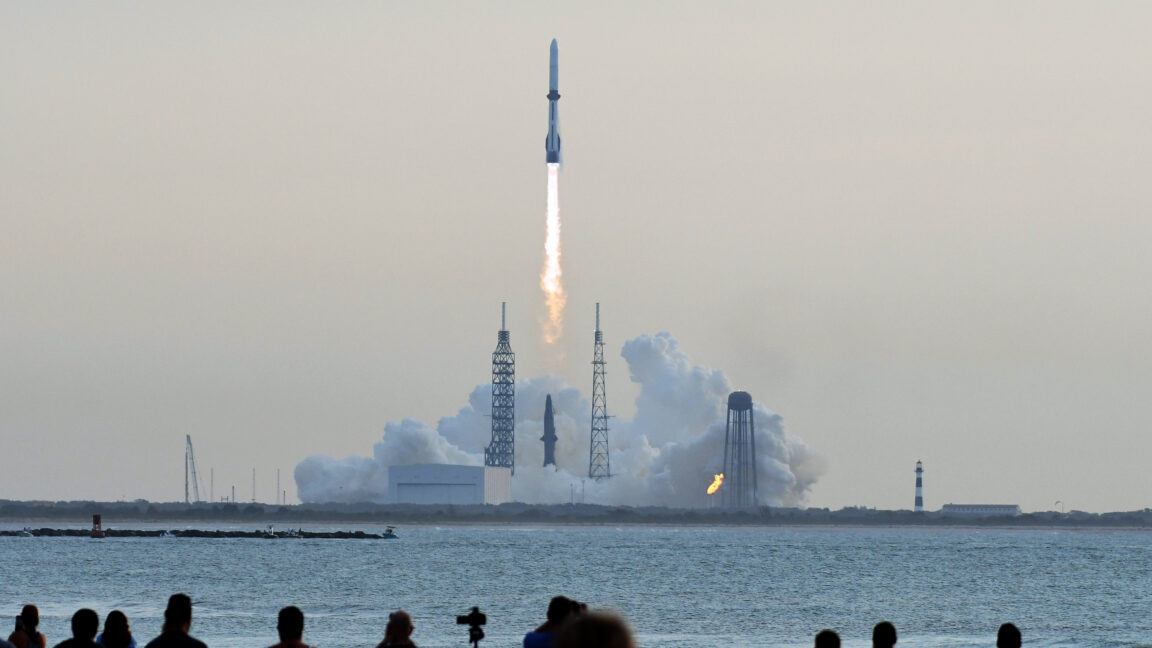
Ambitious Chinese launch company moves into development. Chinese launch startup Space Epoch has secured B-round funding as the company moves toward a first orbital launch and recovery attempt late this year, Space News reports. The company says the funding means Space Epoch has entered a stage of large-scale development. “Three Yuanxingzhe-1 rockets already in production will undergo ground testing in the second half of the year, with the goal of achieving a successful first orbital launch and recovery by year’s end,” Space Epoch said in a statement.

Funding amount undisclosed … Yuanxingzhe-1 (YXZ-1) is a methane-liquid oxygen rocket designed for reusability. Space Epoch says it has a payload capacity of 13,800 kilograms to a 200-kilometer orbit and 9,000 kg to a 1,100 km orbit—the latter altitude being one associated with the national Guowang megaconstellation. It also claims a price of no more than 20,000 yuan per kilogram (about $2,900 per kg), with the rocket designed to be reusable 20 times. The company conducted a vertical takeoff and splashdown test in May 2025 using a YXZ-1 verification rocket, carrying out a reuse test two months later.

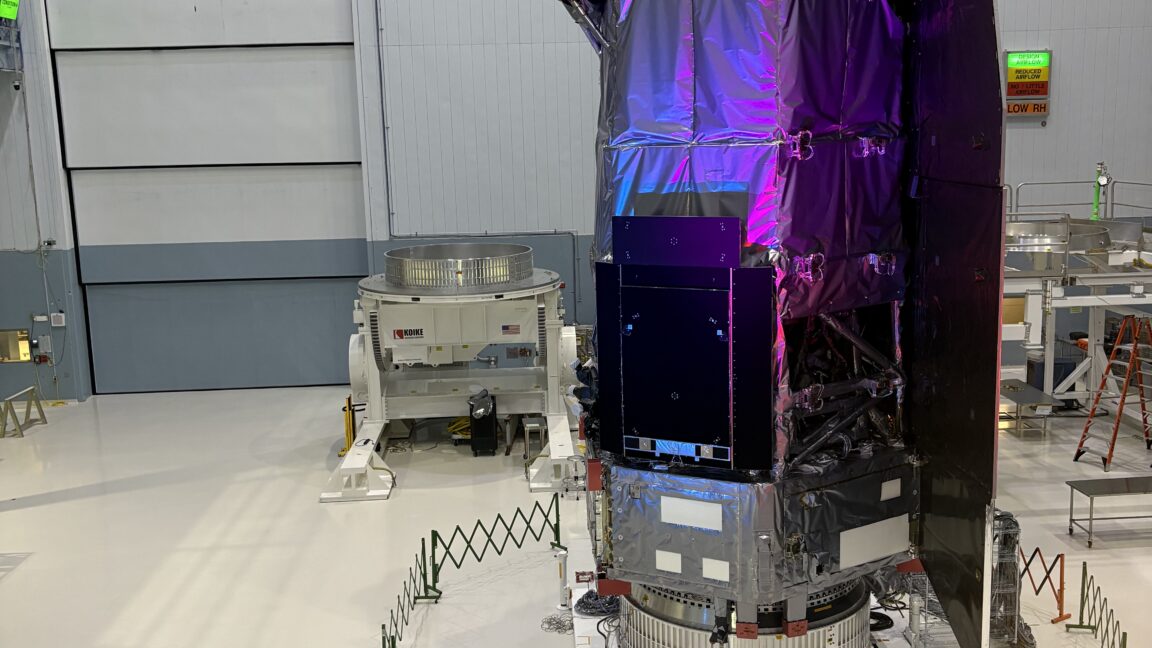
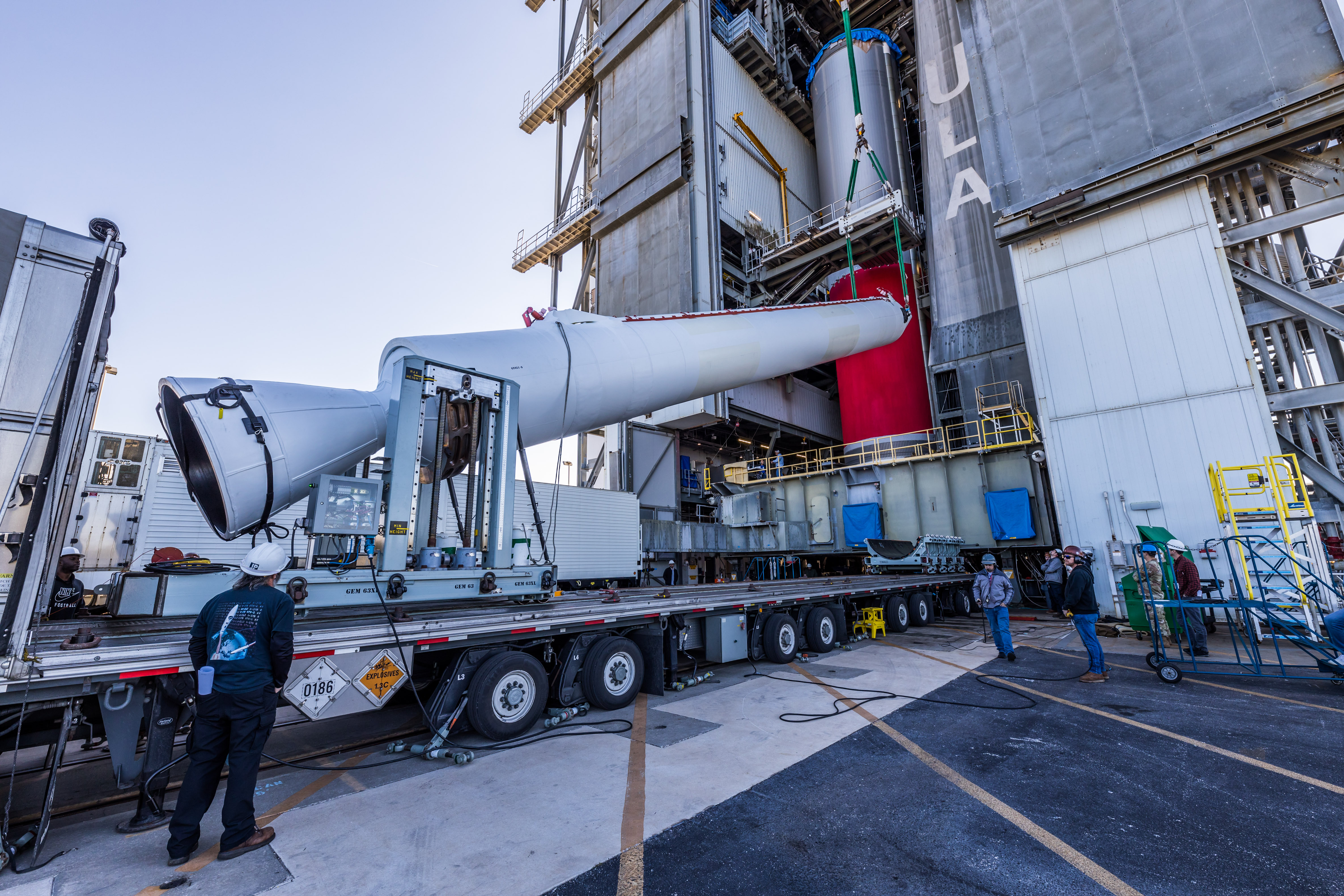
Vulcan likely “many months” from flying again. Twice, once in 2024 and again earlier this month, United Launch Alliance’s Vulcan rocket experienced issues with the nozzle on one of its solid rocket boosters during a launch. In both cases, the rocket’s main engines compensated for the issues, but the US military is not eager to test Vulcan’s ability to overcome such a dramatic problem again, Ars reports. “Any time there’s an anomaly, my team is going to be actively engaged with the contractors to make sure we understand what happened and we correct that issue,” said Col. Eric Zarybnisky, program acquisition executive for Space Systems Command’s space access program.

A nettlesome nozzle issue … Zarybnisky spoke with reporters Wednesday in a roundtable at the Air Force and Space Force Association’s Warfare Symposium near Denver. He said it was too early to provide details on the direction of the investigation but predicted it would be a “many months process” to identify the “exact technical issue” and the corrective actions required to prevent it from happening again. After the first booster issue in 2024, investigators identified a manufacturing defect in a carbon composite insulator, or heat shield, inside the nozzle. The latest incident suggests the defect was not fixed or that there is a separate problem with Northrop’s boosters. (submitted by philip verdieck)

https://arstechnica.com/space/2026/02/rocket-report-neutron-launch-date-is-delayed-again-vector-launch-is-back-sort-of/


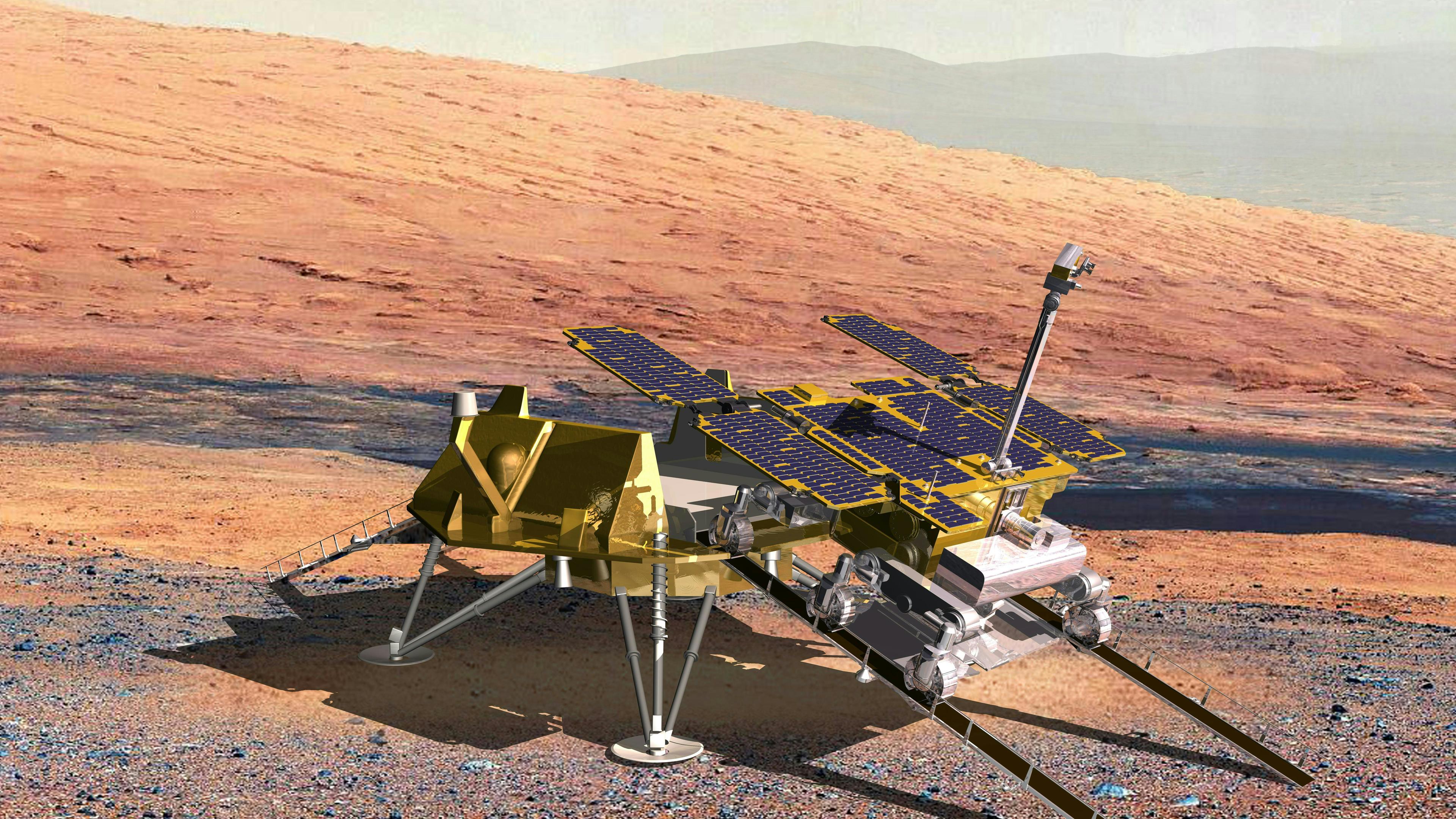
A non-public document reveals that science may not be prioritized on next Mars mission

The way this document is written suggests that when NASA scores bidders for the Mars Telecommunications Network, the addition of a camera or other scientific payloads won’t be a net positive. However, if they pose an overall risk to the mission, they would be a net negative.

New award to Rocket Lab may complicate things

One of the other intriguing parts of this mission is that it sets up a battle royale of sorts for some of NASA’s most prominent contractors. Rocket Lab and Blue Origin have both waged very public campaigns that tout their solutions to NASA’s needs. SpaceX is also interested in winning a Mars mission for its Starship launch system. Then there are traditional contractors, such as Lockheed Martin, which have a long and storied history of building robust (if costly) Mars missions.

If NASA is going to launch the Mars Telecommunications Network by late 2028 to make the next “window” to the red planet, it must move quickly with this solicitation. In particular, industry protests after a decision is made could hold up the project for months and would almost certainly doom NASA’s hopes of making the 2028 launch opportunity.

On Monday, the space agency awarded Rocket Lab a $390,936 contract to study “Mars End-to-End Communication Service Architectures.” The award is not significant monetarily, but it does indicate that NASA is interested in Rocket Lab’s ideas for improving communications between Earth and Mars, and potentially a Mars Sample Return mission down the road. However, one source suggested to Ars that the award is a potential conflict of interest.

The contracting office for the Rocket Lab award is Goddard Space Flight Center, which is also responsible for managing the Mars Telecommunications Network. That Rocket Lab, alone, received an award like this from the NASA center that will also decide on the orbiting spacecraft—coterminous when such a decision will be made—is surely to be the basis of one or more protests should Rocket Lab win the Mars Telecommunications Network contract, the source told Ars.

https://arstechnica.com/space/2026/02/a-non-public-document-reveals-that-science-may-not-be-prioritized-on-next-mars-mission/


Pentagon buyer: We’re happy with our launch industry, but payloads are lagging

DALLAS—The Space Force officer tasked with overseeing more than $24 billion in research and development spending says the Pentagon is more interested in supporting startups building new space sensors and payloads than adding yet another rocket company to its portfolio.

The statement, made at a space finance conference in Dallas last week, was one of several points Maj. Gen. Stephen Purdy wanted to get across to a room full of investors and commercial space executives.

The other points on Purdy’s agenda were that the Space Force is more interested in high-volume production than spending money to develop the latest technologies, and that the military has, at least for now, lost one of its most important tools for supporting and diversifying the space industrial base.

The rhetoric around prioritizing payloads over launchers aligns with the Space Force’s recent history of supporting small startups. Since 2020, SpaceWERX, the Space Force’s commercial innovation program, has awarded 23 funding agreements—called Strategic Funding Increases (STRATFIs)—to commercial space startups developing new sensors, software, satellite components, spacecraft buses, and orbital transfer vehicles. SpaceWERX awarded a single STRATFI agreement to a launch company—ABL Space Systems—and that firm has since exited the space launch market.

“We’re on path for mass-produced launch,” said Purdy, the military deputy for space acquisition in the Department of the Air Force. “We have got our ranges situated so we can do mass-produced launch. We’ve got our data centers and our data structure for mass-production. We’ve got AI pieces that are mass-produced, satellite buses are nearly there, and our payloads are the last element. Payloads at mass-produced affordability, at scale, is the key element.”

K2’s Gravitas satellite, set for launch next month, will test the company’s Hall-effect thruster, solar arrays, and other systems.

Credit: K2

K2’s Gravitas satellite, set for launch next month, will test the company’s Hall-effect thruster, solar arrays, and other systems. Credit: K2

Putting the money in

Payloads, Purdy told Ars after his talk, are “the last frontier” for scaling space missions. “The point is to get missions out the door as fast as possible. Two to three years is too slow. We’ve got to get down to one week. I’m not talking about super exquisite [payloads]. That’s not most of our missions. The commercial industry, your Kuipers [Amazon LEO], your Starlinks, have sort of got the comm piece down, but we’re still struggling in a lot of other stuff.”

https://arstechnica.com/space/2026/02/pentagon-buyer-were-happy-with-our-launch-industry-but-payloads-are-lagging/


Study shows how rocket launches pollute the atmosphere

Atmospheric scientist Laura Revell, with the University of Canterbury in New Zealand, presented research showing that rocket exhaust in the atmosphere can erase some of the hard-won gains in mitigating ozone depletion.

In a high-growth scenario for the space industry, there could be as many as 2,000 launches per year, which her modeling shows could result in about 3 percent ozone loss, equal to the atmospheric impacts of a bad wildfire season in Australia. She said most of the damage comes from chlorine-rich solid rocket fuels and black carbon in the plumes.

The black carbon could also warm parts of the stratosphere by about half-a-degree Celsius as it absorbs sunlight. That heats the surrounding air and can shift winds that steer storms and areas of precipitation.

“This is probably not a fuel type that we want to start using in massive quantities in the future,” she added.

Researchers at the conference estimated that in the past five years, the mass of human‑made material injected into the upper atmosphere by re‑entries has doubled to nearly a kiloton a year. For some metals like lithium, the amount is already much larger than that contributed by disintegrating meteors.

In the emerging field of space sustainability science, researchers say orbital space and near-space should be considered part of the global environment. A 2022 journal article co-authored by Moriba Jah, a professor of aerospace engineering and engineering mechanics at the University of Texas at Austin, argued that the upper reaches of the atmosphere are experiencing increased impacts from human activities.

The expanding commercial use of what appears to be a free resource is actually shifting its real costs onto others, the article noted.

At last year’s European Geosciences Union conference, Leonard Schulz, who studies space pollution at the Technical University Braunschweig in Germany, said, “If you put large amounts of catalytic metals in the atmosphere, I immediately think about geoengineering.”

There may not be time to wait for more scientific certainty, Schulz said: “In 10 years, it might be too late to do anything about it.”

Bob Berwyn is an Austria-based reporter who has covered climate science and international climate policy for more than a decade. Previously, he reported on the environment, endangered species and public lands for several Colorado newspapers, and also worked as editor and assistant editor at community newspapers in the Colorado Rockies.

This story originally appeared on Inside Climate News.

https://arstechnica.com/space/2026/02/study-shows-how-rocket-launches-pollute-the-atmosphere/


NASA says it needs to haul the Artemis II rocket back to the hangar for repairs

The helium system on the SLS upper stage—officially known as the Interim Cryogenic Propulsion Stage (ICPS)—performed well during both of the Artemis II countdown rehearsals. “Last evening, the team was unable to get helium flow through the vehicle. This occurred during a routine operation to repressurize the system,” Isaacman wrote.

The Space Launch System rocket emerges from the Vehicle Assembly Building to begin the rollout to Launch Pad 39B last month.

Credit: Stephen Clark/Ars Technica

The Space Launch System rocket emerges from the Vehicle Assembly Building to begin the rollout to Launch Pad 39B last month. Credit: Stephen Clark/Ars Technica

Another molecule, another problem

Helium is used to purge the upper stage engine and pressurize its propellant tanks. The rocket is in a “safe configuration,” with a backup system providing purge air to the upper stage, NASA said in a statement.

NASA encountered a similar failure signature during preparations for launch of the first SLS rocket on the Artemis I mission in 2022. On Artemis I, engineers traced the problem to a failed check valve on the upper stage that needed replacement. NASA officials are not sure yet whether the helium issue Friday was caused by a similar valve failure, a problem with an umbilical interface between the rocket and the launch tower, or a fault with a filter, according to Isaacman.

In any case, technicians are unable to reach the problem area with the rocket at the launch pad. Inside the VAB, ground teams will extend work platforms around the rocket to provide physical access to the upper stage and its associated umbilical connections.

NASA said moving into preparations for rollback now will allow managers to potentially preserve the April launch window, “pending the outcome of data findings, repair efforts, and how the schedule comes to fruition in the coming days and weeks.”

It’s not clear if NASA will perform another fueling test on the SLS rocket after it returns to Launch Pad 39B, or whether technicians will do any more work on the delicate hydrogen umbilical near the bottom of the rocket responsible for recurring leaks during the Artemis I and Artemis II launch campaigns. Managers were pleased with the performance of newly-installed seals during Thursday’s countdown demonstration, but NASA officials have previously said vibrations from transporting the rocket to and from the pad could damage the seals.

https://arstechnica.com/space/2026/02/nasa-says-it-needs-to-haul-the-artemis-ii-rocket-back-to-the-hangar-for-repairs/


After fueling test, optimism grows for March launch of Artemis II to the Moon

A second fueling test on NASA’s Space Launch System rocket ended Thursday night, giving senior managers enough confidence to move forward with plans to launch four astronauts around the Moon as soon as March 6.

Unlike the first attempt to load propellants into the SLS rocket on February 2, there were no major leaks during Thursday’s practice countdown at Kennedy Space Center in Florida. Technicians swapped seals at the launch pad after hydrogen gas leaked from the rocket’s main fueling line earlier this month. This time, the seals held.

“For the most part, those fixes all performed pretty well yesterday,” said Lori Glaze, acting associate administrator for NASA’s exploration programs. “We were able to fully fuel the SLS rocket within the planned timeline.”

The results keep the Artemis II mission on track for liftoff as soon as next month. NASA gave up on a series of February launch opportunities after encountering a persistent hydrogen leak during the first Wet Dress Rehearsal (WDR).

“We’re now targeting March 6 as our earliest launch attempt,” Glaze said. “I am going to caveat that. I want to be open, transparent with all of you that there is still pending work. There’s work, a lot of forward work, that remains.”

If teams complete all of that work, liftoff of the Artemis II mission could occur within a two-hour window opening at 8:29 pm EST on March 6 (01:29 UTC on March 7). NASA has other launch dates available on March 7, 8, 9, and 11, but the mission may have to wait until April. There are approximately five days per month that the mission can depart the Earth after accounting for the position of the Moon in its orbit, the flight’s trajectory, and thermal and lighting constraints.

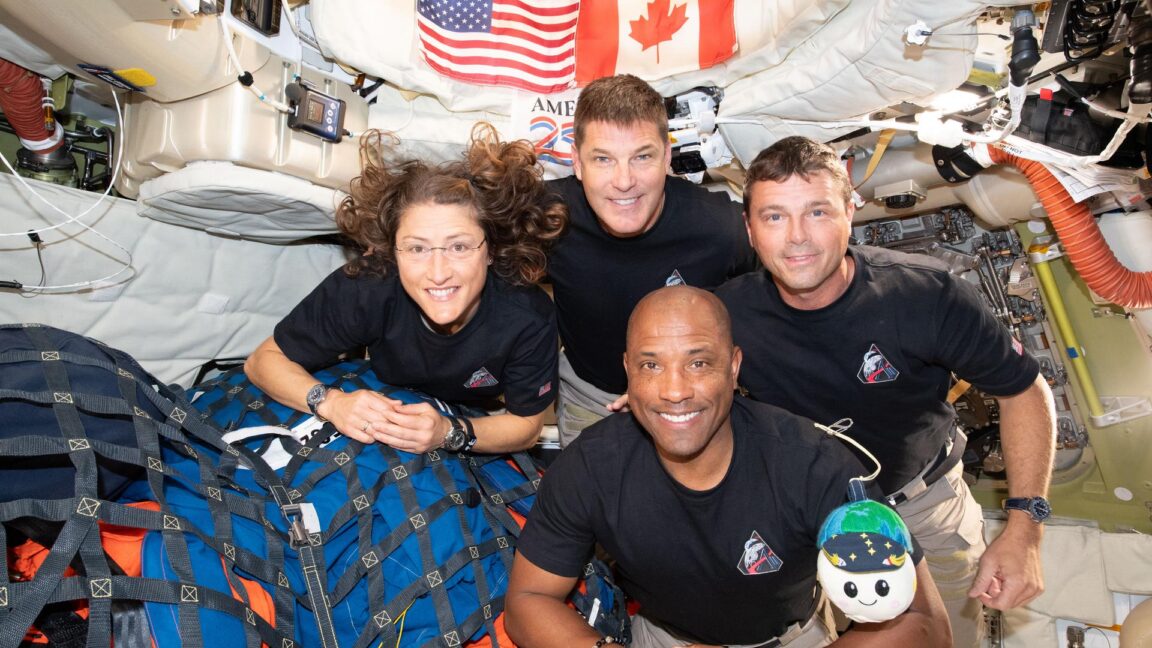
The Artemis II mission will last between nine and 10 days, taking NASA’s Orion spacecraft with commander Reid Wiseman, pilot Victor Glover, and mission specialists Christina Koch and Jeremy Hansen around the far side of the Moon before returning to Earth for splashdown in the Pacific Ocean. Wiseman’s crew will set the record for the farthest humans have ever traveled from Earth, and will become the first people to fly to the vicinity of the Moon since 1972.

https://arstechnica.com/space/2026/02/nasa-reports-no-significant-leaks-in-artemis-ii-fueling-test-eyes-march-6-launch/


NASA chief classifies Starliner flight as “Type A” mishap, says agency made mistakes

Still, after astronauts Butch Wilmore and Suni Williams eventually docked at the station, Boeing officials declared success. “We accomplished a lot, and really more than expected,” said Mark Nappi, vice president and manager of Boeing’s Commercial Crew Program, during a post-docking news conference. “We just had an outstanding day.”

Over the subsequent weeks of the summer of 2024, NASA mostly backed Boeing, saying that its primary option was bringing the crew home on Starliner.

Finally, by early August, NASA publicly wavered and admitted that Wilmore and Williams might return on a SpaceX Crew Dragon spacecraft. Yet Boeing remained steadfast. On a Boeing website called “Starliner Updates” that has since gone offline, as late as August 2, 2024, the company was declaring that its “confidence remains high” in Starliner’s return with crew (see archive).

It was, in fact, not outstanding

However, on August 24, NASA made it official and decided that Wilmore and Williams would not fly back on Starliner. Instead, the crew would come home on a Crew Dragon. Wilmore and Williams safely eventually returned to Earth in March 2025 as part of the Crew 9 mission.

The true danger the astronauts faced on board Starliner was not publicly revealed until after they landed and flew back to Houston. In an interview with Ars, Wilmore described the tense minutes when he had to take control of Starliner as its thrusters began to fail, one after the other.

Essentially, Wilmore could not fully control Starliner any longer. But simply abandoning the docking attempt was not a palatable solution. Just as the thrusters were needed to control the vehicle during the docking process, they were also necessary to position Starliner for its deorbit burn and reentry to Earth’s atmosphere. So Wilmore had to contemplate whether it was riskier to approach the space station or try to fly back to Earth.

“I don’t know that we can come back to Earth at that point,” he said. “I don’t know if we can. And matter of fact, I’m thinking we probably can’t. So there we are, loss of 6DOF control, four aft thrusters down, and I’m visualizing orbital mechanics. The space station is nose down. So we’re not exactly level with the station, but below it. If you’re below the station, you’re moving faster. That’s orbital mechanics. It’s going to make you move away from the station. So I’m doing all of this in my mind. I don’t know what control I have. What if I lose another thruster? What if we lose comm? What am I going to do?”

One thing that has surprised outside observers since publication of Wilmore’s harrowing experience is how NASA, knowing all of this, could have seriously entertained bringing the crew home on Starliner.

https://arstechnica.com/space/2026/02/nasa-chief-classifies-starliner-flight-as-type-a-mishap-says-agency-made-mistakes/


There’s a lot of big talk about sovereign launch—who is doing something about it?

Many European nations have their own satellite projects. Historically, their preference for launching on European rockets has not been as strong as it is for pan-European programs managed by ESA and the EU. So it has never been unusual to see a British, German, Spanish, or Italian satellite launching on a foreign rocket.

This posture is starting to change. All four of these nations have invested in homegrown rockets in recent years. Germany made the biggest splash last year when the government announced $41 billion (35 billion euros) in space spending over the next five years. “Satellite networks today are an Achilles’ heel of modern societies. Whoever attacks them paralyzes entire nations,” said Boris Pistorius, Germany’s defense minister, during the announcement.

Every satellite network needs a launch pad and a rocket. In late 2024, the German federal government made more than $110 million (95 million euros) available to three German launch startups: Isar Aerospace, Rocket Factory Augsburg, and HyImpulse. All three are also backed by private funding, with Isar leading the pack with approximately $650 million (550 million euros) from investors. None have reached orbit yet. For comparison, Rocket Lab, the world’s most successful launch startup not founded by a billionaire, raised $148 million (approximately $200 million adjusted for inflation) before reaching orbit in 2018. Nearly all of it came from private sources.

Rocket Lab, which operates the Electron small satellite launcher seen in this image, is the most successful modern commercial launch startup not founded by a billionaire. Rocket Lab went public in 2021, three years after its first successful orbital launch.

Credit: Rocket Lab

Rocket Lab, which operates the Electron small satellite launcher seen in this image, is the most successful modern commercial launch startup not founded by a billionaire. Rocket Lab went public in 2021, three years after its first successful orbital launch. Credit: Rocket Lab

In 2023, the Italian government committed more than $300 million in support of Avio, the company that already builds and operates the Vega satellite launcher. Avio is based in Italy and is using the funds to develop methane propulsion, among other things.

With help from other ESA member states, Italy is one of the countries that already has a rocket made largely of domestic or European components. The United States, Russia, China, France, Japan, the United Kingdom, India, Israel, Iran, North Korea, South Korea, and New Zealand have also successfully launched satellites using their own rockets.

https://arstechnica.com/space/2026/02/which-countries-are-actually-serious-about-developing-their-own-rockets/


Space Station returns to a full crew complement after a month

Running solo

After these astronauts departed on January 15, just a single NASA astronaut, Chris Williams, remained in orbit. He had reached space on board a Russian Soyuz spacecraft in November, alongside two Russian cosmonauts, Sergey Kud-Sverchkov and Sergei Mikaev. The space station is a big place, and with much of the facility now more than two decades old, Williams had to spend the majority of his time on maintenance and monitoring activities.

Back on Earth, NASA and SpaceX engineers were busy too. Because Crew 11 was brought home more than a month early, NASA and SpaceX scrambled to launch the Crew-12 vehicle a little sooner than expected, to minimize the time Williams had to manage the large US segment of the station on his own.

Expedition 74 welcomes NASA’s SpaceX Crew-12 members aboard the International Space Station. In the front from left are Andrey Fedyaev of Roscosmos;Jack Hathaway and Jessica Meir, both from NASA; and Sophie Adenot from ESA (European Space Agency). In the back are Sergey Kud-Sverchkov of Roscosmos, Chris Williams of NASA, and Sergei Mikaev of Roscosmos.

Expedition 74 welcomes NASA’s SpaceX Crew-12 members aboard the International Space Station. In the front from left are Andrey Fedyaev of Roscosmos;Jack Hathaway and Jessica Meir, both from NASA; and Sophie Adenot from ESA (European Space Agency). In the back are Sergey Kud-Sverchkov of Roscosmos, Chris Williams of NASA, and Sergei Mikaev of Roscosmos.

That culminated with a successful Dragon launch early on Friday, with the reinforcements reaching the space station on Saturday evening.

“This mission has shown, in many ways, what it means to be mission focused at NASA,” said the space agency’s administrator, Jared Isaacman, during a post-launch news conference. “In the last couple of weeks we brought Crew 11 home early, we pulled forward Crew 12, all while simultaneously making launch preparations for the Artemis II mission. It’s only possible because of the incredibly talented workforce we have here at NASA alongside our contractors, and our commercial and international partners.”

https://arstechnica.com/space/2026/02/space-station-returns-to-a-full-crew-complement-after-a-month/


NASA has a new problem to fix before the next Artemis II countdown test

John Honeycutt, chair of NASA’s Artemis II mission management team, said the decision to relax the safety limit between Artemis I and Artemis II was grounded in test data.

“The SLS program, they came up with a test campaign that actually looked at that cavity, the characteristics of the cavity, the purge in the cavity … and they introduced hydrogen to see when you could actually get it to ignite, and at 16 percent, you could not,” said Honeycutt, who served as NASA’s SLS program manager before moving to his new job.

Hydrogen is explosive in high concentrations when mixed with air. This is what makes hydrogen a formidable rocket fuel. But it is also notoriously difficult to contain. Molecular hydrogen is the smallest molecule, meaning it can readily escape through leak paths, and poses a materials challenge for seals because liquified hydrogen is chilled to minus 423 degrees Fahrenheit (minus 253 degrees Celsius).

So, it turns out NASA used the three-year interim between Artemis I and Artemis II to get comfortable with a more significant hydrogen leak, instead of fixing the leaks themselves. Isaacman said that will change before Artemis III, which likewise is probably at least three years away.

“I will say near-conclusively for Artemis III, we will cryoproof the vehicle before it gets to the pad, and the propellant loading interfaces we are troubleshooting will be redesigned,” Isaacman wrote.

Isaacman took over as NASA’s administrator in December, and has criticized the SLS program’s high costestimated by NASA’s inspector general at more than $2 billion per rocket—along with the launch vehicle’s torpid flight rate.

NASA’s expenditures for the rocket’s ground systems at Kennedy Space Center are similarly enormous. NASA spent nearly $900 million on Artemis ground support infrastructure in 2024 alone. Much of the money went toward constructing a new launch platform for an upgraded version of the Space Launch System that may never fly.

All of this makes each SLS rocket a golden egg, a bespoke specimen that must be treated with care because it is too expensive to replace. NASA and Boeing, the prime contractor for the SLS core stage, never built a full-size test model of the core stage. There’s currently no way to completely test the cryogenic interplay between the core stage and ground equipment until the fully assembled rocket is on the launch pad.

Existing law requires NASA continue flying the SLS rocket through the Artemis V mission. Isaacman wrote that the Artemis architecture “will continue to evolve as we learn more and as industry capabilities mature.” In other words, NASA will incorporate newer, cheaper, reusable rockets into the Artemis program.

The next series of launch opportunities for the Artemis II mission begin March 3. If the mission doesn’t lift off in March, NASA will need to roll the rocket back to the Vehicle Assembly Building to refresh its flight termination system. There are more launch dates available in April and May.

“There is still a great deal of work ahead to prepare for this historic mission,” Isaacman wrote. “We will not launch unless we are ready and the safety of our astronauts will remain the highest priority. We will keep everyone informed as NASA prepares to return to the Moon.”

https://arstechnica.com/space/2026/02/nasa-chief-vows-to-solve-sls-rocket-fueling-issues-before-artemis-iii/