Four astronauts are back home after a daring ride around the Moon
Slamming into the atmosphere at more than 30 times the speed of sound, NASA’s Orion spacecraft blazed a trail over the Pacific Ocean on Friday, returning home with four astronauts and safely capping humanity’s first voyage to the Moon in nearly 54 years.

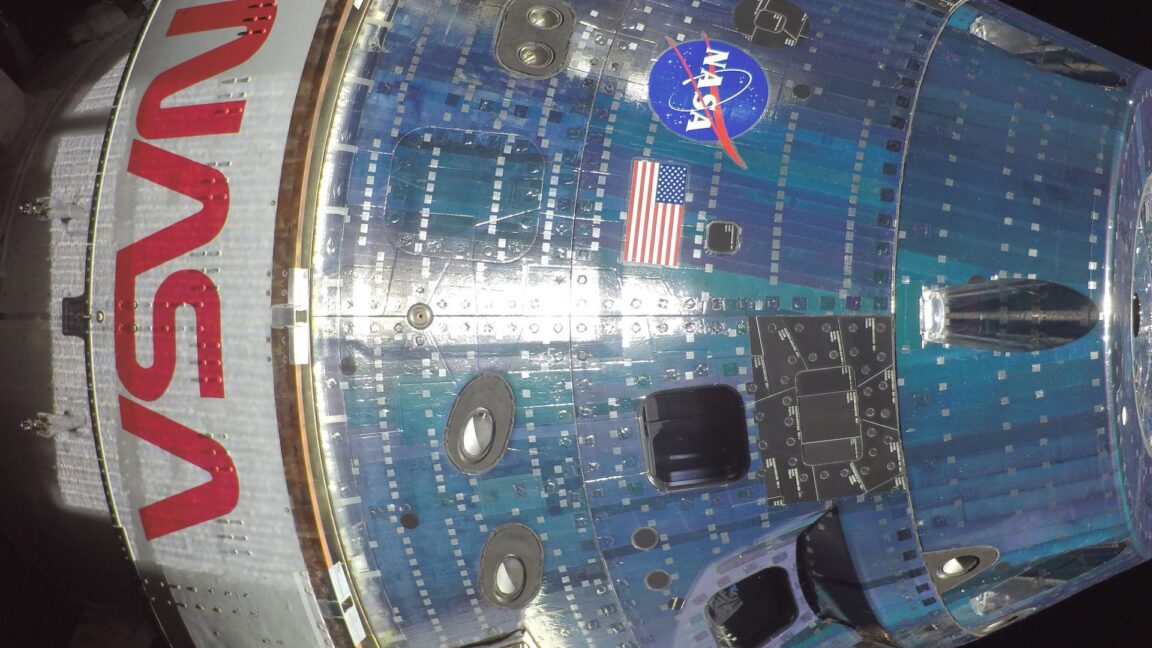
Temperatures outside the capsule built up to some 5,000 degrees Fahrenheit as a sheath of plasma enveloped the Orion spacecraft, named Integrity, and its four long-distance travelers, temporarily blocking radio signals the Moon ship and Mission Control in Houston. Flying southwest to northeast, the spacecraft steered toward a splashdown zone southwest of San Diego, where a US Navy recovery ship held position to await the crew’s homecoming. Ground teams regained communications with Orion commander Reid Wiseman after a six-minute blackout.

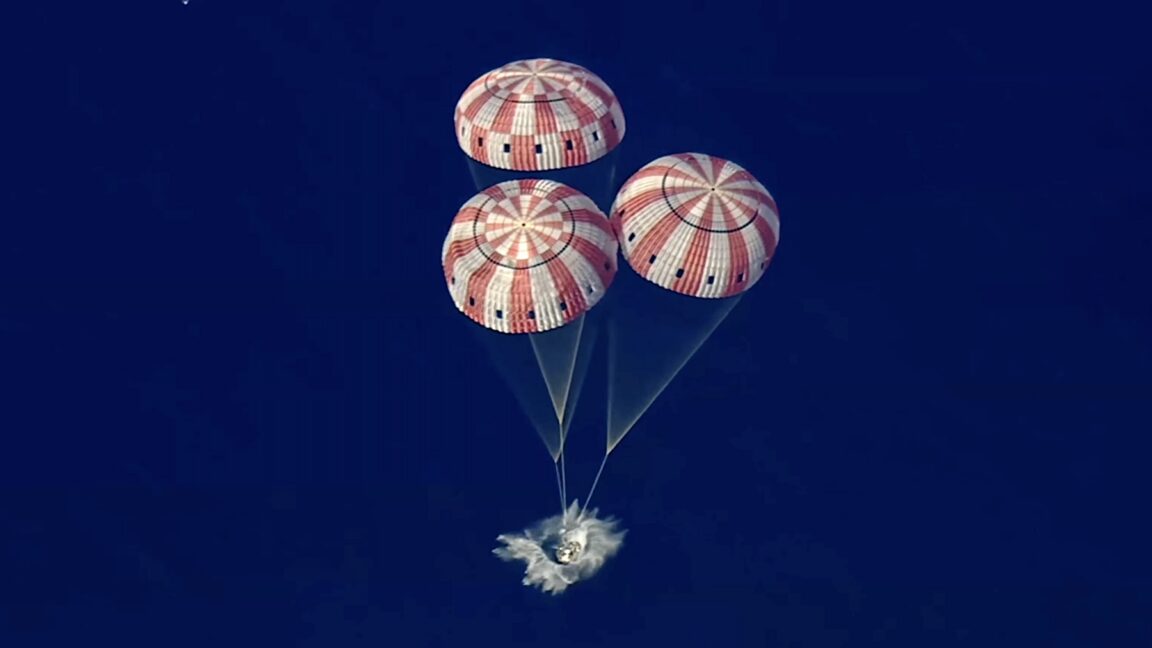
Airborne tracking planes beamed live video of Orion’s descent back to Mission Control, showing the capsule jettison its parachute cover and deploy a series of chutes to stabilize its plunge toward the Pacific. Then, three larger main chutes, each with an area of 10,500 square feet, opened to slow Orion for splashdown at 8:07 pm EDT Friday (00:07 UTC Saturday).

In just 14 minutes, Orion bled off nearly 25,000 mph of velocity, subjecting the crew strapped into their seats to two brief periods of about 3.9 Gs.

The USS John P. Murtha amphibious transport dock ship dispatched helicopters and small boats to begin extracting Wiseman and his Artemis II crewmates: Victor Glover, Christina Koch, and Jeremy Hansen. Wiseman reported “four green crew members” inside the cockpit of the Orion spacecraft, confirming good health and high spirits after splashdown.

Koch exited the capsule first, joining Navy divers on an inflatable raft, or “front porch,” assembled next to the spacecraft. Glover was next, then Hansen, a Canadian astronaut, stepped out of Orion onto the front porch. Wiseman, the captain of the ship, was last to leave his seat and join the recovery team. Two helicopters were expected to hoist the astronauts from the sea and fly them them to the John P. Murtha, where they were to undergo medical checks before traveling to San Diego, then back to Houston for a reunion with their families Saturday.

https://arstechnica.com/space/2026/04/four-astronauts-are-back-home-after-a-daring-ride-around-the-moon/

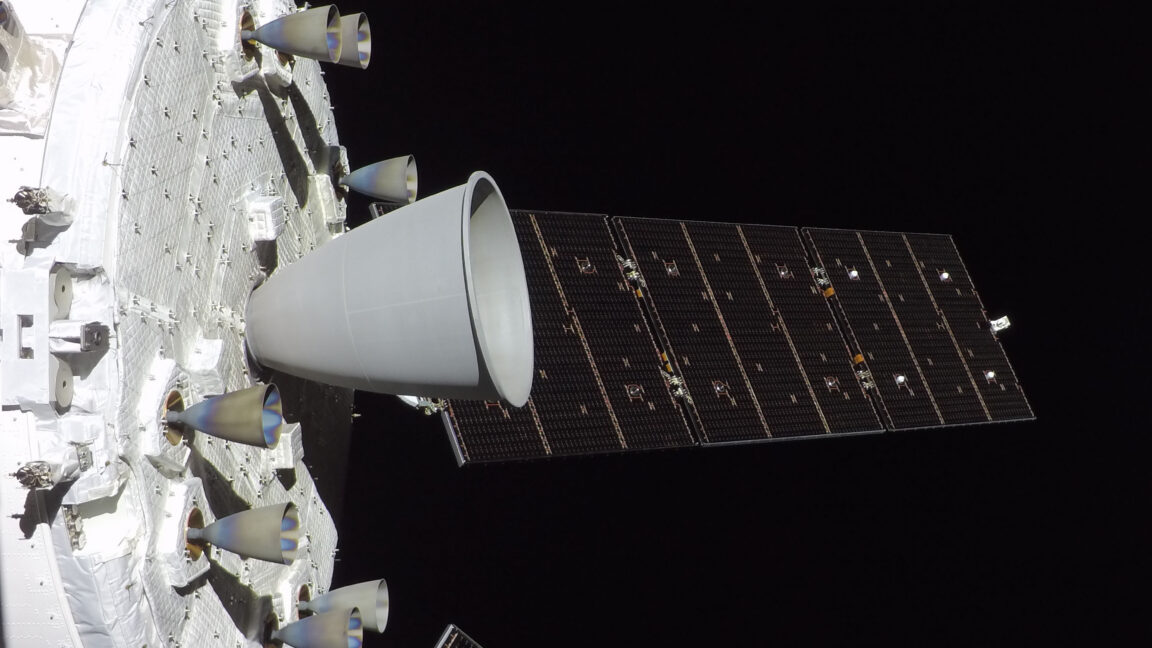
Here’s what to expect from the fiery, 14-minute return of Artemis II

NASA’s new administrator, Jared Isaacman, also had questions when he took the job in December 2025. But in January, after a review, Isaacman announced he had “full confidence” in Orion’s heat shield using the new entry profile. He invited Ars Technica to Washington, DC, to sit in on a technical briefing at the time. From this detailed information, it sure seemed like NASA had put in the hard work and testing to back up its decision.

Even so, you’ve got to go fly to be sure. And that’s what will happen this evening.

“There’s no question that I’ll be anxious,” said Amit Kshatriya, the space agency’s top civil servant, this week. “We’ve done the work. It’s impossible to say you don’t have irrational fears left. But I don’t have any rational fears.”

Splashdown

After the heat shield bears the brunt of the heating, Orion will jettison the “forward bay cover” at the top of the spacecraft at about 35,000 feet. This protective cover must be cast off for three small, drogue parachutes to deploy at about 22,000 feet. After three pilot parachutes deploy, the mains are due to come out at about 6,000 feet. The aim is to slow the spacecraft to 20 mph at splashdown.

Parachutes have been deploying from returning spacecraft for nearly seven decades. Even so, it’s a nervous moment since there is no backup. If they fail, the mission fails.

Under a nominal reentry, the crew will experience two brief periods of 3.9 Gs. However, in some scenarios, these G-loads could reach 7.5 Gs, entry flight director Rick Henfling said.

After splashdown, recovery crews from the USS John P. Murtha will approach Orion and deploy an inflatable device at Orion’s hatch, known as the “front porch.” Winds and seas at the recovery area are forecast to be calm. Recovery crew members, in a nominal scenario, will extract astronaut Christina Koch first, followed by Victor Glover, Jeremy Hansen, and finally Wiseman.

They will then be transported by two helicopters back to the recovery ship for an initial checkout. If all goes well, the triumphant astronauts will fly back to Houston on Saturday morning to be reunited with their family members.

https://arstechnica.com/space/2026/04/heres-what-to-expect-from-the-fiery-14-minute-return-of-artemis-ii/


Rocket Report: Chinese version of Falcon 9 fails; Artemis depends on rapid heavy lift

Accumulating a lot of experience … Booster 1076 entered the SpaceX fleet in 2021 and since then has launched missions including CRS-22, Crew-3, Turksat 5B, Crew-4, CRS-25, Eutelsat Hotbird 13G, SES O3B mPOWER-A, PSN Satria, Telkomsat Merah Putih 2, Galileo L13, Koreasat-6A Crew-6, and USSF-124, plus 22 batches of Starlink satellites. (submitted by EllPeaTea)

Atlas V launches heaviest payload. United Launch Alliance launched its latest Atlas 5 rocket, which carried a batch of 29 Amazon Leo satellites to low-Earth orbit early on April 4, Spaceflight Now reports. The mission was the largest and heaviest payload carried to orbit by an Atlas 5 rocket to date, according to ULA.

Upper stage performance is key … The previous four missions for Amazon Leo that launched on Atlas 5 rockets carried 27 satellites each. ULA and Amazon Leo were able to increase the payload stack to 29 as “a result of detailed engineering work between ULA and Amazon,” according to ULA. Amazon pointed to ULA’s use of the RL10C-1-1 engine on the rocket’s upper stage as a key reason why they were able to add two more satellites to the mission.

SLS rocket successfully delivers Artemis II crew to orbit. On April 1, the Space Launch System rocket majestically launched the Orion spacecraft into orbit from Kennedy Space Center in Florida, Ars reports. A few minutes after liftoff, as Artemis II headed east over the Atlantic Ocean, the astronauts got their first glimpse of the full Moon through their forward windows. “We have a beautiful moonrise,” Artemis II Commander Reid Wiseman reported. “We’re heading right at it.”

Two for two … The SLS rocket has now launched two times, both successfully. In the days afterward, NASA engineers said the rocket had inserted Orion into its proper orbit with greater than 99 percent accuracy, better even than the Artemis I mission in late 2022. The Mobile Launch tower was being prepared for movement back into the Vehicle Assembly Building in Florida for minor repairs and to prepare for the stacking of the SLS rocket for the Artemis III mission. The program is preparing to support a launch in 2027.

https://arstechnica.com/space/2026/04/rocket-report-price-parity-between-ariane-6-and-falcon-9-isar-stands-down/


Orion helium leak no threat to Artemis II reentry but will require redesign

NASA’s schedule currently puts the launch of Artemis III in 2027 and Artemis IV in 2028. Kshatriya said he was confident that NASA, working with the European Space Agency and Airbus, which builds the service module, will be able to fix the valve problem in time for Artemis IV. Manufacturing of the Artemis IV service module is largely complete.

“I’m pretty sure we’re going to need to, at a minimum, tweak the design to prevent the leak rate that we have, if not fundamentally change the way the valve works,” he said.

Valves are a common bugaboo on rockets and spacecraft. Nearly every US human spaceflight program has dealt with malfunctioning or leaky valves. Boeing’s Starliner crew capsule suffered helium leaks in its propulsion system, along with other issues, during a test flight to the International Space Station in 2024. Helium valves on the Space Launch System rocket had to be replaced in the run-up to the Artemis I and Artemis II launches. SpaceX has also scrubbed launches due to valve problems. The list goes on.

“There are a lot of options for how to take care of this problem,” Kshatriya said of the issue on the Orion spacecraft. “If anything, I’d characterize it as a production redesign risk for the Artemis IV mission, which I think we can get in front of, and which is why we put so much attention on it during this mission to make sure [we understand] what we’re seeing.”

The big lesson NASA learned on Artemis I involved the capsule’s heat shield. The ablative thermal barrier burned away unevenly as the craft reentered the atmosphere, but Orion still made it to a safe, on-target splashdown. NASA officials said they are confident the heat shield will hold up on Artemis II after adjusting the path Orion will take through the upper atmosphere. A new heat shield design will debut on Artemis III.

NASA engineers spent two years investigating the heat shield issue after Artemis I. Kshatriya does not expect the valve redesign to take as long.

“It’s not a safety of flight, safety of crew, must-work function like the heat shield investigation sent us down,” he said. “It’s going to take work to get it right, but it’s not of that magnitude.”

https://arstechnica.com/space/2026/04/nasa-homes-in-on-likely-redesign-to-fix-orion-spacecrafts-leaky-valves/


The gravity of their experience hasn’t quite set in for the Artemis II astronauts

“We have loved living in Orion,” said Christina Koch, mission specialist on Artemis II. “In fact, we’ve all said that sometimes you can forget where you really are, because we’re in this small space that just gives us everything we need.”

Living in microgravity makes the cramped quarters seem a little more accommodating. The astronauts can take advantage of every corner of the spacecraft.

“It is bigger in microgravity, and yes, we are bumping into each other 100 percent of the time,” Koch said. “A phrase that you often hear in the cabin is, ‘Don’t move your foot. I’m just going to reach for something right under it.’”

NASA named the crew members for the Artemis II mission three years ago. Now, the astronauts will have their names in the history books. With Artemis II, the number of people alive who have traveled to the vicinity of the Moon has nearly doubled. Just five of the 24 men who flew to the Moon are still alive. Four of them walked on its surface.

“I will miss this camaraderie. I will miss being this close with this many people and having a common purpose, a common mission,” Koch said. “This sense of teamwork is something that you don’t usually get as an adult. I mean, we are close, like brothers and sisters, and that is a privilege we will never have again.”

One of the most poignant moments of the mission was a tribute to Wiseman’s late wife, Carroll, who died of cancer in 2020. On Monday, as the crew neared the Moon, Hansen radioed down the crew’s request to name a crater for Carroll.

“When Jeremy spelled Carol’s name, C-A-R-R-O-L- L, I think, for me, that’s when I was overwhelmed with emotion,” Wiseman said. “And I looked over and Christina was crying. I put my hand down on Jeremy’s hand as he was still talking. I could just tell he was trembling, and we all pretty much broke down right there. And just for me, personally, that was kind of the pinnacle moment of the mission. For me, that was, I think, where the four of us were the most forged, the most bonded, and we came out of that really focused on the day ahead.”

https://arstechnica.com/space/2026/04/astronauts-recall-the-sci-fi-experience-of-flying-in-the-shadow-of-the-moon/


Finally, Artemis delivers some exceptional, high-quality photos of the Moon

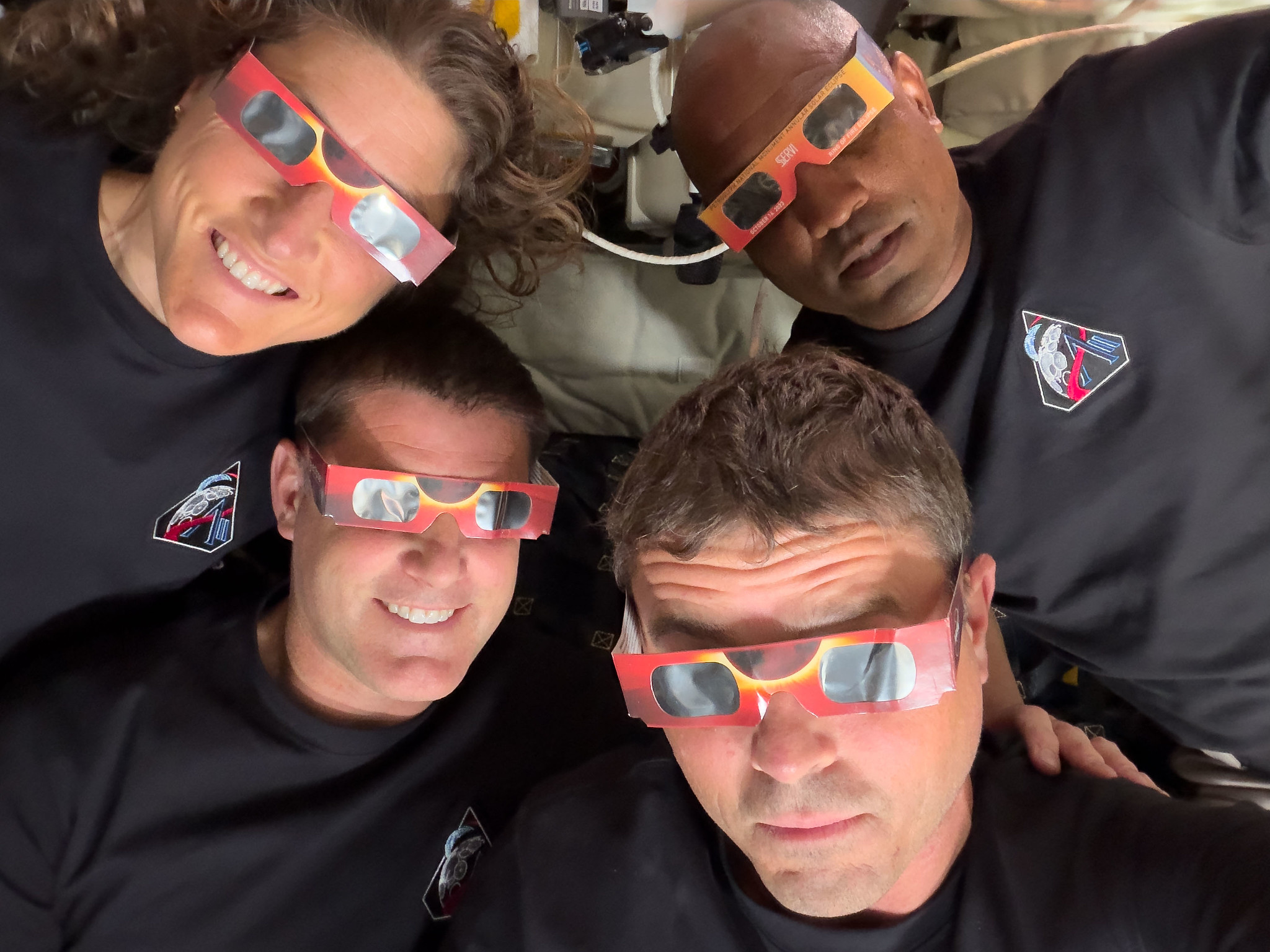
The eclipse glasses are identical to what NASA produced for the 2024 total solar eclipse.

Credit: NASA

The eclipse glasses are identical to what NASA produced for the 2024 total solar eclipse. Credit: NASA

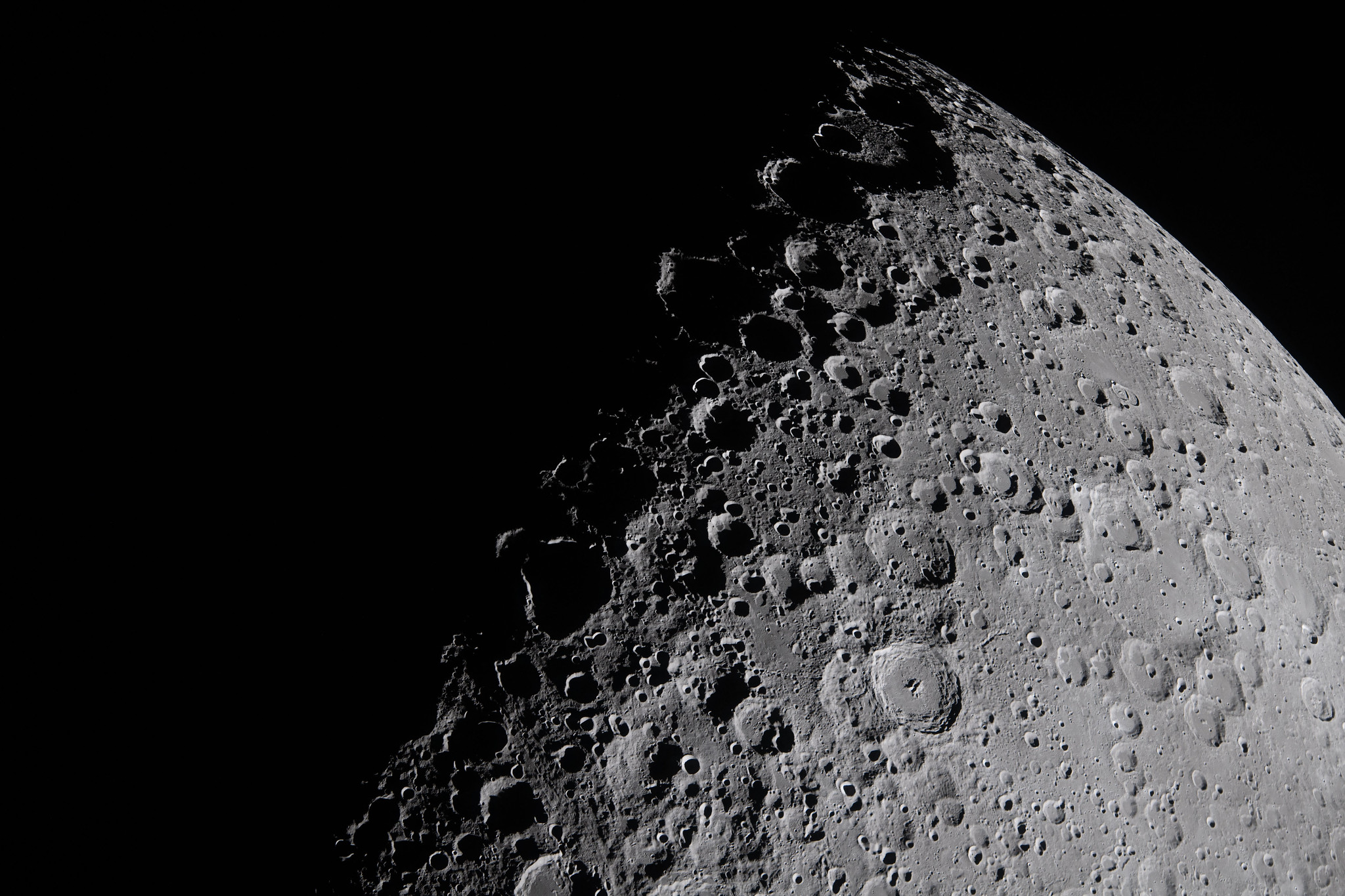
During their flyby of the Moon, the spacecraft got to within 4,067 miles (6,545 km) of the Moon’s surface.

The Artemis II crew captures a portion of the Moon coming into view along the terminator.

Credit: NASA

The Artemis II crew captures a portion of the Moon coming into view along the terminator. Credit: NASA

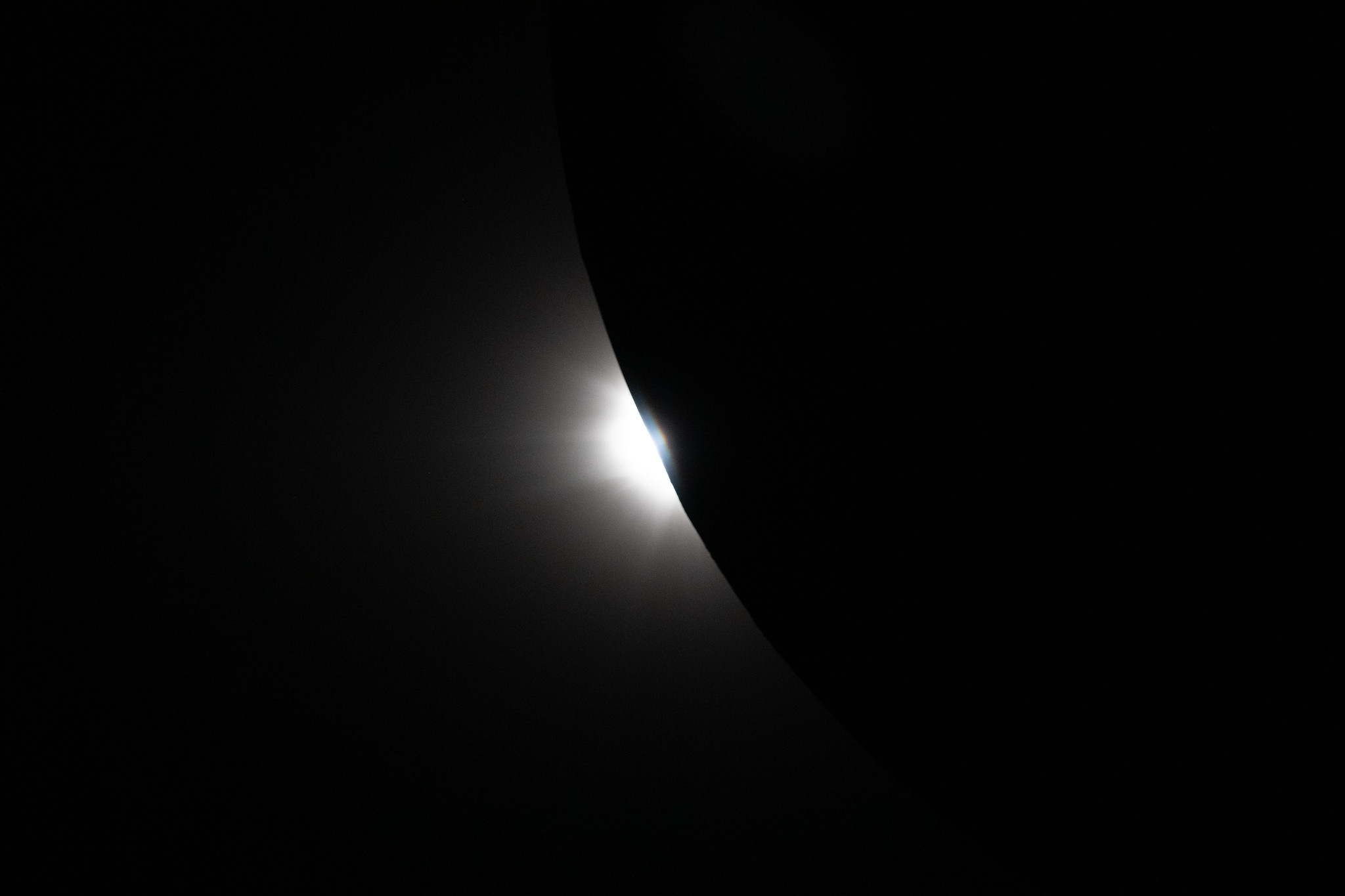
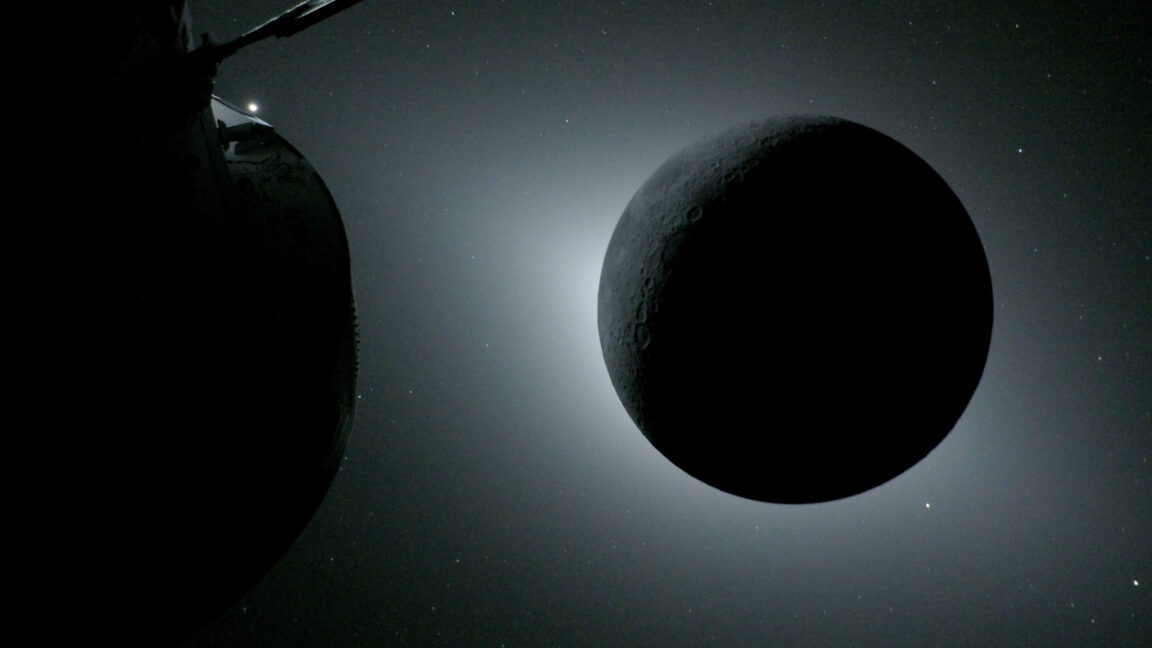
Only a portion of the Moon is visible in frame below, with its curved edge revealing a bright sliver of sunlight returning after nearly an hour of darkness.

This image shows the Sun beginning to peek out from behind the Moon as the eclipse transitions out of totality.

Credit: NASA

This image shows the Sun beginning to peek out from behind the Moon as the eclipse transitions out of totality. Credit: NASA

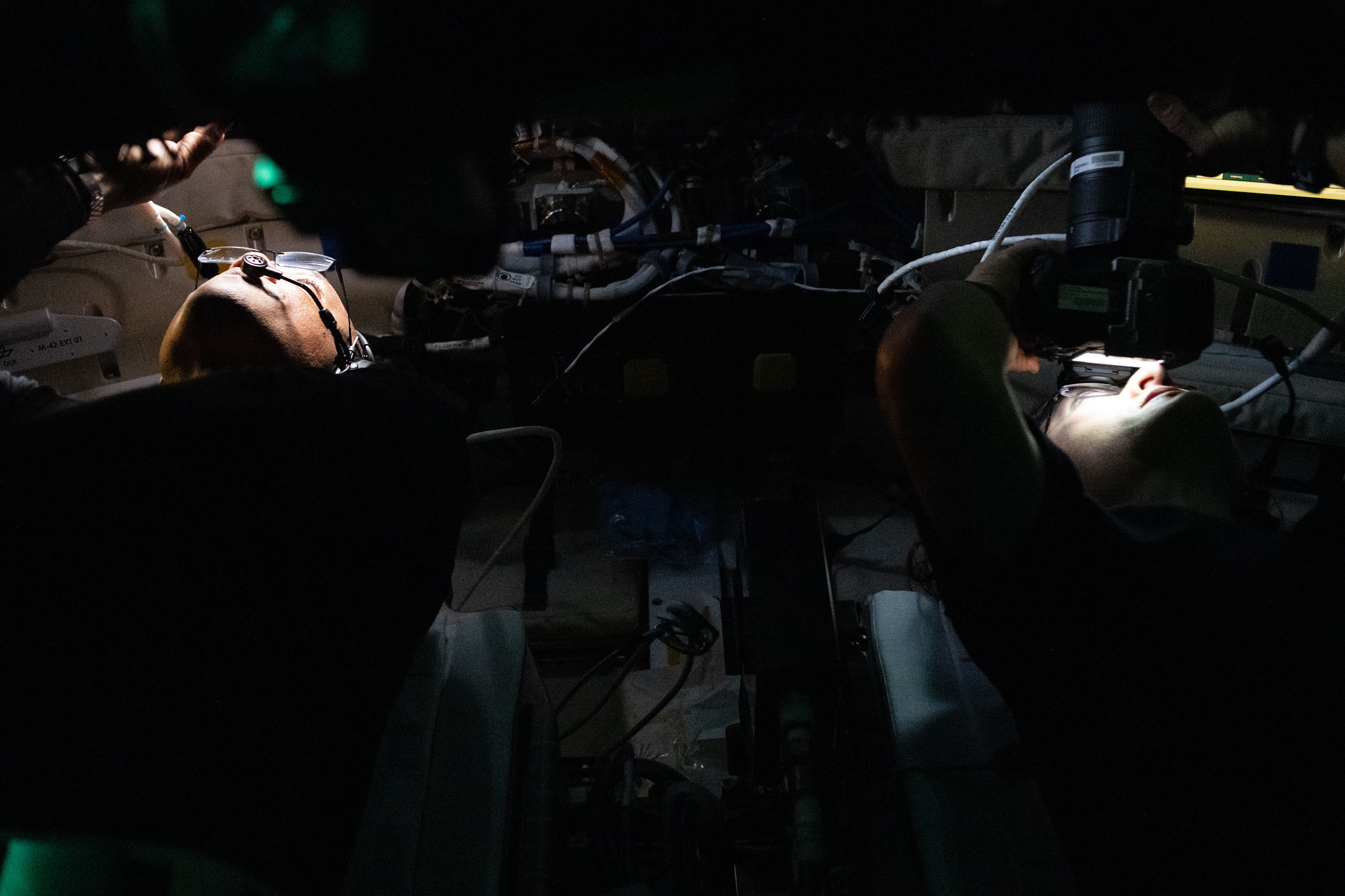
Each astronaut took turns photographing and documenting the Moon, both for audiences back on Earth and for the lunar science community.

Glover, the pilot on Artemis II, said the astronauts had trouble taking photos that did the view justice.

“What we’re seeing, we’re just not picking up on the cameras,” Glover said. “After all the amazing sights that we saw earlier, we just went sci-fi. It just looks unreal. You can see the surface of the Moon [from] the Earthshine. You can actually see a majority of the Moon. It is the strangest-looking thing.”

Artemis II Pilot Victor Glover and Mission Specialist Christina Koch gather images and observations of the lunar surface.

Credit: NASA

Artemis II Pilot Victor Glover and Mission Specialist Christina Koch gather images and observations of the lunar surface. Credit: NASA

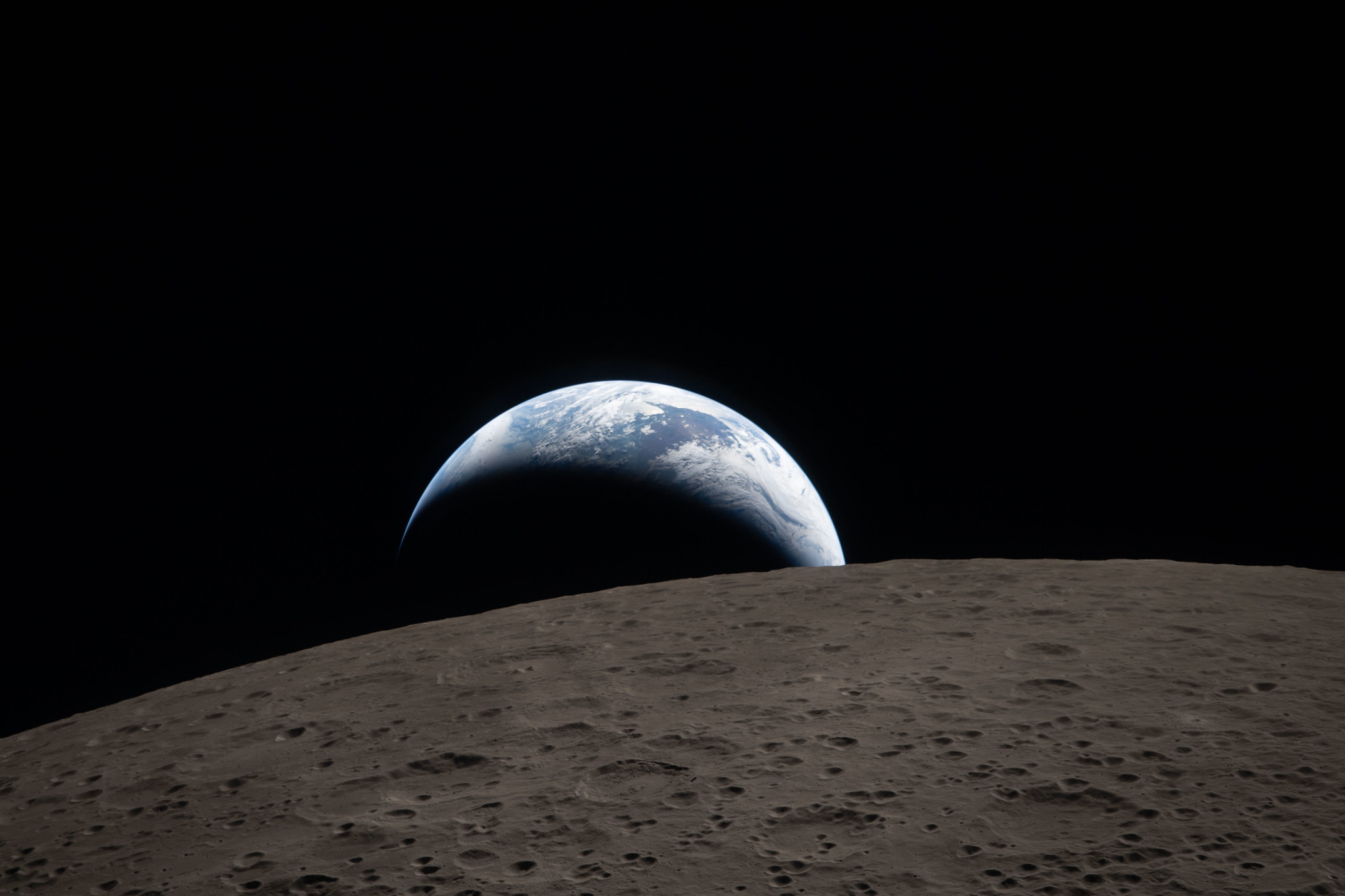
Humanity has seen similar images to the one below, beginning with the iconic Earthrise image captured by Apollo 8. But these are the highest-resolution images of the phenomenon and hint at a future with far more time spent near, and on, the Moon’s surface.

Earthset captured through the Orion spacecraft window at 6:41 pm EDT, April 6, 2026.

Credit: NASA

Earthset captured through the Orion spacecraft window at 6:41 pm EDT, April 6, 2026. Credit: NASA

The Artemis II mission is now speeding back toward Earth, with the spacecraft due to splash down on Friday evening off the coast of California.

https://arstechnica.com/space/2026/04/the-artemis-ii-mission-sends-back-stunning-images-of-the-far-side-of-the-moon/


Why is NASA bothering to go back to the Moon if we’ve already been there?

KENNEDY SPACE CENTER, Fla.—The first time NASA launched humans toward the Moon, in December 1968, the United States was a deeply fractured nation.

The historic flight of three people into the unknown brought a measure of solace to a country riven by assassinations, riots, political discord, and a deeply unpopular foreign war.

If history does not repeat itself, it certainly rhymes. Today, four humans are on the way to the Moon, Reid Wiseman, Victor Glover, Christina Koch, and Jeremy Hansen. They do so, once again, amid a troubled world.

Will Artemis II have a similar impact? Does it even matter?

Artemis II was not a global event

The world of today is, of course, incredibly different from that of the 1960s, especially the landscape of media competing for public attention. Just three US television networks graced the airwaves then, compared to hundreds today and a bazillion more online through viewing options like YouTube and social media. And increasingly, younger generations are as interested in creating content as they are in consuming it.

The world population in 1968 was about 3.5 billion people, or a little less than half of today’s. Yet an estimated one-quarter of them watched broadcasts from the Moon. The stunning “Earthrise” photo, which poetically illustrated how humanity was all in this together, captured worldwide attention.

We don’t have concrete viewer numbers of the Artemis II launch. Based on preliminary estimates, though, the total viewership of NASA’s livestream reached about 16 million people, with perhaps that many more watching television broadcasts and online streams. Undoubtedly millions of people will see snippets on social media accounts. But by any measure, the launch of Artemis II does not seem to have been a global event.

https://arstechnica.com/space/2026/04/artemis-ii-is-unlikely-to-be-the-cultural-touchstone-apollo-8-was-and-thats-ok/


Amazon is trying to buy Globalstar to compete with SpaceX’s Starlink

Apple invested $1.5 billion in Globalstar in 2024, taking a 20 percent stake in the company. As part of the agreement, Globalstar agreed to reserve 85 percent of its network capacity for the iPhone maker for satellite-based texting when outside cellular tower coverage.

Bloomberg reported in October that Globalstar was exploring a sale and had held early talks with SpaceX.

Amazon has been pushing forward with its own effort, dubbed Leo, launching the first batch of satellites for its Internet constellation last year.

The company has more than 180 satellites in orbit, but its deployment is dwarfed by the more than 10,000 active satellites operated by SpaceX.

Amazon in February was forced to seek a two-year extension to a July deadline from the Federal Communications Commission for the launch of 1,600 satellites.

Amazon plans to have about 700 satellites in space by the middle of this year but has said that a launch capacity shortage is hampering the build-out of its service, according to regulatory filings.

Amazon has signed deals with JetBlue and Delta for Internet services on flights commencing in 2027 and 2028, respectively.

Andy Jassy, Amazon’s chief executive, told investors in February that Leo was part of a suite of “incremental opportunities” that the $2.2 trillion e-commerce group would pursue.

Globalstar reported full-year revenue of $273 million in its latest annual results, a 9 percent increase from 2024. Income from operations was $7.4 million in 2025, after a narrow loss in the year before.

Additional reporting from Rafe Rosner-Uddin and Stephen Morris.

© 2026 The Financial Times Ltd. All rights reserved. Not to be redistributed, copied, or modified in any way.

https://arstechnica.com/tech-policy/2026/04/amazon-is-trying-to-buy-globalstar-to-compete-with-spacexs-starlink/


Artemis II, NASA’s boldest mission in generations, launches crew to the Moon

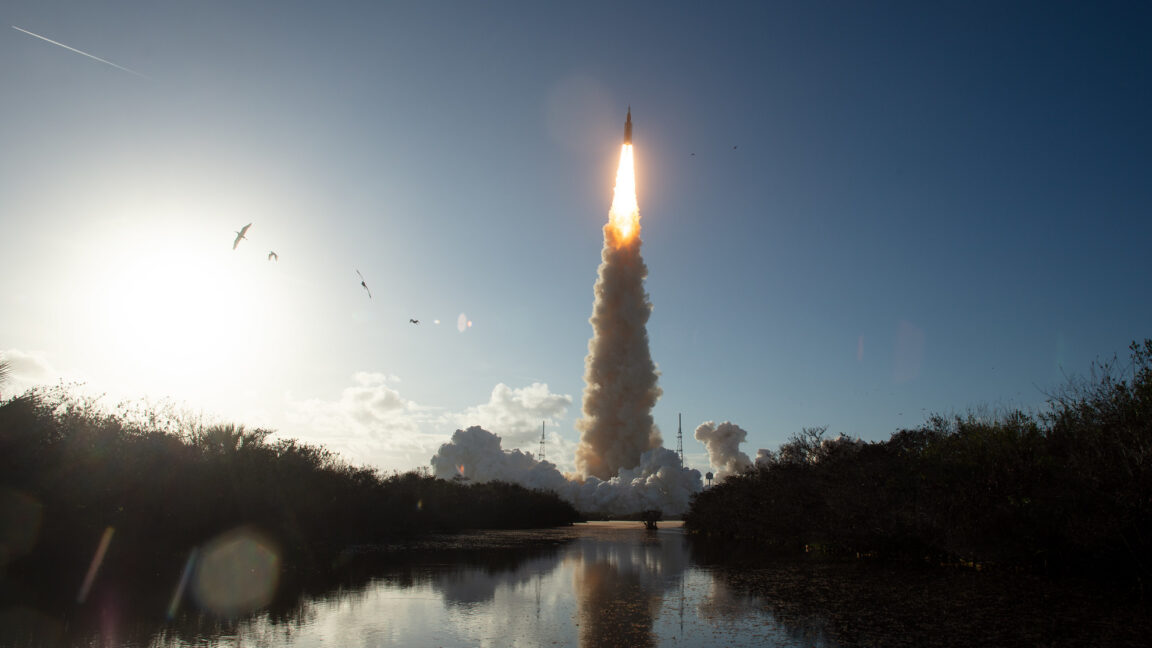
KENNEDY SPACE CENTER, Fla.—Three Americans and one Canadian launched into orbit from Florida’s Space Coast on Wednesday, flying the most powerful rocket ridden by humans on the first leg of a nine-day voyage around the Moon.

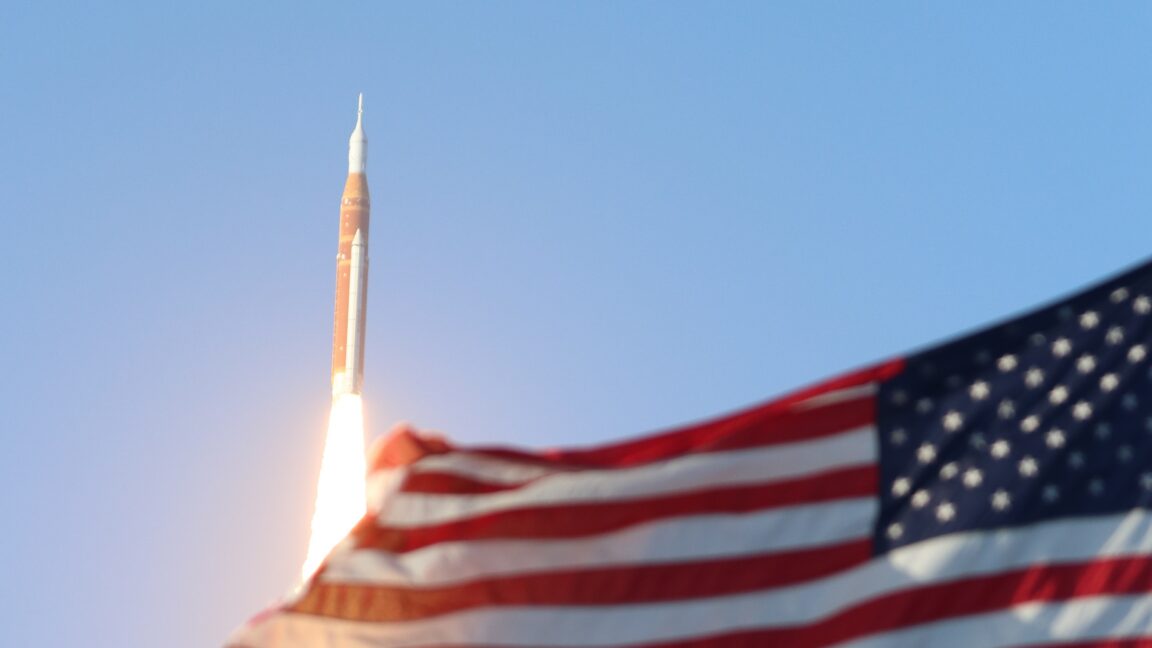
Perched atop the 322-foot-tall (98-meter) Space Launch System rocket, the four astronauts lifted off from NASA’s Kennedy Space Center at 6:35 pm EDT (22:35 UTC).

Four hydrogen-fueled RS-25 engines and two solid rocket boosters flashed to life to push the nearly 6 million-pound rocket from its moorings at Launch Complex 39B. The engines and boosters collectively generated 8.8 million pounds of thrust, outclassing NASA’s Saturn V rocket used for Apollo lunar missions.

Moments later, a wave of sound reached spectators a few miles away as the rocket thundered into the sky, leaving an incandescent plume of fire and smoke in its wake.

Commander Reid Wiseman, a 50-year-old Navy captain and former test pilot, calmly radioed updates from the cockpit of the Orion spacecraft at the tip of the SLS rocket. He was joined in the cockpit by pilot Victor Glover (another Navy captain), mission specialist Christina Koch, and Canadian astronaut Jeremy Hansen.

A few minutes after liftoff, as Artemis II headed east over the Atlantic Ocean, the astronauts got their first glimpse of the full Moon through their forward windows.

“We have a beautiful Moonrise,” Wiseman reported. “We’re heading right at it.”

In the limelight

The liftoff of Artemis II is a key moment for NASA. The agency has spent close to $100 billion on elements of the Artemis program over 20 years and now finds itself in competition with China to return humans to the Moon’s surface. Artemis II is also making history in the annals of space exploration. Astronauts last left the Moon in 1972, and no one has been back since.

https://arstechnica.com/space/2026/04/four-astronauts-depart-for-the-moon-with-a-fiery-send-off-from-cape-canaveral/


Launch day has arrived for NASA’s Artemis II mission—here’s what to expect

KENNEDY SPACE CENTER, Florida—Launching to the Moon is an all-day undertaking, something the four astronauts waiting to climb aboard NASA’s Artemis II rocket know well.

“It is actually a very long day,” said Victor Glover, the pilot on Artemis II. “We wake up about eight hours before launch, and there’s a pretty tight schedule of things to get out there.”

Glover and his three crewmates have their schedules planned to the minute throughout the nine-day Artemis II mission. If all goes according to plan, their mission will carry them more than a quarter-million miles from Earth, farther from home than anyone has ventured in human history. After looping behind the Moon, the astronauts and their Orion capsule will fall back to Earth at some 25,000 mph (40,000 km/hr), setting another record for the fastest that humans have ever traveled.

Reid Wiseman, the mission commander, will join Glover at the controls inside the Orion spacecraft’s cockpit. Mission specialist Christina Koch and Canadian astronaut Jeremy Hansen round out the crew. All four have critical roles during the mission to test the Orion spaceship, which is flying with humans for the first time after 20 years in development.

The journey could begin as soon as Wednesday at NASA’s Kennedy Space Center in Florida. The mission has a two-hour launch window opening at 6:24 pm EDT (22:24 UTC). You can watch NASA’s live coverage of the countdown and launch in the YouTube stream embedded below.

[embedded content]

The full Moon, Artemis II’s destination, will rise over the eastern horizon at the spaceport during the launch window.

Looking at the Moon has taken on a new meaning for the Artemis II astronauts since their selection for the mission three years ago. Artemis II is the first crew mission for NASA’s Artemis program. The long-term goal of Artemis is to build a sustained human presence at the Moon, with a lunar base at the Moon’s south pole, to set the stage for future expeditions to Mars.

https://arstechnica.com/space/2026/04/launch-day-has-arrived-for-nasas-artemis-ii-mission-heres-what-to-expect/