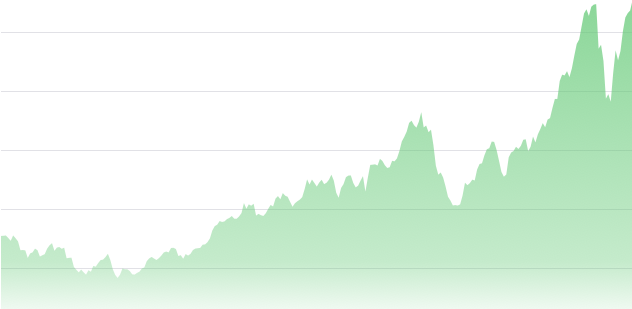
Will Levi Strauss Stock Continue Its Impressive Rally?

January 26, 2021 4 min read

Opinions expressed by Entrepreneur contributors are their own.

Founded in 1853, Levi Strauss & Co (LEVI) is one of the world’s largest brand-name apparel companies, known worldwide for its denim jeans. Its products also include casual and dress pants, tops, shorts, skirts, jackets, footwear, and related accessories for men, women, and children. They are sold in more than 110 countries worldwide through a combination of chain retailers, department stores, online sites, retail stores, and shop-in-shops. LEVI operates mainly through its brands — Levi’s, Dockers, Signature by Levi Strauss & Co., and Denizen from Levi’s brands.

The company’s operations were severely impacted by the COVID-19  pandemic because many retail stores were closed and demand for apparel fell significantly with consumers shut-in at home.

However, LEVI has bounced back with a focus on digitalization and has gained 133.7 percent since hitting its 52-week low of $9.09 on April 3, 2020. LEVI’s global digital revenues, which include revenues from the company’s e-commerce sites and the online business of its pure-play and traditional wholesale customers, grew roughly 50 percent year-over-year.

Related: 3 Supermarket Stocks to Put in Your Cart

Also, LEVI’s revenues across the Americas, Europe, and Asia improved sequentially. The company’s continued investments in digitalization, the reopening of most third-party retail stores, and several other factors have helped its stock earn a “Strong Buy” rating in our proprietary rating system.

Here is how our proprietary POWR Ratings system evaluates LEVI:

Trade Grade: A

LEVI is currently trading above its 50-day and 200-day moving averages of $20.02 and $15.16, respectively, indicating an uptrend. Moreover, LEVI has gained 25.7 percent over the past three months, reflecting solid short-term bullishness.

The company is scheduled to report its fourth-quarter results on January 27. For the third quarter ended August 23, 2020, LEVI’s revenue increased 113.7% sequentially to $1.06 billion. Its gross profit increased 240.3 percent sequentially to $577.4 million and adjusted its gross margin increased 60 basis points to 53.6 percent, driven by price increases and a higher proportion of sales in the higher-margin direct-to-consumer channel. The company reported net income and adjusted EPS of $27.05 million and $0.08, respectively, versus a loss in the second quarter of 2020.

On December 9, LEVI  announced that its board of directors had appointed Elliott Rodgers as a member. Rodgers is the chief information officer of Ulta Beauty, Inc. (ULTA) and has more than a decade of experience in the retail industry. This followed the company’s October announcement of a series of leadership changes at its Levi’s brand, effective November 30, which included the promotion of its chief marketing officer, Jen Sey, to the position of the brand president. This was done to elevate the brand with a focus on digitalization.

Buy & Hold Grade: A

In terms of proximity to its 52-week high, which is a key factor that our Buy & Hold Grade considers, LEVI is well-positioned. The stock is currently trading 6.2 percent below its 52-week high of $22.64, which it hit on January 12.

The company has managed to maintain its brand dominance over the years with a focus on its niche area. At the same time, LEVI has also been expanding strategically across geographies and product categories.

Peer Grade: A

Ralph Lauren Corporation (RL – Get Rating) and Under Armour, Inc. (UAA – Get Rating) are two other popular stocks in the branded apparel space. With a 4.6% gain, LEVI has comfortably beaten the returns of these popular industry participants over the past year. RL and UAA have lost 7.5%, and 9.8%, respectively, over the same period.

Industry Rank: B

The companies in the branded apparel space received a temporary setback amid the coronavirus pandemic as the demand for their products fell significantly. Moreover, many physical retail stores also had to be closed.

However, the industry is recovering, and most retail stores have now reopened now. Also, most companies have been focusing on their online presence of late. As the remote shopping trend is expected to continue even in the post-pandemic, this industry is expected to witness steady demand.

Overall POWR Rating: A (Strong Buy)

LEVI is rated “Strong Buy” due to its short- and long-term bullishness, solid growth prospects, and underlying industry strength, as determined by the four components of our overall POWR Rating.

Bottom line

Despite gaining 72.8% over the past six months, LEVI has plenty of upside based on its focus on diversification across geographies, product categories, and distribution channels. Moreover, the demand for its products is expected to increase with the global economy’s gradual recovery.

The consensus revenue estimate of $5.52 billion for 2021 represents a 25.4% increase year-over-year. Moreover, LEVI has an impressive earnings surprise history; Its beat consensus EPS estimates in each of the trailing four quarters. Its EPS is expected to grow 750% in 2021.

https://www.entrepreneur.com/article/364178


A Return to the Movies? AMC Theatres Is Up 60 Percent

Movie theaters have been suffering during the pandemic, but this may be changing.

January 25, 2021 1 min read

This story originally appeared on Market Beat

For a stock that set an all-time low during the first week of 2021, January is actually turning out to be a pretty ok month for cinema giant AMC Theatres (NYSE: AMC). Investors will be hoping for a return of some kind of stability this year after buckets of volatility last year saw shares whipping up and down.

Related: AMC Offers a Personal Movie Theater Experience for $99

They had to watch the stock fall more than 70% twice in a year as movie theatres found themselves on the front line of the pandemic, while they experienced three triple-digit percentage moves to the north as well. This latest move, which has shares up more than 60% on the month, has been underpinned by the highest daily volume numbers the stock has ever seen. Last week, 770 million shares traded hands, a whopping 5 times and some change higher than the previous record of 145 million set last May.

https://www.entrepreneur.com/article/364062


Is it Safe for Investors to Board Boeing Stock?

After the 737 MAX crash and a deadly crash in Indonesia last week, the airline giant is facing some scrutiny.

January 11, 2021 5 min read

This story originally appeared on Market Beat

To say the least, it has been a bumpy ride for Boeing (NYSE:BA) stock the last couple of years. After ascending to a record peak of $446.01 in March 2019, shares of the country’s largest airline manufacturer traded below the $100 mark just two years later due to the 737 MAX disasters and the crippling effects of the pandemic on the travel industry.

But with some positive developments in recent weeks and the market anticipating smoother air over the long-haul, Boeing stock has regained the $200 level. Plenty of uncertainty still swirls around the company, but from an investment standpoint, is this a good time to get on board?

What are the headwinds for Boeing?

Boeing recently paid $2.5 billion as part of an agreement to terminate the Justice Department’s 737 MAX investigation. This was certainly a weight off the company’s shoulders, but the skies remain far from friendly.

There continues to be a dark cloud hanging over the company in the form of ongoing legal claims. Last quarter alone, Boeing paid out $744 million in legal settlements—and plenty more is likely forthcoming. Families of the 737 MAX crash victims continue to file lawsuits against Boeing.

Meanwhile, Boeing is facing further scrutiny from both the Federal Aviation Administration (FAA) and the Securities and Exchange Commission (SEC). It may have to deal with additional civil penalties regarding an alleged lack of honesty with FAA regulators both prior to and in the aftermath of the disasters. Boeing’s corporate culture has been accused of being toxic and focused on profitability rather than safety.

Then there is the pandemic which is still having a major impact on travel demand and the airliner’s ability to pay for new Boeing deliveries. As a result, aircraft orders are being canceled and deferred making it hard for Boeing to access much-needed cash. This is essentially out of its hands but given the uncertainty around the worsening COVID-19 developments, is reason to proceed carefully with this stock.

And what about Boeing’s tailwinds?

Of course, the argument from the bullish perspective says that despite the legal and pandemic challenges, the are clearer skies ahead for Boeing. And that may be why buying into the stock now before these headwinds potentially fade may be a good idea because it has probably bottomed and is likely for another move up.

The most favorable development for Boeing was when the FAA lifted its grounding of the 737 MAX. This set the stage for the beleaguered jet manufacturer to generate growth from a plane that prior to the fatal crashes was its biggest sales and earnings driver. However, analysts expect that it will be at least a couple more years before Boeing ramps production of the 737 MAX and the highly touted Dreamliner.

The second tailwind for Boeing is progress on the COVID-19 vaccine front. With vaccine distribution now underway across the globe, the airline industry is hoping for a surge in travel volume later this year as restrictions are potentially lifted and people become more comfortable with air travel. And with Boeing having a large backlog of aircraft orders, this could eventually amount to an improved ability to book revenue.

Also lost in the shuffle is the fact that Boeing is not solely a commercial airline business. It also makes aircraft, defense systems, satellites, communications systems, and related products for the military. As one of the top defense contractors, Boeing’s defense division is a profitable business that has helped support its overall financials during the recent struggles. It serves as a solid, less talked about co-pilot for the company’s growth prospects.

Is it a good time to buy Boeing stock?

Boeing is at best a 2022 or 2023 turnaround story. Even though the share price could trend higher before then, even the most patient investors will likely have to endure a lot of turbulence in 2021.

This past weekend’s deadly crash of yet another Boeing aircraft in Indonesia has thrust the company back into an unfavorable spotlight. Although it involved an older 737 model rather than the MAX, it still calls into question the safety of Boeing’s planes soon after it received clearance to fly its 737 MAX.

While we don’t know the cause of this accident and pilot error is always a possibility, it gives Boeing another black eye that won’t be resolved for a while. This means the stock will likely be under pressure in the short-term—and this is more reason for investors to stay in a holding pattern.

In the meantime, Boeing has a new pilot at the controls in former Chairman and new CEO David Calhoun. Although early steps towards orchestrating a turnaround have instilled hope, Calhoun faces a tall order. This represents another layer of uncertainty for Boeing.

Overall, Boeing stock has a more favorable risk-reward profile than it did a year ago. But there are still too many hurdles for the company to overcome to restore faith amongst regulators, customers, and travelers—and therefore probably more migraines to come for investors. Even though the depressed price suggests Boeing stock is going for peanuts, there are safer ways to play the air travel rebound theme.


https://www.entrepreneur.com/article/363123


Electric Vehicle Stocks Are Already Soaring in 2021

January 11, 2021 6 min read

This story originally appeared on Stock News

The market is revving up with the global fleet of such vehicles expanding significantly over the last decade, supported by favorable government policies and technological advances. The sales of EVs are expected to hit 5.4 million in 2023, accounting for 7 percent of global sales, according to Bloomberg New Energy Finance. This growth will be driven by the launch of new models by automakers in China, North America, and other emerging economies.

Some of the best EV stocks skyrocketed last year, powering many investors’ portfolios to new heights. And the industry is well-positioned for growth this year also. President-elect Joe Biden’s goal of achieving a U.S. 100 percent clean-energy , in particular, should help the electric vehicle thrive this year and beyond.

As the tectonic shift from traditional internal combustion engines to electric engines continues this year, some prominent EV players such as  Limited, Tesla, Inc., and Niu Technologies have already gained more than 20% year-to-date. We think these stocks should continue to see solid gains in the upcoming months as well.

NIO Limited

Founded in 2014, NIO is a designer, manufacturer, and seller of electric vehicles offering five-, six, and seven-seater electric SUVs in the People’s Republic of China. The company also manufactures e-powertrains, battery packs, charging solutions, and battery swapping services.

On January 3, NIO provided its fourth quarter 2020 and full-year 2020 delivery results. The company set a monthly record in delivering 7,007 vehicles in December. Moreover, its cumulative deliveries of its  ES8, ES6, and EC6 models hit 75,641 vehicles, representing its growing brand recognition, and expanding sales network.

In mid-December,  the company announced the completion of an offering of 68 million American depositary shares at $39.00 per ADS. The company plans to use the offering’s proceeds for research and development of new products, service network expansion, and for general corporate purposes.

NIO’s increased 146.4% year-over-year to $666.60 million in the third quarter ended September 30, 2020. Its gross profit rose 87.1% sequentially to $86.30 million, while its increased 452 basis points sequentially to 12.9 percent. NIO’s vehicle sales grew 146.1% from the year-ago value to $628.40 million over this period.

The consensus EPS estimate for the next quarter ending March 31, 2021, represents a 43.5 percent improvement from the year-ago value. Moreover, NIO has an impressive earnings surprise history; the company has beaten consensus EPS estimates in three of the trailing four quarters. The consensus revenue estimate of $721.39 million for the next quarter represents a 268.4% increase over the same period last year. The stock has gained 20.9 percent year-to-date. The stock is also ranked #6 of 122 stocks in the China industry.

Tesla, Inc. 

Founded in 2003, the world’s best-selling plug-in and battery electric passenger car manufacturer, TSLA, certainly needs no introduction. The company operates internationally, through two segments – Automotive and Energy Generation, and Storage.  Despite the impact of the coronavirus pandemic in 2020, the company surpassed the half a million mark in electric cars produced and delivered. Moreover, the company’s Model Y production in Shanghai has commenced, with deliveries expected to begin shortly.

TSLA plans to roll out Tesla Cybertruck, Semi, and Roadster this year. Its electric pickup truck factory, the Gigafactory, is currently under construction and could be ready to build vehicles as soon as May this year. Moreover, last month TSLA was finally added to the S&P 500 Index after five consecutive quarters of profit.

TSLA’s revenue increased 45.3 percent sequentially to $8.77 billion in the third quarter ended September 30, 2020. Its non-GAAP net income increased 155.5 percent year-over-year to $874 million, while its EPS rose 105.4% from the year-ago value to $0.76. Its gross margin rose 253 basis points sequentially to 23.5% in the third quarter, and its free cash flow rose 276% from the year-ago value to $1.40 billion over this period.

The consensus EPS estimate of $0.92 for the current quarter ending December 30, 2020 represents  a 124.4% improvement year-over-year. Moreover, TSLA beat the Street’s EPS estimates in three of the trailing four quarters. The consensus revenue estimate of $10.16 billion for the current quarter represents a 37.6 percent growth from the same period last year. The stock has gained 24.7% year-to-date.

TSLA is rated a “Strong Buy” in our POWR Ratings. It holds a straight “A” in Trade Grade, Peer Grade, Buy & Hold Grade, and Industry Rank. It is ranked #1 of 53 stocks in the Auto & Vehicle Manufacturers industry.

Niu Technologies

Based in the People’s Republic of China, NIU is engaged in designing, manufacturing, and selling smart electric-scooters, scooter accessories, lifestyle accessories, and performance upgrade components such as wheels and brakes. The company offers RQi and TQi series urban commuter electric motorcycles, professional mountain, and road bicycles.

Last week, NIU provided its e-scooter sales volume results for the fourth quarter of 2020. It sold 149,705 e-scooters, representing a 40.9 percent year-over-year growth. The number of e-scooters sold in the international markets totaled  12,119, representing an increase of 179.6 percent compared versus the fourth quarter last year. The growth was driven primarily by a recovery in demand and retail network expansion.

In December, NIU  entered a partnership with Aurora Mobile Limited to improve efficiency so as to optimize the user experience for its customers. This collaboration will help NIU gain more insight into its users’ needs and hopefully help it maximize value creation.

NIU’s revenue increased 36.7 percent year-over-year to RMB 894.5 million in the third quarter ended September 30, 2020. The company’s e-scooter sales revenues from international markets were RMB 59.6 million, an increase of 35.2 percent, and represented 7.4 percent of total e-scooter revenues globally. Gross profit rose 28.8% from the year-ago value to RMB 145.23 million over this period.

The consensus EPS estimate of $0.06 for the next quarter ending March 31, 2021, indicates a 250 percent improvement year-over-year. The consensus revenue estimate of $79.14 million for the next quarter represents a 137.8 percent increase year-over-year. The stock has gained 26.3 percent year-to-date.

It is no surprise that NIU is rated “Buy” in our POWR Ratings system. It has an “A” for Buy & Hold Grade and Industry Rank, and a “B” for Trade Grade. Among Technology – Hardware stocks, it is ranked 23rd out of 54.

https://www.entrepreneur.com/article/363121


The 4 Best Performing Stocks on the S&P 500 Year-to-Date

December 16, 2020 9 min read

This story originally appeared on StockNews

The COVID-19 global pandemic has wrought the biggest economic crisis since the Great Depression of 1929. With its onset in March, global economies were forced to shut down and shut in and stock markets quickly collapsed, falling to multi-year lows. The S&P 500 index entered bear territory early in the year, erasing last year’s gains. The broader market index plunged from a high of 3,393 in February to a low of 2,191 on March 23, registering a 35.4% loss in just 33 days.

Since plumbing those lows in March, the index has had an impressive rally and recovered the bulk of the losses. The S&P 500 is up nearly 64% since then. Stocks rose to fresh all-time highs last week as Pfizer (PFE) started to roll out its coronavirus vaccine in the UK, lifting hopes of a quick economic recovery worldwide. The S&P 500 closed above 3,700 for the first-time last week, gaining 13.5% year-to-date. Yet, there’s wide variance in the performance of its member industries and stocks. Sectors like travel and financial have recovered slightly, while technology and alternative energy are hitting new highs.

Here are some winners from the index that have been able to capitalize on the pandemic to become the best-performing stocks: NVIDIA Corporation (NVDA – Get Rating), Advanced Micro Devices (AMD – Get Rating), Etsy, Inc. (ETSY – Get Rating) and Albemarle Corporation (ALB – Get Rating). Let’s take a look at them.

NVIDIA Corporation (NVDA – Get Rating)

As one of the key suppliers of the steadily expanding global gaming industry, NVDA operates as a visual computing company worldwide. It deals in graphics processing units (GPU), PC gaming, tegra processors and artificial intelligence (AI), and primarily serves four markets — Gaming, Enterprise, High Performance Computing & Cloud, and Automotive.

NVDA has been acquiring companies to advance its AI capabilities. In September, the company announced a definitive agreement to acquire Arm Limited from SoftBank Capital Limited and SVF Holdco (UK) Limited to combine with Arm’s vast ecosystem. The company then launched GPU and DPU acceleration to the Arm ecosystem of HPC, cloud, edge, and PC platforms in October. It also completed the acquisition of Mellanox Technologies earlier this year.

NVDA has a strong history of sales and earnings growth. In its fiscal third quarter ended October 2020, the company reported a record top-line of $4.73 billion, growing 57% year-over-year. It also delivered record Gaming revenue and Data Center business revenue, increasing 37% and 162%, respectively, from the comparable quarter last year. Non-GAAP EPS came in at $2.91, rising 63% from the year-ago value.

NVDA is well positioned to grow because gaming, AI, cloud computing and autonomous machines will drive the next industrial revolution around the world. The expansion of NVIDIA GeForce NOW is expected to expand NVDA’s user base. In its third-quarter letter to shareholders, NVDA noted, “Our A100 compute platform is ramping fast, with the top cloud companies deploying it globally.” Moreover, analysts expect current-year revenue and EPS to rise 51% and 67.9%, respectively.

NVDA closed Friday at $520.53, gaining 121.6% year-to-date. The stock is up 45.7% in the past six months compared to the broader market’s 20.5% return in the same period. Additionally, it is presently trading just 11.6% below its 52-week high of $589.07.

How does NVDA stack up for the POWR Ratings?

A for Trade Grade

B for Buy & Hold Grade

A for Industry Rank

B for Overall POWR Rating

The stock is also ranked #40of 86 stocks in the Semiconductor & Wireless Chip industry.

Advanced Micro Devices (AMD – Get Rating)

AMD designs and produces microprocessors for the computer and consumer electronics industries. The company has benefited from the strong adoption of the 7nm chip-based Ryzen and Radeon, and second-generation Epyc server processors, and 5nm chips. This is due to a rapid increase in the usage of artificial intelligence and machine learning in both cloud gaming and supercomputing. The company operates in two segments – Computing & Graphics (C&G), and Enterprise, Embedded & Semi-Custom (EESC).

In October, AMD announced its plan to acquire Xilinx (XLNX), a leader in the field programmable gate arrays. The combination has created the industry’s leading high-performance computing company, significantly expanding the breadth of AMD’s product portfolio. Moreover, the company recently announced its new AMD Instinct MI100 accelerator – the world’s fastest HPC GPU and the first x86 server GPU to surpass the 10 teraflops (FP64) performance barrier.

AMD has gained significant market share in the CPU data center market and its next-generation EPYC processor this year. In the third quarter ended September 2020, the company reported record revenue of $2.8 billion, surging 56% year-over-year. The growth was driven by higher revenue in both the operating segments through the sale of EPYC processor and its Ryzen processor. Moreover, its EPS nearly tripled to $0.32 compared to the year-ago value of $0.11.

AMD is benefitting immensely from booming demand for high-end gaming graphics cards, home computing, and corporate data center spending. Consequently, the company has been steadily gaining market share from chip giant Intel (INTC). Analysts expect AMD’s current-year revenue and EPS to grow 51% and 67.9%, respectively.

AMD closed Friday’s trading session at $91.65, nearly doubling in price year-to-date. The stock is up 20% in the past three months, compared to the broader market’s 9.8% return in the same period. AMD is presently trading just 4.9% below its 52-week high of $96.37.

It is no surprise that AMD is rated “Strong Buy” in our POWR Ratings system. It also has an “A” for Trade Grade, Buy & Hold Grade and Industry Rank, and a “B” in Peer Grade. It is ranked #5 of 86 Semiconductor & Wireless Chip stocks.

Etsy, Inc. (ETSY – Get Rating)

ETSY operates two-sided online marketplaces that connect millions of buyers and sellers around the world. Its primary marketplace, Etsy.com, is the global destination of over 66 million unique handcrafted and creative goods. It also provides various seller services, including Etsy Payments, Etsy Ads, and Etsy Shipping Labels.

Its growth in stay-at-home orders earlier this year offered an extra lift to an already strong company. At the end of third quarter, active buyers and sellers on ETSY’s platform amounted to 69.7 million and 3.68 million, respectively. This implied 55.4% and 42% year-over-year growth, respectively. Moreover, apart from home goods sales, online sales of musical instruments at Reverb.com, which it acquired last August, jumped as brick-and-mortar stores closed their doors.

In the third quarter, the company demonstrated the scalability and value of its marketplace business model. Its revenue increased 128% year-over-year to $451.5 million on the back of strong growth in both marketplace and service revenue. Gross merchandise sales (GMS) of $2.63 billion was up 119.4% compared to the year-ago quarter. Mobile GMS stood 62% while international GMS was 35%. EPS came in at $0.70, significantly improving from the year-ago value of $0.12.

Consumer shopping habits have been greatly influenced by the pandemic and ETSY has successfully sustained this growth by driving the retention and frequency of its existing buyers. The company is focused on seller growth this holiday season and capitalizing on its large market opportunity and unique position in e-commerce. Hence, analysts expect ETSY’s current year revenue and EPS to grow 97.1% and 176.3%, respectively.

ETSY closed Friday’s trading session at $170.02, after hitting an all-time high of $171.66. The stock is up 283.8% so far this year. The stock has more than doubled in the past six months and is still exhibiting strong momentum.

ETSY’s POWR Ratings also reflect a promising outlook. It has an overall rating of “Strong Buy” with an “A” for Trade Grade, Buy & Hold Grade, Peer Grade and Industry Rank. It is ranked #12 out of 59 stocks in the Internet industry.

Albemarle Corporation (ALB – Get Rating)

ALB is a global engineered specialty chemicals company that develops, manufactures, and markets technologically advanced and high value-added products worldwide. ALB is the world’s largest lithium producer, accounting for 21% of global production. The company operates in three segments – Lithium, Bromine Specialties, and Catalysts. The Charlotte-based company has battery-grade lithium-producing plants in Europe, Australia, China, Chile, and the United States.

ALB recently announced that it will serve as a founding member of Zero Emission Transportation Association (ZETA), a first-of-its-kind U.S.-based coalition committed to achieving 100% electric vehicle (EV) sales by 2030. ALB was also selected by the United States Department of Energy (DOE) as a critical partner for two lithium research projects over three years.

ALB reported a top-line revenue of $747 million for the third quarter, a 15% decline year-over-year primarily due to 24.3% fall in catalysts sales. Its lithium segment generated $265.6 million, weakening $19.6 million year-over-year, due primarily to lower market and contract pricing. EPS for the last reported quarter came in $0.8, declining 45% year-over-year.

EV batteries are witnessing unprecedented demand due to the growing “go-electric” trend. Consequently, ALB is growing its lithium business through cost-cutting actions and improving operational efficiencies. Its lithium producing Kemerton and La Negra expansion projects are expected to be commissioned in 2021. Analysts expect ALB’s revenue and EPS to grow 3.3% and 2.8%. respectively, next year.

ALB closed Friday’s trading session at $138.65, gaining nearly 90% year-to-date. The stock is up 13.2% in the past month, compared to S&P 500’s 2.3% return in the same period. Moreover, ALB is trading just 5.1% below its 52-week high of $146.11.

According to the POWR Ratings, ALB is a “Strong Buy.” It also has an “A” for Trade Grade, Buy & Hold Grade and Peer Grade, and a “B” in Industry Rank. In the 69-stock Chemicals Industry, ALB is ranked #5.

Want More Great Investing Ideas?

9 “MUST OWN” Growth Stocks for 2021

Are Stocks Stuck @ 3,700

Top 12 Stocks for 2021


NVDA shares were trading at $531.99 per share on Monday afternoon, up $11.46 (+2.20%). Year-to-date, NVDA has gained 126.46%, versus a 15.60% rise in the benchmark S&P 500 index during the same period.

https://www.entrepreneur.com/article/361828


4 Top Entertainment Stocks to Watch for 2021

December 14, 2020 9 min read

This story originally appeared on StockNews

2020 has turned out to be a historical year for many reasons. While the pandemic delivered a brutal blow to theatres and all in-person forms of entertainment, it has been very kind to video-streaming services thanks to the ‘stay-at-home’ trend. A study from Grabyo showed that Americans are collectively spending an average of $1 billion a month more on video streaming since January.

Entertainment companies that are digitally focused have delivered huge returns to investors this year. Also, keeping with changes in consumer behavior in mind, these companies are preparing for the post-pandemic world through constant innovations. The global streaming market size is projected to grow at a CAGR of 12% to reach $842.93 billion by 2027, according to Fortune Business Insights.

Going into 2021, it is wise to consider established entertainment companies such as Walt Disney Company (DIS – Get Rating), Netflix, Inc. (NFLX – Get Rating), Comcast Corporation (CMCSA – Get Rating), and Charter Communications, Inc. (CHTR – Get Rating) that have displayed business resiliency amid these trying times and are getting ready to maintain their momentum in a post-pandemic economy.

Walt Disney Company (DIS – Get Rating)

DIS operates as an entertainment company worldwide. The Company operates through four business segments — Media Networks, Parks Experiences and Products, Studio Entertainment, and Direct-To-Consumer and International. DIS’ Parks, Experiences and Products segment was adversely affected by the ongoing pandemic with many of the parks and resorts being closed or operating at a reduced capacity. However, the company made huge progress in its direct-to-consumer business.

For the quarter that ended September 2020, DIS’ total revenues increased 24.9% sequentially to $14.7 billion. Revenues from the media network segment increased 10.8% year-over-year to $7.2 billion, while revenues from direct-to-consumer & international segment increased 40.8% year-over-year to $4.9 billion. Disney+ launched in November 2019 and reported more than 73 million paid subscribers, which surpassed DIS’ expectations. The total number of paid subscribers for Hulu increased 28.4% year-over-year to 36.6 million.

Analysts expect DIS’ revenue to increase 6.1% in 2021, and 22.5% in 2022. The company’s EPS is expected to increase 190.1% in 2022 and at a rate of 41.6% per annum over the next five years. DIS’ earnings surprise history looks impressive with the company missing the consensus estimate in just one of the trailing four quarters.

The company held its Investor Day 2020 on December 10th and announced that it will launch Star, its international general entertainment content brand. It is expected to be launched in Europe and several other international markets on February 23rd, 2021 as a fully integrated part of Disney+. On October 26th, DIS announced that Disneyland Paris has embarked on one of the largest solar canopy energy projects in Europe, which is expected to be completed by 2023. The stock has gained nearly 98% since hitting its 52-week low in mid-March. It is currently trading 2.1% below its 52-week high of $179.45.

How does DIS stack up for the POWR Ratings?

A for Trade Grade

A for Buy & Hold Grade

A for Peer Grade

A for Industry Rank

A for Overall POWR Rating

The stock is also ranked #1 out of 15 stocks in the Entertainment – Sports & Theme Parks industry.

Netflix, Inc. (NFLX – Get Rating)

The world’s leading streaming entertainment service, NFLX provides a subscription based streaming entertainment service. Streaming in more than 30 languages and 190 countries, members can watch shows without commercials. The company has increased its focus on original shows and content in local languages in order to increase and expand its membership base. The company offers a variety of streaming membership plans, the price of which varies by country and the features of the plan.

NFLX’s revenue increased 22.7% year-over-year to $6.4 billion for the third quarter that ended September 2020. Global streaming paid memberships increased 23.3% year-over-year to 195.15 million. The company is working with local partners like Reliance Jio in India and launched a bundle with their mobile and fiber broadband plans. As part of this partnership, the company will also integrate with two of Jio’s set top boxes. Net income increased 18.7% year-over-year to $790 million. EPS increased 18.4% year-over-year to $1.74.

Analysts expect NFLX’s revenue to increase 20.7% for the current quarter ending December 2020, 23.8% this year, and 18.2% next year. The company’s EPS is expected to increase 51.8% this year, 44% next year, and at a rate of 41% per annum over the next five years. On a year-to-date basis, NFLX has rallied 55.5% to close Friday’s session at $503.22. During the past six months, NFLX has soared 18.3%.

The company announced on December 9th that it has teamed up with Headspace to launch three new shows in 2021 — Headspace Guide to Meditation, which will be premiering globally on January 1st, Headspace Guide to Sleep, and an interactive experience. On November 30th, NFLX announced that it acquired Joe Penna’s Sci-fi thriller ‘Stowaway’ for most of the world. The company has restarted production on some of its biggest titles including season four of Stranger Things, action film Red Notice, and The Witcher season two.

NFLX’s POWR Ratings reflect this promising outlook. It has an overall rating of “Buy” with an “A” for Trade Grade and Industry Rank, and a “B” for Buy & Hold Grade. Among the 59 stocks in the Internet industry, it’s ranked #18.

Comcast Corporation (CMCSA – Get Rating)

Based in Philadelphia, Pennsylvania, CMCSA is one of the largest cable providers in the United States. It operates as a media and technology company worldwide. The company primarily has two businesses — Comcast Cable and NBCUniversal. Its Comcast cable business operates in the cable communications segment, which provides video, high-speed Internet and voice services to residential customers under the XFINITY brand. Its NBCUniversal business, on the other hand, operates through four business segments — Cable Networks, Broadcast Television, Filmed Entertainment and Theme Parks.

CMCSA’s revenue climbed 7.7% sequentially to $25.5 billion for the third quarter that ended September 2020. Driven by the industry-leading platform and strategic focus on broadband, aggregation and streaming, the company’s total High-Speed internet customer net additions were a record 633,000 and cable communications total customer relationship net additions were 556,000, reporting the best quarterly result on record. CMCSA’s Sky, which is one of Europe’s leading media and entertainment companies, recorded a revenue growth of 5.2% year-over-year to $4.8 billion. The OTT streaming service, Peacock, launched by the company in April had nearly 22 million sign-ups at the end of September across the United States.

Analysts expect CMCSA’s revenue to increase 1.3% for the quarter ending March 2021, and 7.8% next year. Its EPS is expected to increase 14.3% next year, and at a rate of 5.8% per annum over the next five years. CMCSA has an impressive earnings surprise history with the company beating consensus EPS estimates in each of the trailing four quarters. The stock has gained 29.8% in the past 6 months and is currently trading 3% below its 52-week high of $52.49 which it hit on November 24th.

On December 10th, the company announced that it has reached an agreement with DIS such that CMCSA will have the right to distribute the Disney+ and ESPN+ services on its Xfinity X1 and Flex platforms. It is expected to be launched in the first quarter of 2021. CMCSA’s Universal Studios Japan is expected to hold its grand opening of the world’s first Super Nintendo World on February 4th, 2021. On November 30th, the company announced that the Mental Health Center of Denver selected Comcast Business solutions for broadband connectivity at 35 locations across the city.

It’s no surprise that CMCSA is rated “Buy” in our POWR Ratings system. It also has an “A” for Trade Grade, and Buy & Hold Grade, and a “B” for Industry Rank. In the 14- stock Entertainment – TV & Internet Providers industry, it is ranked #9.

Charter Communications, Inc. (CHTR – Get Rating)

Founded in 1999, CHTR is a holding company. Through its subsidiaries, the company provides cable services to residential and commercial customers in the United States. The Company offers its customers subscription-based video services, including video on demand (VOD), high definition (HD) television, and digital video recorder (DVR) service, Internet services and voice services.

The company’s total revenues increased 5.1% year-over-year to $12 billion for the third quarter that ended September 2020. Revenue from the internet segment increased 12.5% year-over-year to $4.7 billion. Revenue from the mobile segment increased 91.8% year-over-year to $368 million. Residential customer relationships increased 6.9% year-over-year to 28.9 million. Net income increased 110.3% year-over-year to $814 million. EPS increased 124.1% year-over-year to $3.90.

Analysts expect CHTR’s revenue to increase 6.9% for the current quarter ending December, 5% this year, and 5.8% next year. The company’s EPS is expected to increase 89.9% this year, 48.3% next year, and at a rate of 51.9% per annum over the next five years. CHTR’s earnings surprise history looks impressive with the company missing the consensus estimate in just one of the trailing four quarters.

The company’s SportsNet announced its comprehensive broadcast schedule for the first half of the Lakers 2020-21 regular season schedule on December 10th. The Lakers regular season live game coverage on SportsNet will begin from December 27th. CHTR announced an agreement with AccuWeather on December 8th to launch the AccuWeather TV Network in January for Spectrum TV Select. The stock has gained 34.4% so far this year to close Friday’s trading session at $651.76.

CHTR’s strong fundamentals are reflected in its POWR Ratings It has a “Buy” rating with an “A” for Trade Grade and Buy & Hold Grade, and a “B” for Industry Rank. Within the Entertainment – TV & Internet Providers industry, it’s ranked #10.

Want More Great Investing Ideas?

9 “MUST OWN” Growth Stocks for 2021

Are Stocks Stuck @ 3,700

Top 12 Stocks for 2021


DIS shares were trading at $172.69 per share on Monday morning, down $3.03 (-1.72%). Year-to-date, DIS has gained 19.40%, versus a 16.32% rise in the benchmark S&P 500 index during the same period.

https://www.entrepreneur.com/article/361634


Apple is now worth 1.5 trillion dollars

Monochrome line graph shows a steady rise.
The Nasdaq chart representing Apple’s stock performance over the past five years.

Today, Apple became the first US company to achieve a $1.5 trillion market capitalization. The stock surged even as investors began pulling back in many other areas of the economy.

Reasons given by investors for the optimism include anticipation of the launch of a 5G iPhone this fall, signs of strong App Store sales, and interest in the potential of ARM-driven Macs, based on a Bloomberg report yesterday that said Apple may announce an ARM transition at its annual developer conference later this month.

Yesterday and today, Apple’s movement ran counter to most of the rest of the market, where investors’ actions have reflected fear of a global coronavirus resurgence and anticipation of bad news from the US Federal Reserve in a report due out today.

Market capitalization essentially means the total number of shares of a company being traded multiplied by the current trading value of a share in that company, making it the best publicly available measure of the company’s actual value.

Apple’s valuation in the stock market has seen a dramatic rally despite two major investor panics in the past two years: one at the turn of 2018 and 2019, when reports said iPhone sales were declining, and another when the pandemic first took root in China, where much of Apple’s critical operations and partners are located, earlier this year.

It should be noted that Apple has embarked on an aggressive campaign to buy back some of its own shares to reduce its cash reserves, which many investors deemed to be excessive—but a measure of market capitalization accounts for that.

After investors became concerned in 2018 and 2019 of Apple’s over-reliance on the iPhone, the company has endeavored to launch more services and produce content that could at least partially make up for the smartphone slowdown, which also affects its competitors. Generally, investors have been happy with the progress they’ve seen.

Along with that services and content push, anticipation of ARM-based Macs that might offer competitive advantages in a pitch to consumers, optimism about the prospects for a 5G iPhone, and interest in the long-term potential of Apple’s explorations of health and augmented reality technology seem to have given investors enough to be optimistic about.

That said, today’s stock market is nothing if not volatile. Time will tell if the growth continues or if shareholders will again get skittish.

https://arstechnica.com/?p=1682680


How to Know When a Change in Stock Price Means You Should Invest in or Avoid a Company

Exercise critical thinking before jumping at the chance to invest.

September 6, 2019 2 min read

Opinions expressed by Entrepreneur contributors are their own.

In this video, Entrepreneur Network partner Phil Town discusses the impact of certain events on a stock price, and whether those events can be helpful or destructive. 

There is a definite difference between an event and a downfall. Events are triggered by fear when investors fail to consider long-term consequences. Stocks typically go on sale, explains Town, because something inspires fear in the marketplace. 

A company on sale is a great investment opportunity only when it shows promise after an event — and not because it is in jeopardy of crashing and burning. An intelligent investor thinks about how recent events and geo-political moments affect and dip the value of stocks. 

Though popular knowledge likes to think that a stock’s price is equal to its value, smart investors realize this is not always true. Warren Buffett thrives on the long-viewed approach of finding companies at a discount and sticking with them as they grow. 

Click the video to hear more about the distinction between stock events and dangerous downfalls.

Related: The Main Reasons Recessions Happen

Entrepreneur Network is a premium video network providing entertainment, ewitducation and inspiration from successful entrepreneurs and thought leaders. We provide expertise and opportunities to accelerate brand growth and effectively monetize video and audio content distributed across all digital platforms for the business genre.

EN is partnered with hundreds of top YouTube channels in the business vertical. Watch video from our network partners on demand on Roku, Apple TV and the Entrepreneur App available on iOS and Android devices.

https://www.entrepreneur.com/video/338830


Apple says iPhones were down 15% last quarter, but everything else was up 19%

[unable to retrieve full-text content]https://arstechnica.com/?p=1448067


The Best Way to Get Your Teenager to Start Investing Right Now

Jeff Rose advises a young fan on where to start his investment journey. https://www.entrepreneur.com/video/322567