Best Video Game Stocks? 1 to Buy Right Now and 2 to Avoid

Technological advancement is boosting the video games industry’s prospects. Thus, the fundamentally strong stock Playtika Holding (PLTK) might be an ideal investment. However, as the sector faces near-term headwinds, Roblox (RBLX) and Unity Software (U) might be best avoided. Read more….

shutterstock.com – StockNews

The current video game industry is bigger and more diverse than ever. Today’s video games offer photorealistic graphics and simulate reality to an astonishing degree in many cases. Moreover, technological advancements are expected to drive the growth of the market.

Moreover, the growing internet penetration rate and the easy availability of internet games are boosting the gaming sector. The global video game market was valued at $195.65 billion in 2021 and is expected to expand at a compound annual growth rate of 12.9% from 2022 to 2030.

Hence, the fundamentally strong video game stock Playtika Holding Corp. (PLTK) might be an ideal investment.

However, the gaming sector’s ability to weather an economic downturn is being questioned. Data from analytics firm NPD showed that U.S. consumer spending on video games is expected to decline 8.7% this year.

Given this backdrop, fundamentally weak gaming stocks Roblox Corporation (RBLX) and Unity Software Inc. (U) might be avoided now.

Stock to Buy:

Playtika Holding Corp. (PLTK)

PLTK develops mobile games worldwide. It owns a portfolio of casual and casino-themed games and distributes its games to the end customer through various web and mobile platforms. The company is headquartered in Herzliya Pituarch, Israel.

On September 7, it was reported that Bingo Blitz, a PLTK studio and popular free-to-play Bingo game, had partnered with renowned actress Drew Barrymore in a one-year partnership to kick off a new era of bingo. The reinvention of the classic game might benefit the company.

PLTK’s revenues increased marginally year-over-year to $659.60 million in the second fiscal quarter that ended June 30, 2022. For the six months ended June 30, the company’s comprehensive income grew 1.9% from the prior-year period to $119.10 million, while its cash flow from operating activities rose 27% year-over-year to $241.10 million.

The consensus EPS estimate of $0.79 for the fiscal year ending December 2023 represents a 21.2% improvement year-over-year. Similarly, the consensus revenue estimate of $2.76 billion for the same year represents a 4.8% year-over-year increase.

The stock has gained 10.7% over the past five days to close its last trading session at $10.37.

PLTK’s POWR Ratings reflect this promising outlook. The stock has an overall rating of B, which translates to Buy in our proprietary rating system. The POWR Ratings assess stocks by 118 different factors, each with its own weighting.

PLTK is rated an A in Value and a B in Quality. Within the 22-stock Entertainment – Toys & Video Games industry, it is ranked #6.

Beyond what is stated above, we’ve also rated PLTK for Growth, Momentum, Stability, and Sentiment. Get all PLTK ratings here.

Stocks to Avoid:

Roblox Corporation (RBLX)

RBLX operates as a developer and operator of an online entertainment platform. The company’s offerings include Roblox Studio, Roblox Client, Roblox Education, and Roblox Cloud.

RBLX’s loss from operations rose 19.1% from its year-ago value to $170.27 million in the fiscal second quarter that ended June 30. Its adjusted EBITDA decreased 69.6% year-over-year to $54.64 million.

The company’s net loss attributable to common stockholders grew 25.9% from the same period last year to $176.44 million, while net loss per share attributable to common stockholders increased 20% year-over-year to $0.30.

RBLX’s EPS is likely to come in at a negative $0.31 for the fiscal third quarter that ended September 2022, indicating a decline of 136.1% from the prior-year period. Its revenue is estimated to be $681.04 million for the same quarter.

RBLX’s shares have declined 62.1% year-to-date to close its last trading session at $39.15. The stock has fallen 14.7% over the past six months.

It’s no surprise that RBLX has an overall F rating, which translates to a Strong Sell in our POWR Rating system.

The stock also has an F grade for Stability and Sentiment and a D in Growth, Value, and Momentum. It is ranked last in the same industry.

To see additional POWR Ratings for Quality for RBLX, click here.

Unity Software Inc. (U)

U operates as a platform for creating and running real-time three-dimensional content. The company’s platform has two segments: Create Solutions and Operate Solutions. Its offerings include Unity Ads and Unity IAP (In-App Purchases) to help users monetize content, Multiplay for multiplayer game hosting, and Vivox to enable game player-to-player communications.

In September, it was announced that AppLovin Corporation (APP) had scrapped its plans to acquire U after the latter opposed its $17.54 billion offer. This deal could have combined two prominent providers of tools for mobile developers.

For the fiscal second quarter that ended June 30, 2022, U’s non-GAAP loss from operations widened 6,351% year-over-year to $44.13 million. Its non-GAAP net loss rose 3,862.5% from the previous-year quarter to $53.14 million. Its non-GAAP net loss per share grew 1,700% year-over-year to $0.18.

Analysts expect U’s loss per share for the fiscal third quarter (ended September 2022) to grow 147.7% year-over-year to $0.15. The company’s revenue is expected to be $326.51 million for the same period.

The stock has declined 74.9% year-to-date to close the last trading session at $35.81. The stock plunged 61.8% over the past six months.

U’s overall F rating translates to a Strong Sell in our proprietary rating system.

The stock also has grade D for Value and Stability. It is ranked #21 in the same industry.

In addition, we have also rated U for Growth, Momentum, Sentiment, and Quality. To see all POWR Ratings for U, click here.


RBLX shares were trading at $34.84 per share on Friday afternoon, down $4.31 (-11.01%). Year-to-date, RBLX has declined -66.23%, versus a -22.35% rise in the benchmark S&P 500 index during the same period.


About the Author: Kritika Sarmah

Her interest in risky instruments and passion for writing made Kritika an analyst and financial journalist. She earned her bachelor’s degree in commerce and is currently pursuing the CFA program. With her fundamental approach, she aims to help investors identify untapped investment opportunities.

More…

The post Best Video Game Stocks? 1 to Buy Right Now and 2 to Avoid appeared first on StockNews.com

https://www.entrepreneur.com/article/436843



2 Stocks to Buy Right Now if You’re 50 or Older

With investors fretting about the fate of the global economy amid aggressive interest rate increases, the stock market seems stuck in a vicious loop of volatility. Hence, fundamentally strong stocks with a track record of increasing dividend payouts, Bristol-Myers Squibb (BMY) and CVS Health (CVS), could be considered safe investments for investors aged 50 and above. Continue reading….

shutterstock.com – StockNews

Fears of a recession have been mounting, especially since the Federal Reserve announced its third consecutive interest rate hike of 75 basis points. With the PCE inflation index showing that inflation was much stronger than expected in August, further aggressive rate hikes by the central bank are inevitable.

As investors increasingly worry about an uncertain economic outlook, they are liquidating their stocks, and the market seems stuck in a firm bear grip. Moreover, the market selloff is expected to continue in anticipation of businesses falling short of third-quarter earnings estimates.

Zachary Hill, head of portfolio management at Horizon Investments, said, “In the near term, we are likely to have continued market volatility with a downward bias as we head into earnings season.”

Since it seems unlikely that the market will return to stability anytime soon, investors aged 50 and above should opt for stocks that belong to companies operating profitably enough to pay consistent dividends despite uncertain market conditions. To that end, healthcare stock Bristol-Myers Squibb Company (BMY) and CVS Health Corporation (CVS) are solid choices.

Bristol-Myers Squibb Company (BMY)

BMY discovers, develops, manufactures, and markets biopharmaceutical products globally. It offers solutions for hematology, oncology, cardiovascular, immunology, fibrotic, neuroscience, and Covid-19 diseases.

On September 16, BMY received approval from European Commission for LAG-3-Blocking Antibody Combination, Opdualag (nivolumab and relatlimab), for the treatment of unresectable or metastatic melanoma with tumor cell PD-L1 Expression < 1%. This approval would enable the treatment of all adults and adolescents above 12 years of age in all European Union member states, as well as Iceland, Liechtenstein, and Norway.

On September 15, BMY announced adjuvant treatment with Opdivo (nivolumab) demonstrated a statistically significant and clinically meaningful improvement in recurrence-free survival (rfs) in patients with Stage IIB/C Melanoma in the CheckMate -76K Trial.

On September 14, BMY declared a quarterly dividend of $0.54 per share, which would be paid out on November 1. The company pays a $2.16 per share dividend annually, which translates to a 3.03% yield on the current price. The current dividend payout ratio is 27.33%. The company’s dividend payouts have grown at a CAGR of 6.4% over the past five years.

For the second quarter of fiscal 2022 ended June 30, BMY’s revenue increased 1.6% year-over-year to $11.89 billion. During the same period, net earnings attributable to BMS increased 34.7% year-over-year to $1.42 million, while its EPS increased 18.4% year-over-year to $1.93.

Analysts expect BMY’s revenue for the fiscal year 2023 (ending December 2023) to increase 3.4% year-over-year to $47.70 billion. The company’s EPS for the next year is expected to grow 6.7% from the previous year to $8.02. Moreover, BMY has an impressive earnings surprise history, as it has topped the consensus EPS estimates in each of the trailing four quarters.

BMY’s stock has gained 3.8% over the past month and 14.2% year-to-date.

BMY’s POWR Ratings reflect this promising outlook. The company’s overall A rating translates to Strong Buy in our proprietary rating system.

The stock also has an A grade for Value and a grade B for Growth, Sentiment, and Quality. It is ranked #3 of 165 stocks in the Medical – Pharmaceuticals industry.

To see additional POWR Ratings for Stability, and Momentum for BMY, click here.

CVS Health Corporation (CVS)

CVS operates as a health solutions company. The company operates through four segments: Health Care Benefits; Pharmacy Services; Retail/LTC; and Corporate/Other. Its offerings include health & wellness services, health plans, pharmacy services, and prescription drug coverage.

On September 21, CVS declared its quarterly dividend of $0.55, payable on November 1, 2022. The company pays $2.20 annually, which translates to a 2.19% yield at its current price. The current dividend payout ratio is 24.5%. Its dividends have grown at a 2.2% CAGR over the past five years.

On September 5, CVS announced its entry into a definitive agreement to acquire Signify Health (SGFY) for approximately $8 billion. According to CVS President and CEO Karen S. Lynch, “Signify Health will play a critical role in advancing our health care services strategy and gives us a platform to accelerate our growth in value-based care.”

For the fiscal 2022 second quarter ended June 30, 2022, CVS’ total revenue increased 11% year-over-year to $80.64 billion. The company’s operating income grew 5.6% from the prior-year quarter to $4.57 billion, while its net income increased 6.1% year-over-year to $2.96 billion.

Analysts expect CVS’ EPS and revenue for the fiscal 2022 third quarter ending September 30, 2022, to increase 1.5% and 4.4% year-over-year to $2 and $76.78 billion, respectively. It has surpassed the consensus EPS estimates in each of the trailing four quarters. The stock has gained 12.4% over the past year.

CVS’ POWR Ratings reflect solid prospects. It has an overall rating of A, translating to a Strong Buy in our proprietary rating system. It has a B grade for Sentiment, Stability, and Growth.

It is ranked #1 of four stocks in the B-rated Medical – Drug Stores industry.

Click here to access additional ratings for Value, Momentum, and Quality for CVS.


BMY shares were trading at $70.92 per share on Wednesday morning, down $0.29 (-0.41%). Year-to-date, BMY has gained 16.39%, versus a -20.57% rise in the benchmark S&P 500 index during the same period.


About the Author: Santanu Roy

Having been fascinated by the traditional and evolving factors that affect investment decisions, Santanu decided to pursue a career as an investment analyst. Prior to his switch to investment research, he was a process associate at Cognizant.With a master’s degree in business administration and a fundamental approach to analyzing businesses, he aims to help retail investors identify the best long-term investment opportunities.

More…

The post 2 Stocks to Buy Right Now if You’re 50 or Older appeared first on StockNews.com

https://www.entrepreneur.com/article/436671


The 2 Best Stocks for a Starter Stock Portfolio

The Fed’s hawkish monetary policy stance to tame the hot inflation is increasing recession fears. However, many analysts believe a soft landing is possible. Given the uncertain market conditions, fundamentally sound stocks Coca-Cola (KO) and Banco Bilbao Vizcaya Argentaria, S.A. (BBVA) might be best for a starter stock portfolio. Read more.

shutterstock.com – StockNews

The S&P 500 witnessed its steepest September decline in two decades on investors’ concerns over historically high inflation, rising interest rates, and a looming recession.

However, in a recent speech in Vienna, US Federal Reserve Governor Christopher Waller dismissed recession fears and said, “The robust US labor market is giving us the flexibility to be aggressive in our fight against inflation.”

Moreover, Deputy U.S. Treasury Secretary Wally Adeyemo said that the Biden administration feels confident about the U.S. economy going forward and that bringing down inflation while maintaining growth is possible.

Given this backdrop, fundamentally sound and dividend-paying stocks The Coca-Cola Company (KO), Banco Bilbao Vizcaya Argentaria, S.A. (BBVA) might be ideal investments for a starter stock portfolio.

The Coca-Cola Company (KO)

KO is a popular beverage company that manufactures, markets, and sells various nonalcoholic beverages worldwide. The company offers sparkling soft drinks, flavored and enhanced water, sports drinks, juice, dairy, plant-based beverages, and energy drinks.

On September 29, KO and Molson Coors Beverage Company (TAP) entered an exclusive agreement to develop and commercialize Topo Chico Spirited, a line of spirit-based, ready-to-drink cocktails inspired by the bright and refreshing taste of tequila and vodka-based beverages. Expanding to more than 20 markets across the country in 2023 might bolster the company’s revenue stream.

On July 21, KO declared a quarterly dividend of 44 cents per common share, payable to shareholders on October 3. Its annual dividend of $1.76 yields 2.90% on prevailing prices. The company’s dividend payouts have increased at a 3.1% CAGR over the past three years and a 3.6% CAGR over the past five years. The company has a record of 59 years of consecutive dividend growth.

KO’s net operating revenue increased 11.8% year-over-year to $11.33 billion in the second quarter that ended July 1. Its non-GAAP gross profit grew 7.2% from the year-ago value to $6.67 billion, while its non-GAAP net income improved 4.4% year-over-year to $3.06 billion. The company’s non-GAAP net earnings per common share increased 2.9% from its year-ago value to $0.70.

The consensus EPS estimate of $2.46 for the fiscal year ending December 2022 indicates a 6.2% improvement year-over-year. The consensus revenue estimate of $42.13 billion represents an 8.9% growth from the prior year. Additionally, KO has topped consensus EPS estimates in each of the trailing four quarters, which is impressive.

The stock has gained 7.2% over the past year.

It’s no surprise that KO has an overall rating of B, which translates to Buy in our POWR Ratings system.

KO is rated a B in Stability, Sentiment, and Quality. Within the A-rated Beverages industry, it is ranked #17 out of 34 stocks.

To see additional POWR Ratings for Growth, Value, and Momentum for KO, click here.

Banco Bilbao Vizcaya Argentaria, S.A. (BBVA)

BBVA provides retail banking, wholesale banking, and asset management services. It offers current accounts; and demand, savings, overnight, time, term, and subordinated deposits. The company also provides loan products, deals in securities, and manages pension and investment funds. The company is headquartered in Bilbao, Spain.

On September 29, BBVA declared an interim cash dividend of €0.12 per share, which is 50% higher than last year’s. The dividend is payable on October 11, 2022. This reflects the cash-generating ability of the company. The company’s trailing-12-month dividend translates to a 5.1% yield.

In the second quarter ended June 30, 2022, BBVA’s net interest income increased 31.3% year-over-year to €4.60 billion ($4.51 billion). Its gross income came in at €6.09 billion ($5.97 billion), up 19.4% from its prior-year quarter, while its operating income grew 23.3% from its year-ago value to €3.46 billion ($3.39 billion). The company’s adjusted EPS rose 55.6% year-over-year to €0.28.

Analysts expect revenue to amount to $23.01 billion for the fiscal ending December 2023, representing 3.7% year-over-year growth.

BBVA’s shares have gained 11.1% over the past month and 7.7% over the past three months.

It is no surprise that BBVA has an overall B rating, which equates to Buy in our POWR Ratings system.

BBVA also has a B grade for Momentum, Stability, and Sentiment. Within the B-rated Foreign Banks industry, it is ranked #1 of 98 stocks.

Click here to see additional POWR Ratings for Growth, Value, and Quality for BBVA.


KO shares were trading at $55.80 per share on Wednesday morning, down $0.98 (-1.73%). Year-to-date, KO has declined -3.65%, versus a -20.82% rise in the benchmark S&P 500 index during the same period.


About the Author: Kritika Sarmah

Her interest in risky instruments and passion for writing made Kritika an analyst and financial journalist. She earned her bachelor’s degree in commerce and is currently pursuing the CFA program. With her fundamental approach, she aims to help investors identify untapped investment opportunities.

More…

The post The 2 Best Stocks for a Starter Stock Portfolio appeared first on StockNews.com

https://www.entrepreneur.com/article/436670


2 Safe Tech Stocks to Buy and Hold Right Now

Amid the Fed’s monetary policy tightening, the tech-heavy NASDAQ Composite has lost close to 30% in 2022. However, the solid demand for tech solutions is expected to drive the industry’s recovery. Amid the market volatility, we think fundamentally sound tech stocks Cisco Systems (CSCO) and Juniper Networks (JNPR) might be safe buy-and-hold options. Keep reading….

shutterstock.com – StockNews

The Fed’s monetary policy tightening has caused a significant downtrend in technology stocks. The tech-heavy Nasdaq Composite has lost close to 30% year-to-date.

However, the demand for tech solutions continues to rise. The increasing use of advanced technologies, such as the Internet of Things (IoT), Artificial Intelligence, and Machine Learning, is expected to drive the industry’s growth.

According to Statista, the total data volume of connected IoT devices worldwide is projected to reach 79.4 zettabytes by 2025. Furthermore, the global digital transformation market is expected to grow at a CAGR of 21.1% until 2027.

While the stock market is expected to remain volatile in the near term, we think fundamentally sound tech stocks Cisco Systems, Inc.(CSCO) and Juniper Networks, Inc. (JNPR) might be safe buy-and-hold options.

Cisco Systems, Inc. (CSCO)

CSCO designs, manufactures, and sells Internet Protocol-based networking and other products related to the communications and information technology industry in the Americas, Europe, the Middle East, Africa, the Asia Pacific, Japan, and China.

On September 27, 2022, CSCO and tech company Accedian joined hands to assist Zain Kuwait, a top digital service provider, in automating its network with increased network visibility and service assurance.

Mohamed Tantawi, managing director, telcos and service providers, META, CSCO, said, “Working with Accedian, we’re enabling Zain Kuwait to simplify network operations with increased visibility and real-time insights while also automating service assurance to help future-proof their networks.”

CSCO’s service revenue increased marginally year-over-year to $3.41 billion for the fourth quarter that ended July 30, 2022. Revenue from its EMEA segment came in at $3.58 billion, up 8% year-over-year. Moreover, revenue from end-to-end security products came in at $984 million, up 20% year-over-year.

Analysts expect CSCO’s revenue to increase 5% year-over-year to $54.13 billion in 2023. Its EPS is estimated to grow 5.1% year-over-year to $3.53 in 2023. It has surpassed EPS estimates in all four trailing quarters. Over the past month, the stock has lost 6.2%. It has a 24-month beta of 0.88.

CSCO’s overall B rating equates to a Buy in our POWR Ratings system. The POWR Ratings assess stocks by 118 different factors, each with its own weighting.

It has an A grade for Quality. Within the Technology – Communication/Networking industry, it is ranked #5 out of 50 stocks. Click here to see the additional POWR Ratings for Growth, Momentum, Stability, Sentiment, and Value for CSCO.

Juniper Networks, Inc. (JNPR)

JNPR designs, develops, and sells network products and services worldwide. It sells its products through direct sales, distributors, value-added resellers, and original equipment manufacturers to end-users in the cloud, service provider, and enterprise markets.

On September 15, 2022, JNPR introduced Apstra Freeform, the newest expansion to its multivendor data center automation and assurance platform. JNPR aims to strengthen its data center operations management through Apstra Freeform and offer customers a blissful experience irrespective of the topology and protocols used.

JNPR’s total net revenues came in at $1.27 billion for the second quarter that ended June 30, 2022, up 8.3% year-over-year. Its net income increased 82.9% year-over-year to $113.40 million. In addition, its EPS increased 84.2% year-over-year to $0.35.

JNPR’s revenue is expected to increase 10.1% year-over-year to $5.21 billion in 2022. Its EPS is estimated to grow 6.3% year-over-year to $1.85 in 2022. The stock has lost 1.4% over the past month. It has a 60-month beta of 0.86.

JNPR has an overall B rating, equating to a Buy in our POWR Ratings system. It has a B grade for Quality. It is ranked #12 in the same industry. We’ve also rated JNPR for Value, Momentum, Sentiment, Growth, and Stability. Get all JNPR ratings here.


CSCO shares were trading at $41.54 per share on Wednesday morning, down $0.28 (-0.67%). Year-to-date, CSCO has declined -32.39%, versus a -20.66% rise in the benchmark S&P 500 index during the same period.


About the Author: Riddhima Chakraborty

Riddhima is a financial journalist with a passion for analyzing financial instruments. With a master’s degree in economics, she helps investors make informed investment decisions through her insightful commentaries.

More…

The post 2 Safe Tech Stocks to Buy and Hold Right Now appeared first on StockNews.com

https://www.entrepreneur.com/article/436658


The 3 Best Blue-Chip Stocks to Buy During a Market Crash

The Fed’s hawkish stance to control inflation has given rise to recessionary fears. With the possibility of the stock market sell-off deepening, we think fundamentally strong blue-chip stocks Microsoft (MSFT), UnitedHealth Group (UNH), and Dow Inc. (DOW) might be solid buys. Continue reading….

shutterstock.com – StockNews

To tame surging inflation, the central bank recently raised rates by three-quarters of a percentage point for a third straight time. Moreover, many analysts expect the Fed to raise rates by at least 1.25 percentage points in its two remaining meetings this year.

Ken Griffin, Citadel’s founder, and CEO, believes the central bank has a difficult job ahead of bringing down prices while not slowing the economy too much. He said there could be a chance for a recession next year.

Moreover, the Fed officials’ outspoken commitment to combating inflation amid the continuing stock market downtrend has led to forecasts that market sell-offs could deepen in the near term.

Given this scenario, it could be wise to invest in shares of blue-chip companies Microsoft Corporation (MSFT), UnitedHealth Group Incorporated (UNH), and Dow Inc. (DOW). These companies have operated for several years and have dependable earnings streams.

Microsoft Corporation (MSFT)

MSFT is a tech giant that develops, licenses, and supports software, services, devices, and solutions worldwide. The company operates in three segments: Productivity and Business Processes; Intelligent Cloud; and More Personal Computing. MSFT has a market capitalization of $1.77 trillion.

On September 22, MSFT announced its plan, along with Planet Labs PBC and The Nature Conservancy, to launch the Global Renewables Watch (GRW), a living atlas intended to map and measure all utility-scale solar and wind installations. The first full global inventory is expected to be completed by early 2023.

On September 20, MSFT declared a quarterly dividend of $0.68 per share, reflecting a 10% increase over the previous quarter’s dividend. The dividend is payable to shareholders on December 8. MSFT’s forward annual dividend of $2.72 yields 1.13% on the current price. The company’s dividends have grown at a CAGR of 9.7% over the past five years.

MSFT’s total revenue increased 12.4% year-over-year to $51.87 billion in the fourth quarter that ended June 30. Its net cash from operations grew 8.5% from the year-ago value to $24.63 billion, while its net income improved 1.7% year-over-year to $16.74 billion. The company’s net earnings per common share increased 2.8% from its year-ago value to $2.23.

The consensus EPS estimate of $2.32 for the first fiscal quarter ending September 2022 indicates a 2.3% improvement year-over-year. Revenue is expected to rise 10.1% year-over-year to $49.90 billion for the same quarter. MSFT topped consensus EPS estimates in three of the trailing four quarters, which is impressive.

The stock has declined 6% over the past month.

MSFT’s POWR Ratings reflect this promising outlook. The company has an overall rating of B, which translates to Buy in our proprietary rating system. The POWR Ratings assess stocks by 118 different factors, each with its own weighting.

MSFT is rated a B in Stability and Quality. Within the Software – Business industry, it is ranked #11 of 54 stocks.

To see additional POWR Ratings for Value, Momentum, Growth, and Sentiment for MSFT, click here.

UnitedHealth Group Incorporated (UNH)

UNH is a diversified healthcare company that offers consumer-oriented health benefit plans and services, software and information products, health care coverage, and well-being services. The company operates through four segments: Optum Health; OptumInsight; OptumRx; and UnitedHealthcare. It has a $475.95 billion market capitalization.

On September 26, UNH’s announced that its subsidiary UnitedHealthcare Community Plan of Nebraska had been selected by the state of Nebraska, Department of Health and Human Services, as a managed care organization to administer the Heritage Health Medicaid program.

“We are honored to continue our partnership with the state to build a robust Medicaid program that delivers best-in-class solutions to the diverse needs of our members,” said Jeff Stafford, chief executive officer of UnitedHealthcare Community Plan of Nebraska.

On September 21, UNH’s UnitedHealthcare and Peloton Interactive Inc. (PTON) announced that they had renewed and expanded their relationship to extend subscription services. This engagement is expected to help UNH’s consumers maximize the value of their health benefits, which should bolster its client base.

UNH’s $6.60 per share forward annual dividend yields 1.28% on the current price. The company’s dividends have grown at a 17.7% CAGR over the past five years.

For the fiscal second quarter that ended June 30, 2022, UNH’s revenues increased 12.6% year-over-year to $80.33 billion. The company’s earnings from operations rose 19.3% from the year-ago value to $7.13 billion. Its net earnings and adjusted earnings per share attributable to UNH common shareholders came in at $5.20 billion and $5.57, up 18.9% and 18.5% year-over-year.

Analysts expect UNH’s revenue for the fiscal third quarter ending September 2022 to come in at $80.56 billion, indicating an 11.4% rise from the prior-year period. Also, Street expects the company’s EPS for the same quarter to grow 20.4% year-over-year to $5.44. The company surpassed consensus EPS estimates in each of the trailing four quarters.

UNH’s shares have gained 31.4% over the past year and 2.7% year-to-date.

It’s no surprise that UNH has an overall A rating, which translates to a Strong Buy in our proprietary rating system.

UNH has a B grade for Growth, Stability, Sentiment, and Quality. It is ranked #4 out of the 11 stocks in the A-rated Medical – Health Insurance industry.

Beyond what we’ve stated above, we have also given UNH grades for Value and Momentum. Get all UNH ratings here.

Dow Inc. (DOW)

DOW provides materials science solutions for packaging, infrastructure, mobility, and consumer applications. It operates through Packaging & Specialty Plastics; Industrial Intermediates & Infrastructure; and Performance Materials & Coatings segments. DOW has a $31.71 billion market capitalization.

On September 23, DOW announced its partnership with Lion Corporation to launch recyclable refill bags for Shokubutsu Monogatari’s shower cream in Thailand. This agreement to develop easy-to-recycle refill bags should enable DOW to expand its customer base in new markets.

On September 14, DOW announced an agreement with French recycling company Valoregen to contribute toward building the largest single hybrid recycling site in France. DOW is expected to be the primary recipient of post-consumer resins, which it would use to develop new plastic products marketed under Dow’s REVOLOOP™ product range.

DOW’s forward annual dividend of $2.80 yields 6.18% on the current price.

DOW’s net sales increased 12.8% year-over-year to $15.66 billion for the second quarter that ended June 30, 2022. For the six months ended June 30, its non-GAAP net income increased 12.6% year-over-year to $3.44 billion, while its non-GAAP EPS amounted to $4.65, increasing 14% year-over-year. The company’s cash provided by operating activities rose 101.8% from its prior-year period to $3.46 billion.

The company’s EPS is expected to be $7.39 for the fiscal year ending December 2022. Street expects DOW’s revenue to improve 4.7% year-over-year to $57.56 billion in the same year. Additionally, DOW surpassed the Street’s EPS estimates in each of the trailing four quarters.

The stock has declined 8.2% over the past month.

DOW’s POWR Ratings reflect its promising outlook. The stock has an overall B rating, which translates to Buy in our proprietary rating system.

It has an A grade for Value and a B for Quality. It is ranked #33 of 87 stocks in the B-rated Chemicals industry.

Click here to see additional POWR Ratings for Growth, Momentum, Stability, and Sentiment for DOW.


MSFT shares rose $3.86 (+1.60%) in premarket trading Tuesday. Year-to-date, MSFT has declined -26.83%, versus a -20.78% rise in the benchmark S&P 500 index during the same period.


About the Author: Kritika Sarmah

Her interest in risky instruments and passion for writing made Kritika an analyst and financial journalist. She earned her bachelor’s degree in commerce and is currently pursuing the CFA program. With her fundamental approach, she aims to help investors identify untapped investment opportunities.

More…

The post The 3 Best Blue-Chip Stocks to Buy During a Market Crash appeared first on StockNews.com

https://www.entrepreneur.com/article/436572


3 Stocks You Will Want to Own Long Term

The interest rate hikes by central banks around the globe might slow down the global economy. However, staying invested in resilient and dividend-yielding stocks could help garner significant returns in the long run. To that end, Johnson & Johnson (JNJ), Pfizer (PFE), and Ryerson Holding Corporation (RYI) could be ideal investments now. Read more.

shutterstock.com – StockNews

Central banks worldwide have been raising rates to combat surging inflation. While many economists expect that inflation may have peaked, Federal Reserve Vice Chair Lael Brainard warned against complacency. “Inflation is very high in the United States and abroad, and the risk of additional inflationary shocks cannot be ruled out,” she said.

Economist Nouriel Roubini, who correctly predicted the 2008 financial crisis, sees a “long and ugly” recession in the US and globally occurring at the end of 2022. This recession could last all of 2023 and lead to a sharp correction in the S&P 500. The economist further said achieving a 2% inflation rate without a hard landing is going to be “mission impossible” for the Federal Reserve.

Moreover, the United States has already reported two consecutive quarters of gross domestic product (GDP) declines, which is considered an unofficial indicator of recession. However, experts believe staying invested in resilient and dividend-yielding stocks could help generate significant returns in the long run.

With stable fundamentals and compelling dividend payments, Johnson & Johnson (JNJ), Pfizer Inc. (PFE), and Ryerson Holding Corporation (RYI) could be ideal additions to your long-term portfolio.

Johnson & Johnson (JNJ)

JNJ researches, develops, manufactures, and sells various products in the healthcare field worldwide. The company operates through the broad segments of Consumer Health; Pharmaceuticals; and MedTech.

On September 15, JNJ announced that its Board of Directors had authorized the repurchase of up to $5 billion of its common stock. Joaquin Duato, Chief Executive Officer, said, “With our strong cash flow and lowest level of net debt in five years, we have the ability to invest in innovation, grow our dividend, execute strategic acquisitions, and take this action to deliver shareholder returns and drive long-term growth.”

JNJ’s forward annual dividend of $4.52 per share yields 2.77% on the current price. The company’s dividend payouts have increased at a CAGR of 6% over the past five years.

JNJ’s gross profit increased 2.4% year-over-year to $16.10 billion in the second quarter that ended June 30. Its sale to customers grew 3% from the year-ago value to $24.02 billion, while its adjusted net earnings improved 4.3% year-over-year to $6.91 billion. The company’s adjusted net earnings per common share increased 4.4% from its year-ago value to $2.59.

The consensus EPS estimate of $10.08 for the fiscal year ending December 2022 indicates a 2.8% improvement year-over-year. The consensus revenue estimate of $95.53 billion is expected to increase 1.9% year-over-year for the same year. Additionally, JNJ has topped consensus EPS estimates in each of the trailing four quarters, which is impressive.

The stock has gained 1.7% over the past year.

JNJ’s POWR Ratings reflect this promising outlook. The company’s overall A rating translates to Strong Buy in our proprietary rating system. The POWR Ratings assess stocks by 118 different factors, each with its own weighting.

JNJ is rated an A in Stability and a B in Growth and Quality. Within the Medical – Pharmaceuticals industry, it is ranked #1 out of 165 stocks.

Beyond what we’ve stated above, we have also given grades for Value, Momentum, and Sentiment for JNJ. Get all JNJ ratings here.

Pfizer Inc. (PFE)

PFE discovers, develops, manufactures, distributes, and sells biopharmaceutical products worldwide. It offers medicines and vaccines in various therapeutic areas. The company serves wholesalers, retailers, hospitals, clinics, government agencies, as well as disease control and prevention centers.

On September 29, PFE and BioNTech SE (BNTX) submitted a variation to the marketing authorization (MA), which seeks to expand the label of their bivalent BA.4/BA.5 Omicron-targeting COVID-19 vaccine for use in children aged five through 11 years. This vaccine is expected to boost the companies’ revenues in the future.

Moreover, on September 13, 2022, PFE and Strata Oncology, Inc. announced the expansion of their clinical collaboration in the Strata Precision Indications for Approved THerapies (Strata PATHTM) trial that is a prospective pan-tumor therapeutic trial designed to evaluate the efficacy and safety of multiple FDA-approved cancer therapies in new, biomarker-guided patient populations. Such collaborations should benefit the company.

PFE’s $1.60 per share forward annual dividend yields 3.62% on the current price. The company’s dividends have grown at a 5.9% CAGR over the past five years.

PFE’s revenue increased 46.8% year-over-year to $27.74 billion in the second quarter ended July 3. Its income from continuing operations grew 69.6% from the year-ago value to $9.88 billion, while its adjusted income improved 93.5% year-over-year to $11.66 billion. The company’s adjusted earnings per common share increased 92.5% from its year-ago value to $2.04.

Street estimate of $1.35 for the fourth fiscal quarter ending December 2022 indicates a 24.7% improvement year-over-year. Analysts expect its revenue to rise 3.5% year-over-year to $24.66 billion for the same quarter. Additionally, PFE has topped consensus EPS estimates in each of the trailing four quarters, which is impressive.

The stock has gained 2.8% over the past year.

It’s no surprise that PFE has an overall A rating which translates to a Strong Buy in our POWR Ratings system.

PFE is rated an A in Value and a B in Quality. Within the Medical – Pharmaceuticals industry, it is ranked #12 out of 165 stocks.

To see additional POWR Ratings for Growth, Momentum, and Stability for PFE, click here.

Ryerson Holding Corporation (RYI)

RYI is a value-added processor and distributor of industrial metals like carbon, stainless, and alloy steels, aluminum, nickel, and red metals in various shapes and forms. Along with its subsidiaries, the company operates in the United States, Canada, Mexico, and China.

On September 2, 2022, RYI acquired Howard Precision Metals, Inc., the largest aluminum distributor in the Midwest. Mike Burbach, Ryerson’s Chief Operating Officer, said, “Its processing capabilities complement Ryerson’s existing non-ferrous franchise, and we are excited to recognize these synergies.”

RYI’s forward annual dividend of $0.46 per share yields 1.65% on its current price.

For the second quarter that ended June 30, 2022, RYI’s net sales increased 22.9% year-over-year to $1.74 billion. Its gross profit grew 81.3% from the prior-year period to $465.90 million. The company’s adjusted EBITDA rose 221.8% from the year-ago value to $298 million.

RYI’s EPS estimate of $13.02 for its fiscal 2022 represents a 74.5% improvement year-over-year. The revenue estimate of $6.23 billion for the current year indicates a 9.8% increase from the same period last year. Additionally, the company has an excellent record of surpassing the consensus EPS estimates in each of the trailing four quarters.

The stock has gained 29.5% over the past three months and 24.5% year-to-date.

RYI’s strong fundamentals are reflected in its POWR Ratings. The company has an overall rating of A, equating to a Strong Buy in our proprietary rating system.

It has an A grade for Value and a B for Growth, Sentiment, and Quality. It is ranked #2 out of 36 stocks in the B-rated Industrial – Metals industry.

Click here to see the other ratings of RYI for Momentum and Stability.


JNJ shares rose $0.27 (+0.17%) in premarket trading Tuesday. Year-to-date, JNJ has declined -2.72%, versus a -21.92% rise in the benchmark S&P 500 index during the same period.


About the Author: Kritika Sarmah

Her interest in risky instruments and passion for writing made Kritika an analyst and financial journalist. She earned her bachelor’s degree in commerce and is currently pursuing the CFA program. With her fundamental approach, she aims to help investors identify untapped investment opportunities.

More…

The post 3 Stocks You Will Want to Own Long Term appeared first on StockNews.com

https://www.entrepreneur.com/article/436566


Three Reasons Why It May Be Time To Buy Stocks Again

Warren Buffett said,”Be Greedy When Others Are Fearful.” With fear at highs, now is an opportune time to be a little greedy.

shutterstock.com – StockNews

A little over a month ago, I wrote about how the big drop in implied volatility (IV) in the NASADQ 100 (QQQ) stocks had set up a short-term sell signal. This proved to be the case as the QQQ has dropped nearly 20% in that time frame.

In a similar manner, however, big spikes in IV also signal short-term buying opportunities. Currently QQQ has reached the point that favors a probabilistic rally over the coming few months. Let’s take a walk through some of the reasons why a move higher may be in the offing.

Seasonality

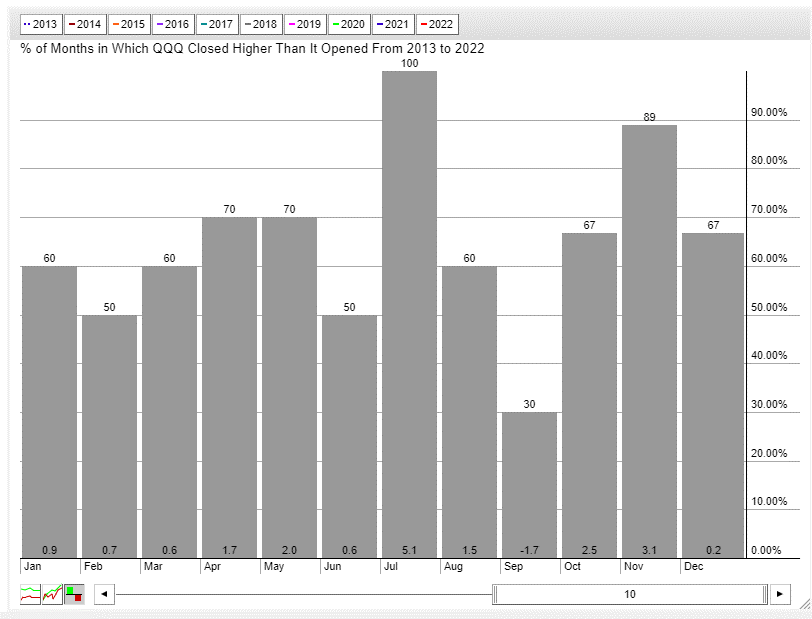
September has been by far the worst month for stocks in the past decade, especially higher growth NASDAQ names. Now that September has come to an end, the next few months show solid seasonal returns. October and November are the second and third best months of the year for stock performance over the prior 10 years.

Implied Volatility

Implied Volatility (IV) has once again spiked to recent extremes. A look at a measure of the VXN -or 30-day IV in QQQ options- shows levels are back near the 40 area after reaching lows near 25 back in August. You can see how spikes in VXN have been equated to short-term lows in QQQ over the past year.

Fear

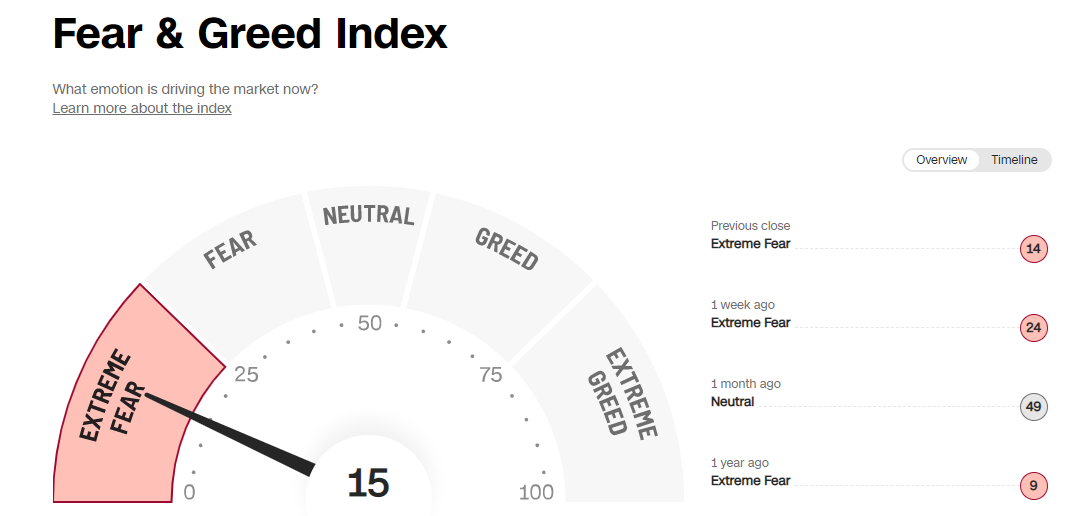
The CNN Fear and Greed Index is back near the lowest levels of the year at 15-which is extreme fear.

The only previous time this past year it was lower was back in May. This coincided with a significant low in stocks.

AAII Investor Sentiment Survey is also at extremely bearish levels. Current bearish sentiment is over 60% which is double the historical average of about 30%. This is considered a contrary signal that usually equates to big stock out-performance over the upcoming 6 months.

The combination of seasonality, implied volatility, and fear are all setting up to put the odds in favor of a year-end rally in stocks. Of course, probability doesn’t mean certainty. As I always say, trading is about probabilities, not certainty. But traders who like to play the odds may want to take a guarded bullish position to position to profit from a probabilistic pop in stocks into year-end.

POWR Options

What To Do Next?

If you’re looking for the best options trades for today’s market, you should check out our latest presentation How to Trade Options with the POWR Ratings. Here we show you how to consistently find the top options trades, while minimizing risk.

If that appeals to you, and you want to learn more about this powerful new options strategy, then click below to get access to this timely investment presentation now:

How to Trade Options with the POWR Ratings

All the Best!

Tim Biggam

Editor, POWR Options Newsletter


QQQ shares closed at $267.26 on Friday, down $-4.61 (-1.70%). Year-to-date, QQQ has declined -32.49%, versus a -23.93% rise in the benchmark S&P 500 index during the same period.


About the Author: Tim Biggam

Tim spent 13 years as Chief Options Strategist at Man Securities in Chicago, 4 years as Lead Options Strategist at ThinkorSwim and 3 years as a Market Maker for First Options in Chicago. He makes regular appearances on Bloomberg TV and is a weekly contributor to the TD Ameritrade Network “Morning Trade Live”. His overriding passion is to make the complex world of options more understandable and therefore more useful to the everyday trader. Tim is the editor of the POWR Options newsletter. Learn more about Tim’s background, along with links to his most recent articles.

More…

The post Three Reasons Why It May Be Time To Buy Stocks Again appeared first on StockNews.com

https://www.entrepreneur.com/article/436452


Why This Bear Market Is Not Even Close to Being Done…

For much of the last decade, the Fed was desperate to invigorate a stagnant labor market, especially from a wage perspective. To this end, it added trillions in liquidity to the global economy which had secondary effects of bubbles in all sorts of assets. Yet, the Fed was mostly unsuccessful in this goal of a strong and tight labor market until a couple of years ago. Now, the Fed has the opposite problem. It’s desperate to cool an overheated economy, and the locus of this is the labor market. Yet, its aggressive interventions have largely been unsuccessful in terms of curbing wage inflation or even job growth as evidenced by the latest reading which showed unemployment claims falling to a new cycle low. In today’s commentary, I want to focus more on this dynamic and discuss its implications for our portfolio. Then, we’ll do our usual roundup of pertinent market topics. Read on below to find out more….

shutterstock.com – StockNews

(Please enjoy this updated version of my weekly commentary originally published September 29th, 2022 in the POWR Stocks Under $10 newsletter).

Over the last week, the S&P 500 is down by 3.1% (SPY). It’s telling that this feels like a ‘moral victory’ of sorts for the bulls given the even steeper losses of the last 2 weeks. We even had a couple of nice 2%+ bounce attempts.

But of course, these rolled over to fall to lower lows. More important is that we have now broken below the June lows, although there is some hope that the lows were undercut before finishing higher in Tuesday’s and today’s sessions.

On Wednesday, stocks were up more than 2% with big bounces in some of the most oversold parts of the market. However, all of these gains were given back in today’s session.

The major factor in the decline was jobless claims which fell to a new low. Remarkably, the labor market continues to strengthen despite a plethora of challenges and increasing signs of economic weakness in various sectors and around the world.

Obviously, this is great news for the economy and the country.

But, why is it so bearish for the stock market?

Well, this is one of those times that we have an economy vs market type situation.

Good economic news is bad for markets as is bad economic news for obvious reasons. The reason is the Fed’s ultra-hawkish stance. Good news means more tightening.

Bad news means that earnings are likely to decline, but it’s unlikely to lead to lower rates (until inflation meaningfully bends lower).

In fact, this is the exact opposite dynamic that we had in the months following March 2020 when the Fed had an extremely dovish stance. This was another the economy isn’t the market and the market isn’t the economy type situation.

Bad economic news caused stocks to rally as it meant that the Fed would ease more and/or for longer. Good economic news was good because, it meant that earnings would increase, but wouldn’t lead to tighter monetary policy or higher rates.

Implications

For the stock market (SPY), the major implication is that… the bear market is not close to being done.

The Fed (and stock market) are caught between a rock and a hard place with no easy options. Slaying the inflation beast seems unlikely without more economic pain.

The headwind of higher rates is quite potent. The best-case scenario for stocks is that we have another quarter of economic data and earnings that beat relative to expectations.

This would likely lead to a range-bound market with some nice rallies like what we had in July, but it’s a far cry from a bull market.

To get a new bull market, we need the Fed to back off and an inflection point in economic data especially in terms of housing and industrials. Both are unlikely at the moment.

In terms of the portfolio, we will do our best to navigate the current situation. Upside is capped and limited, so we need to use bounces and rallies to take profits and lighten up. Downside is steep and significant. Overall, risk management is paramount.

Let’s think about it this way: Going back to a sports analogy, let’s say a football team is driving down the field for a game-winning touchdown.

Well, they’re going to throw or hand it off to their best players and use their best plays. It’s not the time to go for a hail mary or a flea-flicker. (Of course, there are exceptions.)

The same applies to us. This is not a time to take big swings. It’s a time for grinding, for studying, for capital preservation, and leveling up our investing IQ and process for the next bull market.

Market Topics

Now let’s do a review of some important market topics…

UK bonds: Something extraordinary happened this week as the Bank of England initiated a 2-week QE program in the midst of rate hikes.

The impetus was the collapse in the pound and gilts due to incoming PM Truss’ extremely generous budget which is certainly going to lead to bigger deficits, just as rates are rising.

In essence, the central bank is fighting inflation, while fiscal authorities are fanning the flames.

What I’m thinking about – is this an anomaly or a preview of what’s to come for other European countries in a similar situation with soaring electricity prices and sky-high inflation.

Growth stocks: Growth stocks can’t meaningfully rally until inflation turns lower. This is a fact because higher rates are anathema to the asset class. Higher rates mean that long-term cashflows are less attractive.

Further, many investors might choose to get a guaranteed 4% return for 2 years in Treasuries amid this market environment vs something like 10% in growth stocks that comes with an insane amount of risk and volatility.

Oil: One silver lining for bulls has been the decline in oil and gasoline prices. Imagine the current moment but with gas prices above $6 per gallon.

What I’m unsure about is how much of the weakness is due to SPR sales? Or, is it that oil had a blowoff top amid the Russia-Ukraine news which set up a classic ‘sell the news’ inflection point?

Or could it just be that the energy markets are reacting to an oncoming recession?

I think the answers to these questions are quite important, and it’s something I want to keep digging into in future commentaries. However for the time being, I see energy as more of a trading vehicle rather than for investing.

 What To Do Next?

If you’d like to see more top stocks under $10, then you should check out our free special report:

3 Stocks to DOUBLE This Year

What gives these stocks the right stuff to become big winners, even in the brutal 2022 stock market?

First, because they are all low priced companies with the most upside potential in today’s volatile markets.

But even more important, is that they are all top Buy rated stocks according to our coveted POWR Ratings system and they excel in key areas of growth, sentiment and momentum.

Click below now to see these 3 exciting stocks which could double or more in the year ahead.

3 Stocks to DOUBLE This Year

All the Best!

Jaimini Desai
Chief Growth Strategist, StockNews
Editor, POWR Stocks Under $10 Newsletter


SPY shares closed at $357.18 on Friday, down $-5.61 (-1.55%). Year-to-date, SPY has declined -23.93%, versus a % rise in the benchmark S&P 500 index during the same period.


About the Author: Jaimini Desai

Jaimini Desai has been a financial writer and reporter for nearly a decade. His goal is to help readers identify risks and opportunities in the markets. He is the Chief Growth Strategist for StockNews.com and the editor of the POWR Growth and POWR Stocks Under $10 newsletters. Learn more about Jaimini’s background, along with links to his most recent articles.

More…

The post Why This Bear Market Is Not Even Close to Being Done… appeared first on StockNews.com

https://www.entrepreneur.com/article/436440


3 No-Brainer Stocks to Buy During the Bear Market

The stock market is decisively in bear market territory and is now flirting with new, 2022 lows. Clearly, there remains a considerable amount of risk especially in the near-term due to the combination of a hawkish Fed and a resilient but weakening economy. Amid these challenging circumstances, investors should prioritize high-quality stocks with strong financials and a durable and growing earnings stream. There are countless ways for investors to identify these stocks, but maybe the most simple is to target companies that are buying back large amounts of stock. Visa (V), Microsoft (MSFT), and Alphabet (GOOGL).

shutterstock.com – StockNews

The stock market is decisively in bear market territory and is now flirting with new, 2022 lows. Clearly, there remains a considerable amount of risk especially in the near-term due to the combination of a hawkish Fed and a resilient but weakening economy.

Amid these challenging circumstances, investors should prioritize high-quality stocks with strong financials and a durable and growing earnings stream. There are countless ways for investors to identify these stocks, but maybe the most simple is to target companies that are buying back large amounts of stock.

Only companies with sound financials and enough earnings to have excess cash flow are able to engage in buybacks. Reducing share count is also a guaranteed way to increase EPS which is the ultimate driver of a company’s stock price. Therefore, investors should target the following 3 companies: 

Microsoft (MSFT)

YTD, MSFT shares are down nearly 30%. Yet, the company is expected to grow earnings over the next 12 months by 21% which is certainly impressive given its very reasonable forward P/E of 20. 

MSFT is an exceptional stock and company for several reasons. The most obvious isits dominance in multiple categories such as PC software, enterprise software, and cloud computing. It’s also the best-performing stock in the S&P 500 over the last decade.

But, what’s even more potentially interesting is that it’s a beast in terms of returning cash to shareholders through dividends and buybacks. In fact, the company is projected to return over $40 billion to shareholders in 2022 which is 25% more than last year. 

Although, Microsoft’s dividend is quite modest at just over 1%, it is one of the leaders in terms of dividend growth. Over the last 3 years, it’s increased its payout by more than 10%. And, the payout has increased by 259% over the last decade.  

MSFT’s POWR Ratings reflect this promising outlook. The stock has an overall B rating, which equates to Buy in our proprietary rating system. The stock has a B for Quality due to its leadership in many large markets and a track record of growth and execution. It also has a B for Sentiment as 22 out of 23 analysts covering the stock have a Buy rating with a consensus price target of $363, implying a 31% upside. Click here to see the complete POWR ratings for MSFT.

Visa (V)

V is another company that is pretty dominant in its niche and has some very impressive margins. It’s also one of the premier growth stocks in the market and is a strong candidate to make new, all-time highs, once the next bull market commences. 

Currently, the company is buying back about $3 billion of stock every quarter which equates to about 0.75% of the company. This is a nice tailwind for V’s earnings as about 3% of the company’s float is retired every year. 

Another interesting characteristic for V is that it has a great business model as it makes money on every transaction but doesn’t take on any credit risk. This has translated into tremendous earnings growth which has continued over the past year, despite the stock being down nearly 30% from its all-time highs. This has resulted in the company having a very attractive forward P/E of 21. 

V’s POWR Ratings reflect this promising outlook. The stock has an overall B rating, which equates to a Buy in our proprietary rating system. The POWR Ratings are calculated by considering 118 different factors, with each factor weighted to an optimal degree. B-rated stocks have an average annual performance of 21.0% which compares favorably to the S&P 500’s average annual gain of 8.0%. 

Alphabet (GOOGL)

Similar to Visa, GOOGL is another ‘toll-road’ business given its dominance of Search and video. There is tremendous organic growth in these categories that should fuel earnings growth over the next decade especially as advertising continues to shift digitally.

Over the last 12 months, GOOGL’s earnings are up by a staggering 91% due to low comps from the pandemic and an increase in ad spending. Going forward, ad spending could be impacted by an economic slowdown which is one factor in Google’s recent stock price weakness.

However, the combination of a weak stock price and earnings growth has resulted in an extremely attractive valuation with a forward P/E of 16.6. This is basically in line with the overall market, despite Google’s juicy margins and long-term growth potential. 

In terms of stock buybacks, Google has $125 billion in cash, and many analysts are anticipating a massive buyback of $100 billion which would be equivalent to nearly 7% of its total market cap. 

9 “MUST OWN” Growth Stocks

What makes them “MUST OWN“?

All 9 picks have strong fundamentals and are experiencing tremendous momentum. They also contain a winning blend of growth and value attributes that generates a catalyst for serious outperformance.

Even more important, each recently earned a Buy rating from our coveted POWR Ratings system where the A rated stocks have gained +31.10% a year.

Click below now to see these top performing stocks with exciting growth prospects:

9 “MUST OWN” Growth Stocks


V shares closed at $177.65 on Friday, down $-2.41 (-1.34%). Year-to-date, V has declined -17.59%, versus a -23.93% rise in the benchmark S&P 500 index during the same period.


About the Author: Jaimini Desai

Jaimini Desai has been a financial writer and reporter for nearly a decade. His goal is to help readers identify risks and opportunities in the markets. He is the Chief Growth Strategist for StockNews.com and the editor of the POWR Growth and POWR Stocks Under $10 newsletters. Learn more about Jaimini’s background, along with links to his most recent articles.

More…

The post 3 No-Brainer Stocks to Buy During the Bear Market appeared first on StockNews.com

https://www.entrepreneur.com/article/436436


Updated: Bear Market Game Plan!

Please do not assume this bear market is over. History provides many lessons on how bear markets work and thus why the S&P 500 (SPY) could easily fall another 20% or more from current levels. That is the past. Now we need to focus on the future like how low the stocks will go…and the best trades to stay on the right side of the market action. All that and more is in Steve Reitmeister updated “Bear Market Game Plan”. Read on below for more.

shutterstock.com – StockNews

This week I shared a brand-new live presentation to investors at the MoneyShow’s Online Expo that reveals my updated “Bear Market Game Plan”. Just click below to start viewing the on-demand version now.

Bear Market Game Plan >

In this timely presentation I share full details on:

  • 3 Reasons Why STILL a Bear Market
  • How Low Will Stocks Go?
  • 9 Trades to Profit on the Way Down
  • And Why It’s Not Too Late to Get on Board Now!

While most investors head for the hills as soon as the bear begins to roar, now is not the time to run away in fear.

That’s because bear markets CAN be tamed!

In fact, they offer one of the best opportunities to make money…but only if you know which strategies to employ so you can profit now.

Also you need to have a game plan ready to start buying at the bottom for the next bull market to emerge. Because if you are late to the party you are going to miss some of the biggest gains of the decade.

If these ideas appeal to you, then please click below to access this vital presentation now:

Bear Market Game Plan >

Wishing you a world of investment success!

Steve Reitmeister

…but everyone calls me Reity (pronounced “Righty”)
CEO StockNews.com & Editor of Reitmeister Total Return


SPY shares were trading at $357.18 per share on Friday afternoon, down $5.61 (-1.55%). Year-to-date, SPY has declined -23.93%, versus a % rise in the benchmark S&P 500 index during the same period.


About the Author: Steve Reitmeister

Steve is better known to the StockNews audience as “Reity”. Not only is he the CEO of the firm, but he also shares his 40 years of investment experience in the Reitmeister Total Return portfolio. Learn more about Reity’s background, along with links to his most recent articles and stock picks.

More…

The post Updated: Bear Market Game Plan! appeared first on StockNews.com

https://www.entrepreneur.com/article/436430