Best Penny Stocks to Buy in March? 3 to Watch Next Month 

3 Penny Stocks to Watch in March 2022

With another month of trading penny stocks almost here, there is a lot for investors to consider. Now, understanding exactly what is going on in the stock market will always be the most crucial factor to making money with penny stocks. And as February comes to an end, there are a few things to keep in mind. For that reason, let’s break them down one by one. At the top of the list right now, we have a conflict between Russia and Ukraine. 

PennyStocks.com – PennyStocks

While this has only been in play with penny stocks in the past few weeks, it has begun to have a major effect on the stock market. And as February ends, we only expect this to continue resulting in major market volatility. Next on the list, we have the pandemic. While Covid has taken a backseat momentarily, it is still causing ups and downs in the stock market. Although the rise and subsequent fall of Omicron has helped to bring us more toward an endemic state, it is still around. 

Lastly, we have to consider the effects of the pandemic such as massive inflation, and more recently, rising interest rates. Prior to the invasion of Ukraine, rising interest rates were the main topic of discussion in the stock market. So, keeping all of this in mind simultaneously is crucial to understanding how to trade penny stocks and whether or not profitability is possible. So, with all of this in mind, let’s take a look at three penny stocks to watch in March 2022. 

3 Penny Stocks For Your March 2022 Watchlist 

  1. Camber Energy Inc. (NYSE: CEI) 
  2. Ambev ADR (NYSE: ABEV) 
  3. Denison Mines Corp. (NYSE: DNN) 

Camber Energy Inc. (NYSE: CEI) 

Camber Energy is a penny stock that we have been covering substantially over the past few months. And on February 24th, we witnessed shares of the energy company shoot up by over 25%.

This was a substantial gain and shows both how bullish investors are on the energy industry and how volatile CEI stock is as a whole. But, in the past one month and six month periods, shares of CEI stock have shot up by over 18% and more than 80% respectively. For that reason, it’s worth taking a closer look at the company.

The most recent press release from Camber Energy came on February 17th. This is when it announced that its subsidiary, Viking Energy had been recognized as a leader in the energy sector. And more recently, the CEO of the company, James Dorris announced a company update for shareholders. In the update, Dorris stated that the subsidiary, Viking, has reduced its debt by over $100 million through the sale of divisions that were subjected to high-interest loans.

In addition, Camber Energy instituted a financing deal of preferred shares worth $100 million. All of this has helped to put CEI stock in a better position after filing from around $4 to where it currently sits at under $1 per share. Considering all of this, will CEI be on your list of penny stocks to watch or not?

Penny_Stocks_to_Watch_Camber

Ambev ADR (NYSE: ABEV) 

Another penny stock that we have discussed frequently in the past six months or so is Ambev. Over the last month, we have begun to see a slight bullish turnaround for the Brazilian beverage manufacturer. And, this is in line with its fourth quarter 2021 financial results that were released only a few days ago.

The company announced in its latest Q4 results that its net income declined to 3.7 billion BRL or around $738 million. Despite this, its net revenue rose to 22 billion BRL from 18.6 billion BRL in the year prior. In addition to all of this, the company stated that the total cost of goods sold rose by almost 30% from the fourth quarter of the previous year. The main reason behind all of this is the effects of the pandemic.

And, the company states that it is still feeling the effects of Covid on its business. But, as one of the largest distributors of alcoholic products in South America, many investors are excited about the future of the company. For now, ABEV stock is quite volatile, and investors should consider these results wholly. With that in mind, will ABEV be on your penny stocks watchlist next month?

Penny_Stocks_to_Watch_Ambev

Denison Mines Corp. (NYSE: DNN) 

In the past few trading days, we’ve seen shares of DNN stock climb substantially. On February 24th, DNN stock shot up by over 6.4% to more than $1.33 per share. And in the past six months, DNN stock has shot up by over 20%. The most recent news from the company came on February 16th when it announced several intersections of high-grade uranium mineralization at its Phoenix Uranium deposit at its 95% owned Wheeler River project.

“The grade and thickness of mineralization in holes GWR-045 and GWR-049 significantly exceeded what was predicted by the Phoenix block model.

We believe these results will support an expansion of the volume of the high-grade mineralized domain in Phase 1 area of Zone A. The potential exists to identify additional perched mineralization along the northwest margin of the Deposit.”

The Director of Exploration at Denison Mines, Andy Yackulic

This is very exciting news and shows that Denison is working hard to continue expanding its uranium deposits. With all of that considered, do you think DNN stock is worth adding to your watchlist for next month or not?

Penny_Stocks_to_Watch_Denison

Which Penny Stocks Are You Watching in March?

Finding the best penny stocks to buy in March 2022 is challenging. But, with the right information on hand, it can be much easier than previously imagined. Because there are so many options to choose from, creating a watchlist will be your best chance at profitability. 

In addition to this, investors should have a thorough understanding of both how to trade penny stocks and a trading strategy on hand. All of this will help to increase your chances of profiting and decrease your chances of doing the opposite. So, with all of that in mind, which penny stocks are you watching in March 2022?

If you enjoyed this article and you’re interested in learning how to trade so you can have the best chance to profit consistently then you need to checkout this YouTube channel. CLICK HERE RIGHT NOW!!

https://www.entrepreneur.com/article/420798



Why the Stock Market Hates Uncertainty

I have no doubt that many of you are scratching your heads on how the S&P 500 (SPY) has rallied strongly in the 2 sessions since Russia invaded the Ukraine. I believe that 2 long time market maxims help tell the story perfectly. So we will focus on that for today’s POWR Value commentary. Read on below for more….

shutterstock.com – StockNews

(Please enjoy this updated version of my weekly commentary published February 25th, 2022 from the POWR Value newsletter).

Market Maxim 1 = Buy the Rumor, Sell the News

We hear this saying all the time around earnings season when a company rallies up into their report…then crush it…and then shares oddly tumble thereafter. The statement of “buy the rumor, sell the news” is the most logical answer.

Think about it this way. We all know that that investors are forward looking. That is why the market often tumbles 4-6 months in advance of recessions. Just as similarly the market bounces from bear market bottom long before there is evidence of economic improvement.

So with that forward looking anticipation investors place their trades so that when the actual event happens they oft take the profits off the table.

This idea provides a very good explanation behind stocks being volatile on the fears of a Russian invasion of the Ukraine, yet rallying when it actually happened. The rest of it can be explained by the following…

Market Maxim 2 = The Market Hates Uncertainty

When the path is unclear many investors sell first and ask questions later. This is true with any number of events over the years.

For example, the first wave of news on Omicron led to an immediate pullback in stocks. Especially for those most potentially harmed in the leisure and entertainment industry.

Yet once it was clear that Omicron was contagious, but not overly harmful to the economy, the market rallied back to the previous highs.

Or rolling back to September/October 2020 the market tumbled given the uncertainties over the Presidential election. That too was quickly rectified once that uncertainty was removed.

It is for this reason I said the following in my 2/22 Reitmeister Total Return commentary:

“This is a bull market til proven otherwise. However it is true that the market doesn’t like uncertainty. And a potential military conflict is an uncertainty.

However, at some point it will become certain. And that may include some kind of cold war…or hot war with Russia. And oddly that uncertainty flipping to certainty will be a positive for the market. And that is why we remain bullish.

Remember the goal is to buy low and sell high. But if you already bought your shares, then that expression become “hold low and sell high”. And that is why we will not be shaken off this bull before it runs higher once again.”

Gladly we heeded this message in our approach to the POWR Value portfolio which allowed us to enjoy a two day tally of +3.84%.

Reity, what does this mean for the market in the days and weeks ahead?

The market is still susceptible to scary headlines coming out of the Russian situation. Everything that sounds like the odds are increasing that the US will be dragged into a real military conflict will be detrimental to the market.

And indeed the idea that Russia government hackers are messing with the US economy via cyber warfare will not be favorable for stocks (this is the higher risk in my opinion than on the ground military conflict).

Putting it all together, expect continued volatility in the short run. The downside risk in my opinion is around 4,000 on the S&P 500 whereas the upside reward with the bull market getting back on track is 5,500 this year.

But even if 5,000 is as high as we get in 2022 then you appreciate that upside reward is greater than downside risk. And that is why we continue to keep a bullish bias in place.

Yes, there are scenarios that would harm the US economy and lead to a much steeper decline for the stock market. I think the odds of those are fairly low. But if we did start to tip in that direction than we would move our portfolio into a more defensive posture.

Until then expect volatility with a bias towards upside action.

 What To Do Next?

If you’d like to see more top value stocks, then you should check out our free special report:

7 SEVERELY Undervalued Stocks

What makes these stocks great additions to any portfolio?

First, because they are all undervalued companies with exciting upside potential.

But even more important, is that they are all A rated Strong Buys according to our coveted POWR Ratings system. Yes, that same system where top-rated stocks have averaged a +31.10% annual return.

Click below now to see these 7 stellar value stocks with the right stuff to outperform in the coming months.

7 SEVERELY Undervalued Stocks

All the Best!

Steve Reitmeister
CEO StockNews.com & Editor of POWR Value trading service


SPY shares closed at $437.75 on Friday, up $9.45 (+2.21%). Year-to-date, SPY has declined -7.83%, versus a % rise in the benchmark S&P 500 index during the same period.


About the Author: Steve Reitmeister

Steve is better known to the StockNews audience as “Reity”. Not only is he the CEO of the firm, but he also shares his 40 years of investment experience in the Reitmeister Total Return portfolio. Learn more about Reity’s background, along with links to his most recent articles and stock picks.

More…

The post Why the Stock Market Hates Uncertainty appeared first on StockNews.com

https://www.entrepreneur.com/article/420781


Best Penny Stocks To Buy? 3 Short Squeeze Stocks To Watch Now

There’s a variety of trends to follow in the stock market today, and one of the more popular involves short squeeze potential. Whether we’re talking about stocks over $5 or penny stocks, this is something that retail traders have made sure to focus on ever since the big moves that meme stocks like AMC Entertainment (NYSE: AMC) made last year.

PennyStocks.com – PennyStocks

These “short squeeze” candidates start with one key metric: short interest. How big is the short float percentage compared to the overall float and is there unusual volume to back up the speculation? Today we look at a few penny stocks with higher short interest to see if they become the next round of short squeeze stocks to watch heading into March.

Short Squeeze Penny Stocks

Hot Penny Stocks To Buy For Under $5

We’re talking about stocks under $5 when referencing penny stocks on this list. It’s important to keep in mind that just because they’re “cheap” or have a higher short interest, there aren’t any guarantees that big AMC-style breakouts will happen. But the more you know and the more data you have at your fingertips, the better prepared you are to manage risk in the stock market. Today we have three penny stocks gaining steam and also have higher levels of short interest.

China Online Education Group (NYSE: COE)

The so-called “China stocks” were relatively muted since the start of the year. Even with the big 2022 correction, the broader Chinese-based stocks seemed to trade less connected with the latest market trends. In the case of China Online Education, this thinly traded penny stock has recently experienced some above-average activity in light of its latest series of 13G filings to hit the tape. From February 11th through the 14th, these filings were reported in the company’s SEC filings list showing significant stakes by institutional investors.

Take a look at our article, “Penny Stocks & Due Diligence: Understanding Important SEC Filings,” and you’ll see why this might’ve inspired some optimism in the stock.

A 13G pertains to “passive investors” owning less than 20% of a company’s outstanding shares…These are important because we’ll see which large funds or investors are taking a larger position in a company. These typically lift sentiment for a given company.

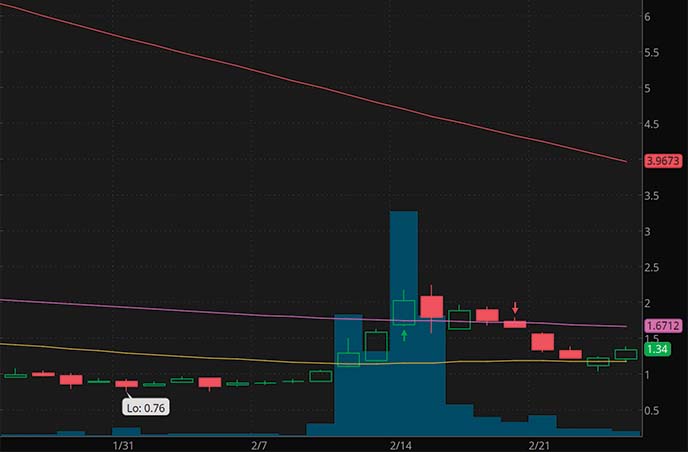
Despite a quiet newsfeed, the Chinese online education company’s shares have popped at the end of the month. Is it a short squeeze candidate as well? Based on data from Fintel.IO, the current short float percentage sits around 51%.

best penny stocks to buy short squeeze stocks Chine Online Education COE stock chart

MicroVision Inc. (NASDAQ: MVIS)

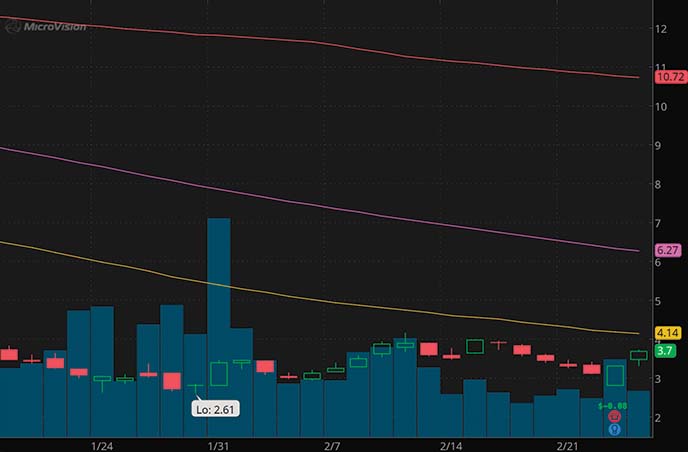
Automotive lidar solutions technology company, Microvision has also seen a turnaround in the stock market this week. Shares have enjoyed a 2-day bounce back above the $3.70 level. Some mixed earnings reported earlier in the week seem to have helped things, overall. MicroVision missed earnings per share estimates by a penny but beat sales expectations for the quarter. With plans for track testing its high-speed Highway Pilot system in the U.S. and Germany next quarter, MVIS stock is on a few watch lists right now.

What’s more, heading into next month, the company may also be one to watch. That’s because MicroVision presents at the March Investor Summit Virtual Event on the 9th. management participates in one-on-one meetings and presents a virtual group webcast at the event.

Is MVIS stock on the list of short interest stocks to watch? In looking at the data, Fintel shows a current short float of just under 22% right now.

best penny stocks to buy short squeeze stocks MicroVision MVIS stock chart

Imperial Petroleum Inc. (NASDAQ: IMPP)

Energy stocks have been red hot this week, especially in light of the latest Russia-Ukraine conflict. Cutting off oil supply, implementing sanctions, and impacting global trade, in general, has brought a big move in energy prices.

Imperial Petroleum owns vessels providing petroleum products and crude oil transportation services. Thanks to a new round of funding, the company has plans to use the capital for acquiring additional vessels to build upon its current fleet. Imperial currently owns three M.R. product tankers and one Aframax oil tanker. With earnings season in full swing, it’s not a surprise that investors may also be looking for further updates on growth after its Q3 results, released late last year.

The company saw fleet operational utilization of 84% during the quarter compared to 87% the previous year’s Q3. Revenue of $4.1 million in Q3 2021 was also lower than the previous year’s period due to a weaker spot market and idle tankers. Considering the strength of the energy market since mid-Q4, it will be essential to see how Imperial has handled its operations.

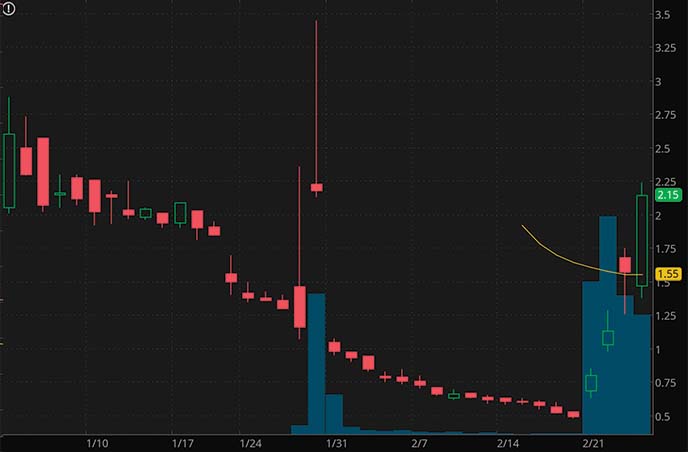
This week IMPP stock surged on the back of global unrest. Furthermore, traders may have also speculated on the stock after looking at the short float percentage figure on TD Ameritrade. That currently sits at 13.67%.

best penny stocks to buy short squeeze stocks Imperial Petroleum Inc. IMPP stock chart

Are Penny Stocks Worth It?

If you’re new to trading, you might be wondering if penny stocks are worth it or not. A lot of that answer has to do with your experience level and understanding of how to trade in the first place. Can you manage risk? Do you know how to identify strong vs. weak trends? Are you able to decipher news headlines and break down important information? Have you found out how to identify important SEC filing types? How will global headlines affect specific sectors & related stocks?

These are just a few of the many questions to have immediate answers for when trading penny stocks. With volatility as a significant factor in trading, seconds matter. If you’re brand new, here are a few articles that will help you get started on the right foot:

https://www.entrepreneur.com/article/420702


Guide to High Dividend Paying ETFs

This story originally appeared on Zacks

The hunt for dividend in the equity market is always on irrespective of how it is behaving. After all, who doesn’t like a steady stream of current income along with capital gains? And if investors are mired in a web of equity market uncertainty, global growth worries and geopolitical crisis, the lure for dividend investing will increase.

– Zacks

Investors should note that not all dividend stocks serve the same purpose. While the high-yield ones are known for offering hefty current income, stocks with dividend growth point to quality investing — a pre-requisite to making money in this volatile environment. Notably, the year 2020 was a bit difficult for dividend investing due to the corporate cash crunch and announcement of dividend cuts.

But things have been changing from the year 2021. S&P Dow Jones Indices announced in early January that indicated dividend gain in 2021 was $69.8 billion compared to 2020’s decline of $40.8 billion. U.S. common dividend increases were $78.6 billion in 2021, up 89.7% year over year, as decreases in dividends fell 89.3% to $8.8 billion in 2021 from the massive $82.2 billion in 2020.

Meanwhile, the rise in interest rates is now common globally. Vaccine rollout, resulting in risk-on sentiments, and higher inflationary expectations, thanks to supply chain woes, led to the rise in rates. A hawkish Fed in 2022 is also responsible for the rise, which has cast a pall on Wall Street. U.S. Treasury yields soared to this year’s high of 2.05% on Feb 15. Inflation in Euro zone is no different, having hit a new record high. No wonder, central banks in developed economies have been tightening policies.

Why to Pick High-Dividend Securities

As economies are likely to rebound this year on widespread vaccination and inflation rates are likely to pace up, bond yields should soar further. In such a scenario, investors may be interested in equities that have the potential to offer capital appreciation as well as benchmark-beating yields. After all, dividends are one of the ways to ride out the turbulent times.

Even if the stock or the fund falls, higher current income would go a long way in protecting investors’ total returns. After all, high-dividend ETFs provide investors avenues to make up for capital losses, if that happens at all.

We thus have zeroed in on some high-dividend ETFs.

Global X SuperDividend ETF SDIV

The underlying Solactive Global SuperDividend Index tracks the performance of 100 equally weighted companies that rank among the highest dividend-yielding equity securities in the world. The index provider applies certain dividend stability filters. Financials (29%) and Real Estate (26.3%) are the top two sectors of the fund. The 101-stock ETF charges 59 bps in fees and yields 9.12% annually.

SPDR Portfolio S&P 500 High Dividend ETF SPYD

The underlying S&P 500 High Dividend Index is designed to measure the performance of the top 80 dividend-paying securities listed on the S&P 500 Index, based on dividend yield. Financials (17.83%), Utilities (16.99%), Real Estate (13.38%) and Energy (13.05%) have a double-digit weight in the fund. The fund yields 7 bps in fees and yields 3.62% annually.

Vanguard High Dividend Yield ETF VYM

The underlying FTSE High Dividend Yield Index which consists of common stocks of companies that generally pay higher-than-average dividends. The fund charges 6 bps in fees and yields 2.81% annually.  Johnson & Johnson (3.23%), JPMorgan Chase & Co. (3.11%) and Home Depot (2.78%) are the top three stocks of the fund.

Global X SuperDividend U.S. ETF DIV 

The underlying INDXX SuperDividend U.S. Low Volatility Index tracks the performance of 50 equally weighted common stocks, MLPs & REITs that rank among the highest dividend-yielding equity securities in the United States. The fund yields 5.32% annually and charges 45 bps in fees. Bp Midstream Partners (2.77%), Spartannash (2.70%) and Public Storage (2.67%) hold top three positions in the fund DIV.

iShares Core High Dividend ETF (HDV)

The underlying Morningstar Dividend Yield Focus Index offers exposure to high-quality U.S. domiciled companies that have had strong financial health and the ability to sustain above-average dividend payouts. The fund is heavy on the healthcare sector (24.07%), followed by energy (19.53%), consumer staples (18.75%). The fund HDV charges 8 bps in fees and yields 3.42% annually.

Want key ETF info delivered straight to your inbox?

Zacks’ free Fund Newsletter will brief you on top news and analysis, as well as top-performing ETFs, each week.

Get it free >>

Want the latest recommendations from Zacks Investment Research? Today, you can download 7 Best Stocks for the Next 30 Days. Click to get this free report
 
iShares Core High Dividend ETF (HDV): ETF Research Reports
 
SPDR Portfolio S&P 500 High Dividend ETF (SPYD): ETF Research Reports
 
Vanguard High Dividend Yield ETF (VYM): ETF Research Reports
 
Global X SuperDividend U.S. ETF (DIV): ETF Research Reports
 
Global X SuperDividend ETF (SDIV): ETF Research Reports
 
To read this article on Zacks.com click here.
 
Zacks Investment Research

https://www.entrepreneur.com/article/420710


The #1 Insider Signal Every Trader Should Know

This story originally appeared on Zacks

We love it when a famous CEO buys a large chunk of his company’s stock.
In Jan 2022, Reed Hastings, the Co-CEO of Netflix, bought 51,440 shares for nearly $20 million even though he already owned over 5 million shares.
This was his first open market purchase of Netflix shares ever. He didn’t even buy during the dark times of the financial crisis.
This big purchase made headlines and was analyzed on Twitter and Stocktwits by stock investors.
Insiders Buying En Masse
But what about when non-famous insiders buy their company’s stock and when a bunch of them buy en masse?
This mass insider buying behavior is called a “cluster buy” and it is the strongest signal you can get in insider trading.
When one insider buys, he might be considered an optimist, especially when he’s the CEO, but when four or five insiders all buy at the same time?
Now that’s a powerful consensus.
But you’re not going to hear about the cluster buys from the media. There aren’t going to be headlines trumpeting the buys of a few corporate Directors and a CFO.
Nope. The cluster buy simply isn’t glamorous enough.
Investors therefore have to dig below the surface to find the insider cluster buys. But once you do, that’s where big rewards can be found.
Cluster Buying Sends the Strongest Signal
Why do insiders spend so much of their money on their own companies’ stock when they already own a ton of shares already?
Greed!
Pure and simple.
The opportunity to make more money motivates people- even people who are already well off like highly paid CEOs and CFOs.
When insiders buy in a cluster, it’s because they all know something very good is going on at the company. Maybe it is a new product. Or contract. Or pending merger. Whatever the reason, they are all very confident that shares will be on the rise. 
After all, who would buy more stock in a company if they knew it was sinking?  And why would there be several of them buying unless they didn’t collectively believe that their stock was a value?
When things at the company are THAT good, insiders don’t want to miss out when everyone else is cashing in. Call it insider peer pressure, if you will.
Real Life Cluster Buying
Shares of the oil producers crashed in the coronavirus sell-off in 2020 as oil prices plunged globally.
They remained depressed over the summer of 2020 and into the fall even as crude prices rose back above $40 a barrel.
The insiders at explorer Matador Resources saw an opportunity with their shares still in the single digits.
In Nov 2020, 6 insiders including the CEO, the COO of Operations and 4 directors, dove in to buy again with 5 buying even before Pfizer’s big Nov 9, 2020 announcement that its vaccine was over 90% effective against the coronavirus.
Pfizer’s announcement, and subsequent roll-out of its vaccine, lit a fire under the beaten down oil stocks. Energy was the best performing S&P 500 sector in 2021.
The rally has continued into 2022.
Shares of Matador have jumped over 292% since Dec 1, 2020.
What did they know?
Continued . . .
——————————————————————————————————
Buy These Insider Stocks ASAP
When in-the-know officers dip into their own pockets to buy shares of their own company, there’s only one reason: They expect the stock price to go up.
Because of their inside knowledge of anticipated contracts, mergers, product breakthroughs and the like, insiders must report their trades to the SEC within 48 hours. Zacks has zeroed in on the best of these buys. We took into consideration which insiders bought, how many jumped in, how much money they poured in, and much more.
Our recommended insider buys are time-sensitive and normally closed to public view – but you can still see them until midnight Sunday, February 27.
Catch our selected insider trades right now >>
——————————————————————————————————
Buy When the Insiders Buy
When high level insiders buy, they are required to report the purchases to the SEC within 48 hours of the trade. The trade then becomes public information.
Hedge funds and other professional investors routinely use this information to get an edge on their trades.
For most of us, though, it’s not easy to get access to the insider information.
While the media will tout the huge insider buys from celebrity CEOs like Reed Hastings’ Jan 2022 $20 million Netflix share purchase, you’ll almost never hear about the non-celebrity CEOs, or other top ranked officers when they buy their stocks.
Was anyone talking about the 2020 Matador cluster buy?
The challenge is getting easy and reliable access to all the insider trades and then figuring out which ones to buy.
Where to Find the Cluster Buys
Anyone can go on the SEC website and get the insider trading information, but it’s time-consuming to search by individual companies, especially now that they’ve revamped the SEC website and made it even less user-friendly.
Some investment firms collect the insider buying data and can provide it to you as a daily list. Have you ever seen one of those lists? The sheer number of companies can be overwhelming.
And those lists don’t usually separate the insiders who are buying at the highs.
Even if you got a list of the insiders who are getting in at the highs and those who are buying the deals, how would you narrow it down to the stocks that are truly worth buying? If I’m going to buy when the insiders are buying, I want to buy only their top picks.
To identify the most promising signals, Zacks’ research team developed a strategy that monitors selected insider buying activity at companies that already show strong earnings and valuations.
Only 7 to 10 stocks meet our demanding criteria at any given time.
We invite you to look into our Insider Trader portfolio now.
Bonus: Just for exploring those trades, you can download Zacks’ Special Report, 5 Stocks Set to Double, free of charge. These 5 long-term buy-and-holds balance our more active Insider Trader moves. Each is the #1 favorite of a Zacks expert for its potential to jump +100% or more over the next year.
Previous editions of this report gave investors a chance at +175.9%, +498.3%, even +673.0% gains.¹
Deadline Approaching Fast: We want to give our readers the best chance to profit so we can’t let everyone see our best stocks. Access to the Insider Trader portfolio and Special Report is limited and will close to the public midnight Sunday, February 27.
See our insider trades and download 5 Stocks Set to Double now >>
Best,
Tracey Ryniec
Editor of Insider Trader
Tracey Ryniec, Zacks’ insider and value stock strategist, is Editor in Charge of the Insider Trader portfolio.
¹ The results listed above are not (or may not be) representative of the performance of all selections made by Zacks Investment Research’s newsletter editors and may represent the partial close of a position.
 

– Zacks

Want the latest recommendations from Zacks Investment Research? Today, you can download 7 Best Stocks for the Next 30 Days. Click to get this free report
 
To read this article on Zacks.com click here.
 
Zacks Investment Research

https://www.entrepreneur.com/article/420711


Toll Brothers (TOL) Q1 Earnings & Revenues Top, Margin Up

Toll Brothers, Inc. TOL reported impressive results for first-quarter fiscal 2022 (ended Jan 31, 2021). Both the top and bottom lines topped the Zacks Consensus Estimate as well as increased significantly on a year-over-year basis. The company has been benefiting from housing market momentum, which has been characterized by strong demographics, a substantial imbalance between tight supply of homes and continued pent-up demand, the growing equity in existing homes, migration trends, and the greater appreciation for home.
Douglas C. Yearley, Jr., chairman and chief executive officer, said, “Based on the good visibility that our backlog provides and the continued strength in the market, we are reaffirming all of our full year projections, including 20% growth in home sales revenues, an adjusted gross margin of approximately 27.5%, and a return on beginning equity of approximately 23%. In addition, we continue to expect to grow our community count by 10% by fiscal year end from the 340 communities we were operating at the end of FY 2021.”

– Zacks

Earnings & Revenue Discussion

This leading luxury homebuilder reported earnings of $1.24 per share, which surpassed the Zacks Consensus Estimate of $1.12 by 10.7% and increased a whopping 63.2% from the year-ago period.

Total revenues (including Home sales, and Land sales and other) came in at $1.79 billion, which beat the consensus mark of $1.77 billion by 1.2% and rose 14.6% year over year. The uptrend was backed by solid demand during the quarter.

Segment Detail

Toll Brothers operates under two reportable segments, namely Traditional Home Building and Urban Infill (“City Living”).
Revenues from Traditional Home Building totaled $1.65 billion, up 17.6% year over year and that of City Living increased more than almost 410.3% to $39.8 million.

Inside the Headline Numbers

Home sales revenues grew 19.8% from the prior year to $1.69 billion. Homes delivered grew 8.6% year over year to 1,929 units. Deliveries increased in all regions served by the company (barring North). The average price of homes delivered was $874,700 for the quarter, up from the year-ago level of $793,900.
The number of net signed contracts for the reported quarter was 2,929 units, up 2% year over year. The value of net signed contracts was $3 billion, reflecting a rise of 19% from the year-ago quarter.
At fiscal first quarter-end, Toll Brothers had a backlog of 11,302 homes, representing a 27% year-over-year increase. Also, potential revenues from backlog improved 45% year over year to $10.8 billion. The average price of homes in backlog totaled $956,000, up from $840,900 at the end of first-quarter fiscal 2021.
Cancellation rate for the reported quarter was 4.8% compared with 3.7% in the prior-year period.

Margins

The company’s adjusted home sales gross margin was 25.6%, expanding 270 basis points for the quarter. SG&A expenses — as a percentage of home sales revenues — were 13.4%, which decreased from 14.9% in the year-ago quarter.

Financials

Toll Brothers had cash and cash equivalents of $671.4 billion at fiscal first quarter-end compared with $1.64 billion at fiscal 2021-end. At fiscal first quarter-end, it had $1.8 billion available under the $1.9-billion bank revolving credit facility, scheduled to mature in November 2026.
Total debt at fiscal first quarter-end was $3.24 billion, down from $3.56 billion at fiscal 2021-end. Debt to capital was 38.1% at fiscal first quarter-end versus 40.2% at fiscal 2021-end. During the quarter, the company repurchased 3 million shares of its common stock at an average price of $61.65 per share for approximately $185.8 million.

Fiscal Second-Quarter Guidance

Toll Brothers expects home deliveries of 2,350 units (indicating a rise from 2,271 units delivered in the prior-year quarter) at an average price of $865,000-$885,000 (suggesting a rise from $808,600 a year ago).
Adjusted home sales gross margin is expected to be 25.5%, implying an increase from 21.9% in the year-ago period. SG&A expenses are estimated to be 11.9% of home sales revenues, indicating no change from the year-ago period. The company expects the effective tax rate to be 26%.

Fiscal 2022 Guidance

For fiscal 2022, home deliveries are anticipated to be 11,250-12,000 units at an average price of $875,000-$895,000. Toll Brothers expects adjusted home sales gross margin of 27.5% compared with 25% reported in fiscal 2021. SG&A expenses, as a percentage of home sales revenues, for full-year fiscal 2022 are projected to be 10.5% (suggesting a fall from 10.9% in fiscal 2021).

Zacks Rank

Toll Brothers currently has a Zacks Rank #2 (Buy). You can see the complete list of today’s Zacks #1 Rank (Strong Buy) stocks here.

Recent Construction Releases

UFP Industries, Inc. UFPI reported fourth-quarter 2021 results, wherein both earnings and net sales beat the Zacks Consensus Estimate as well as improved impressively on a year-over-year basis.
With this, UFPI’s earnings and sales surpassed the consensus mark in all the trailing four quarters. The uptrend was mainly driven by the diversity of markets and an improved pricing model.
Louisiana-Pacific Corporation LPX — commonly known as LP — reported impressive results for fourth-quarter 2021. Both the top and bottom lines surpassed the Zacks Consensus Estimate and grew on a year-over-year basis.
For first-quarter 2022, LPX expects Siding Solutions revenue growth to be 10% from the year-ago period. OSB revenues are expected to sequentially rise 40%. It anticipates consolidated adjusted EBITDA of more than $500 million, suggesting a rise from $461 million reported a year ago.
Martin Marietta Materials, Inc. MLM reported better-than-expected fourth-quarter 2021 results, wherein earnings and revenues (products and services) beat the respective Zacks Consensus Estimate.
Earnings and revenues of MLM also increased on a year-over-year basis backed by improved pricing across businesses as well as disciplined cost management.

Just Released: Zacks’ 7 Best Stocks for Today

Experts extracted 7 stocks from the list of 220 Zacks Rank #1 Strong Buys that has beaten the market more than 2X over with a stunning average gain of +25.4% per year.

These 7 were selected because of their superior potential for immediate breakout. 

See these time-sensitive tickers now >>

Want the latest recommendations from Zacks Investment Research? Today, you can download 7 Best Stocks for the Next 30 Days. Click to get this free report
 
UFP Industries, Inc. (UFPI): Free Stock Analysis Report
 
LouisianaPacific Corporation (LPX): Free Stock Analysis Report
 
Toll Brothers Inc. (TOL): Free Stock Analysis Report
 
Martin Marietta Materials, Inc. (MLM): Free Stock Analysis Report
 
To read this article on Zacks.com click here.
 
Zacks Investment Research

https://www.entrepreneur.com/article/420152


New Strong Sell Stocks for February 23rd

Here are three stocks added to the Zacks Rank #5 (Strong Sell) List today:

– Zacks

ARMOUR Residential REIT ARR invests primarily in residential mortgage-backed securities. The Zacks Consensus Estimate for its current year earnings has been revised 5.4% downward over the last 60 days.

Acasti Pharma ACST is a biopharmaceutical company. The Zacks Consensus Estimate for its current year earnings has been revised almost 27.3% downward over the last 60 days.

Altice USA ATUS is one of the largest broadband communications and video services providers in the United States. The Zacks Consensus Estimate for its current year earnings has been revised almost 14% downward over the last 60 days.

View the entire Zacks Rank #5 List.
 

Just Released: Zacks’ 7 Best Stocks for Today

Experts extracted 7 stocks from the list of 220 Zacks Rank #1 Strong Buys that has beaten the market more than 2X over with a stunning average gain of +25.4% per year.

These 7 were selected because of their superior potential for immediate breakout. 

See these time-sensitive tickers now >>

Want the latest recommendations from Zacks Investment Research? Today, you can download 7 Best Stocks for the Next 30 Days. Click to get this free report
 
ARMOUR Residential REIT, Inc. (ARR): Free Stock Analysis Report
 
Acasti Pharma, Inc. (ACST): Free Stock Analysis Report
 
Altice USA, Inc. (ATUS): Free Stock Analysis Report
 
To read this article on Zacks.com click here.
 
Zacks Investment Research

https://www.entrepreneur.com/article/420153


3 Mining Stocks to Buy as Silver Demand is Expected to Rise to a Record High in 2022

With the global economic recovery in progress, industrial demand for silver is expected to hit a record high this year. So, we think it could be wise to bet on quality silver mining stocks First Majestic Silver (AG), MAG Silver (MAG), and Fortuna Silver Mines (FSM). Let’s discuss.

shutterstock.com – StockNews

Silver is a highly versatile metal with a wide range of uses. In addition to its use in jewelry and silverware, this precious metal has wide utility in various industrial and manufacturing processes.

As the global economy continues its recovery, the demand for silver in industries is expected to grow. According to the Silver Institute, global silver demand is expected to rise 8% to achieve a record 1.11 billion ounces this year. The need for silver is expected to be driven by silver industrial fabrication, investments in silver bars and bullion coins, and its use in jewelry and silverware. Former director of the United States Mint and senior IRA strategist for gold and silver dealer U.S. Money Reserve, Edmund Moy, said “a compelling argument can be made that 2022 will be a good year for silver.”

Given this backdrop, we think it could be wise to bet on silver mining stocks First Majestic Silver Corp. (AG), MAG Silver Corp. (MAG), and Fortuna Silver Mines Inc. (FSM). Wall Street analysts expect these stocks to gain more than 15% in price in the near term.

First Majestic Silver Corp. (AG)

Headquartered in Vancouver, Canada, AG engages in acquiring, exploring, developing, and producing mineral properties, focusing on silver and gold production in Mexico and the United States. The company owns and operates the San Dimas Silver/Gold Mine, the Jerritt Canyon Gold Mine, the Santa Elena Silver/Gold Mine, and the La Encantada Silver Mine.

On Jan. 18, 2022, AG announced that its production in the fourth quarter was a record 8.60 million silver equivalent ounces, consisting of 3.40 million silver ounces and 67,411 gold ounces, representing a 17% increase sequentially. The company also said that it will produce between 32.20 million -35.80 million silver equivalent ounces in 2022, capitalizing on the high demand for silver expected this year.

AG’s revenues for nine months ended Sept. 30, 2021, increased 53.6% year-over-year to $379.24 million. The company’s operating earnings increased 95.3% year-over-year to $20.93 million. Also, its net loss narrowed 91.6% year-over-year to $0.95 million.

Analysts expect AG’s EPS and revenue for its fiscal 2022 to increase 140% and 27.5% year-over-year to $0.36 and $731.33 million. Over the past year, the stock declined 42% in price to close its last trading session at $11.40. However, Wall Street analysts expect the stock to hit $13.60 in the near term, indicating a potential 19.3% upside.

MAG Silver Corp. (MAG)

Headquartered in Vancouver, Canada, MAG is a development and exploration company. It is focused on acquiring, exploring, and developing high-grade, district-scale projects located primarily in the Americas. The company’s projects include Juanicipio Property and Cinco De Mayo Property.

MAG’s net loss for nine months ended Sept. 30, 2021, narrowed 80.7% year-over-year to $2.63 million. The company’s loss per share narrowed to $0.03, compared to $0.15 in the year-ago period. Also, its income from equity investments in Juanicipio came in at $6.90 million, compared to a $3.37 million loss in the year-ago period.

For the quarter ended June 30, 2022, MAG’s EPS is expected to increase 122.2% year-over-year to $0.07. Its revenue for its fiscal year 2022 is expected to increase 36,806.1% year-over-year to $121.79 million. Over the past year, the stock has lost 26.6% to close the last trading session at $15.75. However, Wall Street analysts expect the stock to hit $22.31 in the near term, indicating a potential upside of 41.6%.

Fortuna Silver Mines Inc. (FSM)

Headquartered in Vancouver, Canada, FSM is a precious metals mining company operating in Argentina, Burkina Faso, Mexico, and Peru. The company is  engaged primarily in producing silver and gold minerals. The company’s operating mines and projects include San Jose Mine, Caylloma Mine, Lindero Mine, and Yaramoko Mine.

On Jan. 18, 2022, FSM announced that it had produced 207,192 ounces of gold and 7,498,701 ounces of silver or 305,859 equivalent gold ounces in 2021. The company guided gold production of between 244 to 280 thousand ounces and silver production of between 6.20 to 6.90 million ounces in 2022. Its gold equivalent production is expected to come in at 326 – 371 thousand ounces.

FSM’s sales for the nine months ended Sept. 30, 2021, increased 128.5% year-over-year to $400.91 million. The company’s net income increased 1,357.6% year-over-year to $42.79 million. Also, its EPS came in at $0.19, representing an 850% year-over-year increase.

Analysts expect FSM’s EPS and revenue for its fiscal year 2022 to increase 4.3% and 19.3%, respectively, year-over-year to $0.49 and $710.04 million. Over the past year, the stock has declined 56.1% in price to close the last trading session at $3.54. However, Wall Street analysts expect the stock to hit $4.84 in the near term, indicating a potential upside of 36.7%.


AG shares were trading at $11.52 per share on Wednesday morning, up $0.12 (+1.05%). Year-to-date, AG has gained 3.69%, versus a -8.85% rise in the benchmark S&P 500 index during the same period.


About the Author: Dipanjan Banchur

Since he was in grade school, Dipanjan was interested in the stock market. This led to him obtaining a master’s degree in Finance and Accounting. Currently, as an investment analyst and financial journalist, Dipanjan has a strong interest in reading and analyzing emerging trends in financial markets.

More…

The post 3 Mining Stocks to Buy as Silver Demand is Expected to Rise to a Record High in 2022 appeared first on StockNews.com

https://www.entrepreneur.com/article/420147


3 Packaging Stocks to Buy as E-Commerce Sales Continue to Grow

The packaging industry has achieved significant growth during the pandemic on the back of the e-commerce boom. And with consumers expected to continue to lean on e-commerce this year, the packaging industry should keep benefiting. Thus, packaging stocks Packaging Corporation of America (PKG), WestRock (WRK), and Sealed Air Corporation (SEE) could be solid bets now, given their fundamental strength. Read on.

The United States is one of the fastest-growing packaging markets, with the industry expected to grow at a 3.5% CAGR through 2026. The industry has gained significant traction amid the COVID-19 pandemic as businesses have expanded their digital outlets, which require packaging for delivery. Although the jump in online spending decelerated in 2021, due to rapid progress on the vaccination front and the easing of restrictions, online sales were up 50.5% compared to the 2019 pre-pandemic period. The rise in e-commerce sales led to an increased demand for packaging solutions.

The industry is evolving with significant technology investments to address the growing demand for smart, sustainable, and durable packaging solutions in the food and beverage, cosmetics, and healthcare sectors. The global smart packaging market size is expected to grow at a 12% CAGR to more than $33.00 billion by 2028. Furthermore, analysts expect U.S. e-commerce sales to cross the $1 trillion mark for the first time in 2022, which should continue to bolster the growth of the packaging industry. The e-commerce packaging market is expected to reach $61.55 billion by 2026, growing at a 14.6% CAGR.

Given this backdrop, we think packaging stocks Packaging Corporation of America (PKG), WestRock Company (WRK), and Sealed Air Corporation (SEE) could be solid additions to one’s portfolio now.

Packaging Corporation of America (PKG)

PKG manufactures and sells containerboard and corrugated packaging products in the United States. The Lake Forest, Ill.-based company operates through Packaging and Paper segments.

PKG’s net sales increased 19.2% year-over-year to $2.04 billion in its fiscal fourth quarter, ended Dec. 31, 2021. Its income from operations grew 87.9% year-over-year to $355.70 million, while its net income came in at $216.50 million, representing a 75.3% year-over-year increase. The company’s EPS increased 75.4% year-over-year to $2.28.

The $2.53 consensus EPS estimate for the current quarter, ending March 31, 2022, represents a 42.90% improvement year-over-year. The $2.04 billion consensus revenue estimate for the current quarter represents a 19% increase from the same period last year. Also, it surpassed the consensus EPS estimates in each of the trailing four quarters.

PKG shares have gained 11.9% over the past year and 9.1% year-to-date to close the last trading session at $148.47.

PKG’s strong fundamentals are reflected in its POWR Ratings. The stock has an overall B rating, which equates to Buy in our proprietary rating system. The POWR Ratings are calculated by considering 118 distinct factors, with each factor weighted to an optimal degree.

PKG also has a B grade for Stability and Quality. Among the 23 stocks in the A-rated Industrial-Packaging industry, it is ranked #7.

Click here to view PKG’s Growth, Value, Sentiment, and Momentum ratings.

WestRock Company (WRK)

Norcross, Ga.-based WRK provides fiber-based paper and packaging solutions in North America, South America, Europe, Asia, and Australia. It operates through two segments, Corrugated Packaging, and Consumer Packaging.

On February 1, WRK announced plans to build a new corrugated box plant in Longview, Wash.,  to meet the growing demand from regional customers in the Pacific Northwest. The company expects this new facility to improve its capabilities and enable its regional team to better serve customers.

Last month, Grupo Modelo announced that in partnership with WRK and Grupo Gondi, it is investing roughly $4 million in the sustainable, fiber-based CanCollar® Eco solution in Quintana Roo, a Mexican state on the Yucatan Peninsula. “At WestRock, we are driving greater sustainability by working with our customers to develop and implement new, eco-friendly packaging solutions,” said Patrick Kivits, president of Consumer Packaging at WestRock. “The introduction of CanCollar Eco to the Mexican market, in partnership with Grupo Gondi, is an exciting example of this work,” he added.

For its fiscal first quarter, ended Dec. 31, 2021, WRK’s net sales increased 12.5% year-over-year to $4.95 billion. Its gross profit stood at $796.60 million, up 5.8% from the year-ago value. Its net income attributable to common stockholders came in at $182.30 million, indicating a 19,9% increase year-over-year. Its EPS improved 19.3% year-over-year to $0.68.

Analysts expect WRK’s revenues to come in at $20.63 billion, indicating a 10.1% increase year-over-year in the current fiscal year. Also, its EPS is expected to increase 38.1% year-over-year to $4.68 in the same period. In addition, WRK beat the consensus EPS estimates in three out of the trailing four quarters.

The stock has gained 5.2% in price year-to-date. Over the past five days, WRK shares have gained 1.9% to close the last trading session at $46.65.

It is no surprise WRK has an overall B rating, which equates to Buy in our POWR Ratings system. WRK also has a B grade for Value and Sentiment. The stock is ranked #4 in the A-rated Industrial-Packaging industry.

To see additional WRK ratings for Stability, Growth, Quality, and Momentum, click here.

Sealed Air Corporation (SEE)

SEE provides food safety and security and product protection solutions and equipment in North America, South America, Europe, the Middle East, Africa, and the Asia Pacific. It operates in two segments, Food and Protective. SEE is headquartered in Charlotte, N. C. 

Earlier this month, SEE announced the acquisition of Foxpak Flexibles Ltd., a privately-owned Irish packaging solutions company, a pioneer in developing digital printing on flexible packaging. This acquisition should boost SEE’s digital packaging solutions and enable innovations in smart packaging.

In November 2021, SEE announced the completion of the sale of its Reflectix® business to an affiliate of Balcan Innovations. The company aims to become a leading digitally-driven company automating sustainable packaging solutions, and the divestiture of Reflectix is part of the company’s strategic realignment of its business portfolio.

In the fourth quarter, ended Dec. 31, 2021, SEE’s net sales increased 14.2% year-over-year to $1.53 billion. Its gross profit rose 12% from the year-ago value to $475.40 million, while its operating profit improved 36% year-over-year to $300.20 million. The company’s EPS increased 31.9% from the prior-year quarter to $1.20.

The $0.93 consensus EPS estimate for the quarter ended March 2022, represents a 19.2% improvement year-over-year. The Street expects the company’s revenue to come in at $1.37 billion, indicating an 8.4% increase from the prior-year quarter. Furthermore, SEE has topped the consensus EPS estimates in three out of the trailing four quarters.

The stock has gained 61.8% in price over the past year and 17% over the past six months to close the last trading session at $69.31.

SEE’s POWR Ratings reflect this promising outlook. The company has an overall rating of B, which translates to buy in our proprietary rating system. SEE is also rated B in Quality. It is ranked #10 in the Industrial-Packaging industry.

In addition to the POWR Ratings grades highlighted, one can see the SEE’s Growth, Momentum, Stability, Value, and Sentiment ratings here.

Want More Great Investing Ideas?

100 Best Stocks for 2022

3 Stocks to DOUBLE This Year

2022 Stock Market Outlook

9 “Must Own” Growth Stocks

PKG shares were unchanged in premarket trading Tuesday. Year-to-date, PKG has gained 9.05%, versus a -8.58% rise in the benchmark S&P 500 index during the same period.

Subhasree’s keen interest in financial instruments led her to pursue a career as an investment analyst. After earning a Master’s degree in Economics, she gained knowledge of equity research and portfolio management at Finlatics.

https://www.entrepreneur.com/article/419888


3 Unstoppable Telecom Stocks with More Room to Run

The global telecom industry is growing quickly due to soaring demand, continued technological advancements, and the rollout of 5G. Thus, we think fundamentally sound telecom stocks Chunghwa Telecom (CHT), Telefónica S.A. (TEF), and Telefónica Brazil (VIV) could be ideal investment bets now. Let’s discuss.

shutterstock.com – StockNews

The consumer and enterprise shift to data services and digital engagement has been driving the telecom sector’s growth over the past two years. This trend will likely continue in 2022, given the rapid 5G rollout and adoption of software-centric networks, increasing interest in multi-access edge computing and private cellular networks, and a surge in demand for high-quality communications, internet, and other value-added managed services.

According to a report by The Business Research Company, the telecoms market is projected to reach $3.45 trillion in 2022, growing at a CAGR of 6%. The rapid tech integration across virtually every industry is expected to shape the telecom industry’s future.

Given these factors, it could be profitable to invest in quality telecom stocks Chunghwa Telecom Co., Ltd (CHT), Telefónica, S.A. (TEF), and Telefónica Brazil S.A. (VIV).

Chunghwa Telecom Co., Ltd (CHT)

Headquartered in Taipei City, Taiwan, CHT is a telecommunication services provider that operates through five segments: Domestic Fixed Communications Business; Mobile Communications Business; Internet Business; International Fixed Communications Business; and Other. The company offers local and domestic telephone and leased lines, broadband access, Wi-Fi, multimedia on-demand services, and information and communication (ICT) services.

Last month, CHT issued unsecured corporate bonds of up to NT$10 billion ($358.86 million). The proceeds will be used to finance CHT’s business developments, including environmental and social development investments. Using the proceeds from these bonds, the company might attain its sustainable development by integrating business operations and plans.

Last November, CHT, and Viettel-CHT, a joint venture company established between CHT and Viettel Group, signed a contract to offer the public cloud services and cloud-based applications in Vietnam, and is aimed at the digital transformation of the Vietnamese enterprises. This partnership is expected to expand CHT’s business prospects and boost revenues.

In its fiscal fourth quarter, ended Dec. 31, 2021, CHT’s operating revenue increased marginally year-over-year to NT$59.89 billion ($2.15 billion). CHT’s income from operations grew 5.8% year-over-year to NT$11.10 billion ($398.33 million). Its EBITDA increased 4.8% year-over-year to NT$20.86 billion ($748.57 million). The company’s consolidated net income increased 5.5% from the year-ago value to NT$9.06 billion ($325.12 million), and its earnings per share rose 5.1% year-over-year to come in at NT$1.11.

The $1.86 billion consensus revenue estimate for its fiscal first quarter, ending March 31, 2022, represents 3.9% year-over-year growth.

Shares of CHT have increased 4.3% in price year-to-date and 12.6% over the past year, respectively. It closed Friday’s trading session at $44.03.The stock is currently trading marginally below its 52-week high of $44.08, which it hit on Feb. 18, 2022.

CHT’s POWR Ratings reflect this promising outlook. The company has an overall rating of B, which translates to Buy in our proprietary rating system. The POWR Ratings assess stocks by 118 distinct factors, each with its own weighting.

CHT has an A grade for Stability and a B grade for Quality and Sentiment. Within the A-rated Telecom – Foreign industry, it is ranked #23 of 49 stocks. To see additional POWR Ratings (Value, Momentum, and Growth) for CHT, click here.

Telefónica, S.A. (TEF)

TEF offers telecommunications services in Europe and Latin America and is headquartered in Madrid, Spain. The company provides a wide range of telecommunication services, including PSTN lines, public telephone services, ISDN accesses, domestic and international long-distance and fixed-to-mobile communication services, corporate communications, supplementary value-added services, and telephony information services.

On Aug. 19, 2021, TEF partnered with ViaSat, Inc. (VSAT), a global communications company, to improve the availability of fast and reliable satellite internet service aimed at businesses in Brazil. Under this agreement, TEF will be a wholesale distributor of ViaSat’s high-speed internet services in Brazil. This partnership is expected to expand its footprint offering, reach new customers, and boost revenue streams.

TEF’s operating income before D&A increased 111.6% year-over-year to €9.80 billion ($11.09 billion) in its fiscal third quarter, which ended September 30, 2021. Its operating income improved 437% year-over-year to €14.33 billion ($16.22 billion). Its net income attributable to equity holders of the parent grew 1291.2% year-over-year to €9.34 billion ($10.57 billion). And its earnings per share rose 1937.5% year-over-year to €1.63.

The stock gained 15.1% in price year-to-date and 6.6% over the past year, respectively. TEF closed Friday’s trading session at $4.88. The stock is currently trading 5.9% below its 52-week high of $5.17, which it hit on May 19, 2021.

TEF has an overall rating of B, which translates to Buy in our proprietary rating system. TEF has a grade of A for Value and B for Sentiment and Stability. Among the 49 stocks in the A-rated Telecom – Foreign industry, it is ranked #19.

Click here to see the additional POWR Ratings for Momentum, Growth, and Quality for TEF.

Telefônica Brasil S.A. (VIV)

VIV provides mobile and fixed telecommunications services to residential and corporate customers in Brazil. It is headquartered in Sao Paulo, Brazil. The company’s services portfolio includes fixed-line services, voice and broadband internet access, mobile value-added services, wireless roaming services, data services, pay-tv services, network services, digital services, financial services, and multimedia communication services.

In its fiscal third quarter, ended Sept. 30, 2021, VIV’s net operating revenue increased 2.2% year-over-year to R$11.03 billion ($2.15 billion). The company’s reported EBITDA increased 11.8% year-over-year to R$4.83 billion ($939.54 million). And its net income grew 8.5% year-over-year to R$1.32 billion ($256.77 million).

The $2.05 billion consensus revenue estimate for the fiscal first quarter ending March 2022 represents 3.4% year-over-year growth from the same period last year. The consensus EPS estimate of $0.15 for the ongoing quarter indicates 50% year-over-year growth from the same period in 2021.

Over the past year, shares of VIV have gained 13.6% and improved 11.9% year-to-date. VIV closed Friday’s trading session at $9.68. The stock is currently trading marginally below its 52-week high of $9.72, which it hit on Feb. 11, 2022.

The company has an overall rating of B, which translates to Buy in our proprietary rating system. VIV has a grade of A for Quality and B for Stability. Among the 49 stocks in the A-rated Telecom – Foreign industry, it is ranked #7.

Click here to see the additional POWR Ratings for Momentum, Value, Growth, and Sentiment for VIV.


CHT shares were unchanged in premarket trading Tuesday. Year-to-date, CHT has gained 4.31%, versus a -8.58% rise in the benchmark S&P 500 index during the same period.


About the Author: Mangeet Kaur Bouns

Mangeet’s keen interest in the stock market led her to become an investment researcher and financial journalist. Using her fundamental approach to analyzing stocks, Mangeet’s looks to help retail investors understand the underlying factors before making investment decisions.

More…

The post 3 Unstoppable Telecom Stocks with More Room to Run appeared first on StockNews.com

https://www.entrepreneur.com/article/419887