PC shipments fall 20.1 percent in “sharpest decline” since Q1 2023
PC shipments saw a steep drop of about 20 percent in Q3 2026, analysts reported this week.
The industry saw its “sharpest decline since “Q1 2023,” Omdia said in an announcement toady. Global shipments of laptops, desktops, and workstations fell 21.2 percent year over year (YoY) to 58.1 million devices, the analyst said.
Desktop PC shipments (including desktop workstations) decreased 23.5 percent to 11.7 million units, and laptop shipments (including laptop workstations) declined 20.6 percent to 46.4 million, per Omdia.
Your artwork could be featured in the next Debian release
The Debian Linux project has opened a call for community artwork submissions ahead of the release of the upcoming Forky (Debian 14). If you think you’ve got the artistic chops, your art could appear on the boot screens, login prompts, and desktop wallpapers of millions of users. The submission deadline is November 26.
Continuing Debian’s community-driven ethos, the artwork submission process mirrors that of previous releases. The artwork must feel distinctively “Debian,” integrate cleanly without the need for core software patching, and remain visually appealing for the long term.
Elise Couper’s “Ceratopsian” theme was chosen as the winning default for Debian 13 Trixie. For anyone who might not be up on the latest from the Toy Story franchise, the release names echo character names from the animated films. Trixie was a triceratops introduced in Toy Story 3, hence the “Ceratopsian” wink in the winning submission. It makes sense that the next version of Debian continues this trend with Forky, a character introduced in the franchise’s fourth entry. The Debian team cautions against overly busy designs that may cause user fatigue, but if anyone can successfully incorporate Forky’s googly eyes into the design somehow, know that you’d at least win the contest for my Debian desktop wallpaper.
Let’s Encrypt cuts certificate lifetimes to 64 days starting February 2027
Let’s Encrypt is continuing a push toward tighter security by reducing free SSL/TLS certificate lifetimes from 90 days to 64 days, starting February 10, 2027. For administrators already implementing modern ACME clients that support ARI (ACME Renewal Information), the change should be seamless. For those still relying on hardcoded renewal schedules or manual processes, February will be the deadline to update before certificates start expiring unexpectedly.
Starting on October 14, Let’s Encrypt will begin testing the 64-day certificates, and interested users can opt in to test their setups before production goes live.
Prior to Let’s Encrypt’s launch in early 2016, certificates were often issued for as long as one to three years. The service started with 90-day certificates to force renewal automation that didn’t previously exist. Shorter certificate validity periods limited vulnerabilities from private key thefts and encouraged accelerated HTTPS adoption across the web.
Microsoft event debuts new AI-friendly hardware and Windows changes
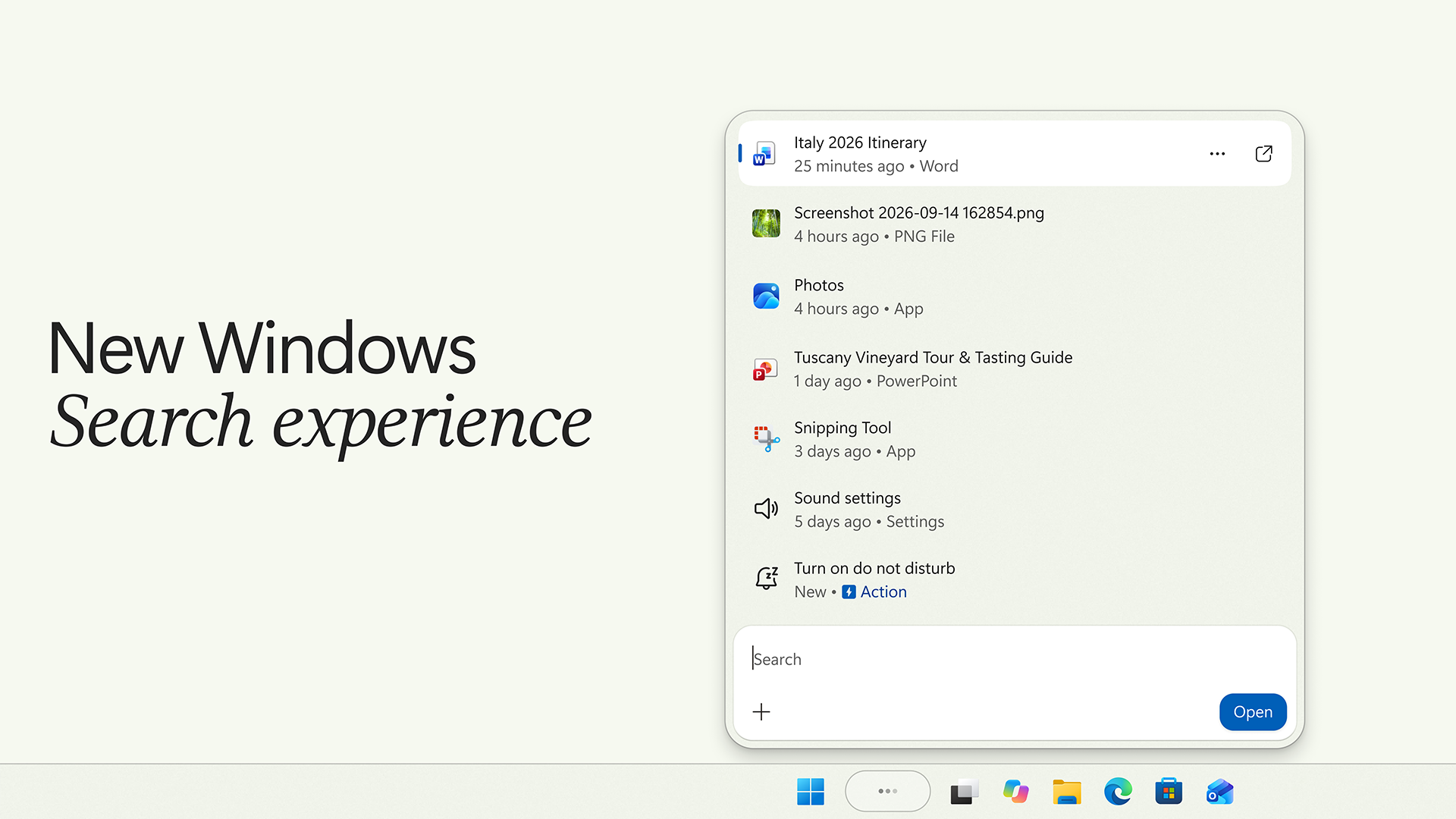
More AI is coming to Windows Search, too.
Credit: Microsoft
More AI is coming to Windows Search, too. Credit: Microsoft
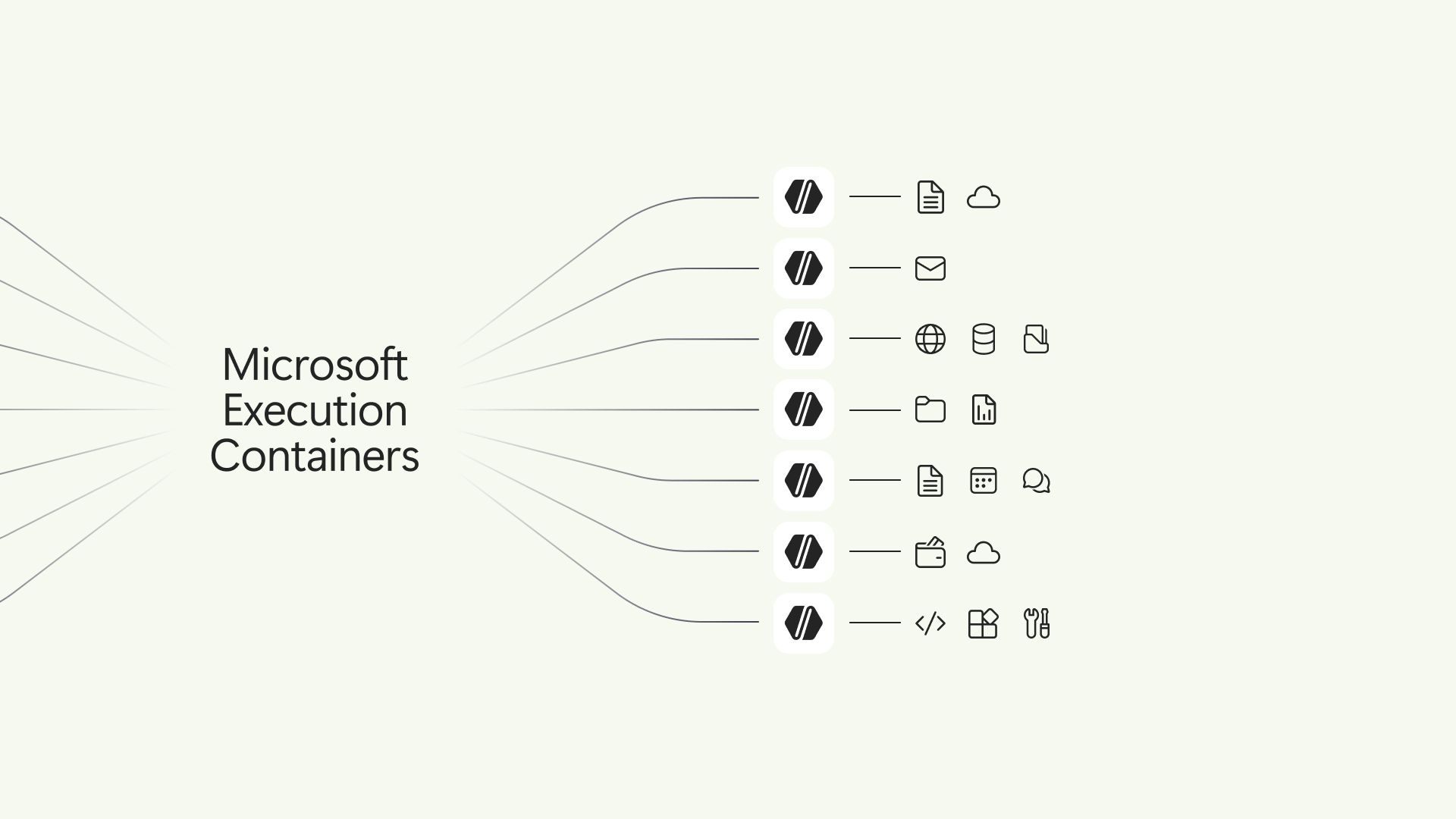
Microsoft Execution Containers
For those who might still feel a little trepidation about turning over their entire digital lives and files to AI bots, Microsoft announced the availability of Microsoft Execution Containers (MXC), a security framework designed to keep agent activities confined to a sandbox. Available to developers today, the framework allows system admins and organizations to monitor active agents working within their systems and to specifically set guardrails for each, ensuring control over exactly what each agent is able to access.
MXC acts as a policy layer that directs compute traffic to the appropriate isolation backend. Depending on the workload, MXC can shift to a process container, session container, WSL container, or even an experimental hardware-backed isolation called MicroVM.
Put your work inside a Microsoft Execution Container! Which is hopefully way less scary than it sounds.
Credit: Microsoft
Put your work inside a Microsoft Execution Container! Which is hopefully way less scary than it sounds. Credit: Microsoft
The hybrid approach
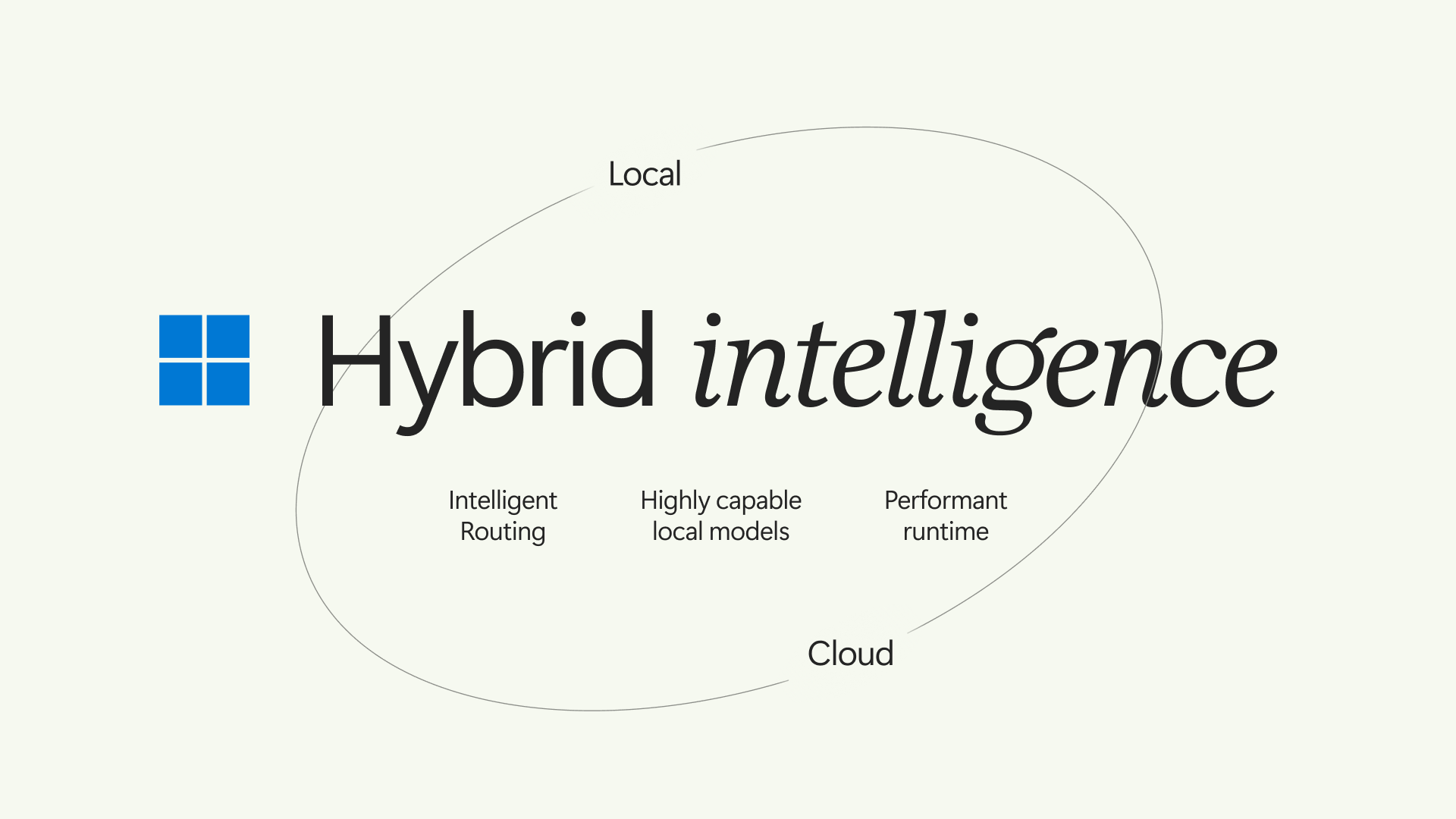
Bringing all of this new agentic workflow together with traditional Windows is a concept that Microsoft calls “Hybrid Intelligence,” which is a move away from cloud-backed AI solutions and a move toward local ones. Hybrid Intelligence will allow Surface Laptop Ultra or RTX Spark Dev Box users to allocate memory as they see fit for any specific application, as well as offer native support for local frameworks like llama.cpp and models from the Deepseek and Nvidia Nemotron families.
AI everywhere!
Credit: Microsoft
AI everywhere! Credit: Microsoft
We’ll see if it works soon enough
Microsoft is betting big on local AI with the changes announced today, but questions about security and user acceptance still remain, especially in light of their past missteps and other recent AI agent mishaps. The Surface Laptop Ultra hits shelves next week—keep an eye out for our review, and we’ll try to figure out whether it’s worth the $2,599 entry price and what this local AI capability buys you.
Soon, Reddit won’t let people use Old.Reddit.com unless they have used the site while logged in within the previous six months.
In July, Reddit started requiring that users be logged in to access Old Reddit. This new requirement is an effort to reduce Reddit’s biggest source of scraping and automated traffic, the company says.
Today, the social media platform announced additional upcoming restrictions on Old Reddit. A Reddit post from an employee, known as “judy-funnie” on the platform, says that “in the next few months, we’ll further limit access for logged-in users to only those who have used Old Reddit in the last six months (which covers the vast majority of all Old Reddit users).”
F-Droid gets its biggest update in a decade with new UI and smoother app installs
Virtually every Android device comes with the Play Store preloaded, but there are other ways to get apps. F-Droid bills itself as a community-driven source for free and open source Android apps, but its official app store has gone 10 years without a major update. That’s finally changing: After a multiyear effort, the team has just announced F-Droid 2.0 is rolling out.
The new F-Droid client was redesigned from scratch in Kotlin Compose, which is the standard for modern Android apps. This makes the store much more responsive, and there’s optional support for Android’s Material theming. The interface has also been cleaned up considerably, making the most important functions easier to access and hiding some others in overflow menus.
While the new F-Droid looks nicer, the update was largely about making it easier to find and install apps. When F-Droid first appeared, there wasn’t much to see, but now it has thousands of open source apps. Unlike the Play Store, F-Droid doesn’t track your taps and installs to push ads and suggestions—it helps you find things and gets out of the way.
Robots make combat airdrops, clear mines as Ukraine defeats Russian pincer
Ukraine’s military robots are dropping from heavy drones in airborne assaults behind Russian lines as other robots clear mines ahead of advancing Ukrainian infantry. The wheeled ground robots are supporting Ukraine’s Operation Vivaldi counterattack that has crushed a Russian military pincer movement and liberated dozens of square miles of occupied Ukrainian territory so far.
The Ukrainian Third Army Corps revealed a “world-first” airborne assault involving robots and drones that took place within Russian-held territory on September 21, 2026, according to the Ukrainian government media platform United24. Heavy bomber drones air-dropped explosive ground robots more than six miles behind Russian frontlines, helping the robots bypass tough terrain and enemy defenses to attack supply lines in the rear.
This is not the first time that Ukraine has used heavy drones to deliver robots closer to their intended targets. But the incident is reportedly the most ambitious robotic airborne assault to date.
Iran strikes on Amazon data centers caused permanent loss of customer data
Half a year after Iranian drone strikes knocked out multiple Amazon data centers, the US tech company has acknowledged the permanent loss of some customer data that was hosted in Bahrain and the United Arab Emirates.
Amazon Web Services was “unable to restore access to the resources and data” hosted in some of the war-damaged data centers, according to an AWS dashboard update posted on September 15. The development was first reported by Reuters and suggests that the Iranian strikes inflicted catastrophic damage on the data centers.
Customer data was irretrievably lost in one of three AWS availability zones in the United Arab Emirates region, specifically the mec1-az2 availability zone. Each availability zone is serviced by one or more Amazon data centers.
I fixed a tractor using John Deere’s self-repair service. Farmers aren’t sold on it.
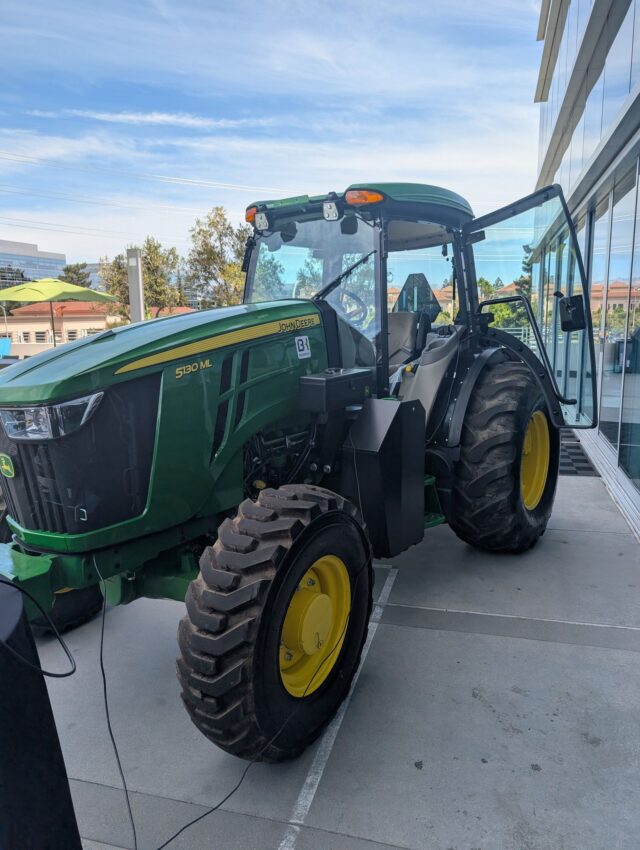
There is something wrong with the tractor. The water-in-fuel sensor, a small device embedded in the John Deere machine that monitors the integrity of its diesel engine, is disconnected. And I’ve got to fix it.
I’m not a mechanic or a farmer. I’m poking at a laptop at John Deere’s corporate office in Santa Clara, California. There’s a cable connecting the computer to a 5130ML tractor sitting on the grass nearby. A bright red notification sits on the screen, telling me something is wrong. I type in a question and the software pulls up instructions and a few images from the user manual that matches the serial number of the machine.
On a sunny morning in June, I walked to work with a quadruped robot beside me. I’ve never gotten more attention from strangers.
A bunch of people snapped pictures of my robot dog. Several people asked me questions. Was it mine? (Yes.) Did I build it? (No.) Was it being used for surveillance? (No.)
Biological dogs kept a safe distance from my mechanical companion. Some growled or barked at it.
 Credit: