AMD will bring its “Ryzen AI” processors to standard desktop PCs for the first time

AMD’s initial lineup includes a total of six chips, split between variants with 65 W and 35 W default TDPs. None match the specs of chips like the Ryzen AI 9 HX 370, which includes 12 CPU cores and a 16-core Radeon 890M GPU.

Credit: AMD

AMD’s initial lineup includes a total of six chips, split between variants with 65 W and 35 W default TDPs. None match the specs of chips like the Ryzen AI 9 HX 370, which includes 12 CPU cores and a 16-core Radeon 890M GPU. Credit: AMD

Like past G-series Ryzen chips, these are essentially laptop silicon repackaged for desktop systems. They share most of their specs in common with Ryzen AI 300 laptop processors, despite their Ryzen AI 400-series branding. The two chip generations are extremely similar overall, but the Ryzen AI 400-series laptop CPUs include slightly faster 55 TOPS NPUs.

Unlike past launches, AMD is not providing its top-end laptop silicon for desktop use, at least not yet. None of these chips include the full compliment of 12 CPU cores that you can get in the Ryzen AI 9 HX 375 or 370; you also can’t get the Radeon 880M or Radeon 890M integrated GPUs. The three models AMD is announcing today top out at 8 CPU cores (likely split evenly between the faster Zen 5 cores and slower, smaller, and more power-efficient Zen 5c cores) and a Radeon 860M integrated GPU with 8 RDNA 3.5 graphics cores.

AMD could always decide to release higher-end processor options at a later date, but the fact is that it makes little financial sense to try and build mini gaming PCs around socket AM5 processors right now. These need pairs of fast DDR5 sticks to maximize their performance, and prices for fast DDR5 sticks have shot into the stratosphere over the last year. It’s hard to make any kind of gaming PC make financial sense right now, but the frames-per-second-per-dollar you get from a desktop iGPU make them particularly unappealing. This may explain why the CPUs are targeting business desktops first.

The Ryzen AI 400 desktop CPU announcement is in line with what AMD announced at CES earlier this year: low-key iterations on existing technology that do little to push the envelope. Maybe that’s the best that we can expect, given current RAM and storage shortages and the fact that most of the world’s chipmakers are all competing for manufacturing capacity at TSMC.

https://arstechnica.com/gadgets/2026/03/amd-ryzen-ai-400-cpus-will-bring-upgraded-graphics-to-socket-am5-desktops/


Under a Paramount-WBD merger, two struggling media giants would unite

A successful Paramount-WBD merger would be the largest streaming merger ever and would lead to further consolidation in the industry.

“What started as a fragmented but flexible streaming ecosystem is increasingly trending toward rebundling—fewer, larger super-platforms offering broader catalogues at higher price points,” Mathur said.

Paramount holds on to cable

Paramount’s WBD bid is unique in its aggressive push for cable channels, which are struggling with viewership and advertising revenue. Under a WBD merger, Paramount would add networks like HGTV, Cartoon Network, TLC, and CNN to its linear TV lineup, which currently includes Comedy Central, Nickelodeon, and CBS.

Although Paramount and WBD’s cable businesses are both in decline, they are both profitable. Paramount’s TV/media business, which includes its cable channels and production studios, reported $1.1 billion in adjusted OIBDA in Q4 2025. WBD’s cable business posted adjusted EBITDA of $1.41 billion that quarter.

Ultimately, a Paramount-WBD merger would put diversity of viewpoints at risk. Under Ellison’s ownership, CBS News has adjusted its approach with new editor-in-chief Bari Weiss. There have also been concerns about censoring CBS under Ellison’s Paramount, including from Stephen Colbert, who said this month that CBS forbade him from interviewing Texas Democratic Senate candidate James Talarico; CBS denied Colbert’s claim. Further, Paramount could have a lasting impact on CNN, including costs, layoffs, and coverage.

More to come

Regulatory scrutiny will be at the center of Paramount and WBD’s merger over the upcoming months. Federal approval is likely, but the merger also faces European regulation and potential state lawsuits. The theater industry is also lobbying against Paramount’s WBD merger.

Should a Paramount-WBD merger ultimately be greenlit, two declining businesses will be challenged to form a profitable one. Even with regulatory approval, Paramount-Skydance-Warner-Bros.-Discovery faces an uphill climb.

Although the bidding war may be settled, the fight for WBD is only beginning.

https://arstechnica.com/gadgets/2026/02/under-a-paramount-wbd-merger-two-struggling-media-giants-would-unite/


Netflix cedes Warner Bros. Discovery to Paramount: “No longer financially attractive”

On Thursday, WBD’s board deemed Paramount’s revamped offer “superior,” giving Netflix four business days to match it. But that same day, Netflix, which had recently emphasized its willingness to walk away from mergers it deems overly expensive, said it would no longer pursue the acquisition.

A statement from Netflix co-CEOs Ted Sarandos and Greg Peters issued last night said:

The transaction we negotiated would have created shareholder value with a clear path to regulatory approval. However, we’ve always been disciplined, and at the price required to match Paramount Skydance’s latest offer, the deal is no longer financially attractive, so we are declining to match the Paramount Skydance bid.

The CEOs added that the WBD merger “was always a ‘nice to have’ at the right price, not a ‘must have’ at any price.”

Netflix and Paramount’s stock have continuously declined since Netflix announced its planned merger. Following yesterday’s announcement, Netflix shares rose by more than 10 percent in after-hours trading, and Paramount shares increased by 5 percent.

In a statement quoted by The Hollywood Reporter yesterday, WBD President and CEO David Zaslav said, “Once our board votes to adopt the Paramount merger agreement, it will create tremendous value for our shareholders. We are excited about the potential of a combined Paramount Skydance and Warner Bros. Discovery and can’t wait to get started working together telling the stories that move the world.”

The article was edited to correct ticking fee information. 

https://arstechnica.com/gadgets/2026/02/netflix-cedes-warner-bros-discovery-to-paramount-no-longer-financially-attractive/


How to downgrade from macOS 26 Tahoe on a new Mac

If you’re downloading the installer from within macOS Tahoe, you’ll see a pop-up when the download completes, telling you that the installer can’t be run from within that version of macOS. Since we’ll be running it off of its own USB stick, you can safely ignore this message.

Settings for formatting your USB disk to get it ready for a macOS installer.

Andrew Cunningham

A 64GB disk is large enough to hold two or three macOS installers at once.

Andrew Cunningham

While the installer is downloading, install and prepare your USB drive. Open Disk Utility, click the View button, and select “show all devices.” Click the root of your USB drive under the “external” header in the left sidebar, and click the Erase button in the upper-right control area.

Change the disk’s name to whatever you want—I use “MyVolume” so I don’t have to change Apple’s sample terminal commands when copying the installer files—and make sure the Format is set to Mac OS Extended (Journaled) and the Scheme is set to GUID Partition Map. (That’s not an error; the macOS installer still wants an HFS+ filesystem rather than APFS.)

The handy thing is that if you have a larger USB drive, you can create installers for multiple macOS versions by partitioning the disk with the Partition button. A 64GB drive split into three ~21GB partitions could boot Tahoe, Sequoia, and another past or future macOS version; I just have it split into two volumes so I can boot Sequoia and Tahoe installers from the same drive.

Running the Terminal command to create our macOS 15 Sequoia boot drive.

Credit: Andrew Cunningham

Running the Terminal command to create our macOS 15 Sequoia boot drive. Credit: Andrew Cunningham

Once the Sequoia installer is in your Applications folder, run a Terminal command to copy the installer files. Apple has commands for each version of macOS on this page. Use this one for Sequoia:

sudo /Applications/Install\ macOS\ Sequoia.app/Contents/Resources/createinstallmedia --volume /Volumes/MyVolume

If you named the USB drive something other than MyVolume when you formatted it, change the name in the command as well. Note that names with spaces require a backslash before each space.

The Terminal will prompt you for your password and ask you to type Y to confirm. It will then reformat the drive and copy the files over. The time this takes will vary depending on the speed of the USB drive you’re using, but for most USB 3 drives, it should only take a few minutes to create the installer. When the Terminal command is done running, leave the disk inserted and shut down your Mac.

https://arstechnica.com/gadgets/2026/02/how-to-downgrade-from-macos-26-tahoe-on-a-new-mac/


Apple says it has “a big week ahead.” Here’s what we expect to see.

The iPhone 17e

Apple would let the old iPhone SE languish for at least a couple years between updates, but it’s apparently taking a different tack with the “e” iPhones.

The main star of this refresh is a new chip, which will supposedly be upgraded from an Apple A18 to an A19. It’s also said to be picking up MagSafe charging support, making it compatible with Apple-made and third-party accessories that magnetically clamp to the back of other iPhones.

Other than that, the rumor mill suggests that the 17e will stick with its notched screen rather than a Dynamic Island, and we’d be surprised to see it move beyond its basic one-lens camera. Assuming Apple sticks with the same $599 starting price, though, there will still be some awkward overlap between the iPhone 16 and the regular iPhone 17.

The iPad Air

Do you like the current iPad Air with the Apple M3? Or the last one with the Apple M2?

That’s lucky for you, because a next-generation iPad Air is likely to continue in the same vein, picking up a new chip but not changing much else. If you’re holding out for something more exciting, like improved screen technology, you’ll likely be disappointed.

There’s no word on whether the M4 might come with any other internal upgrades, like more RAM or increased storage in the base model. Either or both of those could spice up an otherwise straightforward update.

Other possibilities

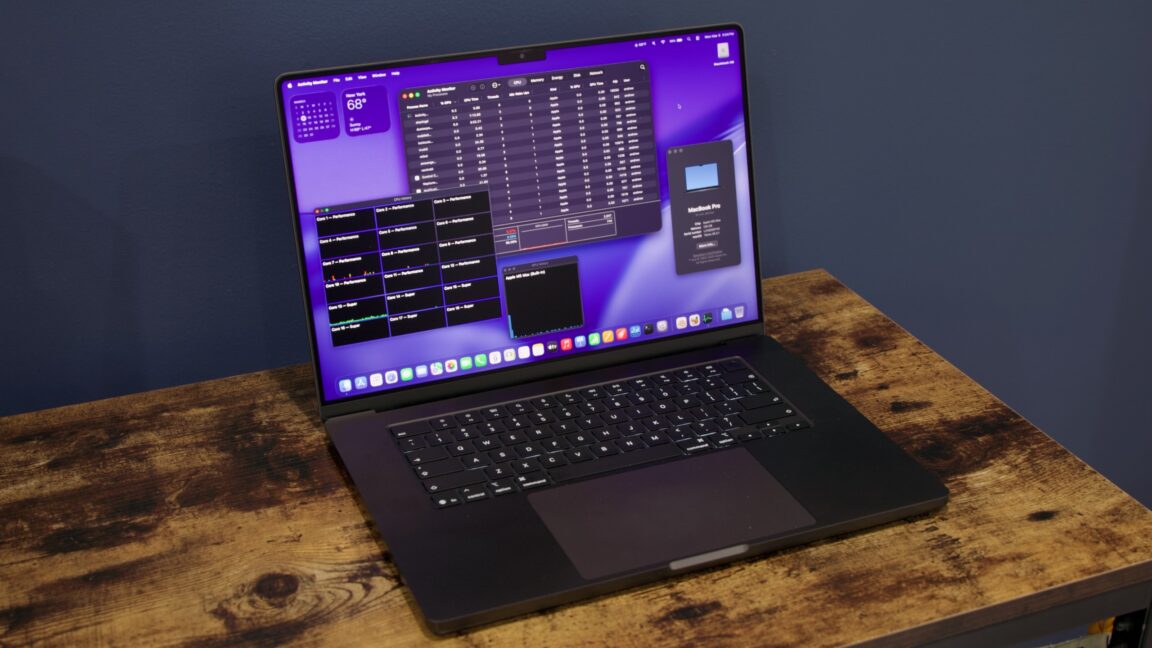
Apple could update the remaining M4 family MacBook Pros (pictured) with M5 family replacements.

Credit: Andrew Cunningham

Apple could update the remaining M4 family MacBook Pros (pictured) with M5 family replacements. Credit: Andrew Cunningham

Apple could choose to refresh almost any of its Macs next week—only the low-end MacBook Pro has an M5 chip, and it has been at least a year since the rest of the lineup was last updated. There’s no refresh that would come as a true surprise, excepting maybe the Mac Pro that Apple has allegedly put “on the back burner” (again).

https://arstechnica.com/gadgets/2026/02/what-new-hardware-to-expect-from-apple-next-week/


Google reveals Nano Banana 2 AI image model, coming to Gemini today

With Nano Banana 2, Google promises consistency for up to five characters at a time, along with accurate rendering of as many as 14 different objects per workflow. This, along with richer textures and “vibrant” lighting will aid in visual storytelling with Nano Banana 2. Google is also expanding the range of available aspect ratios and resolutions, from 512px square up to 4K widescreen.

So what can you do with Nano Banana 2? Google has provided some example images with associated prompts. These are, of course, handpicked images, but Nano Banana has been a popular image model for good reason. This degree of improvement seems believable based on past iterations of Nano Banana.

Google AI infographic

Prompt: High-quality flat lay photography creating a DIY infographic that simply explains how the water cycle works, arranged on a clean, light gray textured background. The visual story flows from left to right in clear steps. Simple, clean black arrows are hand-drawn onto the background to guide the viewer’s eye. The overall mood is educational, modern, and easy to understand. The image is shot from a top-down, bird’s-eye view with soft, even lighting that minimizes shadows and keeps the focus on the process.

Credit: Google

Prompt: High-quality flat lay photography creating a DIY infographic that simply explains how the water cycle works, arranged on a clean, light gray textured background. The visual story flows from left to right in clear steps. Simple, clean black arrows are hand-drawn onto the background to guide the viewer’s eye. The overall mood is educational, modern, and easy to understand. The image is shot from a top-down, bird’s-eye view with soft, even lighting that minimizes shadows and keeps the focus on the process. Credit: Google

AI museum comparison

Prompt: Create an image of Museum Clos Lucé. In the style of bright colored Synthetic Cubism. No text. Your plan is to first search for visual references, and generate after. Aspect ratio 16:9.

Credit: Google

Prompt: Create an image of Museum Clos Lucé. In the style of bright colored Synthetic Cubism. No text. Your plan is to first search for visual references, and generate after. Aspect ratio 16:9. Credit: Google

AI farm image

Create an image of these 14 characters and items having fun at the farm. The overall atmosphere is fun, silly and joyful. It is strictly important to keep identity consistent of all the 14 characters and items.

Credit: Google

Create an image of these 14 characters and items having fun at the farm. The overall atmosphere is fun, silly and joyful. It is strictly important to keep identity consistent of all the 14 characters and items. Credit: Google

Google must be pretty confident in this model’s capabilities because it will be the only one available going forward. Starting now, Nano Banana 2 will replace both the standard and Pro variants of Nano Banana across the Gemini app, search, AI Studio, Vertex AI, and Flow.

In the Gemini app and on the website, Nano Banana 2 will be the image generator for the Fast, Thinking, and Pro settings. It’s possible there will eventually be a Nano Banana 2 Pro—Google tends to release elements of new model families one at a time. For now, it’s all “Flash” Image.

https://arstechnica.com/ai/2026/02/google-releases-nano-banana-2-ai-image-generator-promises-pro-results-with-flash-speed/


The Galaxy S26 is faster, more expensive, and even more chock-full of AI

There used to be countless companies making flagship Android phones, but a combination of factors has narrowed the field over time. Today, Samsung is the undisputed king of the Android device ecosystem with its Galaxy S line. So we can safely assume today’s Unpacked has revealed the most popular Android phones for the next year—the Galaxy S26 Ultra, Galaxy S26+, and Galaxy S26.

Samsung didn’t swing for the fences this time around, producing phones with a few cosmetic tweaks and upgraded internals. Meanwhile, Samsung is investing even more in AI, saying the S26 series includes the first “Agentic AI phones.” Despite limited hardware upgrades, the realities of component prices in the age of AI mean the prices of the two cheaper models have gone up by $100 this year. The Ultra remains at an already eye-watering $1,300.

Faster and more private

Looking at the Galaxy S26 family, you’d be hard-pressed to tell them apart from last year’s phones. The camera surround is different, and the measurements of the smallest and largest phone are ever so slightly different. You probably won’t be able to tell just by looking, but the S26 Ultra has regressed from titanium to aluminum, a reversion Apple also made with its latest high-end phones. This phone also retains its S Pen stylus.

Specs at a glance: Samsung Galaxy S26 series
Galaxy S26 ($900) Galaxy S26+ ($1,100) Galaxy S26 Ultra ($1,300)
SoC Snapdragon 8 Elite Gen 5 (3 nm) Snapdragon 8 Elite Gen 5 (3 nm) Snapdragon 8 Elite Gen 5 (3 nm)
Memory 12GB 12GB 12GB, 16GB
Storage 256GB, 512GB 256GB, 512GB 256GB, 512GB, 1TB
Display 6.3-inch OLED, 10-bit color, 2340×1080, 1-120Hz 6.7-inch OLED, 10-bit color, 3120×1440, 1-120Hz 6.9-inch OLED, 10-bit color, 3120×1440, 1-120Hz, S Pen support
Cameras 50MP primary, f/1.8, 1.0 μm; 12MP ultrawide, f/2.2, 1.4 μm, 10MP 3x telephoto, f/2.4, 1.0 μm; 12MP selfie, f/2.2, 1.12 μm 50MP primary, f/1.8, 1.0 μm; 12MP ultrawide, f/2.2, 1.4 μm, 10MP 3x telephoto, f/2.4, 1.0 μm; 12MP selfie, f/2.2, 1.12 μm 200MP primary, f/1.4, 0.6 μm; 50MP ultrawide, f/1.9, 0.7 μm; 10MP 3x telephoto, f/2.4, 1.12 μm; 50MP 5x telephoto, f/2.9, 0.7 μm; 12MP selfie, f/2.2, 1.12 μm
Software Android 16 Android 16 Android 16
Battery 4,300 mAh 4,900 mAh 5,000 mAh
Connectivity Wi-Fi 7, Bluetooth 5.4, USB-C 3.2, Sub6 5G Wi-Fi 7, Bluetooth 5.4, USB-C 3.2, Sub6 and mmWave 5G Wi-Fi 7, Bluetooth 5.4, USB-C 3.2, Sub6 and mmWave 5G
Measurements 71.7×149.6×7.2 mm, 167g 75.8×158.4×7.3 mm, 190g 78.1×163.6×7.9 mm, 214 g

These phones will again have the latest Snapdragon flagship processor (in North America, Japan, and China) with customizations exclusive to Samsung. The Snapdragon 8 Elite Gen 5 for Galaxy is a 3 nm chip with third-gen Oryon CPU cores, an Adreno 840 GPU, and a powerful Hexagon NPU for on-device AI processing. Samsung promises double-digit performance gains across the board, which is what we hear every year.

Samsung flagship phones have extremely fast hardware, so they benchmark well. However, they also tend to heat up and throttle quickly during sustained use. Perhaps that won’t be as much of a problem with the S26 series. Samsung says it has implemented its largest vapor chamber ever to better control temperatures.

https://arstechnica.com/gadgets/2026/02/samsung-reveals-galaxy-s26-lineup-with-privacy-display-and-exclusive-gemini-smarts/


RAM now represents 35 percent of bill of materials for HP PCs

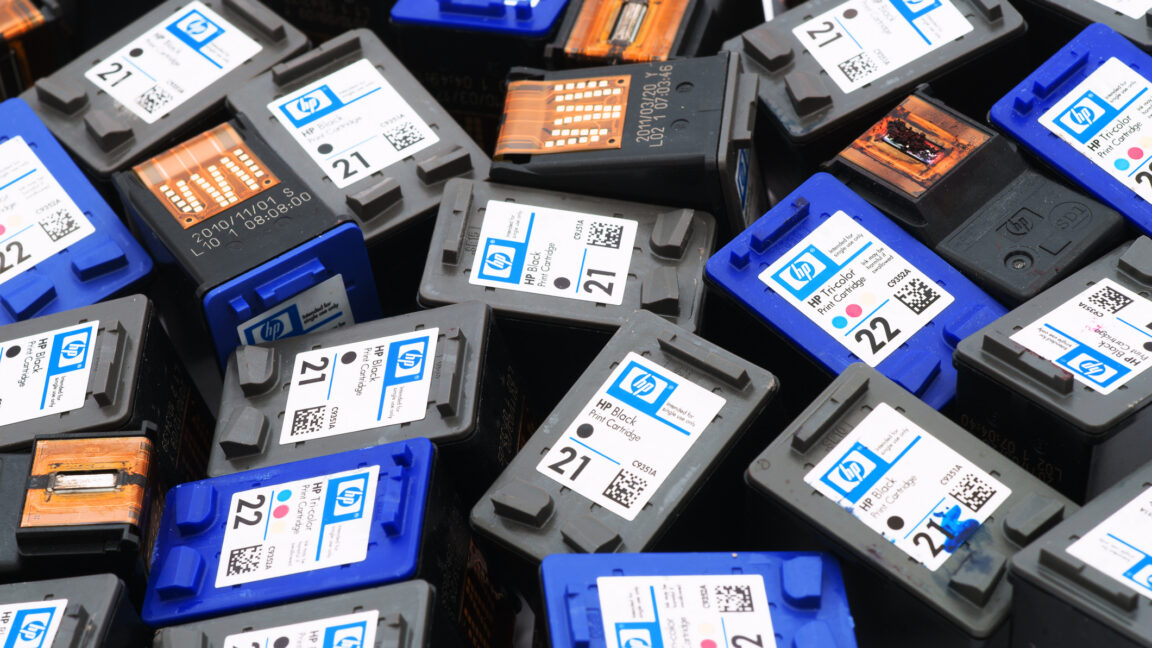
In an illustration of the severity of the current memory shortage, HP Inc. CFO Karen Parkhill said that RAM has gone from accounting for “roughly 15 percent to 18 percent” of HP PCs’ bill of materials in its fiscal Q4 2025 to “roughly 35 percent” for the rest of the year.

Parkhill was speaking during HP’s Q1 2026 earnings call, where the company said it expects the total addressable market for its Personal Systems business to decline by double digits this calendar year, as higher prices hurt customer demand.

“We have seen memory costs increase roughly 100 percent sequentially, and we do forecast that to further increase as we move into the fiscal year,” Parkhill said, per a transcript of the call by Seeking Alpha.

HP expects its financials to be most severely impacted by the RAM shortage in the second half of its fiscal year.

“We are seeing increased input costs driven primarily by the rising prices of DRAM and NAND,” Bruce Broussard, HP’s interim CEO and director, said. “We expect this volatility to remain throughout fiscal [year 2026] and likely into fiscal [year 2027].”

RAM shortage drives higher prices, lower specs

HP’s CFO noted that a third of the margin for HP’s Personal Systems business comes from non-RAM-related categories, including IT services and peripherals. However, HP has also raised PC prices to keep making money while paying significantly more for RAM.

https://arstechnica.com/gadgets/2026/02/ram-now-represents-35-percent-of-bill-of-materials-for-hp-pcs/


WBD says Paramount’s new, higher offer could be “superior” to Netflix’s

Paramount Skydance increased its bid for Warner Bros. Discovery (WBD) from $30 per share to $31 per share, WBD said today. Amid a competing offer from Netflix for WBD’s movie studios and streaming businesses, WBD said that Paramount’s new bid “could reasonably be expected to lead to a ‘Company Superior Proposal.’”

Under its revamped offer, Paramount would also pay the $7 billion regulatory termination fee that would arise should a Paramount-WBD merger fail to close due to antitrust regulation.

The company owned by David Ellison also said it would pay $0.25 per share for every day the deal doesn’t close, starting on September 30, rather than the previous start date of December 31.

Paramount previously agreed to pay the $2.8 billion termination fee that WBD would be subject to if it canceled its merger deal with Netflix.

Netflix has offered $27.75 per share for a smaller part of WBD’s overall business. Netflix is looking to pay all-cash for WBD’s film studios, intellectual property, HBO, and streaming services, including HBO Max, but not any of WBD’s other cable channels.

WBD’s board has not decided if Paramount’s revamped offer is better than what Netflix has offered. If the board makes that determination, Netflix will have four days to present a better offer.

It’s unclear if Netflix would be willing to pay more for WBD’s streaming and movie businesses than what it’s already offered. The streaming giant hasn’t commented on Paramount’s new offer yet, but on Friday, co-CEO Ted Sarandos told Variety that the people in charge of Netflix are “super-disciplined buyers.”

“We have a reputation for such so that I’m willing to walk away and let someone else overpay for things. We have a rich history of that,” he added.

Regardless of the ultimate buyer, any WBD merger is expected to face intense regulatory scrutiny, lead to higher subscription prices, and have a lasting impact on Hollywood.

https://arstechnica.com/gadgets/2026/02/paramount-increases-its-warner-bros-discovery-bid-by-1-per-share/


DJI sues the FCC for “carelessly” restricting its drones

DJI, the most popular consumer drone maker, is suing over the Federal Communications Commission (FCC)’s import ban against new, foreign-made drones, which has been in effect since December 23, 2025.

On Tuesday, the Shenzhen-headquartered company filed a petition [PDF] with the US Court of Appeals for the Ninth Circuit that seeks to overturn the FCC’s decision to list DJI on its Covered List. The Covered List includes communications equipment and services that are “deemed to pose an unacceptable risk to the national security of the United States or the security and safety of United States persons,” per the FCC.

In its petition dated February 20, 2026, DJI said:

Petitioners seek review of the Ruling on the ground that the FCC exceeded its statutory authority, failed to observe statutorily required procedures, and violated the Fifth Amendment when it purported to add DJI’s products to the Covered List. Petitioners respectfully request his Court hold unlawful, vacate, enjoin, and set aside the Ruling and grant any other relief that the Court finds proper.

In January, the FCC exempted a limited number of foreign-made drones, including some coming from Europe, until the end of this year. The FCC also provided exemptions for some foreign-made critical drone components, including those from Japanese companies Sony and Panasonic, and South Korean company Samsung. The FCC hasn’t exempted any drones or drone parts made in China.

In a December 22 statement, the FCC said that “criminals, hostile foreign actors, and terrorists can use [drones] to present new and serious threats to our homeland.” The FCC said at the time that it made its decision about the ban after a review by an Executive Branch interagency body review that it said had “appropriate national security expertise” and “was convened by the White House.”

DJI reportedly requested that the US government audit its devices multiple times before the US issued the import ban.

In a company statement shared with Bloomberg today, DJI said:

Despite repeated efforts to engage with the government, DJI has never been given the chance to provide information to address or refute any concerns. These procedural and substantive deficiencies violate the Constitution and federal law.

In a statement to Reuters today, DJI also said that the FCC’s decision “carelessly restricts DJI’s business in the US and summarily denies U.S. customers access to its latest technology.”

https://arstechnica.com/gadgets/2026/02/dji-sues-the-fcc-for-carelessly-restricting-its-drones/