Windows’ original Secure Boot certificates expire in June—here’s what you need to do
The second thing to check is the “default db,” which shows whether the new Secure Boot certificates are baked into your PC’s firmware. If they are, even resetting Secure Boot settings to the defaults in your PC’s BIOS will still allow you to boot operating systems that use the new certificates.

To check this, open PowerShell or Terminal again and type ([System.Text.Encoding]::ASCII.GetString((Get-SecureBootUEFI dbdefault).bytes) -match 'Windows UEFI CA 2023'). If this command returns “true,” your system is running an updated BIOS with the new Secure Boot certificates built in. Older PCs and systems without a BIOS update installed will return “false” here.

Microsoft’s Costa says that “many newer PCs built since 2024, and almost all the devices shipped in 2025, already include the certificates” and won’t need to be updated at all. And PCs several years older than that may be able to get the certificates via a BIOS update.

In the US, Dell, HP, Lenovo, and Microsoft all have lists of specific systems and firmware versions, while Asus provides more general information about how to get the new certificates via Windows Update, the MyAsus app, or the Asus website. The oldest of the PCs listed generally date back to 2019 or 2020. If your PC shipped with Windows 11 out of the box, there should be a BIOS update with the new certificates available, though that may not be true of every system that meets the requirements for upgrading to Windows 11.

Microsoft encourages home users who can’t install the new certificates to use its customer support services for help. Detailed documentation is also available for IT shops and other large organizations that manage their own updates.

“The Secure Boot certificate update marks a generational refresh of the trust foundation that modern PCs rely on at startup,” writes Costa. “By renewing these certificates, the Windows ecosystem is ensuring that future innovations in hardware, firmware, and operating systems can continue to build on a secure, industry‐aligned boot process.”

https://arstechnica.com/gadgets/2026/02/microsoft-sounds-the-alarm-about-secure-boot-certificates-expiring-later-this-year/

Upgraded Google safety tools can now find and remove more of your personal info

Do you feel popular? There are people on the Internet who want to know all about you! Unfortunately, they don’t have the best of intentions, but Google has some handy tools to address that, and they’ve gotten an upgrade today. The “Results About You” tool can now detect and remove more of your personal information. Plus, the tool for removing non-consensual explicit imagery (NCEI) is faster to use. All you have to do is tell Google your personal details first—that seems safe, right?

With today’s upgrade, Results About You gains the ability to find and remove pages that include ID numbers like your passport, driver’s license, and Social Security. You can access the option to add these to Google’s ongoing scans from the settings in Results About You. Just click in the ID numbers section to enable detection.

Naturally, Google has to know what it’s looking for to remove it. So you need to provide at least part of those numbers. Google asks for the full driver’s license number, which is fine, as it’s not as sensitive. For your passport and SSN, you only need the last four digits, which is enough for Google to find the full numbers on webpages.

ID number results detected.

The NCEI tool is geared toward hiding real, explicit images as well as deepfakes and other types of artificial sexualized content. This kind of content is rampant on the Internet right now due to the rapid rise of AI. What used to require Photoshop skills is now just a prompt away, and some AI platforms hardly do anything to prevent it.

https://arstechnica.com/gadgets/2026/02/upgraded-google-safety-tools-can-now-find-and-remove-more-of-your-personal-info/


Alphabet selling very rare 100-year bonds to help fund AI investment

Tony Trzcinka, a US-based senior portfolio manager at Impax Asset Management, which purchased Alphabet’s bonds last year, said he skipped Monday’s offering because of insufficient yields and concerns about overexposure to companies with complex financial obligations tied to AI investments.

“It wasn’t worth it to swap into new ones,” Trzcinka said. “We’ve been very conscious of our exposure to these hyperscalers and their capex budgets.”

Big Tech companies and their suppliers are expected to invest almost $700 billion in AI infrastructure this year and are increasingly turning to the debt markets to finance the giant data center build-out.

Alphabet in November sold $17.5 billion of bonds in the US including a 50-year bond—the longest-dated dollar bond sold by a tech group last year—and raised €6.5 billion on European markets.

Oracle last week raised $25 billion from a bond sale that attracted more than $125 billion of orders.

Alphabet, Amazon, and Meta all increased their capital expenditure plans during their most recent earnings reports, prompting questions about whether they will be able to fund the unprecedented spending spree from their cash flows alone.

Last week, Google’s parent company reported annual sales that topped $400 billion for the first time, beating investors’ expectations for revenues and profits in the most recent quarter. It said it planned to spend as much as $185 billion on capex this year, roughly double last year’s total, to capitalize on booming demand for its Gemini AI assistant.

Alphabet’s long-term debt jumped to $46.5 billion in 2025, up more than four times the previous year, though it held cash and equivalents of $126.8 billion at the year-end.

Investor demand was the strongest on the shortest portion of Monday’s deal, with a three-year offering pricing at only 0.27 percentage points above US Treasuries, versus 0.6 percentage points during initial price discussions, said people familiar with the deal.

The longest portion of the offering, a 40-year bond, is expected to yield 0.95 percentage points over US Treasuries, down from 1.2 percentage points during initial talks, the people said.

Bank of America, Goldman Sachs, and JPMorgan are the bookrunners on the bond sales across three currencies. All three declined to comment or did not immediately respond to requests for comment.

Alphabet did not immediately respond to a request for comment.

© 2026 The Financial Times Ltd. All rights reserved. Not to be redistributed, copied, or modified in any way.

https://arstechnica.com/gadgets/2026/02/alphabet-selling-very-rare-100-year-bunds-to-help-fund-ai-investment/


Report: Imminent Apple hardware updates include MacBook Pro, iPads, and iPhone 17e

Apple’s 2026 has already brought us the AirTag 2 and a new Creator Studio app subscription aimed at independent content creators, but nothing so far for the company’s main product families.

That could change soon, according to reporting from Bloomberg’s Mark Gurman. New versions of Apple’s low-end iPhone, the basic iPad and iPad Air, and the higher-end MacBook Pros are said to be coming “imminently,” “soon,” and “shortly,” respectively, ahead of planned updates later in the year for the iPad mini, Studio Display, and other Mac models.

Here’s what we think we know about the hardware that’s coming.

iPhone 17e

Apple is apparently planning to launch an updated iPhone 17e, a new version of its basic iPhone. The phone is said to include an A19 chip similar to the one in the regular iPhone 17, and it will also add MagSafe charging. Though the iPhone 17e will likely stick to the basic one-lens camera system and the notched, Dynamic Island-less screen, it will also launch at the same $599 price as the current 16e, which counts as good news given current AI-driven RAM and storage shortages.

This would be a change in how Apple approaches its lower-end iPhone. The old iPhone SE was updated pretty sporadically, with at least a couple of years between each of its updates. The iPhone 16e was introduced just last year.

The biggest question is whether the 17e will continue to exist alongside the older but arguably superior iPhone 16 and 16 Plus, which start at just $100 more than the current iPhone 16e and include a dual-lens camera system and the Dynamic Island. Having four different iPhone models available in the same $600-to-$800 price range is confusing at best.

https://arstechnica.com/gadgets/2026/02/report-imminent-apple-hardware-updates-include-macbook-pro-ipads-and-iphone-17e/


Google hints at big AirDrop expansion for Android “very soon”

Android has its own AirDrop-like feature called Quick Share (formerly Google Nearby Share), but until recently, it couldn’t communicate with Apple’s AirDrop. As we reported in November, the European Union required Apple to implement the Wi-Fi Aware standard in AirDrop, which enabled Google to add support for the Pixel 10 lineup. Google confirmed it didn’t need to work with Apple at all to make that happen.

As part of the Quick Share updates, Google has added an extension to the Play Store that allows Quick Share to operate as a full, updatable APK rather than an element of Play Services. That should make it easier to roll out new features to the entire Android ecosystem. Currently, the extension only supports a smattering of Android phones, but we can expect that list to expand as AirDrop comes to more devices this year.

With AirDrop support, Android devices can send files to iOS and macOS devices without downloading third-party apps. However, the functionality requires Apple users to enable the “Everyone for 10 minutes” connectivity option. While Google can shoehorn Android into the Wi-Fi Aware system, it cannot use Apple’s contact-based sharing options. That probably won’t change with the pending update.

Of course, “very soon” in Google-speak can mean many things. The company does like to pair Android ecosystem updates with Pixel Drops, and the next one of those is expected in March, with changes to location privacy, At a Glance, and more.

https://arstechnica.com/gadgets/2026/02/google-hints-at-big-airdrop-expansion-for-android-very-soon/


User blowback convinces Adobe to keep supporting 30-year-old 2D animation app

30 years of animation

Animate debuted in 1996 as FutureWave Software’s FutureSplash Animator. After a 1997 acquisition by Macromedia, FutureSplash Animator became Macromedia Flash. In 2005, Adobe bought Macromedia and renamed Macromedia Flash to Adobe Flash Professional. In 2015, the software became Adobe Animate CC. In its nearly 30 years of use, Animate has been used in numerous popular animated films and shows, including Star Trek: Lower Decks. Still, Adobe said on Monday that “new platforms and paradigms have emerged that better serve the needs of the user.”

Based on the response to Monday’s announcement, not everyone agrees that Animate is obsolete. Adobe’s announcement has also drawn increased scrutiny because of the company’s growing focus on AI-based tools, which have led to higher subscription fees.

“Shutting down Animate and cutting off users from decades worth of work, while simultaneously focusing on anti-artist AI technology, is incredibly disrespectful to your users. Make the software open-source if you’re not going to do the work yourself,” a user on Adobe’s forum going by “FFFlay” wrote in response to Monday’s announcement.

Although Adobe has shown an ability to respond to customer frustration and will allow people to use Animate for the foreseeable future, people who depend on the software, including for animation and education, are concerned about relying on a program that Adobe almost discontinued.

In a post today, an Adobe community member going by the username rayek.elfin wrote, “The damage is done in my opinion. The news of Adobe discontinuing Animate went viral and probably created so much anxiety and uncertainty that studios and indie animators are already looking to replace Animate in their pipelines.”

When asked how Adobe will try to rebuild trust among users, Chambers said, “Trust doesn’t come beforehand, it comes after (and has to be earned). We say what we will do, and if we consistently do it, we gain trust. We are at the ‘we say what we will do’ part for a lot of people.”

https://arstechnica.com/gadgets/2026/02/adobe-reverses-decision-to-discontinue-animate-after-a-lot-of-confusion-and-angst/


Netflix says users can cancel service if HBO Max merger makes it too expensive 

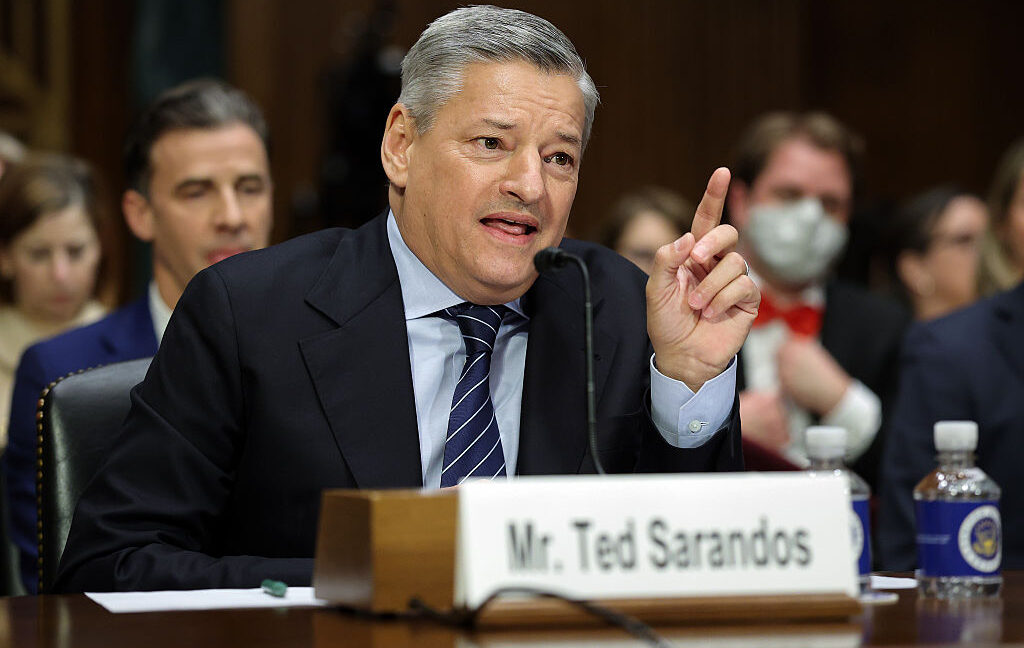
There is concern that subscribers might be negatively affected if Netflix acquires Warner Bros. Discovery’s (WBD’s) streaming and movie studios businesses. One of the biggest fears is that the merger would lead to higher prices due to Netflix having less competition. During a Senate hearing today, Netflix co-CEO Ted Sarandos suggested that the merger would have an opposite effect.

Sarandos was speaking at a hearing held by the US Senate Judiciary Committee’s Subcommittee on Antitrust, Competition Policy, and Consumer Rights, “Examining the Competitive Impact of the Proposed Netflix-Warner Brothers Transaction.”

Sarandos aimed to convince the subcommittee that Netflix wouldn’t become a monopoly in streaming or in movie and TV production if regulators allowed its acquisition to close. Netflix is the largest subscription video-on-demand (SVOD) provider by subscribers (301.63 million as of January 2025), and WBD is the third (128 million streaming subscribers, including users of HBO Max and, to a smaller degree, Discovery+).

Speaking at today’s hearing, Sarandos said:

Netflix and Warner Bros. both have streaming services, but they are very complementary. In fact, 80 percent of HBO Max subscribers also subscribe to Netflix. We will give consumers more content for less.

During the hearing, Sen. Amy Klobuchar (D-Minnesota) asked Sarandos how Netflix can ensure that streaming remains “affordable” after a merger, especially after Netflix issued a price hike in January 2025 despite it adding more subscribers.

Sarandos said the streaming industry is still competitive. The executive claimed that previous Netflix price hikes have come with “a lot more value” for subscribers.

“We are a one-click cancel, so if the consumer says, ‘That’s too much for what I’m getting,’ they can cancel with one click,” Sarandos said.

When pressed further on pricing, the executive argued that the merger doesn’t pose “any concentration risk” and that Netflix is working with the US Department of Justice on potential guardrails against more price hikes.

https://arstechnica.com/gadgets/2026/02/netflix-claims-subscribers-will-get-more-content-for-less-if-it-buys-hbo-max/


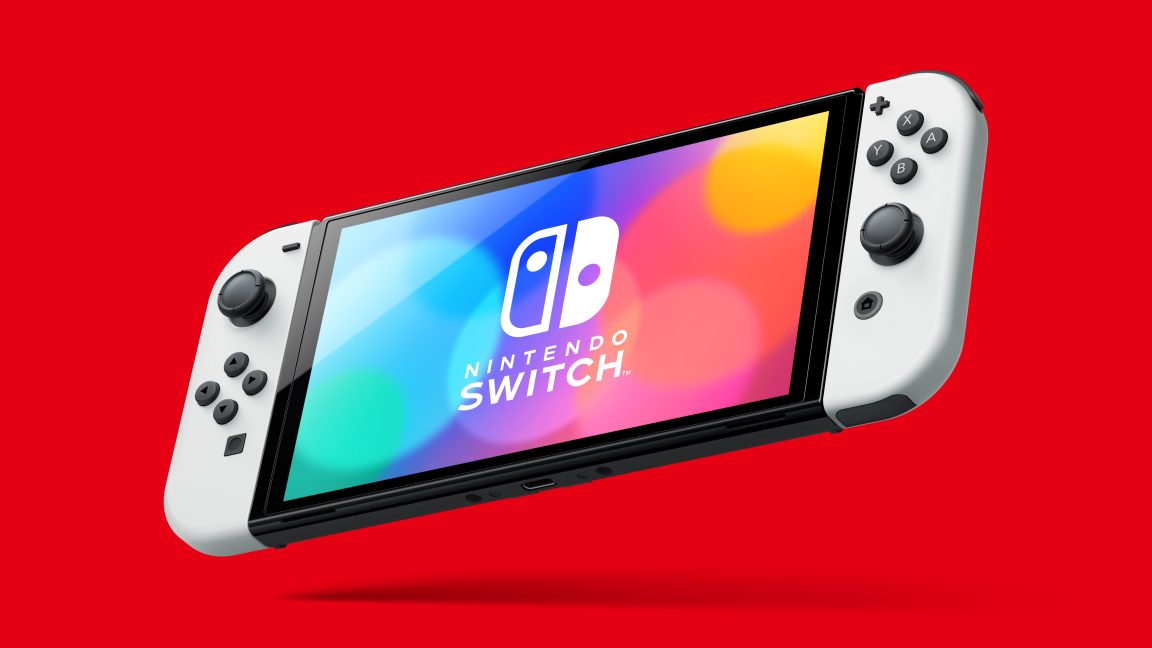
Nintendo Switch is the second-bestselling game console ever, behind only the PS2

Although it was finally replaced last year by the new Switch 2, the orginal switch isn’t done just yet. Many recent Switch games (and a handful of major updates, like the one for Animal Crossing) have been released in both Switch and Switch 2 editions, and Nintendo continues to sell all editions of the original console as entry-level systems for those who can’t pay $450 for a Switch 2.

The 9-year-old Switch’s continued availability has helped it clear a milestone, according to the company’s third-quarter financial results (PDF). As of December 31, 2025, Nintendo says the Switch “has reached the highest sales volume of any Nintendo hardware” with a total of 155.37 million units sold, surpassing the original DS’s lifetime total of 154.02 million units. The console has sold 3.25 million units in Nintendo’s fiscal 2026 so far, including 1.36 million units over the holidays. Those consoles have sold despite price hikes that Nintendo introduced in August of 2025, citing “market conditions.”

That makes the Switch the second-bestselling game console of all time, just three years after it became the third-bestselling game console of all time. The only frontier left for the Switch to conquer is Sony’s PlayStation 2, which Sony says sold “over 160 million units” over its long life. At its current sales rate (Nintendo predicts it will sell roughly 750,000 Switches in the next quarter), it would take the Switch another couple of years to cross that line, but those numbers are likely to taper off as we get deeper into the Switch 2 era.

https://arstechnica.com/gadgets/2026/02/original-nintendo-switch-passes-the-ds-to-become-nintendos-bestselling-console/


The TV industry finally concedes that the future may not be in 8K

Technology companies spent part of the 2010s trying to convince us that we would want an 8K display one day.

In 2012, Sharp brought the first 8K TV prototype to the CES trade show in Las Vegas. In 2015, the first 8K TVs started selling in Japan for 16 million yen (about $133,034 at the time), and in 2018, Samsung released the first 8K TVs in the US, starting at a more reasonable $3,500. By 2016, the Video Electronics Standards Association (VESA) had a specification for supporting 8K (Display Port1.4), and the HDMI Forum followed suit (with HDMI 2.1). By 2017, Dell had an 8K computer monitor. In 2019, LG released the first 8K OLED TV, further pushing the industry’s claim that 8K TVs were “the future.”

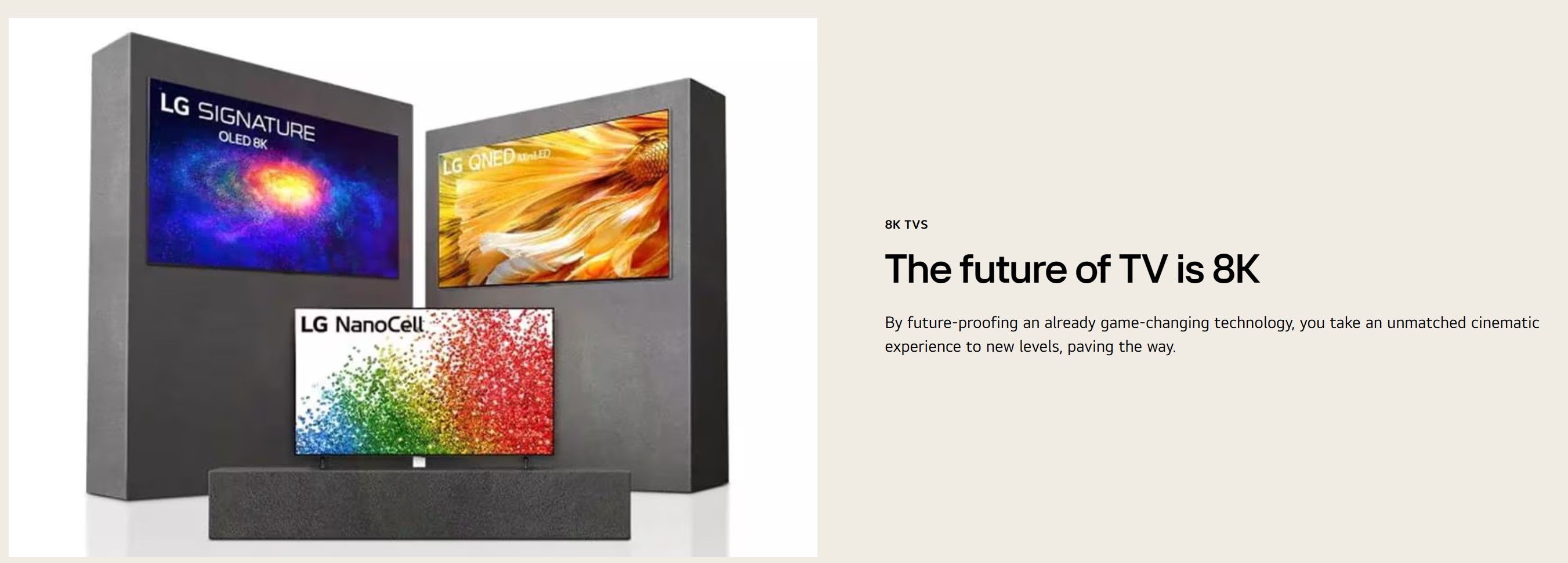
A marketing image with three TVs next to the words "the future of TV is 8K: By future-proofing an already game-changing technology, you take an unmatched cinematic experience to new levels, paving the way."

A marketing image for 8K TVs that’s (still) on LG’s US website.

A marketing image for 8K TVs that’s (still) on LG’s US website. Credit: LG

However, 8K never proved its necessity or practicality.

TV companies are quitting 8K

LG Display is no longer making 8K LCD or OLED panels, FlatpanelsHD reported today. Earlier this month, an LG Display representative told FlatpanelsHD that the panel supplier is “taking a comprehensive view of current display market trends and the trends within the 8K content ecosystem.”

“As our technical readiness is already complete, LG Display is fully prepared to respond immediately whenever the market and customers determine that the timing is right,” LG Display’s representative said.

LG Electronics was the first and only company to sell 8K OLED TVs, starting with the 88-inch Z9 in 2019. In 2022, it lowered the price-of-entry for an 8K OLED TV by $7,000 by charging $13,000 for a 76.7-inch TV.

FlatpanelsHD cited anonymous sources who said that LG Electronics would no longer restock the 2024 QNED99T, which is the last LCD 8K TV that it released.

LG’s 8K abandonment follows other brands distancing themselves from 8K. TCL, which released its last 8K TV in 2021, said in 2023 that it wasn’t making more 8K TVs due to low demand. Sony discontinued its last 8K TVs in April and is unlikely to return to the market, as it plans to sell the majority ownership of its Bravia TVs to TCL.

https://arstechnica.com/gadgets/2026/01/lg-joins-the-rest-of-the-world-accepts-that-people-dont-want-8k-tvs/


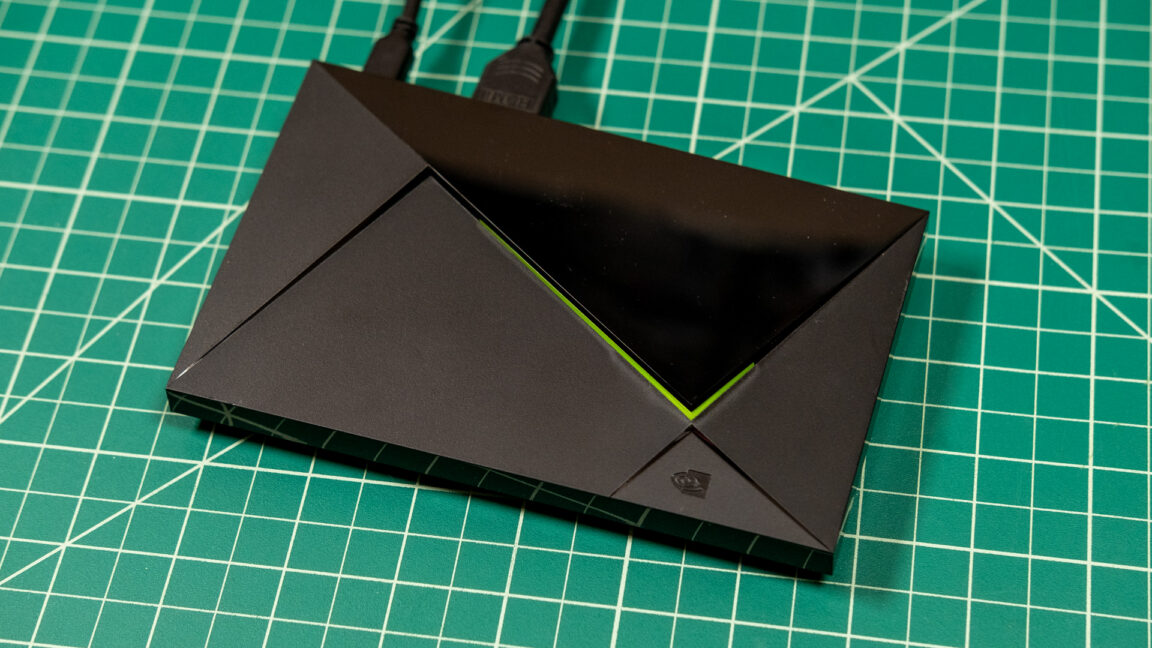
Inside Nvidia’s 10-year effort to make the Shield TV the most updated Android device ever

The best example of Nvidia’s passion for support is, believe it or not, a two-year gap in updates.

Across the dozens of Shield TV updates, there have been a few times when fans feared Nvidia was done with the box. Most notably, there were no public updates for the Shield TV in 2023 or 2024, but over-the-air updates resumed in 2025.

“On the outside, it looked like we went quiet, but it’s actually one of our bigger development efforts,” explained Bell.

The origins of that effort, surprisingly, stretch back years to the launch of the Nintendo Switch. The Shield runs Nvidia’s custom Tegra X1 Arm chip, the same processor Nintendo chose to power the original Switch in 2017. Soon after release, modders discovered a chip flaw that could bypass Nintendo’s security measures, enabling homebrew (and piracy). An updated Tegra X1 chip (also used in the 2019 Shield refresh) fixed that for Nintendo, but Nvidia’s 2015 and 2017 Shield boxes ran the same exploitable version.

Initially, Nvidia was able to roll out periodic patches to protect against the vulnerability, but by 2023, the Shield needed something more. Around that time, owners of 2015 and 2017 Shield boxes had noticed that DRM-protected 4K content often failed to play—that was thanks to the same bug that affected the Switch years earlier.

With a newer, non-vulnerable product on the market, many companies might have just accepted that the older product would lose functionality, but Nvidia’s passion for Shield remained. Bell consulted Huang, whom he calls Shield customer No. 1, about the meaning of his “as long as we shall live” pledge, and the team was approved to spend whatever time was need to fix the vulnerability on the first two generations of Shield TV.

According to Bell, it took about 18 months to get there, requiring the creation of an entirely new security stack. He explains that Android updates aren’t actually that much work compared to DRM security, and some of its partners weren’t that keen on re-certifying older products. The Shield team fought for it because they felt, as they had throughout the product’s run, that they’d made a promise to customers who expected the box to have certain features.

https://arstechnica.com/gadgets/2026/01/inside-nvidias-10-year-effort-to-make-the-shield-tv-the-most-updated-android-device-ever/