Signs point to a sooner-rather-than-later M5 MacBook Pro refresh

Mac power users waiting on new high-end MacBook Pro models may have been disappointed last fall when Apple released an M5 upgrade for the low-end 14-inch MacBook Pro without touching the M4 Pro or Max versions of the laptop. But the wait for M5 Pro and M5 Max models may be nearing its end.

The tea-leaf readers at MacRumors noticed that shipping times for a handful of high-end MacBook Pro configurations have slipped into mid-to-late February, rather than being available immediately as most Mac models are. This is often, though not always, a sign that Apple has slowed down or stopped production of an existing product in anticipation of an update.

Currently, the shipping delays affect the M4 Max versions of both the 14-inch and 16-inch MacBook Pros. If you order them today, these models will arrive sometime between February 3 and February 24, depending on the configuration you choose; many M4 Pro versions are still available for same-day shipping, though adding a nano-texture display or upgrading RAM can still add a week or so to the shipping time.

Apple could choose to launch new Pro hardware on January 28 to go with the new Creator Studio subscription it announced last week. Aimed primarily at independent content creators who make their own video, audio, and images, the Creator Studio subscription bundles Final Cut Pro, Logic Pro, Pixelmator Pro, and enhancements for the Pages, Numbers, and Keynote apps (along with some other odds and ends) for $13 a month or $130 a year. None of these apps require a MacBook Pro, but many would benefit in some way from the additional CPU and GPU power, RAM, and storage available in Apple’s high-end laptops.

Of course, an imminent replacement isn’t the only reason why the shipping estimates for any given Mac might slip. Ongoing, AI-fueled RAM shortages could be causing problems, and Apple probably prioritizes production of the widely used base-model M4 and M5 chips to the larger, more expensive, more complex Max models.

But the only other device in Apple’s lineup that offers the M4 Max and similar RAM configuration options is the high-end Mac Studio, which currently isn’t subject to the same shipping delays. That does imply that the delays are specific to the MacBook Pro—and one explanation for this is that the laptop is about to be replaced.

https://arstechnica.com/gadgets/2026/01/signs-point-to-a-sooner-rather-than-later-m5-macbook-pro-refresh/


Meta’s layoffs leave Supernatural fitness users in mourning

There is a split in the community about who will stay and continue to pay the subscription fee and who will leave. Supernatural has more than 3,000 lessons available in the service, so while new content won’t be added, some feel there is plenty of content left in the library. Other users worry about how Supernatural will continue to license music from big-name bands.

“Supernatural is amazing, but I am canceling it because of this,” Chip told me. “The library is large, so there’s enough to keep you busy, but not for the same price.”

There are other VR workout experiences like FitXR or even the VR staple Beat Saber, which Supernatural cribs a lot of design concepts from. Still, they don’t hit the same bar for many of the Supernatural faithful.

“I’m going to stick it out until they turn the lights out on us,” says Stefanie Wong, a Bay Area accountant who has used Supernatural since shortly after the pandemic and has organized and attended meetup events. “It’s not the app. It’s the community, and it’s the coaches that we really, really care about.”

Welcome to the new age

I tried out Supernatural’s Together feature on Wednesday, the day after the layoffs. It’s where I met Chip and Alisa. When we could stop to catch our breath, we talked about the changes coming to the service. They had played through previous sessions hosted by Jane Fonda or playlists with a mix of music that would change regularly. This one was an artist series featuring entirely Imagine Dragons songs.

In the session, as we punched blocks while being serenaded by this shirtless dude crooning, recorded narrations from Supernatural coach Dwana Olsen chimed in to hype us up.

“Take advantage of these moments,” Olsen said as we punched away. “Use these movements to remind you of how much awesome life you have yet to live.”

Frankly, it was downright invigorating. And bittersweet. We ended another round, sweaty, huffing and puffing. Chip, Alisa, and I high-fived like crazy and readied for another round.

“Beautiful,” Alisa said. “It’s just beautiful, isn’t it?”

https://arstechnica.com/gadgets/2026/01/metas-layoffs-leave-supernatural-fitness-users-in-mourning/


RAM shortage chaos expands to GPUs, high-capacity SSDs, and even hard drives

Big Tech’s AI-fueled memory shortage is set to be the PC industry’s defining story for 2026 and beyond. Standalone, direct-to-consumer RAM kits were some of the first products to feel the bite, with prices spiking by 300 or 400 percent by the end of 2025; prices for SSDs had also increased noticeably, albeit more modestly.

The rest of 2026 is going to be all about where, how, and to what extent those price spikes flow downstream into computers, phones, and other components that use RAM and NAND chips—areas where the existing supply of products and longer-term supply contracts negotiated by big companies have helped keep prices from surging too noticeably so far.

This week, we’re seeing signs that the RAM crunch is starting to affect the GPU market—Asus made some waves when it inadvertently announced that it was discontinuing its GeForce RTX 5070 Ti.

Though the company has tried to walk this announcement back since then, if you’re a GPU manufacturer, there’s a strong argument to be made for either discontinuing this model or de-prioritizing it in favor of other GPUs. The 5070 Ti uses 16GB of GDDR7, plus a partially disabled version of Nvidia’s GB203 GPU silicon. This is the same chip and the same amount of RAM used in the higher-end RTX 5080—the thinking goes, why continue to build a graphics card with an MSRP of $749 when the same basic parts could go to a card with a $999 MSRP instead?

Whether Asus or any other company is canceling production or not, you can see why GPU makers would be tempted by the argument: street prices for the RTX 5070 Ti models start in the $1,050 to $1,100 range on Newegg right now, where RTX 5080 cards start in the $1,500 to $1,600 range. Though 5080 models may need more robust boards, heatsinks, and other components than a 5070 Ti, if you’re just trying to maximize the profit-per-GPU you can get for the same amount of RAM, it makes sense to shift allocation to the more expensive cards.

https://arstechnica.com/gadgets/2026/01/ram-shortage-chaos-expands-to-gpus-high-capacity-ssds-and-even-hard-drives/


Spotify’s 3rd price hike in 2.5 years hints at potential new normal

After a dozen years of keeping subscription prices stable, Spotify has issued three price hikes in 2.5 years.

Spotify informed subscribers via email today that Premium monthly subscriptions would go from $12 to $13 per month as of users’ February billing date. Spotify is already advertising the higher prices to new subscribers.

Although not explicitly mentioned in Spotify’s correspondence, other plans are getting more expensive, too. Student monthly subscriptions are going from $6 to $7. Duo monthly plans, for two accounts in the same household, are going from $17 to $19, and Family plans, for up to six users, are moving from $20 to $22.

Spotify’s Basic plan, which is only available as a downgrade for some Premium subscribers and is $11/month, is unaffected.

For years, Spotify subscribers enjoyed stable prices, but today’s announcement marks Spotify’s third price hike since July 2023. Spotify last raised prices in July 2024. Premium individual subscriptions went from $11 to $12, Duo subscriptions went from $15 to $17, and Family subscriptions increased from $17 to $20.

In 2024, Spotify blamed the higher prices on its need to “invest in and innovate on our product features.” Today, it said:

Occasional updates to pricing across our markets reflect the value that Spotify delivers, enabling us to continue offering the best possible experience and benefit artists.

The reasoning offered is vague, but some features that Spotify recently implemented include the addition of lossless audio in November, music videos in December, and new Messages features (one that lets you share your listening activity with friends and one that lets you request joint listening sessions called Jams) earlier this month. It also opened an 11,000-square-foot podcast studio in Hollywood this month.

https://arstechnica.com/gadgets/2026/01/spotify-to-raise-subscription-prices-by-up-to-2-in-february/


Are people avoiding iOS 26 because of Liquid Glass? It’s complicated.

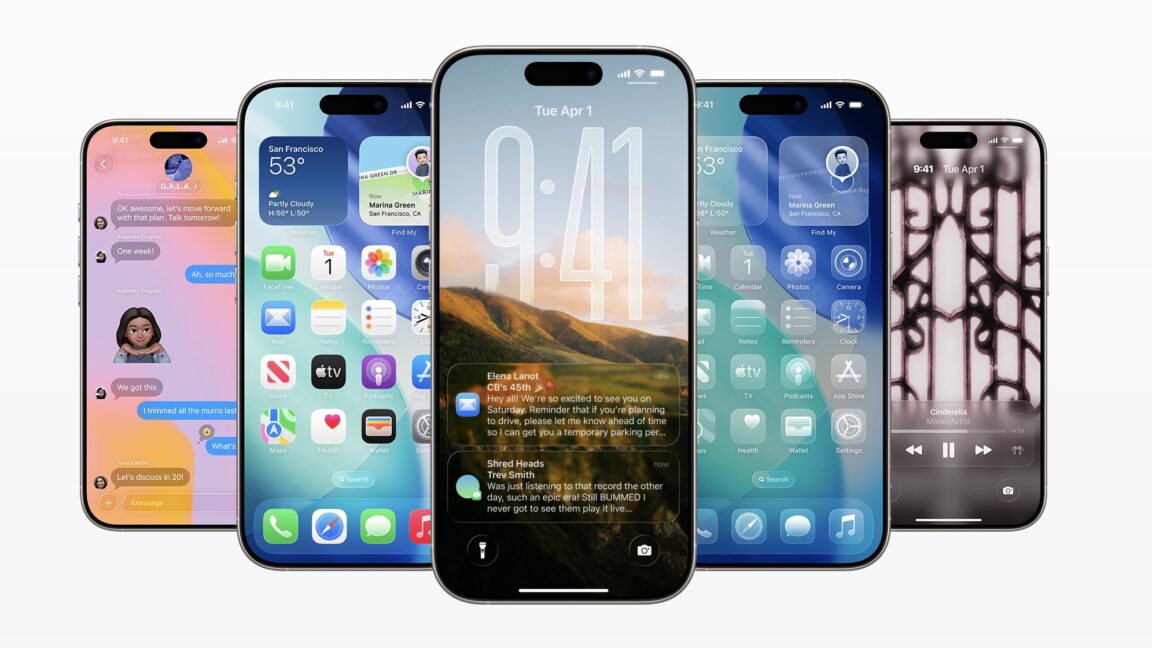
Last week, news about the adoption rates for Apple’s iOS 26 update started making the rounds. The new update, these reports claim, was being installed at dramatically lower rates than past iOS updates. And while we can’t infer anything about why people might choose not to install iOS 26, the conclusion being jumped to is that iPhone users are simply desperate to avoid the redesigned Liquid Glass user interface.

The numbers do, in fact, look bad: Statcounter data for January suggests that the various versions of iOS 26 are running on just 16.6 percent of all devices, compared to around 70 percent for the various versions of iOS 18. The iOS 18.7 update alone—released at the same time as iOS 26.0 in September for people who wanted the security patches but weren’t ready to step up to a brand-new OS—appears to be running on nearly one-third of all iOS devices.

Those original reports were picked up and repeated because they tell a potentially interesting story of the “huge if true” variety: that users’ aversion to the Liquid Glass design is so intense and widespread that it’s actively keeping users away from the operating system. But after examining our own traffic numbers, as well as some technical changes made in iOS 26, it appears Statcounter’s data is dramatically undercounting the number of iOS 26 devices in the wild.

We’ve taken a high-level look at all iPhone traffic across all Condé Nast websites for October, November, and December of 2025 and compared it to traffic from October, November, and December of 2024. This data suggests that iOS 26 is being adopted more slowly than iOS 18 was the year before—roughly 76 percent of all iPhone pageviews came from devices running iOS 18 in December of 2024, compared to about 45 percent for iOS 26 in December of 2025.

That’s not as cataclysmic a dropoff as Statcounter’s data suggests, even before considering other mitigating factors—iOS 26 dropped support for 2018’s iPhone XS, XS Max, and XR, for example, while iOS 18 ran on every iPhone that could run iOS 17.

https://arstechnica.com/gadgets/2026/01/are-people-avoiding-ios-26-because-of-liquid-glass-its-complicated/


Many Bluetooth devices with Google Fast Pair vulnerable to “WhisperPair” hack

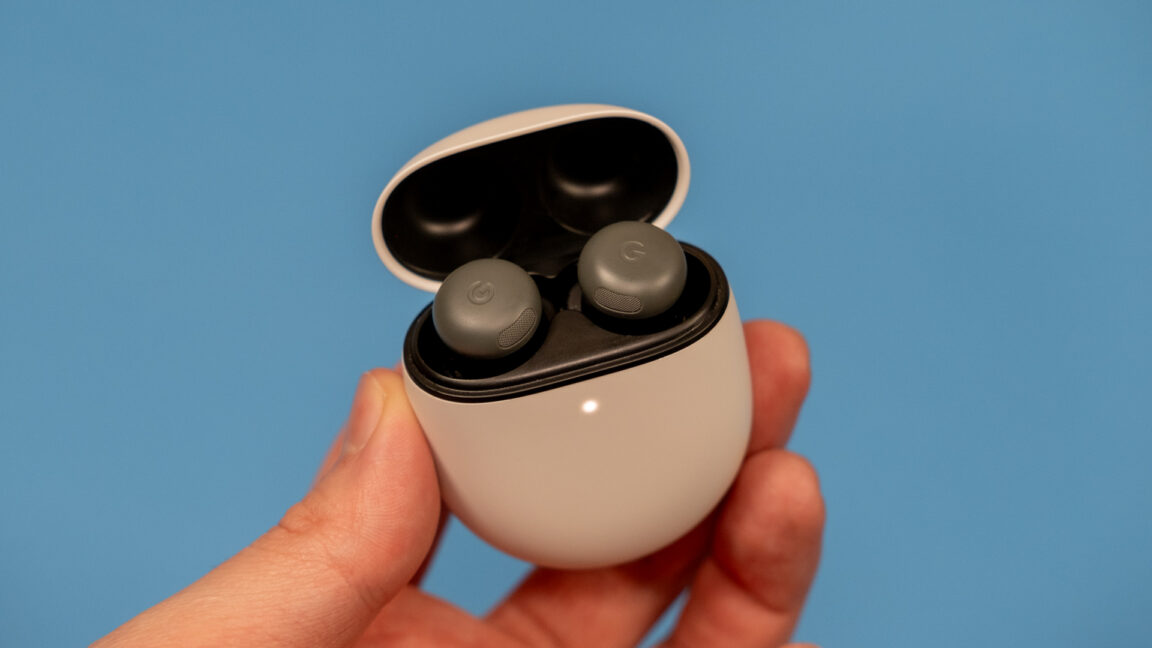
Pairing Bluetooth devices can be a pain, but Google Fast Pair makes it almost seamless. Unfortunately, it may also leave your headphones vulnerable to remote hacking. A team of security researchers from Belgium’s KU Leuven University has revealed a vulnerability dubbed WhisperPair that allows an attacker to hijack Fast Pair-enabled devices to spy on the owner.

Fast Pair is widely used, and your device may be vulnerable even if you’ve never used a Google product. The bug affects more than a dozen devices from 10 manufacturers, including Sony, Nothing, JBL, OnePlus, and Google itself. Google has acknowledged the flaw and notified its partners of the danger, but it’s up to these individual companies to create patches for their accessories. A full list of vulnerable devices is available on the project’s website.

The researchers say that it takes only a moment to gain control of a vulnerable Fast Pair device (a median of just 10 seconds) at ranges up to 14 meters. That’s near the limit of the Bluetooth protocol and far enough that the target wouldn’t notice anyone skulking around while they hack headphones.

Once an attacker has forced a connection to a vulnerable audio device, they can perform relatively innocuous actions, such as interrupting the audio stream or playing audio of their choice. However, WhisperPair also allows for location tracking and microphone access. So the attacker can listen in on your conversations and follow you around via the Bluetooth device in your pocket. The researchers have created a helpful video dramatization (below) that shows how WhisperPair can be used to spy on unsuspecting people.

https://arstechnica.com/gadgets/2026/01/researchers-reveal-whisperpair-attack-to-eavesdrop-on-google-fast-pair-headphones/


The RAM shortage’s silver lining: Less talk about “AI PCs”

RAM prices have soared, which is bad news for people interested in buying, building, or upgrading a computer this year, but it’s likely good news for people exasperated by talk of so-called AI PCs.

As Ars Technica has reported, the growing demands of data centers, fueled by the AI boom, have led to a shortage of RAM and flash memory chips, driving prices to skyrocket.

In an announcement today, Ben Yeh, principal analyst at technology research firm Omdia, said that in 2025, “mainstream PC memory and storage costs rose by 40 percent to 70 percent, resulting in cost increases being passed through to customers.”

Overall, global PC shipments increased in 2025, according to Omdia, (which pegged growth at 9.2 percent compared to 2024), and IDC, (which today reported 9.6 percent growth), but analysts expect PC sales to be more tumultuous in 2026.

“The year ahead is shaping up to be extremely volatile,” Jean Philippe Bouchard, research VP with IDC’s worldwide mobile device trackers, said in a statement.

Both analyst firms expect PC makers to manage the RAM shortage by raising prices and by releasing computers with lower memory specs. IDC expects price hikes of 15 to 20 percent and for PC RAM specs to “be lowered on average to preserve memory inventory on hand,” Bouchard said. Omdia’s Yeh expects “leaner mid to low-tier configurations to protect margins.”

“These RAM shortages will last beyond just 2026, and the cost-conscious part of the market is the one that will be most impacted,” Jitesh Ubrani, research manager for worldwide mobile device trackers at IDC, told Ars via email.

IDC expects vendors to “prioritize midrange and premium systems to offset higher component costs, especially memory.”

https://arstechnica.com/gadgets/2026/01/the-ram-shortages-silver-lining-less-talk-about-ai-pcs/


Apple’s Mac and iPad creative apps get bundled into “Creator Studio” subscription

Apple’s professional creative apps have been slower to jump on the subscription bandwagon than those from Adobe or some of its other competitors, but the company is taking a step in that direction today. Starting on January 28, Apple will offer an Apple Creator Studio subscription for $13 a month, or $130 a year. Subscribers will get access to the Mac and (where applicable) iPad versions of Final Cut Pro, Logic Pro, Pixelmator Pro, Motion, Compressor, and MainStage, as well as “intelligent features and premium content” for the Mac, iPad, and iPhone versions of Keynote, Pages, Numbers, and Freeform.

Apple says it will also offer a one-month free trial for the subscription and a discounted version for students at $3 a month, or $30 a year.

Most of the apps also seem to be getting small feature updates to go along with the Creator Studio announcement. Final Cut will get a new Transcript Search feature that will allow you to dig through video footage by searching for specific dialogue, and a new Montage Maker feature “will analyze and edit together a dynamic video based on the best visual moments within the footage.” An updated Logic Pro “helps creators deliver original music for their video content” and adds a synth player to the app’s lineup of “AI Session Players.”

The biggest update is probably a new version of Pixelmator Pro for the iPad, designed around the Apple Pencil accessory. When Apple announced it was acquiring Pixelmator in late 2024, the image and vector editing app was only available for the Mac.

As for Keynote, Pages, and Numbers—in another lifetime, the apps formerly known as “iWork”—the core apps remain free, but the Creator Studio subscription adds “premium templates and themes” for the apps, as well as access to a Content Hub that provides “curated, high-quality photos, graphics, and illustrations” for the apps. Apple is also offering a handful of OpenAI-powered generative features, including upscaling and transformation for existing images, the ability to generate images from text, and a Keynote feature that will create a slide deck from a text outline.

https://arstechnica.com/gadgets/2026/01/apple-creator-studio-bundles-final-cut-pro-logic-and-other-apps-for-129-year/


Paramount sues WBD over Netflix deal. WBD says Paramount’s price is still inadequate.

Paramount Skydance escalated its hostile takeover bid of Warner Bros. Discovery (WBD) today by filing a lawsuit in Delaware Chancery Court against WBD, declaring its intention to fight Netflix’s acquisition.

In December, WBD agreed to sell its streaming and movie businesses to Netflix for $82.7 billion. The deal would see WBD’s Global Networks division, composed of WBD’s legacy cable networks, spun out into a separate company called Discovery Global. But in December, Paramount submitted a hostile takeover bid and amended its bid for WBD. Subsequently, the company has aggressively tried to convince WBD’s shareholders that its $108.4 billion offer for all of WBD is superior to the Netflix deal.

Today, Paramount CEO David Ellison wrote a letter to WBD shareholders informing them of Paramount’s lawsuit. The lawsuit requests the court to force WBD to disclose “how it valued the Global Networks stub equity, how it valued the overall Netflix transaction, how the purchase price reduction for debt works in the Netflix transaction, or even what the basis is for its ‘risk adjustment’” of Paramount’s $30 per share all-cash offer. Netflix’s offer equates to $27.72 per share, including $23.25 in cash and shares of Netflix common stock. Paramount hopes the information will encourage more WBD shareholders to tender their shares under Paramount’s offer by the January 21 deadline.

Before WBD announced the Netflix deal, Paramount publicly questioned the fairness of WBD’s bidding process. Paramount has since argued that its bid wasn’t given fair consideration or negotiation.

In his letter today, Ellison wrote:

We remain perplexed that WBD never responded to our December 4th offer, never attempted to clarify or negotiate any of the terms in that proposal, nor traded markups of contracts with us. Even as we read WBD’s own narrative of its process, we are struck that there were few actual board meetings in the period leading up to the decision to accept an inferior transaction with Netflix. And we are surprised by the lack of transparency on WBD’s part regarding basic financial matters. It just doesn’t add up – much like the math on how WBD continues to favor taking less than our $30 per share all-cash offer for its shareholders.

Additionally, Paramount plans to nominate board directors for election at WBD’s annual shareholder meeting who will fight against the Netflix deal’s approval. The window for nominations opens in three weeks, Ellison’s letter noted.

https://arstechnica.com/gadgets/2026/01/paramount-sues-wbd-over-netflix-deal-wbd-says-paramounts-price-is-still-inadequate/


High RAM prices mean record-setting profits for Samsung and other memory makers

Supply shortages and big price increases for RAM and storage have been a major drag for enthusiasts and PC builders in recent months. And while we haven’t yet seen large, widespread price increases for memory-dependent products like pre-built laptop PCs, smartphones, and graphics cards, most companies expect that to change this year if shortages continue.

In the meantime, memory manufacturers are riding high demand and high prices to record profits.

In revenue guidance released this week, Samsung Electronics predicts it will make between 19.9 and 20.1 trillion Korean won in operating profit (roughly $13.8 billion USD) in Q4 2025, compared to just 6.49 trillion won in Q4 of 2024.

Samsung is way more than just a memory business, of course, but its fortunes often rise and fall along with its memory division; Samsung’s profits were dropping dramatically in 2023 partly because of an oversupply of memory that made its memory division lose billions of dollars.

Less-diversified companies that primarily make memory are also raking in money lately. SK Hynix posted its “highest-ever quarterly performance” in Q3 of 2025 with 11.38 trillion Korean won (about $7.8 billion) in operating profit, up from 7.03 trillion in Q3 of 2024, and an operating margin that increased from 40 percent to 47 percent. SK Hynix credits “expanding investments in AI infrastructure” and “surging demand for AI servers” for its performance.

Micron—which recently decided to exit the consumer RAM and storage markets but is still selling its products to other businesses—also reported a big boost to net income year over year, from $1.87 billion in Q1 2025 to $5.24 billion in Q1 2026. This has generated the company’s “highest ever free cash flow.”

“Total company revenue, DRAM and NAND revenue, as well as HBM and data center revenue and revenue in each of our business units, also reached new records [in fiscal Q1],” wrote Micron CEO Sanjay Mehrotra.

Why is RAM so expensive right now?

Reading these upbeat earnings reports and forecasts will be cold comfort to people trying to build or upgrade a PC, who have seen the price of a 32GB kit of DDR5-6000 increase from $80 in August 2025 to $340 today. And if the current AI boom continues, it’s unlikely to improve in the near term.

https://arstechnica.com/gadgets/2026/01/high-ram-prices-mean-record-setting-profits-for-samsung-and-other-memory-makers/